
She Sells 7-Figures With 0 Advertising | Ryan Daniel Moran
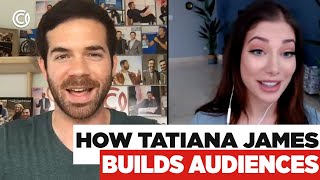
Tatiana James built a seven-figure e-commerce brand without paid ads by focusing on YouTube and Facebook, creating a private moderated Facebook group that grew into its own ecosystem with ambassadors, and trading products to influencers instead of buying ads. She prioritized adding value over selling and kept her personal brand intentionally low-pressure.
Questions this video answers
Over 20,000 members (women).
Seven-figure brand (no paid advertising).
No — she states the brand grew without paid advertising.
Five years.
Tatiana James.
Chapters
Yeah. So that's the difference between building a brand and not building a brand. And so, you know, building a brand, it's what makes you unique in comparison to everyone else who is selling a similar product.
Hi, Tatiana. Welcome to capitalism dot com.
Hey, Ryan. I'm so glad to be here. Thanks for having me.
Well, I always, I always love our conversations. We. We just riff well together. But the reason I wanted to have you on today is we've been. We've been talking a lot about audience building inside the 1% and just the importance and the ease that happens once you've gone and built a responsive audience, things just sell faster. You get a lot more momentum. And yet, looking at the game plan of building an audience, it's daunting to start from zero. And you've done it in two different industries. You've done it with your physical products, and now you have this personal brand that is growing really, really quickly. So you somehow have to have a knack for building an audience. And so I was just hoping you could give us. Let's start with kind of a high level about how you approach this when you're going into a new business.
Yeah, I mean, I think it is so important. And we all start from zero, from the ground up. And so it definitely can be intimidating in the beginning because sometimes we have this misconception that we need to have a huge following in order for it to make a difference with our brand and our reach. But that's not necessarily true. I know you talk about that. You just need a small number of people of raving fans who. Who love your content and who are in alignment with your niche. And so I've been selling online e commerce for the last five years, and I've sold other products where I did not build an audience, and I just kind of launched those products, sold them, and there was no audience building, there was no brand building. And then with the products that I continue to sell today, that's a very different story. I actually went out of my way to. To focus more on building an audience, building a community, adding value. And, you know, the sales, you know, the revenue that we generate from those different products are just. It's night and day. And I think it's really important to understand the value of taking the time to actually build a bit of a following, build a bit of an audience, and how. Yeah, how that can impact you long term.
You mentioned a community that you were. You were building. Is that a Facebook group or a different mechanism? And does it matter?
Yeah. So with my Brand, I focused on YouTube, building a community on YouTube, but also building it on Facebook and via Facebook groups. And so I picked those two platforms because I felt that YouTube has an incredible reach. You know, if you create a piece of content, you just never know how many people it will reach. And it can reach maybe a couple hundred or maybe just your subscriber count, or it can reach way far beyond your subscriber count. And so the reach is incredible with YouTube and, but with Facebook groups as well. I wanted to create a Facebook community just as a way to add more value to my customers because my customers buy my product, I understand what their journey is, I understand what their goals are and how can I better support them. And for me, one of those ways was by creating a Facebook community to support them and to connect them with like minded individuals who are also on a similar journey. And so the Facebook community has been really valuable because we have like a tight knit community. I've got over 20,000 women in there right now and everyone's extremely active and they just receive so much value just by being part of this community. It's not something that, you know, they have in their day to day lives. So when they are on Facebook, they feel like they can learn a lot, they get a lot of motivation, a lot of tips and it helps them kind of stay on track with the journey that they're on. And I'm in the niche of kind of weight loss and so, you know, there's, you know, you talk about this a lot is understanding, you know, you're not just selling a product. Who's the audience that you're trying to serve? And so I learned earlier on that, you know, I'm serving people who are on journey of weight loss and so one of the resources I can provide from them is just valuable content. And I decided to focus on YouTube content and then also Facebook community.
Okay, so for the physical product, you've got this group of 20,000 people who are on Facebook. Did you build them just by following up with your existing customers?
Yes. So the Facebook community, yeah, it started like that. So originally there is nobody in there. And so I was very, very active and my goal was just to add value. So I'm not trying to sell anything. I decided that the Facebook community, this is just a community for support. So it's a private group. And I decided to make it private because I felt in doing that then people would feel more comfortable doing to share things such as pictures before and after transformations. And also it kind of created a little bit of an exclusivity type of feeling. You know, it's not just anyone who can join. We decide who gets to join, and we want to make sure it's a safe space for everyone. So if someone doesn't have a profile and they're not active on Facebook, they're not going to be accepted into the community. And so I felt like that was important for our niche. And so I started the Facebook community just by having. Having following up with our existing customers and letting them know about the community, creating videos on YouTube, pointing them towards the community. And slowly, slowly it started to grow. But you have to engage with people. You have to start to ask questions and start to communicate with people and give people reason to share and to engage. And that's the hardest part in the beginning is just increasing that engagement. Because in the beginning, everyone's new and it's a little bit like, I don't know what I should post, I don't know what I'm allowed to post. And I think that's where having parameters is really important. So making it clear when people join your Facebook community having guidelines. So we have community guidelines. And so that's good because that tells people what you can post and what we recommend, not posting, what we, you know, what we don't allow in the community and our rules. And I think that's important because then people know what the parameters are of what they can play around, and it helps them to feel more confident in creating a post and engaging with people.
So this community really has rallied independently of any other platform. Just because you're in there and you're engaging and you're encouraging this community, you said at the beginning that the sales of that business were night and day difference with the business, that you did not build a community where you're not building an aud. But you also said that you were not selling in the Facebook group. So help me bridge this gap. Where is the increase in sales coming from if you're not actively selling to the community?
Yeah, so that's the difference between building a brand and not building a brand. And so, you know, building a brand, it's what makes you unique in comparison to everyone else who is selling a similar product. And so when we built this brand and people would search for us on YouTube or on other social platforms, or they find us in the Facebook community, they just see that they have their. They're receiving more value this way. And so people would find our Facebook community just through Facebook search because we would have our main keyword as the Title of the Facebook community. So some people would find us and they wouldn't even know about the products that we were selling. And then by reading the posts in the community, reading how people love the product seen before and after transformations, then they discovered the brand and then they purchased through the brand. And as the community grew, as we had more people entering the community, and now we're at 20,000 members. You know, our members are so loyal and they love the product so much that they do all the marketing for us. So we never really post about sales in our community. We don't market the products in our community. We just allow the members to freely talk about the products and to share, you know, what they love about the products. And they are, because they're raving fans, they help us sell more products.
Now, how has this been different than building your personal brand? And I'm asking selfishly because this is something I've kind of struggled with. Is someone, someone recently called me Merlin the wizard who can see everybody else's future but his own, where I know exactly going in and building audiences for physical product brands. Everything that you're saying totally jives with me. But when you are the product to some degree with your personal brand, it's a little bit different because you are not infinitely scalable. So how have you done it differently with a physical product brand when you go and build your personal brand?
Well, I think you've done a great job with that, so I don't know what you're talking about.
Well, thanks. You're growing faster than me, so I'm asking you for advice.
Well, we have different audiences, different niches. And I think, you know, with. With my audience, you know, I approach my personal brand very differently than I approach my E commerce brand. With my E Commerce brand, there's a system to it. There's. There's a process to it. But with my personal brand, I just, I. The intention behind me originally started was purely just to answer people's questions and add value. And so I was never trying to build my name for alternative purposes or for other motives. And so I just, I keep it simple. Like I just focus on just adding value and creating content that I know my audience wants. I ask them, hey, what video would you like to see from me? What questions can I help answer? Where are you at right now in your life? What are you struggling with? And I just focus on creating that content. And for me, me just being authentic in that way and just, you know, saying the truth, whether it's going to benefit my personal Brand or not, has helped my brand grow because I think that authenticity speaks volumes, and I think that people are just craving more authentic influencers on YouTube because there's a lot of blitz and glam and there's a lot, especially in the E commerce space, there's just so much fluff, and you don't know what's, you know, what's possible and what's a hype. And so I think I've just focused on that, and that's. That's really all there is to it. There's no secrets to it. Um, and then just, you know, staying consistent. So I have a certain number of videos that I want to put out each week, and I just stay consistent with that. So people, they know when they subscribe to me that, you know, they're going to receive new content regularly and that I'm going to show up for them.
And do you have a. I call it a hopper, a Facebook group of people who are really active that are reflective of your personal brand as well, or do you keep that reserved for the physical product brand?
Yeah, so I don't have any other community for my personal brand. It's just the physical product brand.
So that. That answers a lot of questions for me because I have tried to have, like, multiple groups in my personal brand, because in a. In a physical product brand, it makes total sense to have a free group that is just there for the community to gel and for them to talk about your products and to show how they're using it, and it becomes amazing content for the rest of the content you put out under your brand. But when it's a personal brand, my experience is I just get tagged with a bunch of questions and I want to pull my hair out. So I keep it reserved for, you know, for our community inside the 1%. And I've never been able to bridge that difference. And so basically what I'm hearing you say is, yeah, makes sense. That would be a common problem. And so your strategy for building community with the physical products brand is a little bit different than the personal brand.
Yeah, yeah. So I just. I just stick to YouTube because for me, you know, this is.
My goal is not to have X number of subscribers. It's not my, you know, I'm not trying to necessarily grow my YouTube channel. I don't have, you know, that there's no end goal with that. And so for me, I'm just like, this is what I can commit to. I have a certain lifestyle that I like to enjoy. If I have a Facebook group where I'm just constantly answering people's questions all day. That's just not sustainable for me. And it doesn't align with my values and lifestyle that I want to have. So for me, I just say, you know, my focus is just on YouTube and that's where I'm going to, you know, add value and do the mentorship and all those things. I do have a small Facebook community as just like a bonus group for people who are selling on Amazon and doing e commerce. And I will answer questions from time to time in there, but it's. It's not a huge focus of mine.
Yeah, that. That is hugely clarifying for me. And I don't know what it was about how you just said that, but in my life, I've always experienced that when I'm doing something for a result, I never get there because I suck. But when I'm doing something for the moment or what some people call the process or just from I have no ask, then I always end up getting the result. And so basically what I heard you say is with your YouTube channel, you don't have. You're not reverse engineering the number of followers and subscribers. You are just there to create and to serve. And that's probably why your channel is growing so quickly now.
I don't really see it as a business, and I think that's the difference is that I have my E commerce business, that's my bread and my butter, and then I have my personal brand. And for me, that's just kind of like my hobby. And so because I'm not in it for, you know, making X amount of dollars or having X amount of subscribers and followers, like, it just. It becomes something that I just enjoy doing. If I feel like I'm in the spirit of creating video content, then I do it. And then it just. The content I create becomes so much better because I'm not feeling pressured to create it. I'm not feeling forced to create it. You know, I don't have like a manager who's saying, hey, we need a video out this week. That just doesn't work for me. Me.
Okay, now what. What about in the physical products brand? Let's slip over there again. Because, because when you are running that as your business.
What do you then commit to and how do you stay in that contribution mode? Or do you even view the community as part of the business? Do you just view that as separate? Help me understand the thought process around it.
Yeah. So with the physical products business, I mean, the Facebook community, when you build a Facebook Facebook, a great Facebook community. It should be an ecosystem where it can run and grow without you. And so in the beginning, I was very active in that Facebook community because we were just getting started. I was trying to get people in and motivated and engaged. But as we started to get more people in the community, it started to become an ecosystem. And so very, very promptly you start to realize who are the members that are engaging the most. People start to create roles for themselves. You'll find out who are like the natural policers and who are the people who are like on Facebook every single day. And you wonder how do they have time to always respond to everyone's post. And so you start to see who those people are. And so what I did early on is I started to kind of assign people roles. And so I would, on Facebook you can see who your top engagers are in the community. And so what I would do is I would reach out to them and I'd say, hey, thank you so much for your contribution. You've made this community an amazing place. And that's a great time to send them a gift or a thank you note or to really show them your gratitude. And oftentimes if they're a top engager in the community, you can offer them to become an ambassador or a community manager and they will happily take on that role. And so then they start to engage and help grow the community. And so early on I decided to, first of all, I had, because it was a private community, I hired someone for approving and declining members. As I mentioned, we decline just as many people as we approve. And I think that's really important. So that's why people feel like it is a safe space because we're very careful about who we approve into the group. And then also having a community manager. So later down the road, I hired a virtual assistant who is a full time community manager. And so they helped with engagement. They do kind of little prompts here and there which help, you know, asking questions to the community. And so that's really important to keep it alive and keep engagement high. But in terms of my involvement in the community, I'm really not there. People don't really tag me and things anymore because they know who the community manager is and they know they can go to that person with their questions. And so it's able to continue to grow without my presence.
Now would you tell me some of the fringe benefits that have come along as having this responsive audience? I mean, do you find it easier to get reviews or repeat purchases or word of mouth or investors or, or any other sources of distribution. Would you share a little bit about if you've experienced anything like that?
Yeah, I mean, we definitely have a lot of repeat customers. My brand, we don't do any kind of paid advertising. So we have been able to, you know, it's a seven figure brand and that's done without any paid advertising, just through the content that we've created over the years and through the community that we've built. And so that's probably been the greatest benefit. People, you know, they share about the products with their family and friends. And because we have these social platforms, because we have a following on YouTube and we have, you know, our Instagram page, you know, people want to refer their friends to go and check out our stuff and to watch our videos. But yeah, I mean, it definitely does make it easier to get reviews. I don't even really look at, you know, getting reviews anymore. It's not really something that we calculate or we're, we're really like, you know, team meeting, hey, guys, we need more reviews. It's not something we discuss anymore. It just happens naturally. And we definitely do go in and we try to respond to our Facebook reviews. And if there is a concern or someone did leave us a negative review, we always want to make it right. But it's not really a big focus of ours at this stage.
That's amazing. I mean, that's really amazing because so many people put 50 to 80% of their attention on how do I get more reviews? And you're saying that the majority of them just come in naturally. I've experienced this with the book, for example, where I see all of these people commenting how amazing the book is within the 1% or on social media. And those become great screenshots for sales pages because they're just crowdsourced. Other people are voluntarily saying them when you've actively contributed to the journey that they are on. I'm curious, Tatiana, on the other side of things, have there been any challenges that the community have created that you wouldn't have had had you gone a different route?
No. You know, our community has been amazing. And because I think we have that community manager who's in there and who is moderating things, we make sure that there's no bullying, there's no harassment. You know, there's no, nothing that we wouldn't approve. And so we've had a great community and people are really supportive. And it's, it's, so far it's been really great. And sometimes, yes, that Means that if someone, you know there is always going to be those customers where it's like, oh, I didn't get my order on time, the shipping was delayed, or my customer support didn't respond within 24 hours. And then they go and they leave a negative Facebook review. But you're always going to have that. That's just. It's part of business. So I would say, overall, the community has been extremely beneficial. And the focus has always been on how can we add more value to our customers. And I think when you take the focus off of how can I get more reviews, how can I increase the average order value, how can I increase sales? Like, those are all necessary things to talk about and discuss and strategize. But our main focus has been on how can we improve the customer experience. And so that has been through adding value by understanding what their journey is, what kind of content we can create to serve them, but also with our product itself, like improving the customer's experience by improving the packaging, for example, creating special packaging so that when they open it, they feel a certain way. How do we want our customers to feel? We want our customers to feel like, hey, they just invested $60 in this product, and some of them have saved up to buy this product for months. And so when they receive it, we want them to feel like they just treated themselves to a luxurious experience. And so that helps, naturally, for us to get those positive, organic reviews.
Yeah, that's beautiful. Tatiana, one of my earliest mentors, still mentor to this day, Travis Sego, told me that what most people don't realize is that everything is audience building. It's really what we're doing. At its core, everything that we do is building an audience or cultivating community. And so I'm yet to see any drawbacks to just going all in on the people that are within your community, because they end up coming back and rewarding you with all the benefits that we have talked about. Tatiana, if you were starting over or you were advising somebody who was launching a brand, are there any different platforms that you would do or any strategies that you would do differently or do? All the same rules apply regardless of this space or the platform that you're in.
I don't think that all the same rules apply, because I think it depends on what your niche is, who is your audience. So, for example, if you're serving people who are older adults, maybe in their 70s, well, perhaps YouTube won't be the best platform. Perhaps it's Facebook. If you're serving primarily women who are into DIY crafts, perhaps it's Pinterest. So I think it's important to identify which platform is worth focusing your time and attention on, because there are so many now. We even have TikTok. And yes, you can, you, you can do all of them, but then you can end up spreading yourself thin. And so I think it's important to pick one or two platforms that are going to relate most to your audience, that that's where your audience is spending most of their time. And, and then focus your time and resources on creating content for those. And in terms of just, you know, the fundamentals of just adding value and focusing on the customer's experience, that doesn't change. I wouldn't, you know, that's always going to be the same. It's been the same since. Since people started selling. And so, yeah, I think it's just understanding who your audience is, understanding the customer avatar. I think so many times people skip that part. They just focus on the products that they're selling instead of trying to understand who is your ideal client, you know, and what are their needs and how can I help serve them. And once you get that done, and I know you talk about this a lot, then everything else will come more naturally and you'll know what the next step is.
So I'm going to put you on the spot here, Tatiana, because I really respect your opinion on this, and I'm having an aha moment as you're like, you just have to pick a couple platforms and go all in on them. I've been guilty of going a little bit too wide in our distribution strategy. And you're familiar with my content. I would like to invite you to critique my strategy and. Or what I could be doing better. We have the podcast, we do YouTube, we have the Facebook community, we have the email list. We do social media posts. What would you suggest, if anything, that I, or we do differently at capitalism.com?
Well, I think it depends on what your strategy is, because you could, for example, you could be focused on YouTube and you're just recycling your content on all of those platforms. So if you create a YouTube video, you then convert it into a podcast, you then convert that, you transcribe it and create it into a blog post. Then you take a picture and you post out on Instagram. So you're, you're actually focused on the YouTube content. Your, your time and your energy is focused on there, and then you've outsourced that content to people who can recycle it and repost it on Various platforms, and that's fine. I don't think that there's anything wrong with that because that's not diluting your attention. You're just simply outsourcing. And you're probably going to reach a lot more people by doing that. I think it's more a challenge when people are trying to create unique pieces of content on every single platform. That's where it's like, okay, that is going to take a ton of time, a ton of energy, a ton of creativity. And is that the best use of your time at this stage in your business? I don't know. But oftentimes for the people that I do coaching for, you know, it's usually not.
Yeah, well, I mean, especially at the beginning. Especially at the beginning, you have to pick one and go all in on that. Unfortunately for me, we've kind of built a lot of half built bridges that are all growing but at the same slow rate. And so we've had to make decisions about what are we going to ignore so that we can go all in on a, on a specific platform. And for us, it's been YouTube and it has been the email list because that's where I enjoy engaging the most often. So basically what I heard you say is that you can use all platforms, but one of them has to be your primary focus. At least until the momentum kicks in.
Yeah, one or two. You know, I personally would love to start a podcast, but I know right now that, you know, if I were to now, you know, I record videos maybe once every two weeks, and if I were to start a podcast, then I have to add time to my schedule, dedicate time to, you know, creating content for that. But I think that for me, if I really just want to master my YouTube channel and just like, you know, get really good at creating video content, then that time and energy can be used on just YouTube. And I think it can grow a lot faster than if I were to dilute myself and focus my attention on both. Eventually I will start a podcast, but I just don't feel like I'm at that time stage right now.
Do collaborations play a role in your overall strategy for either of your two brands?
Yep. Yep. Yeah. So for my personal brand, no, I'm sure that I could, you know, even doing collaborations with you on your channel, that's a great way to reach a new audience. But it's not something I've really focused on. And it's just because my model with my YouTube channel, again, it's not really a business for me. And yes, I. I make money from my YouTube channel and buy through affiliations and all sorts of stuff, but it's not really my focus. So there are definitely opportunities there that I haven't explored yet. But with my physical products, business collaborations have been amazing because we don't pay for advertising, so we're not paying for Facebook ads, Google Ads, Amazon ads. To get our products in front of people. We've been collaborating with influencers. And, you know, there's different strategies around that. There's a strategy where you find out, you know, the big influencers within your nation, and that can help you reach a very wide audience, and that works. But for us, we've just kind of looked for smaller influencers and we've just done, you know, exchange product for content. And that's really helped us and helped us to create new content for our YouTube channel too. So we have them post the content on either their Instagram or their YouTube and we recycle it onto our YouTube channel as well. Because initially, when I started the YouTube channel, I was the primary person creating content. And so I realized, hey, this is becoming a business that's dependent on me and I'm not always going to want to create content.
Yeah.
And so now we have a whole bunch of new faces that are representing the brand so that I can step away and that the business is not dependent on me.
So what I think I heard you say was that when you're doing a collaboration to you and the physical product, brand means that you're sending the product to another small community, another small audience, and you're giving them free product and they're reviewing it or talking about it on their channel. You are not doing the YouTube podcast circuit where you're doing a bunch of interviews to talk about your product. You are just going from one and sending it out to the community. Is that right?
Yeah, that's what we're doing. Not to say that that doesn't work. That's just not what we're doing right now. And so we just find it easy to. I have two virtual assistants that every day they go and they find different people on YouTube and Instagram that are in alignment with our niche and our. Our brand and reach out to them and say, hey, would you like, you know, a free product in exchange for, you know, a content piece of content? And you have creative rights. You can decide what you want to create with that piece of content. We're not going to restrict you in any way. Sometimes, you know, a lot of times they do it in exchange for product and sometimes they want like 50 bucks or 100 bucks, and that's perfectly fine, too.
Okay. Tatiana, is there anything that I haven't asked you that I should have?
I don't know. I don't know. I don't think so. I mean, I.
Then let me. Then let me summarize and you can tell me if I'm getting a good. A good feel for your overall strategy. It sounds like you start by picking whatever platform you're most comfortable being invested in. And it sounds like one of your superpowers to me is that you create very clear boundaries with your time, which is that you commit to a platform and you decide, what am I willing to commit to? And you don't allow yourself to be distracted from that commitment. Sometimes that's.
Well, at that stage, that's where I am right now. But in the beginning, like, I will do anything. Like, it's in the beginning, it's those 10, 15 hour work days where I will be on Facebook and I will be interacting with the community. I'll be creating videos. That's where I was at. But at this stage in my life, there are very clear boundaries of the hours that I'm working and the hours I'm not working. So it's different. It depends where you're at.
Yeah, that's beautiful. I'm actually, I'm really glad you said that. And that when you go all in on that community, that your primary focus is to add value without the intent of selling. And the byproduct of that is that you end up selling a lot of product because you have so much goodwill with that community and that community starts to serve one another. I really liked how you described it as an ecosystem because most people are building audiences as like, ways to stack.
The deck so they can pull the lever and make money. But if you're building an ecosystem, then you're assuming that the ecosystem can survive on its own with or without you. That was my braingasm for the day.
Thank you for that. Yeah, absolutely. Yeah, yeah. I'm just a big believer in just being authentic and just trying to add value. And it will come back to you tenfold.
Tatiana, I know you do a lot of content for e commerce entrepreneurs, so where do people find you?
Yeah, so my personal brand, my biggest platform is my YouTube channel, Tatiana James. Just my name. And you can also find me on Instagram tatianajames26 or on Facebook. So those are my platform.
All right. Tatiana, you are a saint. Thank you for hanging out with us.
On capitalism.com thanks for having me.
I'm Ryan Daniel Moran from capitalism.com we help entrepreneurs build seven figure businesses. When you're ready for us, we'll be ready for you and you can start your journey@capitalism.com start.







