
Successful And Proud Of It : Why You Shouldn't Apologize For Getting Rich
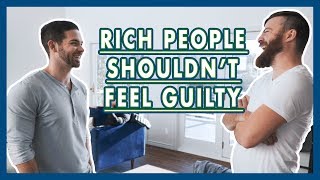
Transcript of a conversation between Ryan Daniel Moran and John Crestani about entrepreneurship, wealth, guilt, and the importance of who you surround yourself with. Moran argues wealth need not induce guilt if earned by producing value, shares his upbringing and early work history, discusses founding the Capitalism Conference to access and learn from established 'empire builders' (e.g., Gary Vaynerchuk, Robert Herjavec, Grant Cardone), and emphasizes that changing your tribe reshapes habits, thinking, and opportunities.
Chapters
You can be lazy as hell and be rich and you still don't have to feel guilty if you've done that by producing other things that other people voluntarily want.
So, okay, so basically now you're a big proponent of capital. So like little. Yeah, a little bit. You only founded the Capitalism Conference, right?
Now.
I like your shirts, which are like Democrat, Republican.
Yeah, because I'll debate anybody on that topic. I mean, people who think that rich people are greedy, people who think that like capitalism's evil, that there's a fixed amount. Come at me, bro.
You bring your sword, I'll bring my data.
The thing is, you just gotta take things seriously. That's the secret to business. You just gotta be serious. You just gotta take things seriously. Quit around.
I wanna do this interview being super serious but doing inappropriate things the whole time.
God.
Oh my God.
Okay, how, how would you feel about that? Would that be cool? No, I think that'd be fine.
How can you not feel guilty?
How do you not feel guilty?
No, you. I'm not talking to me. Well, I was talking to me when you were me. That's a different.
Like, how do I not feel guilty.
About the fact that maybe. How was your. I guess, how did you grow up? Did you grow up. Would you say you grew up privileged? Did you have a lot of problems in becoming successful?
Is the nut that you're trying to crack if I overcame things or is the nut that you're trying to crack?
I want to know if you're situation becoming successful.
Oh man.
I'll say my own example. It was easy. I didn't have any dependence. I was on my own. I grew up from, you know, I grew up in a fairly wealthy family.
You know, I always did well in school. I didn't have a really hard job.
So you. So, so you. So do you, you have some entrepreneurial guilt?
No, I did. Who's who's being interviewed here? Who's who's being interviewed now? Or maybe I'm playing devil's advocate because I'm trying to get some interesting shit out of you. Who knows? But, but I want to hear your story. I'm giving you my story as an example. Wasn't that hard?
I want to hear yours so we.
Can talk about mine later.
Yeah, my dad was a school teacher. My mom was a stay at home mom until they split when I was like 11 or 12. And from that point on we run reduced lunch programs. It's like government subsidized lunch programs at 12 years old. Basically learned I gotta go figure out my own stuff. No one was going to take care of me. No one was going to help me. It was on me. Which, by the way, I discovered later was a really unhealthy belief for the long term, but it made me. But it made me very personally responsible in the short term. Interesting. Which was a good strategy as a teenager. Really holds you back when you're an adult if you believe that it's all on your shoulders. But what that forced me to do was figure out how I wanted my life to be and what I wanted out of it. And we spend this. We spend so much energy today trying to insulate ourselves from hard times. But hard times are things that actually build us. And responsibility doesn't go away just because you hand it off to someone else. Like the responsibility of you to control and be autonomous over your own life, that is their infinite. Until you die, until you're gone. And we try to stack the deck to insulate ourselves from hardship or doing the hard work of responsibility, but it's still there. And you can either trade that and be less free or you can create your own life. So. So for me, at 12, I basically became an adult. I started working at 12.
What do you do?
I umpired. I was a janitor at my church.
Oh, shit.
I, at 15, then started working at Dunkin Donuts and Baskin Robbins. 14 or 15, I think you had to be 15 to get a work permit. So I was 15. In fact, I remember this kid in the computer lab. His name was Scott. This was when AOL Instant messenger was still a thing. He was messaging with somebody and he read it out loud. Hey, do you want to get together after school today? He was a girl that he was. He was. He was dating in high school. And I look, I'm like, who the hell has time to hang out after school? I didn't have an after school. I went and worked and then I studied and then I slept when I could and did that through high school and then started my first business at 18 now. But now, here's the good side, is that made me a very hard worker. The downside made me very dark and lonely for a very long time. Suicidal depression, feeling like everything was on my shoulders. An incredible darkness. And that's another challenge that had to be overcome. And overcoming those things is how you become the person that you are to be. That's how you uncover everything that you are. And so we spend so much energy trying to hide from that. In reality, that is the path through. We've all got it We've all got junk. You've got junk, I've got junk, You've got junk. We've all got it.
Yeah. Shinichi's got.
And so the idea that we can use that as an excuse, like. Yes, it's a variable and it's also part of your uniqueness and value is unique. Inherently unique. So it's also the thing that makes you great.
Okay, that's. It sounds. Basically, you've done a lot of hard work. You've just constantly been working. So you feel. No, I mean, it's. I would, I would imagine it's impossible to feel guilt if you've known you've always worked since you were 12.
Well, so these are, these are not correlated ideas. The, the idea of, of working hard and not feeling guilty. These are separate ideas.
Okay.
Like you, you can be lazy as hell and be rich and you still don't have to feel guilty. If you've done that by producing other things that other people voluntarily want, there is no guilt associated with that. In fact, I probably feel more guilt about working too hard than I do about the money that's in the bank.
Really?
Yeah.
That's good.
Yeah. Because there's an opportunity cost to. How much you work. I am now in my 30s, I unlearning all of the hard work that I did as a teenager and in my 20s.
It's funny, my family's from Indiana, Indiana and Illinois, so I have that midwestern, like, it's insane. I don't know. My parents taught me to be so hard working and it's just like if you're not working hard, you're doing something wrong.
Yeah, that served them up to a certain point. Doesn't mean it has to serve you. What part of Indiana?
Portage, the North Steel Mills.
Marion, Indiana. Lived there for four years. Oh, really? Yeah. Anyway, go on.
Whatever, whatever.
Indiana, whatever. Indiana.
Like uncles or like Jim Bob and like, you know, it's just really. My grandpa.
I love Indiana.
My dad was little Bobo.
I loved. I loved the cornfields, man.
Love Indiana.
So, okay, so basically now you're a big proponent of capital. So like a little. Yeah, a little bit. You only founded the Capitalism Conference right now. Why.
Right.
And I remember you saying like, why are you. Why is it so important?
There's lots of strategies you've used to, you know, become wealthy and you've taught some of your stuff and I teach people how to. How they can start Internet businesses and yada, yada, yada. But you've started Capitalism Conference. Not to teach a specific Way to start a business, but as a way to connecting people and helping, you know, helping entrepreneurs or aspiring entrepreneurs. What was. What was the point. Point of it? Because you. You'd been talking about this a little bit earlier, and I actually think it's really intriguing and would like to hear more about the impetus.
Yeah, so the impetus was realizing that if I really wanted to go where I wanted to go, which is my ultimate goal is to buy the Cleveland.
Indians, which is so weird. He's serious, by the way.
He's so weird. What's weird about buying the Cleveland Indians? Get out of my house.
So.
So you have never loved anything, John. You don't know what love is. So I can tell you what love is if you want to know later.
Stop.
So cameras are rolling.
Where are we going with this?
I wanted to hear what the impetus. Right.
So midget porn, which is not a big mutt.
It's not like they're. I just don't think there's a ton of money in events. Like.
Oh, there's not. No, there's shit money in events.
It's not.
Right. So, no, the impetus was this. The impetus was this. I have this goal right here. And in our world of talking about Internet businesses, like, that's great up until a certain point. And when you get that, you say, okay, well, who's, like, building a real business?
I have money. I have a lake house. I have another house. I have.
So, no, no, I own all of this because of what I did at the capitalism conference. So. So I had built.
Oh, interesting.
I had done the Internet thing, right? You can make $10,000 a month in your underwear or whatever. Okay, great. I wanted more out of life. Right. Well, then what. What do you. What do you. What. What's your. What are you after? What do you. What's. What matters to you? What are you building that has a legacy to it? And I didn't even know how to ask those questions of myself. So in order for me to.
Why not?
Because there was no one around me asking those questions. Like, you are who you surround yourself with. We are tribal beings.
Who were you surrounded with? Are you living in Cleveland at the time? Are you living out.
I was living here in Austin.
And who. Who did you.
Other Internet entrepreneurs who talk about hustle and grind and passive income. Right. All great things. Okay. But I wanted to play a bigger game, okay? And so to play a bigger game, I needed to get around different people. I didn't have access to those people. I did not have them. So I just paid Them.
Beautiful. Beautiful. What money can do.
I found out, actually this was all of my retained earnings at the time. All of my retained earnings I put onto the table.
Are you serious?
All of it? I rolled all the dice on my first event.
You're freaking crazy.
I am not crazy.
Are you serious?
So here's. This was my. It was not nuts. And here's why.
So.
So don't ever put on.
Yes, so. So I would say it is a good investment to roll all your dice on a mentor. I just knew I couldn't pay the mentorship fee of the people I wanted to be around. But I could get them for a day and get them for one day to all fly into Texas. And if I spent three days with those people and invited other people to join, maybe I could help mitigate the costs.
And what are the booking fees of some of these people? I'd imagine 25 to 250k.
Yeah, it's a good range.
That's a good range.
Yeah. Yeah. So I was spending hundreds of thousands of dollars on just to get these people.
Yeah, it's not. It's not cheap.
And that does not factor in. And then we fed all the attendees and had all the stuff. Right, right. So, yeah, this is not. This was not liability. This was not a business to me. This was an investment in myself.
That's why I think it's crazy, but it's interesting. So.
So. So what happened then was over the next couple years, I built a company to $10 million and sold it, inspiring a bunch of entrepreneurs around the world. And the reason was because I started thinking differently. I started putting together the thought patterns of the sharks on Shark Tank and the Gary Vaynerchuk and the people who ran big enterprises. And as a result of doing that, your brain just fires differently. We can all think of a time where we met someone and everything changed 100%. There was a person. One of my buddies, Jeff Wood, says if you've hit a plateau, it's cause you're missing a person, not a piece of information. Because how many times do you go watch a YouTube video and then you're like, that was good information. What do I do now? It just becomes a longer to do list. But when you meet a person, you change.
And you're talking physically, right?
Well, yeah, I mean, biologically we change. We literally change by like, literally.
This is some trippy stuff right here. So if you're. If an alpha male dies.
The second in line, that usually becomes alpha male. And there's a testosterone increase that literally Prepares that person to become the alpha in humans. In humans. In humans. So how do we.
How does that. Like Tony Robbins dies and I'm just gonna get a. Whoever somebody else.
If he had a second in command. If he had a second in command, if Jericho, his son took over, there would be a physiological change in him of now leading that empire.
That's totally.
Isn't that crazy? And biologically, we're wired to be like predisposition for certain fit in the tribe. So it is. You change and you change your environment. It is a both. And so all this to say who you surround yourself physiologically changes you. Biologically physiologically changes you. And it changes what you think about. It changes what you normalize. It changes what your habits are. Everything is who it's not what, it's not how. Sometimes it's when, but it's always who that. Like the, the hack. Like the hack to making a million dollars is hanging out with people who make a million dollars.
That's the hack. Like, yeah, we could go through like these algorithms and like systems and all this, but you are not likely to force yourself to.
Actually will yourself into doing those things. But if you are surrounded by people to where that is normal and natural, you just become that person. You have to. The tribe says you have to. So I every year just book. The people that I'm scared of are the people that challenge me, people that make me play a different game. And I bring them into Texas and I put it all on the line for the capitalism conference. Right. I make my money in other businesses, capitalism conferences. I do for me and for my people in order to play a different game. And that's why my life has changed so much in the few years that I've been doing this and why everybody who goes to that says the same thing.
Interesting. And dude, that. That is all what's funny. What's funny about this is it seems so easy. Like he's like, oh, this is a hack. Oh, just. Just surround yourself with people who are like where you want to be or like he's saying it's a hack, but it's like it's a. It's actually a real hack. And I. I'm gonna just kind of parrot this. My really quick origin story is I got. I was working for an ad agency and they. This guy, Chris Daigle, who's consultant for a. You know.
Yeah.
So he invited me to this. The. The secret. The secret society mastermind group, which is this guy Neil. This author Neil Strauss group that it was like 50 or $100,000 a year. And they were having a get together at. They do once or twice a year at the Roosevelt Hotel in Hollywood. They rented out the whole second floor. There's a bowling alley, lounge. You know, all this stuff, all these douchebags, like uber rich douchebag, super rich marketers. Who else can afford $100,000 a year for this? Like really?
That's. Heck, you got to be a douche to be successful.
Not a. Not a what. But you know what? You know what I mean, what? It was Neil Strauss's group, so I understand, but the point is I was there and I met. I met the guy who would. It was. And I was, I was. I felt imposter syndrome.
Yeah.
Oh my God. Every person I'm talking to, they're like, what do you do? I'm like, oh, I do, I manage. I'm a pay per click manager. Like analyst. Like, it was crazy. But from there I got it. I got one client which ended up paying me $50,000 a month. They put me, they said, oh, I'll give you 10,000amonth or a percent of the revenue you create for the company. And that ended up becoming $50,000 a month deal that lasted for years. And that was my start, but it was putting myself in this room. I was like, holy, I gotta get like, how does this it so. Dude, you're right though. The hack goes, goes on. Now I want to challenge you and I want to say, okay, that's cool. You. It takes three months of freaking work to put on a capitalist. Isn't. Aren't there easier ways to put yourself. I mean, couldn't you just join an investment group and probably, you know, couldn't you surround yourself with grizzled old deca millionaires?
Probably. I wanted a very specific group of people when I started doing this.
Self help people. I mean, couldn't you just do this?
Oh, maybe, maybe.
I mean, didn't you. Did you not think about. You're saying like, you know, like, oh.
Like obviously I wanted all of those people in one room. You wanted specific people in. In the same room at the same time. That's what I want.
Why so specific? I mean, because you probably could have got the same net worth or the same people in the personal development industry. Join Joe Polish's mastermind or you join Dan Kennedy. You pay him 50k.
Yeah, well, first of all, those are two marketers. And I didn't want to hang out with other marketers. I wanted to be around business people. I want to be around empire builders. And so I wanted to be around specific people.
Who are those specific people and why was it so important to have them in the same.
Yeah, sure. So rather than join a.
So three people that I booked for year one were Gary Vaynerchuk, Robert Herjavec from Shark Tank, and Grant Cardone.
So I'll explain why now. I could tell you my personal feelings about all of them if you're curious another time, but I've talked about that publicly anyway.
Yeah, tell me why and then tell.
Me things you learn. You can Google my name and Grant Cardone for some fun stories.
Got it.
So those three specifically, here's why. Gary Vaynerchuk has a similar goal of owning a major league or a major sports franchise. He's 10 years ahead of me, so I want to find out how he thinks differently.
He's 10 years ahead of you.
He's 10 years ahead of me in terms of net worth and following at that time. So I want to know, okay, how does he think differently than me? So if I spend a day with him, I think he'll be able to get 80% of how we're different. I want to know how he wants, how he plans to own the New York Jets. I want to know what he focuses on in order to build that. What's the strategy that he plans to do? I'd never heard him talk about it before. Now he talks about it publicly. But I think that was the first time I booked Robert Herjavec because Robert Herjavec is following a model that I'm really envious of, that I want to build on my route to owning the Cleveland Indians.
That's the physical product.
That is. That is having a stake in a company and having a platform that makes that company grow. The whole reason why I teach this stuff is because my model is I want to have a stake in a business, and I want to impact that business by the platform that we build@capitalism.com Interesting. And then.
So you want it, capitalism.com to be the shark tank of physical products.
Correct? Yes.
Okay.
And. And Grant Cardone claimed to own hundreds of millions of dollars with real estate. Right.
He's also a marketer.
And. And so. And so if that had been true, then that would have been a nice down payment on the Cleveland Indians. And he was 30 years older than me. Well, if I can reverse engineer that, start doing that now, that would be. That'd be really interesting. So those are the three things I learned from those specific people.
Now, what's the Big.
And we've been going on a little while over 20 minutes or something.
Yeah.
What is the biggest. I don't leave the audience. What is the big thing that you learned from this overall? And not. Not, you know, not the. I know you did interviews with all these people or whatnot, but what is what I'd say. What was the big personal thing that you took away from this that maybe you haven't told anybody about or. I don't know. But what is the big overall thing? Where did. Did it change your direct.
Because that's a here's, you know, here's commitment.
Here is moment where you bring these people together.
Here's the thing that I've discovered that I've never told anybody. Yeah, we've all got insecurities, imposter syndrome, junk, things that hold us back, stories, problems, reasons why we couldn't. We've all got it, all of them. So Grant, regardless of my personal interactions with him, was an addict for years, overcame it, channeled that into business. This is wildly successful. Now. That's fucking admirable.
Gary immigrant from another country, started with nothing. Nothing. And built everything that he has from absolutely nothing. So you realize that we've all got junk and reasons why we could make them excuses. I'm this gender. I am this ethnicity. I had this setback. We've all got it.
Sure.
Some people overcome it.
Sure.
And that's a result of who you become, and that is usually the result of some genetic makeup DNA. But it's mostly things that are within your control. What you listen to, who you hang out with, the books you read, the habits that you practice, and the way that you fastlane. All of that is by changing who you hang out with. That's. That's. That's. That's it. That's everything.
That's badass.
Thanks. I like you, too, so much.
Dude. Awesome.
Thanks for having me over, John.
Dude, you know. You know my lake house. Is there anything else you want to.
Here are my lake house. Here in my lake house. Just bought this new John Crestani here.
Is there. Is there anything else? Buy my stuff and subscribe to my podcast@capitalism.com Cool, dude.
Thank you. So, dude, thanks for having me, man. This is fun. And I love. I love this sort of stuff.
I love this, and I.
This is awesome.
And I love your beard.
I didn't put the oil on today, but I'm happy you noticed. All right, guys.
And scene.
Boom.
John Crestani. Here.
It.







