
Talent Stack Your Way To Success : How The Best Entrepreneurs Overcome Challenges
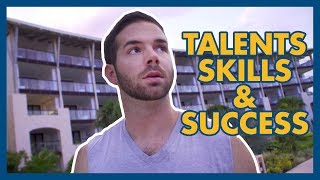
Ryan Daniel Moran explains how combining several above-average skills like copywriting, email marketing, and communication creates unique market value. He argues that surrounding yourself with complementary teammates matters more than product or timing, and that iteration and sucking longer than others is part of the process.
Chapters
Everything comes down to who, not what, not how. It's not even when. It's just who. Do you guys know if they serve alcohol at this place?
No, man.
I heard a rumor. No alcohol for you, brother.
What's up, gents?
Ryan, how's it going?
Good to see you.
Just getting back from the gym again?
No, no, I did, like, two sets and felt really nauseous and then went and laid down like a sissy.
But, you know, maybe what you need is some alcohol. Maybe. All I know is. All I know is my wife decides to come down and watch our session and then decides to stay and watches you, and she's writing notes about what I'm supposed to do. Thanks to watching Ryan.
Hey, you're welcome. What we went for today, since we're partying on the beach, decided to go business. Up top. Party on the bottom. This way, if I catch anybody looking down below, I can go, hey, I'm up here.
Thanks a lot. I appreciate you, man.
That's right.
It was really good stuff.
I'm like, good.
I'm glad you joined.
That's right. We should do. We should definitely be doing that.
I'm glad you enjoyed it.
Okay, that.
That keystroke completes the first draft to the first sales letter that I have written in, like, six years. I cut my teeth. I cut my. I got my chops, if you will, in the entrepreneurial world, in the info product world, writing sales letters.
And I was never great at it, actually. I was never, like.
An expert copywriter or a great info marketer, but I knew enough to be okay. And I knew enough about email marketing to be okay. I knew enough about affiliate marketing to be okay. Scott Adams is a blogger and a podcaster, a writer. He calls this the talent stack. Taking things that you're better than average at and merging them together.
That talent stack was why I was able to be a great physical products entrepreneur and a good trainer for other physical products entrepreneurs. And in the last year or so since I sold my last company, I've wanted to go back and exercise my old muscles and see if they're still strong, see if I can make them stronger, see if I could enhance that talent stuff. So you. When you're watching this, you don't have to be the best in the world at anything. You need to be better than average at a couple things and to get better at them over time. And that talent stack will come together to support some business. There is no perfect business model out there. There's just you and other people and you bringing Your talents and your talent stacks together to provide unique value in the marketplace. For me, what that looks like right now is testing in the marketplace, my skill set to see if it is, if it will take and to see if the new ideas that we start to roll out@Capitalism.com create the impact that I believe they can have for other customers. And so we're testing, we're trying new things. Sometimes I feel like I'm, I'm starting over. I'm like I'm starting to flex old muscles again and it's hard and it's difficult and I have to be okay with losses and things not going the way that I want. I still feel like when I get into a room that I'm not the smartest person in the room. I, I just might be smarter in one area than someone else and smarter in another area than somebody else. And when I combine those.
That'S when I have a unique skill set. That's when I have something that I can offer in the marketplace. So you are not like the thing you do right now is going to be the worst thing you ever do. Hopefully you are not going to be perfectly prepared for everything you do. You flex a muscle and you get better and then you flex, flex it more and you get better.
It's why.
It'S why it can take three to five products in a physical products brand to hit the million or to hit the multi million. And in this case I'm testing my old copywriting skills to see if what I have developed over the last six years since I put an offer on the marketplace will take. And we're gonna find out. And if not, we'll go back and we'll test. We go back and we test and we fail and we get back up and we keep going until I have my next eight figure business, which is what is going to happen. Because I am willing to suck longer than anybody else. And if you are not willing to suck at something until you're good at it, then it's not your talent stack, it's not your skill set, move on to the next one. What are you willing to be bad at? For long enough because you enjoy the process and you're committed to the result for long enough to see if it is part of your talent stack. And when that could combine gets combined with the next talent or the next person, one of those things hits. Most people are looking for the hack. They're looking for the thing you are the hack. Your talent skill, your talent set. That's the hack. Flexing that muscle in the marketplace by putting things out there over and over until you have something that wins. That's how you win. That's how you succeed. There is no way around that.
I was thinking this week, actually just yesterday, I was thinking last night, I was chatting with somebody who just had a really complimentary skill set. To me, it made me realize how much you are held back or you are helped by who you surround yourself with. Everything comes down to who, not what, not how. It's not even when. It's just who. I mean.
I have had business partners where we work so flawlessly well together that bringing an idea to fruition is like. It's like magic. It's like alchemy. And then I've had partners where we're so similar that we just get into each other's way. You might have experienced this in relationships or business partners, but when you meet the right people around you, everything is easy. When it's right, it's easy. And one of the greatest lessons that I've learned in the last year was that your team and who you surround yourself determines if you're successful or not. And it's willing to pay more money to bring on the right team members because it costs you more in the long run to have bad help. Yes, you need a great product. Yes, you need to have your timing right. Yes, you need to have enough funding in order to bring it to market. But that is far and away secondary to the people around you and their complementary skill sets and talent stacks of making that product and that project successful. Without that, it's doomed. I mean, think about this for a second. Somebody brought me an idea recently where they're like, hey, look, here's the market research I've got on this idea. And it was bang on. It was like, big market, right timing, good product. And I was like, all right, so.
What are your sales numbers? I don't have them. I don't have any. Okay, well, now I know I can't bet on you because you can't even take the risk of developing a prototype. Great idea, great market, great timing. But you are ultimately who are going to drive this. And I can't bet on you. It's all people. It's all people. Your happiness is people. Your accountability is people. Your team is people. Product development is people. Your customers are people. It's all, all people. It's not what or how or when. It is all, all who?
What else is in the Ryan Moran stack?
Oh, I don't know what else is in my stack. Communication speaking. I did that. You know, I did the presentation today with no notes.
I just feel like everybody can do that. Of course, nobody can do that. You know, Dan Sullivan calls it the unique ability. You have skills that you are good at that you just assume everybody's good at. And for some people, that's video games. Seriously, plenty of people make absurd amounts of money playing video games. For some people, that is networking. Of course everybody can network. No, they cannot. No, they cannot. The things that are usually our talents are the things that we enjoy the most. So we tend because we got some feedback at some place, people told us we were good. So we enjoyed them because we got love and feedback from that. For me, it's writing, it's communicating, it's coming up with ideas. And when I can communicate ideas in a written or spoken way, my talents stack tends to come out. And so I need to come. I need to surround myself with people of a different talent stack that complement that. That's what a company is. It's people coming together to combine their talents to create unique value. The unique part is where most people just, they forget like they're looking for the hack. They're not looking to create unique value. But if it's not unique value, then there's no value.
And you're unique. You have unique value because you have a unique skill set and talent stack from everybody else do apply that to the marketplace and combine it with other people. That's how you win.
What kind of a fruit tree is that?







