
The 3 Steps To Launching Your $1M Brand
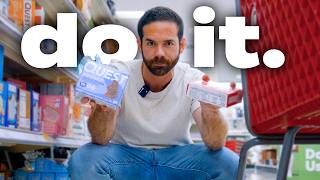
Ryan Daniel Moran breaks down how to build a million-dollar brand: plan a product line, not just one item; find a real point of difference; and build an audience ready to buy before you launch. He uses Dr. Squatch and Quest as examples and argues Amazon is the easiest place to start.
Chapters
It's not the first product that will determine if you've got a million dollar idea. It will be the additional products that you launch and the repeat customers that come back. What's up today? I'm going to show you some examples of brands that launched and crushed it out of the park. We're going to break down their strategy for how they got attention, how they got people ready to buy from them before they even have product ready for sale. I'm also going to show you a couple, couple of examples that didn't go so well so that you can learn from their mistakes. If you do these three things before you launch, before you spend any money to bring the product idea to life, it's pretty much a guarantee that it's gonna be successful. That doesn't necessarily mean it's gonna be a multi million dollar business that sells for hundreds of millions of dollars. But you stack the deck in your favor to make sure that. You know what's funny is that's gonna be the example later of the one that didn't do the three things and it failed. So. So that was kind of serendipitous that it fell. I'm looking for a book. This is my Pinewood Derby cup. Ow. This is my baseball card collection. We're gonna find a copy, Alex. I think I have one upstairs.
Well, shit. Ha ha. Oh look, it was right where we started. It was literally three feet from where we started the video. Alex, the irony. But you came out of the closet. That's all that matters.
I am not a homosexual. I'm a straight man. I'm a very available, disease free straight man. Fairly successful, a bit awkward, funny. You alright? So this book is a classic. I make clients and students read this. It's called Ready, Fire, Aim. And basically what the author of this book argues is that you should launch one product in the marketplace just to get customers. And once you get customers, they will buy other products later. Seems really simple, right? But the takeaway here is that your million dollar idea is not necessarily the first product that you bring to market. It may be the second or third product that you bring to market. So you should never ever, ever start a business with just one product idea. This is a really good example. We're about to run to the store to show you some other examples. But this is one of my brands and that I personally own. And this product, when we launched it, it did about 25 sales a day. That's pretty good. That's not bad. But it's not a million dollar product. It became a million dollar product later, after we launched other products because some people bought the second product and then discovered that we had something else for sale. Or someone saw an influencer, talk about product number three, and they didn't like that product, but they looked up the brand and they saw that we had a really good fat burner. It just meant that it needed time and other forms of exposure that come from launching additional products. Judge the business idea based on the group of products that you're going to bring to market, and you know you've got a winner when you can name at least four products that that brand will sell to the same customer. So, Ryan, what do you do now that you are a multimillionaire and you're. You got so much muscle and you got all these followers? What do you do to find joy and fulfillment? I go to Target, Mother. What else? What better joy could there be than going to Target? And looking at the brands that are now emerging, nothing. Nothing could be better than that. This is why I'm alone.
Well, that and probably a bunch of, like, attachment issues with parents and, I don't know, like, maybe a little bit of high egotism or narcissism. Is that what the Ayahuasca told you? No, no, no, no, no. The Ayahuasca told me something very different. All right, so this, this product right here, these are blue blocker glasses, basically blocks blue light waves that prevent your brain from making melatonin. It's science. It's something your small brain couldn't understand. It's a great product. And they sold a lot of. Of these glasses, and I love these guys. I actually sat on the board of this company. I'm a 1% owner. I believe in what they were doing, but they never defined up front who their target market was going to be. They never were able to define what those additional products could be sold after somebody bought blue blocker sunglasses. So they really struggled to scale beyond the first million or so. Now, the thing is, if they had just said, all right, we're a, we're a light company. We block blue light, we sell red light devices, we sell lighting in your home that is optimized for whatever effect, that would have been a great brand. They also could have said, we're a sleep company, so we're going to sell mattresses and melatonin supplements, that would have done really well, too. But because they never defined it up front, they struggled to break through after this one product. Can we buy an air fryer while we're here? I Don't know. Should we do it? We could do it. We could do it. We could buy an air fryer while we're here. We could do it live on YouTube and say why did I choose that air fryer? What features and benefits stood out to me? Who had the best marketing on the shelves of Target for my air fryer? Perfect example is Dr. Squatch. So Dr. Squatch came to market with natural soap and the targeted men. Men who didn't want to put chemicals on their skin. And they dominated with this product and they got that customer base. But they really started to become a big brand when they said, well, if a man who doesn't want to put chemicals on their skin will buy soap, he'll also buy shampoo and deodorant and shave butter and conditioner. And now they can launch whatever they want because they have the same customer. They can launch multiple products to the same customer. So don't discount your idea if the one product doesn't take off right away. Dr. Squatch really became a household brand when they launched multiple products and now you see them everywhere. Now this brand right here, this is the rocks personal care brand, Papatouille. And you can see they have deodorants and body washes and soap and all of these different products. He didn't come out and say hey, I'm launching a deodorant or I'm launching a body wash. He launched a personal care brand. Now he can launch all the products at the same time because it's the rock. He's got.
Trillions of followers and more money than God so he can do that kind of stuff. You are not the rock. I am not the rock. Although obviously we get mistaken for each other since we look so much alike. He has money and attention to launch lots of products at the same time. You and I don't. So a better strategy for bootstrap entrepreneurs is to get one product to get consistent sales from one core type of person and then you launch the additional products. That's how you build a million dollar brand. Giant air fryer got 14 functions.
French doors. I think, I think we have to buy it. Will this air fryer get me laid?
Totally a write off. Thanks Trump.
Chill. Be cool. Act cool.
So here's what's happening to me right now. Okay, here's a beautiful example. I bought Quest years ago because they had a good protein bar. That was the first product they brought to market. Now they have a new, new type of bar and I'm sitting here checking out. They got like cheez its. And.
They have the peanut butter cups. Like, I want to buy all their products because I had good experience with one. So the fact that I bought one product makes me come back and want to buy all of the other products because I'm their target market. So the takeaway here is that we want to know that we've got options for what we're going to launch after we get this group of customers. Because even if we don't launch with multiple products, and you shouldn't knowing what your products are going to be give you the indication that you can come out with a million dollar brand. There are going to be exceptions to, to every rule, and this is the exception of multiple products. Native deodorant launched in 2015, and within a year and a half, they were sold for $100 million. They had one product and it was deodorant. And the founder Moyes even said people were telling us we need to launch body wash and toothpaste and all this stuff. And we said, no, we're gonna stick with what we're good at. And that's deodorant. Native had great timing. They were heavy in Facebook ads before Facebook ads were expensive. They were the first natural deodorant of its kind. So they had a lot of things going for them. This is the exception to the rule. And they sold for $100 million, not because of how profitable they were, not because of how good their product was, but because the buyer knew that they could launch additional products and make their margin. In fact, some of them are right over there on the shelf. So they sold to a big parent company that they knew could develop additional products to build upon the rest of the personal care line. So even this example, although it did really well with just one product, was valuable because there were other products that would be sold in the future. So the first thing you need is a group of products before you launch. The second thing you need is something that's different. Different is defined as not something else. So Legendary Foods is not pop Tarts. That's all Legendary Foods has crushed. Because they're different in the fact that this is a high protein toaster pastry. The fact that they can say we're not filled with sugar makes them different. So what are you not? That's how we identify our differentiator. And that's a really good indication that our first product or our brand is going to take off pretty quickly. And look here, Legendary Foods now has chips and all kinds of other stuff too. They're starting to follow the Formula.
Dude, dude, did you see this? This is a sticky roll from Legendary.
This is happening to me right now. I mean look, I've bought their toaster patriots in the past and now I see that they have a new product. I wasn't looking for a protein sweet roll, but. But now that I've bought from this brand in the past, I'm totally gonna buy the caramel sticky bun protein sweet roll. It's totally gonna happen. This is so exciting. We came here to shoot a video and I'm probably gonna spend $500 at Target today. Look at, look at Quest. Look at Quest's new protein. This is to compete with Fairlife. So. Oh, this is so cool. So this is the 45 gram of protein 1. Because FairLife has that, you know, ultra filtered 45 gram of protein 1. This. Yeah, there you go. The ingredient is ultra filtered non fat milk. See, once you have the customer base, you can launch whatever you want. And if one of your competitors comes out with a good idea, you can just mimic it and you've already got the distribution on store shelves or through your email list. Oh God friggin love this stuff. This is so much fun. If you saw the creepy old men that DM me because they think I'm attractive, you would throw up in your mouth. And it's not that I'm anti gay, I'm just anti penis. I don't even like my own so laundry detergent.
Now I know nothing about this brand, Molly's Suds. But you notice how it's different from all of the other stuff that that's on the shelf. So they're safer ingredients for your laundry. So it's not tied, it's not all of the other big box brands. As a result they're getting shelf space. And I would guess that this brand is doing really well. That's enough of a differentiation. It doesn't need to be a big brand new idea or reinventing the wheel. It just needs to be different, not something else. That's how you know that you've segmented enough of the market total launch a product that is going to buy multiple products over time. So you need multiple products and you need something different so that people choose you over everybody else. Looking for Bonza, I kid you not. See, I was looking for Bonza because I wanted to make Mac and cheese out of their high protein pasta. And what do you know, they now have a macaroni and cheese which just makes sense because since the customer already buys the pasta to make Mac and cheese, they might as well just make Mac and cheese. Now, I would never buy this as a first product, but because I'm already a customer and I already use it for Mac and cheese, makes all the sense in the world for them to do this. God, I love marketing. You want me to leave so you can do your part of the video, don't you? No, I'm not going to do a part of the video. I don't. I'm not in the videos, Ryan. I'm never in the videos.
I lied. I'm in these. Mother show up. I'm like, hey, man, we're gonna do these three things. It's been 45 minutes. We are still here. We're probably gonna be here for another hour. Nothing's going on. Just looking at Mac and cheese. An hour. An hour. This is actually new. I did not know this brand was in Target. This, this is Ben and Camille. They came from our community. They did a great job, had a great business, sold. I think it was a nine figure exit. They did awesome. Congratulations guys. Did not know that they were in Target, but this is a really good example of a brand that just dominated on one place and that was Amazon.com and because of their domination on Amazon, now a retail store pick them up and say, you've already proven that you can take sales so let's give you a shot on retail shelves. And here they are, really, really good example. Here's. Here's another great example of just being a little bit different. Pretty litter. You're seeing this everywhere. Multi, multi million dollar business. And what's different about it? It changes color according to, I don't know, the ph level of your cat's piss or something. I'm not exactly sure. I don't love my cat that much but because it's just a little bit different, it stands out and people are choosing them because they stand out from the competitors. One brand that is not on the shelf that I predict will be is Alina's brand dudwf, which is a brand for doodle owners. And so her first product is a detangling spray. She's already doing over 100 sales a day. And because that one product has done well, she already knows what product two, three and four are going to be. So she knew what her group of products was going to be up front and she knew that her market would just be doodle owners. Now she can launch multiple products there, but she has one product that is opening the doors for her. And she's just different enough because she's just for doodle owners. And people are choosing her over the competitors. And the reason why she was so successful is because she did the third part right. And that was she got a group of people to know that she existed and they were ready to buy from her on launch day. That's what we're going to talk about next. Oh, we just had the best time, really. Did you know that Quest has new stuff? No, I didn't either. Really. And Legendary Foods has new stuff. We had a great time at Target and I didn't know I needed a new air fryer, but I came to Target and I needed a new air fryer for a while because I drink Alani energy drinks. You know they were just bought by Celsius. Yes. Isn't that wild? Yes, but I don't want them to change the formula or nothing. They won't. But like that's such a wild story. That guy started it as like an Instagram influencer, really. Launch launches this energy drink and then they're acquired by Celsius. Wild billion dollar idea launched on Instagram. There you go. Gotta make money somehow. You know, we had such a great time at Target today. Have a good day, Matty.
Oh, okay. This is living. This is good living. Trying new brands, coming up with business ideas. Like, could there be anything more fun? Is this an overcompensation for how boring my life is? We don't know. But man, do I get my rocks off by looking at new brands. Now in order to have a successful launch, you gotta let people know that you exist. There's no way around it. You have to do basic marketing. You can either pay for exposure or you can earn your exposure. You can pay for it or you can get it organically. Now, if you pay for it, there's a couple ways to do that. For example, Dr. Squatch, who we looked at earlier, they created a funny viral ad that they ran some media to and guess what did really well. I put them on the map, but give them a whole bunch of customers. Now they can launch whatever they want. But then there's this brand that comes from our community. Right Wing Naturals has the same exact type of product, even the same differentiator. It's natural, but speaking to a different person. This is literally or right wing natural company. So they are throwing stones over at the big brands that have, you know, more leftist views and they can run ads saying we're not them. Guess what? They're doing well. They're doing well. There's enough room for lots of players in this space. If you don't come with a big bunch of funding like most of us haven't, the other thing that you could do is you can earn your media. Jocko is Jocko Willink. He does a bunch of podcasts and content and videos. Now, you may never be as big as Jocko, I'll never be as big as Jocko. But you can either create content or you can partner with people who do. And there are ways to get in front of influencers and content creators in a cool way that gets their attention and gives them a reason to talk about your product or your brand. And now here's the thing, guys. You don't need millions of people to know about your stuff. Actually need small amount of people to know that you exist. Which is what I want to teach you next. I have been doing consulting with a new protein line and the protein line is backed by a really big influencer who's breaking into the space and has a unique spin on the market. They're going to do a great job. And here is what I told them to focus on. I said the most profitable thing that you can do to launch this business is to build your email list. And it doesn't matter if it's a few hundred people or if it's hundreds of thousands of people, it will still be the best possible way for you to launch your product and get sales on day one. So this is what I told them. I said you should start talking about your product now, even if it's not ready, even if it's going to be months before you take a sale. Start saying, we're doing this and going in this direction and I want you to be the first person to know about it. We call this a hot list. It's the people who are first in line ready to buy from you even if your product is not ready yet. The more that this person talks about their protein line and the more that they have people waiting to buy from them on day one, the more that we can guarantee that this is going to be successful out of the gate. And you know what? Some people that we work with don't even have their product ready yet. They take pre sales on Kickstarter or their own website and they just tell their customers that it won't be ready for months. But they take the money up front and they fulfill the product later. Oh, by the way, C Bum is not who I'm consulting with. It's just the closest example that I had. If you know what products are going to launch out of the gate, and you have something that's different from everybody else and you have people ready and waiting to buy from you ahead of time. I can virtually guarantee that you're going to have a successful launch. You might even be sitting on $1 million idea. There's only one other thing you need and that's that got to have some way to collect a sale. And unless you're one of the rare exceptions, the best place to take your sales probably Amazon.com why? Because they're better than you. You and I cannot make landing pages that convert better than Amazon listings. We cannot create a platform that has more customers than Amazon and we sure as hell can't create a shipping system that fulfills packages faster than Amazon can. Just put your product on Amazon and take the sale. It's the fastest way to get in business. And, and most people have their credit card there and wanna buy from them anyway. Just do the simple thing and put your product on Amazon. Once you launch, there is something that you should be prepared for and that is you will get a ton of sales out of the gate and then things are gonna die down. You only get to launch one time and then the real work begins. There are things that you need to do after you take your first sale in order to keep that momentum going. Because every single brand launches and then has this decline in sales right after and they wonder, well, what do I do now? That's when the real business building begins. Your business doesn't launch and then take off and make a million dollars. Instead you will launch and that gives you the starting point to begin the work of growing to the first million. So what do you do after you launch? After you take the first sale? You don't need to do it right now, but you should know what's coming. Because after you launch, that is when you need to be actively reaching out to those customers who tried your product for the first time. Because you want to turn those into reviews and raving fans and repeat customers as much as possible. It's not the first product that will determine if you've got a million dollar idea. It will be the additional products that you launch and the repeat customers that come back. And it will also come from those who really love what you got and tell their friends about what you offer. So at the beginning of your business, going all in on creating value for those customers in the form of a wonderful experience and asking them for reviews and feedback is essential to plant the seeds for your million dollar brand. This is a belt from my buddy Jason. And Jason followed all the rules that we talked about in this video. He knew exactly what products he wanted to come out of the gate with. For example, this is a weightlifting belt. But he also knew that he could do straps and other fitness gear. He could do supplements, he could do protein. He now serves the CrossFit market, but he started by selling a weight loss lifting belt. Now he can sell whatever he wants. He was a little bit different. He was the first to do this, this type of strap in the CrossFit space and he built an audience that buys all of his products. He made me this custom belt. You can see right here, it says, I am the millionaire maker. Moran. This means a lot to me. You can tell it's gotten its use as well. But this is a great example of what happens when you look, line up the pieces and you know you've got a million dollar business because you can name what products you're going to launch. Over time, you're a little bit different. You've got people ready and waiting for you before your product is even ready. When you have those pieces in mind, when you can envision what products you'd like to bring to market beyond the first one, and you can think about how they're different, that's how you know that you got a million dollar idea. From there, it's all about getting people to know about who you are and getting them on an email list ready to buy from you. That's how we launch. It's how we get a product into the marketplace and that's how we start the process of getting customers to come back and leave reviews and get repeat buyers. That's where it starts. It's where the real work begins. So if you've got the core products that you want to bring to market, put them down in the comments. My team and I do look at those comments and I do have opinions about what types of products and what brands will work in the marketplace. So if you put your product ideas and where you want to take your dream, we can point you in the right direction to another piece of content or something else that we've created that might help you get off the ground and launch your million dollar idea. We've got hundreds of case studies of people who have done it and we'd love to serve you on your journey. Me, if you found value in today's video, please let me know by including it in your comment below. And I help entrepreneurs build million dollar businesses. If you're on that journey, subscribe to the channel. And I would love to support you. Thank you for being here. I'm Ryan. Daniel Moran with capitalism. Com. I'll see you guys next time. Take care.







