
The $800m Man: Real Estate Deals, Raising Money, and Changing Career Paths
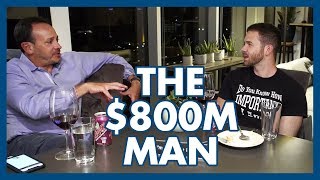
A recorded interview where J.P. Newman recounts his shift from a corporate career (Sony Pictures VP) to real estate investing, growing to roughly $800M under management. He describes early modest wins (a $12,000 flip in Austin), his first equity raise ($800,000 for a ~$2.5M apartment deal), partnering and profit-splitting with operating partners, and a recent high-performing apartment disposition that delivered very large investor returns (reported ~71% annualized). The conversation also covers current market norms (6–7% preferred returns, low cap rates in major metros), team culture, and life lessons (patience, focus on time over money).
Chapters
JP I like to say that you own half of Texas.
It's nice. I appreciate that.
Do you actually own half of Texas?
I don't own half of Texas. I do own a good portfolio. I think half of Texas would be a pretty big portfolio.
Do you talk about how much of a portfolio you have?
My portfolio is about 800 million of real estate under management. Wow.
Hey, does anybody know how that compares to Grant Cardone?
You kind of had a rampant surge upward in terms of, like, in terms of your growth, but you started fairly humbly as, like, doing PowerPoint presentations, raising money. Yeah, tell me about it.
Well, I'm gonna go one step further if it's okay, Ryan. So I actually was a corporate guy. I was living the Dilbert lifestyle. I was.
And I'm picking at this fake cookie that I made.
I was vice president at Sony Pictures and producing animation for kids and Muppets and all kinds of good stuff. It was a wonderful job. Very prestigious. Got to drive into the studio every day. Vice pres. Youngest vice president, like, of a division of 500 people. Very excited. They fly me to the south of France twice a year. Pretty good expense account. It was all good. So I loved it. But I also realized that as much as I loved creating really cool shows, I was stuck in a corporate job. I wasn't. I wasn't Steven Spielberg to be or wasn't like, the next hot producer.
Were you in la?
I was. I worked at. Yeah. And Culver City's at the lot there. It's kind of fun, though. That's a whole separate story. But, you know, balcony deck and the whole thing, it was pretty. It was pretty good.
But so when I got into real estate, at first, being from LA was kind of funny because when once, like, people want to use you to make their projects and then you leave and you say you're a real estate guy, they get. They're like, it looks like this. Like, they just get so bored of you. So to transfer from this perceived high position at a studio, at a movie studio, to now being a real estate finance guy was humble pie for me. Very humble pie. Cause I was running out of money. Like, I was going from a corporate salary. But I knew my dream was to be an entrepreneur. Like, I knew, like, a lot of what I live now was my dream, my goal at 30 years old. Cause Tony Robbins told me I would be a millionaire. You know, I did all the programs. And I was broke at 30. Absolutely broke at 30.
So did you make the transition from LA to going into real estate? At age 30?
Yeah.
So. So what. What would you say to the person who's 30 starting over?
Hang in there. Because.
On it.
So all my friends were younger. They were all, knowing what they seem like they. I perceive that they were on a certain path that they knew. And I was starting with nothing and starting from scratch.
And so that was super humbling. But did you have money in the bank?
No.
You're going from scratch at this point?
Very little.
I.
Very little.
Okay, so I did not know this about your part of the story. When did the first deal come about?
So my first deal came about. I actually flipped a house in Austin, Texas, and I worked my ass off and I made $12,000. And I was thrilled that I had made $12,000. It was the confidence that, hey, maybe I can do this.
And.
It wasn't, you know, nowadays, 12,000 doesn't sound like a lot, but at the time, it was a very, very meaningful that I actually had gone from beginning, middle to end. And that took a long time to get to get to that place.
How long did it take you to flip that?
Eight months of hard work.
Wow.
It was probably. I was probably working for $8 an hour, but it didn't matter because it was symbolic of my new life and some completion, some success in this new direction.
So I've got to hear all about this. Going from, for the first 18 grand in eight months, owning $800 million. What's that?
12,000.
Oh, 12,000. Turning 12,000.
Don't exaggerate.
By 6,000 into a portfolio of $800 million. I want to go all into this, but first, tonight's episode is brought to you by Zevia. Zevia, you're the most delicious calorie free cola. Please send me lots and lots of free stuff. Also, you're kind of due for some new flavors. I mean, seriously. Patty Spence, owner of Zevia. Hey, tag him in this post. Listen, Patty Spence, you're due for some new flavors. I know you did the caffeinated version and stuff, but really, it's been like two years since you had a new flavor. It's time. It's time. Zevia. I can only. I can only buy so many of black cherry. Seriously, Are you a Zevia fan?
I'm not. To be honest, I think it's got Washington stairs, but I don't love the aftertaste after about 30 seconds.
When was the last time you had one?
It's been a while. You know, they.
They redid the whole formula to get rid of the aftertaste.
Did they really.
All right, so, JP, so you started with the first, the first $12,000 profit.
Yeah.
Once you skip a few 99,800 million.
Yeah.
Which I will remind you, is two times the portfolio of Grant Cardone's portfolio. And he's running around 10x in it. JP, the humble mentor of mine, has 2x'd the 10x. Er, thank you very much.
I like that. So here I AM Now, I'm 32, 33, making $6, $8 an hour, flipping homes and all.
Yeah. Were you still flipping for a couple years for like, penny, like pennies? Was there a couple years of like, grit and figuring it out?
So make. I was so faking it. So faking. It's like brokering a deal here, you know? Definitely. There was a lot of, a lot of that going on. And then I, I got my first apartment project and it was a small one and it was really a rough building, but it got me started into something bigger and it was my, my first break.
How did you finance that?
How did I find the deal?
How'd you finance it?
I'm. I'm almost embarrassed to tell you, but I'll tell you guys the truth. I put an ad in the Wall Street Journal and it was kind of a clever ad. It was like, earn, earn above 10% at the time. It was hard to earn great rates. I literally put this ad in. So I was raising money on the phone. I didn't know all that much, but I knew enough about the deal that I had raised. My first raise was $800,000 and I couldn't believe.
Wow.
Took me two and a half months to raise it.
Was that all from the one ad you put it?
And then a couple friends who believed in me, which was really special, by the way, because when you're naked and you've got nothing to fall back on, and a couple of those first friends who put that first 25 or $50,000 in you because they believe in you, you're no longer that executive. They believe in you. It's what we talked about earlier, Ryan. They were, they were buying into who I was. I had no track record going forward. I only had my track record backwards.
How big was the deal?
$800,000 was the equity raise. It's probably a two and a half million dollar.
So what gave you the confidence to go from you're doing measly flips to getting a $2.5 million deal?
I think when you had that second career, there's a little confidence. I mean, I also managed $120 million of films for Sony Pictures. So I think that when you're not that 21 year old and it's kind of a second career, you have a certain confidence. Because I've dealt with a lot of situations.
Were you still scared pantsless?
Of course.
What was scary?
Failing. Failing. And. And at that point, it's not just failing for yourself. Now people are entrusting you with their money. And I've learned in life, there's two things that are the most dangerous things in life. People protect their heart and their money. Right. Those are two things. You just don't mess with people's hearts and. And money. And so I felt this huge obligation to not screw it up. And I've got you. I've been given 800,000 of other people's money, and now I have now gotten married at the altar to this building with the business plan having to make that work.
What was the business plan?
It's pretty simple, actually. It was a pretty rough building. Pretty rough tenants. It was definitely like a rougher building, which is typically where you start from. I don't. These days, I don't do buildings this rough. It was rough.
It was simply to make it better, make the building better and try to change the tenants out and kind of like even what I do to this day, you always build a team. So I knew it took. I mean, one thing I learned, and I think a lot of people forget this. Find your expertise. Don't try to do everything. So I found an operator who was there every single day at that building.
Were they already in place or did you have to go find them?
I hired them and split my profits with them.
Wow. Okay.
I had to, like, I was not gonna be dumb enough. I like, I'm like, it's worth giving up half my pot to make sure this person will be there every day. Incentivize them. It had to work. People gave me their money. It had to work.
And so how'd it work out?
Worked out well. I think I remember the exact return, but it worked out well.
Can you share what the incentive to investors was in those first early deals?
It really was that they got the first 10% of the deal. I do my deals very differently now. It was really simple. And simplicity at that point was key. Again, if you don't understand the deal, you're not going to invest in it. It really was. The first 10% went to the investor, and then they got a certain piece of the upside of the deal.
Okay. So they had essentially a 10% preferred rate of return?
They did.
And then they had a piece of the equity as well.
Yes.
And you got what was left over after that?
After I split it with.
After you split it with the.
Hopefully you don't do that anymore.
So somewhere along the way, you took on a part. Right. Somewhere somewhere along the way, you. In your fund, you put together. Put together a partner. How long into the journey was that?
About five years into the journey. What I found was I had. My partner came to me one day. This was in 08, during the last crash, and he was working for a home builder. He said, jp, can we have lunch? I need your advice. He's like, do you think it's good that I'm working for a home builder? I hate to say it. It could be almost the equivalent to the times we're in now. Everything seemed good, seemed prosperous. I said to him, I know everything seems good. I'm just not feeling it. If I were you, I would find your next job. And he said, what if I work for you? And I said, that's great, except I don't pay. At this point, I'm still startup, but no salary, no benefits. But if you want to come out and help me raise money, here's my platform and here's my vision of where we're going.
Did you have employees at this point?
I had two or three people, but almost everybody who was working for me kind of believed in me, and they were working for a piece of the pie, and I couldn't afford salaries.
Wow.
Yeah. Yeah. Different company. And my other guy who came to me with nothing, he said, jp, I want to hang around you. I'm like, why? He's like, because I think. I think you're onto something. I said, really? I said, I have no money for you either. And he worked for me for a year for free, for nothing. And he's still my partner to this day. I won't tell you what he made this week. I called him this. This week. I called him. I called him.
I said, you had a big deal happen this week, right?
I did. And he gets a piece of everything. And so he had no idea he was making money this week. So I called him and said, hey, by the way, you made.
He made some dollars.
He made a lot of money this week. What a nice day.
But that loyalty. See, I don't mind that people say, well, why would you pay? He literally probably put less than one hour in this deal that he made a big paycheck on. But he was the guy who believed in me when I had nothing. He sat in. He came to the office for nothing, for all upside, and believed in me. So I do not mind. Now it's my joy to give out big checks. It's not even giving. They're earning because they're part of the team. But anyone who took, and I don't think my employees understand that to this day, that the people who said, I'm with J.P. i'm going to risk it all, I'm all in. Those are. The people are making the most money with me now because they were all in early.
Can you give us the cliff notes of the deal that happened this week? You have to share numbers, but sure. You. You saw. You sold an apartment complex or something?
I saw an apartment complex and it was a real estate home run. Here's. Here's. I was telling my kids the calculation. So I bought this property five years ago in Dallas. We're really good at our platforms. We turned it in from a rough property with iffy tenants, security issues, just not cohesive. And we created all these programs for the residents. We really focus on respecting the residents, not just the investors, but making sure everybody, everybody wins.
Do you bring in a property management team?
We do.
And you have like a list of those that you work with in each location?
Yeah. And to this day, Ryan, I still split my pie with an operating partner. So even on this deal, hopefully not 50.
50.
We do what? But there's so much money when you do, when you have the right partner. My operating partner is a Jedi. He's 35, 36 years old now. He's 36. But he's so good at what he does that it's absolutely worth. We've done 15 deals together, and I promise you I'll tell you the numbers if it's. You want me to tell you numbers, I'd love that. Okay. So the investors made. There's. I don't want it too, too nerdy with you. So it depends how you look at it. They made about 71% annually on this.
Hot damn. Okay.
But if I was to simplify, I can tell you 41. And I'll tell you why it's really 71. A real estate home run is when you create so much value in the first three years that the banks want to refinance you and give your investors all their money.
Yeah. Yeah. Okay.
So I gave all. All my investors got their money back two and a half years ago. So imagine this. You get all your money back, and yet you're still an investor with shares in this Building that continues to cash flow and then you sell it for a higher number. So that's why your returns start to hit some silly numbers of 71 over five years, which is actually, if you see you take 71 times five, theoretically it's 350% on their money. And that is a real estate home run. That was that, that's not, that's, that's not the usual.
That's a home run. In cryptocurrency, that's a, that's a home run everywhere.
It is. It's easy to say an irr, but to sustain those kind of numbers over five years is pretty insane.
What numbers were you looking at in order to make it a win?
So the thing I look at mostly is this is going to become advanced. Advanced.
So tell me, like, what cap rates are you looking for? How much equity are you raising? Who finances it? Tell me those types of numbers.
Okay, so right now, if you're borrowing money below 5%, you should be able to, with leverage, you can borrow about 75% from the bank. You should be able to create a 6 to 7% preferred return. If it's a good asset, you know what you're doing, you should be able to do it. Six to seven is the new normal. That was 10% three years ago. It's 6 or 7% today. So to work backwards, that means you're buying something in the low fives for a cap rate. And for any major metro in Texas, it's for fives. In California and Seattle, it's three and four right now.
Yeah, I mean that, that seems five.
Already seems kind of.
It's thin right now. It's, it's thin pickings. My, my, my. Right now, in this part of the cycle, if anybody's promising you more than 10 or 12%, I'd be nervous. I'd really look at it careful. Unless they pulled out some magic genie deal. If it's not a magic genie deal and it's in based in reality, someone said to me, but this guy's promised me 20%. I'm like, you can promise anybody anything to anybody. But the reality for most deals right now, when you do the numbers backwards based on cap rates, based on leverage and based on interest rates, you're looking at a yield of about 10 to 12%. Now, in five years, that number could go up depending on where the economy goes. But if anyone's promising you more, unless there's a situation, I understand. I'd be nervous.
What was it about this deal that you just closed?
It's 94% full. It was built in 95 and it's in Houston. I'm not. It's my first deal. I bought in Houston. So as you know, Houston's been battered, literally, physically, spiritually, and energetically and economically battered.
I don't know. They won the World Series.
They did, they did.
But they also hard to be down on a city that just won the World Series.
J.P. you don't want thousand year floodplains. You don't want FEMA saying, hey, guess what, you broke a record.
But they have a great baseball team. You did.
You did what Noah? You did what Noah's ark was supposed to do. You hit a thousand year floodplain. The one in a thousand year flood and you had it with her.
But did Noah have a great baseball team?
No. Good point. He had animals. He probably needed sluggers.
Houston beats Noah because Houston has a baseball team. And you beat Grant Cardone by 2X. Yes. Somebody put in the comments, that's. Well, if you're 2x the 10x guy, you're the 20x guy.
Holy moly.
Boom. Saws. Boom.
Shots. Fire the gun.
Grant Cardone, what are you gonna do about that? Can't card.
So I like the deal because it was a little above the market for a cap rate. But the biggest thing is it's always full. It's, it's that it's in Houston. Houston is booming. I'm always looking back to the question I got. I'm near roads, I'm within 20 minutes of downtown, near a new tollway, which makes it easy. You don't get stuck in traffic. And economically, if you notice that energy is becoming strong again, there was a housing deficit.
Beautiful clean coal.
Don'T get me started.
When you bought something that was already 94% full, you're paying out a 6 to 7%.
Preferred rate of return on something that has a 5% cap rate. Where do you make money?
It's not like the swinging days of five years ago. You don't make big money on that, but it's called slow and steady. So if you believe in cash, do.
You make it in the appreciation you make.
He makes most of it in the appreciation.
And you make it. You make it in cash flow, but.
Later you make it in cash flow along the way. But it's not the big.
There's enough left on the bone for you to have profit.
Over time.
It increases because as rents increase as.
Okay, yeah, yeah, yeah, this is slow and steady. This is not the time to be drunk on everybody. The Promise. Whether it's the government or the economics.
Is it the time to not be drunk, jp?
Okay, maybe it's the time to be a little buzzed.
And if you're clement, Juan, it's the time to be hydrated. This guy is getting ridiculously hydrated.
Let's boil purple tea.
I need my sleeping time tea. It's time to go to bed.
Have good ginger tea.
Oh, you do have some good ginger tea.
Can I ask, like, you're operating, you mentioned earlier about your operating partners. Like you, before you were, you were hiring operating partners who had a lot of skin in the game and so they were very passionate about the outcome of the business. Today, it almost sounds like you're hiring. Your operating partners are almost management companies because they're, they've now evolved to the point where they're not directly involved anymore themselves. They have people to do.
They're still really involved. Because I have a lot of profit sharing going on at my company. I'm a big believer in profit sharing. I think you take two paths in lives. You decide you want to be a lone wolf and make all the money, or you want to share the pie. And by sharing the pie, you can do. More to the point, why did you give away half when you asked me why did I give away half of it? I still do that all the time. I'm a big believer in and keeping people and sharing and sharing with people, not only because it's the right thing to do, but just from human nature. It keeps everybody feeling like it's the first deal on their tips.
I don't disagree with that. But like by going back to your original partners, and I agree, like from a loyalty perspective, that makes total sense to me. But it seems to me like there's the potential that they've, they've become very wealthy now. And whether or not they still have.
That same incentive, they do. You know why they're passionate about what they do. They love it. They're as hungry now. I mean, to your point, yes, their net worth has changed. Yes. But the, the fire in their belly is still there. That's what makes us great. So that's why we are great operating partners. What's that like?
Not everybody is going to be like that.
My success for Thrive is having the right partners and team around me. It's finding those people that align in everything we've been talking about tonight, having great skill sets with aligned passions, and then also having everybody do what they do best. I've had one consultant said to me, who you're going to meet tomorrow says, just remember, you can't turn a lemon to a lime. Meaning don't try to make people into positions because that's what you need them to be. Make them put them in positions that's aligned with their passion and putting them at their best. And don't try to. Don't try to over train them. Don't try to overcoach them. Use that raw talent. Refine it a little bit, but don't try to. The thought is don't try to over coach people or over polish people. Identify that raw passion and talent and polish a little bit and let them be them.
All right, jp, we're going to wrap up, but one of the things that has kind of inspired me tonight is I had no idea that you had. You weren't even in this game until you were in your early 30s. That's. That's amazing.
And success, you know, big. You know, the success and exponential. My 40s, really where the money started. Really?
You had your big win in your 40s?
Yeah, I mean, I was making, you know, I was building it. And by the time in my late 30s, the platform was built. But all of a sudden you get to enjoy the spoils of your fruit. In my 40s.
That's amazing. What do you know now that you wish you had known when you were 30?
I wish somebody would have told me to be patient. Your ship will come in. Because I felt at 30 that because I had such high expectations of myself at such an early age, I felt like a huge failure. And I wish somebody would just say, trust yourself. It's all going to work out just fine. It's just not your timeline.
J.P. you have a beautiful family. You drive a sweet car. You manage twice the amount of real estate that Grant Cardone does. You seem to have.
A lot of creative free time. You seem really happy. What's the secret to having it all?
When you have the wisdom to not care so much that it's just about the money. And you know that all money is going to ultimately buy you. It's your same mindset. Whatever you're thinking now, good or bad, you add zeros to your bank account. All those baggage, good and bad is with you. So improve your mindset to the mindset that you can have and make sure you know your why. Because when your why is like, for me, my why is my time. My dream early on was to have to live life on my terms, which meant my time. So it's not about the next dollar at this point because as you make money as you know, it gets easier to make more and more money. It's this. This law of the universe of law of attraction. It's absolutely true when it comes to money. So. So what's beyond money? It's time. And then those experiences with relationships with your. Your partner, your people who matter to you. And I love the fact that when you reached out to me, if I can say this on camera, when you reached out and said, I want to go deeper, it's that. That's what ultimately matters. At the end of the day, the money's the money's the toy. So we can go wake surf. Yeah.
Well, speaking of relationships and speaking of enjoying the process, I feel blessed that I get to do things like this with two of my best friends, including the man behind the camera. Three of my best friends. So thank you for hanging out with me. Thanks for drinking some wine. It was me. Thank you, Seamon. Even though your glass is empty.
Click, click, click.
And thank all of you for hanging out with us tonight. Appreciate you. Let's take one more simultaneous sip in honor of Scott Adams.
Scott Adams.







