
The Advice I Didn't Want To Take (That Every Entrepreneur Needs To Hear)
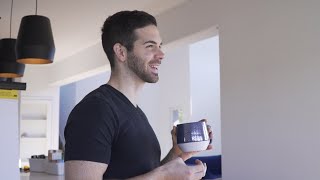
A July 23, 2020 livestream by Ryan Daniel Moran (Capitalism.com) where Ryan greets members, runs community rituals, and announces membership/house news. The core of the video is a mentor’s piece of advice (from Brooke Castillo) about launching new programs to a very small test cohort (10–25 people) rather than scaling immediately, which reframes how Ryan will launch his Capitalism Incubator. The remainder is an extended, practical Q&A with members about product pricing, supplement manufacturing and compliance, audience-building (podcast vs. book), and live stock-market commentary (positions in Home Depot, MasterCard, Microsoft, Procter & Gamble, Facebook, T-Mobile, Visa, silver).
Chapters
Good morning, ladies and germs. It is Thursday, July 23, and it's going to be a good day. It is a good day. We got a room full of people. What's up, Wes? Hello. Nicholas Houston. Good morning. Good to see you guys. Thanks for hanging out with me in the inside the room. Good morning, Drew Hitchcock. Hello, Daniel. Leo. Good morning, Scott Abladinger. Is that your real last name?
That is.
Badass. What's up, Errol? Good to see you. Thanks for hanging out with me again. Good morning, Herb. Good to see you. Happy birthday, Amanda. Alpine. Good morning. Great to see you as always. Say hi to Cleveland for me. If you are watching live, please say hi to the in the chat box. We have a full day today. What's up, Salima? Hello, Rhino. Rhino. I gotta say, Rhino is my favorite person of the day today. Rhino left one of my favorite reviews. On 12 months 1 million that I have received, we passed 91 reviews today, 89 of them, 5 stars. Rhino, yours was one of my favorites. So thank you for that. Good morning, Assam. Good morning, people who are not logged in. Good morning, Onge. Is that your real name? I like you. Good morning, Paul. Good to see you. Good morning, Darius. Good morning, everybody. Hello. Thank you for hanging out with me. Those of you who are watching on YouTube, thanks for subscribing on YouTube. Appreciate it. Good morning, Lil. Good morning, Vikas. Good to see all of you hanging out with me this morning. We have some important shiz to go through today. But there is nothing more important, nothing more important in the world than making the world a better place. And you know how we make the world a better place? We do it with something called the simultaneous sip. So if you've got a cup or a mug or a glass or a chalice or a stein or a tankard or thermos, a vessel of any kind, maybe even a flask. Who knows if you're that kind of person, depends on where in the world you are. But raise it now and join me for the unparalleled pleasure. The thing that makes the stock market better. The thing that grows your business sales. The things that makes every morning start off on the right way. It's a simultaneous sip. Join me now.
Go.
Oh, my goodness. Do you feel that? I mean, Wes, I saw you smile after the simultaneous sip. You know it makes everything better. Hey. I have an announcement to make to all of you who are watching Inside the 1%. This Sunday, we're gonna do an experiment. So this Sunday, we're going to do an experiment. It's Our next Q and A call inside the membership. But we are going to do the first one on Zoom. We're gonna move off of Facebook into it in Zoom. And here's why. Because when all thousand of us are in the same Zoom room and we do a simultaneous sip together, it'll make it even better. So this Sunday, we're gonna experiment and see what it's like to put everybody in the same room on Zoom. So I'll have links for you over the next couple of days. There's a couple more announcements coming out about your membership. That video announcement will be coming out at 1pm today Central. One more announcement. If you live in Austin, Texas, the house I'm sitting in right now went up for sale this morning. I've made a lot of money from this chair right here. I'm sure there's some good juju in this part of the room. Could be the best investment you ever make to sit in the same room where I have put out the vibes of building businesses and investing in profits. All right, so. Good morning, Bram. Good morning. Who else logged in? Good morning, Scott. Good morning, Randy. Hello, Alvin. Hello, Lil. Good to see you. Now, let me tell you guys a quick story. Some advice that I got from a mentor of mine. You might know this mentor as Brooke Castillo. She's been on the podcast a few times. She's become one of my best friends. Brooke gave me some advice that I did not want to hear. It's advice that I was tempted to ignore, but it is advice that I am going to end up taking. And.
Drew says, this is a picture of you on the mug close. This is a picture of the originator of the simultaneous sip. It's Mr. Scott Adams. We should all do a simultaneous sip in honor of Scott Adams. Here we go.
There we go. Thanks for all the work that you do, Scott. So.
Paul says, how are your supplements doing from Swich? So I have the prototype running through my veins right now. I feel great. And we have our second product in development. They are not available for sale yet, but they should be in, like, three or four weeks from now. So I got some advice from a mentor this week. Advice that I didn't want to get, but I think that it will benefit you if you listen to this advice. So some of you know that I have been planning out the Capitalism Incubator. The Capitalism Incubator is going to be our mentoring group for people who are building physical products, brands specifically. And we're taking them from idea to idea to launch in six months. And Then scaling from there for the second half of the six months. And it's going to be a much more in depth experience in anything we've done before. And I wanted to come out of the gate guns a blazing. I wanted to do like 200, 250 people. I wanted to add them all in at one time, put them through the structured experience. And I'm really pumped to be able to do that because what we're putting together is really world class. I'm tapping into my network, I'm tapping into resources to help people be able to build brands that are really exciting. But a mentor gave me advice I didn't want to hear. She said, you need to test this on less than 25 people. And I was like, I don't want to test on less than 25 people. It's already the best thing we've ever done. And she's like, you need to test this on 25 people. You need to test it so that those become case studies that become the people that sell all the other people six months from now. I'm like, I don't want to do that. I want to sell 250 of them. I want to put 250 people in and I'm going to sell a whole bunch. I'm going to come out guns a blazing. And she's like, you need to test this with less than 25 people. She's like, I recommend you do with 10 people. Do with 10 people. And something really interesting happened. She asked me this question. She, Aral says that's advice. My own advice reflected back at me. You might have a point, Arl. So the, the interesting thing that happened next was she asked me this question. She said, she said, how would you sell it if you could only sell it to 10 people instead of 250 people?
And that's when my brain melded. My brain exploded. Because it would be worlds different if I were to sell to 10 people versus 250 people if I could only sell 10 of them, then I would spend most of the sales process saying who shouldn't buy it. I would be much more relaxed in the sales process. I would be looking for my ideal person, not trying to sell it to anyone with money. I'd be thinking about, okay, I can only pick 10 people. So who are the 10 people who are going to love this the most, benefit from this the most and most, and be the most enjoyable to work with? And I went, cool, crap, that's my ideal customer. And it completely reframed my brain. Because if I can sell it that way all the time. Then you end up getting 250 people another time. But if you are trying to sell your product or your service to whoever has money, to whoever will buy, then you end up trying to hawk products rather than sell to the ideal person, the person who will benefit the most. And all of a sudden, all of my stress about it went to zero. My excitement went from three to nine. And so that's what we're going to do. I think we're going to sell it to 25 people instead of 250 people and prove it out and then maybe relaunch it in three to six months. So that's how I'm going to do it. I'm just going to. I'm just going to pick the people that I know are going to get amazing experiences, make it super tight, small and amazing, and then grow it from there.
Bram says I need an emoji for braingasms. All right, but before we go over to those of you who are in the waiting room, let's talk about the stock market. How are we doing today? So I made a couple predictions in the last live and we're going to see how they're doing. So let's see. Let's take a look here.
Maybe.
Here we go. All right. You should be able to see my screen now.
So let's take a look and see how my predictions performed. Nope. Let's do. There we go.
So one prediction that I made was we bought, we bought Home Depot stock live together.
We did that. And we are up by quite a few points here. So we bought it right at 262. It's now at 267. And we bought $5,000. But we bought an option. We didn't buy the stock. We bought an option. So that's up about 20% right now. It's up about a thousand dollars. Since we chatted on Tuesday.
The next one we made, I was talking about MasterCard. I have $5,000 in MasterCard. That's way up. So we bought that right at 300. That's at 316. That's probably going to go to 320. And that's going to be my target. I think I'm selling at 320. And right now we're up about $1200 on that. However, I'm getting my butt kicked on Microsoft.
Because we are way down on this. So this is down about a thousand dollars. I bought it right at. It's right at the level I had now. But the time Premium is going down. So I'm down on Microsoft right at a point now where I need to decide do I. Do I cut my losses or do I hope this bounces here? And today is probably going to be the deciding factor for that. The other one we looked at was Procter and Gamble, Proctor and Gamble. I said, if it pops up over 126, I need to buy it. And so I'm watching this today because it popped up again over 126. And so I might place a trade here on Proctor and Gamble. So that's what I am playing on the stock market. Let's go over to y', all, Wes, if you want to come join me live, give me a thumbs up.
All right, let's do this.
Good morning, Wes. How are you?
I'm good. Ryan, how's it going, man?
Doing good, man. What can I do for you?
Yeah, so I just. At the risk of being a little greedy early in the morning, I just had three questions that I wanted to ask you. Two of them probably quicker than one is, you know, is that okay?
Absolutely. Let's do it. Where are you based, by the way?
Michigan.
Okay, cool, cool. Hit me with the. Hit me with the easy ones and then give me a hard one.
All right, cool. So, I mean, they're all probably easier for you, but so my. My first one is. So I. I'm. So first off, I'm taking a lot of action, which has been something that's been new for me in terms of, like, starting my business.
But I've been talking with suppliers about getting my supplement made, and it's opening up a lot of stuff that I didn't even know to be asking or thinking about. And one of the things that I'm trying to figure out is how do I determine what my markup should be or how much I should sell my first product for? Because they're giving me prices for. You know, if you want to do this tier versus this tier versus this tier, it's gonna cost as much. And I'm like, I'm doing the whole, you know, acting like a player, but at the same time, like, I'm not quite sure what you're talking about yet, so. So yeah.
And you mean from a. You talking about from a cost perspective or do you mean from a price perspective, meaning how much should you think about cost of the supplement or what should you be pricing the supplement at, which. Which is your primary question?
So, I mean, I guess kind of both. But my. My first one was how much should I be pricing it at. Because that would determine what tier. Okay, I guess.
Yeah. Okay, I got you. So, so this all depends on the person that you're targeting because if you are selling a mass market product, then you want to be Walmart pricing. But if you are selling to a specific group of people, then you want to be more like a Lamborghini. You want to be more like Neiman Marcus. You want to be more high end. Now I like high margin businesses. I don't like mass market businesses as much as I like niche businesses that have high margins. So I like to look at who is, who does my target market look up to and who do they, who do they want? Where else do they shop, what other brands do they follow? And I'm taking my pricing signals from there. And I like to be in the top tier of the that market. So people will look at what the most expensive is and they'll look at what the cheapest is. They very rarely look in the middle. So I like to be that top end player. That's me. But I'm also going for a narrow market rather than a wide market. So tell me a little bit about your customer and I may be able to help a little bit more.
Yeah, so my customer is the person who struggle, who always struggled weight and with yo yo dieting. And my, this person is someone who hasn't been able to identify with anything. They've tried lots of different things, but they've always fallen off the wagon. And my first product is going to be one that's addressing food cravings as that is the primary problem that I found. That's kind of like the, the, the gateway problem, like the very first one where it's like a 20%. They can get that, then they can open up everything else to actually make something work. But without that, that happens.
And how much do you think that somebody has spent on their diet, on their supplements, on things in the past that have caused this yo yo dieting problem?
A lot.
I mean I've, I've spent hundreds of, I spent thousands of dollars on supplements over the years, so.
And if you had just one that you knew would end your food cravings forever, would you be willing to spend a hundred dollars on it?
Yeah, that's, that's why I'm creating it. That's the huge part of the reason why I'm creating it. But yes, in a heartbeat.
So.
So would it make sense for you to price your product at the high end of whatever your market.
Is used to paying?
Yes. So I guess I was Overthinking it. I was thinking like, I don't know what used to paying, but I guess I probably should kind of just make it up and just go with what I would pay and just see who shows up.
So. Well, it's not just see who shows up. It's decide who you want to show up and price it in a way that attracts that person. If you are targeting somebody who is his spent thousands of dollars and you now have the solution to their problem, which will literally save them years and additional thousands of dollars in trying to solve the problem, then you should price it in a way that matches that pain point. If you come in and sell it for $4.95, you will actually do them a disservice rather than giving them the level of seriousness that they should take your product. It has to be great and it has to solve that specific problem. But if it does that, then you deserve for them to attract the right person to charge a higher price point.
Okay, that actually makes a lot of sense and how to think about it. Thank you.
Thank you. Great. You're welcome.
My next one was. So you did a. For one of your first businesses, you just supplement business. So it was when doing a consumable or like such a supplement, at what point did you. Or should I like worry about the regulation part of it or the compliance part of it? Or should I just start taking sales and then worry about that later?
So this is not legal advice. So anything that I say should be taken as entertainment purposes only. But your manufacturer should. They. They do carry some of the legal risk of making sure that what they tell you is in there is actually what's in there of managing what's legal and what's not legal. So those are things that your manufacturer carries the liability for. My recommendation is once you start selling to go get a basic umbrella insurance policy on your business. It'll. It's. It's pretty nominal to be able to. To do that. But I personally would wait until you're actively taking sales. Until you do that, a lawyer will tell you you need to have it up front because their job is to protect your rear. But my, I. I don't. I don't like to protect something that doesn't exist yet. So I would go make sales and prove that there's demand in the marketplace and then I would go protect my. Myself with an insurance policy.
Okay, thank you. That makes a lot of sense. And that takes some extra weight that was there.
Anytime you delay the get money date, you put extra pressure on Yourself. So little momentum, little momentum, little momentum. And then you can worry about protecting it. Cool.
All right, cool. Thank you. Then my last one.
Is.
So I'm looking at using the Facebook page or group strategy to build my audience while I'm, I guess while I'm still developing the product.
Good, good.
So my question was, am I for my market, am I better off choosing something like a specific type of page or group, such as.
Easy, delicious weight loss recipes or something like that? Or am I better off going under my brand name and just posting like various types of content that I. That I think would connect, such as.
Maybe recipes go right for the pain point. Wes, I can't stop binge eating group.
I don't know.
I mean, so, like, it's funny, you've got this very specific pain point and you're like, I know, I'll sell them flowers.
Like, flowers will help them out. Easy, delicious, nourishing recipes that you can make in nine minutes or less.
Just, just do like the, like the, the. It's time to stop binging group. It's like binging. No, more like you go right after the pain point. That's, that's, that's how you'll get your ideal person in there.
Okay. That was. You're so good at this. That was so simple.
It's easy to solve other people's problems.
What do I do? What do I. Like this one, or maybe this one. And then you just right through.
So.
Okay, cool.
You've got, you've got some love in the Facebook group. Look up the comments from Andrew Kuval. He's offering you some help on your, on your supplement.
Okay, cool. Awesome, thanks.
All right, man, it's great to see you. Congrats on your progress.
Thanks, thanks.
Alright, talk to you soon.
That's fun. This is fun. Hey, Nicholas. Houston, Give me a thumbs up if you can come on here live. All right, let's do it. Hey, Nicholas. What's up, dude? You're muted, so unmute yourself.
Got me now?
I got you. What's up, dude? What can I do for you? Where are you driving, by the way?
I'm in Houston, Texas, man.
Yes, sir. Very cool. What's up? What can we do for you?
Not too much. I had a quick question to reach back to. I think earlier this week you were on a live. You mentioned something in the process of writing your book. You said it'd probably be better to do an audiobook rather than writing your book. I have a question regarding that because I currently have a service business and I'M also a mentor in the industry as well to people who also have those same types of service businesses. And so I was in the process of trying to write a book.
Which kind of showed them how to go from where they are to where they would like to be. But that book writing process has been pretty daunting. And when you. I essentially wanted to make it a lead magnet and then go into an E course for a high ticket E course item. But the audiobook or the audio. I can't remember how you reference the audio. You said rather than.
Yeah, I told. I forget who we were talking to, but I recommend. Oh, it was Drew. I told Drew to do an audio series.
Instead of writing a book. Right. Yeah, it sounds like. Are you writing the book to get lead flow for your ideal client?
Yes.
Okay. And what's the service that you offer? What is the tax and accounting? Okay, awesome. And so do you have a specific person that you target doing tax and accounting?
So for the B2B side, this is who the book is for? Yes, it's for the mom and pop owner who are trying to grow their small practice.
I see. So you talk to CPAs and accountants and tax professionals on how to grow their business and is that right?
Yes, yes.
Okay. And so you were thinking about writing the book and selling the book on the front end and getting them through this process. Okay, now I understand. So that's such a specific market that you would be better off taking that same content and delivering it in some way that they could access. Now, which might be a podcast, which might be, which might be putting it into a. A free. Taking the same content you have written and put it into the E course that you're talking about, which warmed them up. But you know what strikes me right now is if you just went out to your clients and recorded your one on one consultations and made that a podcast, that would, that would immediately be the number one podcast for CPAs and for tax professionals in the industry. Immediately you would, you would own the space next week.
So content production is going to be key.
Do you have a place that you like doing content? Are you a better writer, a better speaker, a better person on video?
I would, I would probably be better in this type of format talking. And it's easier, free flow just off. You know, I've been in the industry 10, 10 plus years, so their questions are, it's the same thing. They have the same pain points, so it's easy for me to address their issues.
Okay, got it. So if it were me, if you're struggling with the book writing process. Punch the book writing process. I mean, do what you like to do and what feels easy to you that is still in service to the people that you want to serve. And if you're telling me that you like the content creation process, I mean.
If you're driving to work right now and you've got a 20 minute drive. Russell Brunson built his entire podcast and following by recording podcasts and videos on his 20 minute drive to work. Because he was like, that's the thing I'm gonna do consistently. So that's just what I'll do. And if, like, whatever you will do consistently will grow. And if you're struggling with the book writing process. Process, it's okay to not write a book.
Gotcha.
Gotcha. Yeah. Okay. Because, yeah, it's a whole community that I know can be built. I've tested price points on, like, the mentoring side to kind of see where I can price them at. I wanted to create an E course so that can stand alone and make money while I'm not, you know, constantly having to talk to people as well. So the, the big thing is just lead magnets and pulling them into. As of right now, I wanted to do that E course. So. But yeah, I see what you're saying.
So hang on a second. So is the end goal to get more clients, more coaching students, or to build an audience? Because you're talking about all three.
So the end goal. Here's another kicker. It's another layer to it, but so we have a software for them at the end of the day. Ideally it'd be to bring them into the, you know, sell them something, train them, and then get them to become a software user.
Okay, and is that your highest margin thing in your business?
It's not the highest margin, but it's the most. It's a residual component. Mmr.
Okay, and what's the highest margin business right now?
Well, the mentoring is, but I want to take that platform into an E course because I can reach more.
Wait, so the E course is the highest margin thing or the client thing is the highest margin thing?
The E course. The E course. Okay.
All right, got it. So if the end goal is software people, then your content should be free. Great model for this is Alex Becker. Alex Becker does an ad tracking platform. He just does all his content for free while he's talking about his software, which is called Hiros, and all of it's free. And he's getting clients by the truckload, only as ideal people because There's a filtering process and all his content is free. Gary Vaynerchuk is a similar model, but instead of it being a software, it's a client based business. So my recommendation for you would be to stop trying to create the perfect funnel because you're putting a lot of thought into what's my front end, what's my lead magnet, what's my upsell, what's my this, what's my this? And it's taken up 40% of your energy and it's not getting you anywhere right now. Whereas if you were to just unleash, unleash Nicholas, he would go close people in the software just by being himself and bringing people into that experience. And that would be my recommendation for you because it's going to get you momentum now versus doing a lot of thought process about thinking about what the ideal thing is. I struggled with this for years, man. And if I had just given myself permission to go rather than have everything perfect before I said go, I'd be a lot further ahead by now. And I'd like to see you avoid those same traps.
You're right.
Thanks, buddy.
You bet. Thanks for hanging out with me, Nick. Have a good drive. All right. See ya. This is fun. See, some of you think I'm so smart. I've just made all the mistakes a hundred times. I've just made them over and over and over and over. The way that I learned is I'm like, look at that wall. Slash, goal. Let's run into it. Ow, that hurt. Let's run into it again. Ow, that hurt a little less. Let's run it again. Ow, that hurt a little bit less. Ow, that hurt a little. You know what? Oh, there's a door here.
That's. That's how I learn. Mario, I can't see you. So if you turn on your video and give me a thumbs up, I will bring you on here live. But I need to be able to see you to do this. Let's see how. How are my investments doing? Home Depot is still up and MasterCard is still up. It's going to be a good day. I think those two things are going to pop.
Oh, what else, Mario, if you take your video on, I'd love to hang out with you, but if I can't see you, I'm not going to chat with you.
Bram Sparrow is offering his help on podcasts. Thank you for that.
Susan Anderson. You are just the world's greatest resource today in the comments. So I want to give you guys a heads up that there Are going to be some announcements coming to your, to your. There's gonna be an announcement video about changes to your members area. It's gonna be dropping at 1pm today. So take a look. For that, Trent says let's do a daily talks, the daily stock talk. Okay, well if you're gonna twist my arm. All right, let's, let's take a look at tracking today. So.
Here we go. All right, so first of all, Trent wants to know what about silver? What is silver doing right now? Silver. Let's pull that up. Oh, silver's way up.
So. Silver.
Silver. Okay. So the perfect time to have bought silver would have been silver six weeks ago right here when it started to break out above this level here. You can see that actually an even better time would have been three months ago where it broke up over about $13. And now it's on a run. Silver is on a run right now. So if I was doing this for the short term, I would not, not be buying silver right now because it just had this big breakout. It looks like it might be retracing a little bit and I would not be buying silver in the short term. Now I personally not a huge fan of buying precious metals. I do own a little bit of silver because I've owned it for a really long time. I've also lost that. Like that investment has gone down. I bought it like eight years ago and it's gone down since then. So I'm not a big fan of precious metals because I just don't see a whole lot of value in them. I don't think, even though I'm super libertarian and a huge Ron Paul fan, I don't think that there's a whole lot of intrinsic value when it comes to gold and silver. So I'm not a big fan of precious metals as an investment. Personally, if someone else has a different opinion about their use and their utility, I'm listening. But I personally don't see it. Alright, so since Trent asked about stocks, I am watching. Let's take a look.
Alright, so Facebook is one that I have been tracking for a while. And the reason I'm tracking Facebook is because this number right here, 240, 240 is a really important number for Facebook. You can see that it has hit 240 and come back, hit 240, come back, hit 240, come Back, hit 240, come back. Now it's at 240 and so is it going to drop or is it going to finally pop up over 240 and go up. So I have a decent investment in Facebook betting on it going up above 240. But I'm down on that investment right now because I originally made that bet back a week ago when it popped up here thinking that it would continue to go up and it has not. So I am down on that investment right now. But if it does pop up again over 240, I expect it to make a run to the upside. What else?
Oh, another investment that I made is T Mobile. So T Mobile, I've owned Sprint stock for quite some time and now it's T Mobile. And T Mobile has this strong growth trend. I mean, look at this from coronavirus, it was at about 70. Even before coronavirus, it was at about 80. It's been popping up over 100 over the last couple of months, but it stuck right at 100. And then in the last few days the average moved to create a level of support. And I'm expecting this to pop up and go on a run, but it hasn't. So I've been wrong. So I'm down on this investment right now, but I'm holding this investment because I expect it to pop up and go on a run. But we will see. Visa is another one that I like. So Visa, I think we talked about on Tuesday, goes to 200, comes back even over here before coronavirus 200. Stuck at 200. Here's a coronavirus down spike. Then climb it up to 200 and down. 200 and down. 200 and down. Now it's at 200. So are we going to break below that or are we going to go above 200? I think that the overall market wants to go up right now and we have this really strong support right at about 200. So this is, I think, the first time that Visa has the opportunity to pop up over 200 and go on a run. So if it does pop up over 200, it's at 199.50 right now. I will buy Visa and expect it to go up. We talked about Procter and Gamble. Procter and Gamble is looking pretty juicy. It just had this nice pop up over 125. Historically that's the top of Procter and Gamble. But we're taking a look to see if this is going to grow above its previous highs. If we look at the stock market in general, we can see that the stock market has a very, very strong uptrend since the bottom of COVID We said inside the 1%. We expected that Covid would bottom at 18,000, that's exactly what happened it. And we then said it would have the reverse of what it. Of what happened in Covid, which was going from 30,000 to 27 to 24 to 21, and go in $3,000 chunks. 3,000 point chunks. And that's what we see happening. 18,000 to 21, 22,000 to 24,000 to 27,000. And so we're back to back, basically where we were before COVID We're just a little bit below it. So I expect us to pop up to about 28, 29,000, and then we'll see. Then we might have another big spike down or we might grow to new highs. Who knows? But I think the I. I think we have a bullish trend for the next couple weeks or so. So. So that's what I think is going on. All right, Mario, you're going to get the final word today. Give me a thumbs up if you're ready to come join me live. All right, let's do this. What's up, Mario? What can we do for you?
Thanks for bringing me again, but wanted to have a couple more questions.
Just the topics that we were talking about.
Sure.
And yeah, I was started to have a conversation. Continue that conversation. My wife and yeah, it felt like more of a bag company, but just some of the other things that we were looking at was. Was going to be the metal measuring spoons.
And we were also looking at silicone container toppers and silicone and stainless steel straws.
Would you travel without those?
My wife wouldn't.
Okay. Because you look super bored when talking about them, and I feel bored listening to you talk about them. So I don't think you're real excited about any of those. It sounds like you went to your wife and said, ryan tells me I have to come out with four new products. And then your wife told you what they would be, and you're like, that sounds fine.
It's a means of an end right now. And we just got to, well, stop that shit.
Your end will come when you're excited about the business. Everybody says it's a means of the end, so I'll copycat what everybody else has done. And then they wonder why they're stuck for five years.
This is your end.
This is your end. And it's also your means.
And the faster you get that, the faster it becomes the means to take you somewhere. And the longer you sit around trying to build a me too business, the longer that you will be looking as it as a means and the End will never come.
I cannot hear you. Say that again, please.
Bamboo sheets.
Okay. You went from a three to a six on that one. That's a good sign.
So I had engaged in the conversation with her and was trying to think about some ethically sourced products here in the United States. And she says we'll end up spending too much time trying to find it. And mentioned, you know, perhaps Mexico or South America. And yeah, I would personally, I mean, I think it's something that would be easy for us to be able to ethically source something and be able to brand it, but it's just taken a lot more time.
No one cares about how much time it takes when they're having a really good time.
When was the last time? Hold on. This analogy. I might have to spell some things.
When you're. When you're having a great night with your wife, are you sitting there checking your watch.
To see how long it takes?
Basically, I'm saying I need you to make love to this business.
So I mean, to back off the analogy a little bit. You're trying to come up with a thing to sell rather than a business to build. And the business you want to build is creating great products for the target market. That is your wife. And sometimes you. And so you need to stop looking at what does your wife say she might buy? And start saying, what would your wife love to buy?
And when that answer comes, and it might be bamboo sheets, might be cotton bags. Those are two great products.
But. And the means to an end could be we're going to get our foot in the door and in this business by selling products that we know we can source and then saying our third product is going to be the thing that really lights us up. But first we're going to get some customers. We'll get some customers. Those customers are going to support that third product. And that third product is going to be that great thing that we're super pumped about. That's your means to an end.
Sounds good.
You look like you just had open brain surgery. You. Are you okay?
No, I'm good. Mulling this over and, you know, last night we were discussing this and ready to pull the trigger.
But.
Like I said, I appreciate the insight.
Of course, man. Happy to help. Thanks for giving us the update, Mario. All right, we'll see ya.
Okay, friends, someone says there's kids in the background. Watch your mouth, Ryan. I know. All right, friends, we're gonna call today flew by. This is fun reminder. If you're in the 1%, we're gonna do an experiment on Zoom later today. Later. Let me try one more time. Remember the 1%. We're going to do experiment with a call being on Zoom so we can all see each other's faces this Sunday. And I'll have an announcement at 1pm Central T today, so stay tuned for that. All right, my friends, I will see you on Sunday and have a great week and a great rest of the day. Take care.







