
The E-Commerce Deals That I Love To Invest In
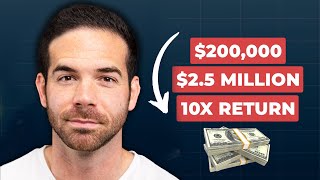
Ryan Daniel Moran built a $100M investment fund for e-commerce brands that meet three criteria: $1M+ annual revenue with $250k profit, an audience of 10,000+ email subscribers, and unique products. His deal structure gives entrepreneurs a small advisory stake, sells part of it to fund operations, and keeps options to buy in later, minimizing their downside while aligning incentives.
Questions this video answers
$1 million in top-line revenue.
$250,000 in profit.
At least 10,000 people (email addresses/audience contacts).
50–60% gross margins (rule of thumb).
Since 2020.
Chapters
Most entrepreneurs get stuck at seven figures, but an eight figure business is totally possible if you follow this playbook. I had a massive mindset shift a few months ago that changed the way that I will do business for the next five years. I had Dan Martell here on the podcast@capitalism.com and he talked about being the 10.0 version of yourself and casting goals and visions from that 10.0 version of yourself. I can think of times where I felt like the 10.0 version of myself. And and if I was that person all the time, I would set very different goals than the neurotic person who wakes up feeling chaotic and worried that everything is going to crumble. So when I thought about the 10.0 version of myself casting goals, one of the things that I wrote down was that I wanted to build $100 million fund. I run an investment fund that invests in e commerce brands. I get really excited about investing in the businesses that come from this community, meaning the clients that I have@Capitalism.com the people who are on my email list, the people who watch my videos. I get so jazzed about the fact that somebody will launch a business after reading my book, after watching our content. And then I can come in and invest in them and advise them to $10 million and we can have a ridiculous exit and we all party together. That is so cool. That is so much fun. In fact, it's one of the most enjoyable and one of the most meaningful things that I can think about doing with my time. So when I think about the 10.0 version of myself, I think about building that part of my business to $100 million. And when I had that thought, I realized I needed to restructure the way that I do deals. I also needed to prepare the people in our community and the people who watch our content to be able to have that type of scalability. Because I teach people how to build million dollar businesses and I get excited about coming and partnering with them and helping them get to 10 million. And I need to do a better job at telling people what types of businesses they can build to be ready to partner with me or somebody else or just have the ability to do it on your own of getting to $10 million. And I need to be louder about that. That's what we're going to talk about in this video. First, in order to build $100 million fund, I realized that I needed to change the structure through which I invest in companies. I have been investing in brands inside of the capitalism fund since 2020. And we've had some.
We had one brand that was doing about half a million dollars a year. We'll do $5 million this year. One brand had a $200,000 valuation. They now have a $2.5 million valuation. That's a more than 10x return. One we invested in at $30,000 a month. They now do over $150,000 a month. And we had some duds and some failures too. We learned a lot in that time. But if I want to have the type of partnership, the type of collaboration with my community that I really dream about, then I need to have a different deal structure that allows everyone to grow and win together. And here's what we came up with. Our criteria for investing in businesses is brands that are doing at least $1 million in top line revenue with $250,000 in profit. The business has to be profitable, otherwise they can't invest in growth. And it's hard for us to do our thing. We've already made that mistake in the past. Number two, they need to have an audience. An audience of at least 10,000 people. What does an audience mean? What does it look like? We'll talk about that in a second. But there needs to be an audience that we can contact in order to build a real brand that has a moat, that has the ability to scale and has value when we go to sell the business. And third, there needs to be product uniqueness, meaning that the products need to be really good, the customers need to like the product and come back to it over and over again. And it can't just be the exact same product as somebody else. But you're ranking better on Amazon so that you have customers coming in. That's just not the type of business that we want to invest in. So that's our three criteria to investing in one of these businesses. But where I get really jazzed is the structure that we came up with to be able to win together at a very high level with almost no downside for anyone. I wanted to find a way where we could have a team that was an A list team that we could bring into businesses to help them grow beyond a million dollars. And it wasn't a drain on the business bank account. So we needed a way to pay for the whole thing. And I wanted to be able to participate in upside with the entrepreneur without it feeling risky or slimy or gross. And I didn't want to just write a big check into a business and hope and pray that they win because we find that capital isn't actually the thing that fixes a business. It's the operations and what that capital goes into that ultimately fixes the business. We learned that one the hard way. So in the past, we would write a check for a business, we would get involved, and then we would figure out how we were gonna grow it. And that was a mess. And there were cases in which we're working for free for way too much. Cause these businesses aren't paying us anything. And that was a real grind. We don't want to do that anymore. So what we do instead now is we come out as 10% advisors, basically. And what our aim, or what our thesis is, is to then sell a piece of that 10% to fund the operations of the company. So we have partnerships with all kinds of investors. We're building a marketplace on capitalism.com. if we believe in a company enough to take an advisory stake in them, we take a part of what we own and we will sell it to fund the company. And that goes to fuel the operations of the business. But here's the problem. If you have a bunch of money that shows up in your bank account and you don't know what to do with it, you're probably going to set it on fire. If you don't have operations to actually help you build a business beyond a million dollars, what are you going to do with the money that we put into the business? You're going to blow it or you're going to invest it in some complicated funnel or some crazy whiz bang idea that you want to test that you've always wanted to do. That is a terrible idea. Ask me how I know, because I've done it a thousand times and I've seen a bunch of entrepreneurs do it. So what we did instead is we took a minority stake in an operations company. We invested and created a partnership with a business that does operations for E Commerce brands. So they do supply chain management and they do Amazon optimization and they do customer service and they do all the things that we know a brand needs to do in order for that business to grow. So here's what happens. We invest in a business and the money that that business gets goes to pay for the operations that we can now oversee, plus our team that is experts in the field of building E Commerce brands. And we can now advise and, and actually help operate a company towards a multimillion dollar exit. Now, I know what you're thinking. You're like, well, how does Ryan make any money in this? Because the reality is if we take A small stake in a business and it's paying for operations. I don't really make anything from that for a long time. The way we make our money is we have options to buy into the company in the future. So if we all win together, then I will make a lot of money. If we don't win together, then there's basically no risk because all that happened was the entrepreneur sold a very small part of the business to me and my team of investors, and they invested it in the business. But if we win together, we have a party and we're really happy together. And I love those types of partnerships where we can win big together. But if it doesn't work out, the downside is very low, minimal, or even no downside at all. But in order for this to work, we have to have a very specific type of brand that we're investing in. So what I want to share with you is how you become that type of brand. In order to be that type of business, you need a couple of things. You need to have margin. You got to be profitable. You got to be able to reinvest in the business. Number two, you need to have an audience that chooses you. Number one, that means you don't just have rankings on Amazon or you don't just have ads that work. You have people that are choosing you. You have an audience that voluntarily pays a premium because it's your brand. So you have an audience of 10,000 people. And an audience to me is email addresses. It's people that you can contact. It's people who have voluntarily said, I want to be a part of this brand. I want to participate in what this brand is doing. And number three, you need to have a great suite of products that people choose, which means you probably need to be different from everybody else. So how do you get there? How do you build these three things? Number one, how do you get to $1 million with $250,000 in profitability, which is our minimum criteria for investing in a brand? Well, I wrote my book 12 months to 1 million to basically be the playbook to getting to $1 million. I don't mean to insult your intelligence here, but it's just flat. Four products at 25 sales a day, which is 100 sales a day. At a $30 price point, that's $3,000 a day. That's a million dollar business. Now, not everybody who follows that playbook will have $250,000 in profit. Some will have way more than that. Some businesses will have $500,000 in profit. After running that playbook, some will have less. I've seen it happen both ways. So how do you stack the deck to make sure that when you've got a million dollar business, it's really profitable? Well, you got to have a premium product. You have our product with really good margin, which so many entrepreneurs are afraid to do because they're comparing their price to their competitors price and they think that they need to be lower than everybody else. This I think is a mistake. I don't want to invest in low margin companies. I don't want to be a part of businesses that are making three bucks on every product. How am I going to do advertising and bring talent to the table if I got to make money on $3 margins? So if you're a premium brand, guess what? It's harder in the short term because you've got to create a unique product. You've got to showcase the differences between you and the competition. You probably need to present yourself a little bit differently than everybody else. You probably need to have an audience. This is hard work. It's hard work that most entrepreneurs don't want to do. But if you do them, you'll have higher margins. You'll build a brand. And guess what? Somebody like me can come in and do my thing. And now I can help you grow from $1 million to $10 million because we've got profit to work with. Money is not going to fix your problems. It won't. Better operations won't even fix your problems. You got to fix your margin problem first. So a rule of thumb for me, if I can see 50 to 60% gross margins on a product, I know that we're at least in striking distance of having a brand that will have the profitability to be able to reinvest into growth, which is what we're gonna do together. The second criteria is that a brand needs to have an audience of at least 10,000 people. That means email addresses. That's what that means to me, means people that we can contact. And this is the thing that most entrepreneurs overlook, that they're probably tired of Hearing me talk about your audience, meaning your email list, is the thing that will allow you to launch new products. It's the thing that will allow you to control margin. It's the, the thing that will allow you to stay in business if Amazon kicks you off. It's the thing that will cultivate relationships with people who will support you for the long term. It's the way that you'll get reviews because you have a connection with the people who are following you. And most people just don't put in the work. They don't learn how to do it. They don't put the effort in. Because at first when you're building an audience, you start with like 200 people and no one likes to talk to an audience that they think is too small. So we're looking for the entrepreneurs who are willing to go through that process of building audiences. If you're watching this, how do you do this? How do you actually do it? Well, looks a lot like work. I mean, it is a combination of creating content and sending that traffic to an email capture page and doing that for a long time. It is sometimes partnering with influencers. For example, we created a partnership with one of our brands, sells a high protein snack. We partnered them with one of the biggest influencers in the space. We negotiated the deal, we paid for the terms, we did all the work. This person has a 2 million person audience now. This brand has the exposure to millions of people. That's a deal that was really good for all parties. So sometimes it means partnering with people who have audiences so that you can skip the work of creating a bunch of content or running a bunch of ads to be able to build your email list and your audience. Another way to build your audience is to run ads or to put inserts in packaging so that when you take a sale on Amazon or you take a sale on Shopify, you're collecting the data and then you are nurturing that relationship. By the way, I'm embarrassed I even have to say this, but an audience is not just how many email subscribers you have, is not how many Instagram subscribers you have. It's the depth of connection that you have with people, which means that you have to actually care. You have to actually think about creating value. It means that there has to be a reason why they're following you. If you have the ability to contact somebody but they don't want to hear from you, you don't have a valuable audience. You have a valuable audience when those people want to hear from you, which means that you need to think about creating value for them. So when an entrepreneur does that, I know that I can help them grow to multimillion dollars. Like I know that. I know that. I know because so few entrepreneurs do it and so few entrepreneurs know how to leverage that in a way that builds brand and valuation, that if you bring me that person who has a million dollar business with margin, with an audience, we'll crush it. Crush it. That's why I can structure a deal that has almost no downside to the entrepreneur and only upside because of the confidence that I know of our team, our skill set with that specific entrepreneur, probably going to win together, and if not, very low downside. The third criteria is that you've got to have uniqueness in your product, or at the very least, you have to have a suite of products that your audience is voluntarily choosing, and they love that product. Now, if you're selling supplements or if you're selling in beauty, sometimes in food, a lot of those products look very similar. So one of the ways to differentiate when you're selling in these competitive markets is just by targeting a specific person. Meaning if you are the supplement brand for moms and you've got an audience of moms that are choosing you. Actually, Mary Ruth's is a good example of this. They're the supplement company for moms and their kids, and moms and their kids voluntarily choose them, even though a lot of their supplements are the exact same as everybody else and they charge a premium for it. Why? Because they're the brand for a specific group of people. So the product suite either needs to be different from everybody else, or it needs to stand out to a specific group of people so that that group is voluntarily choosing you, and they really love what you are doing. If you're selling the same product as everybody else and you have no target person, it's just way too much work. It's way too much work to grow that brand. The only way that business is going to grow is if you sell more. How do you sell more when you're selling the same thing as everybody else? You drop your price. Well, what happens then? Now you don't have margin. What happens when you don't have margin? You can't reinvest in the business. It just becomes this downward cycle that I want nothing to do with. Instead, if you build your brand around a very specific person now, you can build an audience of that person, you can have margin around that person, and you can have raving fans that choose you and pay a premium for choosing you and come back and leave reviews and tell all their friends. That's the type of business that I know I can help. Do you understand that you have like 5 to 10 million dollars of growth sitting here in front of you? Do you understand that? And a lot of times they don't, or they know it, but they just don't know how to get there. And so when I had that realization that I could bring some expertise and some capital and some relationships to the table to help them unlock that. That got me really excited because I can see where some of the brands in this community were at $2 million, Canon will be at 10. And they just need to unlock a couple of things. And I know what keys to turn to unlock those doors. The entrepreneurial game can be really lonely. And I crave more partnership in my life. I crave more collaboration in my life. And I'm at a point right now where I'm structuring my business so that there is more partnership and collaboration so that we're incentivized to work together and everybody to win together. And it feels good to know that when I create content like this that helps people build million dollar businesses, what I'm really optimizing for is for one day that person to get to seven figures and maybe partner with me. And if we don't partner together, they got a ton of value as a result of building a million dollar business from either my free stuff or my book or going through our mentoring or something like that. But now I'm optimizing for partnership and collaboration, not what can be extracted in the short term. Now I know that entrepreneurs can build these types of businesses because I've done it, I've advised it hundreds of times. So now I just need to be loud about what you need to do in order to be that type of business that I might want to partner with. And if you're already there, I'd love to talk about partnering together. Capitalism.comfund is our holding place for all of our deal flow. And this is where you can go and you can find out more about what we do. What our thesis is, if you're an investor, you can look at partnering with us. And if you're a brand that needs help going from 1 to 10, this would be a good place for you to start. It at least opens up a conversation. Most people are not going to be ready for that type of a partnership and I get that. And one of the things I need to do a better job at doing is preparing those types of businesses so that we can come in and help that brand go from 1 to 10. We've completely restructured one of our programs. It's called the capitalism incubator. Simply to make a business ready for that type of scale. As a result of going through that process, those brands often grow their top line revenue and their profit. They often work less because there are operations that are brought to the table and they have a much clearer path to growth and they know where they're going in the next three years. That's actually when we can come in as a fund and partner and help them execute it. But even if somebody doesn't work with us, if they go through that experience, they tend to grow their top line revenue, they tend to grow their profit, they build more responsive audiences, their margins go up, they build better relationships, and they're ready for that type of growth if they want it. And so my entire business is now refocused around having a pipeline of entrepreneurs who are getting to a million, entrepreneurs who are preparing to go beyond a million, and then the handful of partnerships that I get to be involved in. And my goal is to be an example of what it looks like to have a collaborative capitalist community and for us all to win together and for us to have a lot of upside with almost no downside and for us to share the wins and losses publicly so that other entrepreneurs see that it's not only possible, but the path is right in front of them. If you found this video all the way to the end and you need a starting point, the best place to do that is over@capitalism.com playbook. This is a free course that will show you how to pick your brand, launch, get it off the ground, and build the foundation of a million dollar business. If you're beyond that, you need help preparing for growth or you want to work together. Take a look at the links in the description of this video. I'd recommend checking out the incubator or going to capitalism.com fund if you want to be put on our radar and see how we can help. This is where I'm going and I'm. I'm really excited about this idea of cultivating more partnerships and collaborations with the people who have been deeply following my content. It's taken me a while to get this amount of clarity and it feels really good to be going on this path with all of you. Thank you for supporting my work. Thank you for subscribing to the channel, for watching my content. I hope that it is among the most valuable things that you discover on your entrepreneurial journey. So thank you for watching. I'll see you guys next time. Take care of Sam.







