
The Future of Crypto, Building Audiences, & 8 Figure Exits
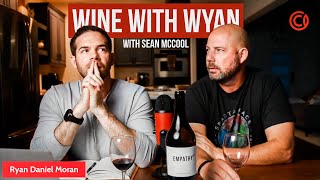
A recorded livestream (Wine with Ryan/Capitalism.com) where Ryan Daniel Moran, Matthew Tremolato, Sean McCool and others discuss crypto’s market dynamics and governance implications, practical influencer and brand-growth tactics, how to position startups for funding, and presentation/storytelling techniques for founders. Notable takeaways: Bitcoin’s halving/stock-to-flow timing shapes cycles; crypto can encode governance enabling tokenized companies; measure influencer ROI with dedicated landing pages/discounts and tracking pixels; recruiter/advior outreach using TAG (Tell, Ask, Go for smallest yes); founders should own a market trend (e.g., remote-work lifestyle) and lead with stories.
Chapters
Okay, I need to go on a rant tag.
You're it.
Just.
Fucking dogecoin. A dog with laser beams that makes you money. Clip that up. That was fire. I can't believe anybody watches this. Good evening, everybody. Welcome to Wine with Wine. Tonight we're drinking our favorite empathy wines from the good Gary Vee. Have you ever had this, Sean?
I have not.
So you are a beer connoisseur. What's up, Matt? Good to see you, man. Matthew, you might, you might call him the only guru expert I trust. So tremalata, you live and breed this stuff, correct?
Yes, correct.
Yeah, you're, you're like selling your business so you can just go all in on crypto, basically.
Correct?
I'm not going to sell my business.
To go all in.
I'm already leveraged so far in that all my liquidity is already in leverage.
Yeah, like you borrow against credit cards and everything. You're like, you're that much into crypto. Yeah. Okay, you've said that. Crypto overall is in a four year cycle. Where are we in that cycle right now?
It's based on a stock to flow model and that stock to flow model is based on a funnel fundamental event called the having. And on the time, by the way.
You'Re going to have to talk to me like I'm stupid because I'm, I'm being real humble on all this, but I'm following you so far. I just might interrupt you when you start using big words like having.
Sorry.
You're fine, keep going.
There is an event that takes place where the supply of the bitcoin decreases. The amount of new supply decreases in four year cycles. There's a finite pool of Bitcoin where the miners are rewarded out of. And the amount that the miners are rewarded in a four year period gets cut in half. And that's called a halving.
And every four years when that takes place.
It'S called disinflation. And there's a supply crunch. And so on that time frame, on the timeline in that supply crunch.
I would say we're about 3/4 of the way through a bull cycle.
We're 3/4 the way through a bull cycle, meaning we've got what, like six to 12 months left in an expansion before there is another sell off for some time.
There's multiple theories because there's catalysts that can compound what's happening, namely money printing, monetary policy.
And so there are theories that there's something called a super cycle, it's somewhat of a meme, but also right now the standing stock to flow model is on track and it's highly significant statistically, given that it tracks the price of the scarce asset bitcoin very well. It tracks it very well.
Okay, so one thing that I want to understand either now or when we schedule time to go into this further is how is the overall market and kind of the transition of crypto becoming a part of our daily lives going to affect the way that we do business? I understand.
I now understand. I was super bearish on all things crypto, especially bitcoin, for many years. I now see that it has utility and so I was wrong on this. So I'm curious how this will affect the way we do business, if at all. I hear some people say it's just going to be treated as an asset class. And then there's people who say this is how companies are going to raise money from now on. Instead of doing big raises, they'll just issue coins. So how, how do you think that the technology will impact our day to day lives from a business perspective over the next few years?
Well, I think the core feature of the technology is its ability to render governance. And what a company is, is a form of governance. When you establish a company, you create a governance model by creating either a board or the articles of operation.
And that's meant to outline and establish how the rules of the governance of the company are established. You're outlining that the core feature of cryptocurrency is to install that governance in a decentralized way, therefore creating the possibility to create autonomous corporations. Corporations that aren't owned by central entities, they are owned by the investors with no middleman or brokerage that creates a stock. Let's say it's actually a tokenized asset.
Yeah.
So like what I'm. The way that I'm hearing you describe that is almost like a company would go public from day one.
Yes.
So essentially a company would. When a company begins, it issues a coin. That's how it raises its capital. It can issue more capital if the demand for that coin goes up, but that you now have a myriad of shareholders if you were to start a company in that way. Am I hearing you correctly?
The analogy sounds correct. The key distinction between the analogy that was given and, and what's actually happening in the crypto space is that there is no central authority delivering the stock and then subsequently delivering a product that's run by the corporation. When the tokens are distributed, the governance model takes hold and there's actually a game theory.
Basically what happens is the token holders vote in the governance model about what happens next in many cases. And so as granular as it can get, it can be that voting can take place on anything from what's, what's the logo going to be next? What's the coin domination going to be after we vote on the logo? And then we're going to start being a company after that.
And so, yeah, so in theory, you would have a completely decentralized company, even decision wise. Like.
You could have companies with no owner.
No central owner. All companies in that structure would be decentralized if what you're describing kind of plays itself out to its extreme conclusion.
Yeah, and it creates a lot more.
It creates more possibilities in terms of different models that basically skip middlemen. There's a lot of companies and their models dependent on them being a middleman and siphoning profit from something that can frankly be rendered in code.
Well, unfortunately for you, you're just so frickin smart and so into this that sometimes talking to us normal people forces you to dumb things down to a level that I can understand. I would really like to have you on the podcast and to schedule like an official long chat with you about this stuff. I might, I might. I've had four sips of wine, so I'm drunk right now. I might even like to do like a three part with you. Would you be open to something like that?
Yeah, you can go ahead and hold my feet to the bar and slow me down a bunch and make sure that everything's. Everything's clear.
All right, cool, man. Because I really have a lot to learn from you and I would, I'd. I'd love to, to talk about this more with you. Thank you so much for hanging out with us tonight, Matt. I'll follow up with you and we'll schedule some time together. Yeah, take care. All right. Good to see you, man. I, I was so wrong on the crypto space. Right? I was just completely wrong because I didn't see any utility to it. And also I was just scared of it. I mean, the fact, like, the fact is crypto is going to radically change our lives. And I think I fell into the, the same perception that a lot of people gave the.com era. Like, this is stupid and it's scary because that means that we're going to have to change the way that we do business. Crypto is going to do the same thing. It is, it's. It already is changing so much of what we do. And I've been resistant to it and I You know, don't want to be resistant to it anymore. I want to, I want to be part of the expansion that is going to happen. So I'm catching up and I only understand every other word that Tremolata says, but I'm gonna catch up.
Go with the stock to flow.
There you go. Quote that from Sean McCool right there.
I don't even know what it means.
But hey, it rhymes.
Sean, would you give people a little bit of background on your background?
Oh, man.
I've been in sales my whole life and then got into copywriting. Did that for a little while. Worked here with capitalism two, two years ago.
Cheer.
Cheers.
And then I've been doing some consulting and agency work and yeah, just trying to make people money online.
Trying to make Sean grill Superpower is he's an amazing coach and works with a lot of high level businesses on their copy, their conversions, their strategy, and also the mindset of the entrepreneur. So Shaman and I have a lot of deep talks on a lot of long walks and have had many great conversations here at the house. So you guys are blessed to be hanging out with him tonight. Paulina, how are you tonight?
I'm fabulous.
I'm in Miami.
Why would you be fabulous in Miami?
Matthew Tremolato. I can't even like a different planet. I've. He was speaking Swahili. I have no idea what he just said.
Just, just wait till we really get into the weeds. Paulina, what's going on? We can do for you. What? I'm drunk. What can we do for you tonight?
I am too. Can we bring on Manny so we can really ask?
Yeah, let's do it.
We have real questions.
Manny, what's going on, man?
Oh, you know, hanging.
What can we do for y'?
All?
How you doing?
All right, we got, we got a couple of questions. All right, so the first one is around. So we've talked a lot about influencers, right? In previous convos, we have established a relationship with one and we're working on a couple more. The question I have is part A. What tools, slash strategies should we be thinking about utilizing in order to make sure that we're measuring accordingly the effectiveness of the influencer?
What are you trying to measure? Like what, like what data points would tell you that?
So we're, we're about to sign on with a hip hop artist, right? The hip hop artist is going to go on his Instagram. He's going to go on, I don't know, whatever social media or whatever outlets he has, and it's like this bag is the dopest bag that has ever happened in the whole entire universe. Go by the.
That's your copy right there.
Right there.
So does he go like use the coupon code recognized to buy the bag? Like, does he use an affiliate link? Like, what's the best way for what.
You'Re trying to do? There's no tool or plugin that is probably better than other than another one, as long as it tracks accurately. So you may be best off just finding a free plugin for WordPress or using a free plugin for Shopify. Like what? Like what? Whatever is simplest and fastest. But the strategy that you're going for I think is the right one, which is to set up a dedicated page with a pretty URL, which is flydadgear.com recognize and then it's a branded page with a video about why that person likes the bag and a link to buy with a pixel on that page to tracks it to that.
Like that.
That's simple. And it will work effectively and it will give you the data that you need. And that's about all you need at this point.
Yeah. What athletic greens did for a long time with all their. Yeah, I think it was just, hey, friends of Tim. Friends.
Yeah, it was. It was all Tim Ferriss for a long time. And yeah, that's what they did.
I like it. Thank you.
Cool. Anything else we can do for you tonight?
Nah.
All right. All right, duo, Good to see you. See you guys later.
Bye.
Bye. All right, let's go over to Kai. Kai, you guys ready to do this? Give me a thumbs up if yes.
Whoo.
Let's go. What's up, y'? All?
How you doing tonight?
We're good, we're good. Thanks for having us on here.
You bet. What can we do for you tonight?
So our brand is going to serve women and we're going to provide natural, holistic solution, chemical, drug free solution for PMS symptoms.
Okay, great.
And from there we're going to grow the brand into.
More solutions for women, more holistic solutions.
Then into prenatal postpartum, Just continue to serve women, grow from there, eventually take it into the babies and everything, you know, women and family related. You just keep.
If you can end pms, you are saving lives across the world.
Yeah, I guess my question is like, how do we really play up the fact that in spite of the fact that there are some teas and there are the chemicals to really make the best out of our entrance into this space?
So unless I'm mishearing you.
So let's work through this because unless I'm misheard hearing you, what you're, what you're asking me is what is, like what's the actual benefit to the customer, which you should know better than anybody else.
May I? Correct. I'm a significant, I'm significant other. Other.
So basically how would we come across, you know, out of the gate, in front of the eyeballs, out of the, in front of the customer in the best possible way. That's, I guess, our question.
This is a very broad question. Do you want to try this one? I mean, you're, you're so like, like first of all, you have to know what the actual benefit is of being natural versus using chemicals.
Yeah, we do know, of course.
Okay, so you, you say them or you show them. So you either tell them or you show them. You tell them by saying what the benefits are or you show them by having your customer tell them what the benefit was that they experienced. You can either show or tell. So it's most effective if you can just show, get your customers to explain what they experienced versus the alternatives. Second best and fastest is to just tell them and you tell them what ingredients have what research that have what benefit and you explain that to them. Or you show a trend, like the trend of the amount of chemicals in our systems, the amount of problems that that causes, the amount of research behind natural solutions. So you show trends or you tell them what the benefit is, or you show them to the customer's mind. Does that make sense so far?
Yes.
Okay.
The answer is always in like a couple places. One, it's, it's in your product development. Like the answer for most of your copy or ad ideas. There's some stuff there and how the product was developed or why the product was developed. It's in the people or it's in the process of how it was developed. Right. So the product itself, the process it was developed, or the people that helped develop it, if you go to those three Ps, just about anytime you can find a hook or an angle for an ad or a campaign or anything else.
Awesome. Thank you. One more quick question about working with advisors or consultants. What's the best way to approach them? What's the best way to negotiate any kind of deal with them.
Okay, this is a two step process. Three. I know. I just made up a third step, the three step process. Are you ready? This is developed after.
15 seconds of research and discovery.
So you're saying state of the art.
This is this, this state of the.
Art and never seen before.
It's both.
Say hearing it first in the one.
These three steps. These three steps. Are you ready?
Yes.
Number one, Let me take a sip. One second.
Simultaneously. First.
Okay, good idea.
One sip per step. Everybody on the call.
Everybody. Here we go. Step number one.
Tell them what you're trying to do.
Okay.
Step two. Step two, Ask them if they want to be involved.
What was the first one?
Tell them what you want to do.
Okay.
Ask them if they want to be involved.
Okay, Are we ready for number three?
Yeah.
You ready for me?
All right, here.
Go, go.
All right, quick recap on the state of the art closing process. Step number one, Tell them what you want to do. Number two, Ask them if they want to be involved. Number three. Go for the smallest yes possible tag.
You're it. You just.
That's the acronym tag. I was waiting for it.
Sorry about that.
Spilled our wine flying all over the table runner. Let's break down the. The tag form.
Tag formula. See, now it's legit.
Let's break down the state of the art.
The TAG blueprint.
The state of the art TAG blueprint. Tell them what you're after. Just say, hey, we're creating a natural PMST company because we saw a problem in the market. Number two. A.
A. I like that.
For ask. Ask them. Is this something that you think you might like to be involved in?
3G. Go for the smallest yes possible. Great. We're really looking for something that we can work with long term. Is that something you'd be open to talking about?
Yes.
Yes.
Okay. Yeah, yeah.
That's how you open. And then from there, it's just finding out what they want. Cool. Do you do any consulting? Have you ever had an equity relationship before? We're kind of new to this, and so, like, we're navigating it. How might you be incentivized to be a part of something like this?
Like a quick. Like a. Like, quick story.
Acronyms getting long all of a sudden.
Oh, man. We'll stick with tag.
We'll stick with tag.
Tag. It's state of the art. So I did some consulting for Brian Lee, who is an entrepreneur that I really admire, and he offered me points in one of his companies. Now, he could have. He gave me you. He offered me this much.
Can you zoom in for that?
That much. All right. Didn't matter.
He.
He could have told me that he was. He would send me a tomato a week until I died. I would have said yes. Right. Because tomatoes are delicious, and I wanted to work with Brian Lee. So it didn't matter what it was. I want. I didn't care if I got compensated at all.
Even the consulting that he paid me for, I broke even on because I had expenses. I just. I just wanted to be involved with what he was trying to do. So if. If you have a project that's exciting, people want to be involved in that. Like. Like you've heard me say, there's an unlimited amount of capital out there. There's billions of people out there, and they're all wanting to flow to good ideas. So if you have something that is exciting, lead with that. That's all that you need in order to have a powerful position in a negotiation. Justice on the team told me once that I'm the best salesman he's ever seen, which I laughed at. I thought it was hilarious. And he was like, what is. Like, what's your sales strategy? I was like, I don't have a strategy. I just find out if they actually want it, and if they don't, I'm like, great talking to you. I don't try to sell anybody anything ever. I just find out if somebody wants it and then offer it to them. It's the same thing with you. This is what we're trying to do. Is this something that you'd want to be involved in? Great. What would motivate you to keep involved? Have you ever done an equity relationship before?
That's it. That's your. That's your opening move in a negotiation. And if they say no, that's when the negotiation starts. Negotiation doesn't happen until someone says no. Okay, so if you make an offer they say yes to. There was no negotiation required. You bet. Thank you, guys. Good to see you guys.
Thank you.
All right, have a good night.
Tag.
Boom, tag. Changing lives over here. State of the art.
One acronym at a time.
That technology.
Acronym technology.
That Acronym technology, changing lives.
That and alliteration technology. I think that's what's driven the last 200 years.
It has to be. Everybody's so fascinated with this crypto stuff. No, no, it's all in acronym technology.
Acronym and tremolata.
You got a coin for that?
You got a coin for. For acronym technology?
There we go.
Look at him. He's thinking about it. He's thinking about. He's. We could do one. I know ICO is a banned term now, but we could go on with a coin for acronym technology.
Think of all these coins. They have acronyms. Coinbase. Their ticker symbol. C, O, I, N. Yeah, that's Brilliant. That's an acronym. I'm sure of it. It's like crypto.
There's an acronym in there somewhere.
Crypto coffee. We should do crypto.
Crypto coffee.
That'd be cool.
So what would that. That'd be like.
It sounds.
I bet, I bet we get a.
High valuation because it's alliterated. It's got two hard Cs. Like Coca Cola.
Yeah.
Coca Cola's got like $500 million a goodwill on their balance sheet.
That makes sense.
So crypto coffee, there's two hot things. One's really hot.
Yeah, like literally. That's true. That's true. And also, if. If you think about it, JP, JP Sears taught me this one. So approximately 80% of people know what crypto is.
Right.
And approximately 94% of people drink coffee.
Wait, therefore 174%.
174% of people would use crypto coffee. Absolutely.
That's right.
You can only buy in crypto.
And.
People buy NFTs because they go up in value.
This gets better the more we talk about it.
Tremata, I might know more about crypto than you at this point now. I might. I might know, you know, the biggest.
Breakthroughs are when you kind of merge two fields.
True. You know, Jeff Hoffman calls that info sponging. Info sponging.
Yeah.
We could do an info sponging. An info sponging. Nft.
Yeah. Info sponging sounds a little kinky.
We're making billions over here. Billions.
Billions.
What's up, Paul? How you doing tonight? Unmute yourself. Say hey. Okay.
Yeah, I'm in.
What's up, man? What are we doing for you?
So I am.
Going through the pitch deck.
Part of the incubator, and for me it's been. I had to take a couple of step backs. I'll try to make it as short as possible. Like, my brand has an existing product that is a portable skateboard.
I was really excited about building a brand that wasn't about skateboarding primarily. And I was really excited about building a brand for people who like to go out to work, to work, to create, to. Because for a higher clarity, creativity, and productivity. It turns out that with my existing customer base, this doesn't really resonate that much. Like, I tried in different ways. I sent emails and I run Facebook ads. So I came to the conclusion that that's not the angle that will resonate with them. So I'm taking a few step backs. Steps back. And it will be more a brand for probably professionals on the move. I've been Interviewing A lot of my existing customers and they have an active lifestyle. They like to go out any chance they have. And it could be within their everyday life, but it can be also, you know, an adventure that they set up. Okay, so this, this is where I got so far. Question. This is shaping, at least in my head, much more like of a lifestyle brand than of a functional brand that solves and fixes a specific problem.
My question is in, and we talk about a problem and a solution in, in having a pitch deck. So in presenting the brand and so my question is, how do I present this problem? I'm talking with these people, so I know some problems that they have, but how do I present this problem that is core to the brand that I'm trying to build in some, in, in a way that represents a lifestyle. Like these people should be represented by a brand.
There's. Well then the problem is that this group of people is not being represented. Okay, so who is the, who is the customer that you're going after? Like, who is the, who's the audience that you're targeting?
So I'm targeting people would be 30 to 40 years old. So they are professionals. They, they, they, they got their, I would say they got the things together they have, but they, they designed and steered their life in a way in which they're not working locked in a cubicle nine to five every day. So they have a mobile life. They kind of detached to what was the, I don't know, status quo of office.
All right, I got you.
Paulo, I'm going to cut you off because here's your angle. Okay. Problem and opportunity.
Approximately 6 billion people just went remote.
Problem.
All of them are experiencing jarring transitions from the old way of work to the new way of work. That's where we come in. We make it possible for the new remote worker to take their work everywhere and transition into the new economy. Done.
I love it.
I love it. That's that, that's your million dollar angle. Like so, so the problem there is not what any one specific person is happening is having the problem. There is that there is a trend in the marketplace that is hitting resistance points that your brand perfectly comes in and solves.
That's your role in the marketplace. And I would love that's a trend that you can sell all day long to investors, advisors, influencers and customers. That's an eight figure angle. That is 100% an eight finger angle.
Okay.
And, and, and you need, and like you've got to own that because otherwise you could very quickly Be a product company that just sells a few things here and there. But if you own the fact that there's 6 billion people who are now making the transition to remote work, and your job is to usher that in and make it as seamless as possible, you can lead the marketplace on that.
Hearing you talking about it, I would love my brand for. To be the one that accelerates this process for this transition.
Beautiful.
And do it.
I did it for my life. You know, I had a cubicle life six years ago in Italy, and it took, like, a life change to be here in California. Now do my things now. Pandemic made it easier to have this life change.
That's great. Good work, Paulo.
Thank you.
Run. Run with that, man. Run with that.
We need the sh.
Just do it. You'll never be as buff and bulky as we are. That was some Arnold in there, yo. Okay, I need to go on a rant. Oh, here we go. Oh, Tremalata. You're going to love this. Okay.
All right.
The mother of my children. The mother of my children says to.
Me this week, she says, ryan, very experienced, avid investor.
No, not at all.
Not.
Not at all. No, no.
Thinks.
What's I do. What I do is voodoo, essentially, right?
I'm like.
I'm like, pam, I just bought. I just bought an option on Pepsi at 140 strike price and have a 31% ROI this week. And she's like, that's voodoo. Empty the dishwasher. That's basically how it goes. So the mother of my children tells me this week that she bought dogecoin. Now, one, I don't know how she knows what dogecoin is.
Number two.
This woman.
Has heard me talk about building businesses, investing the profits for seven years.
The right way to do it.
The right way to do it. You build businesses and you invest the profits, right? If you get 25 a year, you're crushing it. Like, that's my target. 25 a year. And this woman totally disrespected you, completely disregarded everything that I have ever taught her and put her money in a meme Crypto. Put it into dogecoin. A literal joke. Crypto. 400% ROI in six days. The woman on her first investment beats me for the last seven years.
Good job, Pam.
And fucking dogecoin. A dog with laser beams. That makes you money. I just lost, guys. I just lost. I lost. I lost the war, ladies and gentlemen. Emasculated. Tremolana is taking over the world. AI robots and Pam have a conspiracy against us all. Debbie Beck to you. Hey, happy birthday. Thank you.
Okay, so the question I'm going to ask you. The answer will change my life.
Okay, that's a good setup.
That's a good.
That's a good look.
That's pretty good.
Okay, have my attention, Debbie.
So dogecoin today is my birthday and my goal is I am following the book. And one year from now, I will have a business that's making 1 million a year.
Cool.
Okay, so. So what I want to know is I've been listening to the podcast and I have managed to.
Own a frickin job for 20 years. Hate it, don't want to do it. I want to be an agency owner. And what I want to know is what do I need to set up in my business to where when I come to your fund, you guys are salivating and cannot wait to team with me and give me freaking money and advice.
That's actually an excellent question. Well done, Debbie.
Every once in a while, okay.
One, you have to be bought in because I've already told you it's a good idea.
Yes.
We already know that there's a market for it.
I went and got a job to finance this thing.
Good work, good work. So, like, that's a huge step.
Number two, you need to have a clear path to victory. Okay, clear path to victory. Looks like. So looks like a well thought out strategy. Okay, we're gonna launch here, partner with these people, roll out these three products, here's what the market looks like and here's where our strategic advantage is. Simple as that. And number three, you need to actually have a strategic advantage. A strategic advantage can look like an influencer that you've partnered with, an audience that you've built, an advisor on board who has some sort of distribution in retail. You need to have some sort of edge over everybody else. You have a. You've given 20% of the company to somebody in the 1% who is an absolute Amazon ninja. Right. Like, and there's a bunch of those in the 1%. So did you shush me, Debbie?
No, I shushed.
It's a joke. So some sort of partnership because, like, you are not the operator of this business. You don't want to be the operator of this business.
Right.
You need. So you need to have some relationships with verbal agreements that when you go with this, you're going to bring these people on board. You need to have some sort of strategic advantage that wins in the marketplace. Again, that could be somebody who has huge distribution or a retail presence or is whiz Bang on Amazon. And I don't care if you use Amazon or Kickstarter or go retail or build a funnel. I don't care. I just as an investor, need to see that you have a plan to win and you have a partnership with someone who actually has experience executing that strategy that you've chosen.
Okay.
So you need to be bought in, you need to have a plan to victory and you need to have partnerships with people that give you a strategic advantage.
Okay. And I mean I've listed, like I said, I, I've been fascinated with the eight with the business owner podcast because owning a job sucks. It sucks, sucks so bad. And I want to be sure that I finally do this thing right to where I'm not a slave to a boss.
That you're doing it for the wrong reasons.
And you're toast. You're.
Well, thanks, buddy.
Look, here's the thing, Debbie. If, if you're going to build this business the way that you want to build this business, you can't be constantly thinking about, about how much your life and your business sucks right now. No, I'm thinking, listen, Debbie, Debbie, listen, listen. You are playing this tenseness right now between the job and the business that you want, which means that you're going to try and push the business to get you out of your job, which is going to make you do dumb things.
Well, no, I just don't want to make them say mistakes that I made before with not building.
You have to let that go.
Okay.
Okay.
And this is how you actually like the business you start. Well, sure, you like, you, you have to actually like what you are doing. And then it doesn't, it doesn't matter to you what the short term results are. And it doesn't matter that you have to work it from 6pm to 10pm five days a week because you actually like it. This is one of those things that like, you don't know until you actually experience it. But I have to tell you anyway, if you do the business that you like, it's the one that will open up doors and make you money the fastest to get you out of the job. But when you're operating from this place of I want to quit my job, tell me what to do in the business to quit my job. You're. And the reason you're, is because you start pursuing the short term profit rather than doing the things that are actually meaningful in the business business. And, and that just keeps you in a trap that you never get out of.
Well, and I mean I, I've been doing what you said. I've been doing the things I think that are fun. And then I got the job so that I could pay someone.
That's amazing.
I love that you're doing that.
And I, I want to pay someone to do the Amazon stuff because that just annoys me. And, and so I'm building my audience. I'm having a blast looking things up. I've even refined down more who my target is. And, and I want to serve them, I want to help them. And it doesn't seem like work, so I, I just want, I can just see how much value working with the fund would create. And so I want to build the business to where. So it's so appealing that you guys can't say no.
All, all, all of what I told you tonight stands. But what you're looking for are some next steps. Here are your next steps. You need to go get some prototypes.
Okay.
And you need to go, you need to go start creating some relationships with people who can help you with this business.
Okay?
What that means is for you to go offer equity or partnership to people who will join this brand and this vision on an equity basis and can run the things that you don't want to be a part of so you can stay in vision more mode.
Okay?
So that's finding somebody in the 1% who is amazing at Amazon and offering them 10 to 15% of your company.
Okay?
It is going out and finding the person who has connections with influencers and offering them 5 to 15% of the company and then saying, great, that person is going to bring some relationships to the table. That person is going to manage the sales channel. All I'm missing now is the cash. Cash shows up when cash has a place to flow to. That's how you stack the deck to ensure that you get funded. Have a good night. Happy birthday.
Thank you.
So I have some commentary, this for everybody on the call.
So the human population has basically two working types. The way their brain works, they either move away from pain or towards something that they're a goal that they're going after. And that when I, when I was listening to you talk to her, it, it sounded at first like she's trying to move away from the job.
Right.
The problem with when, when you tend to be an away from person, away from working type is that you move just far enough away that the pain stops and then you stop and then.
The pain kind of catches back up. Well said.
Whereas if you're moving towards something, you've got the incentive to Keep moving towards.
Well said.
So and you have to understand it. So 40% of population is away from 40% towards 20% is kind of a mix of both. So you need to notice in your life, like, if I'm an away from person, like, if I've probably had money problems a lot or relationship problems, it's probably because I move away from pain and I get. I feel safe again and then it kind of catches back up. If that's your default, that's fine. You just need to understand that about yourself so that you can kind of take a little more effort and move more intentionally towards the more positive thing.
Well said. Aleyah, how are you tonight?
Yes, I'm so good. The chair get me in.
It's like a Pier 1 chair. I don't know what this is, but Papasan chair hangs.
This thing's winning.
Yeah, it's awesome.
It's winning.
So I was gonna ask you guys. So my first product is I finally gotten quotes from product designers from manufacturers, but it's so two months probably on getting my custom design, and then my Kickstarter agency, which I found a great one, will start after that, and that's three months. But since it'll be probably six months until that Kickstarter is complete, does it make sense to look at another product that I can do in the meantime? Like, even though this is going to be like my baby and my custom product, does it make sense to do something that is a little more simple, that's not completely like white label, but something that I can get listed and sold in the meantime?
Do you have any in the works that you are excited about?
So.
Well, I'm launching courses, which is totally different, but I'm launching courses. And that's a lot of that is.
I got your answer. So based on how you answered that question, here's what I want you to do. I want you to go all in on this product and continue to ask the question, what do I need to make this product launch? Amazing. That's priority number one. Number two, I'm open to launching something else faster in the meantime.
But if you try to force that answer, you'll start making stress decisions rather than building towards what you actually want. So always prioritize what you actually want.
What you really are desiring right now is momentum. So if some other things come up in the meantime that give you momentum, like another product that you can launch in order to acquire customers and set you up for a bigger launch later, awesome. Go after it. If what you're after is Money because you need to bridge the gap, because you just went all in on yourself, then that's actually a side thing that yes, you should pursue in order to de stress the launch of the business that you actually want. So depending on what you're going for, either short term cash to bridge the gap or momentum will change. My answer on this, but making some assumptions that you just want momentum. I'd suggest that you pursue the vision that you actually want, but be open to other opportunities that might present themselves in the short run. As long as you're okay not knowing what they are on a day to day basis. Because otherwise you'll just make a stressed decision and that won't lead to the long term momentum that you want.
And that's really helpful because yeah, it wasn't as much about cash. It's just like I feel like I should be taking steps forward in my business and I feel like I should be bringing in cash also. I mean not, not to bridge the gap, but I feel like I should be building an audience. I should be doing something that like makes this a legit business.
Okay.
You know what I mean?
There's something that I'm learning that I need to say more boldly in the incubator and it's that the biggest momentum shifts come from relationships.
I don't think that you, like, you can go build an audience, right? But the way you'll build an audience is by sharing your vision and by creating partnerships, building relationships and sharing your vision. How do you build relationships and partnerships? By sharing your vision?
Tag.
Tag.
That's how so your focus right now, like how do you get momentum? Get real clear on that vision. What do you do then you share that vision. What do you share that vision for? Because it will bring you the relationships with other people who are excited about what you're doing. What types of relationships? People who are excited and know other people. What kind of people? People who are connected with audiences and influencers and money and, and expertise. So the way you get momentum right now is by casting a vision and by knowing what types of relationships you're going for over the next six months. What we talk about in the incubator is that those relationships are audiences, capital and operations. Operations is things like people who know sales channels like Amazon or clickbank or Facebook ads or whatever. So those types of relationships are the momentum that will set you up for that big launch and that scale six months from now. Most entrepreneurs are thinking so short term that the only way that they know to develop momentum is in the form of sales. So every day they're not taking a sale, they're stressed. But in this phase of your business, the momentum comes from relationships, and the relationships come from you sharing that vision. I'll sound like a broken record as I say it, but I'm like, you're helping me see that I need to see. Say that louder in the group. Because if you get to launch day and you have relationships with those people and a clear vision, you're going to be just fine.
It feels like you're bored at the moment because you're kind of waiting for things to happen. And as you continue to build your business bigger and bigger, bigger, I'm going to assume you're just going to build it to an amazing business. You're going to have these periods where there's a decision that needs to be made or you're waiting on a thing. And I think part of this, you can use this also as a. As a practice to, like, sit in the silence of maybe some things that are happening and not have to react and go do something else.
That's so well said.
Because something will come up in the. If you can just deal with the silence and the boredom a little bit.
That'S where your. Some of your best ideas could come up. Because the energy and the free and the not stressing and reaching for something will yield some cool stuff.
The protection of that inspiration and that focus of creating from the place that is Aleyah at her best. Because Aleyah at 10% might work really, really hard and get nothing done. Whereas Alaya at 100% or even 80% doesn't work that hard at all, but is from an inspired place. And she moves mountains.
Right.
It's like we've all experienced those times.
So some of your best ideas will come when you just cut. You know, everything's on track. You, you've lined up your timelines, you've got some space. That's a reward. Like, you've done some hard work. Like, it's okay. Like, and you'll get some of your best ideas when you're walking, you know, in the woods or, you know, go on a boat ride with some friends for the weekend and instead of trying to launch the second product.
Yeah. To me, it felt like it should be such a grind right now that if I'm waiting on, like, I've done the hard work of prototyping in the first place and building an okay audience and doing the things. And so for me, it feels like all of a sudden, if everything's in the Hands of like a product designer and manufacturer and, you know, whoever else that you know. I should be doing way more. Even though, Marty, there's still a ton for me to do every day, so that. That's helpful.
Well, I mean, I talked. I've talked about this with my coaching clients and things like that. Everybody talks about the law of the harvest, right? You're familiar with the law of the harvest.
You.
You reap what you sow, Right. But everybody forgets about the waiting time between the reaping and the sowing.
There's a winter there.
Yeah.
There's like, everything dies.
There's time for, like, there's time for the sun just do its job and the water to do its job. And there's. You just. There's things you don't have control over. After you plant the seeds and before you harvest, you know, you can do some stuff and you can kind of pull the weeds and. But there's a lot of stuff that you just have to kind of wait on and let happen. And the more space you give that, the more inspired action you'll be taking instead of just trying to go around and create things that you don't really need. Pulling the seeds back up and checking them.
Why haven't you grown yet?
Yeah. And you may not do it.
I guess I'll just eat the seed now.
But it's the same thing. It's like, okay, nothing's growing, so I'm going to dig this dirt up and I'm going to move it over here and I'm going to plant something different with it. So just like, one project at a time. If some other stuff happens to fall when you're telling your vision and mission and all that kind of stuff, like Brian said, be open to it, but don't go looking for it right now because you. I promise you, you'll have plenty of stuff to keep you busy.
Yeah, right. When the seeds start sprouting.
Yeah, yeah.
I mean, like, to keep this analogy, like, you just planted a bunch of seeds, right? Like, and now they're growing and, like, you're gonna have to water them for a while and wait. But, like, you're in the grind. You're doing the right things right now.
Your.
Your next step is go, like, build the foundation for what needs to exist. What. When things start sprouting, which looks like relationships, it looks like. And again, like, I'm. I'm gonna be a broken record here. Get super clear on this vision, like, we're doing with where you are right now in the Incubator and go tell everybody you know about this vision, like make appointments with people that you love to do business with. Make appointments with people who are mentors to you or that you would like to be mentors to and give them your pitch deck. It's why we put people to. Through this process of being super clear on this pitch deck. So you can have those conversations with people because they can work with you or advise you or they know people who can. And so it is all about building those relationships right now. I mean, you've experienced this, Alaya. When you talk about your vision, people get really excited. So your job is going to be continuing to water those seeds and building relationships by sharing that vision.
Thank you. That is really helpful.
You're welcome.
And I also wanted to say something while I'm on here, because I just found it today, but when I was at capcon, which still waiting on that to happen again, by the way, when it can. I'm really excited about that.
Looking like September. Don't tell anybody, but looking like September.
Yay.
So I met a random person just in passing who was like, oh, you have financial literacy content. I know a lady that's launching this app that needs content. And he made the introduction and she put tiny guru like finance pages on her app, which was then voted one of the best apps in the years to follow Caribou. So last year I just printed my thing, which I just haven't looked at it, and it seems dumb, but it's like $1,000 of commissions just from. She does a little profit share thing. So I printed my last quarter statement and I was like, all of this, all of these things, you're everywhere. I just. Somebody that I met at Capcom, I walked by and he was like, oh, this will be great. Let me introduce you.
So what would you.
I just wanted to share.
She meets somebody else and it leads to like. Is that what. There's a word for that. Is it relate?
I think it's a real. A relate at relation.
Something like that. I think that's what it's called. Relate. I don't know. It's like a password. Yeah, yeah. Something relation.
It sounds right. That sounds right. I've heard about that. Yeah, we don't have those anymore because we sit behind computers. No.
Yeah.
And launch coins.
That's pretty cool.
Yeah.
Relationships could do something like that. Who? It's weird.
Good work, Aleya.
And.
And thank you. That makes me very happy. Makes me very happy. Now you promoting like you marketing yourself on podcasts is going to Be very big for you. By the way, podcasts and Clubhouse is going to be a really good way for you to get attention.
For what you want to do.
I have this like irrational fear of sounding like an idiot on podcasts. Like they're going to ask me some question and I'm not going to have a good answer for it. And I know that's dumb, but.
So here's. Here is the secret to sounding smart. Are you ready? I'm gonna show my hand. Way too much.
Wine. The secret to sounding smart is telling stories.
So telling like always coming back to stories here. Like the person who is like best in the world at this is someone that we know personally love, admire. Hillary Clinton. Oh, right.
First place, my brain.
Yeah, it's exactly Hillary Clinton. So, so here, here's an example. Hillary Clinton's running for president in 2008. They asked Hillary Clinton, what's your position on the Iraq war? This is how Hillary Clinton answers. Well, I was in Iraq last year and I spoke with the people in Iraq and I saw the families that were in Iraq and I saw what was happening between the parents and the children and them suffering in this war torn area. Has said nothing about her position on the Iraq war, but man, does she sound smart.
That's great advice.
Okay, that's the secret. It's tell stories.
Never mind, she lost, don't.
Twice.
But that's true. I have a podcast and I mean, we prompt our guests for stories like that's, that's what people want. It's also what people. It's the hardest thing to argue with. If you try to spout facts and figures, people, it's easy to argue and counterpoint and those kind of things. Stories, it's much harder to dispute a story and people just were just wired for story. So.
Great advice. Thank you.
I mean, think about that in religion, every religion is a story.
One big story, a bunch of small stories all mixed up.
How do you, how do you know that what you believe is true? Well, Joseph Smith has tablets.
We're about to get deep.
Or Scientologists have Xenu nuked.
Is that a coin?
The Xenu coin?
Yes.
It's where you, the galactic emperor of the universe, people. The very first coin from 75 million years ago.
Right.
Like all religion is story. Like, like every religion gets threatened if you talk about facts. Right? Hell, facts are stories.
True.
Now we're getting deep.
Now we're getting deep.
Always bring it back to story. Which means that I'd encourage you to think about.
A core six Stories that you come back to when you're doing your talking points. That time that one of your kids asked you, how do I make a lot of money? The time that one of your kids asked you about if rich people are bad. The time that you made X amount of money and you kind of felt bad about it. The time that you entered a new tax bracket. The time you got into an argument with your friend who challenged you on something and you didn't feel comfortable with how to answer the question. The time that you met another family and you were doing a lot better than them and they felt uncomfortable around you. Right. It's like a core six stories that stand out to you will make you look smart no matter what the question is. So, like, what the story was and what you learned from it and what you're doing with it. Perfect.
And the way. The way you use that is you can. No matter what question they ask you, you say, you know, that's a great question. It reminds me of.
And you tell the story. It's a great question. It reminds me of.
Big way.
That is a great segue.
Like, there's so many great lessons from politics. Like, in. In politics, like, watch any presidential debate. Someone asks a question, and they bring it back to whatever their main talking point is.
Every time.
No politician ever answers the question, they bring it back to their primary talking point. Every time. Watch any Sunday political news story, and they'll try and get them to answer a question, and they bring it back to their central talking point.
That's a great question, Ryan. But let me tell you what I want to talk about.
I'm going to use that.
Yeah, that's. That's how you look smart on a podcast.
Thank you.
Good to see you, Aleyah.
Helpful.
Have a good night.
I gotta be honest here for the listeners. I gotta pee. I think we're.
You gotta be. Well, here's the thing. We're done by wine. When wine's over, everybody, you can all go home.
Home.
I have no idea why any of you are still here or why. Why you watch this at all.
We're having fun.
Awkward pause. I need that on some shows.
What?
Awkward pause.
All right.
If you're still here, I love you. Good night. Stay tuned for swimming videos.







