
The Road To $1 Million: Step by Step to A 7 Figure Brand
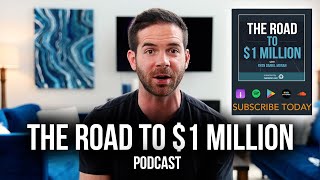
Ryan Daniel Moran launches a podcast documenting entrepreneurs' paths to seven-figure businesses. The formula: four products selling 25 units daily at $30 each hits $1.1M in roughly 12 months. Success hinges on knowing your customer, securing distribution, and managing capital.
Chapters
My biggest regret as an entrepreneur is that I didn't document the growth of the stories of the entrepreneurs that built seven figure businesses as a result of finding my content and reading my book. I've had hundreds of people build seven figure businesses as a result of getting plugged into the work that we do here@capitalism.com and I know them, I've talked to them, but unfortunately, I didn't capture nearly as many of their stories early in the process when they were still in the grind, they were still in the hustle, they were still figuring it out, they were still asking questions about how to get started. So I decided it was better late than never. So at capitalism.com, we just launched a brand new podcast called the road to 1 million. And on this podcast, we're documenting the stories of our students who are coming up with product ideas and they're still wondering if they're on the right path. And they're coming up with their launch plans. And my plan is to document their growth so step by step as they're going from sometimes just an idea or just starting to a seven figure business. And you'll see the challenges and the wins and the losses and the failures and the success stories. And as a result of hearing these episodes, you'll finally say, oh, my goodness, I can do this if this person can do this. And I was listening to them three months ago. If they just crossed $50,000 a month, well, man, what have I been doing with my last three months? And it's finally gonna kick you into gear to go build the seven figure business that you can sell. I recorded the first episode as a video podcast and I want to share the whole thing with you here on the channel. And if you find value in it and you want to subscribe, you can just go over to Spotify or itunes, search for the road to 1 million, and you'll get all of this for free. And once again, we'll be documenting these stories, the ins and outs, wins and losses, and you'll see a lot of your questions answered as a result of listening to this podcast. And you'll walk away saying, I can do this too. So with that, I want to invite you to watch the first episode of the road to 1 million. Hi, I'm Ryan Daniel Moran. Welcome to the road to 1 million. This is the podcast about building seven figure businesses. This is the podcast that shares the highs and the lows, the the wins and the losses toward building a seven figure business. Over the last decade, I've had the privilege of being a part of hundreds of entrepreneurial journeys, many of whom went on to build seven and eight figure businesses. I haven't officially counted, but I know that I could make a list of somewhere between three and 500 entrepreneurs who have crossed seven figures in at least top line revenue as a result of some of the work that we've done@Capitalism.com unfortunately, along the way I failed to document all of those stories. I did not capture the wins and losses along the way. We only captured their success stories after they crossed seven figures. So when I was writing my book 12 months to 1 million or when I am sharing the strategies that we talk about here from Stage, I often reference the success stories that came from our community@capitalism.com but I always wished that I could go back and document the process of their journeys, when they started and how they started, the hard decisions that they made at the beginning of their journey. The struggle of what product to sell or how to launch profitably, even how to manage capital or the fears of running out of money. In May of 2020, I released my first book called 12 Months to 1 Million and it's the Playbook to Building a Million Dollar Business. And when I released this, it created a new set of entrepreneurs who are starting their journey. It opened up the door to entrepreneurs who are just beginning or just wanting to begin their journey. And this was an opportunity for us to capture those stories in the way that I wish I would had at the beginning of my career. So throughout this podcast, we'll be speaking with a variety of entrepreneurs at different levels of their journey. Some are just starting out, trying to find their new idea. Some have already released a product and are on their way to getting 100 sales a day. And some are somewhere in between. But on this show, we're going to capture all of the hard decisions, difficulties and wins on the road to a million dollars. And after listening to a few episodes on this podcast, you'll walk away feeling like, I can do this. You'll walk away with a very clear path to building a seven figure business. You'll also have new ideas that start to pop up. And every time you hear one of the case studies, you'll hear the progress that they made the last time that they were on the show. My goal for this podcast is for you to hear so many examples and so many details along the way that you no longer have an excuse not to start a business that truly excites you. I know that when I started my entrepreneurial journey, I just wished that somebody would show me exactly how to get there and would show me examples of people who had done it. I had to carve my own way and since I shared my journey along the way, hundreds of entrepreneurs became seven figure business owners as a result. My goal now is to share the next wave of success stories with you so that you can follow in their footsteps throughout this journey. You're going to hear me repeat a very simple formula and it's a formula for building a million dollar business. And the formula looks like this. Four products times 25 sales a day at a $30 price point is a million dollar business. Four products at 25 sales a day is 100 sales per day. And at a $30 price point average, that's $3,000 a day in top line revenue. That's about $1.1 million in top line revenue. Assuming that you're taking home a 20 to 30% profit margin, which is pretty average for the types of businesses that we teach. You've got enough to have a full time income, you've got enough to be a full time entrepreneur, and most importantly, you've got a real business that you can scale or sell at the $1 million mark. You've got enough of a business to grow to 5 or $10 million. You've got enough of a business that you can grow it as big or manage it as lean as you'd like, but that is really where everything changes. Once someone follows the formula and has four products that sell 25 sales a day at a $30 price point, they're a full time entrepreneur and they've got a real business. That entire process usually takes about 12 months to complete, which is why the name of my book is called 12 months to 1 million. It lays out the actual playbook to getting that million dollar business in about 12 months. And on this podcast you'll hear me consult with new entrepreneurs who are following that formula and are somewhere along that journey to get to that million dollar business. And we'll poke holes in their plan, will rip open the decisions that they're considering, and will walk away with a clear plan to a million dollars. And you'll sit in the room as you listen to these one on one conversations. You'll hear us discuss agencies that the business is considering. You'll hear me recommend that they avoid certain people or certain decisions or certain markets or certain service providers that I don't recommend. These are real consulting calls. These are real advisory calls. In fact, some of the businesses that you'll hear featured on this podcast are ones that I've invested in, I run an investment fund called the Capitalism Fund and we raise money from accredited investors in order to invest in the businesses and the entrepreneurs that are coming from the capitalism.com community. So sometimes I have a stake in some of these businesses. These calls are our one on one check ins where we're looking at what they're considering doing in their businesses, how they're considering growing, and what holes they have in their plan. And I'm treating it as a real partner conversation so you can see what we're talking about on the road to a million dollars. Throughout this journey, you're going to hear a few things come up in each conversation. If you hear me mention any of the following, I want you to know where they fit in this road to a million dollars. The first thing that you'll hear me mention is the fund. The Capitalism Fund is an investment fund that I run that invests in businesses that come from the capitalism.com community. For example, one of the episodes that you'll hear over the next few weeks is with an entrepreneur named Nick. Nick was a member of one of our membership groups and Nick and I became friends over the years that he was involved. Nick created a low sugar dessert company that was called Keto Brownie. And I loved the product. Nick is a fantastic product creator. But Nick struggled with the sales side of the business. He also struggled with the managing of capital. Those are two big bottlenecks that entrepreneurs face when they're on their road to a million dollars. So at the end of the year 2020, Nick reached out to me, considering bringing on some help to grow the business. And because I run an investment fund that specializes in helping entrepreneurs get free of capital constraints and also have a clear path to victory, it was a perfect fit. So we bought a percentage of Nick's business and we invested additional capital to make the business. So our fund invested into Nick's business and we infused additional capital into the operations to allow him to buy more inventory, to hire some key members of the team, and also to invest money into research and development so that he could release additional products. As a result, we're working very closely in helping Keto Brownie become the next big thing in its industry. Full disclosure, by the time the episode airs, that business may have been renamed. That's one of the things that you'll hear he and I talk about in our one on one conversation. So in that episode, we dive deep into that business. As an owner of the business and a consultant and an advisor to that business, I'm incentivized to help Nick and that business grow. That's one part of the business that you hear us bring up from time to time. The capitalism.com fund is a fund that raises money from accredited investors in order to invest in entrepreneurs that we are really excited about. So you'll meet some of the businesses that we've invested in here on this podcast. You'll also hear us reference the Capitalism Incubator. The Capitalism Incubator is a small group of entrepreneurs that we're investing in with our time and our network. This is a 12 month experience that entrepreneurs go through to get clear on their vision and to launch profitably. And we bring in our group of investors and sometimes influencers to help guide them along their way and also create relationships that stack the deck to make it possible for them to win. Some of the entrepreneurs that you'll hear on this podcast were graduates or current members of the Capitalism Incubator. So they're wrestling with their idea, they're getting clear on their roadmap, they're getting really specific about how they're gonna get to seven figures. And so I'm sitting in as a coach or a mentor and helping them make decisions that give them the best chance at building a seven figure business that they can sell. You might also hear us reference the 1%. The 1% is a mentoring community for entrepreneurs who are building a 1% net worth. That's a net worth of between 5 and $10 million. I believe the path to becoming rich is very simple. It's build a business and invest the profits. This show specializes in the build a business part of that formula. The 1% is a mentoring group for entrepreneurs who are following a path to building a 1% net worth. And some of the guests that you'll hear on this podcast are members of that community. So if you hear us reference the community or the 1%, that's what we're talking about. And finally, you might hear me reference Turnkey several times throughout this podcast. That's an agency that I send a lot of business to. It's run by one of our members, Jeff Lieber. And it's an agency that I send a lot of business to when an entrepreneur wants to sell products on Amazon. Com. Full disclosure, I do advise Jeff. So I am a 1% owner of that agency. But you'll hear us reference several agencies throughout this podcast that we recommend or send a lot of business to. You might also hear us bring up some agencies that we tell people to stay away from. These conversations are very Raw and honest. And we don't pull any punches in the conversations with these entrepreneurs as we move forward. And as you listen to the case studies with each of these entrepreneurs, you're going to hear a few common themes come up over and over and over again. And the reason why they'll come up over and over again is because they're almost universally true. The first thing that comes up in most conversations is that everything is easier when you decide who you are selling to. When you're building a seven figure business, it only takes four products that sell 25 sales a day at a $25 price point. And if you know who the ideal customer is, then choosing those first four products is remarkably easy. We talk about this over and over again on the show, but if you think of one person that you know and what products they buy on a regular basis, you'll list them out very quickly. For example, if you think about a crossfitter, a crossfitter buys straps and knee sleeves and bars and protein powders and food and all kinds of things. I'm not even a crossfitter and I just made those up in like nine seconds. So if you are clear about who your market is, the answer to the product becomes very, very simple. Sometimes you'll hear entrepreneurs get lost in the details and the different decisions that they need to make. So I often bring them back to this question. Who is your customer? What do they want? What are they thinking about? Who do they follow? Where do they hang out? How do we speak to them? Because that question who is your customer? And answers almost every other question on the road to a million dollars. Another thing that you'll hear come up a lot is audience. Audience is simply a collection of your target customer. And I always say that if you address the audience piece of the formula, then you have a very clear path to having a seven figure business, sometimes in a matter of weeks or months. The reason for this is if you have a clear way to distribute whatever product you bring to market, then you've got a clear path to victory. One of the ways that I suggest some of our students do this is by creating partnerships with influencers. This is something that I learned from a mentor of mine named Brian Lee. He was the founder of LegalZoom and also the Honest Company with Jessica Alba. He also founded Art of Sport with the late Kobe Bryant, and he was the first investor behind Honey, the app. I think he has three or four billion dollars companies on his resume and he's only in his early 50s. I don't even Know if he's that old. Anyway, what Brian taught me was that if you start with an audience, then you have a clear distribution for your product. It's the fastest way to get a lot of people to know about your business and about your product line. So if you have a partnership or a relationship with someone with a following or someone who's an influencer, that's one of the ways that you can get your product to a lot of people very quickly. Of course, that's not the only way. Another way that you could have an audience is by being good at running ads or by sponsoring somebody else's podcast or sending out your product to some small YouTube content creators and getting them to talk about you. But solving the audience piece is a critical component of getting to seven figures as fast as possible. Some entrepreneurs will decide to do this by themselves, and so they create a lot of content and they try to build an Instagram following or a Facebook group or an email list or something like that. And sometimes that can be really effective. But I also know that a lot of entrepreneurs don't want to do any of that stuff. So you'll hear me come back to that question. Who's your audience? Who are you partnered with? Where do you have distribution? So that when your product is ready, you've got a very clear way to launch profitably. And the third theme that you'll hear come up a lot is about capital, cash, how much money you got. I have learned that if you have enough capital, you've got a distinct advantage over a lot of people who are trying to compete with you. Cash flow management makes and breaks companies. In a lot of cases, if you have cash flow, if you have capital, if you've got reserves, then you have the ability to go faster. Now, if you're listening to this and you're a new entrepreneur that is just getting your start and you don't have a lot of cash. You'll hear us navigate that too in some of these episodes. Some of the entrepreneurs that you'll meet have past successes and so they have cash reserves to be able to be aggressive with advertising or building a team or ordering a lot of inventory. But some of the case studies that you'll hear don't have any of that. They're working full time jobs, they're starting something from scratch. Building a million dollar business seems impossible to them. So you'll hear from both sides of entrepreneurial journeys. But in my experience, if you can solve the capital problem with partnerships or some other ways to finance your business, you have a faster path to victory. The way that we teach our students and our community to handle this is, is to create a very clear vision to get a prototype and some amount of sales. And then it becomes really easy to either create partnerships with investors or for debt financing or some other ways that we'll talk about in order to finance and fund the growth of your business. If any of this is confusing to you at this point in the process, sit tight. All of this will make sense as we go through each case study that we share here on the road to 1 million. Our goal in this podcast is to show you the ins and outs, is to demystify all of the details and questions about building a seven figure business. My goal is for you to walk away feeling like you can do this, feeling like there's a clear path to victory. And after three or four episodes, you'll start to get ideas. You'll start to come up with businesses that you might like to start. And most importantly, you'll start to realize that this can be fun. That you can do whatever you want to do, that you can build the type of business that excites you, that you don't have to follow somebody else's plan, that you can build the business that you want, not the business that quote works. The formula that we go through is clear enough that it gives you the steps to success. You need four products, you need to get them selling consistently, and you need a decent average price point. But it's flexible enough for you to plug in whatever type of business you want to build. And as you're going through this process, you're going to get ideas for what those businesses might be for you. Or if you're already in business, you'll walk away with insights. They're going to help you get to the goals that you have much faster. The benefit that we have at capitalism.com is a vast network and a lot of relationships with entrepreneurs that we helped along the way. So we've seen people fail and people succeed and everywhere in between. And you'll get to learn from all of the data and all of the experiences and all of the case studies that we share here on the road to 1 million. Lastly, you'll also hear us share case studies of businesses that were involved with or businesses that we are starting within the doors of capitalism.com as part of our business, we have a lab of sorts. We call it Capitalism Brands. This is where my team and I come up with our own ideas of brands that we're building ourselves. As I record this, the business structure of capitalism.com is a mix of a media company, a fund, an incubator, and our own lab of brands. So we have a lot going on here, but one of the things that we'll share is the experiments and the case studies of the businesses that we're involved in. For example, a few years ago I purchased a beauty and skincare company that didn't go so well. We invested a lot of capital and money into this business and now it's a turnaround project. You'll hear us talk about that business here on the show and what we're doing to turn that business around, get it profitable again, and get it back on the path to being a multimillion dollar business. In fact, that business has dropped quite significantly since we acquired it. But you'll hear us talk about what we're doing in order to fix that and to get it back on track. You'll also hear about one of our internal projects, a mental health company called Switch. You'll hear us talk about the launch, the product development, the wins and the losses and the things that are working and not working in that business. And as we release additional products and additional brands, you'll hear us talk about those as well. So throughout this podcast you'll hear case study after case study, example after example, win after loss after example after example of different businesses that are working or otherwise. And you'll walk away with clear ideas and clear examples of what it takes to build a million dollar business. I hope that this podcast inspires you on your journey. I hope it gives you a clear path to success. I hope you walk away from it knowing that you are capable of having a seven figure business. I hope that it demystifies the path to success and gives you the permission to go all in as an entrepreneur. I'm so excited to be documenting this process with you and to invite you to join the road to 1 million. I'm Ryan Daniel Moran with capitalism.com thanks so much for listening. Please subscribe on Apple or Spotify and I'll talk to you on the next episode. Take care.







