
Two Steps To Beat Sales Records, Depression, & Setbacks w/ Hal Elrod
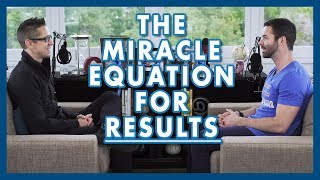
Hal Elrod talks about building Miracle Morning from 10,000 copies in year one to over a million sold, and his formula for beating setbacks: unwavering faith plus extraordinary effort. He survived a car accident at 20 and a recent leukemia diagnosis, and credits mission-focused daily routines and combining conventional and holistic treatment.
Questions this video answers
12/12/12
About 10,000 copies (Hal's estimate).
About six years after initial self-publication.
Unwavering faith and extraordinary effort.
Acute lymphoblastic leukemia (adult case; initially given ~30% survival, later described as ~10% due to a rare NUP1 mutation).
Chapters
Hal Elrod. Thanks for hanging out with me, Ryan.
Thanks for having me at the lake house, man. This is beautiful.
Yeah, it's okay. It'll do. Yeah, it'll do for now.
You're living my dream, man.
Your dream?
That's one of my dreams. Yeah.
What other dreams have you not fulfilled yet?
That's about it.
No, no, actually you've almost died twice. Yeah, those were beautiful family.
Yeah, no, I actually all you want.
Is a lake house at this point.
So I'm turning 40 in about a week and a half, two weeks. And so I started this kind of process yesterday of reviewing like journal entries from my entire life and it was really cool. I found some that I had written when I was 30 about my dream life by 40, basically. Because when I was 30 I looked at what did I do the last 10 years, like basically adulthood 20 to 30. And then I like reflected. I was like, wow, I've done more than I realized. And I think for most of us, right, that's really valuable to every day. We should be celebrating what we did that day. But. And then I looked ahead, I'm like, what, what would be the dream for the next 10 years? It was crazy. I didn't even realize I had that entry until I went and found it. And I Almost every single thing except for lake house. It was on the list in terms of family and all these things.
Is that one of those things where you, you write it down and then you forget about it for a few years? Well, that's what you come back to it.
Yeah. So that's what's weird is that I had forgotten about it essentially. But I think that because there, and there is that there is the element of, for the most part, right. You want to set a goal and you want to revisit it every day and you know, and work towards it and make it happen. But then there's also those weird. I'm sure you've had those do where you find something that you wrote 10 years ago and you haven't seen it for 10 years and you know, and it could be multiple things, but now it's actually happened.
That's interesting because I find that when I review my goals every day, I do a lot of beating myself up because in the micro things move so slow.
Yeah.
And yet we have social media, so everybody else is crushing it every single day. And so I have to look at my goals and more like 6 to 12 month chunks at most because that's enough. That's enough time to actually evaluate progress. Otherwise I really beat myself up over that.
Yeah.
So just storing it away for 10 years or forgetting about it or whatever it is.
Interesting approach strategy that you like. Yeah, yeah, yeah.
So I've got your new book Miracle Equation here and I pretty, I really.
I do like the COVID It really.
It actually is a vast difference between the two.
And you can see self publishing versus traditional.
And that's what I wanted to ask you about to start because you have a really interesting business model behind publishing which a lot, which a lot of people can't figure out the numbers of publishing. And when you had Miracle Morning, I know it wasn't like an overnight success and then there was like an exponential curve to it and then there were follow up books and then I want to digest like the path of this. So first of all, tell me when you publish Miracle Morning and how you brought that to markets. I think it's a really interesting story.
Yeah, I published it. 1212 12. I have brain damage, so I needed a date. I would not forget. It was a good one. So 12, 12, 12.
You're not kidding about the brain damage.
Brain damage, Significant brain damage for me. Head on car collision when I was 20. Maybe we'll get into that point. Yeah, but so I self published the book and what happened was I started writing the book in 2008 or 9. Took about three years to write it. And I was under the impression, as many people are that you. Well, especially back then, that I have to find a publisher to be taken seriously into this book if this book's going to actually change lives and reach people. Otherwise it's not going to, to be a self published. Nobody buys a book. And back then self publishing was kind of again, it was not so mainstream as it is now. I mean we're talking what, 12 years ago with time flies 11 years ago. And so.
Wait, hold on, 12. 12.
12 is not 11 years when I started writing it. Sorry.
Okay. Yeah, yeah.
No, wait a minute.
Do we fall into a different dimension seven years ago?
Yeah, yeah, yeah. Anyway, so the. I didn't say I was good at math, but brain damage, remember? All right, I'll just keep falling back on that excuse anytime. It serves me, by the way. Um, but I ended up, I hired a gal who wrote a book proposal for James Arthur Ray who got a million dollar advance for his book and she wrote a few other big book proposals. And so I was on a webinar of hers and it was a teleseminarity. This was before webinar. She was a teleseminar. And I thought like, I've got to, I'm going to hire this woman. I'm going to, you know, forget. She taught me some great stuff.
What were you doing before you wrote the book, by the way?
So my background is direct sales. 2006 I left, I hit hall of Fam with the Cutco company. Right. And then I, I launched, I started into my dream career which was keynote speaker. But back then I was making like, you know, a grand gig. I mean it wasn't making a lot. I was doing colleges and high schools and.
Were you talking about sales as.
No, sharing my car, my story. Okay, Got it had on by drunk driver. Right. All of that and how I overcame that and then the lessons around that that could help students to be happy and overcome their challenges and all those. So speaking of high schools and colleges, and then my mate, and then I wrote my first book in 2006 called Taking Life Head on about the car accident. Right. And then I never really had a dream or an intention to write another book. It was like, I just, I have a responsibility to share this story with the world and help some people. And that book didn't do it. Got good reviews, but it didn't sell them any copy. Typical self published book. Right. Nobody knew about it and. But the main source of income for me was coaching. So when I left cutco in 2006, I went, what am I qualified to do? Like this, this writing thing, I'm probably not going to get rich from that. The speaking thing is going to take who knows how long to build. What am I qualified to do to make money? And the answer was, all I've done at that point is six years of selling a lot of Cutco kitchen knives. And so I went, I'm qualified to coach fellow sales reps on how to do that. Right. So that's what I was doing to earn money was one on one coaching. And then in 2011 I launched my first group coaching program. And that was like 200. And it got to 220 members at its peak.
Okay, so that was, that was your business. And then you wrote the Miracle Morning.
Yeah.
And you do this proposal, you think you're going to get a million dollar advance.
And I did not. So what happened? Well, I didn't go for it. So right when I, as I was researching like we spent all this time in the proposal and then I went, oh wait, the more I researched it, my conclusion was this, I went, so wait, if I go after a traditional publisher, I have, I have no platform. So I have no leverage. So I really can't get any significant advance. So they will get all of the rights to the book. They will take all of my royalties, and because I have no big or no platform and no credibility, they're not going to invest time and energy into putting a lot of marketing dollars behind me. So I have to do all the promo anyway. So I really threw kind of a Hail Mary and I followed James Redfield's track, who wrote the book the Celestine Prophecy that he self published. Then it sold a lot of copies, traditionally published it, and now he sold 14 million copies. So I thought, I'm willing to put in the work. I might as well keep the rights and the royalties until I've created a significant enough reach with the book that traditional publishers are will call me, like, hey, what's that? Right. So I had no idea if it would work.
So. So the interesting thing is you didn't come out of the gate with a platform.
No.
But you just hustled for as long as it took in order to sell enough books to where hell Elrod now has a platform. And my understanding is you just did a ton of podcasts, is that right?
Yeah, that was. So I did podcasts, interviews and speeches. The. And the irony here is that the Miracle Equation we're going to talk about, that's the new book that's coming out, the Miracle Equation, Though the concept, not the book, I created when I was 20, so about a year, six years before the Miracle Morning was a concept, and then it was the concept of the Miracle Equation that I used to promote. The Miracle Morning. Yeah. And so essentially we'll get more into it. Unwavering faith, extraordinary effort. So what I did is I thought, I'm willing to commit to put forth whatever effort is necessary to share this message in this book with as many, you know, millions of people. Right. That was actually my goal was 1 million copies or change 1 million lives 1 morning at a time. And my goal was in the first year, I don't know how. Right. They call that, what, uninformed optimism or delusion. Right. One of the two. And I thought, I don't know how.
Or brain damage or brain damage, but.
I'm going to change a million lives this year with the Miracle Morning. And I thought, I'm willing to do whatever it takes.
So.
So I self published it. I didn't traditionally publish it because I just thought that was the better route to go. In the first year, I didn't sell a million copies, Ryan. I sold right around 10,000, give or take.
And that's a good book launch in most worlds.
Yeah, for a week if you want it. New York Times, like that's the first week, right? Not the first year, the first week.
But still like most.
Oh, you're saying that's decent for most books? Yeah, sure, sure, sure. But for anybody listening, right, I was 99.9% short of my goal, right. 990,000 copies short of my million copy goal. And as you're gonna find out today, as we dive in, today is the only variable is really time, is that we often set unrealistic not goals, but timeframes. And so I remember, I don't know why this number stuck in my head, but I remember thinking maybe it's cause I was around 30 years old. I thought maybe it'll take me 30 years to reach a million people. I was off by the one year mark, obviously by far. Maybe it'll take me 30 years. But I'm committed to do whatever it takes because, because I was getting emails from people saying this is radically changing my life. And so I thought I have a responsibility to change these million lives for as long as it takes. So during the first year and a half, I did over 150 interviews on other people's podcasts, I gave 40 something speeches, I did over a dozen television interviews, local and national, like Good morning Houston, good day, NBC's daytime, like you name it. And so I put forth extraordinary effort and I still only sold 10,000 copies. But I kept going. And eventually, year after year, I stayed committed to the goal. And it took six years for me to surpass a million copies sold. And now we're at 1.7, 1.8 and it just, it just keeps going.
There had to be some sort of.
A tipping point there, there was the. And I actually listened to the tipping point when I, a friend said it to me when I was getting discouraged. I was talking to my friend Brianna and Brianna Greenspan and she goes, I'm going to send you a book. She goes, don't give up. How? Like you'll get there, but you've got to reach this tipping point. I'm like, what's a tipping point? And so, so it was 18 months for me to get to the first month I sold 1800 copies and it took 18 months to get back to that amount sold in a single month. I mean I was down to 80 copies by like month four. And.
It was, Pat Flynn's podcast was actually, you know, I think that that combined with enough people doing it kind of critical mass. And it all kind of hit at the same time. And that's when it went from, yeah, nothing to 5,000 copies a month and then just kind of kept going.
Yeah, that makes sense. So what's really interesting to me is I know there's another business model behind this, which is not just selling more books, is that you brought on other co writers for other branded Miracle Morning books. And there's like 11 or 12 of them now, I think at this point.
Yeah, I think 13, 12 or 13 years.
So that is a completely radical shift on the publishing model. Would you explain that?
Yeah. So it happened organically. I'm a very non strategic person where I don't have this master plan that I'm rolling out. I literally am kind of a wake up and be like, all right, I'm moving forward this today. And I just keep going the same direction. So most of the stuff I've done, people go, was that your plan? I'm like, no, it was. It just had happened and the way that happened. A buddy of mine called me and he said we were former colleagues at Cutco and now he's a top realtor, runs an office. And he said, hal, have you thought about doing like a Miracle Morning series? Specifically, every agent in our office that's read the Miracle Morning, they've all skyrocketed their sales. And he goes, and so have I. And he said something like, Miracle Morning for salespeople. I said, it's crossed my mind. But you want to write it, you want to co author it. Right? And he doesn't have a platform. Again, just, sure, let's go.
And.
And so we co authored the book. And then. And that was the first. And then now it's. I don't know if you know Honore Corder.
No.
Honore's become a good friend. So she's now my 5050 business partner. In fact, after book one, I think in the middle of it, early on, I met this gal, Honore, and she's written like 40 books on her own and she has a book series for single moms. And I just thought, wow, she's qualified more than I am to launch a series. And so now we partner with co authors like Joe Polish and Cameron Herold and the people that are experts in their space. And then we, you know, we. I have a template that they kind of fill in and create, you know, 60% new content. And. And it's worked. I mean, people are that book. All of the book series books are rated higher than the original ones.
And that. And that became its own business off kind of the. The success that you had just beat down the door of for. For 18 months. It's really interesting how I think. I think oftentimes we experience success in the way that we didn't expect, but it comes off of us grinding towards one singular goal. And that's why the actual philosophy of the miracle equation is interesting to me. The idea of faith and extraordinary effort. But I want to ask you, hard chargers like me and you always have multiple goals. Sure. And it seems like the extraordinary effort part requires singular focus, but it's not like you've only had one goal over the last 20 years. So explain to me how you can do multiple goals with the necessary effort that it requires.
Absolutely. And this is. So in 2005, that was the transformational year for me, like, a quantum leap where I went from achieving pretty great or pretty good results to, like, beyond what I ever imagined possible. And Cutco at the yes part, I was part of it, so. Well, actually, it answers your question. You're gonna see that I achieved, like, 10 goals, that each one of them would have been, like, a singular.
Okay. That would have been the best of my attention.
Yeah. And so here's what happened. So I. I hit hall of fame with Cutco, and I went to a conference in February, and I was like, I'm done. I, like, I'm not even taking notes of this thing, dude. I just. I'm like, I'm just collecting my awards, and I never have to sell another knife again, Right? Nothing wrong with selling knives. But I was like, I'm done, you know? And so I was. I was moving on to the next phase of my life. And the. I saw two people in our region, right? They were the top two of the top reps in the country, and they got the coveted Rolex for the highest level of sales in our company. And I could care less about a Rolex. In fact, I sold mine. I didn't want to. I don't care, but. But I had this pain. And if anybody's listening, right, like, if you really get present, I think that all of us at some level and can get in touch with some degree of this pain. And it was the pain of unfulfilled potential. And I realized I watched them get. Walk and get their reward. And I went. I never did that. I'm about to leave this company having never really given it my all. Like, I had broken records, but I was a very inconsistent. I would break a company record for, like, the biggest month ever. And then I'd be like, cool, I can just take the next month. All right? I would just. Then I would just take a vacation until I ran out of money and I'm like, oh, got to go break another record, right? So I worked in these sprints and I went. I never fulfilled my potential as someone who could consistently show up for 365 days, right? And I thought, I can't leave. I got to give it one more year. Which was a radical emotional shift from like, dude, I'm done. And so I pulled out my computer and I wrote my goal for 2005. And then I ended up deleting the word goal and I wrote my mission. Because you think about language is really important, and the goals are something that we set. And we often set them. It's fun to set them. It's a cute exercise. They change, hit them. We don't look at them. And each year it's like, it's more of a fun exercise to do it, whereas we're not really committed to actually doing whatever it takes to hit them. And so I thought mission holds different weight. Like, military organizations carry out life or death missions. They don't hope, they don't die. Like, it's all or nothing, right? Humanitarian organizations carry out missions to save people. And I thought, this is going to be my mission. And in the new book, the Miracle Equation, that's what I have to focus on, is you've got to get clear on your mission. And in simple terms, it's just, what is the single most important goal of all of your goals? What's the one? And the way that I look at how you figure out the importance is which goal would enable you to develop the qualities and characteristics that you do not right now possess, or at least at the level that they could be, that would allow you to achieve any goal you ever set. And that's the real purpose of a goal, right? Jim Rowan, I think, taught that decades ago that it's not about hitting the goal. But most of us think in this black and white paradigm that's it hurts us more than it helps us. Where it's like, if I hit the goal, why succeed? And if I don't hit the goal, then I have failed. But it's like, no, no, no, no, no. Who you become during that process of putting forth extraordinary effort to achieve a goal far outweighs the value of whether or not you hit any individual goal. And so the point of the mission, though, is this. And this is really to directly answer your question about well, we've got more than one goal and is that that year. I set all my goals for the year and there were some pretty radical goals. The first goal was to not was to go out and double my best year ever in sales. Which if you're in business. Right. To increase your revenue by 100% is pretty intimidating. Right. 10% is like, okay, I can get a little better. Right. 30%, 50% you're like, Ah. But 100% was terrifying.
And so what I 100% on you are already smashing records.
Exactly. I mean I was so, so my previous two best years out of 50,000 sales reps in the company. Dave, you, you know, kind of perspective. I was number six one year and number five the next year. Right. So. So I was trying to. Yeah. Not just double. Like I suck and I don't work, so I'm going to stop being lazy. It's like I'm performing at a record breaking level and I have to double that to, to, to fulfill my potential. And so I decided that if I did that I could do anything. But that year I thought I also have other goals that are really important because remember, in my mind I was done with Cutco. So my goals before I went to that conference were I'm going to write my first book this year and which that's a big undertaking. I thought I want to launch my speaking career. That was my dream is to be a professional keynote speaker and I want to launch a coaching business to kind of support myself.
That was after you decided you were going to leave.
Yeah.
So these are the goals. Now that's not happening. And so all that has to get rearranged somehow.
So now. Yes. And now I'm going, okay, do I put all those goals off till next year? And then as I don't know, you know what, I just was inspired and I go, dude, what if I did all of it? What if I doubled my best year in sales ever while I wrote my first book and published it? And I, and I launched my speaking career and I launched a coaching business and I want to get in the best shape of my life and put on 20 pounds of muscle. And that year I put on 70 pounds of muscle at 5.7% body fat. I don't know that's healthy, by the way. I don't think that's healthy.
17.
17 pounds of muscle and at 5.7% body fat that year. Like I said, I don't know if that's healthy to be at 5.7% body fat. But. And and then I also, that year my goal was like, I literally was like, I took the ceiling off I go, I want to meet my wife. I'm tired of dating. I'm ready to like settle down. I thought I really, I just got into rock climbing. I thought I want to rock climb three days a week. So at the end and I think there's more. Oh, and I thought this isn't meaningful to me unless I lead a group of my colleagues to exceed anything they've ever done in the same way that I'm trying to do for me. And that year more I led a team of 20 sales reps and more reps achieve surpassed the highest level in Cutco that were on that team. And than in the 50 year history of the company. I wrote and published my first book. I gave my first two paid speaking engagements. I. And I'm going to explain how this all fits into the mission, right? And I launched my coach. I had five paying coaching clients before the year was over, while I was still selling, I doubled my best year in sales ever. I did it the final week. I mean I was, it was to the, to the wire.
You basically said, I'm going to have the best year ever.
And then you did and then I did. And then, and here's, and here's, here's where it's counterintuitive. The idea of mission scares people because they go, well, I can't just commit to one goal. I've got all these important goals like you said. And so for me, here's what having a mission does. All it is is you set five goals, six goals, eight goals, three goals, whatever, and you go, which of these is the most important and would be the most beneficial for my future, my present and my future. And then here's what it does. All it does, Ryan, is it organizes your time. When I woke up in the morning, the rule is I wasn't allowed to go to the gym or, or open my computer to write or get on the phone to make calls to get a coaching club, right? I wasn't allowed to do any of that until I engaged in the activities that I had predetermined would make my mission inevitable. And so that's it. And every day we wake up and we usually human nature is to pursue the path of least resistance, right? So it's like I'll just check email. We look at our goals and go, which of these is the least scary, has the least potential foot cause of failure, on and on. And we just do the easiest thing and it Becomes habitual and the year ends and you go, what happened? But when you commit to a mission, at the very least that's going to happen by the end of the year.
And so what was the singular mission.
That in 2005, it was to double my sales. And in the new book, right, the two decisions, unwavering faith and extraordinary effort. I always say that at first glance those are very unexciting. And you go, yeah, yeah. So I got to believe myself and work hard. Cool. Check, like, teach me something I don't know. But part of it, like with the extraordinary effort is how do you make it feel ordinary? How do you make it systematic and recurring so that the effort happens like you're on autopilot, Right. You could call it habits or whatever, but here's what I did. Here's how I took the fear out of a really audacious goal like doubling my best year ever. I went, what's my process? Right? And that's what I want you, if you're listening, what is the process that you could predetermined and commit to? And if you commit to it, over an extended period of time, your goal moves from possible to probable to ultimately inevitable. Right? If you, if you, if you do one thing consistently that move, like for example, if you write a thousand words a day, well, writing a book might be scary, but if you, if you commit to a word count every day and you hit it more often than not, the book gets written, right? It's not, there's no fear, it just, it just happens. So for me, went and figured out what was the best year I had ever had before. How many calls did I make on average every single week? And it was 105 calls a week. Just over 20 a day, five days a week. And I thought doubling my sales is intimidating, but making 40 calls in a day compared to 20, I've done that before. Never consistently for a year, but I've done that before. And so here's the secret to success.
Predetermine your process and then simply commit to that process without being emotionally attached to your day to day results. And if you stay committed over an extended period of time, you eventually get where you want to go.
Yeah. One of my favorite books is Straight Line Leadership.
I just put it in my shopping.
Cart today from your green one right there. It's like one of the must reads. And he says, if you have a goal, find out what it takes, what it costs to get that goal, and then determine if you're willing to pay the price that's it. That's it.
So.
So for you, you're like, well, if I double the one metric that's working and I just do it, then that will at least make it probable for me to hit the goal. What I've experienced is that there, some of those calls are more impactful than others. And as a result, I'm guessing you didn't have to make 40 calls a day. Did you make 40 calls?
Ended up being less. I ended up. I don't remember the number. I think it was 30 something at the end. At the end of the year when I totaled it back up, you know, and that was simply me just not all, you know, not hitting my call numbers every day and, you know. But. Yeah, but it ended up. It ended up working out with less, with. With about. Yeah, with not doubling the calls, but increasing them by about 50% increased in double the sales. I got higher closing percentage and higher average order size, and everything just kind of played itself out. Yeah.
So you did. You did hit the goal, right?
Yeah, yeah.
And so what. What you're saying, I think, is that by having the singular goal, it basically created the momentum and it allowed. It forced you to schedule the other things that were most important to allow you to hit the other goals. Is that what you're saying?
That. That first and foremost. Yeah, that's what I. That's what I'm saying. And then the second piece of it, though, too, is by committing to that singular goal, and it's the one that is the most meaningful. So you're counting. You're now counteracting your human nature to follow the path of least resistance, because you're doing the thing that has the most significant consequences in your world this year. And when you do that every single day, you reach the ultimate goal, which isn't the goal itself. It's. You become the person that you need to be developing the qualities and characteristics of beyond what you've ever been before. And now you are more capable and more deserving of achieving any goal that you ever set. And that's where. That's. The value extends far beyond the goal, because only the growth lasts forever, right? If you hit a goal, you spend the money, whatever. Only the growth lasts forever.
So, Hal, I can kind of relate to this because I think it was 2015 or 16 for me. I was a new dad and I was scaling a company. We were thinking about selling the company. I was building my audience and my podcast, really, it was just starting to take off, and I decided to get into the best shape of my life all at the same time.
Yeah.
And that was the most productive year of my life. And it was also.
Becoming a new dad. And my kid didn't sleep for 14 months.
Right.
So, like, there was literally no time to do what I did. And yet I got it done.
Yep.
But then I was exhausted.
Yeah.
Like, I still feel like I'm paying for those years.
Yeah.
So it was, it was by sheer will and force that I made that happen. It wasn't joyful. It was. It was incredibly energy. Exhausting. You're a happy dude. You never seem tired. You've almost died twice. So how.
My immediate response is like, that sounds like grinding. And I don't know that I can grind like I did back in 2015 or 16 again. So how do you go all in on that goal without it feeling energy? Exhausting.
So, I mean, for me that year, right. If you actually look at. If I actually break down what it took time wise. So my 40 calls a day was two hours of calling. Right. Basically every 20. And that, by the way, if you're listening and you're trying to figure out your mission, your goal, and how do you predetermine your process? You know, it's like you want it to be the simplest activity. So for me, it was like 20 calls a day. And you want to figure out how long does that take you that way, you know? Okay, so one hour a day, I'll do this. One hour day, I'll do this. So for me, it was an hour in the morning to make my calls, and then an hour I would do it in between appointments. So I try to get the next 20 done on my cell phone in between my. So if I get to a customer's house 30 minutes early, right. I would pull over, I'd make five calls, get to the next one, pull over. So I tried to get my calls done before I even got home. And then if they weren't done, I would get home and I'd make 5, 10, 20 calls. And then the actual appointments themselves I did, I believe I averaged scheduling 16 appointments a week. And an appointment on average, I would schedule them two hours apart with 90 minutes plus drive time. So if you actually look, that's 32 hours. Right. So, so I was looking. I was working 32 hours a week on appointments and in the car, plus two hours a day times. Right. Five days. So 10 hours. I was only working 40 hours a week.
Okay. You know, so I mean, on your singular goal.
Yeah, yeah, yeah, that's a good point.
So. So Where. Where was the time for everything else?
I think, okay, so that's 40 hours a week. Right? So that's basically a job right on my singular goal. And you imagine if anybody just picks one goal and works 40 hours on it. That's a lot of time they're putting into that. And then I would go to the gym in the morning or in the evening. Right. I would. I would. At night, I would do my Yahoo personals, date match.com bought them. That's how I met my wife, by the way, the Internet dating success story. And. And then I led my team. I did one call a month with them. I'm sorry, one call a week, Every Sunday for an hour. You know, and I think part of it, you know, to your point of like, that year for you wasn't joyful. I think that it is important that we have goals that energize us. And even if maybe not all our goals, I mean, some goals, it's like, well, I gotta do this one to make money, but I'm actually. I don't love my job or whatever. Have enough goals that energize you, that do bring you joy. Like, I loved rock climbing every week, and I just. I loved working out, and I did yoga and, you know, so I love. I love the calls where I led my team. I mean, there's a lot of times where I was exhausted, I didn't want to be on the call. But for the most part, those gave me energy because I was helping other people. Yeah.
If you hate the goals, I mean.
Yeah.
And I was certainly in resistance to a lot of that. Like, I mean, becoming a new dad is a huge adjustment, obviously, you know, so. Yeah, so that. That makes sense. And also, there's. There's just a sense of if you go all in on one, everything just kind of finds its. Its place.
It does. Yeah.
And. And that's what you're saying about working out and your calls. Whereas most of the time, I think we overthink every goal and we create conflicting processes over how we're going to accomplish each one. Yeah, But. But the truth is, if all the thinking goes into the one and all the energy goes into the one, I find that it just kind of. The rest just fills in the space. Yeah.
It's like that. What is it, Stephen Covey, that has the big rocks where you actually demonstrates it by putting them in a jar. Yeah. Right. And then puts the pebbles and then the sand, and that really is it. Everything else kind of finds its place. And one thing that's so important is to create what I call a foundational schedule, which is not rocket science, but especially if you're an entrepreneur. What entrepreneurs, you know, there's that freedom and they wake up and they're like, dude, I can do whatever I feel like. And they just bounce around like a pinball. Kind of like, oh, I'll check some email now. I'll record a podcast now. Alt right for me. If you look at my schedule, and it started back then, every hour of my day is scheduled. And occasionally I will schedule free time for three hours in the afternoon. And I'll be like, so I have the space to just do whatever I want. But for the most part, you know, my schedule from 3:30am to 9:00pm is scheduled. And I've got dinner with the family in there. I've got kids story time. I've got kids bath time. I've got my. The gym is in there. You know, I go at 6:15 to orange theory. All of everything is in my schedule, including fun time, including free time. But that way I know you never wake up and you go, well, what should I do right now? You're like, no, no, no, no, no. If I look at my schedule, I know what I'm doing every minute of every day.
And.
And it's something that jazz is like. It excites me. I've created the schedule in a way that makes me excited. Gym time is when it fires me up to be right. Email time is when I want to answer emails. Right. So if you're an entrepreneur, don't just don't overindulge in the freedom. So it's detrimental. Create a foundational schedule that you know what you're doing every, you know, every hour of every day.
Yeah. And I have often had resistance to this personally because I want the unstructured.
Yeah.
So I find that even if I just schedule the uninterrupted time, then I'm naturally going to get interrupted all the time.
Yeah.
So if I think, well, I want to be unstructured, the interruptions are going to make that not happen. But if I just block out, this is my uninterrupted time, well, now I get to have what I. What it is that I wanted. So if you schedule the things that you want to do anyway, that's that that's like, for me, a way that I experience my freedom. I still have to be protective of my freedom. Freedom does not just. Just happen. Even when you're financially free, you have to schedule what it is that you want to be doing. And so, so I have resistance to what you're saying, but I also know that it's true.
That's the interesting, that's the irony, right, Is that structuring your schedule gives you more freedom because it gives you freedom from having to worry about or think about or put energy into what you're going to do. And you know, it's kind of like the old Steve Jobs and who else? Zuckerberg. Just, they wear the same clothes every day, which I do too. You recognize this? I just wear this outfit all the time just to keep it simple. Right. So they don't have to make any extra decisions. And gosh, you know, if what you wear causes decision fatigue, well, then how you spend every moment of your day sure as hell is going to cause a lot of decision fatigue.
Yeah, I get it. So you've almost died twice. And you tell the story of the car accident fairly publicly, but I haven't heard you talk as much about cancer.
Yeah.
And you're given, I think, a 30% chance of living.
30% and then downgraded to 10.
I didn't, I don't know about that part. You're downgraded to 10.
So what happened was the, the cancer that I had was very rare and aggressive. This was two years ago. I woke middle night unable to breathe. It took like two weeks of having 16 pounds of fluid drain from my lung and, and seeing multiple hospitals and specialists before they could figure out what the heck was wrong with me. They misdiagnosed me with pneumonia at first and then that didn't, that wasn't it. And so, yeah, it turned out it was this really aggressive cancer called acute lymphoblastic leukemia, which surprisingly for kids is a common, very curable cancer. But if you get it as an adult, it's a 30% survival rate. And so that was, you know, not, I always say, if you're a glasses half empty kind of person, that's a 70%, you're going to die, you know, soon. And the. Then I was, when I went to MD Anderson, which is one of the top cancer hospitals out in Houston, Texas, they did more testing and they discovered that not only was my lung collapsing, but my heart was on the verge of failing. And they had to do an emergency procedure that day to drain my heart of fluid or I would go into cardiac arrest. My kidneys, kidneys, kidneys were on the verge of failing. And then they discovered I had this cellular mutation called a NUP1 mutation. And it, that's where my, my diagnosis went well, like, if you didn't have that, you'd have a 30% chance of surviving with that. You literally. We don't. So 10% was like a guesstimate they had. No, like, if you Google it, it's page four before the first mention. So you think about like, what, what, what in the heck in the world can you Google that? You have to search four pages to even find a mention of it. And that's how rare it was. So. Yeah.
And that's the end of the story.
No. So, all right, so here we go. The. Well, I thought I would let another question. So.
All right, well, first, first of all, my guess is that the miracle equation plays into that where you just said you're going to have unwavering faith that you're going to be in the 10%.
Yeah.
And then you're going to make whatever effort is necessary and your singular goal.
Your mission became beat this thing live for my family. Yeah. Yeah. And it really is. On the day I was diagnosed and told I had a 30% chance of surviving, I, you know, I mean, you can imagine, right? You immediately start obviously thinking a lot and going, what does this mean? Oh my God. And then, you know, then it quickly goes to, how am I going to live? How am I going to beat this? And one of the first thoughts, I'm.
Not sure that's the case, that everybody has that, that everybody says, how am I going to live? Well, why me? How do I take care of my family once I'm gone?
Yeah.
What happens when you die? Is this going to hurt? But you immediately went to, how am.
I going to be, how am I going to beat this? Well, no, and actually, believe it or not, here's what's interesting. I immediately went to the first thing I said. I called my wife. She happened to be out of town with my kids. That was a hard part too. I'm diagnosed with cancer and it was actually, the first diagnosis was Hal, we don't know what's wrong with you. It might be like this weird virus or infection that we can't identify, or you might have cancer. And at that time, I mean really, for the last 20 years, I've lived an anti cancer lifestyle. Like, I eat clean, we have no chemicals in my house. I'm like a hippie. And so I'm like. And it wasn't, it wasn't denial. It was like, logically, I'm like, doc, I can't. Like, I don't think it's cancer, but let's figure out what's going on. But I called my wife and I tell her, hey, sweetheart. And this is what it might be. And she was with my mom actually at the zoo. So she had to tell my mom, your son has cancer and has a 30% chance of surviving. Right? And I think they kept for the kids from a little bit. But.
I said, sweetheart, and my wife starts bawling, right? And you know, and I was already at peace with it. But I'm bowling because she's bowling and I'm, you know, I'm imagining what this is like for her. But I said, sweet, here was my first thought. I said, sweetheart, two things. Number one, I will beat this. And number two, I said, this will be the best thing that ever happened to me. And I know that's, you probably don't want to hear that or you probably don't like that. I said, but the car accident when I was head on by a drunk driver and I died for six minutes and I was told I would never walk again. It was the hardest thing I ever went through. It was unimaginable. It was the best thing that ever happened because it gave birth to my life's work. It enabled me to become the person that I am today. And, you know, that helps people and that just whatever I said, this cancer to me is just a bigger, scarier, newer version. And I go, and I don't. Lord knows why I've been, I'm tested. I thought the once was enough, but so I literally was like, I decided this will be the best thing that ever happened to me. And you think about that. That's a lens that now every aspect of is what am I going to learn from this? How am I going to use this experience to, to help other people, to help myself? Right. I mean, that was from day one. And, and then, you know, the other thing that you just said, which I already forgot what it was, but that was probably my second how am I gonna beat this? I mean, that was the next question, right? How am I gonna beat this?
What's my process?
What's my process to beat this? And, and, and I'm so.
I hear that as why and how. First you decide why.
Yeah.
And. Or what. And then it's how.
Yeah. And the why is not right. It's not the why me. Right? Yeah. Why did this happen? God, I don't deserve this. It's a curiosity from a place of what's the benefit in this? What is the benefit in this? Or the purpose or, you know the old adage, everything happens for a reason. I believe that, but not the way most of us, I think, are conditioned to think around about that idea, which is, why did this happen? And they like, literally, they turn to God or to like, oh, I don't understand. Why would this be happening to me? Why? I don't deserve this. I'm a good person. And for me it's a. Why from place of curiosity. Right. Of like. No. Everything happens for a reason. But it's our responsibility to determine the reasons and we can choose reasons that are based on victimhood and oh, poor me. Why, why, why? Or reasons that serve us and serve humanity and serve our family and that we all will benefit from.
Now, I know that part of your process that you wanted to do is you wanted to go the natural route.
Yes.
You wanted to go the holistic. You wanted to fight it without doing chemo and that. That route. And you were not basically not given that option.
Yeah.
And so your, your original process was removed from you.
Yes.
And so there's not like, as far as I know, some miraculous cure you found. You didn't, you didn't take some herb. Right. That just nixed it. You went through it and you had to do it the traditional way. And I'm guessing that commitment to that goal carried you through. Reason I frame it that way is I'm curious if medical doctors factor in that unwavering faith into your recovery.
They do not. Very few do. There are.
And I don't, I'm sorry, I don't mean like in the, in like a woo woo sense. Like, do they, do they give credit to the people who have that type of commitment to being the ones who actually beat it?
So very few doctors do that I have met now, I have read like, there's a book called Love, Medicine and miracles by Dr. Bernie Siegel, who's a famed oncologist. Right. And he literally says the one, the single common factor in every patient that he's worked with that has beat cancer. And many of them have not, of course, he said, is that they had a commitment that I'm going to beat this no matter what. There's no other option. And that is the first element of the miracle equation is this is not unwavering faith in a woo woo way. I'm not talking about manifesting, I'm not even talking about prayer. And I'm not anti prayer. I'm not, you know, but I'm not. I'm talking about faith, yourself and your willingness and ability to commit, to do whatever it takes to achieve something, in other words, or overcome Something, it's kind of the unwavering faith that first decision leads into the second decision, which is extraordinary effort and to make a slight correction to what you had said around my process. So when I went in to meet this oncologist who's one of the best in the world, and I said, hey, I'm not, no offense, I know you're like, chemo is what you do. But I'm not a fan of chemo. I view it as part of poison, you know, And I mean, it is. I had one, one doctor told me the objective of chemo is to kill the cancer before it kills you, because it's killing both of you at the same time. And the goal is that it kills the cancer first. And that's why a lot of people die from chemo, not from cancer. And I had one of the most horrific or intensive chemos. It was, people will go in for chemo like an hour to a month. I mean, everybody's regimen is different. But I would get 70 to 105 hours of chemo non stop for four days round the clock, followed by the next session three weeks later was five days. And those would alternate for eight months. And so, I mean, I, you know, I lost 25% of my body weight, every hair on my body. But here's the difference is the doctor said, hal, I asked him, I want to cure this holistically. Can you support me in that? And I had never met the guy. This is our first meeting with him. And he says, hal, I appreciate that you want to do that, but you don't have that luxury. You don't have a slow growing tumor. You have a cancer that kills people in days or weeks. A week ago you were healthy. Now your heart is on the verge of failing, your kidneys and your lung. And he said, if you don't start chemo today.
I would give you a few days, maybe a week to live. And I'm holding my wife's hand, she's squeezing it so hard, I'm wincing. And I didn't know this guy, so I didn't know his heart right, or his intention. In my mind, my skeptic went way up and I'm like, dude, you're trying to sell me on chemo, right? By scaring me into that I'm going to die. And so there was kind of a middle finger a little bit in my head. And, you know, I'm like, give it. Can we have 24 hours, Doc, or 16 hour? Can we have some hours to go talk about this, it's a pretty big decision. And he said, yeah, but I wouldn't wait. You know, let me know in the morning, right? This was the afternoon. And so we go home and we Google it, and long story long it is.
He wasn't exaggerating. People die in days. And so it wasn't like. And I already ate such a clean. It was like, what am I going to do? Go from like. I literally didn't know. Much improvement I can make in a lot of ways. So here was the decision that I made, and this was my extraordinary effort. I went back to the doctor the next day. We called him, we said, hey, we'll start chemo. Like my wife. And I concluded, like, this is no joke. If I want to live, this is my best option. And by the way, the closing factor in that decision was one of the best holistic doctor oncologists in the world is in Houston, where I was going to be treated for chemo. And I mean, he's treated celebrities and he cures people naturally. We called his office, his nurse went and talked to him. She came back and told him what. She goes, he wants to know what kind of cancer it is. Told her, came back, said, doc says your best bet is to do chemo.
Wow.
I go, if the best holistic doctor in the world won't treat me because he has no. Because it's so rare. There's no. They have no success with it, so they're not going to throw a hell marriage, Right? So I start chemo, and I decided, I go, you know what? I'm going to do every holistic pra. I'm going to research and do every holistic practice that I would do if that was my only option. And I wasn't doing chemo in addition to the chemo. So I'm going to give myself the best chance of surviving utilizing the best of allopathic medicine and holistic medicine. And my doctors were really surprised at how well my body overall. I mean, I had some really hard sicknesses and ER visits, a lot of them, but for the most part, I responded better than most patients do. And it's because I was doing things to detox my liver. I was doing. I say this in the book, but it's a joke, but it's true. So I was taking 50 supplements a day. I was doing acupuncture, I was doing ozone therapy, and I was doing coffee enemas. And the joke is that there's no effort more extraordinary than sticking a tube in your butt three times a week and shooting 32 ounces of coffee up there. Right. And if you want to know why I was doing that, you can Google it. But. Yeah. And that is, you know, and I'm very beyond grateful to say that, you know, it's just over two years now. I am in remission so far and, you know, and on. On pace to live a long, healthy life with the, the wife and kids and Happy. Oh, very happy. Yeah.
Like you're, you're one of the happiest people that I know.
And.
And it would be, It'd be really easy to feel like a victim after all that.
Yeah.
And. And it seems to me like that unwavering faith and just the decision to say, I'm going to make positive meaning out of this is what keeps you driving forward and happy.
Well, I mean, I think that I just heard this, so I'm not, I don't want to try to recite it because I'll butcher it. But based on the concept that. Right. Our greatest growth comes in our greatest adversity.
Yeah.
If you ask anybody, hey, what was the time where you, you know, what have you overcome in your life? And they'll be like, oh, my God, I went through a divorce. I went through this, went through that, you know, bankruptcy. Right. Like, hey, did that make you better? Were you better off? Yes, of course. It's like, well, then why the hell do you live by the whole Hindsight is 2020 thing where you, you, you're miserable while you're going through shit, and then you look back and you're like, oh, that was really beneficial for me. I'm like, I'm going to just go fast forward into the future and live with hindsight now by saying, how does this serve me? How can I grow from this and just be grateful for every experience, good or bad? Because every experience is an asset. If you choose to learn from it, you choose to grow from it. And here's the thing. If I'm going through a difficult experience, whether it was like my car accident, they said I'd never walk again, or the cancer where, you know, it's like, if we go through any difficult experience, I'd rather be happy and grateful while I go through the difficult experience than be miserable. And that's what I think people have trouble separating is there. You, you don't have to let your circumstance define your mental and emotional quality of life. Right. It's like, go be the happiest and the most grateful and most positive you've ever been while you are going through the most difficult, challenging, and terrifying time in your life. And I just know from experience we have that choice. Yeah.
Amen to that, brother. The final question from me is now everything is going great as far as I can tell, right? You have a beautiful family, you're in good health. You've achieved everything that you wanted to.
Achieve except the lake house. I'm going to move in with Ryan.
Yeah, come on in, buddy. We have a guest room. So I'm curious now, do you still have a singular mission even when things are great, or do you. Do you ease off sometimes?
Yeah. So this is an important piece of the mission, right? So mission changes based on. It can literally change based on. So you can have a mission for the year right now. However, based on the ebb and flow of your year, there may be a month where you actually have to set your mission to the side and focus on a different mission. Right? So, and. Or you might have one mission that rolls out in the first quarter and another mission that rolls out. Right? So I mean, so there's very much, there's a lot of. A lot of flexibility around all of these concepts. So for me, my mission. So my mission in life is to live to be a hundred years. Like, that is my grand mission and everything I do in my world, right? And make sure that health is taken care of first and foremost. My second grand mission is my family. Right now, health is partly in service to my family because if I die, that I can't be around to be there for them. So one of the things I do around that mission is, first and foremost, every morning I am not allowed to read a business book until I read at least 10 pages out of a parenting or a marriage book. And I did. Right? And what that does is it does two things. Number one is it ensures that every morning I'm learning and growing to be a better dad and a better husband. The second thing it does is it literally.
Uses logistics to remind me every day, oh, yeah, these people are more important than any of the other things on my schedule that I have to work toward today. Another piece of that is I go wake up my son and daughter. I have a 15 minute time block to gently wake them up and sing to them and say affirmations and rap and I do voices with these stuffed animals and. Right. But it's a 15 minute block where I'm connecting with my kids. And I book in my day with family in the morning, and at night I've got a bunch of practice. I go to orange theory, I eat green smoothies in the morning. I eat vegan at lunch, I eat paleo at night. I, you know, I do sauna three times. Like I do all these practices. So my foundational schedule ensures that my mission and all my priorities are in order and in terms of. So I've got some global missions, right? Like bigger beyond just a year. But this year, my first mission of the year was to launch the miracle equation, right? That was my first mission. And every, that was every day I woke up, I had to get those, those that process. I had to engage in it, get the activities done. Now that that book is out, my mission is now launching. Actually, my mission is shoring up my funnel. I'm gonna be on the Today show next month. So I've got to get all my emails and make sure I'm nurturing people because I suck at that. So I finally hired someone to help me get better, like Ryan Moran. Like you, buddy. To nurture people. Right? And then, so that's the mission, right? It's a short, it's literally a one month mission. The month of May, me and my team, this is what we're working on. And then I shift gears to my next mission, which is launching the miracle morning movie, the documentary, Right. And that'll be about a 3, 4, 5 month mission. And then I'll shift to launching my event. Right? So it's like the missions, there's in some ways more than one and you know what I mean, if that makes sense. But in any given moment, on any given day, I'm clear on the single most important mission. And my schedule aligns with that.
Yeah. And so when you've accomplished one mission and you have nothing left on the list for the year, you go back to living to be a hundred and being an amazing father, an amazing husband.
And I will.
Yeah.
And it's true. And I will go like, if there's no work mission, which there usually is, but there would be times where there's not for even for a week or for a month or for whatever. Yeah. And I will literally go like up level all of health. I'll be like, ooh, what can I start doing now? What can I, you know, Like, I recently joined orange theory and yoga class because I'm like, I was working out from home, but I'm like, man, I'm taking it way too easy on myself. I'm speeding through my workout. Like 20 minutes. Like, I need someone that's pushing me, right? So that was a recent up leveling to my health. Actually. It was started in the month of May because my month that I turned 40, I'm like, all right, this is a great month to up level health and fitness.
Well, I usually conclude by thanking people for changing the world. Keep on changing the world is often my sign off, but like, dude, I mean, you're just the, the perfect example of if somebody changes themselves, they can change everyone around them and end up changing the world. So just keep on keeping on, man. Thanks for everything you're doing in the world.
Thank you. Thank you for having me and I appreciate that.
Proud to call your friend Hal.
Ditto, brother.
And that's a wrap. That was hot.
Yeah, buddy. Is that good?
Yeah.
Every time I'm here, I'm like, hello. Hello, Hal. This long distance dedication goes out to Hal Elrod over from the lake house.
Here in Austin, Texas. Sending a long distance dedication here on today's top 40. Are you ready for me? I see, I see, I see red lights. All right, Hal Elrod.







