
Update On My Company & Our YouTube Experiment
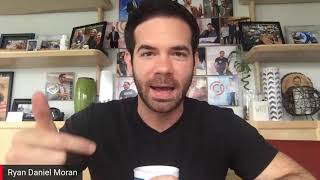
Ryan Daniel Moran (Capitalism.com) gives a quarterly update covering wins and setbacks across his businesses. Wins: clarified messaging and distribution strategy, consolidation to two core offerings (the 1% membership and Capitalism Incubator), and planned price increases to prioritize margin and customer service. Setbacks/learnings: a YouTube volume experiment (increasing live frequency from once to three times weekly) reduced growth — quality over quantity; Switch (a three-product nootropic line: On Switch, Off Switch, Out Switch) is delayed by flavoring challenges despite strong formulations. Capitalism Fund: experimenting with small (≈5%) equity for advisory entry with options to invest later; three deals pending, including a possible majority turnaround buy. He also shares mindset content (optimism, perspective), a pursuit of 'billion-dollar' ideas (food-company rollups discussed), and enthusiasm about Neuralink.
Questions this video answers
Planned increase from $99/month to $297/month (targeted next month).
On Switch (morning nootropic), Off Switch (evening/decompress), Out Switch (pre-sleep).
Taking a small equity stake (~5%) as advisory entry with an option to invest later at a predetermined valuation; three deals pending and one potential majority-turnaround deal.
Chapters
Hello my friends. Good to see you. Good morning. Happy Thursday. It's a beautiful, wintry day in Austin, Texas. Before we kick things off, I need to give a special thank you and a special shout out to two women inside of the 1%. So Myra and Maya had something special done for me that made my entire family and my entire team cry. So I think one of the girls painted this had a mug done of the late John, the late, great John Oliver. So my buddy who was eaten by a coyote a couple, a couple of months ago, they had a painting done and put it onto a cup, which is pretty amazing. So we are sipping in Myra and Maya's honor today, which we'll do here in a second. If you're watching live, say hi in the comments. Good morning, Rhino. I owe you a thank you as well. I'll shoot you a message later. Hey, K.M. hey, Sue. Hey, Spencer. Hey, Drew. What's up? Sufjan, good to see you again this morning. Good morning, Audrey. Good to have you joining us today. Hey, Todd. Good to see you. Todd, I was thinking about you yesterday because I'm working on the first week, that first presentation for Capitalism Incubator and I'm just thinking about the next round and all the people are going to be in next round and I'm hoping you're in it. I was just thinking about yesterday, I was like, Todd would really like this stuff. Good morning, Matt. Excited to chat with you tomorrow. Good morning from Long Island. Good morning, Rebecca Turner. Good to see you. Good morning, Ioana. Good morning, Stephan. Good to see all of you. So today I'm going to give you an update on how some of our businesses are performing and some things that, that we've been experimenting with and what we're testing going forward. So we're just going to give a broad update of things today. But before we jump in, I know the real reason why you're here. It's to sip with the late, great John Oliver. So if you've got a cat mug or a cat glass or a cat chalice or a cat stein or a cat tankard or a cat thermos or cat flask, fill it with your favorite liquid. I've got decaf coffee with on switch and cayenne pepper. And join me now for the unparalleled pleasure of having a cup of coffee with capitalists all over the globe. Join me now. Ready? Go.
How that went a little bit longer. In honor of our friend, John Oliver. Morning, Amanda Alpine. Good morning, James. Good morning, Amari. Good morning, Stefan. Alright, so this has been a very productive quarter for us@capitalism.com we've had some wins, we've had some losses, but overall we made an immense amount of progress. And I'm going to share some of that with you today. Not as productive of a quarter for Switch and Capitalism Brands, but we'll talk about that in a second. So first, let's talk about some of the things that we've been testing at Capitalism and what's working and what hasn't been working. So let's start with. Let's start with what is working really, really well. So it's taken quite some time to kind of find the footing and the messaging that we really want to fall on our sword on@capitalism.com and what has been really helpful this quarter is we have begun to solidify and clarify our messaging going forward, the distribution mechanism for delivering that content where it's really light and easy for us to show up, and also the products and services that we're going to offer consistently. I was having a chat with someone who knows me really well yesterday who was saying, you know, this is the first time that it feels like you, me, as an entrepreneur, are not looking for how to monetize something. You're looking at building a real business. And that's so true. That is absolutely the case. And so I'm telling you all of this because if you follow my journey or you're on your own journey, sometimes it takes a couple of years to find your footing of where your sweet spot is. And we've been profitable and growing along the way. But I've been doing it by making mistakes and correcting, making mistakes and correcting, making mistakes and correcting. And now it feels like from a messaging standpoint and a positioning standpoint, and from a product perspective.
I've now made enough mistakes to have calibrated to a clear, consistent messaging. So if you don't know what that is in your business.
It took me four years to really dial that in. And so we as a company are really excited to kind of focus in on that. And a brief preview on this. You know, there's so much news and bad news in the world that takes up all of our attention. And it surprises me that there's so few people talking about the innovations, the progress, the emerging technologies, the new developments, the exciting entrepreneurs, the new ideas hitting the marketplace. I'm so surprised that no one talks about that at scale. And that's something that I'm going to talk more and more about in my public content, is talking about the progress that entrepreneurs and the world is making because the world is the best it's ever been, even in 2020. You know, even if you look at the cycle of this pandemic, the death rate of this pandemic, the cycle and the death rate of this pandemic has been shorter and lighter than all other pandemics, and our response to it has been the most severe. And so, like what? Like what a world that we live in where the worst thing that happens is still lighter and better than what it has been in the past. And the economic recovery has happened faster than. Than any other recovery. So the world continues to get better and better and better and better, regardless of what the news says. The news is incentivized to just talk about what sucks. It's so interesting. You know, just like, full disclosure, I have voted for Democrats. I have voted for Republicans. I could make a long list of things I liked about Barack Obama and a long list of things that I did not like about Barack Obama. And I can do the same thing with Donald Trump. And I haven't decided who I'm going to vote for in November. That will probably be determined based on what happens in October. But the. It drives me crazy that the news is just incentivized to find something that the president says and twist it in a way that is negative. I mean, he could literally say, like.
I mean, he could. He could literally say like, I just love the puppies. The puppies are the greatest. I just. I love all the puppies. The puppies are the sweetest. I know all the puppies. Nobody knows, you know, better than anybody how much I like puppies. I mean, he could talk and they. And they would be like, donald Trump ignores the plight of minorities in favor of trouting, touting his love for puppies. I mean, it's just. It's amazing how. How anything can be made negative. And so I have just decided to no longer pay attention to the negativity and the pessimism. And I'm just gonna be a voice for optimism, and I'm just gonna be a voice for the entrepreneur, for the capitalist, for the progress, for the momentum that is happening in the world. And I think for a couple of years, I felt like I needed to. I needed to debate rather than just create all the time. And debating just amplifies the other side. I want to be an example of positivity and progress and momentum and empower entrepreneurs to create that change that they want to see in the world and be that change that they want to see. In the world. I think that's how we'll create more progress. So that's my focus moving forward in my content, in my focus. And that just feels really exciting and clear to me. So the big win for us this quarter has been clarifying that message and all right, so I think it's interesting that in some of the comments we're now debating the negativity. Just focus on the positivity. Like the world's great, everything's great. Like lifespans are long.
Like economy is good, there's more opportunity than ever. That's all we need to focus on. That's it. You just need to make the positive side of it louder. So I'm heading in that direction. So big win to kind of get that clarity and that messaging dialed in.
I love that John shows up on every sit.
Let's talk about one more thing that has worked. So we've really kind of relaxed into two product offerings, the 1% and the capitalism incubator. And.
It has taken just as long to really solidify the product offerings inside of my business to a point that feels easy and light and fun. And we're like 70% of the way there. And it's starting to feel like a business rather than a personality, which is really fun. I think next month we're gonna be raising the price of the 1% from $99 a month to $297 a month. Kind of a plan for how that is gonna be structured. But once that is like absolutely locked down, we'll be raising the price. This is a really interesting aha moment for me that I think will really help you out. I have realized how much easier it is to be motivated about a high margin business. So for a long time, a lot of entrepreneurs will make decisions compared to what other people are selling their products or their services for. And so they make their pricing decisions based on what they perceive the marketplace is already doing. And when you're making decisions based on what other people do, it's difficult to be a leader in the space. But if you prioritize being a leader in the space, and that is regardless of what space you're in, if you're selling physical products, you can be a leader in the space by innovating, by branding, by changing the way that you communicate or represent your customers. And when you are a leader in the space, then you can set your own price. You don't have to be beholden by what the marketplace has charged in the past. Instead, you can set your own price for what it takes to incentivize you and the company to do a great job. Sometimes we forget that the purpose of business is to serve the customer, not sell a product. One of the ways that we serve our customers is by selling them products. But when you realize that the primary focus of the business is to serve the customer, then your job is to stay liquid and profitable enough to do the best job possible at serving that customer. So what I have realized is that if we charge too little of a price, there's not as much incentive or motivation for myself for my team to get excited about doing a great job of serving the customer. And so this is kind of one of the factors I've never worked into the business side of things before, which is part of like, the whole job is to do right by the customer. And so your price needs to be. It needs to match what incentivizes the infrastructure. You've got to be able to do the best job for the customer. Now, all of this to say that a lot of you who sell physical products or even digital products are focused on the volume and focus on what other people are doing. And you're making your decisions based on increasing top line revenue or increasing your standing in Amazon, and you're completely ignoring the profit margin that would allow you to go run that ad or to go make that partnership, or for you to outspend your competitors on pay per click, or for you to build that funnel, or for you to be incentivized to create content, or for you to be incentivized to. To be engaged with your customers. And so some people are just going by the marketplace, optimizing for the marketplace rather than actually building the machine that serves the customer. And that's the job of the entrepreneur. So for us, we've raised our prices across the board.
We're launching kind of a new direction for all of our products to serve the customer more. And it feels great. It feels fun. It feels like I'm. I'm excited for every customer. I'm excited to meet every customer. All of our customers are our.
Are our ideal people. And that's what happens when you are able to align price, strategy and person all one focus.
I'm just looking at your questions.
There's some interesting debates happening in the comments.
All right, let's talk about what hasn't worked. So we started this quarter with a thesis of we really wanted to grow more of a presence on YouTube. So we noticed that there was a direct correlation between when I started going live and when YouTube started to grow. So we said, awesome. Why don't we do a 1/4 experiment where we triple down on this, quite literally go from one live a week to three lives a week. And let's see what that does result. Reduction in growth and response. Interesting. So I did a presentation for my team a couple weeks ago where I laid out the actual graphs and the data of what was happening. Here's when we started Go Live, here was the results, here's when we started going three days a week, and here's what happened. And basically what we've discovered is that more does not equal better. Better equals better. So when we looked at the data and the responsiveness of the audience, we saw that more volume did not create more growth, but quality of content did. Said differently. The times that the audience was growing the fastest was when I was doing one, sometimes two videos a week. They were planned out, mapped out, thoughtful, intentional, and there's a lot of prep and reason why behind every video. So this is one of the nuances that I think a lot of people miss about what Gary Vee talks about. Gary Vee talks about creating 100 pieces of content today. He talks about you can't create too much content. And so what most people will do, and I fell into this too, what most people do is prioritize the volume versus prioritizing the intent and the quality. When he says that you can't create enough content or to create 100 pieces of content today.
For most people, what he is saying is he is assuming a certain level of quality or he's assuming that you're just beginning and you just need to find your message and put stuff out there. But for people like me, what I've discovered is that more does not equal better and that creating more focus and intent behind content is what will grow the audience and ultimately serve people. So making myself available all of the time doesn't really serve the customer or myself or create good content that helps people at scale. So I, it was a really interesting realization to see, okay, more doesn't equal better. So how do we do this in a way that both serves our people and is sustainable? And so we're addressing that right now about what that looks like. Because just throwing stuff into the system doesn't grow the audience and it doesn't seem to serve anybody or to be much fun. So now there needs to be a prioritization of the intent and the focus and the structure and the planning behind the content. And then we'll scale that. That's, that's a key point. Let's talk about Switch.
So for those of you who don't know, my next physical product brand is a company called Switch. Switch is a nootropic company that is three stages, has three products. On Switch, Off Switch and Out Switch. So On Switch is a morning nootropic. You can throw up your coffee. Off Switch is an end of the day, relax, turn off your brain, decompress and then out is before you go to bed. So we have our formulas all dialed in and they're fantastic. You notice a very significant difference when you take something like On Switch, it just feels like you are cruising all day long.
And when you take out Switch for example, it seems like you sleep deeper and longer. So just from anecdotal, meaning internal tests.
We'Ve developed a kick ass formula problem. It tastes like dirt. So we have worked with a couple different flavor houses to really dial this in and it's been a challenge. And the feedback we received is that a lot of the ingredients that we use are not often put into consumables like drinks and powders. They're usually put into capsules because they taste so bad. So we've just sent it off to a new flavor house that thinks that they can do some things in order to make it palatable. But this is a major concern because if somebody doesn't consume the product because it tastes like crap, then they're not going to get the benefits and the results that we're promising in the product. So we decided to prioritize the quality of this rather than the speed of this. So we might do something like a pre sell campaign. We might pre sell the product before, you know, before going live because I want to start getting the momentum rather than sit on the sidelines and just wait to see what happens. So we'll see how that plays out. But we're very confident in the product, very confident in the brand, very confident in the strategy. It's just a matter of, of really dialing and nailing the flavor before, before it really can succeed in the marketplace.
Let's talk about the Capitalism Fund. So the Capitalism Fund has three deals pending right now. And all of them are a very different structure and strategy than what my thesis was, going into investing in businesses. So what we've discovered is that a lot of times when we're working with a business, it's not ready for capital, but it's still an exciting business. So.
What they need is more strategic advice. They need, they need to get the kind of align a few things before they're ready for capital. So what we're doing, and I'm really excited about this, is I'm taking a very small equity stake in the business. It's like 5%, and that's kind of our foot in the door to work together for a year. And then I hold an option on the business to buy in at a predetermined valuation. So if we sit down with the entrepreneur and we're like, look, this business is probably worth a million dollars today.
But you don't need capital, you need help. So let me come in, let me. Let's help with a couple things, couple relationships, couple strategic pieces, a couple pieces of advice. And if you do that work, then you'll be ready for capital and I'll put it in at this valuation. So it's allowed us to work together without having this difficult conversation of what's the company worth and how are we going to structure this. Just like, let me come in as a small advisor, help clean this up. And if it's doing well, then we'll go in deeper. And if it's not, you can buy me out of this agreement. So. So that's allowed us to move faster and work with more companies and work on more deals. So a quick plug. If you are interested in that type of a structure where you work with me for a small piece of the company and then have the option, the opportunity for me to invest in the company later. If you do what we tell you to do, then go to capitalism.com fund. This is best for businesses that are pacing about a million dollars. You've got at least, you've got the million in sight and you want to scale to at least $10 million. So I'll come in, I'll take a few points in the business and then we'll work on growing the revenues of that business. If it's going well, we'll invest money in the company and help it continue to grow. So that's, that's the structure behind that. However, there's one deal that's on my radar where we might buy a majority stake of the company, which is really interesting. It would be a turnaround. It's a company that hasn't performed, but it has a clear plan to victory. The founder of the business needs help and needs capital. So we might end up buying a majority stake of the business, a controlling stake of it, and fixing it and selling it like a flip, which is really fun. So being in that position of investing in the businesses, advising the businesses, and working as an equity owner in the business, is where I've always wanted to be and where I, where I really enjoy and I'm excited to play. Let me, let me wrap today up by telling you about the billion dollar idea that I had over dinner with a good buddy of mine.
So I just kind of put it into my brain.
That's funny, Matt. I saw your comment.
I just kind of put it into my brain a few months ago where I was like, you know, I'm ready to have billion dollar ideas. And it was, it was really framed by what happened with Tim Cook when Apple crossed $2 trillion in market cap. I just had such a brain gasm because I realized that a trillion dollars is what I thought as a kid was like all the money in the world. So in my mind, that was like an unfathomable amount of money. A trillion dollars. It took Apple 30 years to cross a trillion dollars in market value. And then Tim Cook grows it from 1 trillion to 2 trillion in two years. And you can say inflation, you can say.
Overvalued, you can say whatever you want. It's a trillion dollars. It's a trillion dollars in two years. And it went in my brain, I just went, you know what? If Tim Cook can make a trillion dollars in two years, I can make a billion dollars in 25 years. And so I've just been sitting here thinking, like, all right, now I'm, I'm looking for my billion dollar idea, not my eight figure exit, not my hundred. I'm looking for my bill. I want to make a billion dollars. And so I was having dinner with a buddy of mine last week, and we were comparing notes on our, on what's going on in the marketplace. He sees a lot of deal flow, I see a lot of deal flow. And we both had this idea that, like, I couldn't sleep for two days. I was so excited. And if you've been following my work for some time, you know, I love food companies. They're fun to market, they're fun to talk about. And I just love the idea of rolling up food companies specifically. So we had this conversation about what that might look like. And, and he said, he said, he said, my goal is to buy a jet. And I said, my goal is to, is to make a billion dollars. By the way, I don't even care about the billion dollars. It just sounds fun. Like, it just sounds like it aligns enough of your energy. And this is, this is the thing. Like, I don't need. I'm, like, financially, I'm good. Like.
I. And, and by the Way, I had a rough 2020 financially. Lots of stories and business investments that didn't pan out. But like, I have the house I want, I have the car I want, I have the friends I want, I have the. I could upgrade my jet skis. But like.
Like, when you're happy with what you got.
You'Re good. It's like, I don't need the billion dollars to feel, like, validated about myself.
I'm good. A great life. A great life.
But a billion dollar idea sounds fun.
So if you can punt the dollar value and just think like an idea so big and so exciting that it would keep me up at night, that's what I want. That's what I'm looking for. I'm looking for the idea that's so fun and so big that I just can't wait to work on it. And he and I were talking about, what if we, you know, bought just food companies? And I was like, oh man, I would just love to do that. And I haven't stopped thinking about it since. And so I don't know what's. What's the most exciting thing for me is that I legitimately can see how that would be a billion dollar thing. And it's just fun for me to be like, it feels really good to think about billion dollar ideas, even if they never materialize, even if they never happen. It's just fun to be like, I think I could actually pull that off. I think I could pull that off. And it's fun and empowering to think about.
That being normal and possible for you. I just love the thought. I love playing in that world. I love just being in that space of like, it feels good to be confident that I could be a billionaire.
Because once you're confident you could be a billionaire, you start making billion dollar decisions. And when you start making billion dollar decisions, you become a billionaire.
It's like, most people never get there, which means I'm already ahead of most people who want to be billionaires. And I don't even care if I'm a billionaire. I just want to have exciting billion dollar ideas. We should just stop saying billionaire like the. Or the like impactful ideas, because when you prioritize that, the money follows.
Great question from Moana. How do you maintain a positive attitude and your cool energy and always to obtain your goals? So, I mean, first of all, I don't like, I get stressed, I get upset, I get angry. Anger is a new emotion for me. I've experienced it more in the last year than I've had in a long time, which people tell me is healthy, that I'm not suppressing it anymore. But anyway, I am. I'm always actively looking for the positive side of things because there always is one. There always is one. Everything's just perspective. Like, everything is perspective. And I don't just mean, like, kind of sort of. It's perspective. Like, perspective is literally reality. What you think reality is. That's what it is.
There's no, like.
Objective reality that we're looking for or finding. We're making the whole thing up. And you know how I know? This is what sold me on this idea, Realizing that dogs. Dogs have 30% of our eyesight.
But dogs have a thousand times the scent we do. So dogs only see a fraction of what we see, but they smell.
Hundreds of times better than we do. So we. They're getting as much data processed by their brain, but it's different data. And so their reality is different than ours, even though they're living in the same world.
So this helped me realize, like, oh, my goodness, like, it's the same reality, but they perceive it completely differently. And they guess what? Your dog doesn't know the Internet exists. Your dog doesn't know what coronavirus is. Your dog doesn't know who Trump is. Your dog just has its own life.
And then you say, well, that's a dog, not a human being. Okay, then let's talk about. Let's talk about undeveloped areas, let's talk about undeveloped countries.
That think that planes are aliens.
That don't care what the United States is doing, that don't care what's happening in the economy. They just have a completely different reality. They have a completely different set of beliefs. Now, whose beliefs are right? Yours, of course.
And that's how every human being feels. Every human being says, yeah, but my beliefs are right. Every single one. Even when they conflict. And so what do they do? They debate about their beliefs, and they each double down and it actually, they start defending their beliefs, which makes them stronger. So when we debate with each other, most of the time the other side just digs in their heels and gets stronger in their beliefs. And each team leaves more convinced that they were right in the first place.
So if it's all perspective, all of it, and there's no objective reality, then I'm going to make it up however I want. And that means seeing the positive side of just about everything. I choose to believe that the world is getting better. And guess what? I can give you data point after data point after data point after Data point after data point. I could do this all day after data point after data point about how and why the world is getting better. But guess what? That's not a persuasive argument. If I go to a person who says the world's getting shittier and people are oppressed and people are dying, I could give them data point after data point after data point. Are they convinced? No, not at all. In fact, they will interpret the same data point that I give them to justify their belief that the world is getting more negative.
Because our brains determine how we interpret the data. This is why slewing facts at each other in a debate doesn't persuade anyone, because we are not convinced by data. We have beliefs and we look for data to justify our beliefs.
That's how most of us are going through life.
So I just choose the ones I want.
That's how I maintain a positive attitude. I believe the world is getting better and the world is expanding and the world is getting, is improving. And because of that belief, I'm able to find lots of evidence for it. If I believed the world sucked, I would find lots of evidence for it, but that wouldn't make me happy.
So that's how I do it. I choose the beliefs that I find empowering and naturally the evidence shows up and I believe I can. I really do believe the world is getting better and it's expanding and it's improving. And I can give you so many examples and reasons why. But if you believe as much as I do that the world's not getting better, then it wouldn't be convinced. Convincing to you.
This is an interesting comment I want to bring up. Billion dollars takes a different kind of person to get there. It's personal development on a grand scale.
So this is.
Almost entirely true.
Thinking about a billion dollars just requires a different type of thinking.
It doesn't require a different type of person, just a different type of thinking.
And you can change that. You can change the way you think. Right now you just start looking for billion dollar ideas. You don't have to change who you are in order to start seeing those opportunities. But yes, the money just becomes the evidence of that. You just start looking for it and it's there like it's already there. Like everything is already happening.
Just finding evidence for it. It's the same thing as when you buy a new car and then you start seeing the car everywhere. You didn't see that car before, but now you see it everywhere. You're seeing things that were already there.
That you didn't perceive before. So what do you want to perceive? You just start looking for it and just start showing up, and they start showing up more and more. I play this game with Esther. It's called Red Truck. My father drives a red truck, and so we go. When Esther and I go out driving together, we'll sometimes see cars that look like Grandpa's car. And so we see a red truck driving, and we go, red truck. And we just see. Who says red truck first? Now, you wouldn't think that there's like that many red trucks, but we see them everywhere. There's red trucks in driveways. There's red trucks in parking lots. There's red trucks coming around the corner. Right now, we're on a hunt for red trucks. And we find them everywhere.
That's. That is such a metaphor for life. Whatever you are looking for, you will find so much of it. So much of it. You're just. You're just. Just.
First of all, I feel like it finds you. And second of all, you just see it everywhere. You're just looking for it. So whatever you focus on expands.
Oh, here's a great question. What do I think of neuralink? I love. I'm so pumped about neuralink.
I think is the coolest freaking thing ever.
So this is the brain gas in my head about neuralink. When Elon said that that technology should allow us to store memories, I was like, boom, I get it now.
I get how the world works now. Because if you think about this.
What Elon is saying is that you'll be able to, in some way, store a memory to the cloud, which is probably going to be more of, like, an emotional imprint. So if you're able to store a memory in the cloud, what you're really hoping for is to experience and feel whatever it is that you had before. So if you can store that feeling of love you had when your first child was born, the day that you held it, and you're like, I'm going to store this memory to the cloud.
And then later you can download that. You're really downloading the mental imprint.
Of the experience. You're embodying the experience.
But we do that every day.
We already do that. We think about things that scare us. We think about things that excite us. We. We do it all. We're always doing it. We're doing it with our thoughts and stories about things all the time, constantly.
So it made me think, like, I could just do that more conscious. Like, I could do that. Now I can think about the day I Held my daughter now and feel how I want to feel. Now you realize like what neural link is going to do is just make it faster for us and like with less energy to experience what we want to experience. I want to feel love. Press a button.
I want to feel excitement. Press a button. Excitement.
You can do it. Right now. It's the same thing as like taking a drug versus just like working out. Same like you can get the same results.
Same positives, some negatives. It's like another way to experience it. So I'm pumped. I think neuralink is the coolest freaking thing ever.
So cool.
Amen, Sean McCool. Just watch inside out.
I'm enjoying hanging out with you guys.
Hey, Matt. I haven't had caffeine in two weeks.
I honestly don't miss it. It's interesting. This is probably my third time, my third or fourth time in the last year doing like a caffeine fast. This is the first time I haven't missed it. It's interesting. Sleep great. But I am a little bit slower in the morning. You can kind of tell on my last couple lives, couldn't you? I thought so.
So this is interesting. We'll wrap on this. So Krista says neural link is not necessary because human beings are already natural neuralink to source. So that's. That's true. I believe in that. I believe that stuff. But.
Then you would could say that all developments are not necessary.
You could say that the drugs are not necessary.
Some truth to that. Also sometimes they're helpful. You could say life is not necessary.
Because it's all God already. Yeah. Okay. You could say video games are not necessary because we're already playing a video game in our mind.
But it's fun to grow and expand and play. Nothing's necessary.
Nothing's necessary. Reading isn't necessary. Working out isn't necessary. They're just all choices. And the menu of choices is expanding and is expanding at a faster and faster rate. Neuralink is one of those things that's probably going to expand it.
Bet on the world expanding and you'll win. All right, we'll call it a day. Thanks for hanging out with me on your Thursday morning. Love all of you. Good to see all of you. If you are watching on YouTube, please do me a solid and subscribe to the channel. And we're going to be going live pretty much every Thursday, so stay tuned. See you guys. Bye.







