
Watch These 12 Minutes When You Feel Like Quitting...
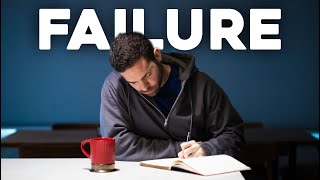
Ryan Daniel Moran argues that entrepreneurs who panic during downturns and avoid losses often miss bigger opportunities. He uses Bitcoin trading and options examples to show how short-term thinking costs you more in the long run. The real game is 70 years, not the next quarter.
Chapters
Foreign.
So I've been thinking about something. I'm gonna confess something to you in this video. I have this story in my brain that anytime I have a. What I might call a pullback, anytime I go through a personal recession, that my whole world is falling apart.
Anytime my stock portfolio goes down by like a dollar, or my crypto account goes down by like 3%, which is like nine times a day, or anytime my business isn't absolutely killing it, all of the time, someone in my brain says, danger, danger, danger, Everything's gonna melt. And this happens to me at least once a month.
Now. It's funny because I work with entrepreneurs and I talk entrepreneurs through this stuff. I get this stuff. I understand that no business is gonna go up all of the time. No stock is gonna go up all of the time. And in fact, it's the people who speculate when things are going up and down and up and down who end up losing their ass. Why? Because they're emotionally reacting to everything that's happening in the markets. I'll tell you my favorite recent emotional story from myself. When bitcoin fell from like 60,000 to 30,000, I said, oh, cool, I have some tax losses that I can actualize so I can sell my bitcoin and I'll have a tax write off. Cause I can just buy it right back. And then I waited for like four days and Bitcoin went back up to like 45, then 50,000. And I was like, I am just a moron. I was trying to maximize my losses rather than just play the long game. And I'm an absolute idiot. So I just, you know, lost a bunch of money by reacting to something emotionally. So I get this stuff, right? Like, I coach people through the stuff. And yet I am still prone to the idea of when things pull back. When there's blood in the water, I still freak out. And I so wish that there was a simpler, more tactical answer to why this happens. But the truth is, it's because we've, like, all got our own stuff, and we've all got our own junk. We all have our stories, and we all have our past failures. And entrepreneurship is the greatest self development program ever invented because you got to be super responsible. Everything is on your shoulders. You are the steer of the ship. There's really big possible gains and really, really big possible losses. And all of your stuff comes out. All of your emotions, all of your mindset stuff comes out. And most of us want to fix the pullback with more work or more stimulus. And sometimes the Best way to fix the pullback is to just ride out the pullback. I studied economics in college. I loved studying economics, and I was studying it during the 2008 recession. And my professor, Dr. Tom Lehman, who's been on the podcast several times, would talk about why recessions were necessary. They're a healthy part of the economy. Recessions are the times that the bad investments get flushed out. It's when the things that shouldn't be there get removed from the economy. Now, why do you need to do that? You need to do that because there's labor resources and time and money tied up in these things that aren't actually producing value. And they get freed up during that time to go into things that are actually creating value for other people. It was ironic that he was saying this during 2008 because it was when the government was bailing out the banks and they were passing stimulus packages, and instead of letting things crumble, they were putting more money into the system to keep it propped up. Now, of course, this was politically popular. It's what Congress thought they needed to do to save the markets and make sure that the financial system didn't totally collapse. But what we've seen in the time since then is that we have even more stimulus, we have more easy money, and we can't get our way out of it. So now we have this broken financial system that if you're libertarian or a crypto nerd or you live in San Francisco, you're pretty convinced that the whole financial system is gonna collapse anyway, and we're just prolonging the pain. The more that we don't take the ouch. And this is true in our lives too, right? We want to drink away the bad emotions. We want to work away the fears about money. We want to numb our to whatever we're not dealing with. And the funny thing is that actually gets us a lot of the things that we consider productive in our lives, but somehow they don't make us feel satisfied. And whenever we see a regression in any way forward, we freak the hell out because we feel like everything's falling around us.
I started trading options about a year ago as kind of this fun side thing. And I hired a mentor who's name is also Ryan, who is coaching me through it. And he helped me see that the way that I traded options reflected my emotional state at the time that I was trading. And it made me see that I make so many decisions in my life that are emotional and have no basis in fundamental reality. It's just my story about what is happening. So one of the things that came up for me as I was trading options was I realized I was trading to not lose money, not to make money, which means I was expecting to lose. I was, I was playing defense while trading options rather than playing to make a profit. And I was like, oh man, does this, does this happen in business too? Do I just shield against loss? Because if so, that means that I'm scared and afraid rather than actually believing in what I'm doing. Asking those kinds of questions really sucks because you have to be honest with yourself about what is really driving your behavior. But if we don't ask those questions, then we end up building businesses or making investments that are not reflections of what we really want. They're reflections of who we think we have to be in order to avoid the things that we want to avoid. Well, guess what happens when all of your attention is put on avoiding something. You end up creating it, you end up getting it. If you're afraid of getting into a fight, and so you're always looking to avoid a fight, you're gonna find people who wanna fight and you're gonna be running away from people or you're gonna be putting up a fight which makes people wanna punch you in the face. When we are walking around our lives with these subconscious expectations, we're going to get more of that. And I'm realizing for myself that I do a lot of things in order to avoid the pullback, rather than just taking the loss and moving on. I have business projects that I probably just need to wash my hands of and be done and take the L. And I haven't done that because I was so.
Upset about the L, so upset about the pullback, the hit to my balance sheet. Whereas if I had just taken it and moved on, all that mental capacity would have been freed up. If I had realized that I'm not playing an 18 month game, I'm playing.
A 70 year game. I'm not playing a game of how much money I can have in two years. I'm playing a game of how I can make a ton of money and really enjoy my life for decades.
When you're playing scared or you're hedging against the pullback, you will cut your wins early. You won't ride out that business to its full potential. Can you imagine what would have happened if Jeff Bezos had exited in 2001? We wouldn't be talking about him anymore. Can you imagine what would have happened if Netflix had taken the Blockbuster deal and they had been absorbed by Blockbuster rather than actually outpacing them and putting them out of business. When you're playing scared, you tend to grab the quick money and run away from the best opportunities. But if you can find a way, not care about the short term result and ride it out, you can be okay with the pullbacks and you can be okay with the projects that don't work out. And you can be, you can be okay with the loss on that business. If you have failures in your past and you're viewing them as evidence for the future, you are never going to actually move forward. But if you believe that the future is always getting better and the tide is always rising and there's more opportunity coming, you can be okay. Saying everything that I did up to this point was just research and development for the next thing. I wrote a book called 12 Months to 1 Million and I've helped many entrepreneurs build million dollar businesses in a 12 month period. But if you're only in this for the 12 month period, or the fast money, or the quick game, you will fail. And if you can't deal with the punches in the mouth along the way, then it's going to be really difficult for you to have the success that you desire. Strangely enough, if you are ambitious, if you have the desire, but you don't have the need for it, if you don't have the attachment for it, that is the perfect mindset to be in. Because now you can just sort of dance happily from decision to decision to decision. In economics, I think we all agree that you can't just print money into prosperity and you can't tax your way to equality. You can't try to force the system to do something that it doesn't want to do. And the same is true with our mindsets and ourselves. We may say we want success, but sometimes what we're really saying is that we're afraid of failure. And you have to kind of take the l, take the loss, accept the pullback in order for you to have the clear space, the dry powder and the right mindset to be able to go through that next growth phase. We all know that economies can't grow forever straight up. They go up and down and up and down, and that's a healthy part of the process. But we forget it when it comes to our own lives and our own mindsets. And especially in times like now, where the economy has been so good, the economy has been so abundant, there's so much money in the system, every little pullback feels like a big punch in the face. And if you want to be an entrepreneur, a successful and happy one for a long time, you've got to start to get comfortable while taking those punches in the face. And that starts with knowing that your reaction to the punch in the face is a lot more about what's going on up here than it is what's happening right in front of you. I'm Ryan. Daniel Moran. I make videos about entrepreneurship. This is a heavy one. Subscribe because the next one is probably going to be a lot happier.
These are delicious. Speaker.







