
When Million Dollar Brand Builders Partner Together
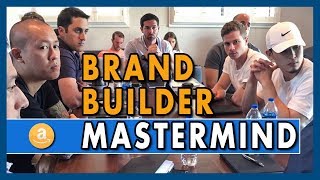
Ryan Daniel Moran coaches brand builders on product strategy. Matt's cauliflower dip cuts calories to 30-40 per serving versus the typical 120-130. The group stresses building evergreen brands and optimizing backend metrics like lifetime value instead of chasing single products or quick service sales.
Questions this video answers
Typical dip: ~120–130 kcal per serving; Matt's dip: ~30–40 kcal per serving — ~70% calorie reduction.
About 5,000 U.S. buyer-reviewers now; projected to reach ~10,000 in about three months.
Chapters
This was great, man. This was. This was.
I think this was the most meaningful meeting we've ever had.
You know what I mean?
I love hanging out with you. I love hanging out with you. Yeah. This backroom meeting was the most valuable we've ever had.
One in the end, spinach, artichoke. Then we got a caramelized onion kind of similar to, like the Trader Joe's caramel onion. And then this one's like an herb, like crudite kind of dip. So I'd love to get your feedback. Have as much as you want. I did little forms down there, so fill it out if you hate it. Please tell us if there's something we could tweak before, like next week, you know, something with the recipe that we kind of dial in. Your feedback is going to help us a lot.
So tell us about the ingredient profile. In the mall, you said cauliflower and Greek yogurt base, but what else for.
Everything is cauliflower and Greek yogurt. So that basically, like a typical dip like this is going to be like 120, 130 calories a serving, and a serving's like a couple tablespoons. Yeah, exactly. So this for the exact same size size is like 30, 40 calories. So it's literally like a 70% calorie reduction.
And Steve, can you think of anybody who might like that? It's the coolest shit. Go ahead and try it. Fill this out for Matt and then we'll get to work in a few minutes.
What major challenge pain point question conversation must you have before you leave? Like, it would be a waste of a trip if we did not solve X pain point or if in a magical world this got solved. It would be fucking amazing. So put that on the board if you've got it. And that's what we are going to spend the work time doing this afternoon and part of the day tomorrow?
Yes. So I'm looking into what exactly should I focus on?
I guess my understanding of Facebook is the cost will continue to rise, so physical products won't do well in the next few years anymore.
Maybe.
So I'm looking to go dreamable. So something that I can.
Well, you are forgetting, you are assuming that you are not making money on the front end. You're assuming if Facebook ads go up, then you won't be able. That will go away in your world. But if all you're doing is spending that money to acquire the customer and you have a whole other brand behind it, you are still 100% relevant. You are Doing the hardest part, like you have gotten really good at the hardest part of all business building, which is being able to spend money to acquire low dollar customers.
That's the equivalent of hitting a 90 mile an hour fastball and doing it well. And anything that you apply that to that is a brand is sellable. All your attention goes to acquiring those customers at scale, which is what you have proven. You are unbelievable at doing. And you need to learn the back end piece, which is how Facebook ads will always be affordable to you, but not Joe Schmo industry.
So you're saying that I should learn how to optimize the back end more than focusing on what should I.
What I'm saying is that you look at some of the products that are smashing it for you now and you say a, can I build a brand around this? Rather than just sell.
Whatever your best selling product is? Or number two, what business do I want to go into? Because I know that my skill set will allow me to dominate everybody who tries to compete with me.
In order for me to keep doing what I'm doing right now, I just need something that's more challenging, something to force me to evolve. And I think that's gonna have to be making.
I don't know.
I don't know how Charles does exactly.
No one knows how Charles does anything.
I'll figure it out.
So your question on the board is what would be sellable 10 years from now?
Yes.
There's a conflict in your question. E comm is a strategy. Is it is. E comm is a strategy. Brands are evergreen. E comm is one way to promote a brand. Anything that was around 10 years ago as a sector will be around 10 years from now. But the strategy might change. Facebook ads weren't really a thing 10 years ago. They will still be around 10 years from now. But Facebook ads don't matter. How they're applied to a brand is what matters. You have figured out how to use Facebook and other paid traffic and video to acquire customers. Plug that into whatever brand you want. Dan wins. So the question I have for you is like, what business do you want to build that's sellable? And then we like. Then it's a question of like, is that sellable? And the answer is gonna be yes.
Unless you're telling me that you want to sell keto products because that's a cycle, or you tell me that you want to sell fidget spinners because that's a cycle. But anything that has a specific target market, you build a brand around. And where you get hung up is you're so used to looking at the product, the pain point for the product, and selling the product, that you do not have the muscle developed yet to say, who's the person I'm targeting? And the minute you ask that question and you identify the three to five products that person buys, now it just goes into Dan's formula, and you just solve to promote those three products. You have a brand, and now we're talking about team building for that brand and building something that's bigger than one product.
But the longevity there is. How many pushes can I sell?
False.
What is false?
His question first is, who's my customer?
The first question. And now, because he asked that question, it's not about selling more hearing aids because they buy other stuff too.
Charles knows that. So he can buy as many hearing aid customers as he wants, even if Facebook ads double, even if profit margins go down on the front end because they buy lots of other stuff. And so now you have to go acquire as many of those people as possible. You can launch whatever you want to the same person. Got it? Yeah. We'll let that process for a few hours.
So how it was created. If you have any specific questions I can ask you.
I want to know what your play is as a business. What your price point is, is how big you want this to go. Because what I'm processing is like, are you developing this for, like, an internal core group of customers, or are you wanting to go scale with it?
If you even want? I actually have probably 15 flyers with me because I'm meeting the team in Celerocom.
I actually. So everybody here already wants it, myself included. So I don't need to know anything about that. I want to know what your play is.
So right now, the next step is actually to commercialize it and to grow it. So what I have is 5,000 people. And those are not regular reviewers. Those are not contaminated people. Those are super fresh reviewers, buyers. Or like, rather, buyers reviewers. 5,000 in us. So it's already enough to cover everybody. But if you talk to me, in about three months, we're gonna have 10,000. We don't get them from Facebook. We don't get them from any contaminated sources I made because across five brands, 120 products of mine, I needed to make sure that no two reviewers are reviewing more than two products per brand. So I needed, like, a big spectrum of buyers who would have interest in certain niches, and those niches keep growing.
I am skeptical that you should bring this to market.
If you can do what you say you can do. I am skeptical that you should sell that as a service.
Why would you say that?
Because it is more powerful if you just apply it to your brands. I can remember sitting in Clement's apartment a couple, maybe three years ago when he was right at about 100, maybe.
A few hundred thousand dollars a month. And we're looking at his review processes, like reverse engineering them.
And you can tell he's really getting dialed in at the review getting process, trying some new things and.
Got really good at them. When kind of the review apocalypse happened. He stayed solid. His review processes were really good. He kept climbing up, then hit a million dollars a month.
In Costa Rica. He's sitting up there talking about his business. He's a two man show. He's exhausted. He's got reviews really figured out and that continues to compile and compile and compile. One of the other backroom members bought his business basically because that business could stick. And because they had the review eating process for over $60 million.
That same guy who sold the company.
Could have at $500,000 a month been like, I've got a really great review getting service, I'm gonna start one and take on and sell it. But instead he just used the system to go really deep on one thing. And now all he wants to do this time is be a crypto investor.
Okay.
So what I'm saying is you can start a service with this thing that you've built that's so immensely valuable and you will do just fine, or you can take on a few really great companies.
Never talk about your service.
And build hundred million dollar companies. And you have one company in that niche, you have that company in this niche and you can, you can control, you can be kingmaker rather than be a service that everybody talks about and everybody uses and everybody's buying and either one's fine. But I think you should give pause before you just take what is currently.
The solution to the biggest problem that everybody has and you just sell it.
Okay.
I'm glad I told that story. We've had a lot of conversations today that were all about scale.
And partnerships. A lot of people think that it's like about selling more product. No, no, no. It's about taking the uniqueness of each person and partnering them into something. Because what we ultimately want to do is that guy's got a cool food idea. So we have the money over here, we have all the reviews over here, we have an Amazon manager here, and we just bake that pie and then that entrepreneur just gets to grow the company. I get to serve as advisor and investor.
So this is not. This is not a mastermind. This is about partnering, unique opportunities. So that's the direction of actor. Now I'm going to go pee.







