
When Should Entrepreneurs Raise Capital?
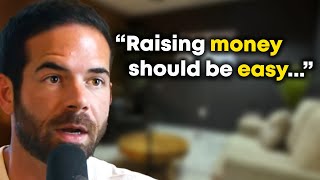
Ryan Daniel Moran argues entrepreneurs should prove demand first through pre-sales and momentum before raising capital. Seek investors only when demand outstrips supply or capital unlocks clear growth. Pick investors who add strategic value, not just money.
Chapters
Today we're going to be talking about raising capital, specifically when you should consider raising capital for your business. If you are new to my work, I mostly specialize in helping entrepreneurs build their first million dollar business. And then from there we work on getting them into mid seven figures and beyond so that they can have a really healthy exit. And when I started out as an entrepreneur, I was a bootstrapped entrepreneur, scraping things together, trying to make things happen. And that tends to be who I help. Entrepreneurs who want to build something from scratch, they are taking their own capital, they are putting it to work on a business that hopefully can give them freedom. And with that type of an entrepreneur, the rules around capital and how you think about it are different than what most people talk about when they think about raising capital. Most of what we hear in this topic is around doing a big round for tech business or for acquisitions. There's very little information about how and when you should use capital, specifically equity capital, meaning raising money from individuals and giving them a piece of your company. There's very little about that for the small entrepreneur who is building something that they hope will give them freedom, that they hope that they can scale and sell, that gives them financial freedom forever. And so I wanted to address this topic since the way that we approach it is different than with most other businesses. Most entrepreneurs, specifically solopreneurs, go out because they're trying to create freedom. They have a dream, they have a vision, they want to create a different life for themselves and for their family. They want to leave a legacy. They might want to have a ridiculously lucrative exit over the next couple of years. And if you follow my work, you know that I help entrepreneurs do that. There may come a day when you go to sell a business for millions of dollars, but there will definitely come a day when you will be freaked out in your business. And if you know what your options are for funding a business, you can get through the difficult times with more ease. A lot of entrepreneurs will go out on their own path and and they see a hard time as a threat to their entire livelihood. If you're building a business and funding the whole thing yourself, one quarter that doesn't meet expectations, it can put you out of business, but even worse, it can just wreak havoc on your mental state. Ask me how I know. If you go through a three month or a six month period in which you have a downtime or you're losing money, it can put you out of business. But it can also just put you in a funk where you're A failure of an entrepreneur. Everybody who doubted you was right and you should have just kept working your 9 to 5 forever. But if you know that there are options for funding the growth of the business, funding the scale of a business, or providing a cushion for you to get through the difficult times, then you can think much more long term about a business. And you know what happens when you think long term about a business? You end up building a better business. What happens when you build a better business? You build the type of business that you can scale and sell for a life changing amount of money. So knowing your options and when you might use them will allow you to think longer term about your business and create something that is more valuable to a potential business buyer of the business. Now, first I want to address who should even be thinking about raising capital. The worst time to raise money is at the beginning of the business when you think you need it the most. This is the worst time. There's a couple reasons why. Number one, at the beginning of your business, you have no leverage, you have no track record, you have no sales history. And people think that by raising capital it will give them the cushion that they need in order to build a business and take it to a million dollars. But they're wrong. And they're wrong because when you've got money in the business at the beginning, you will feel the temptation to spend it all over the place. You'll say, oh, we can sponsor this influencer and we can do this thing over here and we can order this product over here, but you don't even know what's working yet. That's why at the beginning of a business, you should focus on other things instead. There are other ways to raise capital that don't require actual money. What the heck does that mean? Well, first you can pre sell your inventory. You can do this whether you're $1 million business or you're just starting out. If you pre sell the inventory, that may be all the capital that you need. In fact, I'm thinking about one member inside the 1%. That's our mentoring program for entrepreneurs who are on the road to 1 million. There's, there's a bunch of people who have pre sold inventory, but there's one in in particular who built an audience. The small audience. Took him 45 days to build it and he pre sold his first round of inventory and took in over $100,000 in sales. That's all the capital that he needs in order to get the business off the ground. And he's got customers As a result of doing so. Now, he could have raised $100,000 on an idea and given up 30% of the business, but he probably would have blown through it. He would have said, I'll do this over here and doing this over here. But instead he had to stay scrappy. He had to be resource constrained and focused on what would bring sales today. And that meant that he built an audience and he took pre sales for his business. Having a limited amount of resources forces you to focus. And at the beginning of a business you need that focus. And your focus should be on leads and sales. That's it. Until you've got that amount of pent up demand, there's absolutely no reason to raise capital. The person who should or might think about raising capital is when you've got demand that is pent up and money will free up that constraint. What does this look like? It means that you're selling products so quickly you can barely keep it on the shelves or in stock at Amazon or wherever you take sales. It means that you've got a big inventory purchase from a retailer or a distributor that wants to put you all over the place and you literally don't have the money in the bank to be able to finance that inventory order. That would be a good reason to raise capital. When you've got more demand than supply, when you have very real bottlenecks that are preventing you from doing the things that just logically will make more money, that's the time to think about raising outside capital. When you've got pent up demand for something, you've got a reason to raise capital from the people that you want to build relationships with anywhere. Let's talk a little bit about how you raise capital. If you're in a position where you've got more demand, where you have something that's working and you want to make what's working work even better. Well, there's a lot of different options to be able to fund a business. There's bank financing and notes and safe notes and then there's equity capital. And that's what I want to focus on. Equity capital is when you basically sell a piece of the business to investors and now they have a vested stake in the performance of a company. This is something that I want you to remember. If you ask for money, you will get advice. If you ask for advice, you'll get money. So how do you apply this? If you've got a business that has constraints and you put together a 10 point deck about the opportunity that you're seeing and the constraints you're running into. And you call up 10 friends or 10 contacts whose advice you would really appreciate, and you just run them through the slides, you'll probably get funded. But if you call those people and you ask them for money, you'll get advice about what you need to do better. So I always tell our clients that we're working with when they're thinking about raising capital. You put together a small deck with the opportunity and the constraints that you're running into, and then you ask for their advice. A lot of times people will offer their own capital, and if not, they often make introductions for people who might be willing to invest in the business. It's got to be from a genuine place, though. Don't ask for advice hoping to get money. Genuinely ask for advice and you will find there's plenty of willing parties that are thinking about, I've got 25k to throw into this, I've got 10k to throw into this, and I know three other people and that person would be a good fit because they know this person and this person and this person. So ask for advice, not money. And that will create the relationships and the introductions. Probably more than you ever need in order to raise the capital for you to get through that bottleneck. There's one tip that I want to share with you that has served me well. And I learned this from Oren Kloff. This came from his book Pitch Anything, which he wrote, I don't know, 15 years ago. The only thing that I remember from Pitch Anything was that investors want to see momentum. The part of our brain that needs to be satisfied first is the one that sees momentum, motion, growth. So how would you show that when you were talking to an investor? You might do that with showing the market expanding. You might show the growth of your monthly sales, you might show your audience growth. You might show the comparisons of other businesses that have sold at certain valuations. But a tip that has served me very well is just showing the momentum or the growth of something and your participation in that. I believe we live in an expanding universe. I know that might be woo woo or airy fairy for some of you, but the universe is literally like physically expanding. And I believe economies expand. And capitalism is the system through which we are expanding the economy in our service to one another. So the economy is going to be bigger next year than it is today. It's definitely going to be bigger 100 years from now than it is today. So there's always some reason to show progress, momentum. And when you use that as part of your presentation or part of the reason why you've got a bottleneck. It satisfies that lizard part of the brain that is looking for the thing that is going to succeed, the thing that is going to grow. This is why people invest in Apple or Nvidia or any business on the public markets that's going up. Bitcoin, Ethereum. People are more likely to invest when it's at the top than it's at the bottom. Because we naturally follow momentum, we look for progress. So if you can show any progress at all, you will have a much higher chance of formalizing the relationship with money, AKA getting an investor to give you money. My recommendation is to only get capital from people that you genuinely want to build a better relationship with. People who can bring more than money to the table. People who can bring experience, advice, relationships, exposure. If you can build relationships with those people and raise capital from them, that's the most appropriate use of bringing on investors. I will tell you, as an investor, I get excited when I see an opportunity to invest in something that I know that I can bring something. Strategic value, too. I'm thinking of an example right now of somebody who is in our capitalism incubator. And if you don't follow my work, the capitalism incubator is a place where we work with established businesses that are doing at least half a million dollars a year, and we bring our infrastructure to the table. Because we own a minority stake in an infrastructure company, we can usually save someone tens of thousands of dollars a year by using our infrastructure. And then we can also free up the operator, the entrepreneur, from like 20 to 40 hours a month of work that they shouldn't be doing by using them. So we're able to grow these businesses by reducing their expenses, bringing on better people, putting them on a path for growth. But I'm thinking about this one person who had this product that I really loved and I wanted to be a part of this business because I liked the product. But I got excited about being part of the business because I knew four people that I could bring to the table that could help this business, that could advise this business, that could promote this business, that would talk about this business to their network and get them exposure. I genuinely want to be part of it. I want to give them money and see the business succeed. And I don't think most entrepreneurs realize that there are people that want to be part of a business that want to add value to something, and they get excited about the idea of partnering with that Business because they can bring unique relationships and opportunities. What business can't win with the right relationships and the right capital? That's all business is. The right relationships, the right financing and products and services that are in service to other people. Your job as the entrepreneur is to build the product or the service that is good for someone else and to build up that pent up demand. Once you've got that pent up demand, then bringing relationships and capital to the table to be able to be in service to that customer might be the greatest contribution that you can make to the entire marketplace. Now, of course, until you're at that point, you shouldn't raise capital because you don't know what works. So once you figure out what works, then you can explore possibly bringing relationships to the table that you formalize with money. But not until that point. Once you're there, yes, keep as much of the business as you can. But it would be a disservice to you and the business if you are constrained by capital and there's money out there that wants to support you and you don't take advantage of that. Now, of course there are smart ways to do it, not smart ways to do it. You should have an appropriate valuation that protects the health of the business so that you have the resources to be able to continue servicing those customers. And that's a skill set. That's something that I wish I had known when I was building my business. When I sold my company in 2017 at a $16 million valuation, I didn't know that I could show up to the negotiation with my own terms. I thought they're the guys with the big money. I'm just a small entrepreneur with a cool, profitable business that is growing every single year with happy customers and great products and a cool skill set. What do I know? They're waving a big check in front of me. I'll just take whatever they offer me. I wish I had known that I was the one in demand, that I was the entrepreneur that everybody wanted to be a part of. And so this is why when an entrepreneur goes to raise capital or to sell a business, I remind them that they are the one who has built something unique. They're the one that has the leverage in the negotiations. So when we invest in a company, we are now advocates for that business. When we take a partnership with a brand in our portfolio, we are now in an advisory role to ensure that that entrepreneur realizes the value of what they're bringing to the marketplace. So if that's you, if you're an entrepreneur that is growing, you're at seven figures or beyond. There's a few, few ways that you can get the support that you need. One is inside of our capitalism incubator. This is where we bring our team to the table and we bring our infrastructure to the table. We're usually able to save e commerce entrepreneurs tens of thousands of dollars a year just by bringing our resources to the table and helping them negotiate better terms on the product that they're already fulfilling or on the services that they're already getting. So we can usually save that person tens of thousands of dollars and then bring our resources to the table that help them grow on whatever platform where they're taking sales. Also we help them prepare to raise capital if they need it or bring other sources of financing to the table if they just need to grow their inventory orders, place bigger orders. The second way that we can support you is, is inside of the Capitalism Fund. If you need a board of advisors who have a vested stake in your success, go over to capitalism.com fund and you can fill out a form that comes right to my partner and my desk and we can see if it makes sense for us to work together. And if you've watched this whole video and you're an entrepreneur who has a vision of building a seven figure business that you can scale and sell and you need mentoring in the early stages of the business until you're at a million dollar run rate, best place for you to get plugged in is just to go get our free resources. At capitalism.com playbook we're in the business of helping entrepreneurs build million dollar businesses so that then we can invest in them and advise them and that's where we make our money. My funnel doesn't end when you buy one of our programs. My funnel ends when we have a really lucrative, exciting exit together. And that's why I make this stuff for you. Thanks for watching. Thanks for being here. I'm Ryan Daniel Rand with capitalism.com I'll see you on the next episode. Take care.







