
Where To Invest For Cash Flow And Wealth
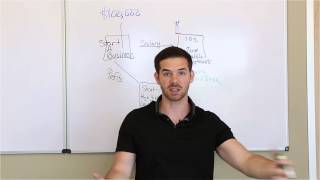
This is a preview video by Ryan Daniel Moran (Perfectly Passive Income series) presenting his "wealth triad": (1) start a business to control and generate income and use business cash for opportunities; (2) pay yourself a steady salary and allocate 10% of that salary into long-term, cash-flow-focused investments—specifically increasing-dividend stocks (target yield ~4% as a buy signal); (3) invest business profits into high-yield, low-risk (often short-to-medium term) opportunities such as real estate, notes, and private lending. The speaker frames the approach around predictable cash flow rather than market timing.
Chapters
Hey guys, welcome back to the second video in the Perfectly Passive Income preview series. Just a reminder, I'm doing this series and an upcoming training class as a way of testing some new content. I'm thinking about putting together a workshop, Austin, Texas in 2016. And I'm kind of working through some of the content and I'm testing some of it at a free training class on August 9th. You can sign up for that over at perfectlypassiveincome.com it's just a way for me to kind of run through some of the content with you and get your feedback and hear how I can kind of refine it.
For future use so I can charge a bunch of money for it. Hit the workshop in 2016. Alright, in this video I'm going to walk you through my wealth triad strategy. Now, my wealth triad strategy is the way that I allocate the money that I make in a business for long term wealth and cash flow. So if I was advising a new person on how to be successful and how to get rich, I would advise them on three things. Step one.
You start a business.
Step two.
You invest or you pay yourself a salary.
And you take 10% of that salary and put that into long term.
Wealth investments. And I'll go through what that is. Okay. And then step three.
Is to.
Put the profits of your business.
Either quarterly or at the end of every year, into short term. And by short, I mean one to three years.
Short term, high yield.
Low risk.
Investments.
Now, step one is starting a business. Now, if you're watching this video, you probably either want to have a business or you already have a business. But businesses are both the place where you control the income. Because if you simply do this better, you make more money. Whether it's by attracting higher level clients, or it's by promoting an affiliate program, or it's doing a promotion to your list or it's releasing a new product or whatever it is. You can always generate new cash in a business because you control it. So in video one where I talked about how to get how I got a free Tesla, I said very matter of factly, if you will, I just put 100 grand into an account. Well, where the hell did the hundred grand come from? It comes from releasing a new product or doing a promotion, doing something in the business. So for me that was $100,000 in new money. And I'll go into the strategy I use for tapping my business for cash on the live class and in the Perfectly passive income training series. But for me it was 100 grand that I needed for the Tesla and I raised that from the business. Now, if you were to make 100 grand in a job, this would be taxed. So the money that you would make to put into a toy would be. Half of it would go to the government. But if you spend this on a legitimate expense, like a company car, all of a sudden you get to keep all of this and it becomes half paid for. Did I just draw that off the camera again? I did that again.
So the hundred grand, when kept in the business, is now fully usable. So for me, it just went right into the Tesla. I tell you all of this because businesses are probably the best legitimate tax shelter. Assuming that you're going to spend the money so you get to keep more of the money that you're going to eventually spend if you have a business. Plus you impact the amount of money that you make. If you want to make more money, you just do something better in your business. For me right now, that's attracting higher level clients and.
It'S not changing who I am or what the products are, but just taking the same products and services that I have and going to the people who are willing to pay the most. I found out that some people are willing to pay $1,000 and other people are willing to pay $100,000 for the exact same thing. So I get to work a lot less, make more money if I just focus on the people who are willing to pay more. That was a mouthful, but that's part one of the wealth triad. The question often comes up in business. How do you pay yourself? What do you do about taxes? How do you make sure that you're living a consistent lifestyle without spending all the money in the bank? What I recommend for people is that they put themselves on salary from their company, so they're paying themselves the same amount every month, and then taking 10% of that and putting that into long term wealth investments. In my opinion. This is my opinion, this is not investment advice. I really don't even know what I'm doing, so you probably shouldn't even listen to me at all. But in my opinion, the best place to put your money, in fact, the only reason to invest at all is for cash flow. Have you ever worried about putting your money into the stock market or someplace where it could go down in value overnight? To me, that's a nightmare scenario and I don't want to be a part of that. I don't want to be invested in things where all my money could go away. So the most predictable Thing in my opinion for you to do is to buy on cash flow, to buy on passive income. And one of the most proven places for this is increasing dividend stock.
Now what the heck is increasing dividend paying stock? Well, there is a collection of stocks out there. There's actually several hundred of them that for every year, for at least the last 10, 15, even 20, 25 years, have increased the dividend that they paid to their investors every year. No matter if the market is up or the market is down or the market is sideways, if it's crashing or it's booming, no matter what, they have increased the dividend that they've paid to their investors. So if it's a dollar per share this year, next year it's a dollar and a quarter and the year after that it's $1.50 and the year after that it's $2 and then $2.50 and $3 and it goes up every year consistently. Companies include Coca Cola, Verizon, Chevron, there's several hundred of them and a lot of them are blue chip stocks. Walmart is one of these. McDonald's is one of these. So they're recognizable companies. And when you look at them on the surface, the dividend yields are fairly modest. My Target is about 4%. If you can get 4% right away, that's a buy signal for me. A really good story. My favorite example is Target. A couple of years ago, Target had a big credit card fiasco where the, I think it was the Visa credit cards got leaked and there was a big Target fiasco and the company stock fell like 35%. So the stock was doing this and then the Visa scare happened and it fell and it fell pretty substantially. Well, at the same time, over the last 25 years, the dividend of Target was doing this.
It just kept going up. So when it fell.
And it hit the 4% mark, that was a buy signal for me. That means go all in on Target. This is a really good stock to hold for a long time. And even though it may have come down a little bit further after that, it of course recovered and is now here and the dividend continues to go up. So if I bought it here and the dividend is now here, the return on investment is like, we'll just say it's, you know, 6.5% per year, which is really, really healthy for a dividend paying stock that you're going to want to hold for a long time because this is going to continue going up. So, so in five years, the roi on my original money just got marker on my hands. The ROI on my original money is going to be 10, 12, 15% on my original money. I'm not putting more money into that. It's just what I purchased. And over time, the return on that is going to keep going up and keep going up and keep going up. And if, I mean all things stay the same and on the same pace that they are right now, the value of the underlying stock is also going to go up. And of course there's no guarantee it's going to go up. It might drop off a cliff tomorrow. But even if it dropped off a cliff, guess what would happen? The dividend keeps going up according to the last 25 years of history. So if it ever dips again, I'm just going to buy more because 4% is that, is that buy signal. So this is how you can identify where to put the money, the 10% of your salary that you're putting into some sort of investment every single month. You just follow the cash flow. You follow the companies that have a history of paying you more, paying you more dividend no matter what the market is doing. Even during the 2007 crashes and fiascos, they were still paying more to their investors than previous year. So if you plan on putting these into long term wealth stocks, then it doesn't matter what the market's doing. You don't have to guess, you just follow the cash flow. You let the cash flow be an indicator of these. So you could simply Google companies with increasing dividends for 25 years or 10 years or whatever you know you want to follow and you'll come up with a list of these. This is where I recommend people put their, put the percentage of their paycheck that they're getting every month. So that is step two. If you were to do only these two things. How do I look from this angle? This is my good side, my right. This is the better, better half of my face. If you only did these two things, you'd be better than about 80% of entrepreneurs. A, because you control your income in a business and B, because you're putting into a proven investment model where you're not guessing. It's not sexy, it's not exciting. 4% on the surface looks really boring, like who gives a hoot about 4%. But given five to 10 years, this starts to get really exciting. You're looking at sometimes 10% plus on your original money. Sometimes, of course, everything is going to be different. And past performance is no indicator of what's going to happen in the future. But if you've got a long track record, this is set to go up a lot over time. So this is just, there's no guessing in here. You follow the money. Where it gets a little bit more exciting is in stage three of the wealth triad where we take our profits at the end of the year, what's left over from paying ourselves and running our company expenses, and we put them into short term, high yield, low risk investments. And actually, you know, I shouldn't even call this short term. We're just going to say high yield, low risk investments because there are some places here that I'll hold for a long time, including real estate, like single family homes, apartment buildings. And we'll talk about some of this more in video number three. This also includes business funding.
This is notes.
There'S private lending.
And there are some other ones as well. But let me run through some of these pretty quickly. Real estate we'll talk about pretty thoroughly in video number three. But I personally now, I don't start a lot of new businesses. I now will fund businesses that I'm able to impact. So if I'm familiar with an industry, if I know how a certain type of business works and I have a client or a student that has a similar business that I know that I can impact, I will buy into that type of a business and very quickly get an ROI on that. It's the Shark Tank model. It's, it's the Kevin o' Leary model, it's the Robert Herjavec model on Shark Tank. Who will invest in this knowing they can quickly impact the business and get their money back with friends really, really quickly. I invest in notes. Notes are basically buying debt. It's buying mortgages, it's buying sometimes student loan debt. And that sounds really complex, but we're gonna distill this and, and make it really, really simple. In upcoming trainings, there's actually some places that'll automate it for you for returns of 8, 10, 12% fairly easily. This is one of the places that I go. When I wanted to fund the Tesla, I put some money into notes and got that and used that money to pay for the Tesla payment and then private lending. I actually fund some, some real estate deals. I fund some investment firms that will pay a fixed amount every month and the returns are often 11, 12, 13% and they're paid out monthly, which gets me pretty close to my target of this, which is 1% per month.
That was slick, Ryan. That is supposed to say month. And I know I'm nerding out on you a bit, but I promise you as we work together longer, this will become really, really clear. So my target for these high yield, low risk, which when I say low risk, I mean we have protected downside, meaning there's a way to limit any downside loss. So if we put money into real estate, we haven't really lost any money, we're putting it into an asset and that we could in theory borrow against, meaning we could immediately pull our cash back out. So we could put money into this, pull the cash right back out and keep it and still have the asset that's paying us cash flow. A lot of people don't see that part of the investment side where you can keep your principal and it continues to pay you cash. There's.
I have a large selection in notes right now that are paying me about one and a half percent per month, which is 50% higher than 1% which is my target. I picked this number by the way because my uncle said to me when I was like 15, if you can just get 1% per month on your money, you would own the world is basically what he said. And for some reason that stuck with me and I found out that it's not that hard to get 1% per month on your money. I feel like I'm rambling to you, so let me simplify this a little bit. All right, so step one, start a business. Control the income that's coming in. Be able to tap, tap it for cash whenever you need more. Put yourself on salary. Pay 10% into increasing dividend paying stock. Blue chip stocks that are proven to increase their dividend year after year after year. Then take the profits from your business at the end of the year, end of the quarter, put them into high yield, low risk investments. Here are some examples of places that you could put them. We'll dive more into this inside of the perfectly passive income training class and into the actual training inside of that. Alright, so that is the wealth triad. This is the three steps to building long term wealth and cash flow. This is, if you do this, you are doing better than 99% of people who ever try to invest without a plan and they just guess and they put it into stock that they think is going to go up in value or they buy a house that they hope appreciates. That's gambling, that is not investing. When you follow the cash flow, you have a much more predictable model and you're in more control of the process. So after several years you break out of the rat race faster than you knew possible. You increase your cash flow and you increase your long term wealth. Now, in video three, I'm going to be walking you through some technical tax shelter strategies, and we're also going to talk about some investments that grow tax free and allow you to build up wealth very quickly and give you guaranteed passive income well into retirement. I hope you'll join me for that video. And remember, you can sign up for the Perfectly Passive Income training class@perfectlypassiveincome.com and that's how I'm kind of testing some more of this content and see if people want to learn more. So I hope you'll join me for the rest of this free series. And I hope you enjoyed this video as much as I enjoyed making it for you. Take care.







