
Why he left EVERYTHING to start a physical products brand... | Derek Halpern
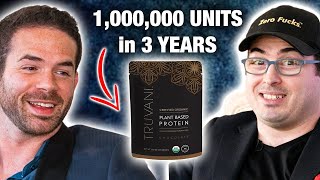
Derek Halpern left his content business to co-found Truvani, a supplement brand, with $30,000 and three partners. They pre-sold a turmeric supplement to validate demand, shipped over one million products in three years, and hit repeat purchase rates above 50% by focusing on strict ingredients and a mission against Big Food.
Chapters
Hi, everyone.
Welcome to capitalism.com I'm Ryan Daniel Moran. I run an annual event called the Capitalism Conference. And I was so excited at Capcon5 to chat with Derek Halpern. And the reason why I was so excited to chat with Derek is because Derek was the biggest Internet marketer in the world a few years ago. Bigger than Tim Ferriss, bigger than Gary Vaynerchuk, bigger, bigger than any of the guys on TikTok or Instagram right now. He was the biggest. He had the biggest business podcast in our space. And at the peak of it all, at its height, he just stopped making content. He just walked away from the whole thing. And you know what he did instead? He walked away from this podcast that was huge and making millions of dollars a year, and he walked away from it to start a physical products brand. And he did that because he saw that it had exit potential, it could grow faster, and he could actually enjoy his life while building it. And he's been incredibly successful building a brand called Truvani. You've probably seen their ads, you've probably even seen them in retail stores and you didn't know that it was Derek's work. Now, there's one part of this chat with Derek that I want you to listen for, and it's how Derek launched Truvani, because he used a strategy that we talk about here on capitalism.com quite a bit and is that he created a partnership with a blogger. It was a blogger that well represented the avatar for the brand that he was launching. And this blogger had a decent size following and that got them out the gate with sales from day one and reviews and repeat buyers and fans. And having the access to that audience was what made all of the difference for the early stages of this brand. It gave them momentum, it gave them profit to work with, to reinvest into the business. So Derek talks about how they did that and why that was so important to them. This is a strategy that we teach heavily inside of our incubator about partnering with influencers who have reach and getting them in the early stages of the business. But if you don't want to do that, if you want to build the audience yourself, it only takes about 5,000 people to have a big enough audience to give you the firepower to have a million dollar business. And that is the focus of our Sprint right now. Inside of the 1%, the 1% is our mentoring community where we're helping entrepreneurs build million dollar businesses. And we're in a period right now where we're focusing on A training of building audiences that buy. It's called six figures per month in six months. Because if you spend about six months engaging a community, you should have enough of a following. That is the foundation for a seven figure business. And if you have that, then you're.
Able to launch product.
1, 2, 3, 4. Get them to 25 sales a day, keep high price points, and have a seven figure business. If you want to join that, go over to capitalism.com1 and request an invitation into the mentoring community called the One Percent. For now, I want you to hear this case study with Derek and see how even though he was making millions of dollars, he saw that there was more upside. There was exit potential, and there was a greater life in building physical products, brands and how he made this shift from being an Internet marketing guru to being a real entrepreneur. This was the chat I was looking forward to most, and it was one of the most popular conversations we had at the last capcon. So please enjoy this presentation by Derek Halpern. Oh, and by the way, this was his first keynote in years. Like, the man never shows his face. You know why he came to Capcom? Because he said he saw that real businesses were being built here. It's true. It's what we do here. All right, let's go hang out with Derek.
Today I want to show you the story behind how we built Truvani from scratch with a $30,000 investment. We didn't raise any outside funding. It was. We have three partners, $10,000 from each partner, and how we built this brand from nothing to something in three years flat.
I kind of broke this presentation down into two parts. I got some story for you where we could kind of talk about the growth and some of the decisions we made along the way. And. And then I have some tactics for you on how to actually do this. Sound good? Yes. All right, let's jump in. So first, the name of the presentation is one million plus. Products shipped in three years. Let's fucking go. All right, here's how to do it. Most people know me from a brand called Social Triggers. Has anyone heard of Social Triggers before? Shoot your hand up. All right, There's a decent amount. I kind of faded away into the ether on purpose. It's fine. Here's what happened. 2015. Have you ever seen this graphic before? I made this before. Everyone stole it from me as a meme, but it's fine. But if you look here at November 17, 2015, I put this up. I was getting burned out. This was me trying to communicate how I Felt about business in 2015, I was kind of doing all this weird stuff. The thing that made me realize I hated to be in the public eye was when I was having breakfast with my then girlfriend, now wife. We sat down, we're in New York City. It's super tight. Like, you have to squeeze in to get to the table. And as I'm sitting down, I get a coffee. I'm hungover. A woman comes by. She's squeezing in next to me. She has her bag up on her shoulder for some reason. Obviously, she never squeezed through anything before. Shoulder bumps into my hot coffee, blasts me all over my shirt. And I'm like, I'm in pain. I'm hungover. I'm annoyed. And I'm sitting there thinking, like, I want to just flip out right now. Keep your cool. Keep your cool. Then her husband comes like, are you Derek? I said, yes. Oh, I bought every one of your products. And I was like, well, I like you and I hate your wife.
Just being. Not being able to go to breakfast without being recognized by someone was very weird for me because I don't always want to be on. I'm loud, I'm a little rambunctious. I curse a lot. But at the end of the day, I'm actually introverted. Like when Covid caused lockdowns and everyone's like, how you kind of dealing with the quarantine? I was like, I've been quarantined for 10 years. It's great. Like, I don't. I wake up, I go to my office. And then when I had a kid, my kid was real loud. So I got a second apartment across the hall so I don't have to leave my floor. People ask me where I live, and I say, I live 150ft in the air, and I never leave. So I just don't like this sort of life, which is why I was starting to get burned out.
Then it came. 2016 came. So that was 2015. 2016 was the best year ever in my business. We doubled. We had at the time, like, seven courses. We had a SaaS, we had a WordPress plugin. We're just crushing it. Everything was going according to plan, but I still hated everything I was doing. And one of the things that I began to realize is I didn't like teaching anymore. I didn't like teaching because I hated my customers. Not all my customers, but just the ones that were the most vocal and complained, like, hey, what email list provider should I use? You should use this one. Well, it didn't work. Thanks. And it's like they blame you for making a tool recommendation. Whereas yesterday, someone comes up to me like, oh, Derek, I heard your podcast a few years ago. It actually motivated me to start this business. I'm really successful now. And I was like, where were you five years ago telling me this?
Because I never heard from you. I heard from the person who was complaining about the email service provider. I'm still getting burned out. Even though it's the best year ever, I knew something needed to change. I'm at my friend's lake house. His name is Devin Duncan. We're sitting at his lake house at this table. And this was the picture taken at that exact time. He said, derek, at the time, he was running an Amazon business where he was selling tens of millions of dollars of product online, just reselling other people's products and just kind of gaming the rankings somehow. He goes, there's a product that I'm selling reselling right now is a turmeric product. And it's crushing. We should make our own turmeric product. And I was like, I don't know anything about turmeric. I don't know anything about supplements. I don't know anything about physical products. Let's do it right. So he's like, well, let's do an Amazon only brand. And I'm like, I don't really like the idea of doing Amazon only brand. What happens when Amazon just says screw you and pulls your listing down? I was like, you know what? I have a better idea. Let's make a real brand. So I called up my other friend Vani, who is better known as the food Babe. She's a food activist and kind of has made all this press as being a food activist for a decent amount of time. I was friends with her at the time for like six, six, seven years. And I said, hey, we want to make a turmeric supplement. You know a lot about ingredients and food. You should come join us. She goes, turmeric, Are you messing with me? And I'm like, no. Why? I take turmeric every day. And I just stopped taking turmeric because the turmeric I took got acquired by a big company and they changed the formula and I need a new turmeric. So we're like, oh, shit, this is perfect. Let's do it. So that's when we decided to come up with the name Truvani. The idea for Truvani was born. It was September 2017. We pre sold our product. This is important. We pre sold the Product. And I'll share more about how we did that. And we said we'd ship a turmeric two months in advance. Who buys turmeric on pre order, Right? Nobody, right? No one's gonna buy turmeric on pre order is what we told ourselves. We actually were gonna work with Indiegogo as a crowdfunding platform to try to make this work, to try to get an idea for volume. And the day before we're gonna launch the Indiego, they're like, oh, well, you know, we don't usually do supplements, so, you know, if things are going a little weird, we might pull your listing down. I'm like, what? They're like, we're launching tomorrow, and you're telling me that you could just turn off the listing if things are going too good? They said, yeah. I said, all right, well, screw you. And I didn't do it on Indiegogo, and we did it on Stripe directly. So we just. That was a very good decision, thankfully, because of what happens. But I'll tell you more about that in a minute. We launched Truvani. Here's the big thing that makes us different, and this is going to be important because people love us for our ingredient standards. Someone was just talking to me. I don't remember who said it, but they were like, why do you go into such crowded marketplaces? I think it was Dinesh. You were talking about this. And I said, we only make products in the most crowded spaces. I don't want to innovate products. I want to innovate ingredients in those products. So most protein powders have weird things in it, like organic inulin, dextrins, xanthan gum, natural flavors, which is really anything but natural. It just says natural flavors on it, but it's not actually natural or organic guar gum. None of these things are dangerous necessarily, but they don't need to be there. Like xanthan gum. What is xanthan gum? It's a flow agent that people put into products to make it run better through machinery. And I remember fighting with the manufacturer. I was like, okay, well, we don't want that ingredient. He goes, well, it's not going to run in the machine. I was like, just run the machine slower. He's like, okay. And that's kind of what we did. Now, you know, the machine runs at one third the speed as everybody else, but we don't have to have xanthan gum in our ingredients, which is great.
So this is what makes us special. Now let's talk a little bit more about.
Why people love us. People here are in E Comm. This is the thing. When you have a mission behind your brand, it doesn't matter if people like your products. What matters is that they believe in your bigger mission and your bigger idea. And when you can really nail that, you can see repeat purchase rates that are double or more than double the competition. I actually have a friend who runs a very similar business to me. Plant based protein powder. D to C started in the same year. Their repeat purchase rate was 19%.
We're at over 50%. Meaning if people buy, 100 people buy this year, 50 people will buy next year. They average about four to five orders per year at the time. Because mission is important, I'm going to show you how to come up with a mission later in this presentation. But I want to show you that focusing on mission can be taken to the bank. People will love what you're doing and they will vote with their dollars and buy products again. Now, how do you know I'm not full of shit? Right? Like that's the big question when people are up here talking. I want to just show you some growth numbers, right? I'm not going to give you specifics here. I want you to focus on the percentages. Just know that we've shipped more than a million products. It's probably a few million products, but we ship more than a million products. We started in 2018. 102% growth, 112% growth, 81% growth. We keep doubling year over year.
This is without venture capital. This is without outside investment. It's just with building a solid business by the principles that we're going to share in just a few seconds.
Now, people always ask me what's next? And this is important because as you're building a brand, we all know you want to start D2C. But in 2021, the world has become an omnichannel place. When we started this brand, even though we focused on D2C, we knew we were going to retail eventually. So from the very first day, I actually hired the chief marketing officer of another similar brand and I asked him for consulting. Believe it or not, if anyone's ever looking for a consultant, don't hire someone that calls themselves a consultant. And I'm sorry for all the consultants here, but you overcharge everybody. You can actually find a CMO from another CPG company and just offer him like $1,000. And he's probably going to say yes because we got the CMO of a company that got acquired for a billion Dollars and he helped advise us. And he cost me like less than 10 grand all in over the course of a few months. So we knew we were gonna go into retail. And this is big because a lot of people when they're scaling, you're gonna ask yourself it works online, but is it gonna work in stores? That's a big, big concern. But people kept asking us for it. Here's one of the funniest things that ever happened to me. We started going to retail last year. We had two protein powders. I'm thinking this is going to be a huge success, right? We're going into retail. Then I get a picture. Look at this. How pathetic. We have two proteins behind a pillar and this like talk about envy. They got a whole shelf, another whole shelf and I'm sitting there like I can't even have a whole shelf with two proteins. So talk about launching a business incorrectly, right? Like we want to go into retail. We got two SKUs. What do we do? Well, we do, we make seven proteins now and I'm happy to say we get two shelves.
Isn't that cool?
We also get a cool little header card because they like the owner of this store, really likes the brand and the mission. So they want to over promote us which is great for the next point. Which is when you focus on mission and you focus on good growth and brand building and people believe in you, this is what's going to happen. This is why stores are picking us up today fast. Because this is called sales velocity and this is price point, Sales velocity, price point. We have one of the highest price points in the market with the second highest velocity. Off shelf velocity is how many units you sell per week. So we have the highest price point, the second highest velocity. The only people that are higher velocity than us is gardener life who basically invented organic plant based protein powder. All these other brands or gain billion dollar business costs. Another startup, Sun Warrior, Ancient Nutrition. All companies are probably bigger than ours. But our early velocity here is crushing it because we focus on mission first. When people believe the same things you believe, they will buy everything you have to sell. Even if they buy a product and hate it, they will come back and buy every other product just because they believe what you believe. We're going to talk about mission now. This is the other big thing that we show retailers is dollar velocity. And this is from Spins. Spins is like Nielsen ratings for products selling on shelf. Spins actually has our dollar velocity at again second to garden of life, $40, you know, for the shelf space in vanilla protein More. Almost double ancient nutrition. More than double the other brands. So stores are seeing this and they're like, of course we want you on our shelf because you're going to make more money on the shelf. Again, mission is what makes this possible.
Now, I want to talk about some more specific stories because I know in the last year we're having supply chain issues, and a lot of people are kind of getting hit upside the head with by surprise. Unfortunately, you think it's the last year. Those things happen every year. Supply chain problems, mistakes. All that stuff is going to happen every year you're in business. Last year was bad. It's bad every year. Like, for example, in our first year, we launched five products. There's a fifth product not shown here because we canceled it because it didn't work anymore. So that's obviously the first mistake. We launched a product that wasn't that good, and we had to cancel it. That sucked. Collagen. This is another really hilarious story. We sell marine collagen. We're launching it September 2018. And I'm excited because collagen is a big market. This is going to be changing the business for us. What can go wrong? We did the video shoot. We did the sales copy. We did everything early. Everything was done. The only thing that wasn't done was we didn't have the collagen in the warehouse yet. It was scheduled to get to the warehouse weeks before we're selling it. So we're like, we're fine.
The day it's supposed to arrive, it's not there. The next day, not there, next day, not there. Now I'm freaking out. Three days. I called the manufacturer. What happened? I don't know how to tell you this.
Coming over on a boat from France.
It's lost. I'm like, what? Yeah, the boat's lost. It's like, what do you mean it's lost? I'm sitting there thinking, like, tom Hanks just lost the ship. Like, did I just get my collagen pirated? Because they thought it was like, cocaine or something because it's white powder. What happened? It's lost. Next day, not there. Next day, not there. Next day, not there. Now I'm freaking out. Luckily, luckily, thankfully, it showed up a few days before we launched. We started to launch the collagen, and it's crushing, right? Everything's going great until the last day of the launch. And Facebook banned my ad account. So I'm sharing this because bad shit happens all the time. There's nothing you can do. This supply chain nightmare that you're in, that's just the first nightmare that you're going to experience. There's going to be hundreds of more nightmares and they're going to be worse and they're going to be probably more stressful than what you're going through right now. And it just keeps happening. One of the inside jokes is people are always like, hey, what's it like running a business? It's like, well, I just wake up every day and feel like I'm getting punched in the face until I go to sleep.
And that's what running a brand is like. Can anyone relate to this? Give me a yes. Come on.
So, first year, little bit of growth. Second year, we wanted to scale up tablets. I want to talk about why we chose tablets. When we did the first year, we had these products, we had three powders and a tablet. I noticed the stick rate or cancellation rate was a lot better on tablets, meaning people would stick longer. The repeat purchase rates were better. So we wanted to double down on tablets at that moment because we realized that people seem to stick around longer. Even though our products and our powders were good, for whatever reason, tablets just had a better stick rate. So we doubled down on tablets. We launched vitamin C, magnesium and vitamin D3 at the same time in the summer. I didn't know if you could launch three products at once. Turned out launching three products at once did one interesting thing. It just tripled the amount of units that you moved in the launch. So when you look at how many units I moved in a single product launch versus a three product launch, the three product launch moved three times more units. Unless it's like a breakaway product, like our probiotics just kind of took off and that was like a rare occurrence. But in general, more products at once led to more units moved during that month. At once. Just something to share. And if you're ever going down this product dev path, just know you can launch more than one product at the same time.
This is when we realize at the beginning of this year, 2020, we had hired a director of sales to go into retail. And you want to talk about getting punched in the face, here's another one. We want to get into retail. We got a director of sales. We actually worked with.
Kettle and Fire. We had talked to the chief of retail at Kettle and Fire. We hired him as a consultant to help advise us on how to break into retail with our products. And we got this director of sales. It's January, Things are going great. What can go wrong, right? We Got. We got a good brand, we got good growth. Everyone likes our brand. We call one of the first chains we want to get into. This chain is like the best chain to get into for my brand. It's a chain focused on ingredients. What can go wrong, Right? We have a meeting. It's Monday. We have a meeting on Wednesday. It's now Friday. Monday comes now. I'm starting to get a little nervous. Things are going too good. Things don't go too good in this business. Monday morning, Earth Fare announces bankruptcy, and they closed all their stores.
So that's how we started 2020. Then we're like, okay, it's fine. We have Expo west coming up, which we bought this booth. What can go wrong, Right? Well, the day, literally the day before, we're going to fly to Expo Covid happened and they canceled the event, which is, by the way, one week before all the official cancellations. So Airbnb as an example, didn't want to give us a refund because you had to have a cancellation between March 10th or later. We had to cancel on March 5th. So everything that happened, it was like a week early. So we were basically out all of the money for this event.
Airbnbs, flights, everything. They canceled the day before. So you want to talk about, like, supply chain issues, we've just been getting punched in the face the whole time, from Earth Fare to the event.
As you can see. We started to launch more products, though, because we did get into a store called Erewhon. It's a six chain store in la. It's a great store. They care about ingredients. They took a chance on us. They were one of the first chains that put us on shelf, and for that, I'll be forever thankful. As we got there, that's when we realized that our product mix was crazy because turmeric goes in this aisle, vitamin D goes in that aisle, protein goes in that aisle, collagen goes in that aisle. And then when people get to the store, they're like, where the hell is the products? Right? They can't find anything. So we launched more protein powders to make that work. Now this is 2021 and we're doing something crazier again. We were supplement brands, but we realized that people just want clean products with clean ingredients in all aspects of their life. So what did we do? Well, we launched a deodorant, we launched a toothpaste, we launched three more scents of deodorant, and we also launched a snack bar called the Only Bar. We're going into snacks and deodorants now, this is interesting also, because last year we had some people that wanted to invest in us. They gave. They valued us real high, almost $100 million. He told me it's a mistake to go after deodorant. You can't be a brand that does deodorant and supplements. You can't be a brand for something that people eat and something that people put on their skin. It just doesn't work. I ignored them. I also declined the investment. And now we have deodorant, and it's the greatest deodorant in the world. I'm wearing it right now. I get to wake up every day, brush my teeth with my toothpaste, wear my deodorant, take my protein powder, and by the time I even leave the house, I actually already have good sales made because I just consumed all my products.
It's great.
So this is the trajectory or story of the brands. We went from one product to a lot of products to a lot more products in different categories. The business has grown substantially as a result. People are valuing us. They want to put us in stores. And I told you I was going to talk about mission. This is the most important part of any brand. People think it's the product. It's not the product. It's not the influencer you find. It's not your ad strategy. You need to get your mission right first. If you get the mission right, everything else is easy. I want to show you an example. So when we launched our first turmeric product, I launched it with a sales page without benefits on it. I didn't even say what turmeric could do. I just said, hey, here's turmeric. Buy it, basically. But here's what we did to prepare the launch.
The fact that Big Food has created a lot of these chemicals to make us addicted to their products really angers me because a lot of people don't know how to break free. And I want to teach people how to break free.
It'll welt in there and be really delicious.
I've realized that we're being misled at every turn. Product labels are lying. They're finding ways to cut costs and cut real ingredients from some of these foods. So I decided to take matters into my own hands.
It's a good room to come take a look at.
So this is the site we want to use. Thank you. We believe in real food without added chemicals, products without toxins, labels without lies. It's our health, it's our safety, it's our Life.
That's it. Didn't even mention the product. We ran this video, got a few hundred thousand views on it, then sent them to a product page saying, hey, our first product is turmeric. You can really support our bigger mission by buying turmeric. You'll notice that we're a self funded company. This is why we're asking you to pre order it in advance. Because we had a decision to make. We could take outside money, but outside money comes with outside expectations and we don't want to compromise our ingredients. We send them to a turmeric page. We pre sold it day one. Remember I told you you're always getting punched in the face in this business. Well, here's the next punch. We launched this product day one. We ordered 5,000 bottles of turmeric to start. We're like, Ah, 5,000 bottles? That's fine, right? Not fine. One hour in, we call our manufacturer, we need like 40,000 bottles of.
So he's like, what? I was like, listen dude, you told me you're gonna work with me, now you're gonna prove it.
This is December by the way. So Christmas is coming up, we're supposed to ship in February. All this crazy, he's like going crazy. Cause we found a small CO man and we picked a small CO man because they already knew about what we were doing in the brand and everything like that. And they really bought into the vision. And let me tell you, finding the right CO packer in the beginning is probably one of the only reasons why we were able to scale. Like we were able to scale because not only did they deliver that product for us, they started to anticipate our stupidity. And what I mean by that is we're a new company. We don't have cash to just blow on things. You don't have outside money. And we would always try to be careful on our inventory. And every time we would launch a product, we call them the first day, hey, we fucked up again. He's like, yeah, I know. I actually ran more product for you and didn't tell you about it, right? That's how you know you have a good partner when he's anticipating your success before you even anticipate it yourself. So that was cool. But you see how the video focused on Mission. It didn't focus on product, didn't focus on benefits, didn't focus on any of that nonsense. It just talked about Mission. We had a thousand reviews in 24 hours, blah, blah, blah. Now what do you notice here? You got to answer three simple questions. Right. Why are you here? When you want to really develop your mission, you have to get clear on why are you as a brand here today? Why are you here?
It's better if you can say why you're here and pit yourself against some enemy of some kind. The reason why you want to pit yourself against an enemy, because people always are like, oh, I don't want to do controversy. Listen, controversy gets attention, especially in the beginning. You want to say, here's what I stand for, because I hate those people over there. You want to actually say that? And we made fun of Big Food in that video relentlessly. We still make fun of Big Food in all of our videos. You have to find a. You have to find this big, dark enemy that people can rally behind. So why are you here? Why should they care? Right? It's not enough to just put an enemy in front. You gotta say what that enemy is gonna do to you. Third is why right now? Meaning, why are you doing this right now? With the case of Turmeric, we told the turmeric story, which was I was taking a turmeric product. It got acquired by a big company. They changed the ingredients and I needed a new turmeric, which is the true story of how the brand launched. So why are we doing it? Because we didn't have a choice. I needed this product. That's why right now. So the fact that Big Food created chemicals, make us addicted to their products angers me. Why am I here? Why should they care? Because a lot of people don't know how to break free. And I want to teach people how to break free or the benefit. And we are being why right now. We're being misled at every turn. They're finding ways to cut costs and real ingredients. Decided to take matters into my own hands. Then we told the turmeric story. When it comes to mission, people skimp on this. They don't focus on building the mission. Sometimes it's hard.
I promise you one thing. If you skip on this mission, you're going to have low repurchase rates, repeat purchase rates, you're going to be having horrible conversion rates. You're going to be complaining about iOS14 as the reason for your problems. It's not. It's actually just a bad mission. Because at the end of the day, like right now, everyone's kind of making iOS14 the boogeyman. And it's true. They think iOS14 ruined the world. And it kind of did. And it didn't. Because what actually happened was, is the sales didn't stop coming in.
Facebook just can't track it anymore. So what we did was, is we just keep running the ads and what we look at is just if anyone's curious, we look at what we call new customer revenue. How many new customers do we get today? And how much revenue did these first time new customers get for today? And then how much money we spend on advertising that product today? And we just look at the ratio and that's it. IOS14 had zero effect on us because we never cared about Facebook's attribution anyway. They were lying to us the whole time. Now they're just lying to us in the other direction.
Now we talked about mission a little bit. Those three questions will help you come up with your mission. The next problem is customers. Where do they come from? And this is where. This is why I got sick of teaching actually. Because they're like, well, Derek, should I use TikTok or should I use Instagram or should I use Facebook or should I do content marketing or should I do this? And they just focus on the stupidest things. And I just. It drives me crazy. Because if you want to get customers, how you get the customers is completely irrelevant. You have to figure out what customers you want. So here's what happens for most people, right? They come up with this idea of your ideal customer. Anyone heard this before? Ideal customer. Yes. Yes. Your ideal customer. What do they do? They're all right. My ideal customer is Jan. She's 37 years old, she has two kids, she lives in the Midwest and she likes buying my stuff.
And then they try to write, run ads to Jan and they just keep blasting him with ads. And you'll see if you go to some of these new CPG companies, often from venture backed companies, I find, and you go to that website and you're just blasted by retargeting, right? You just see the same ad for the same brand and you're thinking, I'm never buying this shit. If I see one more ad again, it's because they don't know what they're doing. So they turn their ideal customer into an exhausted customer and then eventually into a dead customer because they're not marketing correctly. We don't even do remarketing at our company. I hate remarketing, actually. And everyone's like, why would you not do it? It's like free money. It's like, yeah, maybe, or I'd rather just reach the other 280 million people that I haven't talked to yet and I'll get those other people Later. So we don't even do it. Here's what we do instead. In reality, there's no such thing as an ideal customer. There's just ideal customers. Meaning there's no one perfect customer. There are several perfect customers. And you have to know how to talk to all of them. Because people will buy your product for different reasons. A plant based protein powder, for example. You might want it because you're looking for a meal replacement on a diet. You might want it because you need more protein. You might want it because your kid won't eat any meat and you need to get more protein. You might be vegan and you need more protein. You don't know why people want your product. Just like with the headphones. You might get headphones because you're a gamer or because you're a runner or because you like to meditate. I don't know what that fourth example is, but that's another reason why people buy headphones.
So people buy your products for different reasons. There's no one ideal customer. There's ideal customers. So luckily there are three specific types of ideas. Ideal customer archetypes. And if you know how to talk to these three different types of people, your ads are going to convert. Your sales pages are going to convert. Actually, you might be rich and famous in two years. So pay attention to the next at least 10 minutes. If I lost you. There's the informed customer, the afflicted customer and the oblivious customer. That's it. There's no other type of customer that exists in your business. There's the informed customer, the afflicted customer, the oblivious customer. That's it. Let's explain. The informed customer are hyper aware. These are people who know about you. They know about your competitors. They know what your product can do. They know all the benefits. They just know everything about your product already. You just have to get their attention. Right? They need to know how you can help them and why your product over someone else's product. Right? They they're aware of their own problems that they face. They know about all competitors, et cetera. To win them over, you have to start with unique features of your product.
What I mean by unique features of your product? You might notice how in all of our Trevani advertisements, we're always talking about the ingredients and then we're showing them the bad ingredients found in other products. That's a unique feature about our product.
To win over a hyper aware customer, you're not convincing them to use your product, you're convincing them to switch from the product. That they're currently using to your product. That's why we led with all of these things about ingredients.
The afflicted customer. These are people that wake up and have a problem. They know they have a problem. They're aware of the problem. They're actively looking for solutions to the problem, but they just don't know how to solve it yet. They're searching for answers. They may not have an answer yet. And oftentimes they're, like I said, they're trying different ways to solve the problem. So to get their attention, you don't start with a unique feature. You start with the problem.
Meaning the headline on your page is the problem you're addressing. Whereas with the informed, it's the feature that you're offering.
The last is the oblivious customer. The oblivious customer is oblivious. They don't know shit. They're just walking through life blind, right? They have problems. They don't even know their problems. They're just like, oh, that's the way it is, right? They don't even realize that this is a problem. They just think it's status quo. They aren't looking for solutions, they're just living their life. I'm going to show you some examples, but I want to give you a different example. Let's talk about yoga. I hate yoga, but let's talk about yoga Anyway. So if you are selling yoga to a hyper informed customer and I said how yoga can change your life, the hyperinformed customer is going to ignore you. You might say, why? I switch from Vinyasa yoga to Forest Yoga. Now a hyper informed customer is like, oh, maybe I got a switch. You're talking to them in a different way. You're showing that you're speaking their language and they may be interested in yoga. If I saw that headline, I would ignore it because I hate yoga, right? So I'm not going to do that ever. Now let's talk about the next example of yoga. Let's say you have a problem. I have back pain. I sit in a chair for like 24 hours a day. My back hurts, right? And I remember one of my friends, she's like, listen, I got this stretching routine we can do that's going to help your back. I'm like, okay, what do I got to do? She goes, just meet me in the park. I get to the park, they roll out a yoga mat. You tricked me. They brought a yoga mat, made me do yoga. She tricked me. And hey, my back felt great afterwards actually. Back problem's gone, right? But the fact is she led Me in with the problem, which is, hey, you have back problems. I can fix it. Didn't tell me what she was going to do. She tricked me. That's how you talk to an afflicted customer that has a problem. Now, the oblivious customer. How do you talk to someone who's never thought about yoga before, that doesn't want to work out, that doesn't do anything right? You may use a headline like the one thing I do for five minutes before I go into the shower every morning. Now we're not talking about exercise or yoga or nothing. We're talking to the oblivious customer. Do you kind of see how you can make this message more applicable to more people just by changing headlines? This is important for scale. Most people launch their brand and they start talking to informed customers first. Those are the easy customers. But eventually when you scale your brand, you need to talk to oblivious customers only. You have to talk to the people who have never used your product before. You have to get the attention of the masses. So as you're starting to scale your brand, you get to that first million, probably off informed customers, maybe the second 5 million informed customers. Once you get the 10 million, those informed customers are tapped out. Now you got to start talking to afflicted people, people with problems. That might get you to 50 million, but now you want to start being 200, 500, a billion dollars. You can't get that big unless you master talking to oblivious customers. And the way you do that is by understanding your messaging. Tell your marketing team like, hey, are we going to talk to an oblivious afflicted or informed customer? And think about this as you're creating campaigns. When we do an internal promotion to our email list of people who have bought from us before, we're talking to informed customers. Almost the only offer we run internally is free with purchase offers, meaning buy this, get this for free. We don't do discounts or none of that. We just do free with purchase for swag, essentially meaning I don't need to sell them on the product because they already know about the product. I just sell them on the cool thing that they're going to get for free when they buy the product. When you're selling to oblivious customers.
Here'S some of our best performing ads as an example. I have a confession. I love sweets. I mean, I really love them. How do I stop eating sugar? Well, here's protein that tastes like brownies or protein that tastes like banana split or protein that tastes like peanut butter cookies. We're leading them in with the thing that they want, which is sugar. And then showing them how the sweet treats can be satisfied through protein instead. Now, if you notice, there's no talk about ingredients or none of that here, because no one gives a shit about ingredients at the end of the day. At the end of the day, everyone wants to eat cake and brownies, and they want to feel good about it, right? So that's what we. We lead with how to eat cake and brownies. They get there. We say, hey, you could eat cake and brownies. Here's how. And then show them. Here's the ingredient quality. They're like, oh, cool. So I can eat cake and brownies with great ingredients, too. So they get happy about it and they make the purchase. This is how we acquire customers for protein. Again, going to the oblivious customer first.
Is this cool? On how to kind of talk about messaging? Most marketers are always trying to pretend like, oh, it's, you know, I just need time to think about this. No, you don't. You just got to think about who you're talking to and then write the headline for that person. That's it. It's really simple when you break it down. I've actually. I used to teach this in a course I sold a long time ago. And it was funny because I remember people. This is part of the reason why I quit. They're like, well, you know, does that work for a $25 product that I sell on E Commerce, or does it only work for courses about courses making money online? It's like, well, it works everywhere. And, you know, now I can say I proved it right. Like, hey, I got your Bonnie. We're big because of this. I think everyone here can replicate the same thing. I don't think this is difficult.
Now. Let's keep going.
This is the product sales page that converts. It's not for sale. I'm not selling anything, so don't even look for it. It actually goes to a broken URL. It's nowhere to be found. But here's what I want to show you. When we sold this course, I could have led with a headline that said, how to create a sales page. I didn't do that. Right, because. Meet Johnny Legal Fingers.
Johnny Legal Fingers uses a typewriter. You think he knows what his sales page is? No, no, this is his website. This is actually a real website. I changed all the names and stuff to protect the innocent, but this was Johnny Legal Fingers website. You think this guy knows what a sales page is?
He doesn't even know what a WordPress template is. Right. He doesn't know shit. So how do you convince Johnny Legal Fingers that he needs a sales page? Well, what's a sales page, Dan? Millennials, Right? This is his website. So here's how you do it. To get his attention, you need a different message.
As an example, ever get offered $500 for a $5,000 job? Are you sick and tired of people trying to underpay you for your services?
Everyone says yes, by the way, because everyone feels like they deserve more than they're currently getting because, you know, that's the human condition. But everyone agrees to this statement. And what I did to sell this product was I said, well, if you're a service provider, does your contact page look like this, which is contact me, budget, this, this, and that's it. And they say yes. I said, let me guess, everyone filling out your contact page wants to spend $500 on a web design that costs 20 grand. So. Yeah. Well, you didn't tell them any of that. You just sent them to a blank contact page with no information on it. What did you expect? Right? So this is how you convince Johnny Legal Fingers to use a sales page. We actually wrote this long content piece called ever been offered $500 for a $5,000 job. Here's why people think they can underpay you. So you're a freelancer. You take great pleasure in doing great work for your clients, but the good clients are low and far between. Right? We just kind of go through that condition of them getting underpaid, and then we eventually get to the point, which is you don't have a sales page and you need one. And we explain to them how to make one and then they want to buy the product. This is an example of how you take a message, how to create a sales page and you make it applicable to everybody. Same thing happens in protein. I could say, hey, best plant based protein, or I could say protein that tastes like brownies. Who doesn't love brownies?
Works so much better in advertising. People think that their ads aren't working anymore. The reason why ads stop working is because your message, you usually tapped out the informed customers. So when ad starts working, then tanks. It's because the message is not mass appeal enough. You need to talk to oblivious people. One of the secrets to building a brand is saying no. Often.
Your growth is going to be linked to what you don't do, not what you do do. The more shit you do, the smaller you are, the less successful you're going to be. That's just the way it is you got to say no often. So, for example, we do no Black Friday sales at Giovanni. I fucking hate Black Friday sales. We did it the first year. You know what happened? We had an awesome month. Then January hit, and the subscription cancellation took us the whole year to recover from. So I decide we're never going to do that again. Instead, we do. We make this tote bag. It's actually a really nice tote bag. It costs, you know, $15 to make this thing. We could sell this thing for 60, 70 bucks, and people would buy it, and they would be happy with the purchase. I want you to notice something. We make this tote bag. It's got a nice design. This is custom, by the way. We actually put out this big black paper. We put down the ingredients, take a picture, turn into a thing. So we make this custom bag. We make our brands super small. Most people who make swag will make their brands massive on the swag. I want people to know about it. Wrong. People are not going to wear that shit. All right, don't do that. Instead, we understate the bag and dial up the design. Then what happens? People will be. My wife was carrying this as an example. People like, oh, my God, I love your bag. Where'd you get it? Now my wife is a salesperson.
So you turn your customers into salespeople by making something truly remarkable that people want and then makes other people talk to them about it. So now we give this free tote bag for Black Friday, and every year, we make a new print, a custom print every year. It's a limited edition, so everyone goes crazy to get them because it's only available at Black Friday, and it'll never be available again. So people are now collecting the bags. This has really revolutionized our Black Friday by getting rid of Black Friday sales. So that's the first thing I said no to.
This is the most fun story ever. We wanted to make deodorant. You ever talked to a manufacturer and you're like, oh, it's gonna take five months to get this product right. They're telling you how long it takes to make a product. You have to push your manufacturers and find out why it's taking so long. This is an interesting story for us because when we were trying to figure out how to launch this deodorant, they were telling us five months. And I'm like, five months? We're still working on formulation. By the time this is done. Five months. I'm gonna be dead by the time we launch this product. Turns out the Reason why I was five months is because the component that we're using for our deodorant comes from overseas. We have to wait for it to ship, then they have to fill it, and all this stuff happens. So I was like, hey, let's just buy 100,000 components today and get it in the warehouse while we're still working on the formulation. He's like, why would you want to do that? It's like, because I want this out in three months, not next year. So that was another example. When people are giving you longer lead times, don't be afraid to press them to figure out why they're giving you that lead time, because you may find a unique solution to shortcut the lead time.
We don't do content. We don't do blogging. I taught blogging is one of the best ways to build a business for, like, 10 years. And it is. I just got sick of it, and I don't do it anymore. We just buy ads and send them right to sales pages. We don't even do free, like, free email lists. We just buy ads to sales pages, buy my product. That's it. And we do this partially because every time we ran the math on building an email list first, it just didn't. It wasn't worth the effort, basically. So we said no to a content strategy. In the end, if you really want to scale your brand, I think Moyes said this yesterday where he says, you want to get really good at the one thing that you're good at and just drill that into the ground until it doesn't work anymore. What we did, we got really good at creating products and marketing through Facebook and Instagram. Then we got really good at, now we're on Amazon. Then we got really good at retail, and we just keep going after channel after channel as we go after new strategies or channels. The thing that we do is we just put a VP in place to lead that area. So, like, we're going in retail, we got a VP of sales. We're going into here. We get a VP over there. You have to make sure it's not you leading the charge. It needs to be someone specific on your team that's going to lead it. Because at the end of the day, we're all co founders working at brands. We can't do everything. So you need to figure out what you're going to say no to.
And make sure you put VPs in place to make everything else happen.
Finally, we're gonna skip questions because we don't have time. I Want to end with a quote? This is my favorite quote, actually. It's from Captain pike in Star Trek 2009. Your father was captain of a starship for 12 minutes. He saved 800 lives, including your mother's and yours. I dare you to do better. I want to see people from this conference do better than everyone else here, which I think is gonna happen. I was telling Ryan this yesterday. I have never been so impressed by the speakers and attendees at a conference in all of the hundreds of speaking engagements that I've ever done. The quality of people here is absolutely amazing. Everyone is doing cool shit. I think there's only one person I don't like. So I'm sorry if that's. No, I'm kidding. I'm kidding. You're all doing really cool stuff. And. And I want to just say thank you for having me.
Derek Halpern. Thank you.
Stay up here for one second?
Sure. First of all.
I am terrified that.
I have to follow that up. All right.
I'm talking next.
And I have to follow this. Fuck you, Derek Halpert. You know what? Should have told me to wear a suit.
I have one question for you. Okay.
And it was when you left Social Triggers.
Yes.
And you stopped doing the thing that you were profiting. Millions of dollars.
We made a lot of money. Yes. And you shut it down before you.
Knew what the next move was, I believe. Is that right?
So here's what happened. Here's the actual story. We launched our brand in February 2018. We shipped our first product. At that time, I was daily vlogging at Social Triggers. As soon as that first launch came out, I was like, fuck this. I'm done.
I wasn't making any money from Truvani yet. I didn't know when I was going to make money from Trevani. I just saw what was possible. And I knew that if I wanted to achieve the potential, I could not split my focus. It was a really interesting conversation with my wife, who at the time, by the way, was a few months pregnant. She's like, all right, you want to just have no income? That's the dumbest thing I've ever heard. Needless to say, she eventually realized she came around. She came around.
So was that a scary transition for you, or did you have enough conviction.
To carry you through?
I can't say it's scary. Cause I've done this before. Right. Back in 2005, I had one of the largest celebrity gossip blogs on the Internet.
Are you Perez Hilton?
No. But I hated him. So we had one of the largest celebrity gossip blogs on the Internet. It was, I ranked for every celebrity name you could think of. And then one day I woke up, I was 1% unhappy. I quit. I did it again with social triggers. I did it again when I read some book about Jack Welch. I was like, oh, dude, I'm gonna go be CEO of a Fortune 100 company. And I went into this Fortune 100 company and I just kind of ascended the ranks. And one day I got into an argument with. I was reporting to a C level person. Then a VP got put between us and I hated that vp. We got into an argument because she was mad that I was doing this presentation or whatever to the C level execs. And she's like, when I was your, I was putting punch cards into a computer and I was like, all right, but I'm also probably 30 times smarter than you. And then I just left the office and never went back. They called me like a week later to come back into the office for a sit down. And we sat down and they were like, all right, well, are you gonna apologize? I'm like, no, I'm not gonna apologize. Alright, well, you know, we have to have a compromise. I was like, no, I actually left and I haven't been here in a week. I'm pretty sure I've already communicated how I feel right at that time. I didn't have anything to do after that either. So it's not like in every moment. I've just done this before, so I wasn't scared because I'm one of those people. As they say, entrepreneurship is jumping off a cliff and building a plane on the way down. And I just knew that when you put your back against the wall, amazing shit can happen. That's beautiful.
Thank you, Derek.
Thank you, thank you. Give it up for Derek Halpern, everybody. Thank you.







