
Why I just put $180k into PayPal stock...
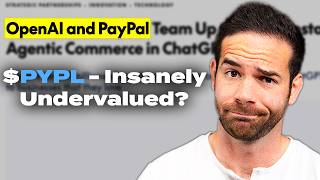
Ryan Daniel Moran invested $180,000 in PayPal based on a numbers-driven thesis: $6.75B free cash flow, $70B market cap (10% FCF yield), and projected EPS growth of 15% annually. He buys one high-conviction stock monthly alongside $150,000 yearly in index funds, with a personal buy ceiling of $75 per share for margin of safety.
Questions this video answers
$180,000
At least $150,000 per year
$6.75 billion
About $70 billion
About $4.50 per share
Chapters
I recently invested $180,000 into one single stock. It was my biggest investment in a single stock ever in my life. And today I'm going to share with you what company I invested in and why I did it. And that way you can hold me accountable to if it was a good idea or a bad investment. That will be fun to track over the next couple years. But let's get something straight first. You should never invest in something because some idiot on the Internet thought thought that it was a good idea. But I do hope that this gives you some insight into how I choose investments, how I make decisions, and why I felt convicted enough to make my biggest investment into one single company. Before I tell you what stock I invested in, let me share with you my overall investing strategy. Every year I invest at least $150,000 into very boring index funds like the S&P 500 and QQQ. Very simple stuff. Why do I do that? Because the math suggests that if I do that for the next 40ish years, it'll compound into over $100 million. So guess what? I have my $100 million plan and now everything else is a bonus. If I make my minimum investment in into boring index funds, then I give myself permission to invest in one stock per month. Just one, not five. I can't spray cash over a bunch of different companies. I gotta choose my highest conviction stock. And for the last 12 months or so, it's been the same company. Every month it's been the same company that I thought was was the most obvious winner in the stock market. And as a result, I accumulated well over $100,000 worth of shares in this company. And that company is PayPal. I started tracking PayPal back when it hit all time highs of over $300 a share. And then when the tech meltdown happened in 2021 and 2022, it fell all the way to four $50. That means it lost over 80% of its value. But the company was still profitable and it still had a little bit of a moat. So I added it to my watch list and just decided to learn more. Of course, you never want to buy something just because it looks like it's gone down and is cheap or undervalued. There need to be strong numbers and a strong story and hopefully a strong future for that company. And in order for me to justify putting money into it, PayPal is kind of a boring stock. It's seen as a dying company. It certainly doesn't have the excitement of something like a Tesla or a Palantir or an Nvidia. But that's kind of why I like it. When something is perceived as boring, it's not going to have these crazy swings in value. And that gives me time to properly analyze if something is on sale and a good investment for me. So I kind of prefer the boring stocks that everybody's overlooking, because I'm not going to get as emotionally invested in the big swings of the price. I can actually look at the company determine, is this something worth buying? Now, at the time that I'm filming this, PayPal is sitting at a market cap of about $70 billion. Compare that to something like Palantir. PayPal is 1/5 the size. It's one fifth the valuation of Palantir, but it makes almost three times the profit. Is it going to grow as fast as something like Palantir? Almost certainly not. It's not flashy, it's not trending, but it's very profitable, and it owns a foothold in its little corner of the universe. And that makes it interesting to me. Now, I don't mean to bore you, but the first thing that I had to do was to get to understand the numbers behind this business. Is it really a dying company, or is there something exciting that everybody else is overlooking? Well, here's what I did. I looked at the actual numbers, and I started with the last 12 months of profit, and in 2024, PayPal did $6.75 billion in free cash flow. Right now, the company is valued at $70 billion. So right off the bat, we have about a 10% return on cash. That means that if nothing happens, that then the business is producing at least 10% in free cash flow return. That's pretty good. That means that if a company doesn't grow 10%, I will take most of the time. But let's calculate where this stock could go. If we look at the total profits divided by the number of shares, then we're left with earnings per share of about $4.50. Over the last 10 years, the compound annual growth rate of its earnings per share has been about 27%. Now, are they going to continue that? Absolutely not. That would be absurd. But analysts predict that their earnings per share will go up about 15% per year. And I think that is a reasonable expectation. So what I did is I took the current earnings per share and then I multiplied them by a 15% growth rate over the next 10 years, and what we get is a future earnings of about $16 per share. Have I lost you yet? Are you Confused by the numbers yet. Basically what I'm doing is, is I'm taking the current situation of the company and creating a reasonable expectation for how it will grow over the next 10 years. This isn't going to be perfect, but it gives me a range to be able to decide if this company is cheap and will grow or if it's overpriced because everybody's excited about it. Well, if we have earnings per share of about $16 and the company P E, the price to earnings ratio is 30, which would be twice the growth rate that that puts the valuation at about $600 per share, about a 9x of what it is right now, and about a 10x of what it was at its lows between 50 and $60. That means that over the next 10 years, the math says that it has a shot at 10xing about. You would have to have some tailwinds for that to happen, but at least the math says it's possible. But of course, just because something might be worth $600 in the future doesn't give you any data for what you should pay today. We've got to have an expected rate of return, so we can use a discounted cash flow model to be able to calculate this. And it gives me today's fair value of about $120. And we need to bake in on margin of safety in case this idiot is wrong with this investment. So what I calculated was that I was willing to pay any price around $75 or under, which, at the time of this recording, is the exact price of PayPal. So at that price, I wanted to sop up as much as I could. That's why almost every month for the last year, I've been putting more money into this company. And if it goes down, I'll probably buy more. There's one more thing that PayPal is doing that makes it a slam dunk for me, and that is share buybacks. Share buybacks are when a company, well, buys back the stock, and it basically eliminates them from the public pool. So PayPal has authorized a new initiative to buy back $15 billion worth of shares, and that's on top of $5 billion that they previously announced that they would Deploy. So that's $20 billion of shares that they're going to buy back. If the stock price stays where it is today, that's like 30% of the company. What does that mean for me? It means that in the future, my shares may have 30% more of the company. My shares, as of Today will actually own 30% more of the earnings that they currently do.
Well, now I'm starting to feel like it's sort of hard to lose on this one. For me, the math simply checks out. But I don't want to buy a company just because the math looks good. I gotta see a vision for the future too. And this is where PayPal has been overlooked. The story on PayPal is that it's boring. The story on PayPal is that It's a dying company. The story on PayPal is that IT's yesterday's news. That's why the company brought in a new CEO a couple of years ago. They brought in Alex Kriss from Intuit and his job was to cast a new vision for the company.
We have more data, we see exactly what people are purchasing around the world. We are transforming PayPal from traditionally a payments company into what we're calling a commerce platform. What I really wanted to do was get the innovation muscle back and open up the addressable market that we could go after.
And what I found interesting about it was that he was directly targeting small business owners and entrepreneurs like me. And I started to see how some of the new features that they were rolling out would directly benefit me. This is what we call a sphere of knowledge or a sphere of influence. Because I'm a small business owner and because I'm an E commerce entrepreneur, I looked at these features and thought, this is really smart. Why haven't people done this already? And as a result, I am starting to get on board with this new CEO and these new features because I could see how they will benefit other small entrepreneurs like me. So now I'm getting excited about the vision of where this company is going. For the first time in years, PayPal actually has a compelling product roadmap. One of those is called Fast Lane Checkout. It's basically a competitor to Shopify Pay. It's a one click checkout experience that increases conversions and is already being rolled out. The people who use it tend to see an increase in conversions on their checkouts. That's really good news. The Second is the PayPal stablecoin. Now this is already live and has billions of dollars in it. And there's nothing really special about a stablecoin except that stablecoins are very profitable businesses because people park their cash in them and the company that issues them just puts them in treasuries and basically gets free money. If there's adoption of a PayPal stablecoin even in just a sector like E Commerce, that is Basically just free profit for the company. And the third is that people forget that PayPal owns Venmo. And Venmo has just begun to be monetized. It has more than 50 million users and they've just barely started to monetize the thing at all. So I think that will continue to pick up momentum and add to the balance sheet of PayPal. So all of this together gives me a story that I believe in and a balance sheet that I think is undervalued. This is where I say, okay, this is going to the top of my watch list. At the end of the day, I'm not planning on a 15 or 30x return on these types of value investments. I just need to have regular compounding growth over the next decade. And if I do that, then my regular allocations compound into a 5-10x return. And I ran the numbers and said, okay, if my total portfolio strategy, my 9% return from boring index funds matches and mixes with a 15% return on really thoughtful value investing. And I blend those together and do them for a long time, the rest of my life, that can compound in over a billion dollars. But the math's got to work, the story's got to work, and you got to have a strategy that you actually believe in and will stick to for a very long period of time. And for me, that's having a base in boring index funds and then allowing myself to invest in one very thoughtful stock until it no longer matches my rules and the math. I take my risks in business. I want to swing for the fences with the businesses that I own that pay me the cash. I do not want to take my risks with my investments. I want to look at downside protection and I want to have predictable growth that will allow me to stay aggressive in business. So I'm not trying to find the next Palantir or the next Nvidia. I'm looking for those long term compounding investments. They're going to grow for a very long time. And that means that I might only buy one or two of them per year. But when I do it, it's because I really believe in what I'm buying. For me, the best investment that I've been able to find in the market is, has been PayPal, and it's now the largest investment in my portfolio. What about you? What are you tracking right now? What do you think about this analysis of this business? I'd love to hear if you see any holes in the thought process or if there's anything that you're seeing as a better deal than PayPal. If so, let me know in the comments. I'm Ryan Daniel Moran with capitalism.com Most of the time I help entrepreneurs build million dollar businesses and have multimillion dollar exits so that they can invest into their growth and their upside and their passive income. Today I'm sharing with you how I'm investing some of my income into something that I think is a really smart choice for me. But I'm an idiot on the Internet. Don't listen to anything that I say. Thank you for being here. I'll see you guys on the next episode. Take care.







