
Wine w/ Wyan: The One About Buying Businesses
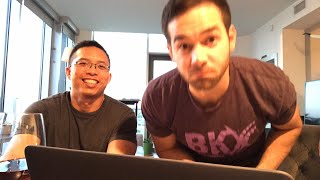
Ryan Daniel Moran, Brian Bigelow, and Clement talk about buying businesses, investment strategies, and the operational challenges that come with acquisitions. They share personal experiences from their time as entrepreneurs in a casual, informal setting.
Chapters
I was living in Chile, and I went to this party that Rackspace threw down in Shanghai.
Just so you know, we were live.
Oh, okay.
Yeah. You're being watched by the whole Internet. Brian, tell all this story about this party that you did in Shanghai. Keep going. Yeah.
Nobody's watching.
Yes. Okay. So when you're beamed up, that. That's when we actually have to watch her. So that's when the stuff will be captured. So I shouldn't say anything? Sam wants to know if we can talk about building an FB audience. Do you know what FB audience is? It's food and beverage, Right?
Absolutely.
So when you talk about building a food and beverage audience for Sam here.
So tonight, I feel we'll talk about buying businesses. I thought that would be really fun. All of us have done it. Thought that would be fun. Just. I don't have my. Oh.
I do. I probably do that three times every wine Wednesday. I'm like, I need my phone in case you're coming. So I guess you're gonna be phone screener tonight. Yep. You'll be. You'll be screening around, right? Okay, cool. So I figured we'd talk about buying businesses. We'll talk about, like, deals. Like, why would you buy a business versus build a business? We'll talk about. I'd be really interested to hear about this deal you just did, why you were excited about it, how you plan to grow it. That would be fun. We talk about what goes wrong, what goes right.
You talk about all these investing books on the shelves because you were drawn to them.
I was. While I was talking, Clement has the Dundo investor up there, which is one of my favorite investors.
Five seconds. About to go live.
It's not working.
What's not working?
I have no idea how to fix it.
Facebook Live. Facebook Live isn't working or the camera's not working?
The camera's fine, though. Facebook Live isn't getting a signal from the camera.
There's audio. There's audio.
Well, that's going to get off. This is going to get awkward real fast. Facebook Live. Facebook. It's about to get real awkward.
You have no idea what we're up to.
Look, Brian came to the house. He wasn't dressed.
We had to black it out in order to keep it censored. Jason Hartman was watching. We were like, well, we don't want Jason Hartman seeing Brian Bigelow in his birthday suit. James Starks was like, I want to see it. And Rob Salatin was like, turn that off.
That's. That's Basically what happened. And that's why you can't see us on Facebook Live right now. And then Carl came in, and he's like, look, I'm on your webinar. Turn your screen off immediately. And Bradley Smith was like, I want to see you guys. Hey, look, we have. We have. I can see. See Money. Like.
Don'T try to be funny while C. Money is in the zone. This is him in focus. Okay, we saw you for about 10 seconds.
Okay. All right.
Gotta remove his NSA strip.
There we go.
And then Aiden came in. He's like, look, I'll watch anything that you guys do. I will. And Dale Perry was like, aiden's here. I'm so stoked right now. And Bradley Smith was like, are you gonna get an image or not? And Rob Salatin was like, I'm getting really tired of not seeing these guys. And Aiden was like, sure, show me the dudes. And Jason. Jason Hartman was like, wine with Wine sucks. You, like, gotta get it together. And then Joseph Aaron was like, nobody tries to say my last name. Don't even try if you're gonna read my name out loud on Facebook Live. And Carl comes in. He's like, hey, look, they're back. And Aiden was like, where is Katherine Lavery?
That's what Aiden said. Hey, we're all good, right, Simone?
Good. Wine aid.
What did you pick?
Oh, that's good. It's good.
That's good.
Hey, what's up, everybody? Welcome to Wine With Wine. Welcome Brian Bigelow to the show. Good to see you. Hey.
I have got to ask. Growing up, were you ever called Ryan Bam Bamboo?
That's the first time I've heard that.
Ryan.
Never heard that one. Maybe just every third time.
Okay. Right. And no one's ever called me Ryan Moron.
So it's perfect.
It's like Bam Bam Bigelow and Deuce Bigelow never get either.
You know, I never. I didn't. I wouldn't have thought Deuce Bigelow, but Bam. Bam Bigelow is.
What's the better one?
I was pretty excited. Pretty excited about that one.
We could.
We could do wrestling.
Veterinarian himself. Mr. Clement. Juan.
Yes.
What's up, guys?
No, at the same time, but yes.
Hey, if you're watching on Facebook Live, I'd love to say, hey, let me know that you're watching in the comments. What's up, Jacob Brown? Derek Coburn is with us today. What's up, Neil? Good to see you. Aiden wants to know if you have renewed your DDS credentials.
Clement did schooling in Canada. You can't practice dentistry if you didn't go to dental school in the US he's out of pylon.
Look, I don't understand how international veterinarian school works. Yeah. Okay. Hey, so tonight we are. Brian, why don't you tell us the wine that we're experimenting with? Brian, we didn't know, like, every. Every week we try to feature an Austin based entrepreneur. Brian has been buying up some businesses, which is something that Clement and I are both fascinated by. So we wanted to talk about that tonight. But what we didn't know was that Brian has experience as a sommelier apparently.
And I drink about five wines, so I knew how to choose one of them.
And one of the five wines was. Was the one that you chose tonight, so. So why don't you tell us why you chose this grape?
We have the Chianti Classico. I chose it because I don't really like Cabernet Sauvignon. Just, it's a little bit heavy for me, so I chose the drier lighter.
So I appreciate the fact that you're so fascinated by this wine that you keep staring at it, but the Internet has no idea what you're doing.
This is actually the first time I've ever been on a.
This is the first time you've ever been on the Internet. Let me tell you, dude, there is so much cool stuff on the Internet.
I've consumed the Internet. I've just never broadcast.
Have you. Have you ever discovered sound boards?
I know what they are.
I've never used. They're pretty amazing on the Internet. That's one thing you should totally Google. Another would be, have you ever played that online lemonade stand game?
I have not.
Oh, man, Brian. We got so much Internet to show. Brian, it's his first day on the Internet.
Online lemonade.
Yeah, you know, like, and when you'd go to like, bored.com and you. You'd build a lemonade stand and you like, it'd be like an online.
I'm gonna have to check this out. Never heard of it.
It's pretty amazing. You can you play it? You put. Jenna Ziegler knows what I'm talking about. Jenna Ziggler's on this and Chris Van Loan II is with us as well, which is kind of amazing. Vicki, dawn, what's going on? Casey Everhart. Good to see you, dude. Hey, Yev. Good to have you, man. Justin. Richard. Hey. Sid McVeigh. Brianna Thomas is here. Does any. Has anybody ever met Brianna Thomas? I think she's Just a mysterious person that lives. That lives in this Internet world that Brian just discovered. Jacob Brown, not a doctor. I'm glad that's catching on. What's up, Howie? Good to see you, dude. Melissa Simmons, thanks for joining. All right. Hey, so cool thing, Brian, you're celebrating this week. You just closed on a business acquisition, am I right?
I did, yeah.
So tell us about that.
I.
I spent the last couple months going through bank process and learning what I needed to. To run a. My first supplement business.
So new to the space when you went through the. The bank process, you mean like I.
Had an SBA loan this time to purchase a business.
Okay.
First time going through that process as well.
It's not the first time you bought a business though, right?
It's not. It's second time I bought a business.
Okay, cool. So the first one was a good experience, I guess.
A great experience. Yeah. So I, I've learned a lot through it. The business has increased its profitability fairly significantly and yeah, looking to kind of do this more. So.
So is. Is the. Is the strategy to buy a handful of businesses with the expectation that you'll have like a nice portfolio of businesses that produce somewhat like passive income? What's the model that you're following? I guess is my question.
I don't know that I have a clear thesis right now. So I am continuing to buy businesses that I think are a good value, that I think can grow. And I think that do one thing excellently.
Hey, is excellently a word?
Probably. That's okay.
All right, cool. We're good with it.
At least we're only half a glass of wine in. So choose new verbiage. They are adjective there.
I guess the.
Yeah. So I'm in the process of kind of buying businesses that I think I can significantly grow the value of and that in both cases the founding entrepreneur has done a few things really well, but been kind of burnt out or not had the energy to take it to the next level.
So they did like something exceptionally well and kind of burnt out and you're going to come in and buy the business and infuse some life into it.
Yeah, I think I've always been fascinated with finding unlocked value in things so figuring out what is an angle that can be applied to it. And businesses are great in that regard. So you have.
Typically some sort of offer or offering that customers like and resonate with, but there are a number of ways typically to scale that up from there.
When I hear offer, I hear like sales letter.
Unique product.
And probably an Audience attached to that as well. Are you looking at like a specific criteria or when you say offer, do you just mean the value prop of the business?
I think that there is typically a value prop of the business that has been proven that people like but that it's kind of early on and it's, it's roll out of that and that there's opportunity to connect that with more people who would be interested.
Yeah.
So where did you find this business?
I found this one through.
The business brokers. I think it's App Business brokers is what they go by.
What was it?
App Business Brokers.
App Business Brokers. Wow. They just got a really good free plug in front of a bunch of entrepreneurs. I have no idea who you are, but you're welcome.
Yeah, so that, that's been great. It's been really good actually. I've connected well with the seller of that business, spent a few days with him and I think he's put some trust in me to kind of take that and run it well and treat his employees well and his other kind of existing business relationships. And he's been really helpful. So they're definitely, definitely elements of that business that are completely new to me, which could be bad. I value learning really highly and so buying something that I feel like is working and does something well that I don't know as long as I don't screw it up, is often a great way to learn as well.
Why did you decide to buy a business versus build a business? And meanwhile I asked this question. The first thing Brian did when he came over was to the place was comment on the investment books that are on the shelf. So I assume that your, your eye is looking for value and scaling that value. But why did you decide to buy businesses instead of start them?
I, I think maybe similar to. You have been entrepreneurial in my career, but really with the intent of building a capital base that I could use to become an investor. I've spent most of the last 20 years kind of really studying investing and kind of applying it. I've managed a small fund in the past.
What was that? What did that fund do?
I had kind of taken a trend following model and it was trying to do a low risk option strategy on top of it.
I didn't really raise enough money to capitalize it well and so I didn't run, I couldn't run the currency portion of the model. And honestly active management has underperformed passive management in general for the last several years. So it was a great experience because.
Of all that winning.
All that winning.
Getting really tired of all that winning.
But yeah, so it was a, it was an option trading kind of multi asset class strategy.
Yeah. So I was really intrigued by E Commerce, particularly kind of the way people were describing things. They were in terms of how asymmetric it could be, which is what you do in option trading actually.
Maybe like. Did you talk a little bit about your background as far as like what you did before?
Sure.
I've been pretty eclectic. So I made a decent amount of money as a trader when I was an undergraduate.
What's a decent amount of money?
I turned more or less than $10.
More than $10.
I turned about Brian Bam Bigelow $7,000 savings to about $10.
150,000 as a 21 year old.
150,000 is more than $10. It is. I'm no mathematician. I think I've heard rumors.
I think I got lucky more than being right in that scenario, but.
Was helpful. And so sometimes being lucky is helpful.
Like I, I would multiple ways. I would not pursue the same strategy that, that accomplished that.
Now open break, you heard it here first on Wine With Wine, the endorsement, the investment strategy that Brian Bigelow endorses is hope and pray. And you can, you Too can turn $7,000 into $150,000.
Isn't that why everyone hangs out with you, ryan?
To turn 7,000 into 150,000? Yes. Well, if you read my Instagram DMS, you would say yes. Apparently that is why people hang out with me.
Yeah, good to know.
Yeah, but you have to say it in broken English and a lot of typos. That's the secret. That's how you get my attention on the Internet.
Do you have your own kind of like Google Translate plugin that can just translate it into broken English?
Well, I. Wow, there's so many insulting things that I could say right now.
I told Ryan my goal was to bait him into saying.
Have some more wine.
You'll have to wait until I started it too early.
So let's give it another hour.
Well, we'll get there, Brian. We always get there. So your special Skill is turning $7 into $1.5 million. Right. And you have an info course about how to turn $7 into $150 million. Great. Would anyone like the link to this? If you talk like that, you too can get Instagram comments like I get on a daily basis. That's the hack to the Internet, Brian. We figured it out, everybody.
My first day on the Internet.
I've got it. Cracked.
No, I would say my defining attribute is I look for things that are that what I would call asymmetric.
So if you lose, you lose a.
Little and if you win, you win, win a lot. And that's been how I've approached investing most of my career. And I think that's true of buying a lot of these e commerce businesses or starting them.
You can structure them in a way that if you lose, you have kind of defined risk and if you're right, you can grow them many times more than what you're initially.
Right.
I'm not sure. Like.
Yeah, everybody tries to minimize risk and maximizes return ultimately and. But so I guess similarly and it's.
Interesting, the bitcoin buyers.
I feel very justified.
Go on then.
It's interesting because we actually learned we have a mishap mutual friend who it would have been interesting to even bring him on. He's trying to figure out what he's gonna do with his life. But I know him from my past life as an investment banking and as you met him.
But are we not saying his name because we're live on the Internet, is that it? We already mentioned app business buyers.
We did.
Who are we talking about? I feel in the dark here, Matt.
But is he still working at WeWork?
He is. It's a guy, Matt Stewart. He manages a kind of a New York based family office but is kind of figuring out what he's going to do next.
I like Matt. Yeah, we should hire him.
He's a good guy.
Matt, if you're watching, I'm certain he is not watching.
We could call him.
We could.
You know, just one, just once, just once in my life I want you to do that face and that reaction when we're not live on. Oh, we could call him. Yes, that technology exists. Everybody we can call people these days. Look. Brian's discovering the Internet. Clement's discovering cellular telephone technology. What will we discover? We're two for three guys. Good news comes in threes. See money. You're gonna discover a new piece of amazing technology tonight. It's gonna be amazing. Flight. Is that you said.
Aiden is discovering LinkedIn for the first time in the comments? Yeah, I don't know. I think LinkedIn. I tried to love LinkedIn. I'm trying.
I don't love LinkedIn.
I suppose I never really get a lot of value out of it. Although it's not really, it's not really the social platform for your personality.
Ryan, what are you saying about me?
Yeah, what are you saying about his personality?
LinkedIn isn't really designed for big reaching.
You know, I did a personality profile.
I did a personality profile that analyzed what type of.
Entrepreneur you are. And I was the intersection of performer and investor. Nice.
Which is you were going to say.
A couple of.
Like one of those Facebook quizzes.
So if you were born in the 19th century, you would have just been like a stock scam promoter is what.
Essentially there it is, what that defines. I now know your opinion of what I do for a living.
You could start looking at ICOs now.
I would be a damn good ICO promoter, I'm sure. We call it Capitalism Coin. That's. That's what it is.
We should probably be filing the trademark for the.
Well, everybody, now you know we're launching at capcon, the Cap Coin. That's how you get your early bird ticket for Capcon in January of 2019. You have to buy it in Capcoin. Yeah, so. So I, I'm, I'm the weird blend of wanting to be on stage and also be the investor, which is very interesting because that's a, that is a pretty accurate reflection of my life at this point. Anyway, you were starting to say before you started talking about mutual friends, the way that you approach investing compared to or looking at opportunities versus Brian, because you look at things more like an investor. You have an investment banking background. So how is your viewpoint similar or different than Brian's?
I think ultimately we both look like, broadly speaking, it's about maximizing the return for the least amount of capital and figuring out as far as like cash flows and return on invested capital. And I think it's maximizing that return on invested capital because I think that's probably the biggest differentiator amongst people who are investors and marketers, at least in this space. And that's. People don't think in ROIC terms, where a lot of Internet marketers are used to seeing money, you invest money right away and you take it out right away. When you add in the complexity of inventory, that's when things kind of go off the rails for some people. And that's a huge differentiating factor on why some companies win, some don't.
When I say entrepreneurs, like, the entrepreneurs I know are really good at making money, they're also really good at losing it because they're used to quick wins, usually for status, and then it goes away. And.
I had moments when I was in that world where I was like, I don't really like hanging out with these people, which is when I made kind of a right turn in My career. And then people are like, how did you do that? How did you get away from the crazy Internet marketing crowd? You just stop following that. So it's interesting that from the outside you noticed that, because I remember that was one of our first conversations. Nobody in our sphere was thinking about it like an investor or thinking about it in terms of return on invested capital. They were looking at it in terms of money generation.
Which I think is interesting, is like the first observation that you made.
Well, and I think it also plays to your comments when we first met of like, people who make it big tend to be very surprised at the success that they might not have had in digital marketing. But then.
Porting those ideas and applying it to a physical products business, they all suddenly find success.
But then often they want to try to hedge their bets. And the weird thing is, like, for somebody who comes from an investment background and comes into this space.
Are looking at people in this space and thinking, oh my gosh, I need to invest in digital assets. And because again, the underlying idea that I think when you win too quickly and you don't necessarily know what caused that, and you're kind of, you come from a world where like, when Google changes their algorithm, your value disappears overnight. I think you, you still have those fears that it could all go away. And I think, like, and that's why a lot of people hedge with real estate. But at the same time, you look at real estate.
The returns are abysmally poor comparatively.
I mean, it depends on what you're getting into it for. I mean, there are plenty of people who take other people's money and buy during bull markets and ride the cash flow on the upside and have very little skin in the game, you'd say their ROI is infinite. And if their business is being in the acquisition mode and using other people's money, that's a perfectly fair roi. But I think the, the difference is that, like, that's their business. If you're looking at it from an investment standpoint, I think you're right. But if you're looking at it from a business standpoint, operating like a business, I don't necessarily think that's the case.
Yeah. And. Well, and like, further to that, in the idea of return on invested capital, if, if there's one metric that people should look at as far as their own portfolios, it's that return on invested capital. If they're trying to get rich versus, like, people think about margins. People talk about, like you go to these conferences and people are only talking about Revenues, they're not talking about how much they're actually taking home. And it's.
And even if you go back to like Warren Buffett or any one of these, some of these billionaires or people who have built billionaires, it's the ability to leverage some type of asset to keep on growing it in some consistent way. And Buffett did it with his insurance companies using some of the float. And.
In the same way, I think you have this unique world in digital assets where our leverage is operational and it's through platforms like Amazon that allows us to and Facebook that allows us to project a message which was never possible before. And you can already see it like even two decades ago, the cost of starting some type of digital business required buying hundreds of thousands of dollars worth of server farms or servers somewhere. And today it's. Today you just buy by the minute. Where like it's this unique thing about this space and time where as you know, we're both passionate about capitalism. Capitalism is becoming less dependent on capital and there's more.
Especially with CapCoin coming out very soon, launching at Capcom launch January.
There's more, arguably more idea, more.
More money than ideas than, than good ideas and good people to execute on.
100% agree. I think, I think it was Jay Massey who said at one of our events, I thought this was really insightful. Any investment is only as good as the business behind it and our leverage is the operations of that business. Absolutely. Brian, question came from Jacob Brown. What was the biggest lessons you learned after buying your first business?
That's a great question.
Also question from Aiden. I love this. Anna, where would you go on a date night with Ryan? What will you guys be doing? And her profile picture appears to be her with her husband. So this got weird quick. Thanks, Aiden for making me feel awkward. Brian, what was the biggest lesson that you learned buying your first business?
Actually, let's ask what's your biggest mistake and what's your biggest win?
I think my biggest ongoing mistake continues to be on that operational side. So kind of figuring out how to manage kind of your whole supply chain flow because if you don't have a product that people want, you're just losing money on that return on capital.
So are you operating the business? Like are you going in and being the operator?
I am operating and sort of building up the infrastructure to manage as I go. So my goal is to kind of ultimately build the infrastructure that I can start to plug more of these businesses into.
But yeah, I have, I've been fairly operational. I'm Kind of starting to hand pieces off as I go.
But yeah, I've been pretty operational.
You.
Know, I've learned a lot. I learned a lot on the first business I bought. It primarily sold, sold on Amazon through fba. I've learned a ton about that ecosystem. Both kind of what works, what doesn't.
Really what drives things. Ton of learnings on that. And the business I'm buying now is more kind of a direct sales model and I'm hoping to learn a lot through that. I find that I learned the best when I.
Can get immediate feedback on whether something works or not. I find a lot of times when I'm starting a business I don't really know quite what to focus on early on and so I can waste a lot of time. If I am working on an existing business, I can test things very quickly and get feedback in terms of how it affects profitability.
So are you saying that buying a business and having that momentum gives you more of platform to test new things, whereas if you were starting from scratch, it would take a lot longer to get that feedback from the marketplace?
Yes, exactly.
How does like give, how does that play out in like a day to day basis? Are you testing things to the audience? Are you testing new products? What are you actually testing?
It could be any of those. When I bought the business on Amazon, like I didn't understand how marketing work on there. I didn't really understand how.
How to kind of get your product in front of customers, whether it's optimizing for the words that you want to show up from a search standpoint. And I didn't really understand kind of a lot of the adding existing menu products.
So you bought it, you learned after you bought it?
I did. I had learned a lot beforehand but had not had a platform to really apply it. And so I was immediately able to just kind of put to work ideas and theories I had and see kind of what bore fruit and what didn't and double down.
Where had you learned about the business model before you bought the business?
I first heard about it on.
Business Coach locally. Had a product. She had this guy, Adam Hudson, who's.
An Australian entrepreneur talking about Jamie.
Yeah, Jamie had her, had him on her podcast and I was just really intrigued by kind of it as a business model. I bought his course.
I wouldn't say it's great content, sorry.
Shots fired.
And.
Then I ended up kind of connecting some other communities. I learned some stuff that I thought was very helpful but I didn't really have a sort of product offering to Test it on. So I just decided, hey, if I could find something that was selling at a decent valuation, I could potentially grow it and then have options.
So you liked the business model, but instead of learning it, you decided to buy it.
I did.
And then you're like, this is going well, I'm gonna buy another one.
I did, yeah.
So you talked a little bit about your mistake of like, you feel it was a mistake or one of your weaknesses of your operations. What would you do differently and what have you done differently?
There's been a number of learnings. One of them is getting a little bit better feel for how. How seasonal different things can be. So, like, if sales velocity accelerates, you need to be able to plan for that in terms of stocking or if you have a new offering. I'm testing out a new tool by Forecastly, which sort of supposedly uses machine learning to kind of forecast what you need to order based on your projected lead times and things like that. I've learned how many holidays they have in China. Did I interrupt sort of production and shipping schedules?
I've learned how much longer it takes if you have to ship your product to the east coast and to the West Coast.
I think I'm learning that in some cases it makes sense to air freight stuff, even if it's very painful.
Yep.
And those have all been learnings for me. I've also learned how much more efficient it is, is if you can do a full container to Amazon as opposed to having to sort of process it along the way.
There's a fight going on in the comments that I'm going to address here in a second. But first, there's a really, really good question from Heidi. What's the number one product that is a guarantee to sell out? And the answer is obviously extra strength Viagra.
Obviously.
Obviously. Hottest, hottest product. Hottest product in Austin right now. Everyone knows that, bar none. But not for sexual performance. It's mental performance. Mental performance. Blood flooding your brain. Right. Actually making them, you know, a major, major threat to Alpha Brain. Alpha Brain's performance here in the marketplace. Also used as a party drug because I hear when you take, you can go all night long.
I've heard that as well.
Yeah.
That sounded like a joke. I've used a lot, actually. I've never used that one. It wasn't that funny. I need more wine.
And why did you two only. Are you two the only ones who got water? Like, what are you trying to do?
You came in like, look, look, you're the slowest drinker in the History of wine. I'm not putting a second liquid in front. That's enough. Wow. For being a sommelier, you're a terrible poorer.
That's true.
This is my first time using this very cool aerating.
That's the automated aerating device. That one? Yeah. Hey.
That veterinarian, Clement, what's the science behind aeration?
I have no idea. I'm not a wine drinker.
Barring this experience, you own like seven aerators, though.
It's.
I also.
Have you seen my liquor collection? I don't drink liquor either.
You just.
You just collect it for entertainment purposes.
For your own entertainment?
No, not.
Haven't you seen him late at night just staring at his.
Thanks for offering me the paper towel. Drowning here in the wine that you spilled all over me. Brian invite you over into my house.
Is it time for a drunk dial already?
I don't have to. I have an interesting offline question too.
All right, hit me.
As clement walks away, Dr. Clement, Joshua Costner asks, I know you focus on physical products based business models. Do you ever advise service based business models? And how do you three feel about investing in service based businesses?
Investing in service based businesses. I'm gonna let you take that one. But the question on advising them. So like in every business there's some sort of, well, there's really two things. There's some sort of sweet sauce or some sort of special advantage. And there's some way, hopefully that if you step on the gas, more revenue comes in. Whether that's in the form of client flow or it's coming from products. There's some way that you're getting leads and customers that can and is always going to be optimized. There's always upside to that. And whether that is dumping gas on the fire with more advertising or different types of advertising, or it's bringing in forms of outside traffic, it's where can we step on the gas with what's already working? I think the entry point of entrepreneurship is figuring out what's working and then scaling is doing more of that more efficiently with more man or woman power and making it happen faster. And so when you've got an entrepreneur who has something that's working, you're coming in and looking at what pieces of that can be optimized. So what other traffic channels can we plug in? How can we. A lot of times it's what revenue model could be optimized to be more efficient. For example, I have one service based client that I work with very closely. Who? He told me what he was selling his services for for. And I said I have reason to believe that you could probably charge four to five times what you're charging right now. If we just tweaked this position in the marketplace a little bit and he was open to it and tested it and on the first client that he tested it on, that client excitedly signed up and he went, oh my goodness, I just quintupled my margins on the same service that I was doing previously. So sometimes it's a matter of just identifying the highest and best use for your service or your product and taking it to the right person and reframing it in a way that allows you to charge a premium price. And that's just an optimization of your delivery method and your revenue method. So it's finding out what's working and tweaking it in a way that is more scalable. What about investing in them Brian, would you buy a service based business?
I probably would not, but I have some friends and guys I really respect who have been doing an interesting model where they've been buying kind of service business models as their cash flow kind of anchor that they can then invest in kind of high leverage, higher risk startups. And I think as a barbell strategy, something like that is kind of interesting where you have, you're buying kind of service e businesses that are selling at really low multiples and throw up a lot of cash flow but then you can then take a little bit more risk with that cash flow to kind of do some interesting stuff.
I would say I would invest in or buy a service based business if it was a compliment to the other businesses that I had or that I owned. So I'm always looking for businesses towards acquire that complement either my skill set or other assets that I'm a part of. And in that way you have your sweet sauce or your special power that can be applied to multiple assets and not just one isolated asset. So I probably wouldn't buy a service based business as my first business, but I would add it to a portfolio if it made everything else better or if there was some way that plugging that into my existing businesses made everything else more efficient.
Anything else for us to hit C money in the questions?
You know, I really liked really like that one you took earlier about the foolproof product.
The foolproof, the foolproof. It's always Viagra, man. It's all the answer to the really the secret that no one talks about is selling drugs on the Internet has an amazing amount of profit potential. Really? I mean why do you Think they shut down Silk Road? They shut it down because there was so much money and the government wanted that money. Like that's. That's how much money there was. Like the government was in on it, guys. Yeah, like they're trying to suppress Bitcoin.
Well, you can see the fight that the FBI is putting on right now. They just don't want the government in on their business.
I have no idea what you're referencing.
Oh, the. All the subpoenas into the FBI where the FBI isn't giving any documentation on the Russians.
As a Canadian, you know more about American politics than a political junkie does.
That's because they hide it from us as Americans.
Only.
Only Canadian news actually has that.
It's part of the machine and the brainwashing. Got it.
Now you know.
Yeah, I've discovered the Internet. You've discovered the great conspiracy.
What's it called? The.
The deep.
The dark web.
No. Oh, the deep state.
Yes, the deep state.
That's it.
I'm in the dark. I'm in the dark. Well, first of all, Aiden just reminded me I didn't call out what. What the fight was earlier. So there's.
There's a single lady in the. In the comments. Yeah, all the single ladies are in the comments. Like it's going down is what's happening. That is where that. That is where I find my.
My dating. My dating prospects. The comments of my videos.
So, so, so the fight is.
Aiden is trying to play matchmaker. Right. And she's resisting it. And I don't like being resisted in my own comment section. It's making me a little bit uncomfortable. But no, finding dating people in the comments to videos is really a life hack. All of you should try it.
When is your info product about this coming out?
I'm still testing a few. Few strategies. For example.
I don't currently have success dating the people who comment. More like Ryan Moron. Right. And I have to respond to that 50 times a day.
Lately I've been getting a lot of comments from young Earth creationists. Okay. Which is interesting because C Money and I did a video in Eastern Europe where I mentioned that I used to be a Young Earth creationist. So I have a little cult following now in the Young Earth creationist community.
They're trying to win you back.
I do have a few people in my life that have given up.
But yes, yes, there's plenty of people who are still trying to win me back. I love the debate, by the way. If any of you would like to convince me that the world is 6,000 years old. Older or younger? I welcome the challenge.
Or flat.
I'm not even gonna open up the flat earth thing for so long. I thought it was a joke. I thought the flat earth thing was a joke.
It's real.
Look, are there any flat Earthers that watch Wine with Lion? If so, I would like to bring you on and talk to you about it live. I want to talk to a flat earth here. Aren't we? I'm not flying them out. You know that flying is warped because the earth is flat or whatever. Whatever it is. Where are we going?
He'll pay for your gas, though.
What? What other weird cult following? Andrew Cravens is watching. What's up, dude? Good to see you, man. Do we have any other weird cult followings? We have. We've got Young Earth creationist, which. Which, by the way. Which, by the way, this is the point where I have to, like, I have to be in defense. I grew up with all young earth creationists. So, like, I love the young earth creationists. They're great people. They're wonderful people. A little bit brainwashed. What other interesting comments do we get on our. On our YouTube videos? A lot of gay men. Oh, yeah, I get a lot of gay men comments.
I'm surprised we haven't gotten any images.
I shouldn't even bring you.
You might not get sent a lot of images from. From my gay followers. But I.
Thank God for the filters. Thanks. Thank God for the filters. Well, I had somebody comment recently, like, Ryan, you do throw off a bit of a gay vibe. It's okay if you want to come out. And I was like, thanks, Clement. That's nice of you to say. And I said, I wish I was. I would get a whole lot of play.
It's not my style. What other recurring comments do we get?
Well, a lot of capitalism haters.
Oh, that's right. We get a lot of comments from socialists. White. Yep, you're right. We get a lot. A lot of white privilege and socialists. Yes.
All right. And this has been very therapeutic for me.
Thank you. White privileges are not fond of you individuals.
No, no, I get a lot of. I'm a white privileged capitalist.
Right.
Because only white privileged people are capitalists.
Clearly.
Also, I love when we were in Ukraine that people called you Roman Brian Moron, but they weren't insulting you.
Thank you for the reminder, Chris. Appreciate that.
Oh, Rick asked, what do I think about the $15 an hour minimum wage?
I think it's great.
If you. How much. How much time do we have?
In what city are we discussing this? In. Are we talking nationally here?
Well, I think generally it's a great idea if you want young people to be unemployed.
And we do. Boy, do we want the young too.
Much experience as it is. And then they come into the workforce and already have that experience.
They're having way too, too easy of a time paying off student loans. Yeah. And we think they should struggle a bit more. So raise the minimum wage so that they can get out of work so.
They don't get work.
Right, right. Yeah, that's the idea.
Yes.
More machine automation. Would you clarify what. Okay, so I could go on a rant about why raising the minimum wage is a bad idea. Would you clarify why you have that opinion?
I mean, logic and science.
Well, I think so. I think there are a number of studies which go in both directions and where I think the flaws in the arguments for minimum wage occur, where they suggest that minimum wage doesn't actually make that much of a difference, is in robust economic markets where the market minimum wage is already a lot higher than minimum wage. And so what happens in market minimum wage, there's difference between market and regulatory minimum wage. And that's. Market minimum wage is what a business reasonably needs to pay in order to get an employee in a market. And then the regulatory minimum wage is what the government dictates that you must pay when the market minimum wage drops below the regulatory minimum wage, that's when you have unemployment because people just can't afford or don't want to hire people. People at that price. And it's.
You just hate poor people, don't you? Oh, that's what I'm hearing.
Yeah. Well, like, I mean, poor people. I hate them so much that I want them to have experience, that I want them to have jobs.
You are a hateful person.
I bet he's a Trump supporter.
I'm almost certain that's okay.
Canadians.
Well, we did win bigly today.
What happened today? Seeing as how this will be edited and released as a whole episode in, like, six weeks.
Two big things. Janice versus Axla Acne, the union and.
Didn'T know about this. Okay. What?
I literally just discovered the Internet today.
It's all right.
Well, literally.
All right, let's take a. Let's.
I'm on almost no social media, so.
Let'S take a quick poll. What is this thing that you're excited about? What's it called?
Janice versus acf.
Okay, Before. Before you get all excited about winning bigly on this.
Yes, please.
In the comments, yes or no? Do you know what this is? One more time. What's it called?
I'm a.
No, Janice.
No Googling. Do you know what it is? I didn't. Janice versus.
Have you not been watching?
Like, is this, Is this the U.S. supreme Court or Canadian.
Supreme.
U.S. okay.
Yeah. So Supreme Court ruling that Clement thinks.
Are people not reading? Like, these Supreme Court rulings have been pretty. Like, you.
Look, Clement, we all know you have, you, you have Google alerts set up for the word Trump. Right. Your phone is going off all the time with Trump. What? Trump.
Which is actually bad, but whatever.
And like, you know, you know, everything going on at all times. US Politics. This is.
In this particular case, this is. This will change American politics for the next few decades.
Okay, so just give us a summary.
Hold on. Not yet. Not yet. You just made the claim that it's going to change US Politics for the next few decades. This is big. According to, According to the Canadian. American experts on the panel. The Canadian, who is an American political expert and a veterinarian and dds and doctor of pharmacology. That's how he's licensed to sell drugs on the Internet. So I wanted, I wanted, I asked the question, how many people are actually familiar with. With this ruling? All right, first of all, Sean says that you are right. All right, so we've got a couple. All right. Oh, my goodness. All right, so here we go.
Nope.
No, no, no. Yes.
But that was Sean.
Yep.
No, no.
No, no, no.
No.
Yes, yes. Hi. Terry Caskey changed my life. Terry Caskey.
My car is named after Terry Caskey. Yes.
You track all of them. You just track the rulings. Like, there were like a dozen rulings in the last week, and that's all they're gonna be for the, like, until the next.
So. So we had, we had one person on the live who is familiar with this. All right, tell us why this is going to change American politics.
Is this an audience or is this a commentary on Americans as a whole? We don't know what the stand.
Well, look.
That's a good question.
You already know Brian's view of what you sell is like. Or what you do is pretty.
Thank you. This has been a great conversation for my ego, let me tell you.
That was actually my primary objective.
The guest in my home has a low opinion of what I do for a living.
Thanks.
Thanks, Dr. Clement. You're welcome.
That was Clement's interpretation.
Great. So is there anything else two of you would like me to know?
Go ahead.
So basically, I love you anyway, Brian.
Go on the Bottom line is that unions cannot force dues onto people.
Even if they're free riders. Public sector unions specifically. So basically the estimate is overnight unions will lose 20% of their dues. If you look at. Was it Wisconsin? I think it was Wisconsin. Scott, Rick. Rick Scott.
Rick Scott's Florida. Scott Walker. Yeah.
So Scott Walker implemented another, a number of moves, especially for teachers unions. Where teachers unions.
He did things like.
It has to be voluntary. It has to be.
When you pay, you don't pay through your pay, pay paycheck. You have to pay directly to your union overnight. Actually, not overnight. Over the course of several months, they basically lost something like 60 to 80% of union members paying dues. And if you look at where people are actually union members, it's almost entirely public sector unions these days because the private sector just tends to pay more. Like people don't unionize.
Why will this change politics for the next several decades?
Because the people who support the state and politicians, and there are Republicans on this as well who are statists and they get support from teachers unions and other unions.
Will no longer have that kind of firepower. One of the biggest political supporters, at least on the ground level of getting people out to vote, getting.
Organizing for specific politicians have been public sector unions and that goes away.
So you hate poor people unions and you don't think people should vote. That's basically what you're saying, oh, people will vote.
And I think.
And you secretly troll me on the Internet.
I just discovered the Internet.
Why do you hate poor people in unions and you think people shouldn't vote?
Well, I think. Well, I think actually hopefully more people will vote, but I think that American voter trends are not positive necessarily in that way. I think people should vote if they want to.
And I think poor people should have an opportunity to be rich.
I like how he just safeguarded all of his comments by just saying people should vote and poor people should be up. He basically just yelled let the, let them eat cake is what he did.
I think Clement secretly hopes that America will become a police state so that everyone wants to move to Canada. He's actually just like a secret subverter of all of our national interest. Interest.
Well, seeing as how he's a Canadian introvert who lives in America, I think he is secretly scheming like, I hope all these Americans move to Canada so I can have this place to myself. I came to Texas so I could have a wide open ranch. Everybody go. Every, all of you threatening to move to Canada, please do. I'll run this place. By myself.
I'm pretty sure the Yukon Territory has a lot of open in space. Oh, it does? Yeah.
Oh, okay. How many Canadian provinces can you name?
British Columbia.
First of all, he knows everything about America.
Yeah, but he knows everything about everything in the world. I think it's what we've established here.
Does he know the Supreme Court rulings in Dirk Durkistan? Probably. Fair enough.
Do they have a Supreme Court?
Is.
How many provinces can you name?
Let's see.
We should I. Okay. I'm pose this as a challenge to those of you who are watching. How many you just heard? A Canadian school?
Some. I consider myself a political junkie and I get schooled all the time.
This is like such a big deal. Like how.
Surprised you guys are talking about this and not Kennedy resigning.
Kennedy resigning is. We didn't even get there yet. We didn't even get to Kennedy residing yet. We've already gotten schooled on the. On the Supreme Court ruling by a Canadian. So.
Let'S turn it around. How many provinces can. Two.
Okay, we have intelligent Americans. Name.
Yukon Territory, British Columbia, Ontario, Alberta, Saskatchewan and Quebec. No, Quebec is a city.
I've got five. That's good. How many? There's 11, right?
I believe so.
Now Northwest Territory.
Oh, yeah.
The island. Prince.
Edward Island.
Prince Edward. Is that it? Prince Edward Island. The island. The really small one.
Okay, there's the time.
The tiny little island. Nova Scotia.
There's the new one. The new one.
They have new ones.
They have a new one that just got made.
Nunavut. Is that like. I actually don't. I.
No. Okay, we're off the hook. We're off the hook, everybody.
You said Alberta, right?
Are you referring to Manitoba?
Oh, Manitoba.
Manitoba is not new.
We got him angry. Manitoba's not new, you dirty Americans.
I think we got Newfoundland and Labrador.
Labrador is not a real one. That's a dog. That is. That is observant. Same on age.
Let's see, we have Old Yeller.
What other provinces are there? There's a Golden Doodle.
And I'm gonna go buy a cottage.
Is probably right. That there are 10 provinces and three territories. I just couldn't remember if they made that last one into province.
But I think we wasn't in the country. I think we hit them all. Except Labrador. Didn't see that coming. Didn't see Labrador.
No, it's.
Labrador is part of Entered the confederation in 1949.
I get bonus points for knowing PE island, right?
I think so.
Okay.
Yeah.
I would have never guessed Anne of Green Gables. Have you Heard of her, huh?
What? That's not a province.
What are you, a stupid American?
Canadian culture? Anyway, moving on.
That takes place in Canada.
Anna Green Gables.
Yeah. Yeah.
I assumed it took place in America.
The longer I live in Texas, I assume everything takes place in Texas.
Did someone actually post, what do you think of the Nunavut territory?
No, I was asking because it entered the confederation in 1999.
That's pretty recent. Well, there's another one that's. That's even newer, Right? Is it Newfoundland? New as a territory? Wasn't it something. It was just.
It was the latest land. The last one, I think, is, like, 1948 or something. It was. It was the last one to enter.
Well, one of them was not an official province and just got.
Provinced.
It went. It. It made it through. It got knighted. It has sainthood now. The Queen and the Pope conspired, and they're like, just give Newfoundland things that happen up north, like, oh, in Canada land.
Trudeau was like, yeah, whatever. Sign. Sign it. Oh, wait. First I gotta get the Queen's permission. I understand.
Yeah. I think it's time. I think the wine's flowing. It's time to call somebody. Where is Catherine Lavery?
I don't know. Okay.
She was hanging out with him.
John. That's right. She was.
She was with Damon.
John, someone gave us without phone number here. Joshua Kaminsky asks, what's changed for you or what have you learned from your business losses and failures to bring you.
To where you are today?
I learn by failure, unfortunately.
I am the type of entrepreneur who takes action. Action and then thinks about it later, which is common among entrepreneurs, not necessarily recommending that strategy, but that is how I tend to learn. So that particularly is how I have learned hiring. Just hire them, and we'll figure it out later. As Gary Vaynerchuk would say, you can't really get good at hiring, but you can get good at firing. So that gave me the opportunity to practice.
Practice firing. So I tend to take action and then adjust later. So I have pretty much learned everything by mistake, which doesn't make it easy for. It makes me actually very hard on myself because I probably make more mistakes than most people, but it's how I adjust. So I've made mistakes in hiring. I have made mistakes in product selection. I have made mistakes. Mistakes in partnering. I have made mistakes in.
Sharing too much publicly.
What have you shared too much publicly.
Just to call it out.
I'm gonna need more wine.
Oh, I remember a few things that you said that you shouldn't have said maybe premature.
Talked about people's products.
Have we done that? Yes, in one case.
Yeah. I can only remember one case.
Okay. And didn't have their permission.
No, it was through an email.
Oh, yeah, Yeah.
I didn't talk about his product. I just talked about him.
What was it?
And he was like, I don't want to be featured as a case study. Okay, but now we're BFFs. Yeah, yeah, yeah. Anyway.
Things that I have shared publicly, I have talked about projects too early. Like, I've talked about ideas that I have not. I'm not afraid of people stealing my ideas, but when I share something I'm working on way too early and it doesn't materialize or doesn't materialize quickly, that can cause confusion.
I. So sometimes I will, like, talk about where I want something to go, not necessarily where it is, and that causes confusion with my team or causes confusion with customers. And so expectations are set that, that don't get matched or I probably share my mistakes a little bit too publicly before I've thought them all through or, like, learned from them sufficiently. I tend to share everything on the fly, which makes me very transparent. But. And it's kind of therapeutic for me at times, but it doesn't always.
Represent me in the way that I would like the Internet to think about me. Like, I tend to share my warts very publicly, which doesn't always work out the way I want it to.
I said something on. We put something on YouTube last week that I regret saying publicly.
What was that?
Yeah, don't worry. Don't worry, Dr. Clement. I'm getting there. I, I think my exact phrase was, I don't know about Amazon. And, and what I, what I, that, that got me in trouble with some people. What I was, what I should have said was that there are, you know, there are tacticians and practitioners who know way more about the backend management of Amazon than me. And where I'm really good is building a business and using Amazon as a piece of that overall business growth. But that was what I was saying was that was why I always resented the label of, like, the Amazon guy, because there's people that know way more than me about, like, optimizing paperclip campaigns, for example. I could recommend those people. Like, I know all those people, which puts me at the center of that ecosystem. But I kind of regret saying I don't know shit about Amazon and it going public on YouTube.
So, yeah, there's plenty of things that I have said publicly that I probably shouldn't have. And all of you got to see.
Maybe you can have your staff make a soundboard of all of them.
That's actually a really good idea. I like that idea, Brian. We're already starting to come collect hate mail for something like that, so why the hell not do it, team.
Somebody asked what's a good book? What's your. What's the book that you would recommend for entrepreneurs? And I think this is something that Brian and you should take a stab at.
Brian, go for it. I need wine. I just shared all my junk on the Internet.
Man.
Brian doesn't know how to read.
I don't know how to read. That's true.
Having just discovered the Internet, you can learn now like there actually. How would you learn to read if.
You.
Read is hard?
I've been teaching my son how to read this year. It's really certainly not a natural.
How does somebody who does know how to read teach his son how to read?
Hard work.
Can you recommend a book for that?
Yeah. What, what, what book would you recommend? What was the one book that you'd recommend for entrepreneurs?
That's a really hard question for me to answer because it's pretty general.
I maybe similar to you try and read about one to two books a week.
Investing, I think would be an easy one for me to answer.
Go for it.
Entrepreneurship. I think if a person is just starting out on investing, I usually recommend the little book that beats the market, which is a really simple explanation of value investing. He wrote it for his 13 year old son as just kind of a guideline. I think the Dundo investor that Clement has up there is a really great book as well.
Those are probably my two most recommended books in the investing space.
I'm gonna go with Alexander and the Terrible, Horrible, no Good, Very Bad Day. I like it. Yeah, I've never read it.
What comment is everybody children that we know?
I've never read it to my child. Okay. I read it every time I'm having a bad day and I'm reminded, I'm reminded that Alexander, he has bad days and that there are bad days. Even in Australia.
You have a lot of bad days as an entrepreneur. Okay.
So.
And if it happened to Alexander, it can happen to anybody. That's. That was my takeaway.
Persistence, yeah. Is a good skill set to have as an entrepreneur. They are not all good days.
There's times it's like I wouldn't wish, like if you're not wired to be an entrepreneur. I went to college to be a pastor and I did not go that route, obviously. And one of my professors said, if you could do any. Anything else except be a pastor and be happy, please do that thing. And I always wanted to be an entrepreneur, and I was like, I'd be way happier as an entrepreneur than being a pastor. True. But I would almost say if you can do anything else except be an entrepreneur and be happy, go do that. Or at least get very, very honest and very clear about the type of entrepreneur that you are. Because so many people, they think they want to build a big company. They think that they want to spend their life building out a vision, and they don't. They actually just want enough passive income to live life on their terms. And if you're just honest about that, you will be much, much happier than playing the status game of trying to one up all of your peers who are in the entrepreneurial world comparing, you know, how much they're killing it. Everybody in.
The entrepreneur's world is playing that game, and you never win that game because there's a. Everybody's lying about how much money they're making. And number two, there's always Elon Musk, who is kicking your ass.
And I know Chris is dying to give us.
Yeah, we got somebody on the line.
Kyle here.
I believe we have our first drunk dial. Kyle, are you on the line?
How's it going, my man?
What's up, Kyle? What can we do you for?
Okay, so I have a few questions, if you don't mind.
Well, start with one, and if you have a good first one, we'll allow you to have a second as well.
All the pressure's on. All right, so we're. Me and my business partner, Thomas Murphy.
He's in.
He's in the chat right now.
Should we try to release multiple products at the same time or focus on two and gaining a customer base?
How many do you have right now? Is this your first product?
I mean, yeah, we're thinking about releasing two, but we could release more.
So is the question, should you release one product at a time, or can you release multiple products.
Start off small.
Or just release a bunch at the same time?
How much capital do you have to run this business?
We are on a budget.
Then do one at a time and nail the first one and roll those profits into the second one.
Nail the first one, or try not to lose very much money on the first one? I mean, there's a learning curve on everything.
So, yeah, I think in order to launch, well, you've got to put enough capital into doing it right, and you trying to chase two rabbits on a limited budget is going to be hard slash, near impossible. So you've got to choose the one with the best upside, go all in on that one, and roll every dime of profit into number two once it's profitable. If you go two at the same time, you won't have the capital to be able to push that home hard enough to be able to get it to the point where it is profitable. But you run the risk of it not panning out and it not hitting and you have to be prepared for that. And no, it's not failure, it's just marketplace feedback.
Is this, this is. Did he say it's his first product completely or not someone else?
Yes, it's his first product.
I think he just replaced it.
Okay, so I think like, yeah, for sure. Start with one, get to understand the, the platform, get to play around a little. Understand that it, as Ryan said, it's not if you, it's a learning experience, but it's going to be way cheaper as a learning experience than actually going to a formal education. And you'll, you'll, you'll get to, you'll get to get another sense of, of what works, what doesn't. That being said, once you do figure things out, then you can start thinking about like massive rolling out 25 products at a time as, as one of our mutual friends is doing across, like, I think he's doing 25 products across four or five brands at once.
That's, that's going to lead to a couple terrible, horrible, no good, very bad, bad days.
Yes.
I am just not good at handling all of those different pieces of operations at the same time. And I tend to find that aligned focus behind as few products as possible at the beginning and then going wider as soon as you have the systems tends to be the most predictable model to doing it. And now if you have, if you've got a team of people and you have much more bandwidth and capital to be able to align behind multiple products, go for it. But to an entrepreneur who's first starting out, I'd say that would be fast advice for failure.
And it's far easier to run a business when you have like six products versus 30 and you've got six products that you. Because you have to think about things like how you manage the inventory, how you manage the supply chain, future thumb and how you customize things. You have inserts and everything. Yes, every product becomes an added level of complexity. Whereas if you can have a high amount of sales but can diversify it to a lower number of products, but not necessarily across 50 to 100. That's way easier to manage and you'll make a ton more money.
I was just talking with my business partner at Shear, Matt Davis today and we were talking about how there's a few products that are just absolutely smashing it right now. And they're different products than what was smashing it a year ago when we exited the company. And the products that were doing well then were different than what was really smashing it a few years before that. But one thing was consistent, that was that at any point in the business you could point to three to five products that were leading the charge in the growth of the business. And then some grow or top out, some have recess, some become evergreen products. But it's always a small concentration of products that are doing well. And if you look at, if you look at the people in our circle, there's very few, few that are like, oh, I just have a handful of products that are doing 20 sales a day. That usually doesn't happen. But there's a lot of businesses that have three to five products that are doing hundreds of sales a day. Now those same brands might have also 10 additional products that are doing 20 a day. But it's a really hard business to scale because there's just, there's no runaway winner where you can turn over the capital, you can turn over the inventory. Predictably.
Clement says.
You know, you made a really good point. When the good doctor has nothing to add.
That'S what I will aspire to. Still nothing.
Just don't bring up politics because he will school us.
I never bring up politics, so.
Well, great. You've been bored for the last hour and a half.
I'm about to fall asleep. I warned you guys this might happen.
Are you going to be okay?
I am.
Alright, this next question better be really good because Brian is starting to fall asleep on you.
I have three children. The youngest is 11 months old, so I'm usually asleep by about now.
All right, so hit us.
All right. How did you start driving south to your business and does it still work today? Like, what did you start off by doing? That's actually what was your main source of advertising?
Yeah, that's a really good question. How did you start actually when you bought the businesses, how were they driving traffic to their products?
First business I bought sold exclusively on Amazon or had a small amount of sales through Shopify. That business still is mostly on Amazon. Amazon stopped bidding on Google shopping ads recently and I think that's actually freed Up a ton of opportunity in that as an advertising channel.
So I'm right now focusing on kind of optimizing on that. The business I just bought is almost all banners or email based banner.
Oh boy.
So I'm learning that as a channel right now. And then we're in the process of kind of kicking off bringing Google online as a traffic source.
My first products were sold on Amazon pay per click and through email lists. And that is still just as effective today as it was in 2013. Dr. Clement, how about you?
Well, I think for people who sell on Amazon, I don't know if that's a specific. I think Amazon creates this opportunity which didn't exist before and that is like you create products. You know the traffic is already there on Amazon. So it's about how you. If you think of it as this massive waterfall, it's creating a bucket that starts collecting some of that flow and standing in front of, being in front of all that traffic rather than trying to redirect traffic from somewhere else to you. It's, it's, it's more about positioning on Amazon. Which is why I think selling on Amazon is more about.
Search word or keyword optimization than it is about necessarily marketing.
I agree.
Makes sense, dude.
Yeah, makes sense.
All right, dude, good luck. I'm excited to hear your progress. Yep. Thank you. All right, see you. Dude.
I feel your energy dropping. It's. Sorry.
I'm sorry. I'll try and bring it back.
It's kind of. It's kind of, kind of. I can't even talk.
Maybe, maybe we need to move to the harder stuff.
There's j. I sleep.
If we move to harder stuff. So my energy is not gonna.
I mean, what makes you.
Are you. Are you on the opposite side? Are you a coffee drinker?
I'm actually trying to wean myself off caffeine and alcohol right now.
Well, we're terrible influence.
What's an upper.
But what's that?
What's an upper that we can give you?
We just like. I'll just run around.
Extra strength Viagra. He can go all night on Amazon, apparently. Order. We gotta put, put Viagra on Amazon prime now.
I'll be right back. I'm gonna do jumping jacks. Yeah.
Brian's literally about to do jumping jacks in the corner.
He is.
I can see him on the corner. My eye.
He is literally.
He's doing. He did three jumping jacks and now he's back. I'm back from three jumping jacks.
Politics.
I had a question I was gonna ask You. And now I don't know what it is because I'm distracted by the three jumping jacks that you just did.
You should do three as well.
Three jumping jacks.
Magic number.
I remember. Brian, you are married and have three children, correct?
I do.
How's that going?
Amazing.
Yeah. Would you say anything else since we're alive on the Internet?
So I think something that's been, to me, it's definitely the most rewarding thing in my life. I have three kids.
I. I've recently been kind of transformed by this. A guy that kind of presented this idea that he had spent a decent amount of time in Israel and kind of saw that dads there were way more engaged kind of as fathers and his parents and kind of started to drill into that and realize that culturally they're far more focused as kind of like a family on a shared mission, kind of. In the west, our model of family is much more this sense of create a nurturing environment that kind of launches people into their own individual thing. But that's actually really, I think, demotivating for a lot of men because we're more wired towards building something and building something enduring. And so I think over the past years, I've kind of caught a vision of that and kind of trying to create kind of a personal and family identity to invite kind of my children into and born for that. That's been powerful for me and I think powerful for us as a family.
So you've. You basically shifted your family focus into thinking about where your family is going rather than just creating the environment. Less individual focus and more like tribal focused. Yeah, exactly. And what is. What's that shared vision for your family?
I think we're still working that out.
I think.
Both my wife and I probably didn't come from families that had a lot of relational skills. And so I think for a lot of us, it's been building. How do you actually build, like, connection with children? How do you remain emotionally present? How do you teach them how to come back from anger or kind of things where that occurs? So a lot of it and just building kind of this definition of joy, of kind of a gladness to be with each other. I think as my kids get older, I think there's an opportunity to invite them into more mission. I think one of those things for us is the most transformative people in our lives have been people who did family well and invited us to be in their lives. And I think as we kind of.
Start to figure out.
Out what those rhythms look like, figuring out how we invite other people into that as well.
Very cool. See Money. Do have somebody on the line? No, no. Special guest. Oh, hey, Rob dial. Rob dial. You've got to come down for wine with Wyan on an upcoming episode. I can't talk anymore.
He wants to give me his number.
He needs to come by.
See Money.
Can I. Can I bother you for H2O? I can barely think.
Rob Dial. You need to come on down to the North Shore. I just said where I live on the Internet. That's a terrible thing. Edit that one out when we go. When we. When we do that one. That was dumb. Do you remember you asked me earlier, do I regret saying things on the Internet? My address. Yes.
So when all of the Ryan Rand groupies are sort of.
Thank you.
Hanging out out front of the building.
Both of them. Both of my. Both of my. Both of my gay followers who post on every YouTube comment. I. Oh, I'm not gonna go there again. Okay, that's interesting because. It's interesting what you said, because I was. I was asked. I was thinking about, you know, managing family and entrepreneurship. Same. I mean, I've got one. Right. And. And I. And I am very involved in her life, but I don't have her all the time. Right. See her on, you know, almost every day. But I don't. I don't have three. Yeah. And so. But. But if you've got an aligned focus of a. Of a. That group. That's interesting. That definitely changes the dynamic.
It changes a lot of things.
Hey, Dr. Clement, will you keep it down, dude? What do you. Come on, man. Okay, go ahead, Brian.
I think so. I was having a conversation on this with another entrepreneur who's a little bit further along thinking about family in this way, and we're talking about how it changes how you think about, like, a partner and who's gonna parent with you. It kind of becomes more like a co founder relationship. Like, what do you. What are you looking for as kind of a compliment?
All right, so pretend there's no cameras for a second.
Yeah, I've been mostly in that.
So. Okay, perfect. All right, so that's that in the west. Since you brought it up in that context, the perception of relationships in marriage is that there. There's. There should be romantic love and passion all the time. The way that you just described it was very mechanical and very logical. Does that kill all passion?
I don't think so. I mean, I think the people that have been married a long time who I think have the marriages I respect the most, still have a lot of passion. But I think a lot of that comes down to building relational skills where one people.
Know how to forgive. Like I think actually a lot of relationships get stale because you kind of like create these sensitive areas that kind of people don't. And then I think the other is people who are able to build real intimacy in terms of trust and feeling supported and things like that I think.
Can have a different type.
In some cases it's kind of that deep. Kind of deep what we would refer to as passion. And sometimes it's a.
A little bit less and less. But I do think particularly if you're pursuing family as mission, it's less that deep romantic love that is the most important piece.
But I think it's awesome when people have that as well.
Was your wife always supportive of your entrepreneurial ventures?
She has made comments multiple times that if she had known how kind of crazy I was.
Married.
So. And she I think is. Would love to have.
Look how distant Brian is from us on the Internet as soon as we start talking about family.
Disappeared.
I can, I can move closer here.
Yeah, now it's on. It's going down now.
You might be sending the wrong signals to your groupies here, but just while.
We'Re talking about wives and marriage, the things I regret on the Internet, add that to the list.
What was the question again?
I don't know.
Has your wife always been supportive?
She is really supportive. She's a supportive person. I think how.
Much I have moved in different directions as I've kind of figured out myself as an entrepreneur has at times made her feel a sense of whipsaw.
So when you say craziness, like I think one of the things that a lot of people don't realize or.
Moving.
So it's like moving in one direction then moving in the other direction quickly.
It's. Is it an emotional thing? Because I think one of the things that a lot of non entrepreneurs don't necessarily understand is like a lot of entrepreneurs tend to be male depressive or like we move in.
We, we.
We're the most stable emotional people in the world.
We tend to be like our emotions tend to follow how well our businesses go.
And referring to. Or is it more like.
I think it's been more like I would get very excited about something and kind of be like oh this is definitely what I have to do and kind of go at it really hard. And I'm like well maybe that's a little harder than I expected it to be and kind of start to pursue something Else.
I think I, over time.
Have.
Become more emotionally aware. So that is kind of, I think, helped in some of it.
I'm more aware of my craziness too. It doesn't change anything, but I'm more aware when I'm being an absolute, absurd, crazy person.
And I think I also, over time I've learned kind of what you guys are referencing in terms of the value of persistence. So I think if you know something's worth pursuing, just deciding you're gonna kind of see it through fruition has made me more stable in my entrepreneurial pursuits.
And.
Yeah.
And I think something else actually that has changed for me is I looked at people that I saw having more success than me as an entrepreneur and I actually thought that one thing that defined them was they were more aggressive than I am in some ways. Like, I have a tendency, I historically had a tendency to kind of go up to something, see the challenge of crossing it and be like, well, maybe I could pursue something else. And I think going at something, being okay with failing at it and knowing that you can recover is an attribute of most of the entrepreneurs that kind of, I feel like, really make it pretty far. And so making a conscious decision to pursue that.
What was the common attribute of going.
I just think they're pretty aggressive. So like they take risks. Having come from more of an investing background, I tend to prefer to hedge. And I think there are times, is.
It taking risk or taking action? Because like, I think in the Amazon space and I guess more broadly, e commerce, I feel like the people that I see being successful over time are people who are persistent about doing things, even on filler. So I'm not sure like they. Many of the people I know are still, still take an assessment of risk return type profile, of course, but they still, like, they just keep on.
Butting their heads against playing around and doing things as opposed to. I think there's always an opportunity to be. To step back and think, oh, well, you. You give yourself the excuse of I'm thinking about it or like I'm trying to calculate the risks versus just nobody. There's never going to be perfect information. Yeah. So just going ahead and taking action.
I agree with that.
Learning from mistakes, perhaps, but not just learning from mistakes.
It's actually like running into things to the point that mistakes occur, but you're actually taking action to move forward.
Oh, I'm really, I'm really good at that. And I beat myself up about it the whole way, but I'm really good at getting to that point. And You've been successful, and that's why entrepreneurs are emotional people. Chris, who we got online, we have.
A very special caller.
A very special caller. All right, we have a very. I don't want you to tell us your name because I hear you're a very special mystery caller. So.
It'S. That's Arizona, okay? Oh, I know who it. I'm not gonna spoil it for y'. All. Who. How. Proceed, caller. Mystery caller.
Yes, my name is actually Mystery. It's Mystery Adam now.
Huh?
Hello, Mr. Mystery. Hello. Hello, Mr. Mystery Scene Money. We gotta talk later.
Mr. Mystery, what can we do you for?
Yes, Ryan, what made you. Or why did you lose your religion? Did you ever question those Christian stories, such as Noah's Ark or if we can do it actually in real life? What's that pivotal moment or weaker moment?
So is a question the pivotal moment on when I left Christianity, or.
Is the question, did I question specific Bible stories, biblical stories?
I think we can split it in two parts.
So for me, what led me out of religion was I came from a very black and white background. So it was basically either all true or none of it was true. And.
It was frowned upon to pick and choose the pieces that you believed or denied believe. So for me, questioning one piece was questioning the whole thing. Now, the minute that I was comfortable questioning one piece, I became questioned. I became comfortable questioning a different piece and then a different piece. This made my peers very uncomfortable. So as I continued to question, I found more questions than I found answers. And there are answers that my peers, my mentors, my advisors couldn't answer, or I was really unsatisfied with the answers that I received. And the deeper I found, the more holes I found. And it was more of like a, no, we don't go there than it was about.
Defining exactly what the belief system thought about those things. Had I come from a more flexible background, I would probably still be a. A practicing religious person to this day. But because my background was more. You're either in or you're out, I finally concluded that I couldn't accept all the pieces that I was asked to accept if I was going to accept the other pieces that I had came to conclude weren't true. I can tell you that the moment in which I realized I wasn't a Christian, I was sitting on my futon in Lakewood, Ohio, sitting in the condo.
On the lake in Lakewood, Ohio, reading through the book of Luke, getting to one of the genealogies, reading Jesus's genealogy, reading all the way back to Adam and going, I'm pretty sure Adam wasn't a real person. I don't think I'm a Christian anymore. And that was the moment where I was like, I don't think that I can justify calling myself a practicing Christian anymore. So that was my exit from religion.
I don't know that I call it profound. Interesting. Maybe profound. I don't know, because to this day I have more questions and I have answers, but I'm more. But now I enjoy the exploration of it rather than falling into a specific doctrine. And I can work in my own interpretations and my own belief systems in a way that feels very authentic and flexible and honest rather than trying to define if I'm falling into our belief system or not.
Now I know that some of us have got eyes on you documentary. The Losing the Religion. When will it be released? And are we going to do a private screen day at Alamo Drafthouse?
I actually boycott Alamo Drafthouse because I was once thrown out of there for quoting too much while the movie Office Space was being aired there. I apparently misunderstood what a quote along was at the Alamo Drafthouse. So, no, I boycott Alamo Drafthouse for making me pay for the burger that I did not get to eat when I was thrown out of there for quoting during a quote along.
They're supposed to warn you first.
They. They warned me, but it was dark and loud and I couldn't quite understand what was happening.
They make a viral YouTube video about your call.
I did write a nasty letter by nasty letter. A very respectful letter that the manager made. Incorrect. Anyway, so, Aiden, actually the documentary has been shot. It is being edited right now and we're analyzing how to best release it. So I appreciate the fact that you've got eyes on Losing My Religion.
Yes, yes. One last question.
So after you came back from Romania Institute of Ukraine and you've made some videos with Sea Money, what are some things that you think we Americans might have got forgotten or sidetracked that we should have learned from from our peers in Eastern Europe?
Aidan, for all the joking that you do in the comments, I am very impressed with your questions tonight. These are my favorite of the night.
So what things do I think. Do I think Americans forget or get wrong?
Well, one, I think we forget how much we have it freaking made. Like we are so damn spoiled and we have no idea how spoiled we are and we get so lost in our immediate surroundings and we forget that there's a whole world out there. For example, there's a video on my YouTube channel where I'm talking with my buddy Alex Huda, tan hoodie, and I'm talking about my dream to own the Cleveland Indians, how important this is to me. And he says, you know, I have no concept of what you're talking about right now. I have no, I, I don't, I don't know what, I don't know anything about baseball. I've never seen a baseball game. And he has no concept for what is like this dream to me. It was the first time I realized, like, wow, I, my dream is like totally unique to me and my surroundings. And in Romania, they have no, like, they don't, they don't give a fuck. Like, they don't give one flying fuck about my dreams or about baseball at all. When the Indians were in the World Series.
A couple of years ago and Raje Davis hit a two run home run to tie the game in the seventh inning, which is basically the greatest moment of my life, Romanians didn't give a fuck. And realizing how small my world was and how small even our world is as Americans and how lost we are and being totally, epically spoiled while most of the world, actually half the world doesn't have Internet access. And most of the world lives on an income that we wouldn't even be able to sustain, sustain ourselves. We're so damn spoiled and we are so arrogant in our being spoiled. That would be number one. And number two, how.
Lonely Americans are, that would be the other one. And how not normal that is. And the fact that we think it's normal and we cover it up with status and that's a very western idea and it's not actually normal or healthy. And you forget that we're just brainwashed in it because it's happening all the time and we're all trying to get that connection with more status, myself included. And it's like the most energy zapping thing that you can do. And the minute you're in a culture in which there is there, there is not as much of that, there is more connection. It's almost like a return to yourself. It's like, oh, yeah, this is who I am, right? And the strange thing about this is like, all my best ideas, all my most creative ideas, all my best money making ideas come to me when I'm in that state, not when I'm in the state of like, how do I make more money? And it's like easy and natural to operate as an entrepreneur when you're in that state. And when we're trying to cover it up with Something that isn't real, we get a result that isn't real too.
You can call that one profound. The other one wasn't as profound. That one you can call profound, Aiden.
Yes, it's very profound. The very first one was a cool story, but.
Well, thank you, sir. I appreciate it. Thanks for the enlivening questions tonight, Aiden. I appreciate you, buddy.
Thank you for having me.
All right, thanks, bud.
Rick says in the comments that's deep.
Truth. Okay. Actually, we covered a lot in that time with Aiden. We covered exits from religion. I don't know how to exit from this, like, very serious vibe from that, that, that truth bomb. But there's some interesting questions that are coming in the comments here. Hey, Lester. What's up, dude? Good to see you.
The Bible is stories written by men, not exempt from sin, translated, edited, and hid throughout history. Jesus didn't like religion either. Not saying it's all wrong, but I don't believe I'm going to hell for thinking over 2000 for men over 2000 years ago didn't tamper with it. Thomas Jefferson wrote his own version of the Bible, the Art of Power. I would read Jefferson's interpretation of the Bible. That would be interesting. Where do we get a copy of that? Dr. Clement.
From the Canada Dark Web.
I think.
He took out all the supernatural elements of it.
I like, I like Thomas Jefferson's version of the Bible. I haven't even read it yet.
I'm a little hammered and I don't know how to transition out of this very serious vibe that I feel right now. Brian, say something that sounds smart.
I have nothing left.
Tell us about what you think of the retirement of justice.
Right. While we're on that topic.
Oh, wow.
What are you. Oh, wowing.
I don't know.
I just asked people to DM me.
Their numbers and you got, you got blown. You got blown up. Brian, did you grow up religious?
I did. I would actually. I don't know if I consider myself religious, but I would say my faith is still a major part of my life.
Yeah. What, what, what did you grow up, what wing of Christianity, I assume, did you grow up in?
Probably something a little less literal than what you're describing.
But you didn't grow up believing the world was 6,000 years old.
It was a discussion point. Like, I don't know that I believed it, but I think a decent number of people I was surrounded by growing up did.
Yeah, I think I've been listening recently to a podcast around kind of like, what is the rise of secularism? They made an interesting point. They're like 500 years ago it was basically unbelievable that anyone wouldn't believe in God. And now in modern culture, it's almost impossible that anyone wants to have doubts and kind of like what are kind of the deconstructive elements of that lead to that?
I don't have a lot of answers around that, but I think that is.
True.
So yeah.
I probably come somewhere less conservative maybe than your background, but a deep belief that sort of the Bible and Scripture have some sense of authority to them.
Interesting. What gives you the opinion that it has some source of an authority?
You know, I tend to be pretty pragmatic, so I prefer to look at the effect it has on people's lives and kind of give more weight, less to sort of dogma of truth of things and more like what is their posture or beliefs and how does it play out in terms of how they interact?
Does that mean that it's actually true or that it's useful?
I'm less obsessed with the question of truth.
So. Okay, fair.
The.
I'm kind of more interested in useful and then also kind of what I've. I've kind of experienced in it. So to me, arguing over what is true is.
Ultimately unwinnable kind of question. So I think.
If you pick the biggest subset of like humanity that has ever agreed or believed the same thing, it's very, very small. And so.
Either believing or knowing the right thing doesn't matter.
To as like a faith mechanism or there is kind of the conclusion you come to no God. But I have come to believe that kind of.
I didn't come to the conclusion that there is no God.
Okay, fair enough.
But I have come to the conclusion that the God of the Bible and. Or the God that I grew up in believing is not real. Yeah.
And I. I kind of ultimately think it's unknowable.
So I mean, okay, fair.
But I know what my experience has been and I know kind of I value typically people who take a posture of connectivity both in faith and other things.
Really interesting question came in before. Before we go to the last drunk dial of the night from Carl Burnham. What book would you take on vacation, either business or fiction? That's a much more concrete question to.
The one earlier that you've never read or that you would recommend you're going on vacation.
Yeah. Besides Alexander the Terrible, Horrible, no Good, Very Bad Day.
I'll tell you one of my actually going back to that whole business book, I would say one of the books that has shaped my Thinking is Antifragile by.
Nassim Taleb in terms of kind of this idea of how do you structure life and things that become more robust in uncertainty or chaos or things like that.
I heard that offer went off the rails.
I think he's pretty bizarre and crazy guy. Like, I would not want to hang out with him, but I. I loved his book, so. But I can't. I followed him on Twitter for a while, and he was always just picking random fights with people.
I love doing that and.
But really, like, pedantic fights and really kind of nasty fights. And so, unfortunately, Tlaib.
I.
If you ever watch Ryan's YouTube channel, we probably won't be friends, but.
I.
Think he's a very brilliant thinker. But he, you know, as a child, his dad basically let himself educate, and then he made a ton of money in his 20s, and so he's never had to be socially really playful, nice.
Oh, I can relate to that. And.
I feel like I get them.
I understand that. I'm gonna throw my vote behind A New Earth by Eckhart Tolle because. Have you read that?
No, but a friend. A friend of mine is recommending it.
Yeah. Probably the biggest shift that I've ever experienced in my personal life came from reading that book. But you have to read it in a. Like, when. When you're in the zone to receive that. So if you were a vacation, would be a good place to read a book like that. So I'm gonna. I'm gonna throw my weight behind A New Earth. I don't agree with the.
Like, structure that he kind of proposes, like, the.
The concrete conclusions that Eckhart has drawn, but the concepts and how it shifted my thinking was probably the biggest shift I've ever received from any single book.
Dr. Cullman, do you have a veterinarian?
I was trying to think, like, looking through the bookshelf, what is a book that I loved?
The Art of the Deal. Winn Bigley. Have you read Winn Bigley?
I have not.
Winn Bigley is fantastic. I would say Winn Bigley more than anything else is probably how Trump won me over. Because looking at Scott Adams view of the president let me see him from a different perspective. And for the first time, I. I analyzed the current state of affairs from not the reactive news media. And I'm still sensitive to it. Like, when the whole Stormy Daniels thing came out, I was like, I'm done. Like, I can't keep defending this dude. Like, there's so much that goes on that's like, I can't keep, like. But when, when I read Winn Bigley, I was like, if I just put on a different lens of viewing what's going on in the world, that was fascinating. And if for nothing else, it's a really interesting exercise in seeing the world from a different lens and a different perspective. I really, I really enjoyed.
What's the premise of the book?
Well, the opening chapters are we're all operating from a certain view of the world, a filter of viewing the world. And our preconceived notions and conclusions tend to dictate how we see it moving forward. So if you believe in God, you're going to interpret the world through that filter and that lens. If you believe that Trump is a racist, you're going to conclude and interpret everything that Trump does through the lens of him being a racist. If you believe that he is a.
He's making America great again and he's a completely benevolent person, you're going to interpret everything he does through that.
And Scott, it's what your pre frame is.
Yes, that's the first couple chapters. And Scott's interpretation of Trump specifically is that he is a master persuader. And so the rest of the book is an analysis of the election with also teaching lessons of everything from the perspective of a persuasion tactic. Like, here's how this from a persuasion perspective played into the overall context of the election. He says it's not a political book. It totally is. That's him playing persuader. But it's still a very interesting analysis of the president and from persuasion tactics.
Did you read Newt Gingrich's speech to the War College right after the election?
You know, every time I've ever tried to read something by Newt Gingrich, I've had the same response of you drinking wine. I fall right asleep.
See, to me, that was one of the more fascinating analysis of the election, really. Persuasion. I thought it actually gave me a whole new lens on kind of Trump and what their campaign had done from Newt.
From Newt.
From a man named Newt. Do you like the Medea movies?
I've only seen a couple of them, but I believe I enjoyed them.
I think they're fantastic. And there is one from, I think Medea in with the one where she's in Secret Service or whatever the hell it is. The one with not. Not Alyssa Milano, the one.
Anyway. The one girl who was hot in like 1990 and she. Denise Richards. That's what I'm thinking of. The one with Denise Richards. And Madea goes on this rant about Newt Gingrich. And she's like, do I look like I know who. Do I look like a Newt Gingrich supporter? Do I look like somebody who would like Newt Gingrich? My favorite Medea scene ever. What book would you take on vacation, Dr. Clement?
I'm not sure I would recommend them for vacation, but. So I think there are two books against the Dead Hand and probably.
What's the Jillian Simon, the Ultimate Resource.
What's the ultimate resource?
Do you know Jillian Simon?
No, I've never heard of either of these books. So now you have to tell us what.
What these are.
Okay, so these are like the foundational.
Books that kind of tipped me over to the light as far as, like, the markets and capitalism. And so the Ultimate Resource, I think, highlights. Have you heard of the bet between Paul Ehrlich and Julian Simon where they bet on like, five. I think it's five resources at the beginning of.
Might have been late 70s on that.
Paul.
Paul Ehrlich believes like, the world's going to end and we have. We're running out of resources. And Julian Simon, however, believes that human ingenuity. Prevails.
Hear, hear.
And he was one of that.
That guy's right.
Yes, of course. Well, he had the bet that that kind of changed the world in that sense because he bet Paul Ehrlich, who. Who wrote a book called Population Bomb. He was this psycho environmentalist. And who and Paul believed that. Well, and they both agreed on the premise that if.
Oh, dear, we have a religious debate in the comments. Go on.
If the. If resources are going away, then they must go up in value. And Gillian Simon's premise was they, in fact won't go away and we as humans will find substitutes. So there's. We'll never mine or drill the last drop of oil. We'll find a substitute for it, and the price of that substitute will get increasingly cheaper. And that's happened from whale fats to wood to. To coal to.
Oil gas and probably solar or natural gas as we go forward.
But what Julian Simon did brilliantly was he was always able to argue based on pure facts of like, no, the environment isn't getting worse. In fact, if you look at.
Any number of metrics of human existence, things have always been getting better. That if you look at regulatory things like the Clean Air Act, Clean Water act, sure, you do see that trends are getting better after those acts were enacted. But back up three or four decades and they are still getting better, if not even at a fast pace. So that's Julian Simon. And.
And Paul Ehrlich is the guy who thinks the world is going to end because we're running out of resources and we need socialism. Yeah, well, he can. Paul Ehrlich, my balls. Okay, so who do we have on the line? Our last drunk dial of the night better not be Paul Ehrlich, I'll tell you that.
We got Abraham.
Oh, my goodness. Abraham, mute your computer.
Yeah.
Abraham, what can we do you for?
I want to build a new large brand.
What industry is the site for drugs.
Have good potential?
The site for drugs that has the highest potential.
What industry, the site for drugs, do you think has the massive potential?
All right, so the question is. I'm sorry, I'm a little. It's Abraham, right?
Yeah.
Abraham. Requesting permission to respond as drunk Ryan and not as sober Ryan.
Sure. What I just heard you ask is I don't know what business to go into. Tell me what market I should choose. Is that the. Is that the question? Yeah. Bring me three, and I'll help you choose the best one of the three.
I'll wait.
Wireless headphones, cell phone cases, and kitchen products.
You're thinking about products, not markets, man. So it's very common for people who are seeking opportunities to say, what product should I sell? Because they're looking for opportunities in cash flow. So the only way you're going to be able to win that game is finding some sort of a gap in the marketplace and you can exploit for a short period of time. You're not thinking about markets right now. You're thinking about products. You're thinking about, how do I make money? That's going to be a really hard game because everybody's playing that game. But the minute you know who you're going to serve versus what products you're going to sell, that's where you start to make a shift as an entrepreneur. Now, out of the three that you just mentioned, I'm going to scrap the first two because those were very, very product heavy. So if you're going to go out of the three, go with kitchen, because at least you can find an identity on a person that you can target, which is probably going to be moms. But for you to be successful in that, you've got to get really, really clear on who the person is on that market, not just what product you're going to sell. Make sense?
Yeah.
And I died, like, back to the finance brain side of things. Find products where you can manage lead times a little bit better. Because people who tend to do really well are ones who are able to turn over inventory quickly, and that just means less investment that you need to put in the business. And as a consequence, that also means the faster you make money.
Just sell Viagra.
You got it. Thanks, Abraham.
I don't think that was the answer. Abraham wanted boys.
Oh, no, no, no, no. I think we just saved him about a year of struggle. I don't think that was fail at all. We just saved a guy a lot of heartache. I must say, I'm very impressed with my ability to articulate that point. While on as much wine as I have had.
As much wine and Viagra as you've had.
You have no idea how much Viagra is in my.
There's a reason I keep moving this direction.
I have. I got nothing. Well, boys, final words that we covered. Loneliness, religion. We covered buying businesses. We covered our favorite books. We spoke with mystery Aiden.
Not sure what happened to Kathryn Lavery.
Okay.
Any final words.
About having your pet spayed or neutered?
Any good veterinarian advice?
Oh.
All pets need cuddling.
Deep.
Brian, your turn.
This is my veterinarian advice.
I didn't realize you had those credentials.
I did either, but I didn't know.
These are just final words.
If you're a Canadian, you can make up whatever credentials you want.
That's true. I think I'm gonna become a Canadian.
Hey, so being Asian. Oh, Clement's Asian.
Asian and Canadian doctor discovered the Internet.
And Asia is a continent.
Yeah.
People from there.
There's. There's more than 10 people in Asia, just so you know.
At least 11.
At least 11.
Nice.
At least 11.
Where was I going with that? Clement's one of them. One of the 11.
I was born in Canada, for the record. So racist.
So let's. So being a. Being an Asian Canadian, he gets to claim multiple cards, right? U.S. politics. He's like, U.S. politics. Look, I'm Canadian. I can say what I want. Yeah. And being Asian, anytime Maurice comes up, he's like, look, I'm Asian. Right? So what I'm getting at is what card can you play as a. As a white?
I've been a. I'm a heterosexual Christian, white male. So I. I don't have many cards.
That I can play, so I found one recently, and I just drunk enough to talk about. All right, so. Oh, I'm going to get in trouble. Yeah, perfect. We can get in trouble for going there.
You already talked about it.
Oh, I did?
Yes, you already.
So it's okay.
It's not shocking.
All right, well, I feel all kinds of like everything in my body is like, don't go here.
We just got to the.
Don't go here. Don't go here.
This is like the last ski run of the day.
Well, I discovered that I'm cisgender demisexual.
What is that?
That's what I said. Yeah. Well, I was in a conversation with Ezra Firestone. Okay. And he used the term cisgender. I didn't know what this was.
I think a friend of mine, just.
So I was like, oh, there's a gender I haven't heard of. Right. I thought I had. Yeah. I'm not sure how many genders there are. And this was a new one. Yeah. Right.
I previously in my life thought there were two. Okay. Apparently had missed a few.
Okay.
And learned cisgender didn't know what it was. So I was too embarrassed to ask. So I called. Yeah. I called up my trusty friend the Internet.
Okay.
You'll learn that there's all kinds of information. Internet.
I'm a little apprehensive about that.
Well, it is primarily for porn.
Since.
We'Re saying things are apprehensive about. When I first heard about the Internet, I only knew it in text terminals, but I knew people looked at porn. This was, like, 25 years ago. I was like, they look at, like.
Porn with, like, text on it.
Like.
Well, knowing what cisgender is will really help you in your search for poor porn. Thank you. And what I discovered is cisgender is when someone is a biological gender that matches their psychological gender. So, for example, I am a male who identifies as male.
And that's your card that you're playing now.
I'm cisgender. Well, I'm not only cisgender, but I'm also a cisgender demisexual. Okay? A demisexual.
Forgive me if I'm misrepresenting it. My Google research has led me to conclude that a demisexual is one that needs an emotional connection before they experience a sexual connection.
So.
There is a lack of sexual connection before there is any sort. Sort of.
Meaning to it or depth to the relationship. Previously, I just thought that was called healthy or, like, normal boundaries. But apparently it's a demisexual. So I'm a cisgender demisexual.
I may be as well. This is a shocking story.
I thought I was alone. I thought I was alone.
I don't think you are.
I suspect there's more in the else.
Hey, don't talk to us like that, okay? Look, we're Demi.
I'm sorry. I just think that may be a healthy. I think we just call it healthy.
This got weird, Clemence. It's got weird. Now that we know that we're triggering you.
Hey, special thanks for watching a wine with wine and public apologies to Tim Ferriss, who was supposed to join us and we ran out of time to feature him tonight. Thank you to all those who. I can't even talk. This is always hard. I feel like I have to come up with a snappy outro and I can't at this point in the night.
Have more wine.
You should just shoot it beforehand and Chris can display.
That's a great idea. Next time we'll shoot the outro before.
The lighting wouldn't match.
No. Go there. Thanks for watching the show. We covered some controversial topics tonight.
I hope it blows up.
I hope we get into so much trouble. And then on the next episode, I can say, hey, Dr. Clement, remember that one time you asked me what I regret saying on the Internet? Refer back to that episode. That was the one that I regret. Thank you, everyone, for joining me in something that I will regret. Have a great night.
And then I always have to relearn how to exit. No.
How do we get out of this?
It's probably video calls, too.
You never know. Figure this out, too.
There we go. Are we sure?
Yes.







