
Wine w Wyan: The One With Geoff Woods
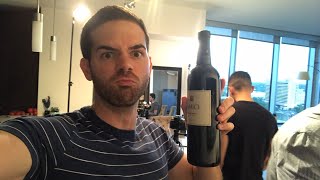
Ryan Daniel Moran and guests Jeff Woods and Santi taste wines and take live caller questions on entrepreneurship. They discuss voice technology, hiring, and focusing on your one thing while trying Beyond Meat sausage and Keto Brownies.
Chapters
Who's impersonating me over here? Hey, we're. We're live on YouTube. Where's Tyler?
I need you.
I'm here.
I need you. Can you please. Can you please.
Put.
Put YouTube up somewhere?
Can you bring glasses over?
Oh, well, hello, Facebook. How is it going? Where. Hold on. We have got to stop doing the countdown timer. It's. It's super high pressure. Like, I feel already. I feel already off my game. That we have.
You gotta scoot over.
You gotta scoot over.
We have gotta stop doing the countdown timer. I feel off my game. So Facebook. YouTube. We're gonna pretend that we haven't begun yet because I feel super weird. This is awful.
And see, so now. Now I'm stressed because we didn't start on time.
Now I feel behind what you focus on. Expanse. Cut that out.
Is what.
What you focus on?
Expans? Is that what you said?
Yeah. So stop focusing on the negative.
Let's do fans.
So we're gonna pretend we're pretty. We gotta stop. We gotta stop doing countdown timers. Someone say something smart. I feel weird and awkward. That's the only way we're able to get it together. Zucks. What is this? What is. What's Zucks up to? Tyler, I. I need your help.
No, no, no, no, no, no, no, no, no. It's not a twi. First of all, it's not a twist off. No, I needed the camera. The camera is YouTube. YouTube's too much headroom. Yeah, way too much headroom on. On YouTube.
Oh, yeah.
Way too much headroom on YouTube, dude. Okay, now we're all. We're almost at it.
Hey, you have the wine bottle. I kind of like this, like, rough. First.
I feel super awkward, but it'll come out well in the edit I'm sure.
Chris has.
If you're watching this, go ahead and comment who you are, where you're joining us from, so we can say hi to you.
Yeah, I can only do one thing at a time.
Somebody should write a book about that.
Did you just say asl? Like the ao. The AOL way of, like, flipping, flirting with people. What. What's your sign?
Ready to mingle? That's right.
Yeah.
There we go. Engagement. That's a good thing.
And you know, the other. The other piece is we should have a ceremonial.
Opening of the wine.
Or if you were prepared, I'm hoping. And it would already be decanted.
Oh, that's right.
We need the.
Yeah.
Man.
I'll get it.
We are so unprofessional. You know, I swore today we were gonna be prepared. I swore we were gonna get it right this time.
Thank you.
Ah, here we go. Oh, we're back at it. Thank you, Santi.
All right.
What do we have? We got our trusty District seven.
And so this showed up in the mail, Jeff.
There you go.
This showed up in the mail from a. From a viewer. Are we all here? Are we ready to get sloppy? All right. We were actually ready to kick this thing off. First of all, if you are watching on YouTube or Facebook, say hello. I want to say hi back to you. And then we are going to kick this thing off officially. What's up, Aiden? Hey, Andrew. What's up? Sean Miller. Timothy Driscoll. What's going on, dude? Who else is with us? Let us know in the comments. Oh, thanks, man.
You're welcome.
You're so well prepared. Brianna is with us, everybody. James Hyatt. Brianna, we were just opening gifts from you. Perry Masterson. What's up, Shonda Ray. Who else we got?
Where is Catherine Lavery? Giselle? What's up, Lopez? Dan Nader. George Matthew Underwood. Sebastian Cop. Jacoby Graham.
What's up, Christian Sullivan.
Aiden says Matthew Tremolata is here. Dave Shea. Andrew Bartholomew. Brett Smith. Daniel Franken. Merrick Grub. What's going on? What's up, Mustafa?
All right, you guys ready to kick this thing off?
Let's go.
Let's go.
Good evening, everybody. Welcome to Wine with Wine. The one with Jeff Woods. And who's this guy?
Are you old enough to be here?
The. The good doctor. The good doctor, son. No, no, no. We can't duplicate. No, no, no, no, no. We gotta do that over. There can be no doctor. Santi. You don't look happy to be here.
I'm just waiting for you to get going.
That's not cool. What's up, everybody? Welcome to Wine with Wine. The one with Jeff woods and Santi. The Venezuelan. Is that where you're from? Is that even a real place?
It's a social place.
Let's get sloppy. Alright, what do we got today? We got our trusty District seven today. And this wine showed up in the mail. From a viewer, from a fan, from a friend. It was an unmarked box with no note in it, so hopefully it's not poisoned. And so we're going head to head Jeff woods between D7 and the mystery competitor called. What's that line called?
The competitor.
The competitor. You look way too serious.
Just in the zone, Jeff.
What's in the zone? Well, we need to get you out of the Zone, because we have a special guest from Japan with us over here today who is not used to this very serious culture that you've got going on. So, Mr. Jeff woods, we need to loosen you up and get you to stop being so serious about that. Why so serious? So I understand the drinking age in China is a little bit higher. So you can't join us. You can't join us. All right, got it. So he's sticking with what, he's our. He's our designated watcher tonight or something? Guys, what's going on? It's been a weird week for me. What's going on with you guys?
What do we talk about on this show?
Let's cheers and find out.
Cheers to figuring it out.
Oh, that is fruity. The com. The comp. How do you say this?
The palate.
No, the wine competitor. The competitor is actually a really sweet wine. I'm not sure I care for this. We'll split test it again against D7 here a second.
There you go.
So I had dinner with Gary Vaynerchuk last night.
How did it go?
He fed me a lot of wine.
A lot of wine.
This is actually my second wine with Wyan of the week because I had way too much wine with Gary. Gary Vaynerchuk last night.
What was the one thing that was most memorable about the dinner?
He talked a lot about voice. He was all in on voice. He was giving his. His thesis on how. On how voice is going to change things. He was basically saying he sees it as like the new app platform. He sees it as the thing that. That. That the next wave of apps is going to be developed on that. He was saying that he's having all of his videos transcribed because he believes that he will be. His kids will be able to say, read me.
The very Hungry Caterpillar by dad and it will pull all the words from previous transcriptions, it will find his voice, and it will read the book as though he's sitting there reading it to his children. Yeah. So he thinks that there's like billion dollar apps that are going to be developed specifically on voice and on Alexa.
Which is really interesting.
I feel a little skeptical, but it is an interesting theory or interesting thesis for sure.
And how are you going to capitalize on it?
How am I going to capitalize on that? I don't know.
I have no idea. I didn't have like an. Oh, this is what I'm going to do. Except to like have everything transcribed. And.
Transcribed means written.
What does it have to do with voice?
Well, so the idea is that Alexa would learn to take your voice, match it to words, and be able to rep, like re package you giving the Gettysburg Address. If it had all your work, all of your voice on file for those.
Words based on all the audio files and all the words that you said, the tone, the inflection correct, would be able to compile that as though you were there.
That's it. So. So Gary was even saying you could watch your favorite baseball team and say, play Harry Carey. And now Harry Carey would. Would be narrating the game as if he was sitting there watching it.
Morgan Freeman narrated the game.
Right.
There it is.
So that's. That's his thesis on voice. So that was really interesting.
How much do you engage with the audience during this?
Well, all you want.
If you could name one voice that you would want to be the narrator for your life, who would it be? Comment?
Solid question.
I'm good at this.
Jeff woods is walking out of his bedroom right now. Jeff woods is picking up.
Dean.
You would not be it.
What do you mean? I have a very. What's the word? Sultry. Is that the right word? Is sultry the right word? How would you describe my voice? In a word.
Ladies and gentlemen, we were talking about something earlier as we prepare for our event, for the one thing about optimism bias.
Optimism bias?
Yeah. About how people who are natural optimists like yourself, how you give inflated importance to what you do.
That's not true.
I'm lucid enough.
That's not true at all. Look, I am just as handsome as I give myself credit for, and no more, no less. I'm fully aware of how handsome I am. There are plenty of days when I'm wearing an outfit and I go right to an eight and a half.
And I know it. I'll own it. I'll say, guys, I'm only an eight and a half today.
You know, only. Only eight out of 10 people are looking at. At me on the street. So.
So I have a question for you. Who's here live because you're making the investment of your time right now?
I'm here live making the investment of my time. Is that optimism bias? Jeff Woods?
Some cost. You're already here. You already committed. They could choose to leave it any minute.
I used to like you.
Go on.
Yeah.
What's the one thing we can talk about that would bring the most value to you?
What is all this? What's the. What's the one word you described? Ryan's voice. What's the one.
It's A question that forces people to narrow the focus down to the thing that actually matters most.
You're so serious tonight, Jeff, get the man some wine. What is this? And you aren't saying anything? Why are they this quiet in Brazil?
I don't know.
I've never been to Brazil.
Never been to Brazil.
Chris, can you see their comments?
You're from Colombia.
You're from Colombia.
What else happened with Gary Vee? I asked Gary Vee what I should.
Do with my life and he said, be self aware.
He actually said, don't be in a rush, which was interesting. So. So basically what I told him was the last time I saw Gary, I was running like a million dollar a year business. I told him I grew that to 10 and then I sold it, had my payday. And since then I placed some bets and I haven't found like my next big thing yet. Like, I know the general direction. Like, I know I want to put together a fund for physical products brands. I know private equity is kind of calling me and courting me, but, like, I don't have the next clear step yet. And he was like, your problem is you placed bets too early, which was interesting. And he's like, don't be in a rush. He's like, you could try your hand at things for the next three years and be young as hell. That's nice. So that gave me the permission just swing and miss for three. For three years. I hope not to be swinging and missing for three years, but that was. I thought that was really good advice.
Can I ask you some questions?
No, but you just did. And you're going to do it anyway.
Fast forward 20, 30, 40, 50 years and get a sense of what it is that you actually want.
Yeah.
The purpose of a goal is not to achieve a result. It's actually to be appropriate in the moment. So it's actually about becoming who you become today. The question is, instead of what's your next big thing.
What are the habits you can acquire today such that by acquiring them would make that future automatic?
Yeah. Attracting and keeping talent.
I do got C money. I got C Money. And what's your our nickname for? Do we have a nickname for you?
T Money.
No, no, no, no, no, no, no. Not Tea money. It cannot be Tea money. Maybe, maybe.
Maybe, maybe. Tea style, Thai style.
You work with Ryan Daniel Moran. Everybody has style when you work next to Ryan Daniel Moran. I am lucky. I get dressed in the morning.
Optimism bias.
What's up? Matthew Samui. Good to see you. Mauricio. What's Up. Matthew. Sorry I missed you while we were in. I was in New York. My man. Oh, man. All right, the product review of the night is here, ladies and gentlemen. Jeff, that is for you. Thank you, Ryan.
Thank you. And Santi, Brazilian guy. Give something. Give some to Mr. Russia over here. All right, so here's what we are reviewing tonight. So do not be fooled. We're not reviewing cauliflower pizza crust again.
What we're reviewing here is the sausage on the pizza.
So it is still cauliflower crust.
Yes, it is cauliflower crust from Cauliflower Foods. This episode is not brought to you by Cauliflower Foods, but I would really like it to be cauliflower foods. You should call me because I'm pimping your stuff quite a bit. Send me some free gear. Okay. So we are reviewing the sausage on the pizza. That's. That's what we're. That is what we are reviewing.
Is that a Dr. Clan sausage?
I was gonna say what? Is that real?
Dr. Clem.
Dr. Clem. No, this is not made by Dr. Clemens.
Is that real sausage?
So. So it's a special kind of sausage, like tofu. It is not tofu sausage.
Soy.
It is not soy sausage.
Sausage.
It is not font. Whatever you just said fake sausage. It is. Okay. Do you like. That's the question. Do you like the sausage? I don't know.
I don't know.
This is gonna fit your. You know, being from Poland, I know you've got really, really good Polish sausage, but. All right, so what we have here, this is beyond meat.
Okay.
Yes, this is beyond meat. Veggie sausage.
It's good.
So last year at the capitalism conference, Bruce Friedrich from Clear Crop Capital gave a keynote that was about his investments in what he called plant based meats. And the plant based meats were basically, they reverse engineered the amino acid profile of meat and rebuild it with plants.
So Beyond Meat is one of those companies, and they just came out with a sausage, and so I decided to make a sausage pizza out of it. Jeff, what's your take.
Telling me that first narrows the filter because if I put it against real sausage, my answer is different. Knowing it's beyond meat, I think it's great.
Tell me the comparison to normal sausage.
Well, normal sausage would have a snap to it. Beyond. Little bit more dense. This has a little bit more of a spongy texture. Yeah, flavor's still good. Not as pungent.
I think you could give this to somebody on the street and not tell them that it was fake sausage, and they would think it was sausage. Yeah. I think it's actually really good. What do you think it's good?
I think it's lacks a bit.
Lacks a bit of strong flavor.
So it's.
Hey, this guy says he's gonna switch.
To Grant Cardone's livestream. Grant Cardone is live streaming.
He gives great content.
Fuck that guy.
Who's Grant Condor? Who's that guy?
He's. Can't Gardone. Can't Gardone. All right. Is he a good guy? I'm not gonna lie. I don't blame that guy who I don't like, because the energy coming from either side of me is a little bit low right now.
Well, I have a great story about this, how this relates to Southwest Airlines, so. No, you'll like this. You'll like this.
I'm listening.
There was a guy who took a Southwest flight, and when the flight attendants made jokes and went off script in terms of the safety, he got really offended. And so he sent a letter to Herb Kelleher saying safety is not something that should be taken lightly. Blah, blah, blah, blah, blah. Basically, you need to stop telling jokes and having fun or I'm going to switch your airline. You know what he said? He replied back three words. We'll miss you.
Bye, Felicia.
I like what, what Aiden said that Grant Cardone does dead streaming.
I would have called it scam streaming, but, yeah, pretty much the same thing. Sanji, will you share with the world the story of how you got here to Austin, Texas? Yeah.
So all the way from Yugoslavia, from Venezuela. Yeah.
So I went to. Came to the US for school, which is going up in New Hampshire in a little town called Hanover. It was really fun.
Learned a lot.
And then while at school, I started watching you for some reason, I don't know why, probably big mistake, is the voice.
And then the sultry voice. We started sultry words.
We started our. Myself and a friend of mine called Ben started our business, a physical product business mainly through Amazon. And we discovered how good of a launch pad it was. Launch products into the market.
And then we developed a whole brand around a couple products and then around a customer. So we developed a whole bunch of products. Then from the there we realized that we could launch brands.
How old were you at the time?
I was 19. It was about a year.
Boom.
Sauce. Yeah.
So did you drop out of university?
No, they. They still. I still haven't finished, though. Oh, they still hold my. My spot there. They were pretty generous about it. I explained what I was doing. Didn't mention your Name, though, that would.
I could be the college killer. Whoa. That sounded horrible. Actually, I don't want to be a college killer.
Strike that.
The degree. The degree destroyer.
What do you think about that?
I mean, I think college.
I think you should go to college and have a great time and study something that you like, knowing that it's probably not gonna lead you anywhere. Thank you. And treat it like an experience. But like, we all know that colleges a dinosaur. It's. It's. It's irrelevant at this point.
Well, I think people need to start asking themselves questions earlier on in life. And I think if you're the one.
Question that they could ask themselves, I.
Would ask the question. If I have two options. I can take six figures and go start a business, or I can take six figures and go to college, considering there are. Most people are taking loans for that, which is going to give me a better ROI over time.
There absolutely are professions. Lawyer, doctor. That college leads to. But I think most people go to college because they lack direction. I don't think you go into debt because you lack direction. I think you ask yourself questions when you lack direction.
Hey, you know what's better than college.
Knowledge.
See what you did there?
Take that to the bank.
The wine goes well with the pizza.
Hold on. Yalls energy is really dense, and it's really, really kind of wigging me out. So we're gonna cleanse your energy.
Over here with some sage.
Well, give me a little direction. What would make this a great episode for you?
You hold on. I'm cleansing your negativity off. Off of.
I've got great positive energy.
Here we go. Jeff Woods. What's going on? At the one thing. What's the one thing that could get you excited?
It's that moment that you realize that you're on to something.
What do you want to drop, Woods?
Well, think about it. It's like that hockey stick growth where it's. You're making over time, you don't feel like you're making progress. And then all of a sudden, hockey stick. We feel like we're at that inflection point.
What's hockey sticking right now?
The opportunity to take this into corporate. Like, we can see what it looks like to actually change corporate culture so that people in their work actually feel meaning in what they do, and they don't slave away for hours and wonder what happened with their life. That they actually have a sense of.
Purpose and fulfillment and what's giving you a sense that it's moving in that.
Direction, going into anywhere from Fortune 10 down to small businesses and seeing what the conversation looks like and knowing what our product roadmap looks like to make it happen.
When did that breakthrough happen?
The last.
This year. So last six months.
What happened?
Going into corporations specifically and leading trainings and getting the feedback. And then also I think for those of you who are watching, how often when you feel like things aren't where you want to be with your business, you feel like you need to do more, you need to do that next product, you need to do more marketing, more emails, more ad spend, it's always more. And for us it's actually been about doing less. And I think an example of that is Apple. When Jobs came back as CEO in 97, that two year period from 97 to 99, he took the company from 350 products down to 10.
Did 350 products.
Yeah, that's 340 no's, not counting all the new ideas that came up. He understood to build the most valuable company in the world, it wasn't about saying yes to everything, it was about saying no to most things. So you can narrow the focus and say yes to the true things that matter most. And for our vision in our business, it's been really about stripping everything away and getting down to what are the core things that we need to do exceptionally well and do them consistently over time because that's what leads to a true market shifting company.
To anyone here at the table not named Jeff Woods, I'm curious if there's, if you share in that like pressure that you feel to like always have it figured out and like always know what your next move is and always be like moving forward in some sort of a direction. Like I pride myself on that, like always moving forward that and when I don't have it, I tend to beat myself up and get a little bit depressed. Before you Dr. Phil me, do you have that experience?
Yeah, I think the experience we have the most is not narrowing down what the one thing is, but rather narrowing.
Down what's the one thing that we.
Can do as players within our structure in the company. A good example is it's really easy for the founders to see when something goes wrong and immediately go in and do it themselves. So the easy trap that we're constantly getting into is you say these are the high level activities, these are my one things and these are the one things for the people in charge of product launch or marketing or branding. And then within a few months then you realize that you're doing things that are not your one Thing.
Yeah.
No joke.
No, no.
And that is very frustrating because it's a constant cycle that you have to be very introspective and say, okay, we're doing this.
Yeah.
It changes when it's not you. Right. Like, it changes when there's team members involved as well. There's a different level of skill set.
So it's not just about the one thing for the organization, but for each person within the team. How do you put that up?
Vice president of the one thing. Drink your wine and then answer the. And then.
Okay, now you can respond.
Well, you were talking about. What you were describing is a personality type. Most CEOs founders have a high level of assertiveness on a disc. They're high Ds. That's a natural impatience. When you face obstacles, you naturally push through. It's. You want to move fast. Things that move slower, like nails on a chalkboard for you.
Amen to that.
That's all personality. So understanding that you want to have that next thing, you want it now, you want it fast. That's all personality. And it's one of your greatest assets as a CEO or a founder. And it's also something that you have to be aware can become a weakness. So I have received the coaching that I have to surround myself with people who will naturally slow me down and force me to think methodically, because I will jump out of the airplane and build the parachute on the way down. But that's not the way you build a great business. You set the pace, you set the tone, which is great. You'll push. Yet if you want to build something that actually scales, you need the people around you that will slow you down and force you to think things through more.
How does that look in a practical term? So what do you mean? So you're saying that you surround yourself with people that force you.
Example.
Methodical.
Yeah.
Give me an example. Yeah. So I just brought on a new employee. I realized for a businesses, for owning a business that's in the business of creating amazing content people can't live without. I was the only content creator.
Okay.
And you're not actually a business owner unless you can step away from your business and your net worth goes up. So I needed leverage in that area. So I recruited a community manager, somebody who create amazing content, engage a community, build a content ecosystem, and step in and do trainings on my behalf. Those are the four. Four things she had to do exceptionally well. Otherwise she's fired.
I knew that I had two candidates at the finish line. I could have Offered the job for each of them. One of them was super driven, super fast. I could tell she's probably faster than me. She can crush an extraordinary amount of work in a very small period of time. The other person is more seasoned, move more slowly, naturally is less adaptable, Meaning they don't just take things at face value. They challenge it, and they work. Want to understand why. And I ultimately went with that person because I understood that I will run through a brick wall when it was not needed, when somebody could simply ask, why are you running through the wall when you could just walk around it? And I've seen the shift in the last. She's been on board for 52 days.
Talking about, did you get the newsletter to go out today? And she said, no, not yet. I said, well, is it going out today? She said, well, help me understand. Why does it need to go out today? I said, because we always send it on Tuesdays. She goes, but yeah, why? Because once upon a time, we decided Tuesday. She goes, well, tell me more about that. Did we do any research to show that we needed to do it every week or every Tuesday? Like, she kept asking questions to the level that I realized we were doing things in our content operations that were unnecessary. We just started doing it, and because it was a legacy way of doing things, we kept doing it that way. And all of a sudden, you create a complicated hamster that does not scale, Man.
Do I get that.
I have another question.
Yeah.
Can I interview the other girl?
How many employees am I sending your way? All of them. Yeah, no kidding.
Seriously, Can I interview the other one? Yeah, you can. All right.
Yes. I told her I would help her find her next opportunity if she was open to it.
I'm right here. Is she based here?
That's my. That's my next hire.
Yeah, I think she'd be extreme. I think she's extraordinary talent, and I think with the right coaching, she can be a true empire builder.
I'm in. I'm in for an interview.
What's her name? This person's name?
I'm not gonna say I'm here.
Okay, mysterious person, I'm coming for you.
Catherine loves that.
You knew.
It's been exactly 52 days. Catherine Lavery.
Yeah. Catherine Larry.
She made it.
Katherine Lary's here, everyone. What do you mean Katherine Larry's here? Like, she's here in our midst? Did she move here on the Internet?
Oh, okay.
Every week we look for Katherine Labry.
Got it. And yes, I knew it was 52 days because we have our 30 our 60 and our 90 day reviews. And I know that I have time blocked to anticipate the question. Questions I need to ask her for her six.
Tickle.
Don't do that, Jeff.
No wonder Pam thought we were gay.
That's. That's a real story.
I don't think I've ever told you guys. I want to hear it. One time I was like.
Which I married, by the way.
I said to a woman.
I said, I don't understand. I don't understand a lot of people on the Internet. Actually, it used to be that a lot of people on the Internet thought that I. That I played for the other team. And.
One day I was like, I don't understand why people think I'm gay. I just don't get it. And Pam says, tell you what, why don't you pull out your phone and read me the last text message that you sent to Jeff Woods? He's like, never mind. I don't want to play this game anymore.
Speaking of which, Jeff woods, did you try this new wine? This is a split test.
Oh.
So hold on. Hold on one second before you take a sip.
Oh, I gotta cleanse the palate.
While we have here, our first wine was the competitor. The competitor coming in from lodi, California, weighing 2015 pounds. The competitor and the reigning wine with wine champion, the www seed championship. Our favorite, cheap wine, Costco's district seven.
So this is the district.
This is the district seven.
Hey, my wife wants to know how she can watch this.
How can she watch? She gets on this thing.
Facebook. What Facebook page.
Ryan. Ryan Daniel Moran.
Facebook.
Look, so I didn't care. I didn't care for this. I didn't care for this competitor. It was very sweet. I did not care for. I like smoky wine. I like a dry, woody, smoky wine.
We can shift to that.
This is so much better.
Wine, wine and whiskey with wine.
Wine's good and still the WWW champion. District 7. Although I was trying to. There was a line like a couple weeks ago that. That I got voted down but I liked better than the District 7.
Brianna says, I'm at the gym watching. Probably wouldn't make for a good call, but I think it's time for our first drunk dial. What do you think?
All right.
Left the Tyler on it.
Can we hot seat somebody?
That's exactly what we're about to do.
Jeff woods, like, when you say hot seat, does that mean your version of hot seat or like what I think of a hot seat?
I don't know. You're gonna take 20 minutes what's your version of a hot seat?
Making them uncomfortable and squirm?
Yeah, totally.
For their betterment.
Yeah, totally cool. If anyone is not uncomfortable with Jeff woods, either flirting with them or ninja chopping their business, don't put your number in the comments. It's good. Mmm.
It's good.
Mmm. So what's your final take on the sausage?
I forgot that it wasn't sausage.
There we go.
I had lunch with the founder of Whole Foods last week. You told me John Mackey, three times. Did I? Did I tell you that I had dinner with Gary Vaynerchuk last night? Yep. That's. How about my lunch with John Mackey? Yes. You know he's the founder of Whole Foods.
Your point is me?
He's my friend. I know. We hang out sometimes. Aware. I'm very important.
Optimism bias.
Uncool.
Ma'.
Am. Santi, what are you working on in your physical product screens? Right now?
We're heavily expanding SKU count to fit what our customers want.
Expanding what?
Heavily expanding SKU count to fit what our customers want.
That was a fancy way of saying we're bringing out. They're releasing new products.
I thought he said, like, screw count. I'm like, what product is screw count?
Building a loud as well.
So you were. You were talking about. You wanted to respond to.
The one thing with team members and because you. Because you brought up how it's different, identifying what your one thing is versus leading a team of people. And all of a sudden, it feels like there's a lot going on, a lot to manage. And I've dealt with that, too. So how would you reply to that?
You're making the mistake of managing instead of leading.
What does that mean?
You're managing people. When people have to come to you and they have to get permission on what they're doing. You're leading people when they naturally can do 100% of the job themselves. And your interactions with them are about coaching them and expanding their possibilities, which tells me you probably have the wrong people on your team.
So I have a question for you.
Or you're not showing up the right way.
Yeah, probably.
Probably. You first.
Yeah, me first. I have a question for you. So people are very important to your. Equate your equation.
It's everything.
Yeah.
So how do you go about getting good people?
How do you go about getting good people?
First and foremost. Is there a whiteboard? Paper. I know this is beta test. No.
Paper. Nope. Nope.
Okay.
If you imagine a company with you at the top and imagine you got five people under you. So what that would look like on an org chart in terms of you and then five people under you. And you compare that possibility to the possibility of you with five people under you. And each of those five had five under them. Each of those five had five under them. Let's assume that you wanted to scale in terms of employee count. What's the difference between the version of you over here and the version of you over here?
What should it be the difference or.
What'S the difference that made the difference?
I don't follow.
I think I'm going to take a guess. In the first case, the employees are looking upwards to you. In the second case, they're looking at their team and trying to build.
That's actually the closest answer I've ever gotten. It's who the five are to report to you directly. Perfect example. When I went to hire my first employee in examination, executive assistant, I wasn't looking for somebody who was a great executive assistant. I was looking for an executive assistant who could become. Have the capacity to become a future COO and could possibly replace me as CEO. It's why Inez is a rock star. When I went to look for a community manager, I wasn't looking just for somebody who could be a great community manager. I'm looking for somebody who could be a future CMO and could possibly replace me as CEO. Because my job as CEO is not to be CEO. It's ultimately to become chairman of the board or on the board, and to replace myself in the next five years. And the only way you do that is if the people who report to you have the capacity to actually replace you. So this is the conversation that we had.
Well, I. I heard you say this before, but for some reason, it's landing differently this time.
Because now it is in your world now.
Now my team is stepping up.
Uhhuh.
Yeah.
You saw what happened when talent walks in. Keep.
Keep talking.
Yeah.
About what?
Sausage and wine.
Yeah. So when you're talking about hiring the right people, you first and foremost have to have a vision of what you want. When you understand that you're not just hiring for the role today. Accountant, assistant, product manager, marketer, Facebook manager, funnel builder. You're looking for a future something, somebody who's showing up like that now and has the capacity to become C level, whatever.
Yeah.
You eliminate 99 of the talent pool.
That's interesting.
Let's say. Let's say we already. Let's say we'll take that step. What's the next step now? How do you Find that person that you've already defined.
What are the two to three things that person has to do exceptionally well, otherwise they get fired. Most people, their definition of a job, job description is what's everything they got to do for the job? And you heard me on the interview with him where I grilled him when you were looking for somebody, what are the two to three things they have to do exceptionally well, otherwise they get fired?
There's, there's a podcast that Jeff and I did together where he beat me up on this and beat me up real good on this. You just Google Ryan Moran, Jeff woods, some good stuff comes up. Yeah. All right, we. It's time for our first drunk dial. Ladies and gentlemen. Let's put somebody on the hot seat. Who we got?
Mute your damn computer. Who we got? Daniel. Daniel from Orange County. From Orange County. Daniel from Orange County. What's going on? You're live with wine. With wine, yo.
What can we do you for?
Yeah, you know, so ultimately, again, my name is Daniel. I live out here in Orange County, California, and I'm creating this brand that's really focused around sales. And sales, of course, is more.
I could go wide and go very general, but I chose to go very niche in order to build a brand, build a reputation. And so what I'm facing right now is I'm full time employed. I'm actually a sales manager. I'm a professional salesman myself. So I'm actually giving value in a little bit of a different way. It's catching good traction. And I finally launched my own product, which is a digital train product. But again, it's very niche for mortgage bankers.
Okay.
For mortgage banking. Right.
Awesome.
And so I think that the issue is that. Right. With having limited time and just having just a whole plethora of options, with going to the networking events and, and handing your card out and building your network on LinkedIn. I find that it's difficult to find people who kind of are without their own personal motives. Right. Like, they're either kind of in a different side of the industry because Internet marketing on a grand scale, it can be anything from business to business to business, consumer. And so I'm finding people more of their motive, you know, like, and they quickly assess you.
So, Daniel, what are you trying to do?
What I'm trying to do, I guess, is just really scale, scale and get, you know, brand recognition and I guess so.
So where, where, where are you now in terms of revenue that you want to scale?
Sure. So right now, I just launched about a month ago, my first month I did 13,000.
Nice. Good.
Yeah. So, and that's without really. I mean, I didn't really pay for any advertising. I'm just doing consistent post sharing value.
Hey, Daniel, can I lead you with a few questions?
Yes, please.
Is your challenge time to build the side business or is your time lack of connections to build the side business? I heard two challenges.
Yeah, I think you get it spot on. The latter is probably the biggest challenge. It's just having the right connections and knowing. But because I make time, you know, I'll make the time, so I'll find a way to make the time.
So here's the question. I want you to look at everything that you're doing from a networking standpoint of everything. If you had to make a list of it, how much of it is not working when you really think you're networking?
That's a great question.
And I got challenged with this because I loved going to the events and my partner Jay said to me because I wanted to go another conference, he goes, are you networking or are you not working? Help me understand specifically how attending this event is going to directly correlate to supporting one of your 20% true priorities that will generate 80% of the results.
That's a bold question.
Sure, sure. I think I'm putting the work right now. So any, any networking attempts that I do, like for example, on LinkedIn or other social media platforms, I'll send a message inviting or offering a free, like sales training, like a free meeting to their sales floor where I could bring them a great deal of value and kind of help spread the brand. So it's really, you know, it's hitting on niche points like keeping a customer on the phone, how to cold call, how to properly frame a sale, and things like that.
I'd flip it, man. It sounds like you're trying to host an event to get customers. Is that correct?
I'm sorry?
It sounds like you're hosting events to get customers. Is that correct? Yeah, yeah. Flip. Flip it, man. Instead of trying to host events and hope that somebody's gonna say yes, that's waking up, trying to get everybody and their mom to say yes versus flipping it and trying to get 80% of the people to say no. So the right 20% say yes. Make a list of the ideal dream team, 10 to 20 clients, and then ask the question, what? How can you approach those people and make them an offer they can't refuse so they're your anchor client and then everybody else falls.
Totally agree. Especially this early in the game yeah. Like you, you are not in a position to scale right now, Daniel. You're in a position to go give value to your ideal people. Yeah. And say no to everybody else. When, like when you are this early in the game, like, hats off to you. Kudos. Great job. Hitting 13,000 your first month. That's freaking great. Now your job is to, to look at who's getting the most value from that and go get more of those people. Your market is not niche, man. Your market's huge. Yeah, your market's massive. That is not a niche audience at all.
Did you say your thing is sales training?
Yeah, sales training, mind development, basically.
Yeah. So I have a buddy who lives in Orange county who used to be the executive VP of sales for Tony Robbins and now he does exactly that. And his clients are T mobile like big, big companies. And whether my point to you is get the brand recognition under your belt to say you did business with those people and get your testimonial. I don't care if you had to pay them to get that. But that's one thing that makes everything else easier and necessary versus hosting an event, seeing who, whatever Joe Schmo shows up like, there's no qualification, there's no feedback filter there.
Yeah, you're, you're, you're, I'd say you're, you're too focused right now. You're wasting your short term revenue rather than going in front of your ideal people and getting them to be, to get amazing results so that you have something to scale.
Yeah, see, that's what I was, I think I, I know you mean I'm going at it where I'm saying yes to everything in hopes to kind of get more brand recognition. And saying yes to everything is putting me in all kinds of different directions, you know, where I'm stuck in the return. And I think that's where it lies in the problem with again, finding the right people. So, yeah, I appreciate the advice.
I mean, I, I, I think you should be in yes mode right now. You just need to be saying yes to the right things. And you're not in the position to turn away business if it's coming from the right place. But you need to be turning away the distractions like random networking events and offering free sales trainings to people who aren't your ideal clients.
Can I share a behind the scenes story about when Gary and Jay were writing one thing?
If I say no, are you going to anyway? Yep. Okay.
So my partner, Gary Keller, who started Keller Williams Real estate company, his co author JAY they wrote the one thing when they were writing the one thing. Originally the manuscript was like 450 pages long. And they sat down with their publisher and said, there's no way that'll ever fly. So they had to start cutting things out. And one thing that got cut from.
The book, what's the one thing that could be cut out from the one.
Thing that got cut from the book that they really didn't want to cut was it would have been like the seventh lie of productivity, the low hanging fruit. It's easy as an entrepreneur to go after that low hanging fruit because it's right there, you can taste it, it puts money in your pocket directly. The challenge is if you don't have a clear vision about where you're going and based on that, the specific activities you can take today, to line you up with that, it's easy to go after the low hanging fruit, but kind of like an airplane flying from the west coast to the east coast, if you're just one degree off course over a period of time, you'll end up on a different continent.
I right, so, so I mean, if we bring this back to like the, the Amazon sellers that are in our community that are looking for like the next product, that's gonna make them 20 sales a day. Yeah. Versus the next wide open space that they could run into that's ultimately gonna drive their business because they're looking for low hanging fruit rather than because they don't have a vision for the company. They're just trying to make dough. And when that's the case, then you're just chasing opportunities. And that is totally fine when you're first getting started, but if you want to build a company.
You'Ve got to be doing something much bigger.
My partner and I, Jay and I just had this conversation today because it's so easy to launch a product to see it be successful. It converts low refunds, great reviews, you think it's great. And yet if Gary Keller was sitting with you, he would ask you the question of every person that bought it, how many customers did they bring? And if you don't have a referral based business, he would tell you your product is crap. So it's easy for us to want to launch that next thing. And yet Jay and I are having the conversation today of whether it's an event we're putting on or a membership or reinventing the paper calendar. How do we build it to such a high level of quality to the point that people feel compelled to share with everyone that they know. And all of that effort that goes into creating word of mouth products happens on the front end, meaning you don't see the results right away yet. You have to trust that if you keep knocking that domino down over time.
Domino run, man.
That takes a lot. What was. Oh, the wine's flowing. Oh, we're getting, we're loosening up now.
We're actually talking about something interesting.
Oh, we lost Daniel. Thanks, Daniel. We're gonna say.
Yeah, I was gonna say that I was reading, reading some story, I don't know where, about Steve Jobs and Johnny Ives relationship. And you know Johnny I.
Right.
No, he's the head of design of Apple.
Okay. Design for.
He's pretty much the second man behind Steve Jobs, not in the business side, but rather the development side of the company. And he was recalling the relationship within the two. And.
One of the things that he learned before he died that Steve Jobs left behind as a teaching to him before he died was that focus was not saying no, do things that you don't want to do. It's saying no to things that you actually want.
Wow.
So it's really easy to be like, oh, I'm a very focused person because I turned down these two, like two things that were easy to turn down. But it's much harder to say I'm turning down these two amazing opportunities that could also have potential long term implications because I decided to focus on this one thing. And that really struck me a bit.
We're going through this right now because we have an event at the middle of the year called Reset. It's about what would be possible if you mastered the ability to make up the gap on any goal you ever fell behind on. And at the heart of true extraordinary results is having clarity on what your goals are, understanding what your gap is towards your goal, and being able to make up the gap, moving your deficit forward. That happens not by doing more. It happens by looking at everything that's on your list, all your goals, recommitting to the ones that matter most and giving yourself permission to say to the others, I'm going to stop focusing on that for now. I'll reevaluate that for next year so that you can. You have a track record of six months of demonstrating that you've fallen behind. So definition of insanity is doing the same things and expecting different results. So how about we give ourselves permission to shelve the ones that aren't the true priority, focus on the ones that matter most and start saying no to the roles, the responsibilities, the, the Commitments we've made, the people we invest our time in, the distractions in our world and strip them out of our life so that the next six months we focus on what really matters. So you make up the gap, you feel like a winner, then you reset your voice.
I know you're right intellectually and yet when I'm bringing it into my world, that is like, it's very easy for me to sit and be like, that's absolutely right. But I have such a hard time applying that because I add and add and add and add.
Thanks for keeping us in business.
I have a question for you though. What do you do about the things that are not as tangible that do have a positive roi? So you mentioned networking. I do see how a lot of people do go to networking events and then just justify it as, oh, I'm to a party, to networking. But there are actually things that have a really big roi, but they're very hard to quantify and they're very long term.
Well, let's use an example. Recruiting amazing talent. Okay, recruiting amazing talent is not something that has an immediate ROI today. Because to truly recruit amazing talent, it's not like you just put up a job posting and they responded. Right? So there's a quote in the One thing from F.M. alexander that people, people do not decide their futures. They decide their habits. Their habits decide their futures. So if the purpose of a goal is not to achieve a result, but rather to be appropriate in the moment to inform the person you need to become today, who's the person you need to become, who naturally meets with talent consistently? So, Jay, my partner went through this where he realized for all his businesses that he owns, the one thing it would make everything else easier or unnecessary was if he was in relationship with talent. And so he just asked the question, what's the one thing I can do such that by doing it would make being in relationship with amazing talent easier or unnecessary? Every Wednesday, 8am Austin job on Barton Springs, he sits down with somebody for coffee who is talent. And because he thinks like an owner, he actually has leverage. And as an assistant, part of her job is to scout and find the talent. Talent and bring it into his world in the form of a coffee meeting. It's why you got to sit down with him. Right? And he was, he was scouting me. No, but just. And that's, it's, that's what is one. He wasn't attaching himself to the outcome. He knew that if 52 times a year he had coffee with somebody that was considered talent that over a period of years, his Rolodex would be so robust that either he would know the exact, exact person or he would know people who knew people who could bring talent into his world.
That's a. That's a brain gas.
And five of his less last seven positions have been filled through those coffee meetings.
Yeah, if you did. If you just had a brain gasm, put hashtag braingasm in los commentos. So that's big.
It's less about saying, what's the roa long term? And asking the question, what's the habit I can form today than if I did it consistently. Consistently would make that long term ROI guarantee.
And you've got. You've got to be thinking about that in terms of years rather than the thing that's in front of me right now. And so I know that I have a habit of being reactionary. This is what the need is. I solve the need. It's what you do as a leader. What I'm hearing you say is almost take the clock, rewind it six months. What do you wish you had been doing six months ago and start doing that?
I've heard Gary Keller say you're never more than five years away from where you want to be. Five years. And if you think, well, five years is so long ago. I want you to ask the question, what are the things that you want today deeply desire to have in your life that you do not have that you wanted five years ago, and what's the commitment you didn't not make to yourself five years ago that had you made it.
Would allow you to have it today? Best time to plant a tree 20 years ago. Second best time.
Did I.
We got.
We have hot seat number two.
Hot seat number two.
Who we got on the line? We have Tyrell from Phoenix, Arizona. Tyrell from Phoenix, Arizona. What's going on?
Hey, Ryan, how's it going?
I'm doing good, man. What can we do you for?
Looks like you guys are having fun.
Well, now that Jeff's loosening up a bit, we're doing better.
It's because we're talking about interesting stuff.
Yeah.
What's going on, Tyrell?
Okay, so I am in the very pretty early stages of building a service business. I know you focus in the e commerce world, but essentially what we do is make it exceptionally easy for physical product brands to get lifestyle photography for their products done.
Okay?
So we take all the work out of it. They come to us and say, hey, this is what we want. This is the style, and we do the Rest of the work for them. So my question is, you know, with you having so much expertise on the E Commerce side.
What would be.
Basically, I guess, the number one thing I focus on in terms of attracting those customers?
What are you doing right now to get in front of those customers?
It's not even. It's not live yet. I mean, the MVP is going live tonight and nothing's in place to be. That's where I'm at right now, is strategizing the first few weeks of launching this business. What I should be focused on.
Okay, I heard you. Open your mouth. Go ahead, Jeff.
I'm gonna answer your question with a question.
He always does. It's awful.
What's the one thing you're not doing that if you started doing would make your entire question irrelevant?
I'm not doing anything.
Okay.
So I need to start something.
Okay.
So should I be.
That's true.
Things and strength to see what channel of acquisition has the most traction in the early days and then double down on that.
That's actually a fair question because I would say go wide at first and then double down on what I would.
I would go the complete opposite. I would again ask, who are the ideal people and how do you approach them and do it that for them, make them an offer they cannot refuse. I would still make them charge. I would still charge for it, but just like a steep, steep, steep discount and tell them that you're doing it because you want the testimonial and doing such an exceptional job that they would have to refer you. And I would even lock that down if I'm going to do it at a steep discount and. And if I do a great job, I want two things from you. I want a testimonial from you, and I want five referrals to your most influential friends.
Yeah, I assume when I say say yes, you're in yes mode that your product works and that you have proof of concept. If you're not there yet, then you need to be going to those exact target people and offering to prove your value and getting a case study out of that and then running with that. And that ideal person knows other ideal people.
I love that idea. I want to add one thing is, you know, I've heard that targeting startups, you know, companies that are better new, they may not have budget, they may not be the ideal customers from in the early days, I might be better off, especially with this tactic in mind, be better off going after brands that if I get a testimonial, would actually be. Would actually have an impact on my business.
Can I share Russell? Can I share Russell Brunson's rule number one.
Don'T sell the broke. Russell Brunson's rule number one, don'T sell to broke people.
Yeah, tell the people who can pay you.
That's the, that's the most distinct way I've heard it. So, yeah, I believe it.
And, and my. So would it be a good idea to. To get some early test companies be full to make sure my process is nailed and I don't screw things up with the companies that could actually make an impact with me? Should I, you know, iron out the process for or just go straight after it?
What do you think?
I would be more comfortable knowing that I can actually deliver.
If you don't know you can deliver, it's probably a good idea.
It's probably not a good idea to go to market with a product that is not going to be of the value that you want or a product that doesn't work.
Is that the next one?
Oh, bottle number three is going to stay, stay in the box. That is. Yeah. Don't. Don't go to market with a product that is, that is that you are not proud of unless you are selling some sort of a beta piece of it in order to iron up the kink. So we do that all the time.
Likewise.
I love doing that. But yeah, they all know that they're getting in on a beta version. They all know that they're in there for, like to get, get results for the process and nothing else.
There's a V in mvp.
It needs to be.
I was thinking you were talking about baseball.
I love the idea of going after those big companies once I have everything working well to get testimonials.
And I, I don't want to be selfish and keep taking this further. If you guys want to move to.
The next caller, dude, you know what you need to do? You're over complicating it. What do you need to do? What's the most potent step you can take.
Right now?
Just getting beta customers so I can figure out the process.
And who are.
Those people and where do they hang out?
My first thought is getting into some Facebook groups that are filled with e commerce brands, founders, and in the communities of people that are my target customer.
I think, I think you're 40% of the way there. You need to have criteria for who that ideal sweet spot is of the person who you know is going to benefit from your service. Then you need to go into places like, like the Facebook group where they and others hang out, but you're probably not going to be able to tell the difference between them. You make them apply to work with you, and you do it for free to the five to 10 people who are your absolute sweet spot that you know you can deliver value for on the condition that they will give you a case study study for your work. And then you go kill it for those five to 10 people who will then share with the rest of the group on your behalf the amazing results that you just got and then your business will be full.
Got it?
Yeah. Not just saying, oh, my customer base or my target customer profile is all e commerce company.
There's a huge negative.
There's a huge summer. They have two products and they don't have any budget. And then there's some that have 50 employees working for them.
Yeah, you. You make people apply. You pick the ones that are the best fit for you, and then you let them bring everybody else.
Nice.
Got it.
Yeah.
Thank you.
Cool, dude. Great to chat with you, Tyrell. Yeah.
Take care, guys. Enjoy the night.
All right, see ya. Bye. Bye.
Completely agree.
So, Jeff.
What do you think is the one thing that you would do to get a new company off the ground? Well, what do you think is the.
One thing that makes you ask me that question about the one thing?
Oh, that's deep.
I'm pump that over to you. Mexico, man.
I don't know.
Hold on. Why you say Mexico? Mexico, man. Say you can ask it in Spanish if it's.
If you can't find the English, I don't know Spanish.
You use sign language in Mexico. Is it like the Oscars?
You have a sitting when there goes an empty chair.
Jacob Brown says, Tyrell, a good hack, is running a contest for the free service and vet the best potential. Brianna says, I'm in Phoenix and know tons of people who need product photos. DM me, I'll be happy to can fit people.
Hey, Mario has a very specific question.
Mario. Hey, Ryan.
How would you invest $170,000?
So on the edit, we'll say, what is it, Mario?
Mario McCann.
Mario McCann and asks, how would you invest $170,000?
Bitcoin.
No.
All of it?
No. All right, first off, as we're recording this right Now, Bitcoin's at what, 6200? So I posted a month ago when it was like, I don't know, 2,460, 400. It was a few thousand points. I made. I made a prediction it's going below 4,000. So, like it's if you look at the chart, you just, you just know it's coming down for like such a ridiculous.
Don't get distracted by the distraction.
It's so ridiculous. Just. There's no, there's no reason to be.
Why are you wasting another second?
Yeah, because, because this is, this is interesting and I can't wait to be right.
I can't wait to be. Ryan's waiting for hit 4,000 before you. Yeah, before I buy everything. No, it's if it's gonna go below 4,000, but like $170,000. First of all, if you, if, if you don't have six months of expenses in the bank, do nothing. Put six. Put six months of expenses in the bank. Number two, if you don't have a regular investment strategy for the long term. For example, to your point earlier, what do I wish I had done five years ago? I wish that I had been putting all my money into Amazon when I knew that it was going to go up. Right. Everybody knew Amazon was in growth mode. I thought the economy was at the top five years ago. I think it's at the top now too. But one of the habits that I think is a good habit to practice is every month taking a allocation of your savings and just putting it into the market. No matter if it's up, down, left, right, ba, select, start, put it into the market. So do you have a regular investment strategy into index funds and or dividend paying stock? My allocation for this is dividend paying stock because I like cash flow. And then number three, if there's, if it's yes and yes to those two questions and you have things like your insurance policies set up, you have your emergency funds set up, then we can talk about all right, what are we going to invest in for passive cash flow? Right now everything's up. Cash flow is really low. I'm insane. Sell mode and just about everything. I'm in cash accumulation mode because I'm just waiting. But the things I am buying are income producing websites because they have accelerated depreciation which is great for tax write off. So if you had a good year like I had last year because I sold a company, I want as many write offs as possible. I'm in, I'm in sales mode on real estate. I'm selling my real estate investments. Favor of putting my money into real estate investment funds because I'm just after the cash flow. Everything else I'm holding and I'm in wait and see mode right now. Jeff, do you have a different opinion?
Yes. Tell me.
Gary Keller taught a class on how to build wealth.
Would you like to, you know what he said?
Was Gary Keller billionaire no.
Well, this is Gary talking, not to you or suggesting advice. This is what Gary has done for himself and expressing his self talk.
That was a great legal disclaimer.
So to be very clear.
Rule number one, beat inflation.
Rule number two, if you cannot beat the market, you might as well be the market. If the market produces on average 8% over time, if you can't do better than that on your own, then you might as well just be in a low cost index fund tied to the S and P. Rule number three, don't invest in anything that can go to zero. So he would say a specific stock can go to zero. The S and P most likely cannot. Real estate cannot. And then rule number four.
Once you have enough money that you have set aside, then you can invest in additional things that can beat the market, like real estate. His whole thing is just very simple and that's actually been his investment strategy. Now I emailed him earlier this year because I had, I took all my 401k, my Roth IRA, I created an LLC and self directed all of it. And I sat down with him because it had been sitting in cash and I wanted to know what to do with it. And he answered none of my questions and answered all of them at the same time.
I asked him, what should I be doing with this money? And he looked at me and said, I like you, I have no idea if what your building is going to work, but you'll be successful eventually. And I was like, thanks Gary. So what do I do with this? He goes, you know, I always viewed my house as the thing I really needed to protect. I just wanted to pay that off as fast as possible. That way no matter what happened, that was safe. Okay, Gary, but what about this? And after the back and forth of that enough times, he finally said, jeff, you don't get it. He said, if you do a good job building your business, it should make you so wealthy that all the questions you're asking about what should I do with $170,000 are insignificant. So go be wildly successful. And on my way out the door I said, thanks, care, but what should I do with this? And he goes, why are you wasting another breath asking me about that? Go be wildly successful.
So is he saying don't put energy into investing, put all that energy into building the business, or is he saying roll the money into the business?
No, no, he's not saying roll the money into the Business. He's saying, park it tied to an S and P, do whatever the heck you want with it. The fact that you're spending this much time that you had to schedule a meeting with me to ask questions about it when we could have been talking about how to scale the business, you were not acting in order of priority.
That's interesting.
I remember I asked you, Ryan, in the conference last December, a very similar question is why do you believe that entrepreneurs should spend their time focus. Focusing on what to invest in rather than tying it to the S and P and then focusing your effort and what you're good at, which is being an entrepreneur, because that's how you beat the market.
What did I say?
And then you passed that along to one of your speakers and then they said, because we entrepreneurs can do better than the market and you should be investors. It wasn't you who answered the question. Somebody else. So what's your thought on it?
So the question is why should, why should entrepreneurs be concerned concern with investing at all when they could be. Yeah. So I know for me, and maybe I have a more scarcity. Are you gonna drink this? Yeah, I'm gonna drink that. Give me a glass.
And not, not like not concerned with it. Just tie it to an S and P and then focus on entrepreneurship.
Yeah.
I enjoy it. Which is one. Number two, I would consider investing part. Part of my business because I invest in people, because I invest in other businesses, because I buy businesses. It's part of my portfolio strategy as an entrepreneur. But most importantly, at least for me, I want to have my monthly cash flow coming from a source that isn't my business because that makes me feel free to operate my business is something outside of me. I'm not saying that's right or wrong. I'm not saying it's good or bad. I just know the way I'm wired if I have my nut taken care of from my investments and that's growing and in a plan, having a plan for investing that capital over time frees me up to be able to run my business more efficiently.
Well, from my understanding, that's exactly what care is done. Because he looked at what are the things that matter to him most. He paid his primary residence off, but he looked at what are the operational costs, taxes, his ranch, all that stuff. What does it cost to maintain that on an annual basis over time so it can be passed down generation to generation. And then he deployed enough capital in bonds, things that were super safe that would throw off enough tax free income that could cover that so that generations could continue to maintain it. And that allows him to play hyper aggressive in business.
Yeah, right.
Somebody called it the Endowment strategy, which is like, what universities do.
Yeah.
Hey, you guys ready for dessert?
I'm afraid to say yes.
Let's do it.
All right.
So I got something in the mail this week. A fan sent me one of the products that he sells on Amazon on. So I figured we'd review it on Wine with Wyan. Sound good?
Delightful.
All right, this was sent to me by Nick, who sent me a message on Instagram that he sells the Keto Brownie. So we're gonna find out if it's good or not. Actually, he sent me two flavors here. I checked. These are available on Amazon. I have not tried these yet. I don't know if they're good. So I'm withholding judgment. I'm not recommending the product or not. I haven't tried it yet. So Nick's product is the Keto Brownie.
The loan carbs are they.
What do we got? So the Keto Brownie.
Six net carbs. That was annoying. I'm sorry. This one has six net carbs.
And the ingredient profile is.
Almond butter, almond meal, prebiotic fiber, protein blend, almonds, chocolate chips, erythritol.
Sunflower. You can read them online. This is boring the heck out of me, so it must be boring you. So do you want to try the blondie, or do you want to try. I want the blondie. All right. Why don't we open them both? And what is that?
I like blondie.
I like blondies.
Which is funny because I like. I like my women. I like dark, and I like my chocolate blondie.
Mar.
What do you know? All right, what you want to. What you want to try first?
I'll try both.
Okay, that didn't answer my question, but go ahead. How. How we doing? How's Nick's product?
I enjoy it.
Oh.
Although I'm not quite sure. So, Nick, I think you just send.
Me some.
Send to the One Thing office. These are actually really good. Good. Yeah. Nail it.
Hey, can you hand try this one?
Yeah, let's get the. Let's get Blondie over here. Nice job, Nick. So, Will Henderson in the house. Hey, Will Henderson. Thanks for hanging out with us. Can't wait to see you in Austin. So these are. These are available on Amazon. I checked before we tried them. I was fully prepared to give him a negative review if I didn't like them. These are actually really excellent.
They're actually pretty good.
Chocolate's better.
You Know what I like about it?
I like the blondie better.
Oh, there you go. Yeah. You know I like about it is it's.
It's nice and dense.
Yeah.
Like, it's. It's like, it tastes like a. It has brownie texture. It doesn't taste like coconut oil where most keto things have that, like, it just. It just feels like dried coconut oil or.
Good.
So I'm. I'm subscribing. As far as texture goes, this is actually really excellent. Really excellent.
Good.
Nice job.
Nick does a pair of wine.
Oh, it's my dog. What.
What about 0 to 10?
What would you give it you can use? I'm going to give the chocolate brownie an 8.
Me too.
What do you give the chocolate brownie? I'll give it a nine. Ooh. All right. I haven't had the blondie yet. That's good.
So I got a question. While we're waiting on the thumb band.
Here.
Aiden Al asks Ryan, when will you get on Lewis Howes podcast? So let me add on to that.
Ask Lewis Howes.
Do you feel like you. You created some relationships with Jay Shetty or Lewis Howes or anyone at the Gary Vee meeting?
Hey, so I don't know if I told you, Triljay, I. I had dinner with Gary Vee last night.
Yeah.
Did you tell Jay Shetty in the interview?
I did not. No. Thanks. No. Thanks for making it all about you, Jeff. Jay Shetty was there. Lewis Howes was there. Good people. We had a great time. You know. You know what I enjoyed. I would love your feedback on this in the comments, ladies and gents. Actually, I really would like to have this. The conversation naturally went to relationships, the struggles that we have as entrepreneurs, the things that we don't like. You know, I've talked about the fact that, like, while I was in New York, I had some of my, like, internal junk come up to my. My mental demons come up. I feel like I'm. I'm playing at a higher level or at least desiring to play at a different level. And every time I go to a different level, different, you know, doubts and insecurities come out. And so I talked about that and everybody kind of leaned in, like, yeah, I have that too. And no one talks about that in our space. We talked about. But we talked about the, the doubts, the hurts, the struggles, things in our past. We talked about.
Dealing with team members. Like, we. I think what happens at those types of dinners is, like, when people let their hair down and they talk about what's actually going on. I feel like there's a gap in the marketplace of people talking about what I would call real shit. Like everyone is teaching rather than talking about real shit. And I'm at a point now where I feel like the things that I've talked about the last several years have run their course. Like, I have said everything there is to say about certain topics and I'm experimenting with different things to talk about. So I wonder if there's space. Just, just have those real conversations.
Can I challenge you on that?
Please?
Yes. You've been talking about the same.
I like the chocolate brownie better.
Yes. You've been talking about six, your timeless truths. Yet what percentage of the people are executing on them at a mastery level.
I totally get that. I know that I want to be freed up from repeating myself on things I've been talking about because, like, I'm. I'm not interested in that conversation.
If it's a timeless truth, then why shift the conversation?
Give me an example of what you mean, please.
Gary has had the same conversation for 30 plus years and it hasn't deviated. So the number one reason people fail to ultimately be really successful in business is they're unwilling to endure the monotony of success. What I'm hearing you say is that you're just bored talking about about it. Not that you need to talk about new concepts because the old concepts are no longer relevant. Sounds like they're the timeless truths. And you're just now the monotony is starting to set in and you have no plan to embrace it.
Maybe I feel like.
Where I am in my life is in growth mode, is an exploration mode. And so to go back five years is contrary to who I am and to where I'm going. And my strategy has never been, at least up until this point, to build.
Business and invest profits.
Well, it's been my job. Okay, so. So I would say that's a timeless truth that I'll always stick to. So maybe I just haven't been talking about timeless truths. I've been talking, talking about tactics. And I'm tired of those tactics.
And so that I'll never, I'll never get tired of building businesses, investing in profits, or talking about building businesses invest in profits. But I feel like the way in which I've done that has run its course and I'm interested in having a different conversation.
Well, I think it's the difference between the person who goes to the driving range, throws back a few beers, hits some balls with their buddies, versus the person who goes and takes out their eight iron and hits a hundred balls and tries to get them within two feet of the pit. It's about the road to mastery, which is one of the commitments to live an extraordinary life. It's not about chasing the new shiny object. It's about truly committing to a level of mastery in the areas of matter most. Which means you're a master of what you know and a perennial apprentice.
Okay.
Of what you do not.
Well, we're saying kind of different things because. Because what I'm suggesting is, hey, like, I want to be. I want to be a master at leading a message. I would like to be a master at building an audience, but I don't want to be a master in talking about the same thing forever.
Great.
So I don't want to be Dave Ramsey.
So if we look at yet. Yet look at the impact and the number of people and the referral based business that he has created, having the same conversation multiple times a day every week.
Yeah, for a long time. Sure.
For a long time. So you talk about, what was it? Building an audience. Creating. Creating amazing content. So if we surveyed your past 100 episodes of your podcast, how many of them had to do with that?
Oh, I don't. I don't know. I don't know.
Single digit percentages.
I have no idea. My strategy on my podcast has always been say what is on my heart and mind in the moment and see who shows up.
That is, that is entrepreneurial, which means it carries a ceiling of achievement with it.
Totally agree. And I have hit that ceiling with my existing message.
So how do you break through it?
I either double down on that message consistently or I get a new message. And like, that's, that's a, A point in which I've reached right now where I'm going, like, do I. Do I try new things or do I become a master at that message? And. And right now I want to try new things.
Okay, that's one option. I would tell you what Gary would suggest.
Okay, what would Gary suggest? Jeff Woods?
What I heard you say is you created things based on natural ability, based on whatever was on your heart at the moment. That's entrepreneurial. That's jumping out of the plane, building.
The parachute on the way there.
Right. That carries the ceiling of achievement. And the only way you ever break through that is when you identify models and systems that if you work consistently, naturally raise the ceiling. So what I'm hearing you say, or the challenge I would issue to you are, what are the timeless Truths of your brand.
That if you just talked about them for the lifetime of your company.
Would remain true and deliver the majority of the value. And how do you go about creating content that continues to engage your heart, yet remains focused on the things that.
Matter most, meaning there are foundational truths that really never change and making those the pillar of the pillars of the.
Content you can always attack and you.
Can always do this as long as the pillar is still there.
Dave Ramsey has talked about his baby steps for decades.
Fair enough. That, that's actually really helpful. Well done. Thanks again. D7 from Costco. You did it again.
So here's, here's, here's how this is applicable to you. It's easy to get you attracted by the shiny object. It's easy to frankly get bored.
Business is very simple.
Yeah.
Create products people talk about. Recruit amazing talent.
Spend less than you make. Right? Yet why is it that it's so hard and it's because we fail to endure this monotony of success. It is not fun to wake up every single day and lead generate, whether that's for new customers or for talent. It is not necessarily fun every day to wake up, pause, see, silence the notifications around you and ask big deadly questions that force you to expand your mind.
Yet these are the things that if you did day after day after day after day after day, over time, ordinary things done consistently that lead to extraordinary results. We just get bored and we sabotage ourselves.
And that's why. Do you think that can be learned?
Do you think that's a personality thing?
I think if I'll tell you, hearing Gary say that and then having Jay in my world every day to reinforce when I am not enduring the monotony of success.
Helps because the monotony has set in for me in areas that I used to love that have started to become monotonous. And that's when I've also realized the importance of leverage to have depth in your bench of people who can step into those areas and replace you. And not only replace you, but actually raise the bar for quality. That's why you recruit the right people.
So in my immediate context, what I'm hearing you say is like my, my shtick, my timeless truth is building businesses and investing the profits the fastest way way to wealth. And that doesn't change. I believe that to my grave.
Although I won't have a grave because Peter Diamandis is going to extend lifespans. That's right, indefinitely. But.
The route through which I am doing and sharing, that might change and evolve. But that pillar won't. And that needs to be the foundation rather than the fact that I have built physical products companies and I've amassed a physical product. Following is one of the routes, but doesn't need to be the focus of the content as long as building business.
And the best thing, I think if you.
I can get behind that.
I think if you had somebody on your team go through all of your podcast episodes and assess how many of the things that you created content wise were timeless truths versus tactics, I think you'd be shocked.
Okay. That's interesting. So based on that, I think I just need another show to give me the route to talk about what we'd call the real.
Why do you feel the need to do one more thing?
Because I want to.
How's that working?
Actually, just fine. Actually, just fine. It gives me quite a bit of enjoyment.
That's true. More and faster.
How many more things can you do before you end up building a complicated hamster wheel that you cannot keep running?
Right now, quite a few. Right. Right now I'm in experiment, try new things mode.
Okay.
And I'm totally cool with that as. As long as I continue to get my major dominoes pushed over with the rest of my time, I'm giving myself the freedom to try new things and I buy that. Cool. Cool. So as long as it doesn't take away from what we've decided is the primary domino. So I continue to try some new things. In fact, I might even say my one thing right now is trying new things to identify what to focus on. Biting my tongue on something.
I'm not gonna ask.
Jeff Woods. Everybody filter just kicked out. But. But I. I'm in. I'm in that mode. And.
I am.
Eagerly and excitedly looking for.
Those opportunities to allow me to share the things that I want to share that complement the core audience. Okay.
What's up, Santi? If the thing that got you where.
You are is building businesses, investing profits.
I subtract more to what Jeff's saying.
I think you should double down on that.
But what do I know if I.
Were to give you.
If somebody were to give you, lend you $50 million to get to the next level, to 100 million mark or 200 million mark, where would you deploy that or how would you do that to double down on what you're good at?
Oh, I would build a. I would build a world class content distribution to.
I would be buying.
A whack ton of Facebook Instagram.
Ads to distribute content. I'd be putting a ton into Facebook Messenger. Why not?
Why not, why not buy Amazon businesses? Why not buy Amazon businesses or create Amazon business businesses?
I would create Amazon businesses, but it would not, it would not be my.
One thing right now.
Can I ask you a question?
Yeah.
What did we talk about at the park?
Actually, so, so before we go there, the reason I wouldn't buy Amazon businesses as my one thing is because buying specifically Amazon businesses is I think, a tactic that I'm not super confident right now, meaning I would rather buy the blog with a million visitors a month and build a physical products brand around it. It's a much smarter play right now. All these people who are buying Amazon based businesses are going to have a hard time because you're seeing consolidation in the marketplace. So I'm just super confident in the strategy, but I am confident in buying businesses and developing brands around them. And I absolutely, I agree that that's pro. That's a super smart play. It's not my immediate skill set right now. It's something that I'm still developing. And so if someone gave me $50 million to deploy, I wouldn't feel comfortable betting on that skill set in me right now, but it would be a better play for some, Someone else.
Is that what's keeping you from entering private equity or what has.
Well, yes, yes. For, for me, I've, I've courted a couple partners in private equity, specifically. It's funny, I was talking with Gary, I had dinner with Gary Vanderchuk last night. I don't know if I told you. Yeah, yeah, it was, it was good. We crushed it. And I, I brought, I brought this up and, and he was, he was warning against the allure of just going into private equity. And I do have that allure right now. It's not my primary skill set and I would, I am actively courting and seeking a few partners that have that experience because where I, where I really want to be, what I would say is my core competency is communicating a message and getting people to rally behind that, but it's not in the execution of buying companies. It's something I could develop, but it's not my core competency right now. And I wouldn't bet $50 million on my own skill set to do that right now.
What skill set of yours would you bet the 50 million?
What skill set of mine? I mean, my.
Best skill, communicating on stage through videos, in podcasts. Which is why I say I would build a world class team at distributing my own content.
You know, does that answer your question?
It does, it does.
Cool. You know, that was super hard for me to admit because like I want to be like, yeah, I go into private equity, like this would be the strategy. But I know for me I would, I would screw that up.
I would have thought you would have said that you would double down on the Amazon businesses rather than the content.
I wouldn't buy other people's Amazon businesses with $50 million.
Okay, let's say you don't buy the business, but would you buy blogs to then build Amazon business?
It's just, it's a smarter play. Yes. Like intellectually this is good shit. This is fun.
That was my way of saying leave this in the it.
That is, that is absolutely a smarter financial play and would probably get me.
The Cleveland Indians faster.
I'm not confident in my own experience in that. So my one thing on this is courting the person who has that experience so that I can be in my zone, they can be in their zone. And I am actively having those conversations. There's probably five private equity groups that I'm in contact with or having that conversation. And I, I do think that's the thing that's going to get me the Indians. Do you hear what you said your.
Real one thing was?
And I would, I would. Finding the person people. Yeah.
The difference between.
The difference between, between a millionaire and a billionaire is a billionaire does not lift a pinky for an opportunity until they find the perfect person to make it their opportunity. What did you tell me you were missing on capitalism people? The right person, President of capitalism. Somebody who waked up every single day and viewed it as their empire to build in some inside your world.
Yep.
How do you find them?
What do you mean?
If I told you now you have to put a president for capitalism.com, what would you do first?
There's, it's actually very simple. We just over complicate it. If you ever think about a job, you ever had a job?
No.
You've never had a job?
I've never had a job.
Okay.
That's why I asked. I thought that might actually be the case. Think about any job you've ever held that you quit.
Why'd you quit?
It's ultimately because at one point in time you woke up, you took your head off the pillow and you realized you couldn't have everything you wanted by remaining inside the world of that company.
So the question you learn to ask yourself is how do I become the type of person who can make my world so big that any talented individual can step, step inside my world and have everything they never. They need to want and never need to leave. So this is less about you and more about understanding. What are the two to three things somebody would have to do exceptionally well otherwise they don't earn the right to be the president of capitalism.com and how do I ensure that they can have everything that they could possibly want by. By having this role? How do I design a comp structure that fits that? How do I design unlimited upward.
Mobility and freedom around that? How do I ensure that it fills their purpose? All those things.
Great.
Similar to what Jeff said in your conference.
Jeff Hoffman.
Exactly.
The first thing he asked is what's your dream? And then he would try to set up everything around it.
Exactly.
So I'm currently of the opinion, I'm open to different perspectives on this, that me being in my zone of leading a message and building a world class content distribution team is the thing that for me will attract the talent of people who want to be in that world. You agree with me, I see.
No, not necessarily.
You look so happy though.
I want you. Fast forward 20 years. You've built a massive business that truly funds an incredible number of lives by people working inside your organization.
And you get hit by a bus and you have no redundancy there. There's nobody else who can carry that vision. What happens to all those people that go away when you consider that possibility? What are your emotions?
Disappointment.
Disappointment. So what I'm hearing you say is that your one thing is actually not being the face of content. Your one thing might be establishing an insanely high bar for quality when it comes to content and being the type of person who can attract talent that can raise the bar so that you can then coach them. You can step in and be the face as much or as little as you want. But Tony Robbins is a very big problem right now.
He can't go away and he's getting up there and his vocal cords are going.
One of the metrics measured in his organization is Tony time on stage. In every event, they try to shrink it.
That's interesting.
Gary just made a decision very early on. The business was never going to be about him. One year into me starting the company behind the one thing, I was already being challenged about not being the face. Who else can step in for the podcast? Who else can step in and lead a webinar? Who else can step in and lead a training.
Because they didn't want me to be shackled to a job or the business, be handicapped or shackled to a person.
Boy, do I get that one Yep. Well, that was my honest answer to your question of why, why would, why wouldn't buy Amazon based businesses? And I also, it would, I think it would be a smarter play to buy the audiences and build businesses around them. But I wouldn't do that until I had the person. I haven't found that person yet. You would say so. The job, the number, the one thing is finding that person.
How long has it been since you and I had that first interview around finding the right people?
A year.
Year. How much true, focused attention have you given to mastering the craft of recruiting amazing talent?
Well, I hired two for the role that are no longer with me.
I would say I've made a lot, a lot of progress there because I learned how to fire.
So if you consider you're never more than five years away from where you want to be. I hear that you just wasted 20%.
Nah, I disagree.
Okay. You learned. Yeah.
I mean, do you. Have you ever hired somebody that's no longer with you? Yeah.
She works for you now.
That's true.
In all the best ways.
She's pretty awesome.
Because she's awesome.
And do you feel like you're further along?
Yeah. But I also know that I made real mistakes. I wasn't clear enough about what we needed in the role. And when I moved the job description, she was talented for the role I hired her for and it wasn't the role I actually needed. And it's because I never slowed down and actually asked the question what do I really need? Based on the business being really clear about the two, three things they have to do exceptionally well and also being clear on what my activity activities would have to look like during the first 90 days to ensure that I had clarity on the questions I could ask that person to make sure they were clear on whether they were succeeding or failing and if they were failing, how they needed to bridge the gap. And I have made all of those things that I learned from the first time I have implemented on the second time because it is an intention. I'm going on a road to mastery in terms of being the type of person who recruits a recruitment retains amazing talent.
Well, I have learned a lot of mistakes not to do. Again, that's progress. Do we have somebody online?
They.
They hung up on us. Hiding what? Someone hung up on us. Don't call them back. Jeff.
I have one.
One. No, don't call them back. No one. No one hangs up on us.
He's asking me a question.
If your day. I completely agree with you and that you should focus Fully on people. So how does your day look like from the point you wake up?
It's actually very simple. I have a tremendous amount of white space on my calendar.
Okay.
If you look at my calendar, you do not see appointment after appointment after appointment after appointment. Here. Let's do an acid test tomorrow.
The first thing that is on my schedule.
Is it 2pm and what do you do? So what do you do today from 8am to 2pm is free space. It doesn't mean I do nothing. It means that is time reserved for myself to do my most important work. And I have hyper clarity that this week there are only three things that matter. Number one, lead generating for our event. Number two, building time blocked to further establish our corporate training training model. And number three, time block for me to identify the questions I need to ask my community manager as she approaches her 60 day review.
But those three are not people or don't seem to be people.
Number three was. Okay, it's about purposefully identifying the questions. I can ask Kaylin at her 30, at her 60 day review to help her self assess where she's doing well, where she's followed behind, and how she's going to make up the gap in the next 30 days. Okay.
Where do you fit in recruiting new people?
That's not. That's not on my thing right now. Right now she's my thing. I just hired her. Okay, so drive sales, build model for corporate training is driving future sales and then coaching the person who's most important to me in my professional world right now. Those are the three things that matter most. This, this week. Nothing else matter. And my calendar reflects that.
What were you doing before you had that person? So when you had that empty space?
I didn't have an empty space. I had Inez as my executive assistant and she and Kaylin had one day of overlap.
Okay, I stole her. She's not my chief of staff. Yeah, yeah, you know, her one thing is you.
She. She actually calls it her only thing, which is her only thing is to keep Ryan in a zone of content creation, coming up with ideas and networking.
That's right. And how does it feel.
For 51 days to have somebody in your world who wakes up every day asking, how do I keep Ryan? And content creation and in the zone, liberating. And how much has changed since you've had that presence in your world?
A lot.
And what's happened to the team?
They all stepped up.
Interesting. Because when talent steps in, people either step up or they step out. Have people stepped out?
Yes.
Oh, interesting.
And for anybody wondering, then why doesn't she still work for me, it's because I moved the cheese.
I hired an extraordinary executive assistant and a year in discovered that I needed an extraordinary community manager. And I was asking her to become that person. And that was not fair. And I told Inez before she started working for me that my job was to help her get what she wants, to help her advance her career inside our world or outside of it. Making my world so big that somebody can step and have everything you want and remain in some my world. It became clear that I could not give her everything she wanted by remaining inside my world. And I made a commitment to her that I would help her find her next opportunity.
For the record, if there's anyone else that you want to help find their next opportunity, I will take them. Including that person you didn't hire.
Previous role. Hey, if you've got questions for myself, for Santiago or for Jeff woods, you can put them into comments and we will see them and we might answer them. Although I must say, this third glass of wine just hit and I'm starting to get a little bit like lovey.
This is nice. Like, I like you guys. What was that? Hey sound you just.
Raunchy where it gets raunchy. Daniel Frank says, I love Jeff woods, but he spelled your name wrong.
Love you too.
Alex must know if this is a giant doobie. No, this is.
This is not. If you tried to smoke this, this would just be. It would not be pleasant. A you'd be inhaling stem.
Number two. It's sage, so I'm pretty sure it would just burn and cleanse you. This is sage. It cleanses the energy. Jeff. Jeff needed to be cleansed earlier.
No, you just needed to talk about more interesting.
Yes. He had some boar. He had some boring ass. Spirits going around, going around. He needed to be cleansed.
You said I would just ask. What's the one thing you're not doing at the beginning of the episode to dive into interesting content?
That's a really good question. We really needed to dial in the beginning of the show.
See work in progress.
See, I make. I learn by mistakes.
Aiden wants to know, do you know anyone. Do you know anyone first named Morning? What? No. Oh, he's asking if you know anyone named Morning Woods. He's trying to be funny.
I see what you did there.
Yeah, he's. He's trying. He's trying to be funny.
Can I talk about something interesting?
Depends on what you think is interesting. Baseball is interesting. Trump is interesting.
The habit that cost $100 million to acquire and why it was worth it for who?
Who spent a hundred million dollars?
The person I just interviewed.
Oh, tell me more.
So if you check out the One Thing podcast, the most recent episode interviewed a guy named Keith Cunningham, which, if you've ever read Rich Dad, Poor dad, he's Rich dad for real.
The rich dad.
Built up a business net worth of over 100 mil, and then he loses it all and all of a sudden is up, died down.
Over, upside down, up that down. He's upside down, is upside down, over.
100 miles, ends up figuring out all the stupid mistakes he made and ends up building it all the way back up and then some. And there was one habit that he acquired because he said, you know, think about when you go to school, you have a tuition for the lessons that you learned. He goes, I went to a different kind of school and the cost of tuition was a hundred.
And he said it wasn't about how much I paid. Yes. Did I learn the lesson and was it worth it? He said the answer that was absolute yes. And so I have been on a 66 day challenge, which is how long it takes to form a habit. We have a challenge around it to making this one thing a habit. And when I say what this habit is, you will likely want to dismiss it because you go, that's too simple. Well, I'll tell you on the COVID the one thing it says is the surprisingly simple truth behind extraordinary results. Not the easy truth. It's simple and it's seldomly done.
It's the habit of thinking time scheduled on your calendar for you to silence the world, to shut down the Internet, to shut down email, to silence everyone who could possibly distract you so that it is just you.
And to ponder a deadly question. Here's an example.
A deadly question.
And a deadly question is a question.
In this episode of the One Thing.
Podcast, a deadly question is a question that is so big that you go, hmm, great question.
Will you say great question or will you dismiss it? Find out in your next thinking time block as presented by the One Thing podcast.
That's pretty good, actually.
Thanks.
You can narrate that. So here's one coming this fall.
One man will spend time in the thinking chair.
I forget you did that well, but the. The movie.
One man, one mission. He'll sit in the chair and think about his life. Arnold Schwarzenegger.
What am I supposed to do with myself? Get down. Am I supposed to get down or.
Am I supposed to grow forward? You're fired.
Find out in the latest episode of the Thinking Chair, presented by the1Thing.
What else you got, Woods?
You want me to ask the question?
I want to hear it. Morning, Woods.
I feel like you really stole the thunder.
Leading up to the question, one man will attempt to steal the thunder.
I'm done.
So now we're just gonna ask it to you to make it a little more awkward.
Oh, great. Here we go.
If your business could talk, what would it say about you?
You're so handsome.
But think about that. How many times have we sat down and actually asked? It's easy to get caught in the day to day of the business, but you sat down and objectively asked, if my business could talk.
What would it say about me? Or what would it say? Or if you ask the question, what would I have to do so that I never lost a single customer?
Or.
What am I not seeing that I should be seeing when I go through the hiring process? I'm going through this with my community manager right now. At least twice a week I sit down and I ask the question, what am I not seeing that's absolutely required for the role?
In a world where businesses can talk? One man with one business. We'll find out what his business has to say.
Starring in his breakout role, Bernie Sanders.
Make it free.
It's immoral that this company charges exorbitant prices when there are people on the sidewalk who can't afford cheese.
That was pretty good.
And a Z. I'm sorry.
Cheese is my favorite.
And Arnold Schwarzenegger.
Get down. The cheese has holes in it. The bullets will penetrate right through. Coming this fall.
It'S the talking business presented by the One Thing podcast.
The wine's working.
Here we go.
I think you need a pregame.
I think this should be my new podcast.
I think you need to show an image of all the bottles of hard liquor over there that are not opened and haven't been opened.
I'm a lightweight. The real purpose of the show is to build up my tolerance. So when I network with Gary Vaynerchuk next time because, you know, I don't know if I told you I didn't have. Oh, yeah. So next time, though, it doesn't hit me as hard. There you go.
One man will try to out drink his tolerant.
I've drunk, done socialize on the wine.
Can I ask a question to the audience before we wrap?
I'm pretty sure you're going to, regardless of what I tell you.
What's that thing that's on your mind that's really Stopping you.
That if we answered that would completely clear all the obstacles for you moving forward. Comment.
Now, wait.
We'll wait while you put it.
It's good. I'm glad you. I'm really glad you like one of my impressions. I was wondering if you'd ever find me funny.
You do.
That's so good.
Gonna do more, Bernie.
More burn. That's the answer. That's what my mouth would say. Do more, Bernie. Impressions.
You know what I thought about doing? So I remember when I was kid a kid, my. When my uncle was driving me to karate class, he listened to this one guy on the radio who did voices and he had a radio interview show, but his guests were him. And so he, as the host would interview his alter egos and he had enough of them that it could actually fill a show. And it was hilarious. And I thought about what would a podcast episode look like if I interviewed an alter ego like the Southwest Airlines lady. Hello, you've reached Southwest Airlines. We're looking for Ryan Moran. When Ryan's on the line, please press one.
That would get annoying quick that I.
That's one possibility.
People are saying, having six year. Having six year of success.
Having fear.
Let me try that again. Yeah.
Was that them mistyping or are you slurring?
That was me slurring.
Got it.
Yeah.
Aiden says, oh God, I almost.
That's what it says. It says, oh God, I almost.
We'll skip that one.
I almost.
You hurt. Pain.
What's wrong with you?
I'm reading it directly. Oh God, I almost. Okay, where's Catherine Lavery?
So skip that.
Skip that one.
Next one.
One man will look for Catherine Lavery, but she never hides. Why haven't we called her on Ryan's wine with wine?
We've been begging for her number. I have her number. You have her number? Yeah, we just stream on my phone on YouTube so we can never pull up the number.
Oh, would you look at this? Oh, would you look at that? Here. There's a great question from Alex Phelps. Would you take this one?
I can't read it.
Why?
My eyesight doesn't see that far.
One man cannot see that far.
There's some irony in asking the founder of capitalism.com this question, but do you have any experience in non profits? Put together a proof of concepts from mental health, suicide awareness, charity platform form. Any insight would be much appreciated. So, Alex, that's actually a great question. Alex, my question in. In terms of developing a non profit, my first question is does it need to be a non profit? Is There a way to do it sustainably, meaning profitably. B corp, A B corp. I don't even know what that is.
So a lot of people go 501c3 yet that has limitations. You have to be very specific about what it's going for. There's a new classification, a B Corp, which has the elements of a non profit, yet also has the.
That's interesting. I would say if, if it had to be a non profit that the elements of business still apply of going to the right audience and making an offer to that audience. But I would, I would ask does it need to be a non profit or can you do it?
I don't remember. It went away. Sounds right. Alex. Apologies. Alex.
One of the first questions Gary Keller asked me when I presented my vision for our company, he asked what's the give element you'll weave into the heart of this business that will win over the heart of the world?
We're a for profit company and we understand that extraordinary results come comes when you are founded in purpose and a greater why to what you're doing. So I know that Gary, when he looked at Keller Williams built in a give element which is profit share for the people. And I also know that this year Keller Williams crested giving away over a billion dollars in profit share and what that has done to enrich the quality of people's lives. And he just established that from day one and there are many years that there really wasn't anything there. It could have been pennies. Yet over time it's led away to giving away over a billion. That's a billion with a B. Dollars.
Does billion always start with B?
Depends on if you're slurring.
So if you want to go into the nonprofit world.
Awesome.
And what are the for profit businesses that you can build that will have a give element at the heart, part of them that can fill the same purpose for you.
Jeff woods, thanks for hanging out with us on Wine with Wyan.
You're welcome.
Wyan Santi, thanks for coming all the way from Southeast Asia, coming in all the way from Bangkok, Thailand, hanging out. Hang out with. You're going somewhere tomorrow?
In about a few hours actually.
A few hours. Where you going in few hours?
Venezuela.
He's going to Venezuela. First time visiting?
No.
Oh, socialist. It is. So it is. It is socialist. It is socialist.
Their government's stable right now.
It'll get better.
Hey everybody, thanks for joining us for another episode of Wine with Wine. And once again, apologies to to Tim Ferriss. We ran out of time to feature him tonight. Hopefully we'll have him on a future episode of the show. Thanks for your questions. Thanks for your dial ins. We appreciate you. We feel a little bit sloppy, but thanks for hanging out with us on Wine with Wine. We will see you next week. Good night.
In a world where a man is determined to drink wine every Wednesday until people start watching.
One man will come from Thailand.
I'm done. I'm not done.
I think the wine.
I only really do the wrap up so that we have a cut. What, what would we. Oh, it's actually over. Except on YouTube. There's 24 people watching. What would we say to those 24 people?
The secret to success.
It's rough.
Choose your KPI and stick to.







