
YouTube Channel: @RyanDanielMoran
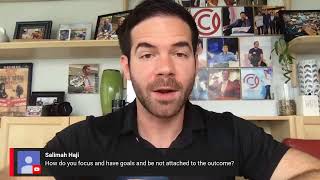
Ryan Daniel Moran explains how to build a business designed for acquisition rather than ongoing profit. He covers valuation strategies and market trends, using personal stories to show why creating a sellable asset matters more than maximizing year-to-year earnings.
Chapters
Morning, ladies and germs. Good to see you. Today is Thursday, September 3, 2020, and it's about to be a really good day. It's about to be a really good day. It's about to get really good when we do a sip together. If you're watching live, please say hello in the comments. Good morning to all of you who are in the 1%. We have good stuff coming up in the 1%.
We have screaming children in the background today. That's why I have this face on. I'm not tired. Don't worry. I'm not stressed. No, no, no, not at all. Just screaming children. That's all. That's all. Just screaming children. Feels like there's 10 of them. Really? Just two. Really, just one. One of them screaming, one of them laughing.
Good morning, Todd. Good morning, Greg. Good to see y'. All. Just so you know, Todd, I was having a great conversation about you this week. Thanks for changing lives by being on the live this past week.
Good morning, Rhino. I'm not sure what you're referencing.
Have not received whatever it is that you are mentioning, but sounds interesting. Good morning, Salome.
Good morning, everybody. Who's watching the livestream? We'll begin here in a second. I'm still gathering my bearings when it comes to screaming children. Hey, Greg. Greg. Well, I'll just give you. I'll just give you the good news now, Greg. Official announcement coming tomorrow, but we're gonna fill up the capitalism incubator. We're gonna fill it up probably today, which means that the tribe is just gonna get a surge of new energy, which is really exciting. All right. Good morning, everybody. Welcome to Capitalism and Coffee. I'm Ryan Daniel Moran. Today we're gonna talk about why you should build a business to sell it, not to profit. We've got some interesting stories to share with you, but first, I know why you're really here. It's not just for this. It's for the simultaneous sip. So if you're a capitalist and you're drinking any liquid, put it in a mug or a glass or a chalice, a stein, a cup, a vessel of any kind, and join me now for the sip that unites capitalists all over the world. It's called the simultaneous sip. Join me now. Go.
Oh, life is so much better. So much better. Hey, for those of you who are in the 1%, I'm going to go ahead and post the link to come join me in the green room. If you would like to hang out with me and ask a question about your business. Today we're going to cover talking about building a business to sell. And so I think a lot of you will want to know how this applies to your business. So I'm just going to go ahead and pop this in the comments.
There we go. So it's in the comments right now. Alright, so let me tell you a quick story about what inspired today's conversation. So in the past couple of weeks, several of my peers have gone to market with their businesses or have received offers or gotten a check for their business. So several of my peers, and you see it all the time.
The news about businesses that are being bought and sold. In fact, one of them was a company based here in Austin called Waterloo. Waterloo was a, is a sparkling water company. They were on stage at the Capitalism conference a couple of years ago and they had a massive exit as of a couple of weeks ago. I mean, there's rumors about what that number has been. It has been publicly released rumors say somewhere between 2 and $400 million, but no one really knows. But just assume that that gap is somewhat accurate and it's a couple hundred million dollars. There's a company that sells sparkling water and it was started as a little tiny startup here in Austin, Texas. There are several physical products brands that are well known being bought and sold right now. And it I was having a conversation with Trevor Blake this past week. Trevor Blake wrote the book Three Simple Steps I talked about here on the Live recently. I was having a conversation with him about how the cycle of transactions is happening faster and faster and faster and faster and faster. So for example, there was a company that, did you ever see that business? I think it's called Mirror, where you can have a personal trainer in your mirror in the morning and you're just going through workouts and they're like beamed to your mirror. And it was sold for over $100 million after about two years, which is about like the minimum it usually takes to have a business that's profitable. In his case, he had an exit in about two years. So the speed at which things are moving and transacting is happening faster and faster and faster. I was having a conversation with a tribe member this past week who has a manufacturing company and we were talking about a business that has $2 million in sales and a $2 billion valuation. And so all of this to say things are moving faster and faster and faster and faster and faster and faster and faster. And it's not necessarily the profit that determines what a business is worth when it sells. It's also Things like awareness, it's things like repeat customers, it's things like audience, it's things like the connections that the business has or the distribution that the business has. All of these are assets. And here's the big braingasm that will help you understand this. When people are buying a business, when a private equity group or an individual is buying a business, very few of them are buying for cash flow. Most of them are buying for some other asset that, that they can plug into their existing assets. That makes the whole portfolio more valuable. So if you think that the value of your business is just the profit in the business, then you're selling yourself short and you're playing a smaller game than you could be playing if you were thinking about making the pie as big as possible. The gain is not how much money can I make in the next six months. The game is how big of an asset can I build in order to have a monstrous exit later down the road? And so now, in order to do that, in order to have the capacity to think about something like that, you have to look at how you can sit in the position to bring together the different assets that make your unique business worth the most amount of money. So that's things like do you need to go raise money in order to give you the capacity to move really quickly? For example, on Tuesday's Live, we talked about a business that had 1% awareness in the marketplace. So they were able to raise money and then go do advertising to the point where they had 1% awareness in the marketplace and that gave them a billion dollar valuation. It was just awareness that they were valued on. So sometimes if you want to go straight for the gold, you need to go partner with other people who are bringing the capital to the table so that you can go bring in the rest of the assets. Sometimes that means partnering with distribution or audiences or certain individuals, bringing on partners or advisors to be able to have the clear path to a successful launch into enough awareness to be in front of enough people to have a really valuable business. So partnerships are a great hack to creating the distribution or the valuation that allows you to get the end result that you are looking for. So again, the name of the game is how big of a building can we build? How big of a pie can we bake rather than how much can we scrape off the top? In the short term, most people who are in this Internet marketing world are playing the game of how do I have enough profit so that I don't have to work a normal job? So they're Actually running from a problem, which is, I don't want to work a job or I'm unhappy they're running from that problem rather than working toward something, rather sprinting toward what it is that they do want to build or create. And those are two very different focuses. Those are very different energies. The energy of running away from a problem kind of keeps you in this mode of extraction all of the time. Whereas I'm gonna go build the biggest pie possible. I'm gonna go build a massive asset. I'm gonna go build something that solves a problem. That is where you actually solve your own problem of financial issues, and you build this giant pie that makes you and everybody who works with you rich. So this is a great distinction that I've been playing with recently, which is if your business exists to make you money, that's fine. It's just going to be a cash flow business. The pivot happens when, if your business exists to solve a problem or if your business exists to serve a customer and their problems that they're facing, then you are building an asset that you can sell. So a cash flow business is awesome. I have a cash flow business, and I also have businesses that I'm building with no intent of making any money from for the next three years because they're going to make me millions and millions and millions and millions of dollars. That's the difference.
60% of my wealth, yeah, about 60 to 70% of my wealth came from one thing, one asset that I built and sold.
The remaining 30 to 40% of my wealth came from the cash flow business that I built that I've now invested into other places. So I have my asset one time made me a whole heck of a lot of money, and the other is from a cash flow business where I've been parking my profits into other things that are going to grow that I'm going to eventually sell. That's the name of the game. You build businesses and you invest the profits. Hey, good morning, Drew. What's going on? Hey, Kyle. Good to see you.
If any of you would like to come hang out with me live in the green room, the link is inside of the comments, inside the 1%.
Oh. What else is going on? Have you guys noticed that the Indians are really good? They're in first place. They traded. Actually, here's a great example.
The Cleveland Indians are building an asset, a perennial winner. They're the winningest team in the American League since 2013 by following a strategy of raising up good players and trading them for the next generation. And.
Maintaining a low cost per win. They're building an asset. They're not trying to make money. And they don't. Not until I'm the owner. I know. Ex. You know, there's this great video on YouTube that I did about what. What I would do to save baseball. If you haven't seen it and you're a baseball fan, you should watch it. It's a good one. I think baseball is on its. I don't know. Might. Might not make it if it doesn't make some pivots. Good morning, Amanda. Good to see you.
What else? Can we call coronavirus over now? I mean, can we just. Can we call it a day? The numbers are fantastic. The numbers are. The number of cases are plummeting. The death rate is falling. We're starting to. We're opening up. Almost every state is open now and cases continue to plummet. Could we call it a day? Can we call it over? Can we say we won? Can we say we won? It's been six months. The world's still kicking. Economy is still booming. People are still hiring. Stocks are still growing. We live in an expanding world, an expanding universe. We live in a world that is constantly growing. It can't not. It has to keep growing. If you want to get rich, you've got to bet on that. You've got to bet on things continuing to expand. It has continued to expand since the beginning of caveman times. It has. And this is the thing that trips me out. The pace of expansion, the case of the pace of acceleration. The pace of growth is happening faster now than it was 100 years ago, 50 years ago, 20 years ago. And that shows no signs of stopping. So the pace of expansion is starting to. Is continuing to accelerate, which means you can bet on. You can bet on things continuing to expand at a faster rate 10 years from now than they are right now. I was having a conversation this past week with Brooke Castillo, and we were talking about how Microsoft. Not Microsoft. We were talking about how Apple is now worth $2 trillion and how in the last two years, that company valuation has grown by $1 trillion. So they made a trillion dollars in two years? Well, it took 30 years to make the first trillion. It took 30 years to get there, and then it took two years to make another trillion. So the question was asked, how long do you think it will take to have the first quadrillion dollar dollar company? That would be a thousand times the value of Apple? I guess technically 500 times the valuation of Apple. So how long will it take for A company to be worth a quadrillion dollars or a thousand trillions. I said 30 years. 30 years. Brooks said 10.
Now, let's just say that we're close.
Let's just assume we are, right? Let's just say we're a little bit ahead. And it takes 50 years. 50 years. Most of us will be alive 50 years from now. So 50 years from now, if there's a quadrillion dollar company, a thousand trillions, that means that the economy has expanded by thousands of times. For one company to be worth a quadrillion dollars, that means there has to be so much productivity, there has to be so much money in the system, there has to be so much growth that the economy, the pie, has expanded by about a thousand times. It means that, that means that standards of living will have grown a thousand times in the next 50 years. Things are getting real, real, ladies and gentlemen. So I want to respond to Mark's comment here. Mark says, I wish I could be as optimistic as you. I'm an airplane pilot about to be furloughed. Airline industry is in the toilet. I'm searching for a new line of making money. So here's the good news. Here's the positive side of this, Mark, because life is 50, 50 positive, negative. So right now, if you're in the negative side, there's always a positive side to this. And the positive side of this is, did you really want to stay an airplane pilot when you know that there are opportunities that led you to discover me, led you to discover this YouTube channel, that led you to discover our work here@capitalism.com where we see thousands of entrepreneurs who are out earning their jobs by starting side hustles and businesses and sometimes building businesses that they can sell and then invest the profit so they never have to work again. And then they become even more productive and even more positive, even more.
Contributive to their communities and their worlds and their families. There's a chance, and I could be wrong, Mark, but there is a chance that what you're about to go through is the greatest opportunity that you've ever gone through. Most of us can point to times where we said that hard time was the reason why I am where I am today. And there's a chance that you're sitting there right now. I could be wrong, but there's a chance that you're sitting in the opportunity right now that will force you to find new ways to adapt to today's economy, today's marketplace that make you more productive, more profitable, more successful, more Giving happier and working less than you ever have in your entire life. So most of us, when we feel pessimism, are because we're looking at our own standing in the world. We're not looking at the world at large. It's hard to be pessimistic when you're just looking at the world without judging it because there's so much growth, there's so much freedom, there's so much expansion, and there's so much desire and demand for more. I mean, look, I'm going to get political on you for a second, but we resist wearing masks. We look like the biggest thing, the biggest threat to our freedom is we might have to wear masks for a while. That's the biggest threat to our freedom right now. A hundred years ago, it was like a lot worse. The things that the government could do, the things that other countries could do were much worse. Today, the worst thing that can happen to us is that we could be forced to stay in our homes or forced to wear masks for a while. Now stick with me for a second because what that means is that there's so much desire and pent up demand against that, so much resistance to that, that it just forces us to continue expanding freedom over and over and over and over again. When we, when we're resisting even small threats to our freedom, that means that we're pushing for more freedom. So we're constantly pushing for greater expansion, for more and more freedom, for more and more productivity. And when we feel pessimism, when we feel negativity is because we're focused on ourselves and our own standing in the overall expanding world, rather than looking at the expanding world. So if you just swim in that ever expanding ocean that is the world.
We'Re all expanding and growing, there's every reason to be optimistic every single day. Reason. That was fun. Thanks for putting me on my high horse, Mark.
Hello, Ahmed. Good to see you. And Mark, I would just challenge you to say that the thing that will take you out of this, take out of this negative time is just put your stake in the ground and say, I'm going to find a way to make this the best thing that ever happened to me. I'm just going to, I'm just deciding this is the best thing that ever happened to me. Watch how fast life changes when you're like, I don't know how, but this is gonna be the best thing that ever happened to me. It's gonna open up new opportunities, new areas of growth, new opportunities for new connections and ideas. Place your place Your stake in the ground and watch how fast life changes. And then write to me@ryanapitalism.com in 60 days. Tell me how life is going.
Morning, Dawn. Good to see you.
Amanda. I want to address this.
So the brand I work for has done absolutely amazing during COVID Awesome. And I want to personally follow the path of building my own brand. Same social worker. Beautiful. So, Amanda, you're seeing it firsthand where the companies who are active right now, who are in the problem are growing and expanding. So the way that I put it to a team member this week was I've never been so grateful for global warming. When you look at all of the innovations, solutions and progress that's happening to clean up the environment, to make things more efficient, and to solve this great problem, that problem has opened up areas for more economic expansion than ever before. So this. This is a great conversation to have when people argue that there's a limited amount of resources in the world. So if you look at what hap. What was in existence before fossil fuels, the way that we got energy was through whale blubber and kerosene. So that sucked because we had to kill a bunch of whales and there was a limited amount of energy and we couldn't do much with it. Then you have the use of fossil fuels, and you have the greatest boom in history. Lifespans go up, people can move across the world, and across the country, you have abundant sources of energy. And now we see the debate over fossil fuels, even though we have an abundant supply. We see the debate over fossil fuels because they pollute, because we have to dig into the earth to get them. So they have their own challenges, even though they've created an amazing economic and moral boom. Like, we have more people on the planet, we are living longer, we're better to one another, we don't blow each other up in large numbers anymore. So that's all because of the economic expansion that's come from fossil fuels, but it has its own challenges, too. So in an attempt to solve those challenges, we have all this new expansion and innovation. We have companies like Tesla, and we have new innovations that are cleaning the oceans, and we have these new innovations that solve that problem. And what are they doing? They're opening up the next wave. They're opening up the next area of expansion. We will never go back to the time of whale blubber. We will only go forward. The worst case scenario is that we continue using fossil fuels, which probably isn't going to happen over the next several decades. They'll at least be Drastically removed, reduced the amount that they're used. So we have this cycle of. We have boom, which creates its own challenges. We solve those challenges and it creates a new boom. And, man, we're living in such this exciting time of being on the cusp of the. Ahmed asks, I want a physical product brand that can be sold for 6 million within two to three years. Yes, you can do it, but if you're building.
But you won't, because you're basically asking, how do I make the money? Yeah, you can build a brand and sell it for $6 million within two to three years. I have a bunch of peers who have done it. But if you're sitting here going, $6 million, $6 million, you're not going to get there. What does it take to get there, Ahmed? It takes you addressing a problem that you like to solve and developing the products and services that do that well and doing that well enough that you attract an acquirer. That's it. And that'll do it. $6 million isn't that much. $6 million is a nice start. I was talking to Trevor Blake this week. I told him he was asking a bit about my background, and I told him I've had a couple businesses that I've built and sold, one of which was for, you know, I made several million dollars. He said, oh, that's a good start. It's a good start. There's way more out there, though.
Hmm. This is an interesting question.
How do you focus on goals and not be attached to the outcome? You don't set goals that are based in lack. That's how you. That's. That's how you do it. Most people set their goals to try to fix what they're focused on. Most people have problems in their mind that they're trying to fix, and so they set goals out of the problem. So the goal is like, I'm going to get out of debt, or the goal is I'm going to make $100,000 so that I'm no longer out of debt. Or the goal is I'm going to be in a relationship so that I'm no longer lonely. And what you're doing is you're constantly focusing on the problem.
And you're constantly afraid that you're going to be stuck in the problem. And so you start making decisions out of this place of tenseness and lack and fear rather than creating the change that it is that you want. And so the opposite of fear is love. The opposite of lack is abundance. When you start setting goals that are based out of love and abundance. You have no attachment because in abundance there's enough for everyone and everything. So what is there to be attached to? What is there to be afraid of? So when you can set goals from a place of creation and service and love and abundance, then it's perfectly at choice for you to choose it and move towards it. And so when you're thinking about what you don't have and you're setting a goal from that place, you tend to perpetuate it, you tend to repeat it, you tend to chase the result rather than to create from a place of that light, creative place. But when you're making decisions from a place of I have enough, there will always be enough and I'm here to create and serve, then you have that light, excited, expansive energy around your goal and which is no longer based in lack and attachment to the outcome. When you can do that, then you can kind of dance towards the outcome rather than feel this attachment, this heaviness to the goal. Because you think that the goal is going to solve your problems, they don't. Hitting your goals don't solve your problems. And you believing that they do just perpetuates the problem. When you can flip it and simply identify what it is that you want while already operating from a place of love and abundance, that's when you're bulletproof to be able to set those goals and hit them with ease.
That was a good question.
Kyle says, I lost my job as a physical therapist and I'm loving my new life. I haven't received a paycheck since March, but I'm building a business I can sell and have a bigger positive impact on people. Great work, Kyle. And you're probably, and you're just at the beginning, it gets real, real good when you just keep focusing on growth and you keep focusing on service.
Alright, we're going to wrap for today. First, I want to share some good news with y'. All. We have four spots left in the capitalism incubator and I'm so pumped to help this group of people build businesses that they can sell. And what's really exciting is that I know that when I give an entrepreneur the shift that is build the business that you don't want to sell, build a business that is in a place of creation and abundance and service and that solves problems. And when you do that, the whole thing can be fun. And it's a business that you don't want to sell, but as a result of doing it the right way, you end up building the asset that other people want to buy. If you want to get a last minute spot to work, myself and my team go over to capitalism.com Inc. I'm going to be doing a zoom call live later today to answer any final questions. There's only four spots left, so it won't be a big pitch or push or anything like that. It'll just be a time to help fence setters get off the fence and decide what's best for them and their family. So if you want to join me, come over@Capitalism.com Inc. Alright, thanks for sharing part of your Thursday with me. It's good to see you all. I'll see you guys later. Take care of.







