
YouTube Channel: @RyanDanielMoran
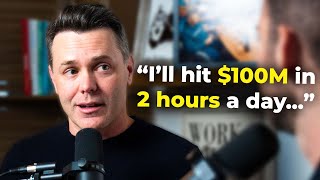
Ryan Daniel Moran talks with Mike Tecku about building a $100 million company while working just two hours a day. They discuss Mike's past ventures, his shift toward meaningful work, and the business strategies that let him scale with minimal hours.
Chapters
My goal is to get it to 100 million within like three to five years. And I have every belief that that's going to happen. I've got maybe an hour or two a day. What if business was always fun and always felt effortless? What would that look like? It should feel easy and obvious.
Well, Mike, this is not where I thought this conversation is going to go.
You want to talk about spreadsheets, you want to talk about, like, Roas, And.
I'm so glad it went here. I have this friend and his name is Mike. And Mike is one of those entrepreneurs that refuses to work more than like a handful of hours per week. And he has this product that he just launched that got to over $100,000 a month in revenue in like a couple of months while still only working a couple hours, like, per week. And this fascinates me because it violates my model. My model is to help entrepreneurs launch four products, get into 25 sales a day at a $30 price point, and then you've got a million dollar business, and hundreds of entrepreneurs have used it to build seven figure businesses. And Mike broke the rules. Mike only works a couple hours a week or a day or whatever. He launches one product, he gets to $150,000 a month in sales in, like, no time flat. And he's doing it in a market that really makes no sense out of the gate. So I asked Mike to come on the podcast because there's a couple of things I want to learn from him. Number one, I want to learn about how he created the rules for this business because he seems to be living an awesome life and growing a business that is growing very, very quickly. It's growing quicker than most businesses that follow this model will grow. But the second thing is that he seems to have cracked this nut of being able to create a high growth business while also optimizing for lifestyle. Not just lifestyle. Like, I want to have all the stuff, I want to do all the fun things. But he's optimized for purpose. He's optimized for happiness, and he's optimized to build a business that matters to him. And I think that that is why it is growing so quickly. This podcast impacted me more than I expected. I actually felt emotional while recording this podcast because I think Mike taps into a deeper sense of purpose than I have allowed myself to tap into. And it was convicting for me. It was hard for me to record. And there were lessons in here that I will be processing for the next several days and weeks and I hope that it has the same impact on you. Mike, good to see you, man.
Good to see you too, buddy.
You know, I remember when we first met and we were in Colorado, this is probably 10 years ago, and we both realized that we actually did things. Do you remember this conversation?
I do.
We had just hung out as friends and then all of a sudden we were like, wait, you actually have businesses? Oh, you're actually, you're actually not one of those guys that just talks about it?
Yeah, I think our natural cynicism was like, everybody's full of shit. Like, wait a minute, what's this?
You're actually good at what you do.
Okay, cool.
We'll be friends now. So the way that I like to start these conversations is to ask, how did you make your money?
Well, that was about, I think it was Even farther than 10 years ago, Ryan. I think. Anyways, I started making money after being just dead broke for years. I was a musician and on food stamps and, and I had all these part time jobs. I was deejaying weddings and plus 100 other things. But this guy I was DJing weddings for, he had a photo booth and I was running this photo booth and we were charging a thousand bucks a night. And I realized my first sort of insight into business was DJing required a ton of skill. And that made me expensive and hard to replace. Running the photo booth took no skill and you know, so. But they both charged a thousand dollars a night. So I was like, one of these is scalable. So I decided to create a photo booth company and fix all the problems that were we. I was having running that company. It took an hour to set up. You had to have a van to move it around. It was, it was a little bit complicated. So I decided like, this has to be moved at a Nissan Sentra. This has to make incredible pictures. It has to take three minutes to set up. A college kid with no training has to be able to run it. So that's, that's what we designed and started our first company. And it, it worked really well. And then people started asking if they could buy it and start their own company. And then we were like, sure. And then we turned it into a franchise. Essentially had a thousand around the world.
Thousand photo booths.
Yeah. Started. Helped a thousand people become entrepreneurs. Their very first business, which was really exciting. And that just started, oh, I can do this and enter the next level of business. And then just kept learning and learning, meeting folks like yourself, being exposed to new ideas and then just continually breaking through walls of my Own limiting beliefs.
I remember sitting at dinner with you years ago and you were mostly out of the photo booth business and you were like, I'm gonna start selling on Amazon now. Do you know anything about that? I mean, maybe a little. I've done it before here and there.
That was like when nobody was really doing it yet. It was like, can you even do that? Are you allowed to do that?
And you just started selling random things until it became a real business. But that was kind of a jump right from photo booths into the physical product space. So do I miss a part of that story or was it just like, hey, there's an opportunity here.
This was literally, I think on our second trip up at Whistler, we met a mutual friend, Matt Clark, and we were on a ski l stuff together and, and Matt was thinking about starting his course. Amazing. And he was like telling me the idea. He's like, I'm going to teach people how to do this. And I'm like, huh? And basically in that 10 minute chairlift ride, he taught me his course. And I was like, okay, I can do that. Great. And so that, that just began the whole process. And I feel lucky because I got like a year head start before, you know, Matt helped thousands of people do that and he was really a pioneer in that space. So yeah, that was, that was the leap right there. But I, that leap was possible because I started doing something interesting and creating a business which allowed me to get around people where I wasn't the smartest person in the room and just get exposed to new ways of doing stuff and ideas. And I just soak those up and move with the ones that inspire me.
What was the best selling product that you had in the cause? Would you say you had a brand or did you have like a conglomeration of different products? What was the actual business model behind that?
We made a bunch of brands. I think we had 10 or 12 brands at one point and they all had two or three products under them.
I was reverse engineering supply and demand. Amazon is amazing because you don't have to create demand. It's there. You have to, you have to fulfill demand. So we just looked at it like, what are the things that most people are searching for and wanting and where is that an overlap where the product isn't very good? So that's how we would choose the next products. I didn't know anything about any of the products we were doing to start with. And then I would just deep dive through the reviews and try to find a way to innovate on all the products. And that's what we did every. We didn't just copy what was out there. We literally solved some problem. And if we couldn't solve a problem, we wouldn't do the product, but that's how we would figure it out. And you just really don't know which ones are going to hit when you're approaching things like that. You don't know how big the market is or what's. What's going to explode. So the 8020 rule is real. And in the end, we were doing about $88 million. And I would say 7 million was coming from one product, which was literally the most boring thing you could possibly think of. It was a standing mat that you'd have at your kitchen or, you know, behind a standing desk. And we ended up.
Every concierge in Austin had one of your mats, right?
Yeah, it's. It's incredible. Like, I would go to all around the world and I would. I would go to hotels and be like, oh, there's our mat.
Cool.
I'd go get a haircut. You're like, oh, that's a nice mat you're standing on. Nice. But it didn't matter where we were. We'd be in Hawaii. We'd be, you know, the Bellagio in Vegas and be like, there's a sky mat. Cool. That's nice.
This is, this is why I asked this question. You started in the photo booth business and you saw an opportunity. Like, there's this window of opportunity and you made the product better. How can we make this simpler? How can we make this easier? How can we drive down cost of goods? And that made it possible to be franchised, and it made it possible to go out to the masses. You took that same approach into a marketplace like Amazon, and you say, okay, there's this demand. How do we make this better? One of those products really hits, you end up selling that company. I don't remember what year, but 2021.
2022, 2019, four months before, but before.
Okay, so you end up selling that company. But it was sort of the same eye, the same thing of, hey, there's an opportunity here, but how do we make the product that much better? Fast forward to now and you're doing the same thing in a new company, or you have this new company that seems to be growing like crazy. And it was the same approach of, you see this market and we're going to innovate on the product. You're going to make it the product that you really wish exists in the world, and now it's popping. So would you share a little bit about the new business as much as you're comfortable sharing? Yeah, because I know it was like a long process of developing that product, improving on what exists, but that's really the reason why it's starting to pop.
Yeah. Well, let me back up and kind of get to the massive personal shift I had to make to get to this space and where I feel like a lot of our peers kind of hit a ceiling and don't make this evolution. Up until this point, I was pursuing freedom, right? So I was trying to create things and business models that allowed me to have freedom of place and freedom of time and enough money to.
To.
To survive and do the things that I wanted. And the ceiling was my imagination on how, you know, how big of a life can I create? How good can life be? And I think that's the dream that we're given as a kid, the American dream. Like, let's have a big house and cars and enough money to retire. And we, we can't even dream bigger than that. Like what, what is beyond that, right? It never even crossed my mind. I remember when we started the, the photo booth company, I thought, like, wouldn't it be amazing to make $30,000 a year? I don't even know how I'd spend that. Like, that would be just nuts. I had made $4,000 a year before, literally to start that company. I had to sell all my. My guitars and some of my furniture to make that happen. So I spent all of COVID.
Trying to re engineer my brain to be able to think bigger, to dream bigger and shift my goal from freedom to optionality. I wanted to not just be able to not do anything. I wanted to be able to do anything. Keep.
Keep going.
You know what I mean?
I'm almost there.
I had achieved freedom. I had traveled to 50 countries around the world. I bought everything I wanted. I bought two houses. There's literally nothing else that I would need or feel motivated to acquire at this level. So I wanted to become.
More expansive, more powerful. I don't know what it is, or to have like a level of resources where I could create whatever I wanted. I wanted the optionality to do whatever I wanted.
To. The difference there is almost like a freedom from limitation. Now you want a different level of freedom to just be able to choose whatever you want to choose, right? So you're free from a job, you're free from doing shit you hate. You're free from, you know, the day to Day stresses of working 16 hour days as an entrepreneur. But now you're like, now I just want to be able to do whatever I want, like, choose whatever it is I want to create.
Yeah. I just don't want limitations on whatever I'm imagining. So I have this estate out in Wisconsin and my girlfriend and I were like, wouldn't it be cool to build like a French garden? Like we've seen at all these castles we've traveled to, like, oh, cool, what would that take? And we start building it, you know, and. But you know, when you have a few million dollars, that's enough not to work, but it's not enough to just do whatever the hell you want forever. So, like, okay, that might be a reason to go back to work. We were talking about how I never identified as an entrepreneur and I had to do some real shifting on my identity. And I think it started when we did our, like, kind of journey weekend. I don't know if we can talk about.
Yeah, I mean, we already talked to Noah about our, our weekend ayahuasca trip in Guatemala, right?
In Guatemala, Yeah. So the three of us were on this trip and I had a profound experience.
I'm just interviewing everybody that was on that trip.
We went to Guatemala.
I think there's something really powerful that, that Austin has. And when you go pursue interesting things, you get to be around other people that are pursuing really interesting things and you create these, these experiences for yourself that wouldn't happen solar with like your regular folks. You have to. You expand and you get this exponential return of your network. I think it's really cool. Yeah.
Well, I view it as entrepreneurs decided that they wanted to live life differently.
Right.
And so you naturally have this group of explorers and thinkers and creators who are, who just said, like, hey, this model doesn't work for me. And so what, what other models are there? And along the way, we sort of create them, but we're also. It's just wired in us to pursue other models. And so we do things that break our patterns of what's normal. And so if you just look at our peer group and some of the relationship structures, like, including mine, for goodness sake, like if you look at the family structures, if you look at the business structures, if you look at the way we think, it's just different. And so if you get that type of person into a group, you're going to have this wild sharing of ideas of people who do weird things on the weekend or think about things in ways that no one else has thought about them.
Before it's really fun because there really aren't any rules, Right?
Yeah. You realize very quickly that there aren't any rules. Yeah.
Anyways, that weekend.
It started a little wildfire in my mind and made me question, like, why am I here? What am I doing? I don't, I don't have to do anything ever again. And the idea I think was 35 or something, that I'm just going to get good at golf for the next hundred years, like, made me get just so sad. That's not why we're here. That's not why we're like, I'm wired the way that I am. Um, so I didn't know what to do. I, I didn't have anything else to achieve. I didn't have any other dreams, which.
Which by the way, is like first world problems 101.
Oh, yeah, right. This is totally unrelatable to most people. Exactly. Sorry. And.
And once you get there, you realize that there's no like party at the top of the mountain.
There's nothing.
There's. It's just like, what now? Exactly.
There's this great joke about Buddhism that you can spend like 10 years in a cave and achieve complete enlightenment and peace and then the you have is now what?
It's very frustrating. Anyways, to summarize, that started this whole process of unwinding my brain and rewriting and deciding who do I want to be, what do I want? And I just started paying attention to my attention. What feels effortless to me? What, what feels like? I don't have to force myself that question to work. And I just started noticing like, what am I reading about all the time? What am I actually pursuing in my own day to day where I don't have to like, you know, scold myself like, you didn't do this thing. You know, like feel guilty, like what feels like play what feels like pleasure.
And then I just started leaning into it with. Without any kind of desire or goals or expectations.
And I realized that I'm a creative person. I like to build things. The processes that I enjoy are, are digging really deep on something.
Figuring out how to solve a problem, finding the 8020 of something, finding the, the throughput of what is the most essential and then making it easy, making it systemized. And I just can't stop doing. I'll be like walking down the grocery store and I'll see something like, that's a stupid product. Or like I'll run into something that is hyper annoying. Like, why is this a thing? Why haven't Someone solved it, then I'll spend the rest of the day trying to solve it. And, you know, that happens to me every single day. And I could start a business out of absolutely any one of those things.
And I don't know if that's a gift or a curse, but it just made me realize that who is the person that does that? That's an entrepreneur. And I think I always had resistance to it because I was a musician, I was an artist, and I thought, like, business people were lame. And so I had this war between myself about this identity. And it wasn't till that moment that I realized when you create something, that's art, right? And just because it's functional, just because it solves a problem for person, doesn't make it any less art. I think it makes it even more beautiful, you know? So to me, I just embrace the idea that entrepreneurship is bringing something new and valuable to the world. You can have form and function together. And that, to me, is like an incredible thing to do.
Yeah, it's interesting to hear you call it an art. And I heard. I heard it said recently, good work is when it is just like a gift to the universe, right? When it's just like, done. I have improved this as much as it possibly can be improved. My contribution here is done. And then I'll let the cards fall, however they're going to fall. That's true creation. That's true good work. And that's sort of how I'm processing how you're looking at a business or a product is there's a problem. I'm going to improve upon this problem, and we'll see what happens.
It's a massive competitive advantage, too. If I'm approaching something as like, this is my art. This is an expression of me. This is my love language to the world. If someone's going out there just trying to, like, make the most money possible, like, you're not going to beat me. Like, I'm going to make something beautiful, and people are going to notice the details. They're going to see how much effort has gone into it. And it doesn't matter what I charge that this is. This will be. My goal is to make something exponentially better than everything else out there. And I know if I obsess about it, if I pour my heart into it, I'm going to beat the person that's like, well, how can we reduce cogs? You know, what can we do to increase advertising? You know, I don't like that. And.
And how did that lead you to the business now.
Sure. So the other insight I had after all this like fumbling around and searching and reading.
Was that my goals needed to. Not just my goals, my dreams, my imagination needed to get bigger before the businesses I would create would get bigger. So I just started thinking, what is the most ridiculous, impossible goals I can think of right now? Things that seem like I could never achieve. I just wanted to shatter my own limiting, limiting belief of my own power, right? So I wrote out a bunch of them. And the ones that seemed the most like impossible are the ones I pursued. So I thought to myself, what if I got a year younger? And this was three years ago, I think before like longevity became like a concept, that, that, that's not something that you can't get younger. We just, that's not the way time works. This isn't back to the future, right? So I was like, okay, that seems impossible. And then I thought, well, what if I, what would it look like if I made a hundred million dollar company if the biggest I had done was 8 million, what would 10x like that be? That sounded just so impossible to me beyond my skill sets. But I just made that the goal. And I have been reverse engineering that. I was like, if that what it would, what would it take to get a year younger? And I just started doing hours and hours and hours of research and it didn't feel like work, it felt just my natural curiosity was feeding that and about two years of just non stop blissful research and experimenting and trying it led me to this product momentum, which is based on my kind of 8020 theory of aging.
I think most people make everything really hard, really difficult. Being healthy is an insanely strict diet. It is working out all the time. It's sacrifice. It's no pain, no gain. And I, I wanted to invert that. So something I really like to do is what is the normal belief, the cultural belief about a goal? How can I invert that? So how can I make elite nutrition easy? How can I make eating healthy delicious? Like those are things are not supposed to go hand in hand.
Trying to reverse aging, what is aging, right? And what I've discovered, the, you know, the through line on every piece of research is that aging is your body accumulating damage faster than it can repair itself. So we've got two things that we can, two levers we can push. We can increase repair and we can reduce how much damage. It's not more complicated than that. It's not taking a bunch of crazy pills to like alter the way your Body works is your body works. It's beautiful. How can we support that? What are we doing to impede on that? I don't want to change the way the body works. So I went out and I outlined what are the 20 things that we are declining in fastest as we get older. And let's assume those are the raw materials that are causing a feedback loop of aging.
Nothing in there is trying to alter that. So I found those things. I went out and individually sourced from around the world the absolute best version of each of those ingredients. Went to the places, talked to the people. I didn't depend on a third party to just give me the cheapest thing. I found the most expensive version of everything out there, made a personal connection with them.
So I just have to interject here. You can't do this if you're not thinking about it like art. It's actually really hard to think like this if you're not thinking about it like art. So you're viewing this whole thing as almost like a personal challenge of how can I solve this problem simply and how can I make this just like my gift to the world, right?
Yeah.
I didn't care if 100 people bought it. I wanted to set the goal. What is the most incredible thing I can make? Can I make a masterpiece?
So.
This is hitting me personally because it's making me realize.
The percentage of my life that I think like this. It's how I want to think all the time. But the percentage of times that I think about this is like less than 40%, you know, versus me waking up thinking about, like, the stressful thing that happened or sales are down and so. And so is upset and we got to change this thing. Like those. Those things are more on my mind than I just want to create something great. It has shifted dramatically in the last year when we were like, we're going to make the best product possible. And we completely, like this whole year was redoing product lines. It was exhausting, but also exciting. But in order for you to go there on that level, like going to the places of sourcing the ingredients and getting the most expensive stuff, there either had to be enough space for you to not be in stress mode thinking about, I gotta think about this thing and fix this thing, or just an absolute commitment to go there no matter what. Can you share a little bit? What allowed you to shift into that space?
I remember talking with a high school counselor, and she asked, like, the most.
Basic routine question that you could imagine, like, what would you do if you had A million dollars. This was back when a million dollars. Yeah.
But it's still a very.
This is before the playbook to building a million dollar business was available through the book. 12 months to 1 million.
Ryan, you might be single handedly responsible for inflation.
Just ruined the whole country. Sorry.
I'm sorry.
It's a, it's a simple question that I don't think people actually give enough credence to because you're asking someone who doesn't have a million dollars what it's like to be free, what it's like to not worry about money. And there's zero way to understand that. And I remember her answering, asking that, and me thinking that, like I'm gonna just make up some nonsense because I'm an idiot kid. I don't know what it's like to have all my needs met. Like, I don't know what the view is from the mountaintop. I'm at the bottom.
Yeah.
So that's when I decided, like, okay, I'm going to do that.
By the way, that's the most honest answer to that question ever. Because it's so damn frustrating to answer that question. And of course when you make a million dollars, it's well, what if I had 10? And then when it's at 10, it's well, what if I had 100?
You don't know what it's like. I have no idea what a billionaire wants.
What is, what are the dreams of, you know, like.
But here's what's so profound about this, Mike, since you brought up our ayahuasca weekend. Like, and the times when I have had heart opening experiences either via plant medicines or being in love or having a child, like, the times that have been a really expansive experiences, all I want to do is give. That's all I want to do is I want to create and I want to give. And in those moments, that's all I want to do. And out of that experience, all I want is to be back in that mode. And I think that when we ask the question, what would you do if you had a million dollars? What you're actually asking is what would you create if all you were thinking about was creating?
Right.
What would you be doing if you were in a place where all you wanted to do was give? So if you're in a place where your cup is full and you could just give, what would you do?
Yeah, what would you do for free?
And Mike, even when I'm in those experiences, I have a hard time with this question.
There's not like a thing. Right. The way that I answer it is I would show up to everything that I do from this place. I would show up to every negotiation from this place. I would show up to every product launch from, from this place. And just, it's more of a mode for me than a thing that I would do. Besides, like, I would talk about baseball, of course, I would talk a lot about baseball. And this last week I was actually did a consulting call for a former outfielder for the Cleveland Indians who's starting a business. And that was like, oh, cool. Like, this is fun, but on a day to day level it's just, I have a mode I want to operate in, not a thing. So for you, is it a mode or did you have like an answer to that question?
So I've been thinking about this analogy of a bike. We have gears on a bike and we just get to the end of the gears and we can't pedal any faster. We're just like, well, work harder, faster.
Right.
And there's a limit to that, obviously. And what we need to do is two things. We need to put down the bike and imagine a vehicle that could drive down the road at 100 miles an hour, that could fly over the road.
What would it be like if there was no limits to how fast we could go? And then the other end of that, if you're going to make something that you need to make a proportional goal that makes sense for that vehicle to be built.
You know, if you have a bike, there's this radius, this limit to how far you can travel with that. And adding more speed to a short radius becomes very unmotivating. Right. And I think that's what a lot of us experience once we've had success, is that this is line from the Matrix. Right? Like, so you're saying I can dodge bullets.
One day you won't have to. And you get to the point where things are so easy, so effortless that it's uninteresting. And the way we are wired is.
The pursuit of the unknown, creating things, new things, challenge. We feel alive when we're in a flow state. And so if you rob us of that, we just fall apart. And so our dreams need to be as big as the thing we're building. Otherwise we just won't go anywhere. There's no reason to do it. So.
So I just heard all the words that you said, didn't make any sense. Well, it made total sense. But, but how do you, how do you apply that? Like, this is a beautiful analogy of like the bike can't go any faster. And I so relate to this idea of once you get to a certain gear, you. You just can't pedal any faster. Right, Right. And some people, entrepreneurs just say, like, well, that's when you've made it. You know, you. You get off the bike, or you. Or you.
That's what most begins.
Or you just pedal as fast as you can. Right, Right. Forever. And then you die. But. So I'm hearing everything you're saying, but what does that mean in terms of how you think about what you're going to do next and the business that you're actually going to create? And we're sort of dancing around. I just want to slip in here that you not only went through this thought process, the company that you're building now is growing much faster than anything you've done in the past. I think out of the gate.
Yeah, it's.
It's screaming. What were you about to say?
My goal is to get it to 100 million within like three to five years. And I have every belief that that's going to happen.
It's a big jump from somebody who's never built something bigger than $8 million.
Right? Yeah.
It's a big deal.
Yeah. Everything has to happen in the beginning for that.
I'll get to that in just a second. I want to finish this thought. So you have to create an incredible goal, a dream that is worthwhile to build the vehicle to get there. What are the two richest guys in the world doing right now? They're building rocket ships. And it's not to go build another company. It's literally to get people to another planet. And they're not building it for themselves. They're building arcs. This is where their mind is at. They have an insane goal, perceivably to other people, not to them, an incredible goal. And they're building the machine to get there. They have a very powerful why. So that was the thing that needed to transform me. I needed a. Another why. And there's a roadmap for this next level. Right. It's Maslow's hierarchy of needs. We hit the ceiling of all of our fundamental needs being met. The next level up is self actualization. And then where Musk and Bezos are at is at self as at transcendence. Right. They're thinking way beyond themselves. The thinking generationally.
You sound like an artist.
So for you and I, our next level is self actualization. How deep does this rabbit hole go? How powerful can I become? What are my limits? I Think there are none. That is my new belief. So if that's possible, if that's what I really believe, what am I going to create that would reflect on unlimited power and potential? Cool. What do I need to do to become that person? So everything is focused on who I need to become to create the thing I want. Not that I want, that I think would be useful to the world.
Correct.
Yeah. What's my gift?
And that changes the vehicle that I'm making. The reason to make it. Everything. You know, if you're trying to get to Mars, Right. You have a specific vehicle you have to make. And every. Every decision is based on achieving that goal. And so you have to have that. That figured out first.
So. So let me just process this out loud and tell me if this is close to what you're saying in your own words. Once you. Once you maxed out the gears.
Yeah.
And you. And you accomplished the freedom goal for you, it was okay. Now I need to cast my sights on something that has a big enough vision that I need to grow into and become a different person. And both the person I become and the thing I create from that place will be a better contribution to the world than what I have done up until this point.
Yeah.
And so for you, the first start was just lifting the ceiling on how big you think. And creating a goal for you is $100 million that you'll have to grow into and create something that is worthy of. Of accomplishing that. And then from there, it was almost like a cross section of your interests, of the things that you're already feeling a natural pull to. Is this a fair summary of kind of where your mind is going?
If I had only just done one of those things, I wouldn't. I wouldn't be moving forward. Like, the idea of making a $100 million company is not incentivizing because I don't need the money.
I'm with you on this. That was my number two growing up. I remember telling somebody I would love to see if I can grow that big. Not because I didn't have any attachment to that number. It was just for my background. That was the biggest number I could think of, and I wanted to see if I could do it. And now I'm at this point where it's like, I know how much effort that takes unless I feel really drawn to something. And that, I think, has been the other half that's been missing for me to really have the juice. So I'm hanging on to your every word right now.
Yeah. If you don't have a really powerful reason to do something. It's just sort of like masturbation or something. Right. It's like, why. For me, the hundred million thing is, imagine you're going to the gym, you're lifting weights, you want to get stronger, better, faster, and you keep lifting the same weights, you're not going to make any progress. So I'm just creating a weight that will allow me to become the person I want to become. I do not care about the company itself. I care about the end result of me achieving the vision of myself.
Who you become in the process is that's the wealth.
Right. Becoming worthy of creating that thing.
I see. So the money, the money goal for you is simply a target for you to be able to grow into.
Correct? Yeah, yeah. It's just like a fun resistance to go against.
And that's different from, and I've experienced both. That's different from an egoic pursuit.
Right.
Of so and so makes this much. I'm going to make this much.
What a boring game.
It really is, it really. And there's no real intrinsic motivation to it.
No, it's just, for me, it's just a scorecard of like, how much value did I actually create? How useful was this thing that I actually solve a problem for people.
And kind of back to the weight analogy. This, this thing just smacked me in the face the other day. Have you read Schwarzenegger's biography before?
I haven't, no.
Oh my God, it's so good. You can watch the Netflix special on it. It does a pretty good job. But he's got an old documentary called Pumping Iron. And.
The thing that I think is really difficult for people when they see influencers, specifically in the working out space. Right. And you know, like, just work harder. You know, it's like, just lift more weights. You're a. You're just weak, you're lazy. And like, these are the messages I hear in myself all the time. Like, I didn't do that because I was lazy. And like. Yeah, but when you hear Schwarzenegger talk about what it's like for him to lift weights, he's like, you know, every time I gets a pump, it feels like I'm coming. If I felt that I'd be lifting weights all day.
How is. That's not hard? That's not hard for you to work out and become a, you know, a muscle monster. If you feel like you're having sex twice a day, congratulations. You know, it's like same thing with like David Goggins. Like, he's like, really just running with an erection, you know, like, he's so into that thing. It's not effort. It's play for him. So my big thing, this is. This is the ideas that I'm still crawling with. My radical thought that I want to try to pursue myself right now is, what if my natural inclinations, the way I'm wired is divine? It's fine. It's perfect. I should listen to it. I shouldn't be at this war with myself between my conscious and subconscious. What if I. What if I jujitsu that natural inclination and pursue the thing that feels like it's like coming, you know, like, it feels that good, right?
That's what I should be doing. So, to me, I am only moving forward on things that are simple and obvious and beautiful and feel good. And I'm going to trust that I was designed and built and on a path that has divine purpose, right? And I'm going to stop fighting with it. Like, I know better, right?
So that's the signs that I'm looking for. I'm at a crossroads. When I'm at a crossroads, I just wait till it's simple and obvious and, you know, and I just keep trying things, trying new crossroads and, oh, here we go. Whether that's, you know, I think you should do that with relationships. The path you're pursuing, whatever it is, like, it should feel easy and obvious. That's. That's what I'm thinking. And so that's what I feel with this company is not effort. I just wake up really excited. I, you know, I'll be in the shower and like, oh, that's a great idea. Oh, what about this? And it's. I never have to force myself to do it. And I think that's what's gonna make me just unstoppable at creating this thing.
I'm envious of that.
I think you have that power.
So this is very timely for me because I, like, this year in particular was just like.
We had a strong year, but I felt like I was fixing problems. And what I arrived to at the end was that I desire more of what you're describing of just being in my zone. Even if. Even if I don't make $100 million or even if I don't make a million dollars, the experience of life that I want is more of the unfolding of things that feel effortless. And what I have done in the past was just add more to the plate. And that has just. It's drowned out the space for the feeling of effortless, it's just created more effort. And so I. The. The crossroads or so that I'm kind of at is like, do I need to let some projects go? Do I need to divest from some things? Do I need to pursue fewer things? When you have fewer goals, like, what needs to happen in order to create more room for that? I'm curious if you ran into that at all, so.
Oh, of course. Right. I made rules for myself. Like, if I'm going to get back into business, there are strict rules because I'm here on this earth to feel alive. I don't know what the big picture is, like, why we're here after generation after generation. This infinite cosmic universe, whatever. Like, and me and my little company make a difference. No, I don't. Come on. Right? But we're here for a reason that I can't possibly understand. I know we all have coding and wiring and we have a compass built into us that this is. This feels right, this feels wrong. I'm just going to start listening to that compass and stop pretending that I know better and just following that North Star and tacking back and forth.
So the rules that I made were, well, what if business was always fun and always felt effortless? What would that look like? That would mean me doing a lot of things, not doing a lot of things that I don't like, and creating a business that either I could effectively outsource those things or just not do it all. And a lot of the time outsourcing is difficult. So what about just not doing them at all? And the things I really focused on, like, what do I not like about business? Right? It's. I don't love advertising and marketing and spreadsheets and all that stuff feels like a lot of work.
So if I want to eliminate all that pushing a stone up a hill and like, trying to convince people to buy my product, what if I make it amazing? What if I solve a problem people actually want? What if I have so much inbound I don't have to advertise? Like, so the company's called Momentum. For the last six months, I have not been able to make enough to advertise. So I just. Ads are off, right? Because we just have enough to. To supply. And so my constraint is production. And so those. Those are the problems I'm solving, which require a ton of innovation. Is super fun. I love it. And so I just want to solve supply constraints forever. I don't want to, you know.
Create demand. That sucks. Nobody wants to be selling and cold pitching people all the time and trying to convince people you want people. Hey, can I have that thing? Of course you can. Maybe if we're in stock. Right.
And what is the product? Just so people know.
So it's the top 20 things that you are declin in as you get older from the most premium sources possible, all combined into one delicious shake. Delicious is important, Right. I think there's this idea that you have to have this health food that feels like suffering. I think a lot of green drinks out there like this must be good for me. This feels like a chocolate shake. Because it is a chocolate shake. There's an incredible amount of the most expensive chocolate you can imagine in there. And nothing else? No weird anything in there. I made zero compromises on this. It is most like green powders out there. Might cost a dollar to make. Ours is 30 times that. Excuse me, that's. That's for 15 servings. They do 30. It is 60 times more expensive to produce.
For a month supply. That's obscene. That doesn't make any sense.
That is absolutely obscene. Right, so your cost of goods is $60.
Yeah. For a month. So we. It's 30 bucks a bag. We sell it for 75. Right. There's no real margin in there to go out to an influencer and give them half.
Right.
Just like. So this needs to be. My play is be so good that you don't need to do all this other stuff. Let them let the product be the marketing. And so far we're at the very beginning of this. Right. That is working. And my hope is that continues to work. I'm just going to keep working on making the product better and better and making it more expensive and trying reduce manufacturing costs while increasing quality at the same time.
And the last we had chatted, it was, I wouldn't say going viral, but the ads were crushing and the repeat order rate was insane.
Yeah, I think we're still in stealth mode pretty much. Just because I haven't been like on a megaphone anywhere. I don't like social media. I don't have an account. If you go to momentum shake on Instagram, there's like seven posts. I just. I don't care. Yeah, I don't. I get no joy out of this. So I'm not doing it, you know, and maybe, maybe my mind shift will change on that and I'll find a way to do social media that feels like play. And that's something I'll probably explore at some point.
But it just isn't a ton of money. But, yeah, the ads are working. Our website converts it like 5%, which I think is pretty good. And yeah, for an expensive product.
Can you share with when you launched and what the total revenue has been? And this is just to prove the point.
Yeah, yeah. We. I still think it's a very small company. Our constraint has been we are. We haven't grown much since July because I've just been maxed out on how much we can produce. So we're doing about $150,000 a month right now. We launched in, like, April.
Yeah. And so, like, we grew till July, and then it's just been like, well, we're not going to grow anymore because we can't make anymore. And as soon as we unlock that, I think we'll be able to scale it pretty quickly. Yeah, it makes.
Makes total sense to me. So I just want to give that out of the way so that, like, there's. There's proof of concept to this, this. This theory that you are, that you're, you're. You're sharing. So come back to this idea of, okay, you.
You're create.
You're basically creating your own rules for this game. And it reminds me of what our friend Todd Herman talks about how. He talks about how when athletes go into business, they find business much harder because there's no boundaries.
Right.
There's. There's no rules to the game. And it sounds like you were very clear on what the rules to the game needed to be. And so you have, you have your scoreboard, which is $100 million, and then you create the rules within that of, I don't want to have to do a bunch of social media posts. I don't want to have to grind my face off marketing. So the product needs to be really good. And it sounds like you just went through a process of defining the rules for this business before you started it.
Yeah, they're like forcing functions. Right. Anytime I feel resistance instead of just pushing through it, I step back and like, why do I feel that? Is there a way to avoid this completely? And I just sort of challenge the. The notions of what is standard. I didn't start off with, like, you know.
I, I assumed I had to, you know, do influencers and a ton of advertising. I was going to lose money on every sale for a long time. That's like, what people think you're supp. And then I just, like, I didn't like it. And then I was like, well, what if I didn't do it? What would that look like? So I've. All my effort for the last six months is like, okay, can I make the product even better? Can I increase my production while increasing quality and decreasing costs? Like that shouldn't happen, but probably right, Maybe, why not? So I just try to invert like these expectations and move forward on that and it's just so much more satisfying. And if it works, amazing, I think it will. And if it doesn't, at least I had a good time.
Yeah. Yeah. Would it be fair to say that you don't feel worried about losing? You don't care if it flops. You're more into the game and playing within the confines of the game.
I really would love it to succeed because I think it's going to actually add a lot of value to people's lives.
But.
I am detached from the results. I am 100% on the process. Do I feel really proud of the thing we're making? Can I make it even better? Do I enjoy the process of the work that I'm doing? Yes. That is complete success to me. I am not going to be putting myself in a position where I hate what I'm doing. I'm not proud of what I'm doing, but I'm successful. That's meaningless to me. So.
That'S okay. If, you know, if it doesn't work out and I maintain my process, that's great because this is an infinite game. I'll just keep making more businesses.
I am, I feel very convicted by this conversation and it's because I actually jive with the way you are describing business more than the grind your face off. Right, Right. And I feel like a broken record. I feel like I've told this story a thousand times now. But I was with Gary Vee like two weeks ago and the thing that's great, what's that?
I like him a lot.
I think he came too. But the thing that I've heard him say this and he has shared this with me when we've been one on one in the past, but I really felt it this time. Which is the reason he is able to grind his face off or has that perception is because he is operating in this place that you're describing.
Right. It doesn't feel like work to him.
Correct. I mean we ended our dinner at 9:30 and he had two more business meetings and he was not dreading them.
Right.
I mean it is a game to him. There is natural motivation and energy to the game that he is playing. And I compare that to my day to day experience. And I am More like, man, why I'm grinding. But the times when it feels effortless, it more like sneaks in the back door. And I can tell you like a few of the targets now it has shifted to a consulting call with Mike. So part of that is like these interviews and creating content. Mostly effortless.
Nice.
Having deep conversations. Philosophy, religion, politics and business. Mostly effortless for me. Right. And I know that if everything fell apart, I'd still be in front of a microphone. Having conversations like this, it's obvious you're.
Naturally good at it. And I just say in that, you know, like it's, it's obvious. Right? And that's what it should be. You know, if you weren't getting feedback, if you have to grind your face off, something's not right. Right.
If. If I made a product and it wasn't getting recommended and getting five star reviews and just growing naturally all on its own, the product's not good enough or the problem's not big enough. Right. So I wanna, I don't wanna push a stone up a hill. I want the, to keep iterating and making the thing right until it's simple and obvious. And the feedback is so obvious, like, oh, cool, we will continue down this path. I don't need to guess. Right. And it feels easy for me. People like, like it is. Everything else is a waste of time. This, this. You have a thousand ideas a day. I'm sure I know I do. And we have to say no to all of them because they're probably not totally aligned on all those things. Very few things are. I'm sure you've heard this a zillion times that ideas are worthless and execution is everything that is only said by people who've never had an idea in their life. Right. You never hear that from someone who has good ideas because those are invaluable. You can talk as much smack about it as you want, but everything else is grinding your face off until you have a good idea. Good ideas are effortless and they're so rare and they're so important. It just makes up for all the inelegant execution that you have. Right. You could be, you can have an amazing product. Think about like any famous restaurant you've been in. People wait two hours in line.
Yeah.
There's no advertising for it. They, they're late, the service is bad and people love it.
That, that doesn't sound like an execution. That sounds like an amazing product and an amazing idea at an amazing time in an amazing location. That's what you want Everything else is hard work and effort and you don't have to. It's just a belief that that's the way to do it. Wait till it's not. Find the thing.
Explain more about the wait till it's not. Because I've seen you do this and it's. I've seen and experienced the power of just waiting for the impulse. Like waiting for it. Like it almost has to get out of you now. Like, for example, I have a great idea.
For an app that I have to make this thing just for myself cool. Like I have to. And now it's getting to a point where I'm bothered that it's not coming out of me. And I don't really care what happens, it just has to exist.
But my day to day experience is drowned out with responsibilities. And so I'm feeling this tension. Like something has to break, right? Some idea has to break. So would you explain this idea of wait till it's not and wait. Waiting for the impulse.
We don't have infinite time yet or attention or energy, right? We can only focus so much time on so many things. I'm literally trying to optimize my day for peak decision making. And I have accepted in myself that I've got maybe an hour or two a day of peak decision making and everything else is probably bad decision making or non optimal, right? So I've really paid attention to when I'm making good decisions between like 11 and one for me. So everything else around my day is working towards that, that time. So right now that's why we have this interview schedule right now, because that's my brain is most optimal. You whether I'm getting my walk outside or my sleep or energy or whatever. Like my day is set up around for optimizing that time period. And I don't care about anything else. I don't care about being productive or working a whole day as long as I can make one or two good decisions. Literally that is what the human experience is, is decision making. And no matter how much effort you put into the wrong decision, that is massively net. Negative inaction is way more important than that. So every time you get to a crossroad where you don't know what to do, stop. I'm going to geek out here a little bit. I'm rereading Lord of the Rings right now. And Gandalf is in Moria and he's like at a crossroads in a tunnel and he's completely lost and everyone's looking at him. He's the leader and he's like, oh, damn. And so he just sits and waits and meditates for literally hours and hours and hours and hours. And everyone's like, the hell are we doing? Are we going to die in here? And then eventually, he. He's like, oh, it's this way. And it's not because he, like.
Knew. He just felt, like, fresh air come from one of the tunnels. So he was waiting for an observation, for feedback, like, oh, here we go. And that 10 hours that he spent or whatever time was so much more valuable than leading them to death on the wrong trail. So I am willing to wait and be patient until it's simple and obvious.
And that is just paying attention to the feedback you're getting. I had an idea for this shake. I was. I first put the thing together, all the different ingredients. I had all the supplements. It was about 400 bucks a month. It took 30 minutes to put all together. It was very difficult for me to maintain that routine. And I was like, okay, humans are lazy. I'm lazy. I don't want to do this every morning. This is expensive. I don't want to pay for this every day. So these are the things, and it tastes terrible. So these are the problems I need to solve. It became. I didn't know that in the beginning, and it was only till I started going down the path. I found the chokehold. I solved for it. And then I was like, this was for me. Oh, maybe other people would like this. And then I started talking to people about it, and I started getting feedback. Every time I brought it up, people, like, leaning in. They're showing real interest, like, oh, let me know when that's available. That sounds great. Cool. More feedback. Then we get to production, and I send it out, and people start recommending that. People are like, oh, okay, feedback. And then I get. I get other, like, slightly negative feedback. I make adjustments, and then I keep moving forward with, you know, the obvious thing to do, but not until I get that positive feedback. So we just. We just built our own facility, which was a tremendous amount of money and effort, and I had to get all these, you know, hundreds of thousands of dollars in machines and stuff, and it'll require a tremendous amount of expansion in my own abilities. Like, I don't. I haven't done manufacturing like that before. I inherently know now that I can do it.
Because I believe I can do anything, and it's just a matter of learning stuff. But I wouldn't have done that without the feedback.
Yeah.
And it just keeps moving forward to Answer your question. If I am filling all my time with things that are less productive, less return on life, less return on investment, that is literally robbing me and all the people I could be serving of the more important thing. So I ruthlessly cut all that out and I just open space to pay attention to the thing that matters most. It's going to have a, most ideas like they're a million, 10 million. If it's not going to be at this new goal, I don't bother with it. So that's what I move forward on and I, I just leave space to become.
For the ideas to trickle in, for the feedback to be noticed, and then decide this is the right course of action. This is not the right course of action.
So.
The resistance I'm having in this conversation is I'm sort of realizing how many things I force, how many things that I approach with.
I'll work through it rather than just like allow it. And I think like, there is, there is absolutely a place for working insanely hard at something when you feel really optimistic about it or you feel like, you feel like it's your art that you're bringing to the world. But as I'm taking a sort of mental inventory of all the things that are taking up mind share.
There'S, there's only a few things on that list that I feel that way about, but I have the resistance of letting them go. But I am sort of retracing back to when they all started. They were all started because I was like wanting to make something work or for something to happen rather than clearing space for the unfolding of it all. So I'm having the sense of like, do I need to take inventory of all things that take up mind share and just like cut them out, just stop doing them? What advice would you give to me and people who can relate to that?
Have you heard the joke of how is a relationship like a fart?
No, but I, I now want to know the answer.
If you have to force it, it's probably shit.
Heard.
So that's how, that's a radical thought, right? Like, everyone believes relationships are hard work. Why, why do we believe that? Why do we believe that everything successful requires a tremendous amount of hard work? Why, what if it didn't? And I just want to see what that's like. I want to go pursue things that feel right, that feel effortless. That doesn't mean that this isn't effort and work to go into stuff. But you're getting positive feedback. You're getting, you can see the steps and that you're just going to be diligent about it and move forward and like more positive feedback. Move forward, more positive feedback and expand that way instead of just like, failure, failure, failure, failure, failure. Hard, hard, hard, hard, hard, hard, hard.
That doesn't sound like a fun life. So that's what I'm optimizing for isn't how good can life.
Yeah, yeah.
So to answer your question.
I would start with a very clear goal of the man you want to be, the life that you want to create, the why you're doing it, and then see if that is aligned with the subconscious in you. Like, does this, is this out? Are you at war with yourself? Do you have to make yourself do it or you like get jazzed about it? No one has to force me to eat chocolate. You know, I love that. And it's this constant force of me, like, don't eat the sweets, don't eat the sweets. And now I'm thinking like, well, what if, what if chocolate was good for you? What if sweets were good for you? And so like I'm making a cookie that.
For, for momentum that is incredibly healthy. Like high in protein, low in, in sugar and calories. And like, I don't want to, I want to invert that. Right. So that's just sort of my thought. Like, make sure you're aligned on all those things and the answer will be simple and obvious. People like make this analogy of like.
We don't know where we're going, right? We're, we're hacking our way through a jungle and people are like, what if we just hacked harder and move forward? And I want to be like, where's the river? You know, like, let's hop in the river. This path has already been designed for us. Just where's the flow? I want to get into the river. It'll effortlessly move me through the jungle. And not only that, it has a destination already pre planned. You're going to make it to an ocean eventually with limitless possibility. So I want, by finding the simple and obvious path, you find the goal at the same time. And that's how you say that again.
By finding the simple and obvious, you find the goal at the same time.
The river has a destination, right? The we don't know. It's sometimes it's hard to know where to go and why. Right. And if we use our internal compass to find the thing that is aligned with us, that feels effortless, it makes the goal, the destination a lot clearer. So sometimes that's why I said in the beginning, like, I paid attention to my attention. Where. Where am I going that. What am I spending all my time on? And you have to sift through the cheap dopamine. Right.
We are programmed to pursue this thing, and there's cheap dopamine and there's earned. And sometimes the only way is to remove all the cheap sources of garbage. Take all the garbage out of your house that you're, like, snacking on, take all the women out of your life that, like, you're not going to marry, and just focus on the ones that are, like, moving you towards a more positive, better version of yourself that makes you feel more alive and not just, like, quickly satisfied.
Yeah, that's. That was where I was going to go next, is, did you have to clear room first? Did you have to carve out space? Because I think.
If I have a full plate, the thing I want to do to avoid it is pursue cheap dopamine. And so there's a process sometimes of, like, clearing out or avoiding the cheap dopamine and then clearing out space, and then there's room for ideas to emerge. And, yeah, it seems like you were not as quick to fill up the plate, and you were just. You just kept an empty plate.
I, after selling the companies, I really allowed myself to be bored. It's just painful for me, and I wanted to make sure I didn't just start pedaling on the bike faster. So the goal for me was to 10x myself and.
Eliminate distractions. So I did that to the best of my ability. I'm very much human. I very much want to eat junk food. I very much want to scroll on my phone endlessly. And sometimes I allow myself to do that because it's usually pointing towards a resistance.
But what do you mean by that is pointing towards a resistance?
When do you pursue cheap dopamine? Is because you're avoiding something.
Yes.
Right. Instead of beating myself up about it, I let myself do that. And I'm thinking the entire time, why am I not motivated to do the thing that I'm supposed to do? Maybe I'm not supposed to do it. Maybe my body, my mind deeply knows better. So I'm just really listening to that. And so I just start making realigning. Like, so maybe this isn't the right goal. Maybe that's a poor decision. And I keep trying new things. I'm like, oh, here we go. I don't need these distractions anymore. I don't want that donut. You know, that's. That's. That's sort of this radical idea I'm coming up with that the way I'm wired is correct, my natural impulses are correct. I just need to constantly be realigning the goal I'm pursuing. Otherwise, you know, the, the, the animal in me is going to, to pursue the cheapest source of that thing.
Yeah.
The fastest, quickest.
So we can do as much as we can to like limit that desire. But what if we just harness that desire? What if that power is unlimited? It is a locomotive engine, it's a rocket engine. And we just found a source that it like really could dig into.
That's what I think the conscious mind is really for. Is, does this feel good? Does this feel good? How about, there it is. And then boom, you have unlimited motivation. And because it feels good, how did.
You arrive consciously at what that would be for you? So momentum, this company seems to be the extension of that for you. But at some point it became like a conscious, like it's going to be a shake.
Sure.
You know, it's more of like a hard, tangible thing. At what point did it become that clear? And my temptation is to go right for that. Like, I want to know the thing, I want to see the thing. I have a goal. I want to know how I'm going to get there. And I think that's what keeps me in effort mode, is really wanting to be able to see the tangible of it and go in that direction. So at some point it had to sort of crystallize for you. At what point did you know, hey, the shake is the thing. This aligns all of these goals and rules that I have for the experience that I want.
I think it really starts with a self introspection and I look at the skill sets that I have, the things that I know I'm exceptional at, and be very aware of the things that I'm not. And then. So those are the tools that I have. Right. And I know that my perspective has limitations. I'm trying to broaden that perspective, but I know I can only see what I have right now. And so what do I know how to do? I know how to make incredible products, right? Physical products. I know how to. I understand my fellow human being and their weaknesses and strengths. How can I lean into that? Right. How can I make them happy and make it easy for them? So I know I'm good at those sorts of things. I know I'm really good at solving problems. And so that creates a force, functioning constraint. Now I came up with this idea of like, what if a guy Guy got a year younger. There's a zillion ways, zillion paths to do that. I'm not a microbiologist. I think the solution to aging is probably going to come from some incredible gene therapy 10 or 15 years from now. I don't know how to do that. I could try to go pursue that, but that would feel like a lot of work. So I'm going to try to find a solution that has that kind of impact or like is aligned with that kind of impact in a way that I can truly add value.
So my thought is I, I might be able to. If I give your body all the raw materials it needs to, to repair itself and I make it easy for you. It's a daily habit that you feel great doing, you don't have to force yourself to do. If I can make that happen, perhaps I can slow your aging by 10 or 20%. And I extrapolate that out. 10 or 20% is like 10 or 20 years in 100 year lifespan. And it's not just like you get older, you've delayed when you start getting older. So 40 becomes 60 and how you 60 becomes 80, that's an incredible thing. Like if I'm pursuing something, is there something more valuable than I can do? Then reach out to people who are so inclined to improve themselves, to give them an extra 5, 10, 1 year of exceptional living. Multiply that by a hundred thousand people at 100,000 years of human potential. 5 million years of human potential. Wow, that is a really exciting. That is where it gets to transcendence, right? And so I know the path that I'm going to end up pursuing over the next 10, 20, 30, 40 years is self actualization. And then right after that is transcendence. That's the next ceiling I'm going to have to break through. So I'm already making sure I'm aligned with that. So there's the mission in there and I reverse engineer back from that. Like, okay, I need to make something incredible. I need to make something that will actually live up to that expectation.
So I started from there and it felt aligned and I got excited about it and that's how I knew I had locked into a mission that I could stick to. Because like for me it's like I'm not going to build this thing up to sell it and like, woohoo, I get a yacht. I wanted to build a vehicle that I would really enjoy piloting for the next 10, 20, 30 years. And I don't know what I'm going to come up with three years from now. But I'll have a platform. I'll have a, you know, customers that want more problems solved, and I'll be listening to them, and I'll just be. I'll keep doing the things that I really enjoy, which is creating things and solving problems. And there's. I've already got, like, the next 15 things in my head that I'm excited to go work on, and I'm waiting and, you know, like, I got to finish this step first, but I'm excited because I know the next step after that, and the path is clear because I'm on the thing, and I know where it's going. It's very exciting for me in that.
Sense, this conversation is convicting for me.
Good.
This is a very different mic than the one I met.
Well.
We. Our purpose is growth. Right. Our purpose is to feel alive. That requires growth. You're busy being born or you're busy dying, as Dylan says. Right. So if I hadn't changed.
I would probably be dying. Right. I would be in the reverse. I think maybe not everyone's like that. Right. And that's why I feel conflicted sometimes about advice, entrepreneurship advice, because sometimes I feel like it's like Schwarzenegger, like, yeah, easy for you. That feels great for you. Or it's like Shaq trying to teach people to be tall. The secret of basketball is to be 7ft tall. You just got to do this. Okay.
Okay.
Okay.
Okay.
So that's so good.
That there's going to be, particularly in your audience, there's going to be a lot of people that this makes sense to. That this is going to be like, yeah, I am feeling this transition myself because, you know, we're of this age, and that's where this transition is happening for a lot of our peers. Right. And maybe the person starting at zero, this will help them plot out a map, but maybe not super, super applicable yet, because they are in the pursuit of freedom. Right. And that's a very different set of schools. Luckily, there's a, you know, 12 months to a million dollars, and I think you did an incredible job at.
Thank you.
Making that easy and obvious for people. It really is simple, and we. We have to just remove this confusion that there's this expertise required that there's this thing that you don't possess. I really love this quote, you know, the Michelangelo quote, that he didn't create statues. Like, he just chiseled away the rock, and they were always there. That's. That's what I think that Our little ayahuasca journey. Not to bring it up again, but. But here we go. Here we go. You know, the consciousness and the subconscious is the you, me, we. There's a oneness there. And that. That. That subconscious.
Is. Is you. But it's also everything. It is a small piece of God. Right? So in all of us is this unlimited God. We are a reflection. We are the spark of that eternal life. So why don't we tap into that? Why do we believe that there's something we don't already have? We just really need to tap into it to source it, you know, like, oh, okay, this is here. I am that. We are that. So I just want to remove these. These. These false prison bars in my mind, these limiting beliefs that there's something I'm not already. That's what growth is to me is just like being closer to that you, me, we connection. Like, oh, it's already there. Unleash it. I think that's why people like superheroes so much. This idea that.
They. They can be so much more. I mean, it takes work, right, to really discover that, but maybe there's that infinite power in all of us, and we just need to access it. What's cool about, like, this mythology of, you know, why those are so popular, is that people almost always use that power to do something good for everyone else. And that's that self transcendence.
Because what would you do with it? Right.
I'm actually really glad you said that. So. So you brought up the superhero thing, and I was like, it's a weird right turn, but that was a really interesting point of. One of the reasons why we love them is they always turn that power outward. And if I think about. Oh, God, man. If I think about, like, my superpower and how good it feels to turn that outward.
Yeah.
And. And. And how often I let my just selfish tendencies hold it back because I think I'm gonna get something else in the short term because I'm scared or because I'm worried. Instead of just letting that out and let that be the masterpiece for the world. When you can operate in that zone, you can have everything you want. You're not attached to it anymore.
It's a superpower.
It is a superpower.
Yeah.
Yeah.
I mean, like, everyone loves Batman the most because he's human. He doesn't have external.
Hell.
Yeah.
But he. He. He has resources, and he has this, like, vision, and he combines those two things. Right.
All of us have something in us that allows us to be way greater than we are. And we just haven't harnessed it. We haven't developed it. We haven't unleashed it. We haven't believed in it. And it's there. It's waiting. Because we're all. We're all connected to this life force. We're all connected to this collective conscious. So we all have this power. We just don't know what it is. And so everything I'm working towards is like, how. How far is this? What is the boundary? Maybe it is unlimited. Is there any limit to how good life can become? Like, how much bigger can I think? I want to just keep pressing the edges of that balloon, and maybe there isn't an edge and just keep going. It's a really fun belief anyways.
I don't know.
Yeah.
Even if you're wrong, it's like a very helpful fantasy.
Right.
Is there anything that I didn't ask you that I should have?
I don't. I don't know.
There's infinite questions, right? There's infinite answers.
The mic I met is, like, rolling everywhere in his grave right now. The mic that I met would be, like, this hippie that lives in Austin. I do not want to hang out with him. I'm going back to Wisconsin.
I think is. I just. I think I. I just chiseled away a little bit more rock, that's all. I haven't, like, adopted other people's beliefs and ideas, which is, I think some. The hippie thing. We kind of feel like we're in Austin, right? And you can't order a sandwich without someone asking your, like, astrology sign. And it just feels like, do you even understand what you're talking about? Like, these are religious beliefs. They're not spiritual. You are just adopting other people's thoughts without understanding them. I think what we're talking about is very spiritual. You know, we're tapping into something greater than ourselves, a power to decide how we're going to be a superhero for other people. Right. That is. That's a religious experience, but it's not dogma, you know, it's. It's your own journey. There's no shortcut. So I think I have. I've felt that I didn't have the words to articulate it. I didn't see it. I hadn't climbed up enough mountaintops to get the view. And now that I'm here, all I see is more mountaintops, which is exciting because that means I got something else to. To do. And it's an infinite game.
That's.
That's the. The cool thing that we're never going. There's no end to this. It's a carousel ride. How can I. How can I extract and produce more out of this to have an even greater experience?
Well, Mike, this is not where I thought this conversation is going to go.
You want to talk about spreadsheets, you want to talk about, like, roas.
And I'm so glad it went here, as it's very timely for me because this is what I'm reflecting on right now. And I've been recalibrating this idea of that effortless experience of wanting to create more room for that. And at some level, it's scary because there's, like, an honest reflection of what do I need to let go of. But there's also this.
Knowing of when that part of you emerges. That's actually what we want. So thank you. This was. This is way more than I. Than I expected. And I really glad you're here.
I didn't know what I was going to talk about. A lot of these ideas are still incubating and formulating, and hopefully we do this in a few years and we've both like, those were nice. Those were cute. They were cute. Yeah. And we're, like, at a hundred.
But now that we live on Mars, it's a little different now.
We have no idea what the view is going to be from the next peak. Right. And all we know is right now and one step in front of the other. So I thank you for being allowed to think out loud here.
It's good to see you, Mike.
Good to see you, too.
This podcast was hard for me. It was hard for me because it made me realize how easily I slip into what we call business. Ryan@capitalism.com it's the mode of me just grinding away, and I didn't like the answers that were coming for me. As I was reflecting with Mike about how he creates space for our own unique genius or our superpowers, it actually made me sad to think about how infrequently I allow that version of myself to come out and play.
I almost felt a sense of loss over the fact that I drowned that out so much. So this podcast made me reflect, Reflect and think about the times that I go unconscious and the times that I go into a mode of, I guess, selfishness instead of a more contributive and a more aligned way of doing business. And so this was a hard one for me to record. And if you found value in it, I would just ask that you share it with somebody that you're close to and ask them to hold you to a higher standard, or to send it to somebody close to you and say, tell me when I'm out of alignment with the difference that I want to make in the world, because that's exactly how I'm processing this conversation. Hope you enjoyed it as much as I enjoyed recording it for you, and if so, let me know in the comments. Thanks for watching. See you next time.







