Emily Heyward of Red Antler and the Soul of a Brand | Now What? by Wix
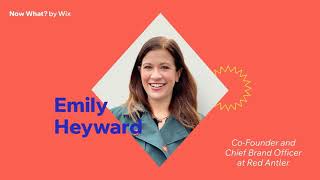
In this episode of Wix’s "Now What?" podcast, host Rob Goodman interviews Emily Heyward, co‑founder and Chief Brand Officer of Red Antler, the agency behind DTC brands such as Allbirds, Casper, Keeps, and others. The conversation explores Heyward’s definition of brand as a deep, purpose‑driven articulation that informs every consumer touchpoint—not just a logo or visual identity. She explains Red Antler’s holistic service model (UX, packaging, e‑commerce, digital experience) and how the agency has evolved since its 2007 founding, adding in‑house engineering, remote‑work practices, and a performance‑marketing arm (Good Moose). Heyward shares case studies—Allbirds’ mission‑first positioning, the bold "world’s most comfortable shoe" headline, and Casper’s disruptive storytelling—to illustrate how purpose, packaging, and narrative create memorable experiences. The discussion moves to DTC strategy, emphasizing retention over costly acquisition, the need for authentic storytelling alongside data‑driven performance marketing, and the "why test" framework that drills down to core human truths (often ending at the fear of death). Heyward also reflects on the impact of COVID‑19 on agency culture, remote collaboration, and maintaining team cohesion. She describes the motivation behind her book Obsessed, its eight lesson structure (starting with a real problem, embracing brand messiness, etc.), and offers advice for founders on selecting partners, staying true to purpose, and making incremental "wiggles" rather than radical pivots during turbulent times. The episode ends with practical takeaways for building lasting DTC brands and a glimpse into future work.
Chapters
Hi everyone and welcome to now what the podcast from WIX about how technology is changing everything. I'm your host, Rob Goodman and in this series we're talking all about evolution in business, design, development and beyond. Over this past year, business and creative leaders have had to evolve to meet the challenges that come with this overwhelming amount of change. Here at wix, we're interested in the ways that creative people are evolving to build new businesses, grow beyond their limits and shape the future of the web. So we thought, what if we got together a bunch of our friends, leaders in design, development, e commerce and the agency world to talk about how they're dealing with change and how it's affecting their careers, teams and industries. This is a place to prepare for tomorrow's ever changing world and apply those lessons today. In this episode, we're joined by Emily Hayward, co founder and chief Brand Officer at Red Antler, the branding agency responsible for darling startups and direct to consumer e commerce companies like Allbirds, Casper and Keeps. Emily and the team have been building brands together since 2007. She's been named among the most important entrepreneurs of the decade by Inc. Magazine and she recently published her first book, Obsessed with Building a Brand People Love from Day One. It's a fantastic guide to building groundbreaking, long lasting brands. Emily and I chat about the fundamentals of creating brands people love. This goes beyond a tagline or perfect logo. It's about understanding your customers at a foundational level and gaining their trust in the process. And I talked to Emily about how her agency has changed over the past year through COVID 19 and and how working with businesses you believe in is vital to success. You're in store for a short masterclass on building brands, running an incredible agency, and learning how to keep the needs of your customers at the forefront of everything your business does. Let's get started.
Emily, welcome to now what?
Thank you. I'm so excited to be here.
Yeah. One of our first guests.
Yes.
You are the co founder of Red Antler, the Incredible Agency and the author of Obsessed, the new book on branding. I'd love to hear in your words what brand means to you. And as you're meeting with these startups and tech companies who are trying to understand these concepts for the first time, how do you explain the meaning of brand?
Great question. So I think that often people confuse the expressions of a brand with the definition of brand itself. Meaning I'll often hear from entrepreneurs, oh, I don't need a brand. I've got my logo. But what I really need is help with my website or help with my marketing or help with my packaging. And for us, brand actually starts deeper than any of that. How we think about brand is having an incredibly clear articulation of what your business stands for. It's almost like, what's the answer to the question of why people should care? How do you sort of crystallize, like, this is what makes this business important and then use that idea to influence all the ways that you're showing up in the world? So yes, of course, your logo is a really good indicator of what you're all about. And it can, you know, if done well, create a feeling in people and evoke certain associations. But it's not the be all end. All right? It's also, you know, your digital experience, it's your customer service policies, it's, you know, sort of how your product functions. All of that ladders up to how I define brand.
Does Red Antler work with companies on all of those aspects, or do you mostly own one part of that system and then influence the others?
A little of both. I mean, I think that from the beginning, when we launched the business in 2007, from the start we understood that the definition of brand needed to be more holistic than it had been in the past. I think that at that time, most people and companies defined brand as a corporate identity. It's like your logo, maybe some fonts and a color palette. Right. And I think that as we were seeing the rise of all of these innovative digitally native businesses, we recognized that brand was the full experience. And you know, the very first work that we were doing, we were getting involved with user experience, packaging design, building e commerce websites. You know, early days, I think the first e commerce website we built, we used Flash, which I don't recommend to anybody.
There were some great, great cartoons back in the day on Flash.
Totally. There were bubbles.
Yes, yes.
It didn't, didn't work as well as we had hoped it would. Yeah, I think that was really part of our thesis in those early days. And we have very intentionally built a team that is able to touch every aspect of the consumer experience. Now I think where we're less involved are things like service design. You know, we're not designing, for example, loyalty programs, which is, I would argue, also part of brand, but in terms of the sort of core experience that a consumer sees and touches and reads and feels, we've got a team that's influencing all of that.
And you've worked with some of these amazing new technology brands. Keeps and Casper and Allbirds. One of my personal favorites. I'd love to hear a little bit behind the curtain of the Allbirds brand origin story. There's so much incredible feeling behind that brand. And I know for me as a customer, obviously I love the shoes, I love the experience of wearing them. But when I got that package of Allbirds and I unfolded it like a book and it was just beautiful and easy to recycle and see the whole story there, I was like, wow, this is a company that really cares about the end to end experience. And I know that's core to the brand itself, this sustainability, this that comes from the materials as well. Talk to me a little bit about that first inkling of the brand.
I think Auburns is the perfect example of what I meant by brand needing to start deeper, because that is a company that was absolutely born from a mission on the part of the founders. They came to us with a vision of what they wanted to build, and it was really about reinventing supply chain, you know, and rethinking the materials that we use in the items that we wear and that we're sort of buying a lot of and kind of consuming every day. So starting with footwear, right? And they wanted to launch with this amazingly comfortable wool shoe. And they very smartly recognized that in order to get the world to embrace this idea, especially in a category where there's so much some really established, beloved brands, right? I mean, Nike is arguably like one of people's favorite brands in the world. They recognized that they needed to come out with a brand that was going to create a movement and it couldn't just be about the mission, right. I think that the mission's a big part of it. It's a reason to fall in love with the company. But I think that if they had tried to launch with just like the world's most environmental shoe, I don't know that they would have really been able to achieve the same traction, even though that's such a big part of why they exist and sort of the founding of the company. So we worked really hand in hand with them and it was an incredible collaboration and we were really functioning as one team, the two founders and our team, to help figure out how this world should behave and what it should look like and what does it stand for and how do we communicate these ideas to people in a way that they fall in love with, but that also inspires them, Right? You bring up the box. You know, the box is a great example. That was the first box that we launched with, and it was a 40% reduction in cardboard because there was no separate shoebox and shipper. Right. It was just one box. So, again, it tied into the mission, but it also created this delightful experience, which is something that you get to do with direct to consumer brands. Right. Because it's sort of arriving in your home and you open it and it feels different and exciting.
Yeah. The whole experience of the selling and the delivery and all of that, there's no going into the store and meeting and talking and seeing what's around you. You have to deliver that on the web. You have to deliver that through the packaging that's coming to your home. That's so, so important. And that idea of going out with the tagline, the world's most comfortable shoe, I think that that's what it was. That's so bold, you know, it's so like, screw it, we're just going to do this. At what point were you all like, yeah, let's just go for it.
It's so funny looking back, because that was the headline on the homepage for a long time. And we iterated on that headline. Again, just working directly with the founders. I don't even remember who was coming up with what. Right. We were just brainstorming for weeks on what that first thing that you see should say. And where we all landed was this line that now you look at it and I think someone who doesn't work in our industry would be like, that took you weeks to come up with. But it was, turns out the world's most comfortable shoe is made of wool. And there was just something like, every word in that sentence worked so hard for us, including the turns out, which gave it this more casual, almost winky feel. Because you're right. Like, it's very bold to be like, this is the world's most comfortable shoe. But I think the fact that the line was written in this casual, conversational way almost gave us permission to be that audacious. And what was incredible and what I don't think we ever could have predicted is that Press picked up that moniker. Everybody started referring to Alberts as the world's most comfortable shoe, which was amazing and not something that we could have planned for, but it was a really nice result of all of that hard work.
Yeah, that's amazing. I'm picturing something in the music industry equivalent, right. Like a band comes out and they're like, this is the greatest rock and roll album ever in the world. And then Press would just be like, yeah, yeah, it is. You know, but that's like, what happened with Allbirds because the product matches the promise and that's really amazing.
Yes, it is very comfortable and I don't think we could have gotten away with that if it weren't. I think it was also a way to introduce wool, which is not something that you expect a shoe to be made from and tie it to the benefit. So again, instead of it sort of feeling like this weird thing like what? Why is this shoe made of wool? That doesn't sound comfortable at all. It sounds itchy and hot. We just got ahead of it.
So the show is all about evolution. We're talking about how industries are evolving, how roles are evolving. What is happening in the face of all this change that we've seen in the past year. Talk to me about Red Antler, specifically your agency and how the agency has evolved over these past 13 years that you've been running the shop.
Well, we're not building our e commerce websites in flash anymore.
That's good.
That's good. So I think what's interesting about Red Antler is that our mission has actually not evolved all that much over the past. It's going to be soon. 14 years. You know, from the beginning, my co founder JB and I had this vision to create really the first creative services company that was designed to work with startups and high growth companies. It didn't exist at the time. You know, it's hard to remember that now because I think that startups have now embraced the fact that brand is important even for a prelaunch company. But at the time that felt crazy. Like everybody said to us, why would a pre launch company invest in branding? Like that makes no sense. You should get out there and test product, market fit and iterate and like those were the buzzwords of that era. So we were very clear on what we wanted to build and we knew that brand could be a driver of business growth and that it's something that you should bake into your business from as early as possible. And that has stayed true. I think what has changed is what it takes to successfully launch a brand into the world today. There was no iPhone when we launched Red Antler. You know, I mean that's massive.
That alone is a revolution. Yeah, yeah.
You know, Facebook was like a sort of weird niche, funny thing for college kids, you know. So I think that as the world around us has changed, we continue to evolve our services to make sure that we're still best set up to deliver on that promise of really seeing brand as a competitive edge. And because of that we've continued to build out a team that's gone more and more in depth around certain service offerings. We did not used to have engineering in house. That was something that we used to outsource and partner with. You know, then I think with the birth of responsive design, the line between design and development became really blurry and we realized that our vision was not being articulated properly if we weren't able to own that end to end process. So that's when we built out an engineering team. So that's just one example of where we've been able to go deeper around specialties in order to continue to deliver on our promise.
So one of the things we're focused on here at wix is supporting e commerce companies, helping businesses set up shop, grow, scale, market, all of these things. You have such a wealth of experience working with direct to consumer e commerce companies. And I'm just curious, I know that based on the company, the audience, all of these things you have to build specific programs and campaigns and all of these things. But what have you seen kind of cut through the noise for DTC e commerce companies? For listeners out there who are maybe in that world, what advice and what have you seen work so well?
The companies that I've seen do best in that space, their focus is more on retention than acquisition. I think that if I had to boil it down to one principle, I think there are a lot of companies that just think that the path to success is to continue to pay for new consumers. And it's just gotten so expensive to do that. And yet to your point, like harder and harder to break through the noise. It's not cheap anymore to advertise on Instagram or Facebook. Whereas that used to almost be like a little hack, right, that these businesses could do. So I think the ones we've seen that have really been able to break through the pack and see long term like sustainable growth, it's because of repeat purchase and the relationships they're building and over delivering on the product and service side and really creating these amazing, almost irreplaceable relationships with their core customers.
Which makes the idea of brand and the weight of brand that much more important. Because building that connection, that bond, that relationship is going to drive loyalty, retention, all of those things for ultimately the business's bottom line. So I love that totally.
And I think it also building the right brand ensures that you're getting the right people in the first place. Meaning the people who understand what you're about, care what you're about, are going to stick around for the long term, I think that there's so much tension these days between performance marketing and brand marketing, and I personally hate that those are even named two different things. I think we're really setting up the wrong dichotomy, but I think that you can sort of become obsessed with the data and run ads that convert. But, like, then what? Right. Like, is it the right person? Is it someone who's there for the deal? Or is it someone who's going to fall in love with you and tell all their friends and come back for more? And I just don't feel like there's enough of a view towards that big picture these days.
Yeah. And speaking of performance marketing and brand marketing, I know that recently you acquired performance marketing agency Good Moose. That's part of Red Antler. And so talk to me a little bit more about that. Why do you think those should not really be considered separate disciplines? And where do you think that it's complementary? And where do you think there's that tension where the overlap is at odds with one another?
Yeah, so we actually created Good Moose. We did not acquire it. Yeah. And it's interesting, you know, the assumption would be we acquired it because I think initially we actually set out to figure out, you know, who do we want to be referring our clients to? Like, all of our clients were asking us for referrals to performance marketing agencies. And we went on this journey to like, figure out, you know, is there someone we want to partner with, maybe eventually acquire? And we just weren't able to find a company that, like, really aligned with our vision of what we wanted to build. But in that process met an incredible guy who is now the CEO of goodmoose. His name's Daniel.
And.
And we just saw so eye to eye with each other about how these two types of businesses could work hand in hand to deliver better value. And I think that, you know, where we are all aligned, and Daniel talks about this a lot too, is like, everyone has access to the same math these days. Like, there's really not much of an opportunity to beat the algorithm. Like, the platforms have just made it really more or less impossible to kind of hack your way to growth in the way that you might have even been able to five years ago. They've just removed a lot of access to things that used to enable you to do that. Not to get, like, too in the weeds. But what makes a difference is incredible storytelling, incredible creative. Again, getting the right message to the right people and doing it in a way that makes clear the value of this brand above any other competitors and getting people excited. Because if you're just trying to do it through like the data and running the ads, it's just a very expensive path to growth. You know, you need to have that emotional side that sort of like lifts those efforts up and delivers more impact than, you know, if it's all just about sort of again, like being in the weeds on the numbers.
So let's talk a little bit about Red Antler as a company and how the past year has affected the way that you work internally as a team and across your teams. I think you're at over 100 people now and how you're working with your clients as well. What has changed?
It's weird because, like, so much has changed, but then in some ways it actually doesn't feel as different as I would have thought had you told me at this exact time last year, in two weeks you're going to go remote and never go back,
say goodbye to the office full of papers everywhere and the, you know, late night coffee sessions, throwing things on the wall.
Our approach to collaboration had been so oriented around in person interaction. I mean, more than probably most companies. Like, yes, we had paper everywhere. Like, we used to like print out the work, which now looking back I'm like, that was not very sustainable of us. But we used to hang our work on the walls and have a group of people standing around like critiquing, discussing, picking things out that we were excited about. And we obviously aren't doing any of that right now. We really had no work from home culture before this. Like, none. Like people could, you know, on a day be like, hey, I need to work from home today. We would say, fine. But it was not baked into our culture at, at all. And we had to very, very quickly adjust. And I think in some ways it's been amazing, actually. I think it has really opened up our minds at the leadership level to the fact that we can be more flexible and allow people that flexibility and just help work fit better into people's lives. I think in some ways it's really sparked more creativity for the team because they have more space to think and, you know, they're not just sort of like in person in meetings all day long. But, you know, there are parts about it that are hard too, I think, like staying inspired, staying motivated, maintaining a feeling of connection to the culture of the company. Especially like we've had a lot of new people start who have never met anybody, which is just so wild, so strange. Yeah. And you know, feels like, you've met, if you've met over video. But like, it's not the same.
Right?
And same was true for our clients too. We were obsessive about getting together in person. I was flying out to the west coast at least once a month, you know, just for meetings or just like coffees. And I don't know what that's going to look like on the other side of this.
And you're starting to talk about culture and communication. What has been your North Star over this past year in terms of leading through all of this change? Everyone in the company is looking to you. I'm sure they're looking to their colleagues as well. But how have you kind of sustained the balance of going through all this yourself and then instilling in the team a sense of stability as the ground underneath is shaking?
I mean, I hope I've done all that. I don't know.
You're like, rob, I wish we had talked a year ago.
Yeah, no, no, no. You know, obviously we have spent, I think less so than in the first few months. In the first few months, I and other leaders on the team were having daily meetings about all this, like literally meeting every single day, planning our response, communication to the company. What do we need to be doing differently? How are we going to weather this? Financially, I'm relieved that that period of intensity is behind us. I think we have, not to use a cliche, we've all sort of settled into a new normal. But I think that we've definitely been more thoughtful than ever before about transparency and how to make sure the team feels up to speed on what's happening behind the scenes. Just because we're not all seeing each other. So we're putting a lot more thought into company wide communication and also just like spirit raising activities too, like planning fun things, as fun as they can be over Zoom. But I think we've actually done a pretty good job having some good times over Zoom, you know, injecting surprise into our weekly all hands meeting, things like that. So again, I think some of these practices will continue on for the better. I think we've definitely spent way more time thinking about what we're sharing with the team in a thoughtful way than we ever were before. And I think that's probably something we should be doing even if we're all back in the office.
Hi everyone.
I want to tell you a little more about our partner platform at wix and how it makes it incredibly effective for agencies to create and manage client websites at scale. I've worked on websites in one capacity
or another, my whole career.
And the WIX Partner platform makes it possible to conceive, create, manage and secure all your clients websites in one place. You'll get a combination of game changing collaboration and lead generation capabilities that can help you reimagine your workflow as an agency team. This means you'll be able to create the sites faster and get more time for you and your clients to build better campaigns and get to market sooner. You can build using the WIX Editor or Editor X, the web design platform that includes advanced tools for layout, styling and breakpoint control. And if you're building an e commerce website, you can design something as beautiful as it is functional with powerful third party integrations, secure payment solutions, drop shipping capabilities and brand loyalty programs. From the get go, you'll be able to make data driven decisions by analyzing traffic and conversion rates across Facebook, Google Ads and email marketing campaigns. And you can customize how search engines display your client sites with advanced SEO tools.
All this plus you do it with
guaranteed enterprise grade security compliant with the
highest international security standards.
You can learn more@wix.com partners. Now let's get back to the show.
So let's talk about your book Obsessed. I'm really curious where it all started for you. What made you want to write a book? A book is a big undertaking. We spoke beforehand. I used to work in the publishing world, so I know that there's a lot, a lot, a lot that goes into it for the writer, you and editor and marketing, all that fun stuff. What made you want to put pen to paper?
So I had actually never really thought about writing a book. But I got approached by an agent who had had my name brought up to her by the man who ended up being my editor, a guy called Kaushik, who's awesome, and he ended up being my editor. And he had said to this agent like, hey, I think it would be interesting to approach Emily Hayward about writing a book. And by sheer coincidence, she was friends with my friend from college, so she knew me and she's like, I know her. And she reached out to me and was like, would you ever write a book? And I'm like, huh? Would I ever write a book? So yeah, that's the true story of how it happened. I think that once she and I started thinking through like, what would this book be about? And do I have enough to say? I realized that I actually do have quite a bit to say and that, you know, the, at the time, whatever it was, the 11 or 12 years that I had been running Red Antler, that I had learned a lot over that time and that it would be valuable to put those lessons and insights, you know, into one place and share them with the world. And I have to say that the process of writing it, as hard as it was, it really helped me in my day job just articulate like what it is that we do, why it matters, how we do it. It gave me more clarity on how we create the magic.
Yeah, it's kind of a gift to be given that time and space to reflect, which we often never do working in business and marketing and all these things. Right. It's always the next, next, next, what's ahead. But that time to reflect and look back. Exactly as you're saying, you can codify what worked, what didn't, what are the methodologies and to that effect, I'm curious what you've seen now, looking back and written this book, as some of those key strategies that have won for the brands that you've worked with. And I think about challenger brands, you know, the brands that are kind of going against the big behemoths. And then I also think about those category defining brands which you've also worked on, like the Casper and what you've seen kind of work for strategies.
Yeah, I mean, the book is actually organized around eight key lessons. So each chapter is a principle that I think leads to success for these modern brands. Right. These brands that are sort of changing the game and rewriting the rules and connecting with people in new ways. And then, you know, within the chapter, a bunch of examples of brands that have sort of embodied that lesson. So, you know, I think just to highlight a few, you know, I think the first is really about starting with a real problem. And I know that probably sounds so obvious, but it's actually fascinating to me how many entrepreneurs are so focused on their idea and what they're building that they forget to ground themselves in the consumer. And like, what's a real problem that people are facing regardless of whether your business existed or not? The problem isn't that your business doesn't exist. Like you've got to tap into an existing human truth in order to be successful. So I think that's one. I think later on in the book I talk about how sort of the rules around consistency and brand building have really shifted. I think it used to be that sort of the 101 of marketing was like, pick a message and just stick to it. And now with so many channels and so many places that these brands have to appear, brands actually have to embrace, like, the messiness and get comfortable with tension and inconsistency and sort of flexing, how they show up, obviously, with a consistent North Star. But there needs to be, like, just a lot more nuance and tools in the toolkit to keep it interesting for people. And then I think also, you know, you brought up Casper, and to me, that's just a perfect example of a business that came out of the gate and really just surpassed people's expectations at every single step along the journey. No one expected to fall in love with a mattress brand. People couldn't even name their mattress brand. And obviously that category has changed a lot in the past six years, I think, thanks to Casper.
Yeah.
But at the time, they just broke all the rules.
And I love in the book how
you talk about this idea that no mattress brand talked about the benefits you get from a good night's sleep and focusing in on that. You know, the best branding is obvious, right? Like, oh, of course that's what you should think of. But no one has. So I just think that's a really interesting kind of approach you had to the the brand story. And obviously it resonated so well.
Yeah, that was the heart of our strategy for Casper was like, let's not talk about our proprietary foam, you know, or like the sleep positions that, you know, are most suited for. Whatever. Right. It was really about, what does sleep give you? It gives you a better life, and let's embrace that.
Yeah, I love that. So one of the things that's so unique about Red Antler, and you've discussed this, is that it is an agency for startups. So you're in this amazingly unique position where you're on the front lines of what is happening in the startup world. So I'm really curious about what you're seeing in terms of evolution in the startup and technology space. What kinds of projects and opportunities have been coming through your doors in the past six months? 12 months, yeah.
There's definitely been a shift since the pandemic started. And I think that, you know, when it first started, we were like, is this it? Are we done? I'm sure a lot of businesses felt that too. But what's been fascinating to me to see is how times of trouble always end up being a springboard for innovation. And we're getting approached by a lot of clients who are really looking to tackle, like, the big, meaty societal problems. Like, we've talked to a lot of founders who are looking to innovate in the health care space. We've talked to a lot of new fintech companies. I think there's this feeling that, you know, the sort of rug got pulled out from all of us. And in those types of moments, people start to question, like, the core institutions that are supposed to just be stable and, you know, that you can count on and realize they're not really there for you in the way that you need them to be. That ends up opening a door for entrepreneurs.
And so you're seeing a lot of these, as you're saying, big societal challenges and tech trying to meet the moment and say, how can we revolutionize health care, financial services? Obviously crypto is getting to be massive and moving in lots of different directions. Does that change the approach you have as an agency to working on these kinds of big societal challenges? I mean, obviously there are different outcomes and products working on consumer goods and working on different kinds of tech solutions. But from like a mindset and framework perspective, how does Red Antler approach those kinds of partnerships?
I think for every client we've ever worked on, we start by asking ourselves, like, what's going to move the needle specifically for this client? And it's almost never the same answer, right? So I think it's less about like, oh, here's how we approach this category versus here's how we approach that category. And I think it's more about, in a case by case basis, asking ourselves, like, what matters here to our consumer, you know, like, what is going to ultimately move someone to change their behavior. So obviously if we're talking about something in the healthcare space, like trust is paramount, right? And you probably need to do harder work building trust than you do to sell someone a candle. But at the same time, we're also asking ourselves, how do we upend this category and do things differently? You know, and maybe there's a chance in health care to bring some, like, delight and joy into someone's day, which is not something that we expect to find in that category. So again, I think it really needs to be less about a playbook, more bespoke, but always ultimately focused on, like, who do we need to reach and what do they need from us in order to be inspired by this brand?
And one of the things I learned in the book was this centered around the question of why and asking the question of why. Why does a consumer need this? What is your product doing until you've exhausted all options and you're left with because they're afraid they're going to die. But talk to me a little bit about this. Why questioning and also hearing These stories in the book, I was like, this is so brilliant. Like, this is why I'm in marketing and creative. When I was a little kid, this was all I was asking all the time. So I've found like the right role here.
Great. Well, I'm glad it was inspiring for you. So yes, the why test is my little, it's my somewhat jokey little framework. But I do think it's actually very valuable to make sure that you are tapping into a core human truth. So I mentioned before that, you know, there can be a tendency to almost be self serving in when you think about the problem that you're solving. And I'll give an example. You know, I'll often ask founders, like, what's the problem that you're solving? And they'll jump to their business idea. They'll say, oh, the problem that I'm solving is like a more convenient way to buy dog food. Or the problem that I'm solving is, you know, more data visibility for small business owners. But if you listen, like, those aren't problems, right? Those are answers, those are solutions, their business ideas. So when we're trying to figure out what we would call the consumer insight, right, like the need state, we will ask ourselves why? To make sure that we're going as deep as we can go. So if you say, you know, okay, people want an easier way to buy dog food, well, why do they want that? Because they love their pets. Well, why do they love their pets? And like, keep going deeper. And I joke that you're not allowed to stop till you get to fear of death. Because ultimately as human beings, our sense of our own mortality is what motivates every single choice we make and every single action that we take.
Is it a judge of the success of the entrepreneur if they can kind of cut down on those questions until they get to death? Like, if it takes 100 questions, is it usually a little bit of a harder process together?
I actually do not make my founders go through the why test. It's more a tool we use internally to just pressure test our thinking and again, make sure that we're not like backfitting the consumer insight to fit our strategy. You know, when I used to work in traditional advertising, we would joke that like the really bad creative briefs would be like, the consumer insight is that people want a crunchy cereal with raisins. And it's like, no, they don't. They're not like sitting around wishing for your business. So I think it's more of just an exercise that, you know, when we're writing strategies, we can use it to be like, okay, are we being honest with ourselves here?
Yeah, and we've touched on this a little bit. But talk to me a little bit on your view of how launching a business has changed in the past five years. You're working with these brands, you're working with these startups, and you're getting them out the door to customers. What has been that big shift over these years?
I think there are a few. I think one is that the competition has just gotten insane. You know, it used to be that over the course of a year we might see a trend play out. Like, I remember there was a year where like, wow, a lot of people are launching things in clean beauty. And it'd be like a year that we'd sort of discover that now literally within a month we might meet with three teams who are all doing like almost the identical thing. It's just wild, you know, because so many of the barriers to launching a new business have been removed and people all have access to like the same cultural trends, the same comps, the same ideas, you know, so you're just seeing a lot more of that and it really raises the bar of what you need to go out there with and how you need to differentiate. I think that across the board, both founders and consumers have gotten more sophisticated about design. So I think a few years ago, even just like having a really nice looking website was a point of difference. I don't think that's true anymore. I think everybody knows they need a nice looking website and you need to work a lot harder. And then lastly, you know, I think just the continued growth of ways to reach people, the channels people are spending time on, have just put a lot more pressure on what these businesses like need to have in place out of the gate. You know, we talked about Casper. When we launched Casper, we had like 10 great lifestyle shots and they were on the E. Commerce site and they were really well done. And like that served us for a long time. And now if you had 10 photos that might get you to like midday, you know, like, where's our next 10?
Yeah, there's no gas in the tank after a few hours.
No, totally. So I think just like the sheer volume of content that these brands need to be creating can feel almost crippling. But it's also, you know, a real opportunity.
I'm guessing that you get a lot of people through your doors and you need to be selective, which is a really kind of enviable and exciting position for an agency. To be in. And you talked about getting these. You know, you could get three of the same company or objectively the same kinds of company through your door in a month's time or in a quarter's time. What are the factors that you're putting in place when you decide to sign on the dotted line and build a brand with a company?
I'd say there are a few. My most important one, as the person who's very involved with our clients and the work, is I want to work with good people. Like, I just feel like it's so critical that the relationship is there and that we have good chemistry, because all the best work we've done has come out of having really positive working dynamic with our clients. And when we don't, it's just impossible to do good work. So I think that's one is just like, are these people going to treat the team well? Are they respectful? Are they going to be fun to work with? Are they nice? You know, like, seriously, that.
That's like, number one, like the core human stuff.
Yeah, totally. It's like, do we vibe? Number two would be, do we believe in this business? And that. That probably sounds obvious, but I do think we spend a lot of time talking about, does the world need this business? You know, I think people will come to us and they'll say, oh, you know, I want to launch another direct to consumer eyewear business that's going to compete with Warby Parker. And we'll be like, well, what makes it different than Warby Parker? And they're like, the brand. And I'm like, no, it doesn't work that way. There needs to be a reason for this business to go into the world for us to be excited about it again. Gotta be solving a real problem. And then I think third is like, actually combining those two things. Is this the right team to do this business? Like, is there something about this team, their experience, their worldview, that makes them the best suited to bring this into the world and to win? Because as I mentioned, you know, if one team's doing it, guaranteed there's another team doing it too. And I think we want to make sure that we're aligning ourselves with the people that are going to be able to, like, pull it off and bring unique perspective and ultimately, you know, be the category winner.
So you have this opportunity to work with all these different companies. Obviously, you're. You're running Red Antler. Talk to me a little bit about advice you might have for businesses out there as they're trying to Deal with change. Maybe they need to pivot, maybe they need to double down. But there's a lot of inputs right now. There's still a lot of shifting ground. What kind of advice do you give to people so that they can make really tough decisions?
I think that it needs to be about continuing to ground yourself in why you exist in the first place. Because I think a lot of times businesses will hit a rough patch. I mean, this past year has been hard for most. Right. Other than maybe zoom.
Right.
Like, we're all struggling in different ways. And I think that you can almost too quickly be like, okay, well, how do I shift gears in order to, like, get out of this patch? But I think that if you're too quick to sort of, like, abandon your core principles, there's not really hope of coming out on the other side of that, you know? Like, I think you've got to keep focused on the ultimate vision and find a way to, like, make smaller shifts that sort of keep you on the same path, if that makes sense. So, like, rather than veering left, it's like, how do we, like, wiggle but stay ultimately on the road that we set out on in the first place? Because otherwise it's like, you might succeed in the short term, but if you lose sight of your core values and, like, why you're doing it, and again, what makes you special, what makes you different, I think you're really detracting from any possibility of long term success.
I love that. And I'm basically picturing your next book as, like, the brand Wiggle. You know, brands that didn't, you know, didn't do 360 pivots, but, like, wiggled their way into the sunshine. So I don't know. I'm inspired. In case you want to write again, I will pre order.
You know what? I love it. I had absolutely no intention to write another book, but you know what? Maybe with a title like that, I just might have to do it.
Yeah, we might have just made news right here. Emily, this was such a joy to talk to you. It's so fun to chat, and your brain and your energy and experience are just brimming over. And I appreciate you sharing so much with us today. This has been amazing.
No, thank you. Thanks so much for your thoughtful questions and for having me. It was so fun.
Thanks so much for listening. And big thanks to our guest, Emily Hayward from the agency Red Antler, for stopping by and sharing so many insights with us. Some of the things that really stuck
with me from this episode are how
much high quality customer service and incredible products build strong relationships that play directly into repeat purchase, brand loyalty and ultimately sustainable high growth e commerce businesses. How building the right brand means bringing the right people into your business for the long haul and why it's important to tap into an existing human truth and customer need to be a successful entrepreneur and that the problem isn't that your product doesn't exist in the world yet. The problem is always, always, always where
the customer need is.
You can learn more about Emily and red antler@redantler.com and be sure to get her book obsessed anywhere books are sold. I've read it and I highly recommend it. There's even an audiobook too. Thanks so much for listening. This is now what by wix, the podcast about how technology is changing everything. Now what is hosted and produced by me, Rob Goodman, Executive Producer for Content at WIX Audio Engineering and editing is by Brian Paik at Pacific Audio. Music is composed and performed by Kimo Muraki. Our executive producers from WIX are Susan Kaplow, Shanee Moore, Omer Shai and me, Rob Goodman. You can discover more about the show and our guests@wix.com nowwhat? Be sure to subscribe and follow the show for new episodes wherever you get your podcasts and if you like what you heard, please leave us a review on Apple Podcasts and share. Share this show with your friends and colleagues.
We'll see you soon.
More from Cardinal





Chef Noah was tired of dull tools - so he made his own #cooking #knives #chef #fyp #kitchen #shorts


every day Chef Noah wakes up and chooses violence... professionally🔪 @forgetotable #knives #chef

Mother Nature knew what it was doing with these color combos #graphicdesign #design #designinspo


Trying Modern Bread & Bagel for the first time 🥯 #nyc #glutenfree #food #shorts #foodreview
