Natalya Shelburne on the Myths of Design Engineering | Now What? by Wix
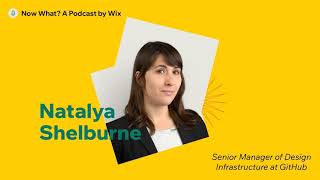
In this episode of the Now What? podcast, host Rob Goodman interviews Natalia Shelburne, Senior Manager of Design Infrastructure at GitHub and co‑author of the Design Engineering Handbook. Natalia discusses the misconception that multidisciplinary designers‑developers are rare "unicorns" and argues that such roles should be commonplace. She explains how decisions made by designers and engineers deeply affect each other, influencing business outcomes like time, cost, and profit. The conversation delves into mental models, describing design systems as externalized knowledge that align teams, improve accountability, and reveal power dynamics. Natalia shares practical career advice—embracing curiosity, avoiding prescriptive skill‑sets, and seeking mentorship—while warning against rigid industry dogma. She reflects on the pandemic’s impact on working parents, advocating for systemic childcare support at conferences and workplaces. Throughout, she highlights the importance of community, teaching, and continuous learning, and references resources such as the Design Engineering Handbook, her articles, and talks at Clarity Conference. The episode closes with a promotional segment for Wix Velo and a call to action for listeners.
Chapters
The decisions a designer makes impact the decisions an engineer has to make. The decisions an engineer makes impact heavily the decisions a designer is able to make. And there are just such steep consequences back and forth. If you can figure these things out and get these disciplines working together, those consequences play out differently. You can see it in business like money, profits, and not just like good vibes on a team.
Hi everyone and welcome to now what the podcast from WIX about how technology is changing everything. I'm your host Rob Goodman, and in this series we're talking all about evolution in business design development and beyond. On this week's episode, we're joined by Natalia Shelburn, Senior Manager of design infrastructure at GitHub. Previously a senior Software Engineer at the New York Times and co author of the Design Engineering Handbook from Envision. Natalia has walked the multidisciplinary path her entire career as a designer, developer, educator, speaker and artist. She studied art and psychology at university, earned her master's degree in Creativity and Talent Development, and has taught at Harvard Extension School. You'll see her giving talks at the Clarity Conference and across the globe on Front End development and design. I talk with Natalia about the misconceptions of the design Engineer. Get to the root of making designer developer collaboration work. Hint it's about people. Natalia shares the value of design systems for making businesses run better in a more profitable manner and doing it all in less time. And she offers advice on carving out a career path as a multidisciplinary creative. You're in for a great conversation with the always enlightening and Natalia Shelburn. Let's get started. Natalia, welcome to the now what?
Podcast.
Happy to be here.
Awesome to see you again. We worked together on the Design Engineering Handbook, which you helped author at Envision. You come from an amazing background as an artist, art director, painter, educator, developer, coder and leader. And I want to talk to you today about the evolution of the relationship between designers and developers, that intersection, the collaboration that is so key to making amazing products and experiences for customers.
So why don't we just start off
with a little bit of what your role is now at GitHub and what you were doing just prior at the New York Times.
So right now I'm the Senior Manager of design infrastructure at GitHub, which means I get to work with way more talented people supporting our design system Primer, which is open source. You can check it out. And previously I was working as a Senior Software Engineer at the New York Times and it's been front end Design Engineering intersection For me all the time. So, you know, I love your intro that it's been amazing. But my dream is where you can say, what a completely ordinary standard way of working, right?
That's your whole. A lot of what you talk about is this idea that people who come with a complex skill set approach to design and development. It's like this mythical creature, this unicorn, and people put it up on a pedestal and admire it. Whereas what you're saying is this should be common. People work across the seams all the time and this is kind of the world that you've been occupying in your roles.
That's my first soapbox that I really like to hot takes and soapboxes. You know, unicorns should be as common as horses because they are not mythical. Why can we name and talk about unicorns in an industry? Like we all know what that means, therefore it exists, therefore there are people doing that work. And my immediate question becomes then, well, like, how do you promote a unicorn? How do you compensate a unicorn? You can't leave it in the mythical realm if it's a very valued role people are filling. So that's where I get pretty fired up talking about it is why this, why is it so special to get the term of unicorn when there are just a million different ways to be multidisciplinary in this industry? Why are people who do two things or communicate well across disciplines that have to work together, they get to be called multidisciplinary. But design engineering, for some reason, right between those two, it's a unicorn, right?
And we're talking specifically about developers who. Designers who code and this idea that they are unicorns, that they are so unique. Let's talk a little bit about the relationship between designers and developers. This is the world you've been occupying and you've led and you've learned so much about how to kind of stitch these teams together, how to build collaboration connection. What are some of the ways that you found to unsilo yourself as a designer or developer? Ways to start building connection? And what I find really interesting about your work and your philosophies is it's very people oriented, but then there's also systems that can be put into place and built as a way of organizing and containing this information for teams.
Kind of a two pronged question here is why am I always on about this? And I would say it's because I come from, I'm a career switcher into tech. I was one of those people who was told, like, you're far too good with People, you're far too creative. Computers are for people who don't like people. So you do something else explicitly. And you know, just in general, I kind of, I got that message growing up. So something that was creating cool experiences, making websites, all that stuff in my youth, it had to stay a hobby until I found the long way back to it to make it my career. And it just doesn't map onto my mind now having gone, you know, spent the better part of a decade in the classroom and just seeing how people's brains learn, how we work and how truly multidisciplinary people are. The siloing doesn't like. I'm not ignoring it, I'm not fighting against it. It just because I came to tech later, that's not how I learned things to be in general. My kind of perception of it has been you do get siloed. Because what are we optimizing for? Speed shipping. The faster you are at something, the more often you'll be doing it. Until one day you realize your skills are sharpening to a point. Collaboration takes more time. Learning different things takes more time. And time scarcity is another thing you see in tech. There's never enough time to catch up, to keep up, to do everything. There's the individual, how do people learn? People tend to want to be multidisciplinary, curious. Then there's the resulting. But what do you actually get to do in your work given the constraints, given the deadlines? And how siloed do we become in our roles over time? And what do you have to do to fight against it as an individual, as a team? That's another can of worms right there.
And are you seeing this evolution take place in teams and in individual roles as this design engineer idea codifies, are you seeing more teams hiring people who have this multi disciplinary skill set?
Yeah, absolutely. I mean you see it, the postings for jobs right now, you see all of a sudden design systems, design system managers, design system contributors, systems engineers, systems designers. You know, design engineering is one of the ways you can describe it for me. I just love it as the clearest way to say please, not unicorn, but like let's name it something very easily graspable. That's not too much one thing or the other. But I think it's been very clear that engineering and design have both really moved forward a lot. But the way that we come to understandings like design has been doing its thing, engineering has been changing a lot, and the place where they intersect isn't a gap, it's an overlap where we really step on each other's toes all the time. The decisions a designer makes impact, the decisions an engineer has to make. The decisions an engineer makes impact heavily the decisions that a designer is able to make. And there are just such steep consequences back and forth. And, and those consequences usually are time, business, money spent trying to solve these things. And I think it's a pretty clear if you can figure these things out and get these disciplines working together in a way that's very possible. We're seeing it evolve, it's happening. Those consequences play out differently. You can see it in business, money, profits and not just like good vibes on a team.
Are there concrete ways that you've kind of rolled out this evolution, rolled out this change in organizations or just with talking to people and sharing lessons from the teams you've been on in terms of how you start to like change the philosophies of people who are perhaps too rigid or boxed in and they're thinking about how operations should go.
If you're asking me if I can change someone's mind, the answer is no. That's just, you know, people are not, I mean, they're either going to be receptive to it or not. And you know, to change someone's philosophy is not something I can say like I can just walk in and do it. And in fact, you know, for anybody listening, an individual really can't go against a company or a team or something and be like I'm going to change it by my like teams and dynamics and organizations get there. It's a system, it's an ecosystem. And to think that you're going to be one plucky person saying guess what, I'm going to change everything just doesn't really work that way. The reality is just it's a very boring, slow process of getting organized, getting buy in, working together, showing how things are going to go and evolving something naturally because you have to do it with everybody. You can't just steamroll people. And if you're just an individual contributor on a team, for example, you have a different impact than if somebody is like in a decision making leadership capacity. So personally, one of my favorite ways to have an impact is the community work that I've been doing, whether it's conferences, meetups and just creating kind of tutorials or educational material because I guess I could never quite leave the classroom because there's one thing to try these ideas out in a low stakes environment like a tutorial or a just like trying a project out and there's Another thing to take this leap in a high stakes environment where it's like, my job depends on it, my professional reputation depends on it. It's a very different scenario.
And with your background, what is it about this intersection of art and code that most gets you excited in terms of the approach to your work? And thinking back on your past experiences as an artist, as a painter, as a teacher? What is it about the intersection and kind of the possibilities there that make you excited to work in the space?
You know, I think of it as just the medium. One of the earliest things I noticed is I get the same flow working in code as I do if I'm painting. And it's a shame that we have this kind of separation of art and technology, as if they're these opposites, kind of a binary like this or that, and they can't coexist. I think it's just the medium that I work in. And so what gets me excited is just how fast I can do stuff if I just use the medium to do it. I think it's really neat. I think there was a list apart article a long time ago that really just stuck in my head forever. It was basically thinking about creating on the web as the infinite canvas. And it's just like this idea of, like, yeah, I can just do a little, like, typing, just some ideas strung together, declare a couple of things, and there's this infinite glowing canvas in front of anybody in the entire world. I can just send them a little URL and they can see something that I made to kind of tap into this incredible way of sharing that's just. Just objectively cool to me. And so this idea of like, art is paint, brushes. Well, is it like, do you get dibs on what's creative or not? And if it has just like this much technology, like, ooh, this is art, art, art. Ooh, it's technical. It's no longer, like. I don't. I don't think of it that way. I definitely think of it as just like another medium.
Yeah, I love that idea of that infinite canvas. And you approach it as you would with any tool. I'm just curious, do you still paint at all or make artwork kind of, you know, for your own side work? Or is most of the art you're focused on now the art you do in the design and code realm?
The less it's my job, the more I do it. So when I actually taught painting, I, like, just didn't. And, like, unless it was, like, my job and the less I do fine Art. As soon as I stopped teaching the fine art stuff, the more I started doing it as my hobby again. So whatever I'm not getting paid to do, I do more of in my spare time.
So you have been painting and drawing and things like that?
Absolutely. One of my favorite things to take, like everybody has a canary in the coal mine thing. They're like, if I'm not doing this, then I'm like, I'm not in balance. I'm not whatever. For me it's. It's drawing. It could be reading for some people, it could be cooking. It could be just whatever it is that they're like, what's thing I create that I do? For me, it's drawing. And personally right now I've been really getting into ink and monochromatic stuff, which is funny because I talk about color so much on the web now. I'm like, black and white.
Yeah. You have to kind of occupy both spaces, both extremes. It's great to have that space to express in and play in. And I love hearing about that. And you've talked about this idea of mental models in terms of designers and developer collaboration. If you could explain what you mean by that and the structure that puts in place for people to be better able and better equipped to work together and collaborate.
My graduate work was in basically how people learn, how people absorb information. And one of my favorite things is we're working in programming computers like this line, this line, this line. And it's just like, that's just not how human brains work. The idea of mental models is basically like, it's how we organize chunks of information in our brains to make sense of, like, how does this work? How does that work? And it's this idea and I'm going to simplify it greatly. It's just like how stuff works. And the first time you learn something, you get like a that click moment. Like, oh, I think I can now operate and understand enough not to make beginner mistakes. I can do this. And it's like, I think everyone can at some point relate with that moment where it finally clicks and you've created a mental model. And then there's like that next time you do something and it like super works with your mental model. And you're like, yes, this is the best. I love my mental model. Like, I get how this works. And that's when like the real trouble begins is then you. Something else comes in and it. And it just isn't fitting in any way, shape or form. And that's like that uncomfortable cognitive Dissonance where like, oh, you can expand it, accommodate it. Actually your mental model was incomplete because it didn't have this bit learning, right? Like you get to learn something or you could just entirely reject it. Silo yourself in this one tiny and complete mental model and never, you know, like, say, this stuff is broken and it doesn't work and that's not a good thing. So it's basically like a really big simplification of how stuff works. And it's useful for managers, teachers, anybody who's just like, I wish to help this person learn and grow. Because right there, where you notice that friction between like, they get how stuff works and then all of a sudden they are confronted with new information and there's this critical moment where they're like, they could go one of two ways, grow or stay in comfort zone. And that's like basically teaching or redirecting is like, ah, instead of the bad path, let's pick the above average learning path. And here are like a million tools and activities and things we can do to make it better. And so I've applied that a little bit into tech. And so actually I'm glad you brought up play just right before this question. Play is super critical and important. And that's how we say, like kids learn, but adults don't stop learning as well, hopefully. And so what's the grown up version of play? Curiosity. That's why we hear people like side projects or pursuing interests that may have no actual value, like wasting their time on their stuff. It could be just play as well. And that's part of expanding or growing or, you know, keeping your mental models flexible. Because ultimately what you really want is just to stay flexible, see new ideas. And when you feel the discomfort of these new ideas not mapping on the previous knowledge that you've acquired to be like, cool, maybe it's a different mental model entirely. I should have the ability to have multiple things in my head and be flexible in trying to understand it from different perspectives.
And are these models things that need to kind of rigidly be put in place throughout a project or throughout the lifespan of a team's work? Or is it something that is happening kind of fluidly, in constant shape and evolution as projects are happening? As there is, you know, tension across teams or between collaborators and things like that?
I mean, it's kind of like an empathy point of everybody has their own construction of the world in their heads. And so if you have that moment, like, why can't everyone just see the truth and objective reality of how this works. And it's just like because brains, because of what they learned first or where they came from or how some foundational knowledge might intersect with this new information. It could be the same information, but two people hearing it will be interpreted differently because all new information has to interact with what you already have in your head. And it could be anything. Like who knows? So it's a great opportunity to remember that and ask questions, oh, how are you understanding this? What foundational assumptions are you making or am I making that I shouldn't be making? And we should continue to dig deeper at it. So it's not like to say like there's a designer mental model and there's an engineering mental model, like there's some generalizations you can make probably, but you can make generalizations across things all day. It's more of a people aren't machines. And you said my like my big gift is like you work with people. It's like we all do. And the things we type into computers will also then appear in front of people. It's all about people eventually
Hi everyone, I want to tell you about Velo, the full stack development platform from wix that empowers developers and agencies to rapidly build, manage and deploy professional web apps to their customers. With Velo you can harness your creativity to turn your ideas into incredible working products. From an enterprise level E commerce site to a social network or API versus Velo has the tools you need to build it. You can save time and money by accelerating your development workflow, cutting typical cycles in half. And with Velo zero setup environment and visual UI editor, hours of coding and maintenance time disappears so you can deliver faster. Velo offers peace of mind with Wix cloud hosting, fully maintained and monitored for you. One click and you can scale securely and seamlessly simplify your development experience from testing to deployment and debug. Release and monitor your web apps with built in tools or integrate with services like Google Cloud Operations. You can use the Drag and Drop editor to create your UI and then add custom functionality with standard JavaScript and Velo APIs in the built in integrated development environment. Instantly create dynamic sites and collaborate on any type of content and you can easily add custom event driven functionality in the front end and back end. Open up a whole new world of animations, creating striking visuals and interactions with the Velo Timeline Animations API. Velo also makes it easy to integrate with your favorite third party tools and services with APIs for Twilio, Stripe and more. You can learn more about Velo right now@wix.com Velo now let's get back to the show.
I love how your background, you studied psychology, obviously, art background and teaching. It all flows into your work as a leader and working at the intersection of design and development. And I want to talk about design systems and the way design systems are kind of this manifestation of that collaboration and that creativity forged together with systems, with processes to make things faster, fluid, less time, less money spent on projects, faster to market. All of that. Talk to me about how design systems can kind of unlock collaboration and also kind of be this aligning function between teams.
So so many ways to keep kind of the thread of our conversation going. In some ways, a design system is a mental model externalized and outside of the people experiencing it, where you can say, this is how our stuff works and we agree on it right here. This is how we collaborate. This is what our product is. These are the pieces of our product. These are the patterns we've decided on. And in a lot of ways, that's kind of the communication on blocks is like, here it is, it's externalized good documentation, for example, isn't everything ever written down. It's something that allows other people who don't have your full mental model and everything in your brain, but you give them enough to where they can make a good decision as if they did. You raise the contribution ability of everyone on your team through this externalization of stuff. So when you think about it that way, a design system makes perfect business sense, right? Like, oh, cool, a thing where we can all agree on stuff and can speed things up. On the flip side, if you're having trouble setting one up, it's like, do you have an agreement? Did you agree? Like, what if you try to document your patterns and you realize, like, we didn't work that way, we don't have any. Like, everything's bespoke, like, it could be anything, right? Like, it's fun when you start externalizing and documenting those things, right?
Because if you try to stand up a system where you have tons of question marks in the spaces where they're supposed to be decisions and alignment, then you start kind of, you know, untangling the thread or whatnot. And you're going to have to get to some really core foundational conversations around, like, what are we doing? What are our choices here? And so that process, I could imagine both incredibly challenging, but also fruitful in terms of alignment and getting a shared vision. And then as you said, kind of creating this physical manifestation of it in the design system. So there's like there's so much, there's kind of infinite work there for teams if they haven't done that early alignment work to begin with.
Well, and it's also not just a line one work, but also it could reveal one of the last pieces of that is accountability. It also creates boundaries that you all agree on as well and who is accountable for what. So one of the few spoken things about is it also reveals power dynamics on your teams as well, of who gets what and how do they get it. So again, it's all about people. You know, you say design systems and maybe somebody will just think like, yeah, we got buttons, we document them. It's like it's not about buttons. It's like, who makes the buttons. There's so much more around it. It's almost like just given where it's gone, you can't talk about design systems just as component libraries. It really is just like, how do we work together? How do we understand this intersection and collaboration?
What about the gap between design and business needs? How have you been able, through your work to bridge that conversation and do the translation work where you can sell things in or build collaboration in a way where it's not necessarily about design, it's about moving the business forward. And perhaps design or development is the means by which you're going to hit those business goals. But what have been the ways you've been able to put that translation mode on design to business needs?
I almost would say, like, trick question, like, we should always be aligned on what we're designing for and what outcome we're getting. Like, what are we optimizing for? So I would just say like the simplest way is it's a case by case situation. But one of my favorite questions is always like, what are we optimizing for? What do we want to be making easier and what do we want to make harder? It should be easier to do the right thing, harder to do the wrong thing and design around that. But that's a trick question with so
many answers because ultimately the team should be optimizing around what's going to drive the business forward. So if everything is oriented in that way, then foundationally there should be less translation needed.
Well, I mean, I don't even know if it's like translation necessarily, but everybody has a role to play on the team and what they're optimizing for in their individual contribution should also then align towards like what the company goals are from their perspective. And some of it will be like a little push and pull and compromise, but Ultimately, like, my only advice would be is just like, really make sure you're doing what supposed to be doing. Make sure you're aligned with what people expect you to be doing. No matter how awesome your contribution is, if you're going rogue, that's not necessarily teamwork either, right?
What are some of the jobs that you're envisioning are going to arise in the next three, five, ten years as this evolution of the designer and developer and those teams continue to move forward?
I want to just say like a big, I don't know. And I would say be wary of anyone who has the definitive answer because I just keep hearing this like, really gung ho person. I was like, I don't remember how many years, it was like five or six years ago. And I just remember just the confidence with which this guy was just like, if you do hybrid design and engineering and you don't pick one, you are unhirable. The end. Final story. Just take that off your resume. Like, that's over. If he said this to someone else and they believed them, and I'm sure he did, right? Like just, you know, read the room, see the work that's being done. And if it's adding business value, I think like things will catch up. It's kind of almost a formula and an equation. But stay clear of anybody who has like the absolute answer and is like, that's what it's going to be.
I like that though. Follow the business need, follow the opportunity. Where is value being added in the room and ultimately that will become codified in systems and teams and organizations and you'll see the growth there.
Well, and also just like follow your own interests. Like be curious and don't always worry about optimizing yourself for the industry because the industry is going to do what it's going to do, right? Like, you cannot predict it, but you can burn yourself out until you're so good at something you don't want to do. I mean, a lot of why I ended up where I am is because I like it a lot. And when I hear stuff like, you're going to become unhirable if you learn this, it's like, yeah, but like, what about SVGs though? I'm going to, I'm just going to, I'm just going to go ahead and do that instead. Like, that was literally my next thing after hearing this guy talk. And I was like, meh, wow. I want to animate some SVGs today. That's going to be fun. What wild and wacky stuff. Can I come up with next. That's. That's only in retrospect is like, oh, what a wise decision. At the time, it was just like, God, like, what a confusing industry and what mixed messages you keep getting. Keep following your curiosity, keep building your flexibility. Don't follow the shoulds or should nots. Or like, when somebody says, you have to learn this, you have to learn that. It's just like, you know, if you really look back at it, I heard a million times, don't major in art, don't major in psychology. Those are both useless. Oh, my God, don't teach. That's dead end forever. Don't do that. I heard a million don'ts, but I don't take advice from people whose lives I don't want to lead, so that makes it a lot easier to just like, quiet the room. So maybe that's it. Like, only take advice from people whose lives you want to swap with, and that might make it a little easier to make a choice.
When you were hearing all of those don'ts around your career and your studies and your steps, were there any people who you admired who helped kind of define the path for you, or was it more your own recognition of the things that you loved and following what was ultimately going to make you happy?
I would say I'm completely influenced and lucky to have had incredible voices around me all the time. That was my strategy all along, is to surround myself by way smarter, more talented, more creative people and just absorb all their superpowers. None of this was just so easy and understood. Like, oh, I know who I am and what I like. It's more like, wow, there are a lot of really overwhelmingly negative voices all the time everywhere saying, this is wrong, this is worthless. This isn't no good. It's just like that's happening to everybody all the time. And the laser focus on the people who are doing the work to make others better. The people building resources, the people like, shepherding others through and just being like, nope, nope, look, I wrote a book, I wrote a resource, I'm making classes, and that list is long. Those people are out there doing the good work, and those are the only ones I again, like, I would only take advice from and listen to. And coincidentally, those are the ones who encourage me. One perfect example is one of my most trending articles was like, the last was like, from Bootstrap to CSS Grid. Can you do it if you're on Bootstrap, Like, a long time ago? It's like CSS Grid was just about to, you know, Be a thing, you know, from all the feature flags. And it was like, if you're still using bootstrap, is there a way you can start using CSS Grid today? And I remember I was at a meetup in New York City, and I just kind of pitched it. I have this idea. I made it work. It was just such a weird little workaround. And I just can imagine. I can just hear all the voices on the Internet being like, boo, this is dumb. This is the worst. Why'd you waste your time and everybody's time? I could just hear those words all of a sudden. And then the person who encouraged me to write it was Jen Simmons, because she was busy hosting a meetup while doing everything and writing all the resources for CSS Grid. She was doing all this community work while doing everything. And so, like, yeah, when she told me, I was like, yeah, write that article. I was like, yep, okay. And I wrote it, and it was wonderful. And, you know, got my booze. Lots of people are like, boo, why would you do this? Like, I was like, that's the point. So really easy to give advice, A lot harder to take it. But I've been really trying hard to take my own positive advice and just keeps working. So I'm just gonna keep giving that advice to others as well.
That's great. I'd love to hear about what's giving you energy right now. You know, certainly we're hopefully coming out of some really challenging times, months behind us. Here's hoping. And I'm curious about the things that gave you energy over this time. Your family, painting, drawing. Like, how did you recharge and reset and keep moving?
Well, you met me during a pandemic, so I did none of those things. I have a small child, so I was on fire, much like a lot of the parents experiencing this. So I would say what's giving me energy is pure determination and just, like, anger at the system for failing us entirely. I don't know to turn it back to positive. I think once the systems for childcare and basically society comes back online, I'm just like, watch out for the people who've had a very bad time during the pandemic. Like, watch out for the multitasking parents who have been, you know, like, changing diapers during zoom calls while they're managing everything. I learned a lot of really great time management skills during that time. So as things ease up, I am finding myself, like, way more efficient than I ever was. But at the same time, like, I'm super gonna need to take A break. So, yeah, but that's giving me energy right now is just like, it's going to be a really interesting thing to watch once all the parents who basically went offline to homeschool and work full time and handle everything without kind of being able to call on any kind of village. Once everybody from that comes back online, I think it's going to. We're going to see something.
Something in terms of like, creation, invention, anger, rebellion, all of the above.
Yeah. I think people have had a lot of time to think, like, here's how I change things. As soon as I have five minutes or at least five minutes.
Any of the productivity hacks that you want to share with listeners, or is it like, super honed in on your exact life and predicament?
No creativity, productivity hacks, really, other than just, we really need society and people and nobody does anything alone, so we've got to help each other a lot more. And there's no amount of life hacks that can really replace, like, hey, a great bunch of people supporting each other. Like, for example, one of the articles I wrote, 2019, how timely, was, what if childcare was as standard at conferences as, you know, coffee? Right. What if it was just one of the perks that corporations are like, yeah, we got you, we got your childcare, we got your coffee and your hoodies for everybody. Because I experienced a conference that did exactly that. They had a certified childcare provider come in and in the venue. They were just there and available. And it absolutely saved the day for me.
Right?
Yeah, it was a great article. And, yeah, it seemed like a real close call where you were perhaps gonna have to take your baby up on stage.
Yeah, sounds cool. Would have been awful and would have really meant I wouldn't have gone. And it just made me think, like, it opened up this conversation about whose voices we're missing. What? When it's just there's too much friction to be able to go. Single parents who don't have somebody to travel with them to a conference, why don't we have remote conferences? Why don't we have better access to childcare? Like, what ways we could make it better? And, you know, 2019, the feedback, I was like, can't go remote. That's crazy. Conferences will never be remote. Childcare, that's a you problem. And, you know, after 2020, I'm just like, all right, maybe I should write a part two to this, like, I told you so. But seriously, let's get to work and make it better. We should just make it better. For everybody. Like tech can change the world. We are constantly talking about how we're going to disrupt everything. Let's disrupt some of these things. We're ready to make it better.
It's such a pleasure to chat with you, Natalia. Always is, always learn from you and it's just always fun to connect. So thanks so much for joining the show.
Thanks for having me.
Thanks so much for tuning in. And a giant thanks to Natalia Shelburne for joining the show and sharing all of that goodness and magic at the intersection of design and development. Some of the moments that really stood out to me from this episode are the idea that being a multidisciplinary creative needn't be a rare invention, a unicorn,
a mythical creature, as Natalia puts it.
There are people working in organizations everywhere who are at the seams between product design, development and more. As Natalia says, let's not put those people on a pedestal. Instead, let's put them on a career track with ladders for growth and leadership. Natalia talked about the opportunity post pandemic to take all of these lessons and inventions of working parents and put them to use at scale across communities to improve society for parents with careers and families. I love hearing Natalia's excitement about what these people will help usher into the world to support parents and families and get to that as soon as they have a moment to rest and recover from the last year and a half. I also really enjoyed hearing Natalia talk about how education, mentorship and sharing her voice lending advice to others has been a rewarding way to help more people build their careers at the intersection of design and code. You can get your copy of the Design Engineering Handbook that Natalia co authored from Envision for free at DesignBetter Co DesignEngineering. I was lucky enough to work with Natalia on this book during my time at InVision, and it's an incredible read for leaders and designers and developers alike who are looking to build better products, teams and workflows together in this new realm of design engineering. Natalia recently spoke at Clarity Conference and we'll include a link to her presentation in the show notes. You can connect with her on Twitter Natalia3 that's n a t L Y A T H R E E and visit her website@artist-developer.com what a perfect name for her website. Remember to review, share and subscribe to now what? And get a full transcript of this episode, show notes and more on our website@wix.com nowwhat. Thanks so much for listening. This is NowWhat by Wix, the podcast about How Technology is Changing Everything. Now what is hosted and produced by me, Rob Goodman, Executive Producer for content at WIX Audio Engineering and Editing is by Brian Paik at Pacific Audio. Music is composed and performed by Kimo Maraki. Our executive producers from WIX are Susan Kaplow, Shanee Moore, Omer Shai and me, Rob Goodman. You can discover more about the show and our guests at Wix.
Wix.com NowWhat?
Be sure to subscribe and follow the
show for new episodes wherever you get
your podcasts and if you like what you heard, please leave us a review on Apple Podcasts and share this show with your friends and colleagues.
We'll see you soon.
More from Cardinal





Chef Noah was tired of dull tools - so he made his own #cooking #knives #chef #fyp #kitchen #shorts


every day Chef Noah wakes up and chooses violence... professionally🔪 @forgetotable #knives #chef

Mother Nature knew what it was doing with these color combos #graphicdesign #design #designinspo


Trying Modern Bread & Bagel for the first time 🥯 #nyc #glutenfree #food #shorts #foodreview
