Shanna Tellerman of Modsy and How Technology is Changing Interior Design | Now What? by Wix
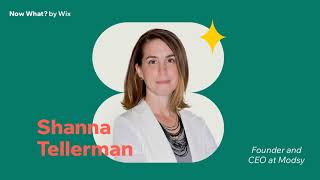
In this Now What? podcast episode, host Rob Goodman interviews Shanna Tellerman, founder and CEO of Modzi (formerly Modsy), an interior‑design startup that uses 3D rendering and AI to make professional home styling affordable. Tellerman explains Modzi’s service model—a low‑cost per‑room design fee that includes unlimited revisions and connects users to designers—while the bulk of revenue (about 80%) comes from a marketplace that aggregates furniture and décor from multiple retailers, including private‑label products. The conversation covers strategic expansions such as virtual home tours built with Lennar for pre‑construction properties and a beta renovation service. Tellerman describes how the pandemic forced a drastic cut to marketing spend and staff, yet sales persisted, leading to a later focus on organic growth, SEO, content, and refined attribution models that now guide a more efficient paid‑media strategy. She discusses the company’s remote‑first culture, the decision to keep office space for social events, and the importance of transparency and honesty in leadership, which she cites as a key factor in building trust and scaling the team from 12 to over 120 employees. The interview also delves into her long‑standing perspective on VR/AR—skeptical about consumer adoption of VR but optimistic about AR’s future— and her view that 3D graphics are most valuable when they enable 2D experiences for consumers. Tellerman emphasizes the need for personalization in e‑commerce to cut through product noise, leveraging data and AI to surface the right items. Finally, she shares personal sources of energy, such as home renovation projects and building a new deck and studio, illustrating how her professional and personal design passions intersect. The episode offers insights into technology‑driven design, business resilience, leadership philosophy, and the evolving landscape of remote work and e‑commerce.
Chapters
With consumer businesses, you always have to look at that kind of investment to reward benefit from a consumer lens. And consumers are not going to spend a lot of time learning something new and figuring out how something works. They're going to expect it to be easy and expect it to be intuitive. Out of the gate.
Hi everyone and welcome to now what the podcast from WIX about how technology is changing everything. I'm your host, Rob Goodman, and in this series we're talking all about evolution in business, design, development and beyond. On today's episode, we're speaking with Shanna Tellerman, founder and CEO of Modzi, the interior design startup that is transforming the way people reimagine their homes and shop online. Shauna has a storied career in technology, having previously served as a partner on the investing team at gv, previously Google Ventures, and prior to that as founder and CEO of Sim Ops Studios, which was acquired by Autodesk in 2010 and was originally spun out from her studies at Carnegie Mellon University. There she focused on democratizing 3D game development, and at Autodesk, Shauna worked as a product line manager responsible for launching their cloud platform and Autodesk360 applications. Shauna and I talk about how technology is changing the way people create and furnish their spaces and buy products online. We discuss her startup journey with Modzi, talk about making incredibly tough decisions as a business leader and the real value of transparency. And we dive into the state of VR, Arkansas and the incredible potential that data and AI hold for drawing in new customers. You're in for an honest conversation at the intersection of technology, e commerce and leadership with the incredible Shana Tellerman. Let's get started. Shana, welcome to the now what Podcast.
Thanks for having me.
Yeah, I'm very excited to talk to you about the topic of evolution and change and what you have been through over this past year and what's coming for Modzi in the future.
It's an exciting topic. Excited to be here.
So let's talk about Mazi. Why don't we start off and if you can describe the service for folks listening.
Yeah, absolutely. So Modzi essentially is an accessible way to design your home. Interior design is really expensive, inaccessible, and a little bit old school in the way that they actually show you kind of vision boards and mood boards. So when I went about designing my home, I experienced that point where you're like, I can't imagine how anything is going to look in this space. And I was like, there has to be a better way. And so Modzi was Born to basically help you envision how your space will look and connect you to a affordable interior designer.
Yeah. And so I've used Modzi a handful of times now in my new place. I've used it in a bunch of rooms and hopefully didn't give your stylist too much of a headache in some of like the, you know, revisions that I needed. But it's, that's their job.
They love that.
Yeah. But it was just an amazing process, you know, shooting all of the images of the room, sending it into Modzi, having this incredible, you know, lifelike rendering, 3D rendering of the space. And then based on the quiz I took and the questions I answered, I got all of these amazing recommendations for how to use the space and, you know, types of couches I could get and artwork and all different things like that. So when you see my space, it's pretty close to what Madsi recommended.
Oh, that's so awesome. Yeah, we're going to have to do a customer testimonial.
Yes. Yeah, let's, let's do it.
Love showing that before and after.
Amazing. Yeah. So it's really an incredible way, as you were saying, to bring that accessibility of this kind of high end home decorating, you know, styling to so many people. Talk to me about the Modzi business. What is the makeup of where you're focusing the business and in terms of revenue, you've got people subscribing for the service offering. Then you have people purchasing furniture through the platform based on the recommendations. Like, what is the pie of the business?
So you pay a service fee up front. It's just a one time fee and it's per room. You can buy multiple rooms if you choose out of the gates. And people get to do that often and get a discount when they buy a handful at the beginning. So you pay a service fee at the beginning, but it's very affordable. So it starts at $150 a room. Our lux service, which is really a, you know, a premium, high touch service, is only 499 a room. And we're comparing to typical interior design fees, which would be several thousand dollars just for the service fee. And so that's a flat fee. You pay it up front and it includes unlimited revisions. The discussions with your designer, the back and forth, there'll be an intro call with the designer. So everything is included in that. And then for us it's obviously that's a small fee. So as a percentage of revenue, that's the relatively low percentage. But in terms of the unlock the offering, that's really where a lot of our attention and a lot of the value is, is the designer's experience working with the customer, the effort that we take to deliver an incredible experience. The designer's communications, the interactive rendering that you get that shows your room, lifelike like you described. And every product in the design is something you can interact with, you can swap out, you can actually see things re render in real time. You can go into an editor and make your own changes, or you can work with a designer and the designer can make iterations as well. So that small fee unlocks a lot of service and a lot of value. But then we really monetize off of the purchase of merchandise and furniture that happens on the other side. So the customer hopefully has a delightful experience and they've gone through their couple of revisions or edits and they're like, okay, this is it. And even along the way they might be making some decisions like, we know this is the sofa, but now let's like really get the right rug. And so they'll purchase. And we have a fully integrated marketplace they can check out in our experience, across multiple retailers, retailers as well as vendors and brands that people haven't heard of. So they're emerging smaller brands and they check out in one place. And we then do all of the ordering across all of these different brands, all of these different retailers. In some cases, we can even add on an installation service so we can aggregate and actually install everything for the customers who order like 50 items, 100 items. And so for us, that's majority of the revenue, almost 80% of our revenue comes from the merchandising.
Okay, and I was reading, I'm not sure if it still exists. Is there a modsie line of furniture as well?
There is. We have a couple of things. So we have a lot of direct relationships with manufacturers where we have developed private label brands and exclusive brands. But we have actually developed one of our own product lines where we have a in house product developer who's been in the industry for her whole career. And we saw kind of the white space as we were hearing, especially in main seating. So we were hearing like, we need things that are kid friendly, pet friendly, but we want style and we want elegance and we want the performance fabrics, but we don't want the kind of like sagginess. So there was a lot that we were hearing. And so we took that as an opportunity to say, hey, let's work with a manufacturer. Let's actually build this unique product line directly with that customer's. Feedback and it was a huge success out of the gates. Outside of this year's logistics issues, which has been real with COVID I'm sure we'll talk about it. It's been really cool to see how a new product line can flourish.
It's amazing because you work on so many different aspects of the business. It must be interesting to decide where you draw the line and where you keep going around the full circle. Like, I love that notion that through Modzi, you can have somebody basically install your home or your room. You can have certain pieces of furniture designed and made. Are you thinking about steps in the future where? Well, if you can design your room, could you design a piece of furniture? Could you design other aspects? Where do you see the handoff and where do you think maybe we should fold that into the business?
At some point, at least at this point, we sort of see our central value add and our central competitive advantages as the technology. And so we're really good at 3D rendering. And so where does visualization aid in the experience of homes and home design? And then the second piece is really around that design element. It really is about improving our lives through our environment. If we put those two things together, that ends up centering most of our business decisions. We have had some early areas of expansion. We're actually working with Lennar right now, and we co created a virtual tour that you can take of a home that is not even constructed yet. That it gives you a sense of like, what is this home that I might buy? What is it like to walk through it? Just like you would take, you know, a virtual tour of a open house where somebody's photographed it. But if that model home doesn't exist, how do you take a virtual tour? So Mazi was able to do that with Lennar, but obviously for us, it really becomes an entry point to that home buyer's journey. And so we hope that we can then follow that customer all the way through to then buying that home and ultimately designing that home. So that's like one area that was a natural expansion. We're also in beta for a renovation service, which is kind of an obvious extension. We've had customers asking about kitchens and baths and fixtures and finishes. And we sort of drew a hard line, mostly because we weren't sure yet. We wanted to go into that area from a designer perspective. And it's a different commerce model. We're not going to sell you a bathtub online, at least not right now. But we found we were turning away so much business that eventually we said, okay, well I'm sure we can come up with a different service model where we charge a higher fee. It's higher touch. We don't sell the SKUs, we direct to partners, but we can also help furnish the remodel as it comes to life with all of the elements that really are furniture and decor. And so we've kept it pretty tightly within that circle, but who knows what's in the future.
That's amazing to hear. And let's talk a little bit about the past year. Obviously this has been so challenging for so many people, so many businesses. I know that Modzi early on made some really tough decisions around staffing, making the team a bit leaner at the start of things. And then I know kind of in the second half of the year you started to notice that things were going well, people were spending time at home and they wanted to make their homes and their spaces as beautiful as possible. So talk to me a little bit about this past year from a business perspective of what was impacted, what surprised you and how you led through that.
It was a year of two halves. Absolutely. We started the pandemic and you know, both being a venture backed company, but also being in the furniture industry, we looked at all the signs and signals and it was like a recession is coming. In the past, the furniture industry has declined by over 30% during historical recessions. And so we were like, this is not going to be a discretionary area where people are spending if their jobs are impacted. And we're a venture backed company. We got to pay attention to the bottom line. We've got to survive through whatever winter is ahead. So we sort of took a pretty big cut on our marketing. Actually we took almost 100% cut on marketing, stopped spending, stopped trying to acquire customers and said, we're just going to kind of hibernate through however long this is. And that did mean that we expected a pretty big drop in our customers. And so there was an equivalent drop in our number of service providers on the platform and then operational staff that support that. So that was kind of the beginning and it was super tough. We did it in stages because we knew that we would have our existing customers to kind of follow through over the course of months. And so by May, June even, we were just sitting there like, you know, jaws dropping as we were like, the sales haven't stopped. We had stopped all of our marketing, but the sales didn't go away. Like, when are they going to go away? Is there just a really long lag Effect. And with each week that passed and they kept coming in, we were like, huh, Maybe they're not going away.
This was around the summertime, is that what you said?
Around the early summer, as we saw the sales hadn't declined. So, I mean, the good news is that we actually kind of in the outer waves of people that we had told we were going to unfortunately have to let them go. We ended up retaining quite a bit, and we even rehired some of our prior designers and operational staff. Not everybody, but certainly a good number. And then sort of June, July, August, we kept watching and we were like, okay, this isn't a blip. This isn't like sort of what they were calling the initial frenzied shopping that was happening for the home. That really there was kind of like Black Friday in May of last year. And we felt, like, pretty confident at the end of August that actually, you know, with every other means of discretionary income essentially cut off through travel and, you know, other spending, and with everybody stuck in their homes and then rethinking the home and the way they're working from the home and they're, you know, doing, learning from home and then moving at unprecedented levels as people suddenly felt unlocked to move to new locations and to make different kinds of life decision, we were like, I guess we're in a boom. We're one of the industries that's benefiting. But it was just. It was not an obvious path. It was not like, you know, we weren't Clorox, where it was like, everybody's buying that on day one, right?
So how did you show up for your team and how did you show up for yourself over this past year? Because you have to play both roles, right? You have to somehow find ways to refuel your tank, and you also have to create and lead in the culture of the organization.
In terms of my team, the biggest thing has really just been transparency. And I feel like it's sort of like secret weapon of leadership is that at the end of the day, if you're just really open and honest with people, it's actually much easier for you, and it's much easier for them. And so rather than telling people any kind of cheerful stories or pretending I knew what was coming, I would just show up every day and say, this is really awful, and I don't know what's around the corner. But I do know we have a great team, and I do know that we're making the right moves right now, and I do know that we're going to Be open and honest with each other and that we're going to make every decision that we have to to get through this. And so that was the only place that I could go through all of this is just honesty, just like brutal honesty. And I felt like the response was so positive to that. The team, they'd feel sad, they would feel all the emotions, but people really felt like they trusted that they knew what was going on and they trusted that we as a team were going to find a way to get through it. And thankfully, we did. For me personally, actually, working from home was a pretty big unlock. I did that for a short period when my first startup was Hybrid. It was in Pittsburgh and I was in California, and I would work from home, but I didn't, like, choose to do that. It was kind of a factor of the situation. And I felt like I was missing my team because they were all in person and I was separate. But the experience of working from home and when we all move virtual one, I felt like connected to the entire team in a different way. There's some people in the office and some people that are remote, but for me, my use of time just became more efficient. Instead of having 30 minutes between a meeting or 15 minutes and walking around and chatting with people, which was really nice in a social way, but was hard for me to focus and get anything done during the day, I just would knock out little things all day long, and all of a sudden my evenings were open, and I didn't spend two and a half, three hours at night getting through all those tiny little things. And so actually, that's just been a giant transformation for me. I have had more time to spend with my husband. We, especially at the beginning of the pandemic, we binged on Netflix like everybody else, and so much time with my son, we would go for walks at the end of the day and go to the playground when it opened and just spent a lot of time playing. And so for me, that was just really recharging.
Yeah. Do you think that Modzi will ever go back to 100% office, or do you think this unlock is going to stay kind of open?
It's absolutely going to stay. We were actually 60% remote when the pandemic happened. And so we were fighting against what was already kind of the natural evolution of our company, which was to be just mostly remote. And so we had this San Francisco team that was the early team and. Or the leadership team, but certainly by no means all of the team members. And we had an office and it would be at a third capacity any day because people live all kinds of crazy places in the Bay Area and the commutes are horrible. So we were sort of like what is the point of this office? Why are we renting this office and why are we sitting in these rooms together when we also have five people on the video call? So all those questions were coming up before the pandemic. And just to have a rip the band aid off moment and go virtual overnight. I think it allows us the flexibility to kind of re approach it and say when we do have space, the space is going to be used specifically for social gatherings. It's going to be used to help people connect and bond and do the happy hours and the award ceremonies and other things that we do that are fun and host when people come in town, have little team off sites and get togethers and and maybe a key meeting or two. But for the most part we'll be working remotely and people will not be in office
hey everyone, I'm excited to tell you about WIX E Commerce the complete solution for entrepreneurs starting an online business, retailers moving their stores online, or brands already selling millions of dollars. Wix's industry leading e commerce platform features advanced business tools that will help you launch, run and scale your online store. With designer made store templates, templates to choose from, plus the ability to customize anything from the storefront to checkout, product pages, cart and store member areas too, you can create a brand that perfectly suits your business. With WIX E Commerce, you can manage your own inventory or source from suppliers you work with, offer as many products as you like and sell with unlimited product collections. You can define shipping rules and automate your taxes for every sale. You can also accept secure payments online with the WIX payment solution or choose from a global network of providers including major credit card companies PayPal and Stripe. Wix E Commerce gives you the ability to extend your reach with multi channel sales, all while managing everything in one single powerful dashboard including online and mobile storefronts, Facebook, ebay, Instagram and Amazon Shops. With an integrated analytics dashboard, you'll be able to review your sales, create tailored business reports and focus your marketing efforts where they'll have the biggest impact. All while saving time with a streamlined operation to run your business smoothly. There's so much more you can do. Offer loyalty programs to customers subscriptions, automate your social campaigns and manage every aspect of tracking and processing orders from purchase to delivery. You can get started with WIX e commerce@wix.com and explore templates, tutorials Blog posts, webinars and so much more. And now you can level up your plans this year with our new 2021 E Commerce Strategy Handbook featuring four key strategies for growth, case studies from incredible companies, insights from PayPal and much more. Download it today@wix.com eCommerce Strategy Handbook. Now let's get back to the show. Thinking about the future of work and remote and you talking about Modzi staying remote. You are very connected in this technology world. Are you seeing that more and more startups and tech companies are going to start moving into this model of remote working? What are you seeing kind of in the space or do you think it's going to evolve to a hybrid or people are going to crave connection and crave being shoulder shoulder again and go back into the office? What do you predict there?
I think I predict it's going to be less extreme than people are predicting right now. I do not think we're headed towards a fully remote and fully virtual environment. I do think people like working together. I think people do like the social aspect. I do think there are certain kinds of brainstorms or off sites or meetings where that in person connection builds a lot of trust or a lot of momentum that carries you through the conversation and carries you through the day that's hard to get in a video setting. That said, I do think that the flexibility, like the comfort level with the idea of we don't work in the office when we don't have to. We're here for the days that it's important to be here. We're here for the meetings that it's important to be here. We use this space in a different way. I think that is going to be more a part of companies and they're going to all be on a spectrum. I think some companies are going to be like, yeah, we're going right back to the fully to the way that we used to work as soon as we possibly can. And then I think you're going to see a lot more that are in the middle that are saying, actually most of our team members choose to work from home two to three days a week. They're in the office one to two days a week. And I think you are going to see more on the fully remote spectrum as well. Because they said, hey, it costs a lot of money to have an office and these offices. We could translate that same capital towards 100 other uses in our business. So let's just shed that constraint and hire amazing talent wherever they are and figure out how we get together. Renting spaces when we need it. And I think we're going to have that whole spectrum.
Yeah. And some companies, I've heard it's like, well, would you rather be in the office all the time or twice a year, go on, you know, an extravagant bonding trip to, you know, some tropical location and have an off site and do all those things? And it's kind of like, okay, well, give me, give me something to think about here.
Absolutely. Yes. Our team has been putting in their votes for a team trip to Hawaii, which I told them there's some financial goals that we have associated with that team trip to Hawaii. Yes. Yeah.
So you've worked in 3D and VR for so much of your career. You started at Carnegie Mellon, you got your master's degree in entertainment technology. You went on to intern at ea, you went on to start Wild Pockets, which was acquired by Autodesk. You went to Google Ventures as a venture capitalist and then started Modzi after that. But you have really unique perspective on 3D on VR over the past decade plus couple decades. And I'm curious your take on where VR, AR 3D is today. You know, a few years back, there was this, like, VR moment where, you know, everyone was investing and building and, you know, this is going to be the thing, new headsets and all that. And I was, you know, totally there for it. I was like, yeah, this is the next big thing, which VR has had many moments of being the next big thing. But from your perspective, as someone who's worked in this space for so long, are things kind of further along than you would have expected? Are they kind of lagging behind? Would you have pictured adoption being greater than it is? What's your kind of state of VRAR3D, the pulse of it, in your estimation?
Yeah, I guess because I've spent so long in the industry and working in 3D, I come at it as a skeptic because I sort of like rode that enthusiasm curve in my early, early career and actually in graduate school where we were doing VR work and it was like, everything is possible, anything can be in VR. And then you actually try to build the experiences and you put real people in it and you realize all the limitations from like the seasick feelings, emotion sickness, to the constraints of like, you have your eyes fully covered and you can't really move around comfortably in the real world and you start to realize that it's very point specific. So I do believe in VR for games and gaming, and I think it is a form of entertainment. I think we will See it in arcades. And I think people who like gaming at home will have VR headsets and there will be experiences built specifically for that that are really great for that. But I don't think it is more widespread than that. And I think it's a really cool immersive technology. But I don't think that this is like the transformative moment where we suddenly all have a VR life alongside our normal life. I am a much bigger optimist, I think, for where AR plays a role. But again, not like I don't think it's a game changing technology. And I think that people are overhyping in some ways what they think it can be. I do think that it's very useful and practical in terms of informational overlays in the world. So like navigation, I think in certain working professions it's very useful. But I guess I'm a believer that the form factor that's going to really accelerate AR specifically doesn't exist yet. And it's not Google Glass that didn't quite work out.
I think we were both there. I think we were both at Google
at that Google Glass moment. Yeah. So I don't think that that's it. I don't think glasses actually are it because not everybody's going to want that kind of covering for their face. I think that at some future sci fi moment we have something like a contact lens that sits in your eyes that does overlay the world that gives you information that's way saf, by the way, than picking up our phone while we're driving and texting or even looking at the map and directions. So I do imagine that both surfaces in the world will display information, but that will have some kind of form factor in our eye or I don't know, it'll be a computer chip in our brain or whatever. But that is a future where we're going to figure that piece out. I think until then there's no magical unlock in this space. After many, many, many years in this space, my biggest conclusion as a 3D lover. I love 3D and I love graphics. The best use of 3D is in the background to create 2D representations. And that computer graphics itself is just this incredible computational unlock to create incredible imagery, incredible visualizations, incredible constructions of spaces. But if you can put it into then an easier to digest usable format of 2D video, et cetera, that you have way more opportunities to get in front of consumers and to scale something.
Yeah, it's so interesting because anything is possible. Mozzie could make an iPhone app where you just move across your room and you just see it. Right. And it just shows up. But if people don't want to use it and they're not going to adopt it, then the investment in it and the kind of showing off nature of what is possible with tech, ultimately it's not going to make a difference to the business. You have to make those decisions and say, yeah, it's possible, but it's not applicable.
Exactly. I mean, and I think with consumer businesses you always have to look at that kind of investment to reward, benefit from a consumer lens. And consumers are not going to spend a lot of time learning something new and figuring out how something works. They're going to expect it to be easy and expect it to be intuitive out of the gates. And so there's paradigms like 3D editing, moving through 3D worlds that are learned behaviors. You have to learn how to do it. That's why gamers become very advanced and figure these things out. But your everyday person. We like to flip through images on Instagram, we like to send a quick text message, but we're not going to go much further.
We get mad when like the post button on Instagram is moved, you know, to the corner. So maybe turning it into a virtual world off the bat is not going to be the most inviting scenario.
Exactly. I mean, you can create virtual worlds, but then you create simple ways to experience them that can be video, that can be 2D. Right. Like there's all these different metaphors for interacting. Everything doesn't have to be 3D. In fact, like our brain simplifies the world around us to make it easier for us to understand. Right. By removing some of the visual noise in our understanding of like the depth around us. Right. And so we have to take that to heart when we think about new technologies, which is people are only going to process kind of a small component of what you're putting in front of them.
I'm curious what you think about E commerce and in real life experiences with digital, with online shopping and then the connection between them all. Maybe it's 3D, maybe it's AR, or maybe it's just background systems as we've been talking about, that do a better job of kind of cross connecting the systems by which you shop online and you make decisions in the real world. Where do you think that is going? Where do you think E commerce is going both for the consumers and then maybe even on the back end.
The primary problem in E commerce is really sorting through the noise. Right. As a Consumer and even as somebody trying to sell what you want to do is put the best possible thing in front of the customer that is most likely to buy it fastest. Right. And to give them the information that is most likely to convince them to purchase it.
Right.
Like that's what both parties actually want. And so I think that the world is headed towards personalization, which I know has been a topic for a long time. But I think that the data we have available and the way we use that data to really understand what the consumer is looking for and to put the right product in front of them is going to continue to have a lot of legs as we move into the future. Versus like, I've curated my site and these are the 10 products that I put at the top of the page, right? Like that might not be the right 10 products for you. It might be the right 10 products for me. I think that is still going to be a big opportunity. I think the other piece that kind of plays into the world we're in is this kind of expert lens over top of things, right? Like as a consumer, again, like, I don't know, I go on Amazon and I search for like a water bottle and it's like there's 500 options.
I know. And they all have like five star ratings and 500 reviews.
Yeah, exactly. And the pictures look great. And the comparison charts all say the same thing. You're like, so which one do I buy? Right? So I think there's room in the world whether it's again, personalization technology, whether it's an expert. Like there's just this room to like declutter the world and tell you this is the product. Or maybe these three. Here's the three options. Like we've gotten rid of all the other noise. Like this one's the best for the world and the economy and the, you know, and the people who made it are really like good people and like it's not going to break on you and it has a good warranty. Like all the things have been checked, but now there's still three. And then you have some element of choice, but you're just not completely overwhelmed. And I think E commerce today is super overwhelming.
I love that sense. I mean, as a consumer that makes me feel more at ease. Even what you're describing, it's like, please, yeah, make this easier. Don't overwhelm me with information. It's great. But I mean, that's what Google did, right? They made the information accessible and useful. It's like, we need that for Everything.
Exactly. Yeah. So I guess I'm a bigger. I'm the biggest fan of AI. Right. Like, I think that algorithms and the power of algorithms and the power of modeling off of the data that we collect is like, we're only in like inning two, maybe. Right. Like there's just so much more we can do with the power of data.
Yeah, I love that. Right. And operationalize it, use it at scale. So that works for everyone, but it's still personalized based on signals that we're generating. And we're all living so much online, we're generating so many signals that can be used to help us make better decisions. So that's great. How about lessons learned over these past couple years with Motzi? So it's been. Is it over five years?
Yeah, we just hit our sixth anniversary. Sixth anniversary, which is crazy.
Wow. Congratulations.
Thank you.
And your first startup, I think it was two years before you were acquired by Auto5.
Actually that was five. When I hit the five year at Maudzi, I was like, wow, I'm going to go even longer than my first company.
Oh, okay. Okay.
It was a very long journey.
So at this stage of the company and scaling it, building it, what have been some of the lessons that maybe you've never experienced with your first go as an entrepreneur and founder that kind of surprised you that they may want to share?
I'll mention two, because I literally have like infinity number of learnings from this company, but it is at a scale and at a size and you know, it evolved so far beyond my first company. My first company was 12 people when we were acquired and we're now 120 full time employees plus hundreds of designers. And so it's quite a bit different. And we barely made any money. My first company and you know, this one, we've had pretty steady and wonderful revenue growth. So.
Congratulations, Shauna. So it's so awesome, you know, because I've known you for years now just to know that like this is the trajectory and the growth and the organization you've built. It's so exciting.
It's been really fun. I think that, you know, maybe that's one of the lessons alone. It's just like when it feels like it all clicks, like you know the product you want to build and you know the domain you're in and you have a strong vision, like that really does mean something to building a company. And I feel like that vision and that clarity has been constant and stable through all of the craziness of a company. And it's Allowed us to create something valuable in the world that people really wanted. And I didn't have that level of clarity with my first company, so that has felt very, very different. The most important one to me really has been learning how to hire and manage leaders. And I didn't really even know how to manage people in my first company, barely. And I did a terrible job. And so over the couple of jobs I had in between, and then especially in Modzi, I have learned from the people that I work with and learned from the people that I have led and managed how to be a better leader. And that kind of constant feedback loop. I've worked with a coach. I've gotten feedback directly from my direct reports. Like, I have made enormous number of mistakes, but I've learned more this time because I've been asking the question and because I've been looking for those insights. And I really started to realize, like, what does it take to work with super talented and excellent people? Really, the same secret as what I said before. It's complete transparency and honesty. It's like showing up and saying, I don't know how to do this, or, I don't know what you need. Tell me what you need, or I'm not sure if I'm doing my job well. Give me some feedback. And being able to be that level of open and that level of honest and to create that level of trust with the people I work with, that's been my biggest lesson learned and my biggest unlock.
Amazing. Yeah. Creating that culture of openness, of transparency, and that mindset that you have of staying humble, open to growth and learning, that's amazing.
It takes, as a leader, realizing people might expect you to know everything or want you to look a certain way or act a certain way, but it's actually kind of nonsense. And that for you and for everybody else, it's more comfortable when you show up and you say, I know how to do this, but I don't know how to do this, or I don't. That word you've put into that financial deck, what does that mean? I know that I've seen it before, but I'm not sure what that means. And so getting comfortable with my actual level of knowledge and experience and then not trying to pretend anything further than that has allowed me a tremendous amount of freedom, but I think has also built a lot of trust.
Yeah. And then the whole team can kind of relax their shoulders and be like, well, you know, if Shauna isn't up there trying to know it all, then maybe I don't have to be that way either. And then you can see more clearly gaps in the organization or where people need to level up or where there's opportunity for growth and there's not these like facades and kind of layers on top of things that you have to, oh, you have to investigate and see what's really going on. You can move faster, you can make decisions and patch things up. So I'm really curious because you said, okay, well we cut the marketing and things still went well. So for people who are listening and are running e commerce businesses or e commerce leaders, talk to me a little bit about what's happened with marketing since that moment and then what has worked well in terms of getting the word out, in terms of direct to consumer marketing tactics that Modzi has taken that have helped you build the brand, build awareness, but also build trial and conversion.
The first point is probably what any great marketer, you and anybody else who's a talent in the industry wants to hear, which is we really just stopped paying Facebook and Google all this money and turns out that really it was the talent of the marketers on our team that was driving most of the business. And so I think that there was a moment in 2018-2019 where the spend and the pace of spend into paid channels and the ability to get clarity on the efficiency of that spend was really murky. And it was a drug and one of those drugs where you're like, I can't afford to take a month off because we might miss our targets as a high growth company. And so the pandemic gave us this once in a lifetime opportunity to say cut it all off. And I think us and many companies, you cut it all off and then all of a sudden you're like, it wasn't as bad as I thought it was going to be. And then we have built it back up. We're certainly not off of paid marketing and it is definitely going to go back into the hands of Google and Facebook and others, but with a lot more efficiency because we were able to take that moment to build much more in depth attribution models and systems to really understand the impact of different channels, kind of the, you know, the cost of an additional customer and to truly understand our baseline, like what comes to us on an organic basis, what comes in a word of mouth basis. And we had invested for years in our blog, in our content, in our recommendation systems, in SEO, which we kicked off really actually now almost two years ago, very late into the company. But it was one of the best impacts We've had on the business, and it's still paying off. I mean, it's growing at a phenomenal rate still. And so I think we just reminded ourselves how important the kind of free, organic, unpaid half of marketing is, and how much you need to kind of nurture and continue to develop that side of your business. And then you kind of need to manage paid and then grow paid at a sustainable rate alongside, and then really understand the incremental cost of a customer. Like, at what point are you paying too much for that customer? And so we went through that. I believe a lot of companies have gone through that this year. And so as we've turned back on paid marketing, it's at almost a third of the spend. And now we're beating revenue from every quarter for year over year. Revenue is at a higher and higher rate. And so to be able to sustain growth, but actually have slashed our marketing is pretty incredible.
Yeah. So you took that moment to basically hit pause, study it, and now you're, like, stronger, more optimized, more focused, and you know when to turn the dials up and when you're kind of throwing money out there that you don't have to.
Absolutely, yeah.
And I love that you found these ways organically through SEO and content and just nurturing the audience and community. You have to build the business. It's fantastic.
It's been the best unlock for the business, which it takes a long time. We've been investing in for years, but it turns out it's a really meaningful baseline.
So let's change gears. And I'm really curious, what is giving you energy and excitement these days? Like, we're still in our homes a lot and are fairly limited. What is giving you energy, making you motivated? I mean, I know you love this business, and I know you wake up energized to build it every day, but anything. Your favorite Netflix show. Are you running a lot? Is it time with sky and your husband? Give me something that just kind of gives you that energy. Yeah.
I mean, ironically, it's been home projects, Right?
Okay, maybe not ironically. That makes sense.
It makes sense, right?
Yeah, yeah. Like, we're using Modzi in every room.
And, you know, we did that at the beginning.
Sure, sure.
We like redid Skye's room, But then we actually moved outdoors. So then we moved beyond what Modzi does right now. Although I did kind of like, twist the arm of our team, and I got them to do some modsy designing for me outside.
Well, because we have a roof deck, and I did ask they Said no. Yes.
We don't have enough furniture to sell, so we haven't built that merchandising yet. But yeah, we built a deck that's behind me. My husband and I have just been envisioning things and so we sort of redid our entire backyard. We ripped out the old deck, which we hated. We built this new deck. We're actually getting like a studio shed workspace built out there, which I'm so excited about.
Like one of those, like office kind of setups in the backyard.
Totally. Exactly.
Is that going to be your space?
We're gonna share it. We're actually share this space too. Yeah, it's cool. It opens on both sides, so it'll open up to like the grass area and it'll open up to the deck and. Yeah, so that's been really fun. We designed that and then we actually had been thinking about buying a house as well that we're gonna like, move into in a couple years and ended up finding the house of our dreams. And so we did that too. So we ended up buying a house. Like we're hitting every cliche as a, you know, a couple that was staying at home during the pandemic.
Shana, thank you so much for your time and your insights and sharing so much with us today. This was really wonderful.
I really enjoyed it. Thanks for having me.
Big thanks to our friend Shauna Tellerman for joining the show and sharing more of the Modzi story with us. And so many insights. When it comes to the future of E commerce and what it's like leading a cutting edge 3D technology startup, some of the big moments that stick with me from this episode are, first and foremost, how much transparency can make a giant difference in leading a team and an organization. When Shawna faced some of her hardest decisions as a business leader, staying honest with her organization and those that felt the impact of her decisions directly was key to maintaining trust amongst her colleagues and seeing the team through to the other side of this incredibly challenging time for the business. This was just as the COVID 19 pandemic was hitting their company and this idea that the primary problem in E commerce is sorting through the noise as both a customer and a seller. Shauna spoke about how as a seller, you want to put the best thing possible in front of the customer and you want it to be the fastest purchase possible. This simple concept can be incredibly challenging to execute, and Shauna spoke about the vast potential for data and AI to help sellers better connect with customers and for customers to find what they want. Even faster and easier than ever before, Shauna says. We're still way early days on what's possible. You can check out modzi@modzi.com that's M O-S-Y.com and learn more about Shauna in our show notes on our website@wix.com Nowwhat? Thanks so much for listening. This is now what by wix, the podcast about how technology is changing everything. Now what is hosted and produced by me, Rob Goodman, Executive Producer for content at WIX Audio Engineering and Editing is by Brian Paik at Pacific Audio. Music is composed and performed by Kimo Maraki. Our executive producers from WIX are Susan Kaplow, Shanee Moore, Omer Shai and me, Rob Goodman. You can discover more about the show and our guests@wix.com nowwhat? Be sure to subscribe and follow the show for new episodes wherever you get your podcasts and if you like what you heard, please leave us a review on Apple Podcasts and share this show with your friends and colleagues. We'll see you soon.
More from Cardinal





Chef Noah was tired of dull tools - so he made his own #cooking #knives #chef #fyp #kitchen #shorts


every day Chef Noah wakes up and chooses violence... professionally🔪 @forgetotable #knives #chef

Mother Nature knew what it was doing with these color combos #graphicdesign #design #designinspo


Trying Modern Bread & Bagel for the first time 🥯 #nyc #glutenfree #food #shorts #foodreview
