WarnerMedia’s Richard Jennings on Design Transformation | Now What? by Wix
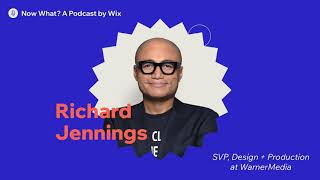
In this episode of the Now What? podcast, host Rob Goodman interviews Richard Jennings, Senior Vice President of Design and Production at WarnerMedia. Jennings walks through his unconventional career path—from fashion and 15 years in the music industry to leading a roughly 80‑person creative team that serves HBO, HBO Max, and Max Originals. He explains how his background in print evolved into a focus on digital, interactive, and motion design, emphasizing the need for teams to understand multiple media rules. The conversation delves into the rapid shift to remote work during COVID‑19, highlighting new communication rituals (daily 9:30 am syncs, Slack channels, increased documentation) and the challenges of losing informal, in‑person creative exchanges. Jennings discusses leadership practices that foster inclusivity, the importance of speaking the business language, and how he pushes his team to articulate the “why” behind design decisions. He describes the massive scale of key‑art production—creating countless asset versions for various platforms—and how the process feeds the streaming “beast.” The interview also touches on his personal sources of inspiration (fashion, design sites, books, street style) and habits that keep his creative spark alive. Finally, Jennings reflects on the future of media platforms, noting that WarnerMedia lets the business dictate new tech directions while the design team experiments and supports visual storytelling across emerging formats.
Chapters
As creative people and designers, we are building art with a different set of rules for every medium. You have to understand it and you have to partner with people to understand what's working and what's not working. That communication line is extremely important when it comes to design.
Hi everyone, and welcome to now what the podcast from WIX about how technology is changing everything. I'm your host, Rob Goodman, and in this series we're talking all about evolution in business, design, development and beyond. Today we're joined by Richard Jennings, senior Vice president of design and production at WarnerMedia. Richard is a creative leader and storyteller with an incredible career story in the entertainment industry, transforming his career as a design leader as the music and TV industries were themselves evolving seemingly overnight. His team at WarnerMedia Services, HBO, HBO, Max, Max Originals and supports partners across all of WarnerMedia's businesses. Richard's passion for learning drove him to pursue an MFA in graphic design that he completed in 2019. And he now uses that achievement as a means to help motivate and inspire those around him. In this episode we talk to Richard about where he finds inspiration, his work in making the design industry more inclusive, what organizational evolution looks like during a global pandemic, and so much more. You're in store for a great conversation with my friend, Richard Jennings. Let's get started. Richard, welcome to the now what podcast. Hi. So great to have you here. We have a long history together and I know you from your art director days in the music industry. I'd love to get started and hear a little bit more about what your role entails at WarnerMedia today.
Rob, thank you so much. Really, thank you so much for inviting me to do this. I think. You know what, let me start with a little bit of my background because I just think it's important to kind of talk about where I've been and where I'm at now. So I started in fashion and I spent about 15 years in the music industry before coming to WarnerMedia and I've been at WarnerMedia now for about eight years. I oversee creative for HBO, HBO, Max and Max originals. I think the three areas, if you want to boil them down, you could say that it's design, interactive and production. 70% of the work is key. Art development for US and international use, out of home digital assets, presentations, digital publications, environmental. I'm going to keep on going on motion design for social campaigns, hbo, Max branded merch, and I also have a copywriting and editing team, but I think most importantly, helping drive brand awareness. Set by the brand team. Is my main focus.
How big is this team? Because that's a huge purview that you're overseeing.
Well, I think if you include freelancers, it's about 80 people.
Wow.
But all located. I mean, well, now it's Covid, so you can't say we're all located together because that's not true. But we're mostly in New York.
Okay. Was it like a full floor in a building?
Yeah, well, it was about a half of floor.
Okay. So talk to me a little bit about your own creative leadership in media and how that's evolved over your time in the music and entertainment industries. Because you've grown personally, you've grown the size of your teams, and you've really moved your way up the ranks, so to speak, to have such a major impact at these corporations. To talk to me about that leadership journey.
Well, you make it sound. You give me a lot more credit, but I really appreciate that. Thank you. I come from a really strong print background, and I started in the music industry way before the digital revolution, so I'm dating myself a bit. But that digital revolution definitely had a big impact on my career decisions, but also realized early on the importance of evolving and being relevant. Printing has definitely become specialized, but digital assets still are going to rule. And having a team that understands print is still important. But diversifying the team to understand motion and digital is absolutely pivotal. They both require different process of design thinking, but it is possible for creatives to understand both. You must understand human behavior and engagement. And of course, at the core of our jobs, we are the messengers, you know, and let's not forget, the medium is a critical factor.
Yeah. And so what about that transition for you from print to digital? Was that tough over those years now that, you know, more and more has become interactive?
No, not at all. I mean, I think at the core of it is about design. Right. It's just a natural progression for creative people to evolve. I mean, that's what design is about, evolution. And if you really are in this field, that's something that you embrace, you know, and I welcome it now. Yeah.
And I mean, so much is happening in the streaming world, especially over this past year. We're seeing more movies go direct to streamers, and I know more and more are coming to HBO Max. So the way that consumers and viewers are thinking about streaming media is really. It's changing. It's changing every moment.
Yeah, well, you know, on that, I think that what we're starting to realize is that we have to get to our audiences and Our audiences consume entertainment in all different ways. It's really just feeding that beast. Personally, I'm not a fan. I mean, that's just me. I'm not a fan of going to a theater. I love to have that experience at home. And. And I think that's what we're answering. We're giving content to people wherever they would like to consume it.
You mentioned that, you know, the team used to take up half a floor in the building. Obviously, now everyone is remote. Can you talk to me a little bit about that shift? I mean, you always worked in office settings with the team and collaborating in live spaces. What was that shift like for remote for you, both as a leader and as someone who's trying to calibrate and successfully empower your team?
You know, if you had asked me over a year ago if this were possible, I absolutely would have said, you're crazy. You're absolutely crazy. This is just not the way creative people work. But I think what we've had to do is really address dependencies and expectations because these have definitely evolved. I mean, the tolerance level has expanded. People are now more empathetic to the creative process. But what has not changed is the expectation of turnaround and delivery. I mean, there's still so much to teach here. I think the main challenge was to understand we're visual communicators, and now we have to be a master at verbal communication as well. Video meetings have definitely helped, but video fatigue is real. Scheduling meetings just for the sake of scheduling a meeting is exhausting. I will say that, you know, I'm not a fan of virtual happy hours with a group of people. I think really, what is that, long gone are those little side conversations that are productive and meaningful. I really believe the creative connective tissue has definitely worn thin. But I don't think that we will remain this way. I mean, I think there is hope that we will be back into a way that we will all work together and be able to have those organic, wonderful, creative conversations that are on the fly.
Are there things you did from a leadership perspective that really doubled down on communication where you never would have thought of doing X, Y or Z a year or two ago, but now there's more recap docs, or there's more slacks or chats happening, or there's more documentation. How do you kind of compensate for what's missing?
Well, I'll tell you, my team would probably. I'm sure they're not a fan of this, but we do have a longstanding 9:30 meeting where we go over our projects. And so for me, that was really important to take from the physical environment and then bring it onto the virtual environment, because I felt like that morning connection to kind of talk about where we are and what we're doing and just have what could be a somewhat organic conversation that's still in place. And we've taken that from the physical to virtual. But I think we've really had to embrace all those tools that are out there, you know, those communication tools. I think texting has become more important to stay connected as well as Slack. And I have to tell you, I. It took me a while to get onto Slack, but now that I'm on it, I'm a fan. And now I'm like, let's open a new channel for this and that, you
know, so, yeah, you're like texting your friends and family and then you're slacking your workers. You're like, I'm just chatting everyone. You don't want to send the wrong emoji to the wrong person, but, you know, you're figuring it out. Yeah, it's helpful. It's definitely helpful for organizing and keeping things like an ongoing dialogue versus, like, formalizing. Okay, now I'm going to sit down, I'm going to write an email. It's going to be proper. And it's like, no, sometimes you have something quick. You can't go by somebody's desk, but you can at least just chat them.
Yeah, I think Slack has definitely been our savior when it comes to those type of conversations, because you can have multiple conversations going at the same time.
Yeah. A lot of people have said the past year has kind of shown cracks in teams or in culture or things like that that maybe wouldn't have shown had there not been this transformation to remote. Were there things that kind of bubbled up that came to light now that the team was not together all the time that you have kind of learned from and want to bring into whatever the next phases of our work lives will be.
I think there is this one challenge that I really have felt. You know, the one thing about being around other creative people, whether you're involved in what is going on, you're. You're actually still experiencing it happening around you. So what I think is a big loss in what we're doing now is that you have some of those junior people who are not partaking in those really wonderful kind of conversations that happen.
The exposure.
Yeah. And it becomes impossible to have a meeting with 20 people to review, say, this one key art exploration. I Mean, it's a wonderful idea, but then it becomes kind of wasteful of people's time. And I think in this new world really do have to think about people's time. Time is really important because we're expected to be on and ready and connected at a moment's notice within seconds. There used to be a time when you could walk to a meeting and kill 5, 10 minutes having a conversation with someone and it's okay to be late, but you're one minute late to a video meeting. People are like, whoa, you know, like, why are you late? You know.
Yeah, we know you didn't have to commute. Right.
But that's what I think is really missing. And what we're losing is that ability to have that exposure happening. You know, I love that you use that word because that's exactly what it is, is just exposure to the whole design process.
Yeah, that's really interesting that those kinds of soft effects that you get just by being physically around people, that can be missing. So maybe it changes into, okay, here everyone, you can go into the live design file and as a viewer and look around and check out the comments. It's not the same, but maybe there's these other kind of ways that you open things up for people to at least view. But of course, people are going to learn so much from hearing the feedback, seeing the work, seeing the response to that, seeing the process happening live, verbally and visually is so critical to learning.
I think one thing that we've become aware of, and my account team is so amazing about taking a look at what we're doing and how we're doing it and should we change. And they're really being proactive right now. And it's funny you'd ask me this, because this is just happening in real time, is that they're trying to figure out a way to involve people more and what is being done. Because I think that when we are so isolated like this, you're not seeing the full picture. You're only seeing and so concentrated on what's in front of you. So they're really looking at ways how do we celebrate some achievements and talk about it amongst everyone versus people not knowing what's going on, you know, on the day to day.
Yeah. Just zooming in on maybe one. Maybe it's a tiny win, maybe it's a massive campaign win and just unpacking it, celebrating like, look how we evolved here. We moved from A to Z and got there. I love that idea of kind of celebrating those moments and giving people Access to that, learning of what happened in the process. So that's great to hear. I know in your role, you need to interface with a lot of different teams, and you need to really own these relationships with the business leaders. Talk to me a little bit about the idea of learning the language of business in design and what that looks like in your work.
My job really is to connect with people in all different disciplines. And as I mentioned before, that there is definitely this shift for creative people to be more verbal communicators. I really do find a tendency to push my creative people to give me the why versus I just like that or this is what I prefer. Because I think honing in on being able to speak the creative language is very important in the business sense and to get people involved and excited. But I think, too, that it's a lot about enthusiasm and passion, and that definitely is conveyed in the way that we present and share ideas. And I don't know, maybe it's me, but I don't find it such a challenge in the business sense. It seemed natural to me. I just. I feel like there's been this evolution of, like, creativity is everywhere and people get it, you know, and people are looking for it, and they're looking to be inspired and have the design or the concept explained to them so that they understand it. So I don't really find it as a challenge.
It sounds like there's a lot of trust in the organization.
Oh, yeah. I mean, we're a creative organization. We're entertainment. You know, it's not like we're going in and doing brain surgery and we've got to, you know, worry about, like, saving someone's life. I don't think anyone would be in this business if you didn't love it and you weren't in that kind of mindset about this is entertainment.
So everyone in the organization at their core is passionate about entertainment, passionate about creativity. So there's already that shared DNA language of entertainment and creativity. And whether it's visualized in the show or the projections around sales and marketing, down to the visuals, like, it all is still rallied around that shared vision?
Yes, yes, you got it.
Well, has there been a time when you had, like, a really strong vision for a show and there was an executive who was just like, oh, no, that's not at all where we need to go. And you had to kind of, you know, either battle it out or kind of find the middle ground together?
I mean, that happens all the time.
Every day.
Yeah, that happens every day in creative. Right? I mean, you're given this task of creating this key art to represent this show. And there's a lot of people who are involved in giving feedback and direction as to what is the right way to convey the message or the concept of the show. And. But I think that it's a completely a partnership and a collaboration. And I think just in design like this, that is what design is about, is that push and pull and finding that middle ground. So I wouldn't be in this business if I didn't have those healthy discussions, you know, and trying to figure it out, because you've got to take everything that you're hearing and distill it down into something visual that works for everyone.
Yeah.
Or at least most of them. Right.
It's like, can't please all the people,
whoever has a final decision.
And I love how there's a universe of content and creative made around each show. Right. There's podcasts for it, there's advertising, there's social, there's what appears on your screen if you're using an app on mobile or your TV screen when you're using Apple TV or whatever it might be. So you have to think through every new multimedia and interactive experience and what's not only going to look good, but what's going to work well for viewers and for customers.
That's where this beautiful thing about communication across the company happens, because you really have to understand all different areas and work together. Because as creative people and designers, we are building art with a different set of rules for every medium. You have to understand it and you have to partner with people to understand what's working and what's not working. You have to, too. That communication line is extremely important when it comes to design.
Are you thinking about what the next 1, 2, 3 years looks like in terms of platforms and programming? Are you thinking about ar, VR, more audio interfaces? Or do you kind of let the business lead you to where you need to start producing?
It really is about let the business lead us. This company, WarnerMedia, is quite big when it comes to the machine that is for development. And there are different areas that are focused on different aspects of content and delivering content. So really we follow whatever is new. And I mean, we're happy to join in and experiment and that's where we come in to help with the visual. But we definitely allow others to lead.
Hey, everyone, I wanted to jump in and tell you more about Editor X, the new advanced web creation platform brought to you by wix, the folks behind this podcast. I'm actually Learning Editor X right now for my websites and I've been loving it. Editor X gives designers complete creative freedom to build incredible websites within a sophisticated workspace. It's super intuitive to use, leverages cutting edge responsive design and combines CSS level controls with smooth drag and drop functionality. This means you get developer level controls in a beautiful design environment. Editor X is built from the ground up for collaboration and teamwork. Shareable design libraries, live commenting and advanced roles and permissions means you can get to market faster and with easier workflows. For hardcore digital designers. You can define the exact position and behavior of every element at any viewport. With flex and grid layouts, you can design custom interactions and you can have full breakpoint control. You can seamlessly integrate business solutions into your sites with industry leading e commerce tools, blogs, events and booking systems. Plus advanced SEO and marketing tools are baked in to support your clients success. Editor X is a highly visual platform for responsive design that also makes it so easy to add custom code and CMS to build data driven sites and complex web apps too. You can learn more about editor x@editorx.com and you can start your training with free video tutorials, lessons, webinars and more at Academy X. That's how I'm getting started. Now let's get back to the show. Is it overwhelming at times from a creative perspective to basically have to slice and dice to infinity? You know, basically there's key art and then there's millions of cuts and versions and all of these things and. Or is that just become. Look, that's part of the process.
Is a part of the process. As you can see, part of the group that I oversee production. That's what they're focused on, you know,
and they've operationalized all of that.
Yes, absolutely. You gotta feed the beast. And this is just the natural evolution of this business and what we do and how we deliver or what we deliver.
Do you ever reflect back on where your career started and thinking about like, okay, made this one piece and it goes here and here and now it's just, you know, the world is just so different.
It really is different. And I don't mind dating myself, but you're right about that because when I started it was really just doing a long box that sat in a record store and then you had to worry about the poster that was up on the wall or that experience of how someone shopped in the store. But now we're going to everyone everywhere. You talk about all these other digital assets, but now we're talking streaming and what does that mean as people digging into the content on the platform? And what does that visual look like when they first land on it to when they start to dig into the story and then look at the episodics? And I mean, it goes on and on and on now with the amount of digital assets we're building. But that's why I said that it's now just part of the story. You know, there's still a print aspect. Let's not say print is still there. So there's still print. And I mean, you have out of home still there. You know, you have special projects. But yeah, you're right. I mean, it is. It's a lot of digital work.
I can tell just from talking to you, which I love speaking to you, Richard, but you have such energy and enthusiasm for your work. And I just want to know what is it that you love so much about this world of design and creativity Every morning, you know, what is that kind of breath of air you take in and are excited to kind of get into it?
I got into design very late in my career and I've always had a passion for it. I made a decision early on to do something that made me happy, and design was something that made me happy every day. I don't find it as a job. I really don't. I really don't. I love it. I love all aspects of it. I love living and breathing design. I think probably maybe my background too, of having a little bit of fashion, which really like I'm crazy about, and music and having been in the music industry for so long and now being in this different type of visual entertainment has just expanded kind of my love for creativity. You know, the one thing that I do want to share with you, and I know this is maybe a little off mark, but I love telling this story because I think it really helps me on a day to day. And this was definitely pre Covid that I would do this is that I read this article and I'm sorry, I can't tell you the publication or who they were interviewing, but it was a creative director. And they were asking this creative director what inspired them or how did they stay inspired. And this person said, you know, I think we become a creature of habit in life. You know, we do the same thing. We wake up, we do this, we do that. And yeah, sometimes there's a real comfort in that. But he said what he does differently every day is that he would take a walk, his walk from home to work. He would turn a different corner he would just. To mix it up, but not just to mix it up, but so that he was aware of what was going on around him all the time. And I think as creative people, it's so easy to become numb. You're in this job that you do every day. You do the. You turn out the same assets, you know. But this is what I love about key art, too, is that you get to really dive into the show and the story and trying to create this visual representation of it that will entice people to want to click on it or watch it or. I think you can see it. Is that my mind is constantly thinking. I'm always, like, thinking about creative. I'm always trying to examine what does it mean to tell a story or how you tell a story, or. I just love it. I just absolutely love it. I love it.
What about outside of your work? What do you kind of take in from the world at large that is, like, fueling your creative tank? Books, Running, you know, time with friends and family. Like, what. When you're not on at work, what are you doing that you're like, this is making me feel good to be alive and give me energy.
If you wouldn't have asked me before, COVID I mean, I would have said, you know, a regular trip to a department store and, like, walking around and seeing what's new in fashion or, you know, would have been the kind of thing that really jazzed me and got me excited. And I'd see somebody walking down the street or in the store with a new color that I haven't seen mixed in a different way would be like, oh, my God, that's amazing. You know, I think books are very important. I think belonging to design sites have been incredibly important for me now. Being fed design information is like my daily thing, like, every single morning. You know, I subscribe to everything I can when it comes to design, and I just love feeding through them and, like, looking at them. And I'm not just talking graphic design, you know, fine artists, illustrators, photographers, animators, like, architects, everything. Like, I just want to see it and get fed that information so that I can kind of see what's going on in the world and what I take from it and what I like. And I tend to share it, too, with other people. You know, I have a slack channel just for that design inspo, so which I'm pretty much the only one who's throwing stuff on there all day. But it's things like that. I mean, fashion to me, has really speaks to what's going on culturally. I look at it as more than just stuff that people wear. There's a message behind it from and tennis shoe. Come on, let's talk about, like, the craze about tennis shoes and design and all of that. And I find it everywhere I look. Everywhere.
That's amazing. I love that you've kind of ported your real world experience pre Covid to just ingesting everything digital. And I love that you're just like, you're just breathing it in from every corner of design and creative. And then I love that you share it with your team, and it's obviously coming through you in your work, but it kind of gets absorbed into you as a person, and then it's going to come out in different ways as you're doing your thing.
And, you know, anybody who knows New York or living in a dense city is.
More from Cardinal





Chef Noah was tired of dull tools - so he made his own #cooking #knives #chef #fyp #kitchen #shorts


every day Chef Noah wakes up and chooses violence... professionally🔪 @forgetotable #knives #chef

Mother Nature knew what it was doing with these color combos #graphicdesign #design #designinspo


Trying Modern Bread & Bagel for the first time 🥯 #nyc #glutenfree #food #shorts #foodreview
