Who, What, Wix Episode 7: Shoot Your Cover
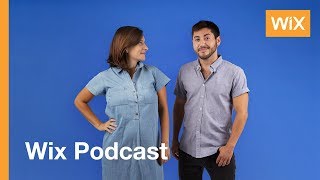
In this episode of the Wix "Who What Wix" podcast, hosts Justin and Yael interview photographer Max Montgomery, one of three winners of Wix’s 2016 photography campaign that awarded the chance to shoot a magazine cover. The conversation covers the campaign’s scale (over 10,000 submissions), Max’s personal background—growing up in a photography family, dropping out of college, interning with Mario Testino, and working under Rankin and Francesco Carrazzini—and his path to shooting the "COVID" (cover) of Brides magazine. Max walks through a typical cover‑shoot day, emphasizing pre‑shoot preparation, coordination with editors, lighting setups, and the need to stay proactive and reactive. He shares anecdotes about a disastrous assistant shoot in Palm Springs, the challenges of client demands, and the importance of simplicity and resilience. The discussion expands to the broader role of images in branding, the power of faces and eyes, and practical advice for small‑business owners and aspiring photographers: keep setups simple, use natural light, shoot constantly, be self‑critical, leverage Instagram, and aggressively outreach editors via email. The hosts also list stock‑image resources (Wix free library, Big Stock, Shutterstock, Getty Images, Stocksy) for those who cannot shoot their own photos. The episode ends with a call‑to‑action for listeners to check out the winners’ covers and to use Wix’s resources for DIY photography.
Chapters
Welcome to the only small business podcast you'll ever need.
We go behind the scenes with business owners and marketing experts for success stories, epic failures, and creative ideas you can use.
From Wix.com, this is who what Wix. What's up, everybody? My name is Justin. This is who what wix. Welcome to episode seven. I'm here with Yael. Hey.
Hey.
And honestly, I can't believe I want to give ourselves a little pat on the back. Episode 7. It seems like time has flown since we were in the studio welcoming everybody with episode zero.
Yeah, we've loved hearing your comments and getting to know you a little better and hearing what you like to learn about and talk about. So today we're talking about photography. Now, Justin, you take loads of photos. If you guys don't know, Justin has a whopping 200 followers on Instagram.
That's so condescending. Those are 200 quality people. Those are 200 good people.
I'm one of them, to be fair.
So thank you.
Yes. So what would you say would be the biggest honor you could imagine when it comes to where your photos could be?
Well, I mean, I've always been a huge music nerd, so my dream was always both, you know, to be writing in a music magazine, which. Which I did professionally, but also I would have loved to have shot the COVID I mean, the COVID of a music magazine is like, you know, that almost famous idea that would be just amazing to me.
Ding, ding, ding. I think you are not the only one, my friend. That makes you a dream. Yeah. So basically, as far as we understand it, the COVID of a magazine is like the holy grail for photographers. Like that is the top of the top. So this past fall, WIX had a huge campaign for our photographers. Anyone that's using the WIX Pro Gallery could see submit their portfolio for the opportunity of a lifetime.
Yeah, it was really cool. We opened it up to WIX photographers. All these folks had to do was create their own WIX photo portfolio and send it in and then they were automatically entered. We got over 10,000 submissions from all sorts of photographers, from folks just shooting street scenes on their iPhone to. To real deal professionals shooting weddings and big events. There were three winners that were chosen, and the prizes were incredible.
Yeah, they were pretty bananas. Basically, one winner assisted on the COVID of Vanity Fair. One shot the COVID of Conde Nast Traveler. And lucky for us, our guest today is the third winner who shot the COVID of Bride's magazine. So we're talking to Max Montgomery. We're actually Gonna rewind a little bit and grab an interview with him from the right after he shot this cover.
Yeah. So we got to talk to Max a little bit about his history. I mean, he was born into a photography family and he actually sort of rebelled against it. He wasn't really into photography until he turned 18, but since then he's been unstoppable. He's already shot a bunch of magazine covers. And brides, which he shot, you know, with Wicks, was just his latest. So we talked to him about his history and also we cover some advice that he can give because we all know photography is a huge part of your website. No matter what your website is, whether it's a blog or you're selling something, or you're just trying to get your name out there, maybe as an actor, as an artist, you need to have great, high quality photography on there, all over the place, showing what it is that you do.
We're thrilled to have this winner on the podcast. We learned a lot talking to him. We thought it was super interesting and we can't wait for you to hear it. Let's jump right into the interview.
We are here today with Max Montgomery. He's one of the winners of the recent WIX photography campaign. There were over 10,000 photographers who submitted their WIX portfolio websites to this campaign. Max was one of three that got chosen by magazine editors to shoot a magazine cover. So, Max, can you tell us how was this shoot yesterday?
Hi, guys. The shoot was great. Um, it was very high pressure situation shooting the COVID of Brides magazine, thanks to winning this week's competition, but exhilarating fun it was. It was a great day.
So what, when you, when you're shooting the COVID of a magazine, what does your day look like?
First thing I do is have a conversation with the editor and the fashion editor. Planned out locations, talked about hair and makeup. Decide on a kind of loose shot, list of what you're going to do through the day. Start building the lighting setup together, testing the lights. Typically that can take. Well, I mean, it can take any amount of time. Yes, it took about an hour. Then you have a bit of a waiting game while the hair and makeup finishes on the model. Then the model will go into the first outfit. You will do your first lighting test on the actual model. And it's the first time you can, you know, because you do the lighting tests on photo assistants. And then she comes in and then it's, you know, you start rocking and rolling, as it were.
Do you like finding out certain information before you shoot and having other information arrive to you the day of.
No, I would always want to know everything I can in advance. I believe that preparation is everything. You know, if you're on assignment and you have to shoot a cover or an advertising or anything, I want all of the information. I can have as much time in advance. So you can try and manage your time and your expectations accordingly.
How often do you get that information or does that information actually stay the same?
Never. Never.
Never stays the same.
There's always something. There is always something. And that is what this job is. It's dealing with the problems that you face on the day. It's about being as proactive as you can be before the day and as reactive as you can be on the day to whatever issues come up.
So, Max, you were, you were born into photography. I know that. I know that your father was a really successful photographer as well. Could you tell us a little bit about, about growing up with a photographer dad and sort of how that shaped you?
To me, the best way I can describe it, it's kind of like if your parents ever played music in the house. And my dad always used to play jazz and I always used to want him to turn off the jazz so I could listen to my hip hop albums. And now that I'm, you know, older, I, I love all the jazz that he played because it reminds me of when I was in the house with him. You know, Until I was 18, I didn't really care about photography too much. It was something that was always in my house. My mother also had a photographic agency, so it was coming from both sides and it was something that was always there. But I, I, they never pushed me into it. My father never told me he wanted me to be a photographer. In fact, you know, I don't think they were too excited about it when I started because they put me through, you know, a private education. And then I dropped out of college to, to pursue a job. I started interning with Mario Testino, who's, you know, one of the great fashion photographers of our time. And I seen how his operation had worked and, you know, it was the first time I'd really been in a work environment. And I think I was a bit disillusioned at college and I was like, I'm dropping out and I'm going to start working for this guy. And that is when my father was very important to me because that's when I then I wanted to find out about the wealth of knowledge he had. And that's when I Could come home and speak to him after dinner and be like, oh, you know, this happened today, this happened today. And he would tell me, oh, maybe it's because of this, because of this. And so I was having a photo education at work and I was, then I was starting to have a photo education every day when I came home.
Now I know from there you went and worked with John Rankin, who is a huge name in the photography world. What do you think you took from that experience?
Rankin is the one who really taught me, first of all, what it was to have a work ethic because I went to a private school. And to be honest, there's a lot of people who have some sense of entitlement when you go to a school like that. And I probably was a bit of a, you know, brat when I was 16, 17 years old and going to work for a guy like this, it very quickly gets beaten out of you and it gets beaten out of you by the staff if you can make it. And every day, you know, was a 16 hour day and seven day weeks. But he's the guy that, you know, taught me what it was to hustle and to work and to be a photographer. And then my father, you know, would help, fine tune it. And then the next evolution was obviously I moved to New York to go and work for the final photographer. I worked for an Italian photographer called Francesco Carrazzini, who taught me a whole different way of seeing the world. So I think between all of those, hopefully I'm coming out with something.
Okay, well, it sounds already like you. You have your parents that are really influential. You worked under these three incredible photographers. We also hear that you've shot some pretty amazing models and some pretty amazing clothing. So not to brag, but who have you worked with?
I just did a very exciting shoot which is not out yet. And I don't know if I should tell you, but I'm going to because I can't inside. I just shot the Kings of Leon for the COVID of Q magazine.
Really?
That's awesome.
You know, I've started working a lot in Hollywood with the kind of the younger generation of next up and coming stars. So I've shot Bella Thorne, who is, you know, the hot young actress at the moment, has a huge Instagram following, you know, 15 million or something like that. Like that. For the COVID of Galore magazine. I've been lucky enough to work with Heidi Klum quite a few times. I shot her for the COVID of Mary Claire, also shot her for the COVID of Galore. And A couple of other things. I've shot great designers. I was just out in California last week before I was in Nashville. My great friends Poppy Jamie and Suki Waterhouse have started a. An accessories brand. And I've been shooting all of the stuff for that, which will run in Vanity Fair and Sunday Time Style, which
is exciting now that you're doing tons of professional work. I know sometimes it can be tricky to take your passion and make it your business and not lose the fun and excitement from when it's a hobby. Do you still shoot for pleasure?
If I have friends over for a dinner party at my house and it's, you know, 11pm and there's been too much red wine. Often we will go into the streets of New York with a hand flash and I'll style them in order. All my own clothes out of my cupboards and we'll, you know, do hair and makeup in my bathroom and we'll shoot. And you'd be surprised how great the pictures often come out.
What about. Tell us about a photo shoot where everything went wrong.
The worst. It wasn't my shoot. I was the assistant on it. I was the first assistant on it. And it was. My responsibility was I've been sent out to Palm Springs to find a location and I found a location. It was incredible. It was this dry river lake and the photographer had said to me he wanted to shoot it as the sun was coming up. So I drove from the hotel at, you know, 2am in the morning and arrived at 4am in the morning as the sun was coming up. And I'd worked out that it took three hours. Sure enough, the day of the shoot comes and, you know, we have all the equipment and the model is ready and we all set off. But of course, when I'd gone, I was driving a dodge charger at 80 miles an hour. And when we were all driving equipment, you can only go as fast as your slowest member. And we had an equipment van that could only drive 45 miles an hour, so we missed the sunset. And I'm not going to tell you what the repercussions were from that photographer, but they were extreme. That's it. Photography is light. If you. If you miss the light, you're done, you know. And so. But it was a good lesson because, you know, that now won't ever happen to me.
Never again.
People will never care about what you're doing as much as you care about what you're doing. That's just natural. So mistakes can be made and you gotta. You gotta Stay on top of everybody. Sure.
Now, you know, depending on the magazine or the assignment, I'm sure a lot of clients come to you and they've got this wild idea, they've got this concept that they want you to create for them. Sometimes do you get an assignment and you're like, listen, I can see into the future and that's just not gonna work.
Often that happens. Okay, yeah.
What are some of the wild ones?
Well, you know what, it's not even that it's wild. It's sometimes they're just stupid, frankly.
Okay.
You know, it's like, you know, people are like, oh, we want to achieve. So we want to do, you know, four shots on the beach and then we want to do three shots in the mountain and we want to do three location change. We need back and front shots. And you know, just logistically, timing wise, there's not enough time in the day. And often and then other things that happen is people will tell you, you know, oh, we want you to do this. And we want like, we want you to shoot nine pages for the magazine and they'll dangle a carrot. So maybe they'll tell you this celebrity, we want you to shoot this celebrity nine pages. And you say, great. And they go, the only problem is we need the high res final retouch pictures the day after the shoot. And that's not possible, right? Not gonna happen. And if it does happen, the work's not gonna be good, you know, because good things take time.
Yes, we absolutely agree with that philosophy for our non photographers that are starting new businesses. How important do you think an image is for their branding?
Images are the most powerful thing in the world. They say a picture tells a thousand words and it's true. It's graphic content that humans react to. And if it's done well, you can tell the story you want to tell, you can tell the narrative you want to tell. Photography allows companies to brand themselves. You know, if you have a strong aesthetic, people, people can buy into it. And that goes from top to bottom. Look at Uber, look at Whole Foods, look at, you know, whatever it is. It's, you know, it's about creating a world that people want to live in, you know, because they feel safe there. It's all branding.
I think like oftentimes it can be a little clearer for an up and coming business to figure out by looking at images online how to shoot their product, if they sell a product. And it can be a lot harder to figure out how to put images online if they don't Have a product if they just have a service.
Let's say that you're a life guru, right?
Sure.
You can just take. You can just take pictures of people, you know, being successful and being happy and. And people buy into it. If it's done correctly, it's harder. But, you know, you have to be creative. If you're not creative, find someone who is creative who can do it for you.
Now, most of your photography, you know, you focus on people, their faces, their moods. You were talking about creating that feeling, and I think that can apply to almost any business. So what do you. What do you think is so powerful about using faces and people, no matter what you're trying to sell?
The eyes are a very powerful thing. You know, I think you can really see into someone's soul through looking in their eyes. If you take a. If you take a photo of a table with beautiful food on it, it can be very interesting. But it's much more interesting usually for people when there's a beautiful girl and a beautiful man at the table, because it sells them this dream and this
aesthetic, it tells more of a story.
Yes, totally. It's a narrative.
What do you think are sort of the differences between when you are shooting with the goal of getting a beautiful photo versus getting a photo that works in a marketing campaign or that will work to get someone to buy something?
I guess the only thing you lose is freedom. And the job that we have is to try and hide the fact that we've lost the freedom we have to make things look as natural as possible. And the really great photographers do it very effortlessly.
What about, you know, you're working where the other. The person on the other side of the lens is also there for a job as a professional? Sometimes. Sometimes. I was gonna say sometimes you're, you know, working with an amazing musical artist that really doesn't like to be in front of the camera, or there's a lot of photographers that make their living out of shooting weddings. And maybe the future husband or wife would like to. Right. How do you get that person comfortable?
Listen, I can't tell you how a wedding photographer does it. That is the scariest job in the world for me. Literally, every day, you are tasked with capturing somebody's most important day of their life. You know, hopefully, you know, that is mental. Imagine signing up to do that. No, like, I take pictures, you know, I'll take pictures of a girl for a magazine. If we don't like it, like I said, it goes in the bin. It's not eternal, you know, as lifelong. But sometimes, you know, I've shot people who, you know, just don't like the way they've aged. And they remember. They remember themselves, you know, 15 years younger. I shot a musician, you know, who just. She just didn't like the way she looked. And what inevitably happens is they kind of disconnect after a while, and you have to try and bring them back in. But sometimes it's impossible, you know, you have to really try and make the person feel as comfortable as possible within about 30 seconds, you know, and some people don't want to be there. Some people are doing. Promoting, press because. Because they have to. To make money for the projects that they're working on. But, you know, some actors love the acting part and hate this part. Other people love it. But you have to, you know, you have to be a bit of a chameleon and try and make everyone come around.
Sure. So let's say somebody came to you and they needed some serious advice. They said, listen, I'm starting this business. I have no money for anything else than my smartphone. I have an iPhone. Right. What are like three pieces of advice maybe you'd give them. Creating a great photo on a very low budget.
In terms of a small business, I would say that whatever you're doing, keep it simple, okay? The. The more complicated you try and make things, the more complicated it will be for you afterwards. So if. If you have a very low budget, try and keep things simple. I often found when I was shooting lookbooks, when I was very first starting, you know, we would shoot outside against white walls because it would kind of look like studio, and the sun would. You know, we'd wait for the sun to come around so it was at the right angle that we could make it look like we were inside a studio, you know, and whatever you do, by the way, when you. When you start doing jobs with more money, you should also try and keep it simple. Simplicity is key in photography.
Keep it simple, stupid. I mean, that's what they say. So if you're. If you're just starting out with photography, whether you're. Whether you want to be a professional photographer or not, what's one thing that everybody needs to keep in mind?
What I can. What I can tell you is go and get a camera and go shoot and then shoot more, and then shoot more and then shoot more and make mistakes. And make mistakes and always be very critical of yourself and keep looking and you'll get better. It's not. It's not, you know, it's not a hard thing, anyone can do it, anyone can take pictures. It's just, it's just about putting the hours in.
So once you've put those hours in and you're starting to build a body of work, what do you think is the best way to get your photography out there?
I think Instagram is really important when you're starting off because Instagram has given people a chance to promote themselves. It's something that didn't exist before. And it's also a huge network that has allowed people to reach out together. Instagram also allows you to have a link directly to your website. Then past that, nobody is going to do it apart from you. So when I started and I decided what my. The first thing I did when I came to New York is I went to a magazine store that has all the magazines and I. And I wrote down the name of every single magazine. Then I went online and I googled who was the picturing editor at every single magazine. And then I got their emails into a list and then I prepared a portfolio for the different magazines. Each magazine, I preferred a different portfolio that I thought was best suited to them. And then I emailed them and you know, I probably emailed about 150 editors and maybe four of them replied. And then I emailed them the next week and the next week and the next week and the next week until, you know, I'd, you know, and I kept going and, and then I found more editors and I'd go back to the magazine stores and find new magazines. I go to other places until I had, you know, six or seven magazines that I was kind of shooting for. But it's basically just don't stop. You've got to be proactive. Nothing is going to come to you. You've got to go and bang down the doors yourself. You know, nobody owes you anything. You have to go and find it yourself. And never ever say the words I can't do it. You know, like you just got to work out how you are going to do it. You might not understand now, but. And also like every time you're in bed watching Netflix, slap, slap yourself in the face. You know, like if you have four
hours for Netflix, you have three and a half to get some work done.
Yeah. So it's about not accepting. No, it's about having a resilience. It's about, it's about pushing and then you have to believe in yourself. And you know, I still doubt myself if I could be. You know, I still don't. I don't know if I'm going to be a big photographer at the moment. Like, I'm a good young photographer, I think. But how do I know if I'm going to be big? How do I know if anyone's ever going to phone me again if, you know, I have nothing in my calendar now. You know, like I've, I've, I've shot for the, you know, I've shot seven days of the last 15 and it's been great. But I have nothing for the rest of my life booked. I have not one job confirmed.
All right, so for, for everybody listening at home, Max Montgomery wants to work for you.
Yeah, he's ready.
Call this dude.
He's hungry, he's talented, he's inspired, and he's ready.
And I'm cheap.
No, but Max, you know, it's interesting because all the things that you just said about developing, pushing yourself forward as a photographer, we hear the very same things from small business owners in every, in every industry.
Yep. Restauranteurs, service providers. Everyone that is successful had to be very hungry and remain hungry to be successful.
Totally. I think it's amazing. What, how quickly small businesses can become big businesses if they do things correctly.
Yeah, I think that's the dream. Alright, Max, listen, thanks for taking the time to talk to us today. It was a pleasure.
Of course, guys, thank you.
Alright, and now it's everyone's favorite time. Time for the tip of the day.
So we talked a lot on this episode about, you know, learning to shoot your own photographs and the importance of photography on your site. But if you just don't have it in you, or maybe you don't have the time, or maybe you don't have the money. There are certainly tons of ways that you can get lots of, of high quality, beautiful images on your website without picking up a camera. Yell. What's the first one?
Let's be honest, the first one is wix. In case you guys don't know, WIX has thousands of free images. Not to mention we have a partnership with Big Stock, so you can get thousands more.
Give me one more.
Okay, we got Shutterstock and another Getty Images.
One more.
Stocksy, you got any more? Think stock.
Give me one more.
Big Stock.
That's a lot of stock.
So much stock.
Alright, so take note of all of those. Check them out. There's some great, amazing resources for high quality images that you can use on your site today.
Yeah. And if you want to try doing your own photography and you haven't done it before, not to worry, head over to the wix. Blog where we have tons of DIY tutorials about how to do photography indoors, product photography and so much more. Alright guys, that's what we got. We hope you enjoyed the behind the scenes sneak peek at what it's like to shoot the COVID of a major magazine. We totally enjoyed bringing that info to you. If you've been digging our podcast so far, head on over to wherever it is you're listening. Give us a rating, a review or most of all share it with your friends because we're trying to spread the word that anyone can start a small business and we want to help.
And if you want to see see the amazing work that our three winners from the photography campaign came out with, you can check the covers of Conde Nast Traveler Brides or Vanity Fair. The holiday issues are out and you can see what WIX users are doing in real life. Check it out. Thanks a lot for listening. We'll see you next time.
More from Cardinal





Chef Noah was tired of dull tools - so he made his own #cooking #knives #chef #fyp #kitchen #shorts


every day Chef Noah wakes up and chooses violence... professionally🔪 @forgetotable #knives #chef

Mother Nature knew what it was doing with these color combos #graphicdesign #design #designinspo


Trying Modern Bread & Bagel for the first time 🥯 #nyc #glutenfree #food #shorts #foodreview
