Wix | Live Webinar: Real talk on the Google algorithm
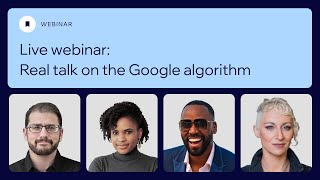
In this hour‑long live webinar hosted by Crystal Carter (Head of SEO Communications at Wix), a panel of SEO experts—Morty Oberstein (algorithm researcher), Lily Ray (Senior Director of SEO at Amsive Digital), and Mike King (founder/CEO of iPullRank)—discusses the major Google algorithm developments of 2024 and their practical impact on website owners. The conversation covers the prolonged March core update, the rise of AI overview results, the increasing prominence of user‑generated content (UGC) from Reddit, Quora, and LinkedIn in SERPs, and the fallout from the Helpful Content and Spam updates, especially for small and niche sites. The panel examines Google’s recent leaked internal documentation, revealing how the search engine categorises link source types, uses click‑through data, and evaluates site focus, providing concrete guidance for link‑building, UX, and content strategy. They also explore the growing relevance of alternative search platforms such as Bing and AI‑driven chat tools, and suggest diversification tactics—forums, community sites, social media, local AI SERP formats, and cross‑platform content promotion—to mitigate algorithm volatility. Throughout, the experts share actionable recommendations for recovery, brand‑signal building, and future‑proofing SEO in an environment where Google’s signals are evolving rapidly.
Chapters
Few people joining, and I think that's probably enough for us to start moving into introductions. So today we are joined by an illustrious collection of algorithm folks who learn so much about SEO and have contributed so much to the SEO community. There's myself, Crystal Carter. I'm the head of SEO Communications at wix. I've talked about algorithms and studied them. I've got an article about how you can look at how you can identify if you've been hit by an algorithm update from your data and your in your Google search console, which is worth checking out on the WIX SEO hub. Also to my left on the screen and right in front of me on my screen is Morty Oberstein, who's been studying Google algorithms for many, many years. You can see some of his data on the WIX SEO Learning Hub. Morty, say say hello to the lovely people.
Hello.
I'm an algorithmic nerd.
It's true. He does love it. He really does love it. Yeah. So the volatility updates, all of that sort of thing. We are also joined by Mike King, also known on the Internet as Ipool Rank. He is the founder and CEO of iPool rank. Mike, I don't know if you wanted to just say hello to everyone quickly.
Greetings and citations, folks.
So Mike is an incredibly talented tech, SEO and algorithm data analysts and all sorts of SEO analysts and has so many, so many incredible things that he's contributed to the, to the community. We're also joined by Lily Ray, who is the Senior Director of SEO and VP of Research over at Amsive Digital. See, they're both agency leaders who are speaking to so many people about algorithms. And Lily Rae has been doing so much over the last few months across the helpful content update, which we will discuss shortly. Lily, if you'd like to say hello to the crew we've got here today.
Hi everyone. Excited to be here.
Excited to have everyone. Okay, so we are going to just go through a couple of little FAQs for, for your fellow webinar attendees. Yes, this webinar is being recorded. Yes, you will receive an email after the, after it's ready for, for you to view if you weren't able to watch the whole thing or whatever. So you'll get a recording. It will be posted on YouTube, so for your viewing pleasure. So don't worry if we're moving quickly. We got to get through a lot of good content today. And if you need to go back to it, you can watch it on YouTube again. You can ask questions in the Q and a panel which is right next to the chat where you just told us where you are from. Hello to everyone from Los Angeles. Thanks JP for joining us. And you can also check out future webinars and you can see past webinars indeed on the WIX SEO Learning Hub, which is@wix.com SEO learn webinars. And we've got lots of great stuff lined up there for you. You can also, I've skipped ahead. You can also find out more about about our webinars in our newsletter, which you might have just signed up to when you joined. So on the agenda today, we've just done the introductions with our fantastic cohort of incredibly clever people, which I'm so happy to be a part of on today. You know, I really, I really booked this webinar for myself so I could ask questions. And we're going to talk about a Q a few key milestones in 2024. And then we're going to have a little bit of a roundtable discussion around some of some of these core topics because we have had a lot of questions from y' all and we are going to go through some of some of those as well. So a couple of top trends I think that we've seen across 2024. It's been a really complicated thing, but one of the ones that we saw is like with sort of super long updates. The March update, for instance, took a long time. It took something like 44 days over the, over the course of the year. So we've seen about 25% of the year has been has been updates, for instance. And this is something that I thought was really, really interesting. And it's certainly been something that we've been waiting for things and we've had some of the communications has been unusual as well where we've heard about the update after it happened or after it had been finished by over a week, I think, was one of the cases, which has been an interesting thing. Another thing that we've seen is the emergence of AI overviews, which has been really prominent in the US and has been less prominent in other places. And we started hearing more about this around March time and we're starting to see how that's all rolling out. So we'll be interested to see what people are thinking about that. And also UGC in the serp. So we started to see the increase of Reddit and Quora and other UGC elements in the SERP during that time. And I would like to open up to the panel to discuss whether or not Y' all are thinking if these are trends that y' all are also seeing or if these are some trends that, or there are some trends that we've left out of that over the sort of things that we're seeing this year so far,
I can jump in. Yeah. I would say the rise of user generated content, particularly on a few sites, I think, you know, Reddit, LinkedIn and Quora being the biggest ones is probably the biggest SEO trend that I've noticed this year. I mean we've all noticed it's ranking everywhere in top positions, but it's still, it's, to me it's quite impressive that to this day, you know, you can write an article on LinkedIn Pulse and it can rank extremely well on Google very quickly. But I think, I, I don't know, I don't know how long this is going to last, but I would say that's the biggest change that we've seen to SEO in the past year.
Right.
Keep that like, because like in the AIO reviews, for example, like they just came out with some data like, oh, I think it was bright edge, like Google's taking Core and Reddit out of the, the AIO reviews. So if it's not good for the AIO reviews, is it really good for the serp?
I think that we're seeing less Reddit and Quora in AI overviews because so much of what's appearing in AI overviews currently is health related and medical related. The stuff that I've seen in terms of Reddit and Quora dropping in AI overviews is particularly related to like health queries. I don't know if others are seeing different things, but that might be why they're dropping.
And I think there's also, you know, something that people have been able to, able to flag this for them as well. So I know it's something that you've been flagging to Google and taking directly to them to let them know that some of these things are not the best things to be, to be, to be showing on, on Google. Do you think that that has been that trend of, you know, providing direct feedback? Because one of the other things we've seen from Google is them saying like, if you were hit by the helpful content update, like, let us know. If you, if you're seeing search results that you don't like so much, like, let us know. I mean, do you think that, that, that, that more direct feedback is a bit of a trend as well from them?
Yeah, I think they're being much more open about like encouraging people to send feedback. I mean, setting up the form that they set up earlier this year to receive feedback about the March core algorithm update, I think that was pretty unprecedented. I don't remember that happening before. And they've done some big moves lately to like, really communicate with the public about what they're up to and asking for feedback. So it's a big trend. I think a lot of people are just waiting to see whether or not they will implement a lot of the things that they received as part of that feedback.
And Mike, what's your, what's your opinion on that? And that as a thing, I saw, I saw a little bit of a reaction there.
I hate all these trends. Like, I don't think Reddit is something that we need more of. I don't think that the AI overviews were a good product. Them scaling it back is just telling you that they, you know, I think that there were people internally that were always like, why are we doing this? This not good for the health of the web. But really it was always Google just reacting to what the market was telling them because of what Bing did. Right. Like, Satya Nadella said that he wanted to make Sundar dance, and he literally did. So, you know, I think that we're in a space where Google is kind of like flailing to some degree and what they're doing with the, the helpful content update, I mean, we're hearing it loud and clear. Like, the web doesn't want that. Right. Like, there are so many of these smaller and I suspect a lot of them are in the audience right now that were impacted negatively by this and they had been really investing in making high quality content and then, you know, following the measures that Google has said to follow for so long, and then suddenly they just get the rug pulled out from under them. So, yeah, I think that Google is just in a really weird space and they need to do some things that are actually valuable to the Internet. And, you know, giving us more Reddit results is not it.
I think they realize they have a problem. I think I, I think you like the fact that you see Google search liaison Danny Sullivan meeting with people posting about it is basically admitting, like, we really messed this thing up a little bit and we're going to try to fix it. I don't, I think it's going to take them a long time to fix this. I don't, I think something happened that they didn't intend on happening, and I'm not sure they understand exactly what happened.
I'm glad you said that and not me.
I don't think I'm supposed to say that. Good thing this is not being recorded, right? No, it is.
Oh, no,
I think, do you think that all of it, I mean, you, you, you brought up the relationship between, between, you know, the AI overviews and, and Bing and, you know, the Google trying to keep pace with Bing, for instance. I think the, you know, I discussed this in some of my Moscon stuff as well when I was presenting on some of the UGC stuff. I personally think that the, you know, the presence of the UGC is also response to the AI presence and also the whole connection between Reddit and Google as well. How much do you think that the, you know, the variety of tactics that we're seeing coming out and the potentially, potentially, you know, not necessarily always working in tangent things that we're seeing coming, coming out is a response to the overall AI boom that Google's trying to keep pace with.
So it's not just that. Right. There was a lot of people over the last few years that were saying, oh, Google search quality sucks. I just add Reddit to the query anyway. And so Google's like, cool, well, if that's what y' all want here. And I think what we're seeing is that it wasn't a good idea. Right? Like, I think, you know, that was them reacting to the feedback, that specific component. But, you know, now they're pretty entrenched with Reddit in that they're like, we recognize this is actually a good source for, I don't know, whatever they think is a good source for, I'm guessing for genitive AI, I also don't agree with that. But nevertheless, like, they have a very in depth relationship with them. Now, as far as the AI overviews, it's kind of, you know, wrong to think of it as like, oh, they only did it because of bingo. Because all this technology started with Google. Google had a version of this like two years before being rolled out. They just said this wasn't good enough. But because the market is like, oh, okay, you've got to roll this thing out, they had to do it. But I think the reality is that most of these AI things that Google has been building just isn't as good as what else is out there. And so they're still having to keep pace, still having to have a product out there. But you know, people don't like it. So don't put it in my search results.
Yeah, what's tricky about it is, is there's a lot of Unknowns. Like, you know, we hear, we hear both sides. We hear from a. I still hear from a lot of people that people do like the Reddit results. I think it depends who you talk to. Personally, I have had some experiences where something's broken on my dishwasher and the answer is on Reddit. So, like, I get it. You know, I think there's definitely a lot of examples where Reddit's super helpful. But yeah, to your question, Krystal, I do think, like it's a combination of things happening all at the same time. It's true that people were appending Reddit to their searches. That was a huge trend for years. But it's also true that the way to combat AI, an influx of AI spam is to do things like the helpful content update, whether or not that was effective, and the spam update, but then simultaneously elevate a lot of that user generated content and encourage people to leave more user generated content at the same time. So I think those things kind of all happen together. But I also agree that they overshot shot the whole thing by a lot.
Is anybody else bothered by the fact that on the one hand of Google's CEO saying like, people want the AI overviews, this is what they're looking for, they want the AI content and, and the very same breath basically saying you want user generated content. Here's a bunch of Reddit, like, how does that actually, like, not contradict each other? Just to kind of like point out where I feel like I might. My practical point in saying that is it does kind of feel like they're a little bit all over the place and they don't have direction. And I think that's kind of what makes this so complicated for us. People trying to write content is where are we going? I'm happy to skate towards that puck, but I don't know where that puck is skating is heading right now.
Yeah, I also think like, you know, of course the SEO industry and the spam industry's response to all of this is let's go spam Reddit. Let's build tools to try to spam Reddit and quora and use AI to spam those platforms and LinkedIn. And that's something that's happening a lot, whether or not it's successful. But you know, it just, they've created a new set of problems. Like I'm seeing definitely on Quora, a lot of spammy stuff, ranking in top positions. So I don't know that this necessarily solved the problem they were trying to solve.
Well, what, what can we say about this? That like, is actionable for our audience, right? Like, what, what can we do here? What can you as a marketer do or as a website owner do to, you know, get in here? Like, are we saying, like, hey, you should be more present on Reddit? Like, what are we saying here? Basically?
So what we've seen, so what I've seen is that there are certainly there are a lot of user generated content, people who are running forums, people who are running user generated content on their own sites, who are doing well. There are a number of WIX websites who use user generated content, who have forums, who have communities that are working really well and they're seeing a lot of visibility in things like discussions and forums. So that's one tactic. For instance, I think also, I think also in my experience there's a lot of talk about the AI overviews. But you know, recently someone, I think that same bright Edge report that Morty was showing is that the AI overviews are showing for something like 7% of searches. I think it was. And also, you know, they're not even showing in a lot of the EU countries. So if you're outside of the US then you're not seeing them very much. So that means that a lot of the core SEO, SEO tactics still apply. It's what I would say. So I think that it absolutely, you know, pay attention to the trends and that's one of the reasons why we're gathered here today. But I think that, that in my experience, certainly for smaller businesses, core SEO tactics of, you know, listening to your audience, creating content that makes sense for them and is something, that, something that is still valuable right now.
Yeah, Marty, I'm sorry, I don't know, man. You go now, I was going to say, from my perspective, I do think we should be leveraging these platforms, right? Like one of the things that I've suggested for a long time to our clients is that, yeah, go to Quora, see for your keyword, does CORA rank there? Cool. Then make the best answer possible and then link back to your site and effectively you can steal that, that traffic. It'll be referral traffic. It won't necessarily be search traffic for you, but what do you care, right? Like you want to drive more traffic to your site for people that are looking for whatever that is. And so there may be opportunities for you to look at. Like, okay, well, this is a query I'm looking to rank for. There is a Reddit discussion that I can jump into. I mean, have fun. Like Again, I hate Reddit with a passion. But you know, if you're someone that can navigate that, that discussion forum, then absolutely go be in there. But also like Crystal is saying, like, if you can host those conversations on your own site, knowing that Google is pulling in this discussion information into the index, I think that's a great idea. But I also recognize that, you know, a lot of the people in this audience are small businesses, so they have limited capacity to moderate forums and what have you. And so I think the bang for your buck would be again, like posting on Quora or like Lily is saying, like writing an article on LinkedIn posts because we know it will rank pretty quickly for those keywords and you can
link those back to your, to your website as well, which allows us to do that.
I think long term, if people are thinking about like someone just asked in the comments, like, should I still have a blog? Like, you know, somebody asked me this morning what do I do about AI overviews? And I, I don't think like the first off, the numbers keep coming down and down and down. I don't personally, this is my, maybe it's a hot take. I don't think this is the format that's going to be the AI overview of the future. I don't think it offers enough differentiation. It's basically a glorified featured snippet. If I was creating a product and I was going to say like, let's launch something, is there enough differentiation for what I currently offer? The answer would be no. And I don't think because of that, the overview is going to be what it is now is what's going to be in the future. And I don't think like getting hung up on the fact that now they're a overviews. First off, they're only 7%. By the way, that number differs from data set to data set. Like SEO Clarity has got a different number. Whatever it is, I wouldn't get hung up on the 7% so much, but I would say is like, don't get hung up on the fact that I overviews like that ecosystem is going to change. I mean, they're currently pulling like answers from TikTok that don't make any sense. Telling you to eat glue. Like, this is not going to be what it ends up being. So I wouldn't like now fundamentally start switching my whole content strategy in order to try to get into the AIO. We don't even know how sticky the URLs actually are. It could be like you're there one day you're not there, the next day you're not there again for another 30 days. So like that to me doesn't say like, yep, that's what we should be doing right now.
So and absolutely great point. Another thing that's been, been happening, like we're talking about things happening in 2024, but a lot of this sort of started last year and specifically with the helpful content update. Lily's been saying, showing screenshots like this of, you know, smaller sites who are, who are seeing, you know, good traffic and then seeing, you know, things like fall fall very, very sharply and seeing traffic impact really, really sharply. This is, this is something that you've seen from a few different, few different clients or not, sorry, not clients, sorry, but a few different, a few different folks from around the web. And this is something that, that you actually were doing helpful content audits from your team. Are you able to, to discuss some of the things that you were looking at when you were trying to see if somebody had been impacted. Impacted by the helpful content update?
Yeah, definitely. I mean, I think the patterns became very clear very quickly in terms of the types of sites that were impacted. So you know, if I were to generalize what happened, generally they were relatively smaller sites, often niche sites that were focused on maybe travel or recipes or something like this. In many cases there were display ads, in some cases very aggressive display ads, lots of affiliate links. And the sites usually existed for the purpose of driving SEO traffic. Like I would say that's how they got most of their traffic. Unfortunately what I think is becoming apparent is, you know, there were absolutely a lot of sites that were in some sense like gaming Google and I think that's what Google was going after with the update. But it became evident to me and a lot of people over time that there were many, many sites that Mike talked about before. Like they, they're really trying to do things right. They really were traveling to the places that they were blogging about and things like this that also got hit really hard, like 90% declines from that update. And the thing that makes it extra tricky is a lot of these sites have really been working on improving over the last, literally year, almost year. And we haven't seen any movement from any of those sites, any significant movement, positive movement. We've seen more negative movement. So that's why I think Google now is really starting to communicate a lot with the public. I think Morty mentioned it before. I think they know that they may be over engineered it and I anticipate that. I said this for months now, so we'll see, but I anticipate we will see some of those sites come back. I just don't know. When Google hinted yesterday that there will be a core update in the next few weeks, I think those were their words. So I would be surprised if we didn't see some positive growth from some of these sites that have made big changes.
And I think it's been a real challenge for some of, for some of the smaller sites, like you were saying, because I think that we hadn't seen something to the, that was this, like, had this big of an impact since like the days of Penguin Panda, like that, that sort of thing. And, and I think a lot of people were very unprepared for it for that kind of kind of impact. Are you, are you, what are you advising people to do during this time?
Mike, did you want to jump in?
Not good.
Well, I mean, it's tricky because we've, we've worked with several companies that have been impacted. We've definitely talked to many of them. I've talked to so many dozens of people that were impacted by this update. And it's, it's really hard on a personal level because you can, when you, when you kind of feel the impact of what this happened to people in their business, it's, it's pretty intense. But you have to do, I mean, all the same things that we kind of advise clients to do with any algorithm update. I think, you know, a lot of these sites were kind of doing kind of somewhat manipulative SEO tricks in some cases that Google, Google was using machine learning with this update, so it was identifying patterns that felt exploitative from an SEO perspective. So it's really like reconnecting with like, who is my brand, who's my audience? Does this content really only exist for SEO or is this something that's really valuable for my audience? Am I going after the same keyword opportunities as everybody else and mass auto generating thousands of pages? You have to kind of ask yourself those questions. And I know a lot of those site owners are starting to diversify where they get traffic from, which is also a great exercise. Exercise. You know, starting a more robust social media presence and video presence and things like this. So hopefully they're rewarded with more traffic with the next update.
And Mike, have you had any, had any dealings with the helpful content update? Have you been speaking to people who've been experiencing some of this?
No. No, that's not so. Okay. None of my clients have been impacted, which is, you know, I'm I'm praying every day about that. But you know, I do look at the sites that have publicly said they've been impacted. And the thing is, is that Google isn't really oriented for small sites right now, right. Like when you think about the core things that they're looking for, they're looking for like highly relevant, robust content. They're looking for, you know, a lot of authority in the form of links, right. And then they're also looking at user signals. While all of those things are things that big brands naturally get, right? Like when you look at user signals, you are going to click on a brand that you recognize. And so if we're assuming like how they might have built this system, it's going to leverage those signals pretty heavily. And so if you go back to user signals, right, and this is the thing that's reinforcing what should rank or what shouldn't. Well, if you get demoted for whatever reason, you are not going to get more clicks. And so I think it's very similar to the Panda situation where ultimately we learn that it was a function of those user signals, like a pretty heavy one where if you get hit by this, there's really no way to recover until Google makes a change. And so yes, you got to tell people, like, keep making great content, improve your ux, things like that, but they're not necessarily going to see impact from that until Google makes that change. And that's very unfortunate because people are like working hard and seeing no value and their businesses are falling apart. And it's like, yeah, just wait around or oh, you should have diversified your traffic sources. It's like, well, it's too late now. So you know, the best thing you can do is just like, wait.
At this point, it's a chicken and the egg problem for Google in a sense because they're trying to advise you to create this kind of content and then you're not seeing it being properly rewards necessarily the way that they want it to be. So it disincentivizes creating that content and you kind of get stuck in this kind of vicious cycle. By the way, if you are a smaller website, I think like one of the takeaways from what Mike is saying is if I could put my words in Mike's mouth, like, think about your brand overall. I get people to start looking for you. Like I kind of say Google is like a mob is attracted to like the largest digital light possible. So if you're out there, you're creating momentum for your brand. You're a social Media, you're doing events, whatever, whatever it is that you can do to create momentum and you get things like people searching for your brand by name. Those are things that Google's going to starting to see if they're going to see like your URLs are being shared all over social media. Suddenly creating that digital presence can help you. So don't think about like SEO in a very linear way necessarily. Like, okay, I'll have the keyword in the title tag, have the keyword in the header. Build up your entire digital presence. That'll be a very strong signal to Google that even though you might be a smaller site, you do have a big light on the Internet.
And I think that, I think that from that perspective, from the diversifying your, your traffic from more more than just Google and from, you know, pulling in some of those things. I know we have a lot of wix folks here. If you are using wix, then you know, within your, your wix cms, there are lots of tools to help you do this. Every time you post a blog, every time you publish a, publish a page, there's the ability to share it across social media directly. You have things like your RSS which can help you to, to distribute content more efficiently. We have a few different blogs and, and content or and webinars about that as well, which we can send in the link and the email after this as well. That can help you to do that and can also help you to build up your newsletter and various different things like that. So I think that, and I think that that part of the, the diversification of of the web is, is a trend that I think we should we'll personally, I think it's a trend that we might see more in the next couple of years. So, so I think it's worth worth thinking about that as well. And I would be remiss if I had Mike King on the webinar and didn't talk to him about the leaks about the leakity leakity leaks in just a few probably about a month ago, Mike King and Rand Fishkin published some incredible research talking about secrets of the algorithm, Google's internal search, engineering documentation, linked or leaked. Mike, I'm sure you can summarize this better than I can. You know, what did you, what were your feelings when you found this content? Can you tell us about it?
I feel like I've been training my whole career for this moment. So just to give you all some background on this, there's some documentation that mistakenly leaked from Google that talks about all the features that Google looks at in its algorithm and the way to think about this is we got the ingredients and not the recipe. So now we have a very big, you know, look into what they're actually looking at and that can give us some insight on things that we need to focus on as marketers, as website owners, as, you know, small businesses trying to do things in SEO. And it clarified a lot of things that Google tells us, like, oh, we don't do this, or it verified a lot of things that we thought were working in SEO. It also invalidated a few things as well. And so the documentation is about, you know, 2,500 pages. And so it talks about a variety of different components of Google, not just search. It looks at things like YouTube and, you know, all the other components of Google, but most of it is search. And so based on that, you know, there's just a lot of, again, verification and validation that we got so we can get a better sense of like, where to focus. So as an example, right when it comes to link building in the SEO space, we have all historically said it doesn't matter if the links get traffic. But in the documentation they talk about this idea of what's called a source type. And the source type is an indication of where does this page live in the index. So Google breaks this index into four different components just for simplification. They have what they are considering high quality or high value pages in one bucket, they have medium quality in another bucket and then they have low quality and then they have another bucket that's called fresh documents. So pages that are from news sites and things like that. So the whole point here is that you want to get your links from pages that live in that high quality bucket. And the proxy for understanding those would be pages that rank well themselves and also drive traffic. So these are things that you typically don't think of as an SEO. You're just like, I want to get as many links as possible because this other site has more links than me. And so with your link building efforts, you need to really focus on that high quality where quality is defined by those measures I just said, not just things like page authority, domain authority and rating and the things that SEO tools will give you. And in addition to that, there's a lot more information that's related to how Google is using Click Data to determine whether or not something should continue to rank. And so what that tells me is one, UX and SEO need to work very closely together, meaning you need to design your pages so that you're giving people the information, right, right away, right? Like if you have a recipe website and you're telling me your grandmother's life story about why she makes apple pie, nobody wants that. And you know, that's what we all did. Because for SEO, you have to get content on the page, but the user just wants the recipe. So if the user lands on the page and they're just like scrolling, scrolling, scrolling, can't find what they want and then they immediately leave, that is a bad signal to Google and that is what is telling them that you don't deserve to rank because there are other pages that Google shows and the user clicks on it and then they don't go back to Google because they're like, this is what I wanted. So you want to give more of, you want to encourage users to spend more time on your site to reinforce Google having you rank. And also that's an indication that when you're looking at your competitors, it's not just, you know, do you have the most copy on your pages, do you have the best links? You also need to be looking at what their click activity looks like. So using tools like Semrush or similar web or there's a number of tools out there that'll tell you like, you know, how much time are people spending on your competitors pages. That's going to give you insights on how do you change what your page looks like so that users can get precisely what they're looking for. And there's a lot of other stuff in there, but you know, just off the top of my head, those are like pretty actionable things that I think anyone should be able to do.
And this was a, an absolute bombshell in the SEO community. Like this is absolute, absolutely, you know, people, people, every, I think everyone, every one working in SEO. Read, read this, read this document. I certainly did. And, and I think there was a lot of, a lot of people. I. One was, was the section, the thing, the one that's really stood out for me was the thing about the homepage. If you're cons, we are wondering about homepages. If you are a wix WIX user. For instance, we put a lot of emphasis on your homepage, on the SEO set of checklists. We have a whole blog or we have a whole webinar dedicated to homepage. You're, you know, making sure your homepage is right and optimized. Because as an SEO, I've definitely seen huge impact from, from working on your SEO, working on the SEO of your homepage. And that was one of the things that you highlighted in the document was that there was specific, certainly specific information about looking at, looking at the homepage as well as well. So that, that was one of my, I knew it sort of moments from it. I don't know how other people felt about reading, reading the, reading the leaks and the information.
There was an interesting one that came out today, when it come out today. Someone pointed it out today. We covered it on It's New, which is our daily SEO news series. Plug for that we do with Barry Schwartz and Greg Vin you can find on the WIX SEO Learning Hub and on The Rusty Brick YouTube channel. Subscribe notifications, whatever. One of the things that came out was that someone pointed out was there was a user, I'm sorry, an automated generated content kind of score. Meaning. So like you created a bunch of content with AI. Google seemingly in the, in the, in the API leagues has a score for this content was created, you know, through an automated process. Barry kind of pointed out that that might be like related to an, an old, old, old part of the algorithm that's maybe not current, whatever it is or it's not. I would highly doubt that Google doesn't have a way to classify whether or not your content is created with AI and if it's not scoring it somehow. So even if something in the leaks might be like, okay, like maybe that's not currently being used in the algorithm, it kind of tells you the way Google's thinking, where it wants to go. And in a situation like this, I think you can apply and say, okay, if they were doing it back then, they're definitely doing it now.
So, Morty, I'm going to push back on that. I don't think anyone can reliably detect generative AI content. And I think really what Google is doing is they're leveraging a series of signals. A lot of the stuff that Lily talks about with eat, that's how they determine whether or not something is valuable in that way. Because even Chat or, excuse me, even OpenAI has difficulty detecting generative AI content because you can't reliably, you know, at a reasonable confidence level do that. They're having to say, okay, does this site actually get traffic? Does this site have, you know, links? Is this content relevant? And then also using all the other things they're looking at with respect to is this site authoritative on this subject? And that is another thing that was in the leak. They talk about this idea of, you know, the site focus and then they're also comparing the other pages or any given page, they're comparing to the site focus. And if, let's say, for instance, you're a site about recipes and you start, at least you start writing about wrestling, they can understand that. Like, you are not an expert on that because it just is so distant from the rest of your topics. And so Google is doing more of that than being like, oh, yeah, you're definitively generative AI content. Let's just emote you because of that.
I agree. I think actually what they're doing, I think they did with the product review update, which is now the review update, you can profile language, kind of what machine learning is kind of built for. You can profile language based on whether or not there's actual experience, like tendencies in the language construct. Like, the example I always use is like, if I reviewed a vacuum cleaner and I wrote the vacuum cleaned the carpet. Great, versus saying the carpet was clean. No, sorry, the vacuum cleaned the carpet, but it had a hard time with cat hair. It's a completely different language structure. So I agree with you. I don't think you. I don't think they're looking at, like, this is AI. I think you're right. They're looking at it. This is not what we're currently looking for. And when Google says, oh, we're not looking at AI content, we're looking at low quality, unhelpful content, that's probably true. And they're basically one in the same anyway. We're just splitting hairs.
I should say, I should say there's been lots of discussion about, about the, about the, the leaks and that they're not officially claimed by Google necessarily. I should just caveat that, like, the research is the research. I'm not, not, not to dispel the research, but just to say, like, just to clarify that. But they're fascinating regardless of, and super, super valuable to see, to see sort of behind some of some of the scenes of that. Lily, we haven't heard from you in a while. I don't know what your take on all of this excitement has been.
Oh, no, I usually defer to Mike when we have these conversations because he's here. No, I mean, I think it's been fascinating. Like you mentioned, it's a big change in the SEO industry for us to at least see the names of all the thousands of attributes that Google may or may not be using. I think, I think it, like, to Mike's point, it confirmed a lot of theories that the SEO space has had about whether individual factors are something that Google considers at all. I mean, there was one called Small Personal Site that was very interesting to me. Like, what are they doing with that? How are they, why are they labeling sites as small personal sites? But there's a site that has been really cool. I mean, one way that the SEO industry has responded to this, which has been really cool, is a lot of people have built tools and resources to be able to kind of parse through the leaks because there's so many of them. So there's one I wanted to share called 2596org2596.org that's been really helpful for our team because it uses AI to kind of summarize the leaks in like, plain language. Whether or not it's 100% accurate, we don't know. But it's been a really nice way for us to kind of go in there and see is that something that Google uses? And how might Google be using that individual factor.
That's cool. I didn't see that before.
Yeah, it's a good one.
Yeah, it's super useful and super fascinating. So, so really, really fascinating. And all, all of this time we are going to be getting to, just before we wrap up, we're going to get to some questions from the audience. I'm just going to shout out and let people know ahead of time. We will share some of those things as well. We've got some, some articles and I will update this to include some of the content that we've discussed as well. But there's a fantastic, if you're, if you're still feeling a little bit not sure about, about what algorithms are, how they work, and we've got a fantastic primer. They're written by one and only Mordy Oberstein. There's a link, there'll be a link to Mike's algorithm leak document. There's a leak, a link as well to the incredible research that Lily and her team have done with the Google Helpful content ranking system. And then a few other of our, a few other links from the WIX SEO hub about algorithms as well. So that will be sent to you in your inbox after this, in after this webinar. And now we are going to get to your questions. Morty, have you got some questions for us?
I have a lot of.
Usually I'm like tracking the questions better because I'm not talking as much.
Sorry,
let's go with, let's start with Simon. Simon Cox. Simon Cox is here. Simon Cox is in the chat. Simon Cox is a fabulous SEO fabulous human being. So say hi to Simon in the chat. Simon asks, is Bing becoming more important as it is being used by certain AI tools, ChatGPT, Copilot, etc. And possibly Apple Search in the future?
I think so.
Bing, what's that? I think it's definitely becoming more important, but I think it speaks to a bigger trend that we're seeing. People are diversifying how they're getting their information needs met. That's not to say that like Google is no longer important. It obviously still is. It still is where everyone starts or most people start. Like it's still over 90% of, you know, people searching for information. But you do have to be mindful of the fact that people are, are active with ChatGPT, active with Bing Chat, they're even searching on TikTok and all these other channels. And so what you need to determine is, is my audience there? And if they are, then yes, you want to create assets that are going to perform well in those channels. But you know, there's, there's starting to be a lot of people who are, are doing effectively like rank tracking for chat, GPT and things like that to see how brands are showing up. My whole position on this really is don't block large language models. Like people are starting to do things like block chatgpt or the common crawl and all these different sources that these tools are using. That's a bad idea because you're, you're cutting out on opportunities for your brand to show up.
I think it's interesting that, I mean, we're seeing very, very early signs and very small signs that there's some user behavior shifting to Bing. I think obviously it's negligible compared to Google's market share. But people I talked to Fabrice at Bing really often, people are loving Copilot. I think Bing's AI product and it's integrated into so many Microsoft products now. And I think we will see, especially if things continue the way they are with some of Google's recent updates, I think people might shift more to using Bing. And I know like we talked about the helpful content update, a lot of the sites that are struggling with visibility after that update are seeing a lot of more traffic from Bing and seeing their sites rank for things on Bing. So it's possible that we might start to see more traffic coming from there than we've seen before.
I know we're definitely like talking about like, is there more or not less traffic? But I'll tell you my, like, my barometer is my kids, my my 13 year old kids know what co pilot is. So that tells you something like from a branding point of view.
Yeah, there's like a bit of a shift where the younger audiences, they don't say Google it anymore, they say search it up, up. And because they're, they're used to being like, oh, I'm use all these different things to find my answer, they're not defaulting to just googling it.
Right, right, right.
That's a big, that's a big shift. Brand, Brand tells you everything. Okay, what, what, in what ways might the AI overview factor in for a small business owner?
Oh, this is interesting. So first of all, like while people gather their thoughts, first of all, it will apply most to you if you have a US based audience at the moment and if you are, if your audience is predominantly in another part of the world, then it's going to be less of a concern to you for now. But it might be in the, in the future so it might be worth watching that space. Mike, you've got your, your unmuted.
Yeah, I think it's an opportunity for smaller businesses because you don't have to rank in the top 10 to appear in the AI overview. We're seeing things that rank, you know, like 50, 60 or whatever or they rank for, you know, related keywords that are less competitive. And so Google is pulling that data in so it's a bigger opportunity to have more visibility. However, at the same time, if you do rank well for keywords that have AI overviews, you may lose that traffic. And so what we do for our clients is we pull data. We do what we call these, these threat reports. We're pulling all their top keywords to see, you know, do you, do you have AI overviews on these keywords? And if so, are you present in them? And if not, do we want to get you into them or do we want to redistribute your efforts towards keywords that you know that don't show AI overviews. And so as far as I've seen, like that is, you know, the best approach. Like look at the landscape, figure out what you want to do and then use that to inform your strategy moving forward. But the thing is, we don't really have data yet. Like we don't know what the impact of the AI overviews is. Google keeps saying like, oh yeah, it's better for everyone because for what I just said, you don't have to rank well in order to be in it. And they're saying like, oh, a lot of traffic. Is driven in those citations. But again, we don't know. So, you know, we're, we're kind of flying blind with respect to what the impact is. But I think it's pretty clear, like what we need to do.
One thing I would keep an eye on also in the local space. I totally agree with that by the way. And we covered it on it's new the other day. I'm just going to keep plugging that away. If you look, Google announced at Google I O back in May the custom format for the. An AI custom format for the, for the serp, which I think is a offshoot of the custom format that they have when they announced Gemini and they recently were caught testing a cot. They were recently testing it for local queries. So like someone searched for, I don't know, best sushi restaurant in New York and it organized the result page by category. So it had a header for review websites reviewing the actual restaurants. It had similar types of restaurants. It had, you know, Asian fusion restaurant. And it organized the SERP in the kind of a way like makes more. It to me makes more sense of how you as a user wanted to be organized. I'm really high on Google using the AI for that. And if that kind of continues, I feel like that could open a ton of visibility for small businesses on those local serves that they never had before.
Yeah, I agree with that. I think we're definitely not seeing the full extent of AI overviews for the public yet as far as local businesses are concerned. I anticipate in the next three to six months we're going to start to see a lot more AI results for local businesses because it's something that Google was definitely testing in the beta version very heavily, but we haven't seen any live yet. Something to your point, Morty, that was really interesting during the beta testing was if you type Best coffee shop in Brooklyn, you used to get Google Maps, you still get Google Maps, but the AI overviews would sort the results in a slightly different way. You know, it might say four people on TripAdvisor say they like this place and three people on this other, you know, CN traveler.com said this thing. So it's not just purely about the local ranking factors that we've seen on Google Maps. It's kind of a more like AI summarized version of what Google's seeing.
I, I kind of like that because now you have more visibility for all these different types of businesses and you're not stuck. Like, I better get into that three pack. Moving on to the Next question. This is an interesting one. It's a little bit off of what we're talking about, but it kind of relates to the first topic on the Reddit situation. If you have original writing on your website and post the same, or at least somewhat the same partial content somewhere on LinkedIn or on Reddit, is that helpful or hurtful? I am under the impression that posting the same content multiple places is hurtful.
If you asked me last year, I would say don't do that. But from what we're seeing right now, you will often see the same content ranking multiple times across different domains, including Reddit and LinkedIn. I don't know how long that's going to last. We've been waiting for Google to roll out what they call the site reputation abuse algorithm update that they announced in March and said it would be implemented in May and it still hasn't been implemented yet. So I anticipate that when they do roll out that algorithm update, it's possible that sites like LinkedIn that have a lot of people leaving kind of like duplicate AI spammy content, I anticipate they might drop invisibility. That being said, I don't know that that would work against you from an SEO perspective, aside from Potentially Reddit and LinkedIn outranking your original content. That could happen.
I think. Also if you're going through a strategy of syndication, it's generally good practice to not copy and paste. But if you're posting maybe on the similar on a similar topic, like let's say you're talking about a water bottle and look at Mike's drinking water. So let's say you're talking about a water bottle, your new water bottle product or something like that. Maybe you have it have, you know, one article that has one USP and another article that has another USP on a, on a similar channel or like on LinkedIn or on Reddit or on Quora or something, something to that effect. So generally speaking, if you're doing syndicating syndicated content, it's worth varying the content so that it's not word for word. And with some of the tools you can potentially use a tool to help you do that. You could potentially help a tool to at least help you accelerate that process. But it's generally worth worth doing that. And if you are syndicating it.
More from Cardinal





Chef Noah was tired of dull tools - so he made his own #cooking #knives #chef #fyp #kitchen #shorts


every day Chef Noah wakes up and chooses violence... professionally🔪 @forgetotable #knives #chef

Mother Nature knew what it was doing with these color combos #graphicdesign #design #designinspo


Trying Modern Bread & Bagel for the first time 🥯 #nyc #glutenfree #food #shorts #foodreview
