Wix | SEO Webinar: ChatGPT and AI Writers in SEO Content
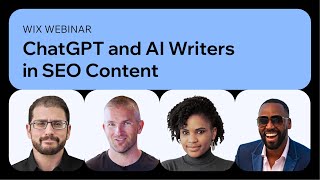
The webinar, hosted by Wix and featuring Morty Oberstein (Wix), Ross Hudgens (Siege Media), and Mike King (iPoll Rank), explored the opportunities and challenges of using AI‑generated content for SEO. The discussion began with an overview of why AI writers are attractive—speed and reduced effort—but emphasized that SEO success depends on creating the best content, not just any content. Ross demonstrated that feeding AI unique, high‑quality inputs (proprietary data, product images, brand voice) transforms it from a generic output engine into a powerful assistant for drafting, editing, and repurposing copy. He highlighted practical use cases such as data‑driven studies, product‑page copy, social‑media captions, and line‑editing existing drafts. Mike expanded the conversation to the broader search ecosystem, describing how Google’s shift from lexical to semantic (vector‑based) search, the Helpful Content update, and EEAT influence rankings. He explained that AI‑generated content is not penalized per se, but must satisfy user intent, authority, and information‑gain criteria. Tools like AIPRM, OrbitWise, Auto‑GPT, and Wix AI were showcased for prompt management, relevance scoring, and automated content creation. The panel debated the future of organic traffic, the risk of a flood of mediocre AI content, and the likely response of search engines—relying on authority signals and content uniqueness. The session concluded with a Q&A covering entity graphs, AI authorship, and the prospect of AGI, underscoring the need for thoughtful, human‑guided AI use in SEO.
Chapters
Today we have, we have myself and Morty Overstein permanent pictures here on the webinar scene. And then we also are joined today by Mike King, who is the founder and CEO of iPoll rank. He is an artist, a technologist all rolled into one. He is runs a fantastic digital marketing agency. He consults with companies all over the world and he's been working in AI and LLM models for years. We're so pleased to have you here today, Michael. Thank you for very much.
Thanks for having me. Yeah, of course.
Fantastic. We are also joined today by Ross Hudgins who is also, also, also a legend in his own right. So Ross is the founder and CEO of Siege Media and has been has made the Inc. 5000 list for the last five years running. He's done some fantastic work in mods and search engines, Search Engine Land and Forbes, is a frequent speaker at Moz and Learn and Bow. He is also someone who works in the AI space quite significantly and has some fantastic the 49ers memorabilia. We're so, so pleased to have Ross here. Thank you for joining us, Ross.
Yeah, thanks for having me. Excited to be here.
So we're going to get into it in just a moment. We are working on some of those admin things. We'll sort those out shortly. But just to let you know, the webinar is being recorded. Absolutely is being recorded. It will not only be shared on the page that you signed up for the webinar on, but it will also be shared on YouTube. So find it in all of the places where you enjoy webinar content and you'll get a link to the YouTube page on email as well. You are all very familiar with the Q and A panel as we're working on starting up the chat panel. So ask your questions in the Q and A panel as we go along. We'll curate those and answer them at the end. If you want to know more about our future WIX webinars, then visit wix.comseo learn webinars and you'll find all of those there. And moving on to our agenda for the day, I'm going to hand it over to Morty Oberstein and he's going to tell us how it's all going to work.
So before we get started, I come from the content side of SEO, so AI writers were an interesting avenue. AI generated content is just fascinating and it's novel and, and it solves a lot of pain points for those who are not on the writing side of the world. Writing is difficult and it's time consuming. And AI writers came along and with AI generated content, seemingly have solved that problem. Writing is no longer hard and it's no longer extremely time consuming, it would seem. So we thought it'd be really, really important to have a webinar to really dive into. Just when do you use AI written content? When is it not appropriate? What are the best ways to use it? How does it SEO going forward? Because it does seem like a panacea, but generally things that are too good to be true or sound too good to be true are generally too good to be true. And while AI writers are an amazing tool, I think it's, you know, worthwhile to have a look and how to use them responsibly. Because while the, the web, it's, it's a, you know, I try to think about the web as a child. It goes through stages. You, it could be a cha. It could be a toddler, it grows up, it becomes a preteen, it becomes a teenager. I would say the web is somewhere around like a teenager right now. If I had to like put my finger on where is the web. And teenagers are generally just good thinking about my own, my own life, not the most responsible. And I think that there's a tremendous amount of opportunity with AI generated content, but I also think there's a tremendous amount of potential problems that come with it. So we thought it'd be really, really, really important to dive into AI writers, how they'll impact the web and how they impact SEO. And for that, we're going to turn over to Ross Hudgens, who's going to handle AI for content creation, then dive into the impact of AI on search with Mike. And then of course, we'll have your questions at the end of that. If you see me, by the way, and not looking. And I'm scrambling around because I'm looking through the Q and A as the webinar goes along to try to take down the questions that are most pertinent. And with that, let's hand it over to Ross.
Fantastic. I'm just going to stop sharing my screen.
Thank you, Morty. Great. I will screen share on my side. Excited to be here to talk about AI generated content as Morty was kind of setting up there. I mean, as he nicely described. I think some of the initial reaction a lot of people can have is you can press a button and create content with AI. Why not? I fly this against every keyword I'm trying to rank for. And can I go about doing that using these tools? That seems so possible and feasible to do that. So that's going to be essentially what I'm going to get into is with that in mind, maybe that's not really the case, unfortunately, but maybe there's a middle ground where we can still use this very powerful tool to help our businesses be successful through search. And what are some of the ways we can do that? So before I get into it, got a good introduction already, but just to kind of restate it, we're been around for 10 years. We're a content marketing agency with SEO specialization. So creating content online to rank on Google is pretty much all we do. So this is our sweet spot. And I founded the company as well. So been thinking about strategy on this side for a long, long time. As was teed up previously, worked with a lot of great e commerce brands across the web. And that's sort of some of the context for some of the companies we work with in terms of the advice I might give today. So first, essentially want to start with the idea that the goal of SEO is not simply to publish content. If the goal of SEO was just to publish content, then creating content with AI would be optimal. But unfortunately that is not the case. Instead, the goal of SEO is not to publish, it's to win. It's to build the absolute best thing or have the goal of doing so in order to achieve that goal. So really, to achieve the number one ranking, you need to have that argument that it's the best content, not the same content as everyone else. Because if you're simply generating the exact same thing everyone else has generated, there's no way you can truly make the argument that you're the best thing for that result. So that is part of the conundrum here with AI content. The issue is that essentially this content is a commodity. If we, all of us go to chatgpt or your tool of choice, and you ask it similar things in terms of creating a blog post, you're going to get a very similar result. It's at that point very hard to argue that you're truly making the best thing in that case. So to kind of give some examples and flavor there, if we're searching for something like what is SEO? And we input it into ChatGPT, you end up with very similar feeling content. Not that I'm saying these four on the left did that, but you can sense how sort of it ends up repurposing a lot of what exists, and you end up with very similar things. But there is a solution here. What you do want to do with these tools is to not use them as output engines and isolation saying don't just go to these tools and say give me a blog post meant to rank for what is SEO without providing it anything. If we provide it something, or rather something great, that's when some magic is possible. But before we get there, just want to show an example of this in practice of just how sameness can occur with very simplistic prompts and inputs for the tool. So if we go there and say, hey, I'd love a guide to rank for Wix SEO, please give me some recommended URLs and metadata as maybe some supporting images I might add to that result as well. We get a rough looking blog post like this, we won't read through the whole thing, but for the most part it's a relatively simple article that if you go search these things, WIX is ranking which good job wix. That makes sense. But the other articles as well feel very similar to this, but I'd say a little bit better on average. And some of the issues beyond just some SEO practices being slightly off, at least from our definition, putting the keyword far to the right or putting the keyword at the end of the URL. One of the things that occurs on this suggestion from them is that really the only WIX specific thing in the entire blog post is this first section of the WIX SEO wiz. So that's not very SEO WIX SEO specific. It's not additive necessarily. It's not finding anything novel to add to this. It's essentially repurposing what already is there. And that for that reason is going to not allow an article like this to rank, even if it's a decent article, all things considered. So what you need to rank though is the best content that does exist for that topic. So if we take this further, what do we need to get there? Essentially the magic is when you can give this tool or these tools unique inputs, you can create content faster and better and get new things that would allow you to get to content that actually can win. So in this left chart, let's say we have a unique Data set of 50 or whatever number of populated cities in the United States with unique data points around how many five star restaurants and bars they have, how many popular events are there are to maybe create a study on like the the best cities to visit or best cities for things to do per capita. Hypothetically, if we had and curated this data set, brought it together and then provided it to the tool we then could ask it to create a blog post or even a summary on this concept and get something that no one else ever had because we were bringing it something that nobody else ever has. So in this case we do that. We ask it Chat GPT, can you please summarize my data? And you can see now it's actually immediately coming up with insights based on the data that's provided in that chart. We don't even need to think about it. It creates copy in a pretty well done way. And this is just a summary. It's definitely capable of taking that same unique data set and, and if I go to it and say, hey I'm Trulia, I'd like to create a study of the 10 best cities for things to do in the United States. Please write in the brand voice of Trulia. 400, 500 words. That could be pretty solid. You probably like likely need to improve it. But because you brought it unique insights from the start, rather than just asking for a blog post of things to do, you're more likely to actually create something that's great because you brought it something great up front. Another example of this is if you bring it unique things about your company and then ask it to describe that. So chat GPT or GPT4 can now interpret and view images when you share a URL with the interface. So if I share this Namagasi shoulder bag from Monk and Anna, a wix, someone who's using WIX currently, and then ask it to write 150 words of branded sales copy in the brand voice and tone of this, of this brand. It does a very strong job of that. So what we're doing here is we're giving it something unique. This is a unique photo from our unique product line that we spent a ton of time and effort to curate and get right and also define our own brand and we're asking it something specific that only we as a business could ask. This is not something competitor Y is going to ask in in the same way ever again. So this is going to get us unique, novel, well done content that otherwise if we had not given it a unique well done input, we would have never gotten out an output. So we can see here where we're getting to. If we give it the right things, which can be data, which can be design, which can be our products, it can then get to a place where it can actually create high quality content that might be able to support ranking in many instances. Another example is simply editing. So it's very good line editor on average. So if you input copy that has issues or just generally any copy, it's pretty good at editing that at a high level. So we think about the elements of content, that's essentially the same idea. We are giving it an input to get an output that's unique. No one else will only give them chatgpt this exact same set of copy. So it's now going to take what I had and further improve it rather than simply asking it to create a blog post. On post structure for SEO, I'm now saying edit my blog post. So you can see that difference in in mindset means I get something that Google is happy with, users are happy with, and hopefully can rank because of that. So I have a little different typos in here, might be possible to quickly pick up on that. But that's part of the potential value add of a tool like this for sure. So sort of recapping that, I think you can use it as an output engine using information you feed it. If you simply ask it to be an output engine without feeding information, that's where we get stuck. We create content that's like everyone else's that has risk for all of our businesses. Another way of stating that is you can use it as an editor summarizer rather than simply creating from scratch. If you're using it for that kind of thought process, you're more likely to again get to things that Google and users like, all things considered equal. Another tool we like for line editing and sheets and the like. And I'm sure Michael get into a lot of this good stuff I would guess. But this is, this is good on the content creation side. Plugs into Google Docs pretty easy easily and allows you to input your ChatGPT AI and is really well done. I know WIX has versions of this too that sort of definitely tie into some of this concept where if you have a well done landing page and essentially have the AI, then create content based on what is already there. You've essentially applied this concept that I previously described in a well done way. So use AI to create content that supports SEO. Also this is another way of doing it using input. So you could technically create content from scratch for things that aren't trying to rank directly for SEO without many inputs and be relatively okay as long as it's not trying to rank itself. So some examples of that would be things like a privacy policy or turn policy terms and conditions. You probably would still want to customize those for your business, but you could reasonably ask these tools to generate those for you but these other pages are all good examples of areas where you could feed it inputs depending on how detailed, depends on the kind of content to get pretty good content back. So we saw the example of data for the data studies. What if you gave it 30 different images for your category and then said create 100 to 200 words of copy that describe this category for Fostella store which is another WIX brand, or Wix a brand that uses Wix and then create that copy that's going to be well done in terms of output that can definitely support SEO. So we talked about product pages as well reasonably could create and help you develop a career page. It's not going to rank directly for SEO, but it's going to be a valuable place to build a page like that. Social media copy is another great place and generally more and more thinking about visual content. A lot of the brands on Wix you have great visuals from your products, photography, video, et cetera. So if you share that URL with with the tool and then have it interpret that design in your brand voice, you can get pretty well done work where really the main weight is being carried by your images rather than the text. And that's where this can have a lot of value. So we see in this left example Fostella stores top left image. I fed that into GPT4 and asked for Instagram social media copy and comparing to the existing Instagram, it's relatively solid. Using similar use of emojis seem to be relatively on point with the hashtags used as well. And as we hopefully would generally all agree, most of the weight in social media Instagram type content is the image itself. So you can get to high quality content a lot faster. When you think about what is the most important part of this content and the least important areas, those are very clearly opportunities today to use tools like this to kind of fill out that experience while maintaining your brand advantages. So to kind of restate that there are many places where high quality, high quality content needs to be some more supported by text content, but that text content itself is relatively a commodity or just not adding that much value. That's where AI really has a great place to then round out those non commoditized areas. So we're referencing back to this handbag or shoulder bag from Monk and Anna. It's the product here, it's the site design here that carries, I would argue, the majority of the weight and the importance. They do a great job with copy in the bottom left. They even have a little poem that occurs down there. But if you fed that to AI, I would pretty confidently say it can output a very similar framing or theme around that while maintaining the core, most important elements, which of course are those product photos, which you still need to do by hand, at least for now, and the overall site design and aesthetic that is maintained there. So with that thought process in mind, there's a lot of great things that can occur. So to kind of like sum it up, if you stick to this idea that to be productive with AI, give it best in class inputs. That's the goal of SEO, is you need to have the best in class things. So if you believe you have the best in class handbags and you give it the best in class photos of those handbags and ask it for supportive copy, you realistically can rank with that page. But if you simply ask it to create content from scratch without much guidance, that's not best in class. You can't realistically do that in a way that's going to reliably help you rank consistently in search. So use it as an output engine using your best in class inputs, and that's how you're going to consistently win with SEO using this great new technology. That's it for me. Thank you for the time.
Thank you so much, Ross. That was brilliant. Some really great insights there. And I saw a lot of people commenting in the chat that it was really great to see some practical applications there. Thank you so much for that. I'm sure we'll get to the questions afterwards. I guess we can jump straight in for Mike's section on a sort of wider scope. But thank you so much for that. Really, really useful. Lots of big thumbs up in the chat. Thank you. Thank you. Michael, let's get, let's get into your section,
Confirming that you can see my screen. You good?
Cool.
All right, so let's talk about what generative AI means for SEO. So real quick, I'm Mike King and you know, despite popular expectation, I am not the real estate agent for that house back there. But you can follow me on all the things that I pull ran. I'm from an agency called IPO Rank. You know, we do all the SEO and content strategy work and so on, and we've actually been doing using GPT technology since 2020. Here's a quick example where we drove $300 million in incremental revenue for a client just by, you know, getting more generative copy onto product listing pages. So let's talk about how Google's under a lot of threats right now. One of which is that TikTok supplanted Google as being the site that gets the most traffic on the, on the web. ChatGPT in general was a code red for Google. They said like, hey, we got to figure this thing out. Which is so remarkable because the T in GBT is from a technology that Google invented. We've also got users believing that Google search quality is on a steep decline. You know, people are adding Reddit to the end of queries because they feel like without it, Google isn't giving you good results. And so all of these are threats that are going to impact your content marketing and SEO. So the TikTok threat means that Google's going to rank more visual content. You're seeing more examples where people are looking up queries like how to tie a tie. And it's not your blog post that turns it into 30 steps of how you do a Windsor knot. It's three videos that are ranking at the top. And so if you're not, you know, creating content that's going to be there, you're just not going to get the clicks. And so short form video is going to get a lot more competitive. We're seeing that, you know, more and more people are about to ramp that effort up because they feel like that's how they reach Gen Z. And so if you're going to be doing short form video, don't forget to put it on your website. Most people just put it in the channel, Instagram, YouTube or whatever. You really want to have it on your website. And there's a great guide on the WIX site that talks about how to, how to do video optimization that I think you should check out. But the other thing is that ad sales are actually down for Google as well as a function of the economy and also as a function of people going more towards other platforms like TikTok to spend their money. And so what does that mean for organic search? It means that you're going to be in situations like this where mesothelioma, one of the most expensive, if not the most expensive keyword, at least in the States, has, you know, more, more white space around these ads. You're seeing the feature snippets take up more space. And so the user is going to most likely click on those ads. And so what that means is that the real estate is going to get smaller and you're going to have to be more effective as early as your metadata in order to be, you know, driving those clicks. But the last time that people were saying that Google search quality wasn't so good. We got two things that changed SEO forever, which were the Panda and Penguin updates. And so really what this is telling us is that Google is, is coming at us with this or not us coming at people who are making bad content with this helpful content update that we are likely to see something like we saw before, where they're just demoting content that's not valuable. And so if you leave with one thing today, leave with this idea on here that you have on the screen, right? You should only be creating content that's at the intersection of your audience Persona expectations, your buyer Persona expectations, and then search engine expectations. So I, I kind of split the audience Persona from the buyer Persona because there are people that will, you know, consume your content and may influence your buyer Personas, but will never become buyer Personas. I think we all know what buyer Personas are. And beyond that, you know, search engines are another Persona that you need to account for because they have a lot of expectations of your content in order to rank for your target queries. And so that's what I want to talk to you about today, pretty much, but through the lens of the threat of generative AI. So if you're a local business, small business, or what have you, you know, you probably shouldn't know about what's going on in the local search space. And what we're, we're finding is that content is still a lot of the top factors when it comes to ranking for a local business. And so this is from the latest local rankings factors from Whitespark. Obviously, this is also true in standard organic search as well. But the whole point here is that a lot more people are going to be making content this year. And this stat right here, 54% of businesses comes from Ross's team. So thanks for putting that together for me, Ross. We're also seeing that 47% of people are going to be increasing their blog content. And of course, SEO is more than just blogs. But typically when we're thinking about SEO, we're like, okay, how do we write more stuff? Right. Well, here's the other part. Marketers have the highest adoption of generative AI, and it makes sense because we're the people that have to create the most content, right? And so there's this growing list of generative AI tools. There's a ton of them out there. They're all effectively just using the APIs for ChatGPT or GPT4 or whatever, and then putting their spin on it with their own sorts of prompts. If you're using ChatGPT directly, which I would actually recommend over any of those tools, I recommend you check out a tool called aiprm, which is effectively like a prompt management tool. And it's also a community of prompt engineers. So you can pull from prompts that they've already written and use that to generate your own content. And so one of the things that I've noticed by playing with this is that some of these prompts are like a paragraph long and they generate really good copy, whereas in most cases people are just like, hey, give me a blog post about X and they kind of leave it at that. And so if your, your prompt is one sentence and you get back garbage, it's what you pretty much should expect. And so I would say just play out, play with that tool and also look at other people's prompts and see what you can learn from it in creating your. But the reality of it is that every tool on the planet is integrating ChatGPT in some form or fashion, including Wix. And I actually spent five minutes last night building a website using Wix AI. And in fact like literally it took five minutes only because I had to figure out which pictures I wanted to use because the process is so easy. And so here's the example, right? Like I'm setting up my site, I'm generating my about copy, I'm giving the things that I want to include in that. So enterprise experience, full stack developer, over $4 billion in incremental revenue driven. And then it gives me three different options to choose from. Didn't love the first one, second one a lot better, selected it and then I've got my website. And so, you know, I think that this is the sort of thing we're going to see a lot more of where people can really get to the point of generating content so that they can create the presence that they want. And in fact, things are already moving well beyond that in that we have this new technology called Auto GPT which is still kind of nascent at this point, but it can, you can just say like, hey, I want you to act as, let's say, a marketer and figure out how to build me a presence that is going to make me money. And what it does is it just continues to make new prompts and do new things to figure out what you want it to do without you having to prompt it every time. And so that just gives us a glimpse of where the future is going. But a big result of that is we're going to get a Whole lot more crap, too. And so there's a gentleman named Doug Kessler. He gave a really compelling talk about this back in 2013. This idea that more and more brands were going to get into content marketing is going to really be like a race to the bottom for content quality. But another thing you can get is people giving you the answers of how to fix your chat while you're on a webinar. Who knew? Thanks, Steve. But Google actually loosened their stance on generated content as well a few months ago, Actually, about a month or two ago. And I think this is one of the things that was holding up this big deluge of content before, because so many people were like, oh, you might get penalized by Google. Well, they're saying, like, you know, as long as it's made for humans, it doesn't matter how it's created. And if you look at the guidelines in more depth, they're just like, hey, we're actually really good at detecting spam anyway, so make it however you want to. You can't really beat us. Which I don't know is true. In fact, I don't think Google can reliably detect LLM content or generative AI content because, you know, I've played with all the tools, and they all give a lot of false positives and false negatives. And so it's not really a strong enough signal to rely on by itself. In fact, OpenAI can't even reliably detect it. Their tool only detects correctly 26% of the time. And so what Google has to do is combine any detection like that with the other signals that they have. So you may or may not be familiar with eeat, which I refuse to say is eat. I call it ET instead. But anyway, if they layer those signals with, you know, whether or not they believe something is generated or not, then they can say, okay, well, it's generated, and plus it's off the baseline for this given author, for this given website. And so they're seeing a lot of, or we're seeing a lot of reports in the SEO community where people are saying like, hey, I've been trying this out. My site got crushed. I guarantee you that those are also sites that just like, you know, spun up the content, didn't edit it, and just straight up published it. If you do that, you deserve what you get. Now, to the point that Ross was making, a lot of us are doing this, like, copycat content. You know, we're using tools like Surfer and Phrase, and it's saying like, hey, anything on this keyword features these keywords, has these headings and so on. And it's always been weird to me that because marketing is very much about differentiating yourself and standing out, but instead people just copy each other endlessly. I don't get it as an artist, but it is what it is. So if you want to survive, what you ultimately need to do is make better content than what's out there. And so also I feel like we need to update our understanding of search because it's very much out of date. And yes, this is going to be one of those, like, oh, this guy's talking about patents, but really it's all about content and links. Sure. So how Google works in all search engines actually work is what's called the vector space model. So you take a query and you plot in a multi dimensional space. You also take the documents or web pages and you plot those in multidimensional space, and whichever ones are closer to the query are considered more relevant. So relevance is not like a qualitative idea. It's very much a quantitative idea. And so Google has a whole pipeline where they do their crawling, their processing, rendering, indexing, and ultimately ranking. That's not a shock to you if you've been following SEO, but if you haven't, or even if you have been following SEO, is one key change that Google made starting in about 2013 that really was like a quantum leap and better performance, and that was their switch from what's called lexical search to semantic search. So lexical search is really about like counting words. Are these words on the page? How often are they on the page? How do they relate to other words that should be on the page? Whereas semantic search is very much about meaning. And the way that that works is through that idea that I just talked to you about of converting words into multidimensional coordinates in vector space. So as an example here, you take the phrase how or the sentence how are, how old are you? It's converted into a series of decimal numbers and then you can compare against other, you know, words in that same way. So here's an example from what's called the word to vector, you know, methodology that Google built back in 2013. So in the example, you take the vector for the word king, you subtract the vector for the word man, and then you add the vector for the word woman, and you get the vector for the word queen. So effectively you can do mathematical operations to determine the relevance and the relatedness of subjects, topics, keywords, and so on. So relevance is A function of a mathematical operation called cosine similarity. And so when the cosine similarity between these two vectors is close to one, that means that they're very close together or similar. When it's close to zero, that means they're orthogonal or not related. And if it's close to negative one, then that means they're opposites. And so Google came up with something called bert, which allowed them to have better vectors, basically where those relationships in the context was really captured. And what do I mean by that? Well, previously, the way that that was built, the word bank in both of these sentences would be considered the same. But with bert, the word bank is understanding that river bank means something different than making a deposit in the bank. And so now that they can do that, they have a better understanding of the meaning in your content. And so you get these, what we call higher dimensionality vectors. That allows you to really capture the information. And so that's how all of Google search works across YouTube images, everything. They're just looking at these different numbers that represent content and then determining which is closest to the actual query. And so where Google has improved here is through this idea, what's called dense retrieval, where they can better understand the different aspects within your copy, not just looking at the copy in aggregate, but also what does this paragraph mean versus what this other paragraph might mean. And so when you're seeing the featured snippets where they're highlighting specifically in the paragraph where it is, that's this work, this is, that's this methodology at work. So the whole thing to take away here is these vectors, these embeddings, is how Google really understands content relevance in a way that they never did before. And so your website has a vector, your author, or you as an author has one. And so Google can associate things with your representation in this mathematical way. So another thing to know about this is that they're able to understand the relationships between different pages. So you're going to want to build any links to your site from pages that are actually relevant to what you're discussing. That's something that we've said in SEO for forever, but it's really why you're seeing that link building is working differently than it did before. Other thing is that if you're doing any sort of content marketing, your byline is an asset. So don't just be writing on random topics, because Google is associating your expertise based on this author vector that they're creating about you. So last thing I want to really talk about here or not really last thing. But one of the last things I want to talk about here is that relevance is not a qualitative measure. And I've built a tool called Orbit Wise so that you can measure this and compare yourself to other websites. And so this is a free tool that you can try out. So here's my friend Vanessa. She's actually a brand strategist and a WIX user. I was looking at her website because she hit me up. She saw that I was doing this, and I was like, oh, let me see if I can bring her site in this. And so there's a keyword that she ranks for, which is how to build brand awareness. And I look to see who ranked number one for that. It's a site called Wordstream. And I wanted to see, is her page less relevant than Wordstreams because it doesn't rank as well, or is it just a function of authority? And so you put it in. You put the keyword into the tool, how to build brand awareness. You put her website in, you put your email address because you know, lead generation. And then you put in your URL if it doesn't rank in the top 10. And so what it's doing is it's scoring everything in that same idea that I just talked about, that vector space model. And each of these dots represents one of those websites that's ranking for that keyword. But you're also getting these relevant scores. What you can see here is that the average score for what's ranking in the top 10 is a 72.42 or 43. And Vanessa's page is actually a 73, whereas WordStream's page is a 72. And all these other ones are, you know, varying in that. In that range. And so in this case, it isn't a function of her page being less relevant. It's more a function of her needing more authority. And so this is a good thing for you to know, because you never know, do I need to, you know, optimize my content, or do I need to build more links? Now you can know. And so you can just check out the tool here. All right, last point is the future of content and links. So we moved here. This is still a question that people are asking, like, how long should my content be? For SEO, that actually should have never been the question, because we've. We've always been evolved beyond the word count idea. In fact, the guy that used to run search, a gentleman named Ahmed Singal, back in, like, the early 90s, he wrote a paper about, like, why you shouldn't just look at the length of content to determine whether. Whether or not it should rank. What they do is what's called document link normalization. So everything is effectively compared as though it's the same link. And, you know, again, marketers are still copying. We're all doing the skyscraper technique, except we're skipping the part where you make better content, because we're just going in and looking at what these tools tell us to do and then inserting more keywords. And in fact, ChatGPT can do that, or ChatGPT can do that for you. This is an example where I'd written something about generative AI, and I said, hey, put the keyword in here more in places where it makes sense, and it does it quite well. So there's no reason that you should be, like, toiling over that. Just give it after you've written your content over, and then it can do it for you. But the reality is that everyone is going to be creating what we call, like, perfectly optimized content. This is an example of the integration between Jasper and Surfer. And you can literally drag and drop different headings and say, write me something about this. So really, we need to evolve beyond this complex version of keyword density, because Google has to sort all this out. If everybody's writing the same stuff, who do they rank? Obviously, authority comes into play, but nevertheless, if everything else is equal to, who do they rank? And so that's where this idea of information gain comes into play. And basically what that's saying is, if I've got 100 pages to choose from, which of these pages is saying something new that the other ones don't? And then based on that, I can give it a booster so it ranks better. Google has a whole patent around this. They have a whole score for it. And I think as part of the helpful content update, they are kind of giving more weight to this score. So it's definitely something that you need to account for. So really, you want to cover all the bases for whatever expectations people have, but you also want to focus on saying something new. So we've got a guide on AI and content and sel, so check it out. Just want to wrap it up real quick. Your relevance and authority needs to be your primary focuses so you can survive and always create your content at this intersection of audience Personas, buyer Personas, and search engine expectations. From IPO Reich, we got a show called the SEO Weekly. Check it out. And I got a book. You should buy it. That's all I Got.
Thank you so much, Mike. That was fantastic. That was a whirlwind tour. For anyone who was. For anyone who was thinking that's a lot of information. And it was. This is all being recorded and it will be on YouTube. So you can go to YouTube, you can slow it down because Mike was moving quickly through a lot of some great concepts there. And if you need to put down, that's fine. And the links will be shared. So we will share the decks with you as well. So you can see the link there. And a lot of people are really interested in orbit wise, so that, that's great to see as well. And we have a lot of questions. So I'm going to hand it over to Morty to, to wrangle the questions from our, from our very active audience. We always have a very engaged audience here for our webinars. So I'll hand it over to Morty and we can have a little bit of a discussion.
So before I get into the questions, plus one for the SEO Weekly with Garrett Sussman. Garrett is amazing fan favorite, so definitely check that out. It's a great way to keep up with what's going on in the wide world of SEO. There are a gazillion questions. I don't even know where to start. Let's piggyback on one of the later points that Mike was actually talking about about information gain. What about a scenario where. And this is a combination of a bunch of questions around just creating content with AI where it's already been done before, a million times over. Can I use AI for that? And where's the added. Where's the added benefit that I'm going to be able to add if the, really, if the, the topic's already been covered before a hundred times over. I'm only covering it because I need to cover as part of my corpus of content. How does that work?
Yeah, I actually kind of disagree with that idea that just because it's been, you know, kind of comprehensively covered that there's nothing new to say. As an example, me and Ross just talked about the same thing. We both had different takes on it. Right. Like, I think it really comes down to the level of expertise. But what I generally will say to people is that you can take a look at the entity graph and figure out what's related there and then based on that, talk about something new. Right? Like you can use a tool like Entity or even look at Wikidata or whatever and then put in your topic and then see what else is relevant. To it and then figure out how you can work in something related to that, to whatever's related to it. So as an example, let's say I'm talking about like vinyl records, right? You know, there are different types of vinyl records. If I was just going to talk about vinyl records in general, you know, you're just saying like a record player and listening to music and so on. But then you can see, okay, well there's 78s, there's 33s, there's 45s, like there are different elements to that. And then when you, you keep traversing the entity graph, there are more things to talk about that you may not be aware of. That's generally where I tell people to start if they just can't find an expert to talk about the subject.
And I think if people are, if we have a few beginners who, with us who are unaware of what an entity is, it's essentially the way I normally describe it is, it's pretty much a noun, sort of something that the Google knows exists in real life online, but is essentially a noun. So if you, if you ever go so something that has a Wikipedia page like, like, you know, I don't know, Disneyland or wherever, these, these are things that are, that are going to be entities. And when you get a knowledge graph that says this is Disneyland and it's here and it was founded there and blah, blah, blah.
Yeah, we have a, yeah, love that. We have a concept we tell our team to use called Vines. It's sort of like how to think outside the box. Different areas to look to. News, experts, social images, video. Did that backwards, but I dropped the link in the chat. There's some different areas to kind of like think through and yeah, potentially find some additional entities as well.
Right.
And that's one of the things that's a little bit dangerous about going, you know, one method that people do to analyze the results pages, they'll see, okay, what's ranking for the keyword. And you can only tell what Google's already ranking, but you can tell what doesn't exist yet that Google would rank should it exist. Let's take a more general question. How is AI going to improve and do you think it will ever get to a point where it'll be consistently updated? I think what that question meant was ChatGPT, the data set is ends at 2021. I think they may have updated it, but will it ever be to a point where the, the data set that the AI is being trained on will be in real time and if so, what does that mean for the, for the future of the web?
Yeah, I definitely think it's going to improve. I mean, that's just like the nature of technology, right? Like, and so many people are focused on this, like every day there's some new tool that people are building. Like, I can't even keep up. But as far as like, you know, will it ever be trained in real time? I don't know how realistic that is as far as like, you know, in the near future. Because the way training works, it's like distributed across a ton of different websites and, or excuse me, not websites, computers. And then you've got to like, you know, curate the data to some degree. But at the same time I don't think it matters as long as the base layer of the language model is good, which it very much is. And you're seeing that they're doing what's called retrieval, augmented generation, where they're pulling in results from search and then using that to inform what the answer is. So you don't necessarily need it to have real time data, you just need it to be able to pull in stuff when it doesn't know if it has something accurate.
I know new, new plugins are available that you can add to chat GPT that allow you to crawl the web to that direct URL. I believe I don't have access to that yet.
But yeah, AIPRM does that.
Right. And then Bing's, Bing's new Bing or whatever, they, they, they ground chatgpt in their, in their chatbot with, with, with Bing results. I recently tested it to ask it if Zendaya had gone to the Oscars and there was a photo that was circulating of Zendaya at the Oscars and she was not at the Oscars, she was in London with her boyfriend. And yeah, bing backed with ChatGPT said no, she was not at the Oscars. So that's something. It does seem to be working so far, sort of.
I've had a lot of experiences where if the news is very, very, very current, it's still a little bit stale. So be careful, check the citations. This brings to the next question. What will be the future of organic traffic? Should AI become a prominent feature in search engines such as it already is in Bing?
Yeah, I mean, we don't really know. I think the reality is that people prefer answers, but at the same time, I think what we saw with the feature snippets is that it displaces the search volume. And what I mean by that is like let's say you used to just search for Eiffel Tower, right? And you would go to some random page and read facts about the Eiffel Tower. But now you're getting those facts right there in the serp. So it's not that you like close Google. You're then like, okay, well what's my next question? And so they get sent somewhere else. And so I think the issue is that there may be situations where the chat bot doesn't give a good enough answer. And then in that situation people are going to go back to search. But I also don't know that you know this, this mode is going to be what everyone prefers all the time. Because you don't always want to have a conversation. Sometimes you just want to answer.
Yeah, I always thought that was interesting because to me the novel of the AI experience is the chat itself, not the answer. The answer. I can get a feature snippet. I have a direct answer. I do think that it's interesting. I have a controversial take on this. I guess I think that things like Peter Stippus direct answers, I guess now the AI chat experiences, they incentivize now the secondary layer of knowledge. So the first layer of knowledge is basically handled by whether it's a featured snippet, whether it's an AI chat experience, whatever it is. And it's really the secondary layer of content that needs to be written by or handled on an actual website. Which means that the incentive to create content should be a little bit more specific. But that's just my personal controversial take on the, the lack of incentive to write top level content in 2023. Okay, who is the author? If AI writes content, who is the author?
I think it's a good question for Ross.
I mean some, some of my presentation was actually arguing don't have it write that much content. You're sort of the base layer in some ways. It might be rounding you out. And if someone's contributing 20%, 30%, I wouldn't probably call them an author in that case. I think that was probably the most powerful use.
Yeah, that was the beauty of your presentation, I think. Like if you, if you look at AI as in the, as being open and you just give it a prompt and go. And you have no borders around it. You don't give it a controlled environment, disaster and personal. But if you give it, if you, if you give it constraints and you give it delineation, you give it a context to work out of, then it's an amazing, an amazing tool. Okay, do you think that there are going to be people who were going to specifically seek out brands who write human content. I think, I think that question was more about do you think that there will be cases where people will. Brands will up their level of content to distinguish themselves from other brands that are predominantly using AI and will people be able to recognize that and seek that out?
I think that's definitely going to happen. As far as people can. As far as people being able to recognize it, I don't know because the way that these things work is all in like mimicking how we write. And even if even once people start creating other new interesting, original stuff, then it just gets fed back in and it learns again and then copies how we write. So I don't know that it's going to be the sort of thing where people can, you know, naturally detected. And I think I, I think if we think about Cambridge Analytica and how all that went down and how people couldn't discern the difference between like real social posts and fake ones like it. It tells you everything you need to know as far as that. But I do think that people are going to start saying things like, yeah, this is generated with no AI. As an example on 60 Minutes last night, at the end of the segment about AI with Google, they were like, yeah, just so you know, this wasn't made with AI. And I think we're going to see a lot more of that and people are going to embrace that.
I think it's, I think the tricky thing with it is like where do you draw the line? Because I use Grammarly, for instance. And if you use. And they're adding a lot of this stuff into, into Google Docs, they're adding it into, into Microsoft Word for instance. So if that helped you, does that mean that you had some AI? Similarly, I very often will, will dictate and that is using voice generate voice recognition to create the text for my. So I think that can be a bit tricky. I'm not sure if Russ has an opinion on Ross.
Yeah, yeah. I mean, I generally agree with all that. It's sort of the up to us to guide it. I think today you could go to content sites and see very bad SEO content and you just feel that and it's sort of getting to that best result thing. If that's done with a lot of AI content in there, I don't think people are going to know the difference. But if you go to someone who's misapply using the tool tool, it's a lot of junk. It'll just read just like that. Same kind of bad SEO content today. So as long as they're achieving that goal, I don't think it'll, it should matter too much.
Yeah, let's, let's point out the state of content now isn't great already.
I was gonna say, I think also what you were saying about like the different prompts and how you have people who are prompt engineers, like, there is definitely a skill in writing a prompt. You know, if you ever, if you log into mid journey, you can see like if I log into mid journey, I say, oh, I want to see a dog riding a skatebo. And the picture comes out awful, terrible. And I see other people who are making, you know, Rembrandt and you know, the Sistine Chapel over here. And I'm like, how did you do that? And they've got these really complicated, really complex prompts. So I think you're right that, you know, you both talked about the value of the input. There's that traditional adage, traditional for AI. Garbage in, garbage out. And it's very important that you fine tune that.
Ross, this one's right up your alley. Would you repurpose content with ChatGPT?
I think so. I mean, that social media example I shared is a relatively reasonable example of that where you're using a product photo that lives on your website. You're now asking it to create social media copy. I think that's a reasonable way to do that. Where essentially you're still using that base layer of best in class thing, which is the image, and then supporting it in some way where I know I haven't tested it, I didn't do it with my own presentation, but apparently you could have it. Take a blog post and make a presentation out of it. I think that would be a powerful thing to do.
Someone pointed out in the chat that in your example the, the AI even added in the emojis.
Yeah, exactly. They got it.
They nailed it. What's going to happen with Google if there's going to be a plethora of mediocre content coming into, into the ecosystem, a deluge of it, an enormous amount of maybe not spam content, but just love content. What's basically out there right now, but it's a lot more of it. How will Google respond?
Yeah, I mean, I think it's what I was saying before, you know, that's where the eat thing comes into play. And a lot of, you know, you can spin up all the content you want, but if you don't have the Authority like that, it kind of stops it right there and then you can go to the long tail, of course, but you know, less people see that, so they probably don't care as much. But at the same time there's going to be a lot more bad content and a lot more good content as well. And so as a result of that, all those signals that Google already uses is going to make the good content continue to perform better. So I don't think that, I don't think Google is going to be like suddenly under attack because they're getting millions more pages, but I think that they are already mitigating that with eat, the helpful content update and so on.
Yeah, information, if you look at, if you look at the site overall and the authority of the website overall, that can help you with the various pages. So again, if you're, if you're competing with two pages that are competing against each other that are relatively similar, if one website is far more authoritative and far more topical, that's another, that's a boost for that particular page. And also what Google can do in terms of its language profiling, I personally believe that it's able to profile language in order to understand whether or not you have say, firsthand experience with a product that you're reviewing. It's not far fetched to realize that Google can profile language or to say, hey, this is closer to what language would look like if you actually use the product versus if you just randomly spun it up with AI. I feel like I have to ask this question and I'm almost dreading it. But I'm going to ask it anyway because someone asked it and we're just going to do it. Will AI gain consciousness? I have strong feelings about this.
Yes.
Ross, you want to take this?
I'm not the expert for that question. Will it achieve AGI I think is the right word. Probably. I don't know. I'm not. Mike's way more technical than me.
I definitely think AGI is realistic. You know, probably not as soon as everyone's predicting like, you know, there are tool or libraries out right now called like baby AGI. Like I think we're getting ahead of ourselves but you know, I think it's really a function more of computing power which we have a ton of and we're just getting more as we go. So I think that it's possible. But I think that at some point our regulators are going to step in and slow things down. Like the EU is already trying to ban Chat GPT. So, you know, I think it's possible. It's just. Will we see it anytime soon as a different story?
You know, fun, Morty. Fact, I'm a little bit like a philosophy nerd, and I think that. I think we're talking about human consciousness. I don't personally, just my honest opinion, don't think that's possible. I think the human. Human mind, the Persona, is ineffable and it's. You can't qualify it, and therefore you can't pass it on. And generally speaking, that which create. That which is the created thing can never surpass the creator of it. So personally, I don't think it's possible,
but I think there's some flaws in your argument.
All right, well, we should have a conversation about this at another time. I'll pull up my. My Aristotle and my Kierkegaard. We'll have a long conversation about this. I saved that for last. So I wouldn't be able to have a philosophical conversation on our webinar. So I think we're out of time. Sorry, Mike.
That's all right.
Well, thank you to everyone. Thank you, Marty, for bringing the philosophy to the discussion. Thank you to Mike for bringing in the algebra. I wasn't expecting to have to remember my vectors. I was like, oh, so snap. We're getting mathematical over here. Okay, thank you to Ross for bringing so many practical examples there. It's been a fantastic session. Thank you to everyone for being really involved in the chat and for sharing your information. Again, it's going to be online. It will be on YouTube. It will be on our website, and it will be. We'll be sharing it on social media as well. So if you. If you miss anything, please go back, rewatch, slow it down. If you need to pause it, rewind, all of that stuff. Thank you very much for joining us. Our next webinar will be next month. We'll be talking about Google Search Console with Daniel Weisberg from Google, and it will be fantastic. So I hope to see you there. Thank you both. Thank you all and good evening. Good afternoon, Good night.
Oh, wait, don't forget to sign up for our newsletter. Search Searchlight over the WIX SEO hub. Hey, market's got a market. Thanks, everyone.
Thanks, everybody.
More from Cardinal





Chef Noah was tired of dull tools - so he made his own #cooking #knives #chef #fyp #kitchen #shorts


every day Chef Noah wakes up and chooses violence... professionally🔪 @forgetotable #knives #chef

Mother Nature knew what it was doing with these color combos #graphicdesign #design #designinspo


Trying Modern Bread & Bagel for the first time 🥯 #nyc #glutenfree #food #shorts #foodreview
