Wix | SEO Webinar: Introduction to Local SEO
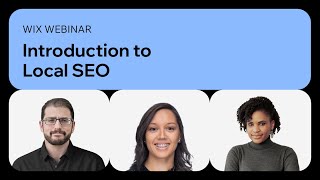
In this recorded Wix SEO webinar, head of SEO branding Mordy Oberstein welcomes the audience and introduces co‑hosts Crystal Carter (Wix head of communications) and Crystal Tang (Uberall). The session delivers a comprehensive overview of local search engine optimization (SEO) for businesses that have a physical presence or serve customers in a defined area. It explains why local SEO matters, contrasts it with traditional SEO, and details how Google Business Profile (GBP) and the Google Map/Three‑Pack dominate local search results. The presenters walk through the most impactful ranking factors—accurate GBP data, reviews, on‑page elements, backlinks, behavioral signals, and citations—offering concrete best‑practice tips such as completing every GBP field, adding high‑quality photos, responding to reviews, and using structured data. They demonstrate Wix‑specific tools: automatic structured‑data generation from business info, AI text creator for page copy, and the Uberall app in the Wix Marketplace that manages listings, reviews, posts, and citations across directories. The webinar also covers AI applications for content creation and customer messaging, and answers audience questions about service‑area businesses, hiding addresses, multi‑location service areas, choosing GBP categories, and the value of Google posts. The session ends with a reminder of upcoming webinars on AI and content, and links to Wix SEO Learning Hub resources.
Chapters
Welcome to local indoor to local SEO. I'm Marty Oberstein, head of SEO Branding here at wix. I'm joined by the always amazing Crystal Carter, who's the head of communications here at wix, and by Uberall's own Crystal Tang. So, so many crystals. Two crystals for the price of one and.
And one Morty. Morty Gem.
Right? Or as Simon Cox refers to me as Chris Tall. So thank you for joining us. To answer the most pressing question, yes, the webinar is going to be recorded. It'll be up in a few days or so. You'll get an email with the link to the YouTube recording. It'll also be hosted on a post, the same URL where you registered on the WIX SEO Learning Hub. So definitely know it will be recorded. You can always go back to the recording. Please ask questions. There's a Q and A panel. Please ask your questions. We have moderators who have been so fortunate to join us and they will help answer your questions. And those that we don't get to in the during the moderation period, we'll try to answer ourselves after we go through the presentation. So please, please ask questions. There's no such thing as a silly question. It's the only way we learn is by asking questions. So please ask questions. And again, we do a monthly webinar series. Please look for future webinars on the SEO learning hub@wix.com learn webinars. We have a. I think next month's webinar is about AI and content and how to handle AI and content and SEO. So we're looking forward to that. Okay, so we've done the agenda, or sorry, we've done the introductions, just part of the agenda. We're going to hear from Crystal Tang about SEO, local SEO and then we're going to go through some local SEO resources from the great Crystal Carter and then we'll have our Q and A.
So the local studio resources are going to be things on wix. So Crystal Tank is going to be talking a lot about things generally about SEO and some things about wix. But the last, the section I'll be covering at the end is how you can do it on wix. So if you're wondering about that, just hang on, hang in there with us and we'll get to it.
And then of course, the Q and A. By the way, if you're looking at me while during the presentation, I'm like looking around because I'm looking at the Q and A doc that we're working on to make sure we answer your questions. I am absolutely participating and paying attention.
And how could you not with such a fantastic guest that we've got here today.
Absolutely awesome. Yes, we're excited to be here. I have to say thank you to Mordy and Crystal and the entire WIX team because I'm excited to be here. So thank you for having me. Hopefully we can geek out over some local SEO which I'm just personally really passionate about. As Mordy mentioned, I am with Uberall and I'm here today really just to talk about an overview of local SEO. What does it mean for local businesses around the world? What are some maybe tips and best practices that you should follow? And then of course, as they mentioned, happy to take as many questions as we can answer and then of course if there's time to follow up afterwards, we can do that as well. So I think with that I'm happy to go ahead and get started. Started. So in terms of what we'll cover today, I'm going to provide a high level overview of why local SEO is important. I imagine, you know, it's, it's very blatant to a lot of users, but also I think there's some things to consider from a consumer perspective as well. I'll touch a little bit on the differences as well as overlaps between traditional and local SEO because there's definitely a lot of blending. I'll highlight a few best practices to improve your local rank. Talk about ranking in the three pack, the map pack, you know, on Google Maps, some tips and tactics. And then of course this would not be an SEO webinar in 2023 if we didn't touch on AI because it's just really changing the game. So wanted to share just some, some thoughts and discussion points around that and how we're thinking about it and how businesses can start considering leveraging AI in their day to day management. In terms of local SEO in general though, I wanted to share a few kind of initial stats to really set the stage and discuss why we're about this. So if I take off my marketer hat, my SEO hat and I really just think about myself as a customer and a searcher like I am on my phone all the time searching like restaurants near me, convenience store near me, pharmacy near me, all of this stuff and there's actually a really, really insightful review, survey and consumer report from Bright local that says 78% of consumers use the Internet to find info about local businesses more than once a week. Like I said, for me, I know, that's dozens of time of week. And then also there's a lot of considerations that they take whenever they are deciding once they find that business, how to choose them. One of those is reviews, as you can see in a stat that we shared about a review survey. But there's a lot of other things that we want to dive into as well. So really just to put it into plain terms is we want to make sure and help educate businesses on why this is important, why we're talking about it. It's really to help serve customers that are looking for a product or service nearby. And it's also essential for businesses with physical locations. So you can be a market, a pharmacy, you know, a salon, and you want people to come into your physical business. But it's also incredibly relevant if you are delivering a service to your end user as well. So you can be, you know, a garage door repair service. Of course, people aren't going to likely show up to your office with their garage door saying, can you fix it? You have to go visit them. But you still need to rank. And there's quite different tactics to consider when you don't have a physical business that people are searching, but you're delivering that service to the user. So when we think about local SEO versus traditional SEO, as I mentioned, there's actually a lot of blending that goes on. But if we take a step back, typically local SEO just means some type of local intent. This can be explicit. So that means someone that is taking out their cell phone or going online and doing a search, and they say, you know, taco shop San Diego, because I put the term San Diego in there. Google knows or, you know, plenty of other search engines. We can throw Bing in the mix, we can throw Apple in the mix. At this point, they know that you are looking for somewhere to visit when you say the word San Diego or when you say near me. However, these companies are also smart enough to know that there's a lot of search terms that are implied, local searches. So again, you know, I want to book a massage or something like that. They're also assuming that you do not want a Wikipedia article on how to become a massage therapist, that you likely want some local results in there as well. So anytime we talk about, like local SEO, oftentimes this means surfacing a business where a customer can visit or you can deliver the service to them. And oftentimes, when we think about traditional SEO, this covers the gamut of everything that can be on the website, on the Internet. So yes, there can be Traditional SEO tactics that are applied to local businesses, of course, but. But also what traditional SEO can serve that local SEO doesn't, or online only businesses. Businesses where maybe you're just trying to deliver information. That's where we'll see some of those kind of typical standard traditional SEO tactics. So if we were to break it down and we were to kind of bucket all the tactics into traditional and local SEO, we wanted to provide kind of this output. I will mention as well that because a lot of these are blended, while the targets for local and traditional SEO are different, they definitely can be shared across the board. But if you think of traditional SEO, it can be online customers for anywhere. Again, you're thinking of something like, you know, a Wikipedia article. Someone wants that to rank no matter where they're located. You don't have to be in the particular area to find value from finding this article. Whereas local SEO is really targeting that consumer that is nearby or planning to be nearby. So oftentimes thinking not just your immediate crowd, but maybe people traveling through or you offer a product or service that people are willing to travel to go get. These are things like potentially like lawyers, oftentimes someone is going to travel farther to get services or meet with a lawyer or potentially like a mortgage broker than they are to go buy milk at the grocery store. So sometimes your local consumer can be a little bit broader than the immediate neighborhood or area area that you're serving. Oftentimes the keywords that you're targeting between traditional and local SEO are often different. So you think traditional SEO, you might have broad terms. Whereas in local SEO, not only are you targeting, you know, components like near me and the area, but oftentimes your services and your products are going to be a lot more specific to your market as well. You know, maybe there's, for example, like trends or, you know, different types of ways that people refer to your product and service in your area that may be a lot more relevant to those local consumers than, you know, someone searching for information across the web. In terms of devices. Traditional SEO, of course you can target both desktop and mobile. Local SEO, of course, you can target both desktop and mobile. But the amount of searches that are taking place on mobile is continuing continuously increasing year over year when it comes to a local aspect. And again, when you think about yourself as a consumer, oftentimes I will use my cell phone to like just geo locate me and look nearby and I'll zoom in on the map to find this information. But if it's a product or service that I want to do more research on. I may then just go naturally take that to my desktop to find a little bit more. Maybe I need to see if it's in stock. Maybe I feel more comfortable completing my order on a desktop than I do on my cell phone, you know, that kind of thing. But in terms of just that first step of showing up, mobile is hugely important for local SEO in terms of what happens on the SERP or the search engine result page. So this is basically the results that show on Google and traditional SEO. You're really targeting basically everything that shows below the map. Whereas with local SEO, your main target is really going to be your Google business profile listing that displays in the map pack. We'll show you that, we'll talk about that a little bit more. But making sure your business is present there. And of course that only qualifies if you have a brick and mortar location or a service area business. So if you just operate a website, if you're just, you know, running, you know, a blog or something like that, then, you know, maybe local is not the most relevant. So, so the Google business profile and map locations are really going to target those physical businesses. Of course you want to think about things like search intent, conversions, conversion rate, and how these vary based on what people are looking for. Again, same thing here is taking the difference between what a consumer is looking for near them compared to just general information online. And then of course, the way the results are delivered to users. When you look at a local result compared to a result that's not local, you're going to see different elements in the SERP that users are going to engage with. And just to mention again, the differences in types of businesses, you know, e commerce SaaS, basically any business can do traditional SEO and only those brick and mortar and service area businesses are really relevant for that, that local intent. So to really focus a little bit more on the map pack, the three pack, I mean, I feel like you'll, you'll hear, I've heard it, I think even called the snack pack at some point in time. But this is kind of the, the gold mine for all businesses. This is where you want to show if someone searches, you know, salon near me, massage near me, you want to be one of those three results. The amount of clicks that happen on those first three results is, you know, astronomical compared to any others on there. So this is really the, the target and the gold mine businesses. It's also nice because it's a snapshot like, kind of like a digital storefront for your business. When you display there. So it's not just getting there, of course, that's the target, but it's also making sure that that small little snapshot is as impactful as possible to the eyes that see it to give you the chances of users clicking on you. But this is really the target, is getting your business in the map pack. So if we talk a little bit about some best practices to improve your chances of getting there, there are some basics. So one of the things that should always be considered is just keeping your data and your Google business profile accurate. And while customers may not know at the moment whether or not your name or address or phone number is accurate, Google does. Google is consistently getting user feedback. They're consistently scraping the web for additional information to validate whether or not this is a good result that they trust to deliver to a user. So as a business owner, you have to kind of influence Google's trust by saying, yes, my data is accurate. You can validate it against my website, you can validate it against Bing and Apple and anywhere else that that Google is going to check and validate your information. So having that really good source of truth, making sure it's consistent, is going to ensure that Google doesn't distrust your information and they will qualify you to rank in the top map pack. Of course, once it's correct, you want to make sure you have everything filled out. I think this is oftentimes one of the things that maybe small businesses may not take the most advantage of because it can be cumbersome. You may not know the right things, you may get some errors. But really taking the opportunity to fill out that entire real estate, add all your images, your content, your text to a user and allowing it to represent your business is going to be really, really helpful. And again, it sends all the signals to Google about your business. It tells them how and when they should show you by adding images of your location, of your employees, of your products and services. Google is smart enough to read that and say, oh, there's a lot of pictures from this business for this product. That means I should probably start ranking them. When people search this product, they are a relevant result outside of just completing your data. And we'll go into details in just a few slides about all of the elements. Of course, reviews and ratings on your profile are hugely important. This is really, I think, what allows you to stand out whenever you do rank in that three pack or in the top five. Oftentimes, the first thing I do, especially when I'm thinking of particular industries, is look at the ratings, it's not just are they three, four or five, it is how many reviews do they have, how many do they have compared to the other two businesses I'm looking at. Oftentimes your reviews and ratings are really going to be what tip the scale for a user engaging with you. And then of course you know, you don't stop there. Of course you want to start with a really solid profile and local visibility for your location on Google and on all the directories we mentioned. But you have to also implement your on page local SEO. It's not just important for ranking in organic, it really does impact the way you show on Google and again sends Google more information about your business when they should show you, how they should show you and oftentimes even pulling information from your website to justify why they displayed you to users. So getting into the three pack we talked about some of the high level tips but really optimizing your Google business profile, I will say if you have one strategy that you can focus on this week, this month, it is definitely starting there. Not where you should end, but it really makes a huge impact. It's where all of your competitors are and it's really the most visible to consumers. 90 or more percent of the the world's searches happen on Google still today they hue they have a huge market share. So making sure your business is in is complete and accurate is definitely going to move the needle for you. Also improving not just your reviews, the amount you have, but the volume of reviews you have and your responses to those reviews is going to be impactful. I think when you respond to reviews, oftentimes we see customers come in and possibly change their rating or they're evaluating the way a business responds in terms of engaging with them. So responding to reviews absolutely has an impact to the conversions that customers are taking on your profile. And then of course the more people clicking on your profile and doing business with you is going to be a positive signal to improve your ranking on Google. And then also I just want to highlight this is one of kind of my favorite tactics again depending on your industry is high quality photos. And when I say high quality I don't mean that you need to go hire a360photographer or or buy a fancy camera. Like every smartphone has a really, really nice camera. And it could just be like focusing once a month taking a handful of pictures of your office space, your products, you know, your services, especially if you're doing like home services like what is your equipment look like or repair job and adding these to Your business. There's just been a ton of development about how these display to users and also the information Google gets behind the photos, especially due to the strong a they have in evaluating the information in an image. And I will mention here, if you are in like a restaurant industry, I can't mention enough how impactful this is. If you take your phone out and you know, search a restaurant near me. I oftentimes say like the results look a lot more like Pinterest than they do a Google search because images are really, really at the forefront. So I always, I like to recommend going and doing a search that your customer would do and look at what that result looks like and kind of set your target for a business you would engage with. So we've been talking a lot about Google Business profile just to make sure everyone's clear. A Google Business search result looks just like this and your profile is what shows here. So I mentioned it is a snapshot of your business. It is not like your website, your homepage where you have endless space and endless functionality to describe and show your business. You get get a very limited view of information that Google determines is relevant for users to fill in. And I cannot mention to fill it all in to make sure you are giving customers everything they need to decide in that moment. So you know, you can go into things like just starting with your name and your category. I'll mention we published a really great article on wix, their SEO hub, earlier this year about selecting your Google category because I don't think businesses realize how impactful and important that is. So when Krystal shares some of the resources later, that'll be a great one to review if you just have considerations about that. But you can see here address information, hours, a handful of attributes and then again on every single one of these, you're going to see an image, you're going to see reviews, you're going to see some high level details. So again, thinking about the information a customer wants or needs at the moment when they're ready to make a decision, make sure that it's published on your profile. When we talk about getting your data to Google and then where it's going to rank when Google's considered ranking it, I think it's important to be aware of where this is. So we talked about local and traditional SEO a little bit. There are what we refer to kind of as the blue links. Those are organic results. That is where your website link will show up. Where we are targeting with the map pack is right there in the middle on the map, you'll typically see red dots or map pins or branded pins showing your business on the map. But then you'll have the nice map pack showing your business details. It's usually three results. Sometimes there are paid results in the map, so sometimes you'll see four or five with a very, very discreet word that says add next to it. That's one of the Map Pack ads. And then of course, at the top, there's also other areas of Google where you can do paid organic. There's LSAs, there's a few other different Google SERP features that they might show above the Map pack as well. But if you see and you do any local searches, Google is really drawing as much attention as they can to those main listings that are ranking on the Map Pack. And when we think about why we're targeting that, it's just because most people are clicking there. So of course you want to show up as much as possible on a search result page. When a user, you know, does their search, they take their query, but really they're clicking primarily on the map pack. Of course, some of the ads are going to gather and garner a lot of those clicks. So if you are in like home services or a category that offers any local service ads and you're looking to drive the needle, I would definitely recommend looking into that. But also if you're not in there or it's not something that you want to prioritize, really targeting the map pack as your first focus is going to be helpful. Of course, then there's other features and then the organic links that display below. You cannot, you know, forget the importance that your actual website has, not just in helping display on your Google profile, but ranking in addition. So if you can score that top map pack position or one of those three and then also get your website to rank for that query, you are pretty much golden. So I do want to highlight a little bit of the Local Pack ranking factors. I am going to caveat this, and I think it's official, but Darren Shaw, who runs the White Spark ranking factors, actually is publishing the new edition tomorrow. So It'll be the 2023 local ranking factors that comes out tomorrow. So these numbers may change slightly. For anyone that doesn't know, it's a survey of dozens, or even at this point, it might be hundreds of local SEO practitioners that basically answer all of these questions about what moves the needle for their clients and their customers that they work with. And I think the report is about 10 years in history, so it's been Released every few years since I think 2012. And so the new one is coming out. But what this gives us is an idea of what is most impactful to customers, what is most impactful to Google when they are ranking and displaying a business. But then also it gives businesses and marketers something to focus on. So again there's not just, you know, I'm not just saying focus on Google first because it's fun or you know, it's, it's easy. It really is because it takes the most impact, it makes the most impact when you are thinking about showing up first to customers. Then it's followed by reviews. There's a lot of different factors within reviews. This covers the content and reviews, the volume of reviews, the speed at which you get reviews, the recency, so many different things. But that's all taken into account and that is kind of the number two local search ranking factor followed quickly by on page elements. Very much like reviews. This covers so much it's content, its structure, its title tags, its headers. It's basically just having a really strong on page strategy and how that influences your ranking in the map pack. Outside of that, there's a lot of backlink strategy that can have influence. So Google seeing your business mentioned in reputable articles and sites around the web, linking to your website and the page that's mapped to your Google business profile really does send strong signals to Google to say, okay, not only do we trust this business, but all of these other reputable companies and websites also trust them because they're publishing them. So we are going to influence and increase where we're ranking this business. Outside of that we have behavioral and citations that rank right at the same. So behavioral really just means how users engage with your business. I will say this one oftentimes gets a little bit missed because behavioral is a huge influence for conversion rate. So ranking just means you show conversion means who's clicking. And so oftentimes the more people you click, the more Google is going to see, okay, this was a really good result. You know, we should start showing this more because a lot of users are engaging with the content. So while behavioral isn't an immediate and huge impact to ranking, it is really, really strong when it comes to conversion citations. This is what I just like to kind of call like the, the vegetables of the food pyramid. It's the thing businesses just have to do. It's not super exciting or you know, the, the prettiest of it, but it's just that thing that tells Google that your data is consistent it allows you to ensure that there's no breaks in the consumer journey. So yes, you might have someone searching for your business on Bing, on yellow Pages, on, you know, some of these sites around the web. It's important for that to be consistent because if they don't see the right phone number there or the right hours or the right address, while it might not be the lion's share of traffic, Google is going to see and track that that information is not accurate and you know that's going to impact your ranking negatively. But then also a consumer who might be engaging with your content there is also potential to have a bad experience. So making sure your data is published on all the sites your customers are on is definitely a ranking factor. And then what we have kind of trickling down at the end of the list is personalization. This really just happens to be the person that is searching for, you know, the business or service. Do they have preferences, languages, any settings on their, you know, browser or app that is influencing the results that Google is giving you? I think this is one of the ones that is becoming less relevant and we're, we're not seeing as often but it's still important to be aware that sometimes that impacts the results results. To touch a little bit on on page SEO and how that segues into local SEO, there's a couple of high level things that I actually will mention for any WIX users. Crystal's going to dive into some really nice tips about how to manage some of this stuff on on wix. If you're leveraging that. I can't, you know, talk about local SEO. If we don't talk about content, that's what you hear. Google wants information not just to rank you locally but just to understand your business. So really having a strong on page content strategy especially that includes local components is going to be helpful. Structured data, it's just a really helpful way to teach Google how to navigate your information. Otherwise you're leaving it up to chance. Like if you don't have structured data, they're going to crawl and they're going to think they have the right idea about your business. But structured data is really the map to get that them the information that you need and then of course local specific pages. So if you're a single business, you know, targeting different areas, especially service areas, it's great to have pages that represent each of the service areas. And then of course if you're a multi location business, ensuring that you have a page that represents each store location and has relevant content to that specific area is going to be impactful to Google. And then of course, whatever page you create, making sure that it's on your GPP profile to connect the dots. We talked a little bit about citation building. I just want to highlight here that this is going to vary by industry and by region. And really here just mentioning that you should identify and evaluate where your customers are. So I think like restaurants and hotels definitely need to consider Yelp. But if you are, I don't know, a grocery store, I don't know that it's important for you to be on Yelp. Same thing with TripAdvisor. That's huge when it comes to travel, that's going to be a really critical site. You need to ensure your business is accurate on you're responding to those reviews. If you are in the travel industry or rely on travel business. And then of course, you know, industry specific sites like Avvo, there's a ton of home services sites that you should make sure you're on. In addition to those regional directories, every area has them. You know, there's different sites in Canada that a lot of the businesses up there rely on. Same thing when you think about businesses in Europe as well, that there's, you know, very specific niche directories that are relevant. So making sure that your basic information is there, it's accurate and you have a seamless way to update it. And the last topic before I highlight the WIX app is really just touching on AI. And I think this one is actually really interesting because I just love reading everyone's ideas and tests of what they're doing and thinking of with AI. But oftentimes for me I'm thinking, okay, what could be helpful for a business owner? How can they leverage AI? So I don't know if anyone's used ChatGPT or tested any of these. I've seen some really, really interesting use things like saying, hey, I have a cafe in this area. Can you evaluate other cafes nearby and tell me what their average rating is or tell me what their categories are and what my categories should be? Oftentimes there's ways to mine information with AI to help you and to help inform some of your decisions. So I think it's also like, you know, one of those areas where you have to be cautious because it's a new model, things are changing and it only knows as much information as put into it. So I think it's helpful to do a lot of research so whether you are looking to target new customers and you're trying to get additional Information ideas for content which you will all see. I, I loved it. I actually played around with it recently. There is an AI text editor in the Wix app that helps you build some content based on, on some topics. That's really, really interesting. I love AI for content optimization and providing that. And then also I just think it's really interesting. Something we're doing at Uberall is leveraging AI to connect the dots in the consumer journey. So we have messages. For example, someone sends you a message on Google, they say, is this product in stock? If we have that information in our platform, not only will we pull it out and say yes, we have this in stock. Would you like to place an order for it to be picked up at your nearest location? Here's the address us. Those are the types of ways that I think AI really can help move the needle for local business owners and create efficiencies, but also help drive a little bit more revenue, which I think is, is what everyone is focused on. So I just love hearing about some of the tests and developments with AI. And as a local marketer, understanding where this can impact business owners is tremendously exciting. And the other thing I will just mention is our uberall app that we have in the WIX marketplace. So for those of you that have maybe started managing your Google business profile and you're looking to maybe see where do we go to the next level. We have an app that allows you to manage your listings and then also your listings and reviews. So this is going to publish that data across a network of a number of directories in your area. It also comes with manual cleansing. So one of the things that is quite annoying is if you go into Google and try to publish your business and they say your address is incorrect or your map pin is off, we have a process that as soon as the data comes into our system, it is cleaned by a team of experts to ensure it publishes quickly to all of these sites because they all have their preferences. There's also a number of metrics and performance scores. So you can track not just how your Google listings doing, but how your listing and data is performing across line. Of course, the ability to add and publish photos for your business as well. And then you know, if you're interested in reviews, there's a lot of really nice review tools and features that are available within the app. Pulling in your reviews, responding to reviews, creating offers and social posts, and managing that Q and A. So I think definitely, if you're looking to take your local SEO to the next level, taking A look at the website, the Uberall app in the WIX marketplace would be quite interesting. And we have a handy little QR code here that'll take you directly to it. Awesome. And with that, Crystal, I think it's back to you to share some of the local SEO resources.
Fantastic. Thank you so much, Crystal. That was brilliant. Really, really insightful. Thank you so, so much. A few people asked a few questions about some acronyms. A few people said, what's GBP again? That's Google Business Profile. Someone said, what's AI? That is artificial intelligence. And yeah, there's a lot of great tools. And also someone said, will this be shared? Yes, it will be shared. It's being recorded. It will be shared on YouTube. We will also be sharing the decks afterwards. So if you weren't able to scan the QR code because you're watching on your phone and you can't scan it on your phone, you can get the QR code after we, after we finish. I'm just going to share my screen now and we're going to go quickly through a few resources on wix. So we have a few, a few things that are useful for you to know. So first things first, when you have create a WIX website, you can add your address to, into the business info panel on, on your WIX website and it will create structured data automatically. Somebody asked what structured data is and structured data is essentially a little bit of code that sits behind your website that you can't, that humans can't see, but bots can see it. And they love it because it's essentially like giving them the recipe for your website rather than just giving them the whole, the whole pizza or the whole roll of soup or whatever it may be. There's a link, there'll be a link on this deck, so you can see that later as well. And also the other thing you want to think about is adding your name, address, phone number, also known as NEP in the local SEO circles, to your footer and your about page. So if you're wondering how to do this in your WIX SEO, in your WIX SEO website, WIX website, there's a section where it says add a section and we have a whole section that talks about you're adding your business info and it includes your business name, address and phone number. We also have sections that allow you to incorporate Google Maps onto your about page. So you can add in your business info, you can add in a little bit of information about yourself and you can add in your address. So she was talking, Crystal was talking about your pins on your maps and make sure that you've got the same address on your business info as you've got here and you can point that there. Crystal also mentioned our AI tools. So let's say you get to your about page and you're not sure what to put for it and you want to make sure that you've got your local business information there. You can use the AI text creator. You click Create AI Text and then you would click about for this particular one and then you'd add in some of the things including some of the location information and your service information and then you would get a few options on this particular one. I thought option three was good. So I clicked User Use Use text and I'm going to add it to page and then you can adjust it. It's very important that you check your AI text when you're using, when you're using AI because it's very much like it's generative and things like that. So it's important to double check it and make sure that it fits exactly what you need and that it's accurate for your uses. The other thing you want to think about is setting up your Google Business Profile. I saw a few people in the discussions talking about how do I set this up? If you're on Wix and you don't have a Google Business Profile, you can do this from within WIX wix. So you would go to your marketing and SEO settings. You click on Google Business Profile, then you start typing in your business name and it'll give you a few options. In this particular case, the business that I had wasn't listed because it's not listed but if it was, then it for instance would show would show on the list. So I would type in my business name and then I'd start filling in my details. So as Crystal was saying, it's really important to fill in all of your business details for this particular what I started writing and I wrote in 79 characters about my business. To be honest, I should add in more, more details than that. But and also we have the business category as well that that is a drop down. So there'll be other categories that you can choose from in there and it's worth trying them out and testing them. The other thing that you can add into it is you can add photos from within, from within wix. You can also adjust your business hours and you can add in some of the attributes. Google Business Profile gives you the option to say that it's a women led business or that you have WI fi that's paid or you have curved site delivery or that sort of thing that's really useful. So that's worth checking out as well. And finally, and then also we have some information about your business data. So Crystal was also talking about business data within your WIX cms. You can see the traffic by location report to see visitors by region, city and postcode. So in this particular one I filtered it by New York but you can see it's showing a few entries for Brooklyn and a few entries for New York, but you'll notice that they're both different postcodes. So if you're targeting, if you're, let's say you're a hyperlocal pizza place and you deliver really locally, you can see who's seeing you there and you can also see it on a map if you want to get a bit more information there. That's not New York, but here we go. The other thing that I would say, and number five is to check out the WIX SEO Learning Hub. As Crystal was saying, there's a lot of overlap between, between classic SEO and local SEO. So you can get a full overview on the WIX SEO Learning hub. You can also dive into all of our local SEO resources including Crystal's fantastic guide to the introduction to local SEO and her other article articles as well and lots of things about Google Business profile webinars and more. And with that I would say thank you and we can go into our very lively Q and A and get some more fantastic information from Crystal.
Awesome.
I'm still on you. Thank you Crystal. And thank you Crystal. I've been waiting all webinar to say that I wanna. There's been a lot of questions. I'm trying to monitor the Q and A section and I'm gonna try to unify a bunch of questions by theme so we can answer as many questions we possibly can all in one shot in the limited time that we have. So one question I saw a lot was I don't have a physical store. I'm a service business, so I don't know. I'm a mobile mechanic or I do home medical testing. How do I can I how does it work to set up a Google Business Profile? What's the deal?
Awesome. That's a great question. So the requirements for having a Google Business profile is either the customer can visit you or you deliver your service to the customer in person. Like you just have to make in person contact. You can't be a virtual Therapist that never meets your your customers in person. Although I think Google's going to think about that in the future, how things change. But that's currently the requirement requirements. So mobile mechanic, as you mentioned, absolutely qualifies. There's a feature within Google where you just have, you have to hide your address. And there are parameters around when you can and when you have to. So if you have an office space and technically someone could come visit you, or maybe you want your address published so that you could get deliveries easier or something like that, you can publish it, but then mark your business as a hybrid. So you can say, I also, you know, I, I accept people at my location, but I also deliver goods and services to them. And so Google won't hide your address, but they'll add features that say you serve a very specific area. Now if you are someone that practices out of your home and your home has no signage, and then you just go meet your customers or clients where they are, Google guidelines state you have to hide your address. A residential address cannot be published on Google as a business, again, unless there's clear signage. And then that would just be a feature within Google that you do is you hide your address and then Google publishes kind of this little polygon on the map and you add your service areas that you serve and that one will be published that way, but your address won't be displayed.
Perfect. Now let me ask you a different question. In let's say I have multiple service areas. So I service, let's say I don't know Miami and Jacksonville and Tallahassee. Don't know how far Tallahassee is from Jacksonville, but I know that Jacksonville, Miami are far away. How does that work? Is it one giant service area? Do I have to have multiple locations and each one has its own service area? How does that work?
So typically you're going to still just have a single business profile on Google and then in the field where it says area served, you list all of the zip codes, counties, cities, however you deliver it. Google's guidelines are just, if you put a city in there, you have to accept customers from everywhere in that that city, so you have the ability to expand it. Guidelines are quite gray about qualifying for an additional listing if you're a service area business. But a good rule of thumb is if you're just, you know, one business, everything operates the same than just a single business profile with additional service area areas.
Is there a radius like a. If the area is five hours away, can I do a service area for like New York and All the way to California.
So Google guidelines state two hours. I will mention they are a guideline that is not a rule. So that's one thing too because there's, there's examples where a wedding photographer would be willing to travel to a different state. They don't qualify for another listing in the states that they're willing to travel to. So it is one of those things that, you know, make a judgment call. As a business owner unless you have two separate businesses operating. I would say keep a single profile.
Okay, the last follow up question so I can answer all of the questions around us. I think by the way, there are a bunch of questions about hiding my address. I don't see you answering those people like, you know, know it's my home. I don't want people to actually show up. So you hide the, hide the address so you avoid that problem. But let's say, okay, I have set my service area right. Google has a two hour guideline but I set it from New York to Miami. Now someone's searching for mobile mechanic Miami. Will it hurt my rankings if I'm set from New York all the way down to Miami? Because Google will think, well, maybe I'm not relevant for Miami because most of in New York.
Yeah. So this is a, this is also really important. Setting your service areas in Google. It doesn't matter if they're just a bunch of zip codes in New York like Crystal is showing or they're multiple states. That does not impact where Google displays you. Google is going to display you one based on your physical address that you have. Even if you hit it, they still know where you were verified. But then also they're going to lean on a lot of these other local SEO signals. So this is where on page content and on page SEO is going to be hugely impactful because for a service area business you're going to have limited things in GPP that will tell Google, hey, I'm relevant in New York, but I'm also relevant in Miami. That's where they're going to see need to see, you know, backlink mentions in different, you know, publications around the country. They're going to need to see content on your page that serves all of those markets. But that's where I would, you know, start with gbp. But you definitely need to leverage on page and other tactics to actually influence Google and rank you in the right areas.
Right. So I think in that case if you have, let's say New York or Miami, so have a page on your website, Mobile mechanic New York Mobile mechanic Miami send a signal that way.
Yeah, yeah. And but I will say it's not going to be detrimental. You know, it's just not probably going to be as successful if you don't have a strong SEO strategy broadly that
was like therapeutic but they really dive deep into the service area business.
I know it's always a fun topic.
It is. It is also a very confusing topic because again Google's guidelines are a little bit not so clear sometimes about this. Another question I've seen is about optimizing my Google Business Profile. What goes into opting my local my Google Business Profile? What category or categories do I pick? Pick what matters? For example, a question I've seen and by the way, the Uber app can I believe can help you with this because I have been asked this question multiple times. Can I schedule create Google posts out of wix? And I think you'd be able to do that with the Uberall app. But are Google posts a ranking factor? If I post more often, is that going to rank me higher? What goes into optimizing this mysterious Google Business Profile?
Awesome. So I don't want to take the shortcut out of here but this is a very detailed answer because there's a lot and we could be here for another hour. What I will say is that the new local search ranking factors report comes out tomorrow. I'm also happening to be on a webinar with Darren Shaw on Thursday to discuss the new changes and a lot of it's going to be about GBP but I would definitely recommending just search local search ranking factors. It's White Spark that does it. I know he's contributed to the WIX SEO hub as well but that dives into to every feature of GBP and ranks the importance of it. So there's things like your name, your category, you know, what are the things that people think you should pay attention to that you really shouldn't. So there's a section on myths that really don't have an impact. So I think that is definitely a good starting point resource because it is actually quite complicated in terms of posts and other content that you can add to Google. It's definitely impactful and important. This is where I would say it definitely toggles the line between ranking which is showing up and conversions. I would say thinking about Google posts to drive action is going to be more impactful than thinking about it for Google to show you higher. But yes to your point the the Uberall app does allow you to schedule as many posts as you want, not Just to Google, but to Facebook, to Twitter, to Instagram, to other places as much to like a year in advance. So if you're like, hey, I've got a couple hours this month, you can go in and set your calendar for quite a while.
I think that the, the categories point is really useful and the postdocs in my, in my local SEO workings I've seen, I've seen posts make a big difference to sort of getting a little bit of visibility. I'm sure the ranking factors will go into, go into that. But certainly getting involved in posts can make a, can make a big deal or make a big difference. The categories I'd be interested to hear you talk a bit about categories. I' worked in the with a recruitment client for instance, and there was one where you could schedule it as a recruit recruiter and another you could, you could say the category was employment agency. And we had different search results depending on which one it was. I think I had another client who was, who is. It was a tennis center and they were like are we leisure center, Are we a sports center? Are we that sort of thing. So I wonder if you could expand on how you choose the best kind of category.
Yeah, no. And this is why I wrote an entire article on it. Because it's important. It is a huge driver of how you display. Changing your category will can almost immediately have an impact on how Google understands you. It's also something you shouldn't change all the time because it could trigger suspensions if you're going back and forth between it. So you want to be thoughtful about how you're. You're choosing it. So oftentimes times one of the first things to do is to do a couple searches on Google, see what your local and maybe even national competitors have as their categories and start that as your list. Like these are the five ones that typically display and you'll start to get trends. And then I would say go do a couple of searches that you want to show up for, see the businesses that Google is already ranking and you know, for those, those queries and see what their categories are and see where they vary and add to your list. I always think that's a really good starting point. And then one of the really important things is your category controls a lot of the other information you have access to inside of Google. So your attributes, the way your reviews look like there's so much stuff that is controlled based on your category so going and validating what's available. Like are there particular URLs you want to publish that maybe a mortgage broker has, but a loan office does not have. So you want to be mindful. Do I want to be a professional or a business? But yeah, that's what I would say is outside of getting your information correct, doing solid research on your categories is, is really important because it does. It's basically Google reads your name and then your category and then they're like, oh, do we show this business or not? Not. And, and it's quite interesting. So starting with those searches I think is really helpful.
By the way, in the chat I was going to mention this, but someone just threw into the chat. I'm looking right now. We have a resource on the SEO learning of how to select your gpu. You've had a category, so look for the URL in the chat or if you can't find in the chat because there's so many messages, look on the SEO learning Hub for that article. I want to look. By the way, someone asked about Google posts. Google posts are basically a almost like a social media kind of updates about your business and what they. You can showcase products and offers and all sorts of information. From my point of view, when I see someone or biz has Google posts, it makes me feel comfortable like this business is taking care of their business. They're concerned about their online visibility. When you see a, I'll call it a full Google business profile, it makes me as a consumer feel okay, this company and this business on the ball mall, I trust them. As weird as that sounds.
Right.
It's almost like as a, as a whole, optimizing your Google business profile is almost a way to convert people because it makes them feel comfortable with who you are and the fact that you are on top of things.
Yeah, I always describe it if you were to think like, I don't know, back in the 90s, the 2000s, when people frequented malls, like what attracted you? It was that store window because they were showing their products, they had this display, they had a cool name and cool font. Or the lighting was good. Like imagine that as your Google business profile, but just digitally. And I think that always you should, you should take that into account. Someone has a small area to get a snapshot of your business, give them everything they can to really have an understanding.
Yeah, I think, and I think you mentioned filling out all of the different things. And so for some verticals, like restaurants for instance, you can catalog every single item on your menu. Interior, exterior, things like that. For hotels, they have another like amenities. And like all of all of these sorts of different things and it really makes a big difference.
Yeah. And I mean again, that is where I feel like I take my hat off when I go and I know I'm going to go to a restaurant. One of the first things they do is look at the menu and it's great. If it's on Google, I don't have to click another link to get to another website. If I can scan and like make sure they have options for the, the group of people I'm going with, it's incredibly helpful. Helpful.
The same with images. When I look at a restaurant or whatever local business, I always like to look through the images and see, okay, what's the atmosphere like? Do we really want to go what does that food look like? So all the images and someone asked in the, in the chat at one point, what images do I show? Really? Anything I've seen, I've seen property management companies who don't think their office is not the commodity. They have properties all over there. So they're showing the property, they're showing the maintenance staff, they're showing them, you know, taking, fixing things, all that stuff. And you can really put a lot of, of a 360 degree view of your business on the. I don't literally mean 300 because you could do that. Also a holistic look at what your business is and what it is visually.
Yeah. Like what to expect when they engage with you. Absolutely.
Basically anything right around that. I want to talk about structured data markup really quickly because there's a lot of questions about structure to marker, which is code that you can add to your site that helps Google better understand explicitly what is on this page and it can alter and affect how you appear on the Google results page. So one question, I saw a bunch of questions around this or what kind of do I need to put local business structure data markup on all my pages? On my home page, a question that wasn't asked that I will ask because it does matter is let's say I'm a service area business do and my address is not shown. Do I add local business structure data markup or is there another markup that I should be using using?
Yes. So a few different questions in there.
Sorry, I'm trying to like put them all in. I know.
No, I will say in general, yes, like you should add structured data to as many pages as you want Google to understand. But they don't always have to follow the same things. Like there is structured data for you to mark up reviews, there is structured data for you to add information about your products and services and prices. And then yes, there's local business structured data, which I'd suggest there's a lot of elements underneath local structured business data that is likely a lot more, you know, detailed than what you need because local business is a little bit broader. But absolutely, if you're a service area businesses, there are ways to display your address and not display it in structured data. So absolutely structured data for the win as much as you can and as much makes sense for you, your business.
And I should just say if you're, if you're a WIX user, if you, if you input your address into, into the business info, your structured data gets added to the most appropriate pages and you don't have to worry about which pages they're on. So they go, they go straight into the places that they should be in.
And as Simon Cox mentioned in the the chat, we automatically add for your blog and your products. One last quick question. We have another minute. I saw people asking about this citation where everything, everywhere does it matter? You know, just the main ones. How crazy do I have to go with managing my citations?
This is where I just, you know, love kind of the, the technology at Uberall because we have packages based on your business and where your location is and if your service area. So our technology basically says if this user that's leveraging the wix Uberall app has a hidden address address, we are only submitting your business to directories and, and sites that allow hidden addresses because if you, if you don't then they're going to publish your address to those sites. And same thing if you're a business that's in Canada. We have a ton of direct integrations with specific Canada directories. You don't have to think about it, it's all based in the back end. So typically a good volume especially for small businesses that don't have this huge brand recognition to, to live on. You're not like the Walmart. Having more citations is better. 20, 30, 40. I think ours comes by default with 50 based on your region. But the idea is that you hopefully can leverage automation because keeping them up to date, they're not always the most savvy websites to edit your information on. So leveraging like the Uberall app is really helpful.
Yes, absolutely. Do check out the Uberall app and a big shout out by the way to Jason Brown for helping to answer some of those questions on citations in the chat. I love the local SEO. SEO community. You are all like a pack, a
local pack There you go.
Love it. SEO for the win.
Yeah.
With that just a reminder again, the Uber app, check that out. Check out the SEO tools inside of wix around local SEO and there will be a recording sent out to you so if you came late or if you missed something you want to go back, you will be able to re watch this as many times as you would like. And last but not only, not second to last, catch us again next month as we talk about AI writers and how to handle content from a content creation point of view and from an SEO point of view with Ross Hudgens and Mike King. It's an amazing group of people right there. Crystal and Crystal, thank you both so much.
Thank you so much. I will mention find me on Twitter, LinkedIn anywhere if you have more questions.
Thank you so much Crystal.
Thanks so much for having me.
Bye bye everyone. Bye.
More from Cardinal





Chef Noah was tired of dull tools - so he made his own #cooking #knives #chef #fyp #kitchen #shorts


every day Chef Noah wakes up and chooses violence... professionally🔪 @forgetotable #knives #chef

Mother Nature knew what it was doing with these color combos #graphicdesign #design #designinspo


Trying Modern Bread & Bagel for the first time 🥯 #nyc #glutenfree #food #shorts #foodreview
