Wix | SEO Webinar: SEO tips and trends for 2025
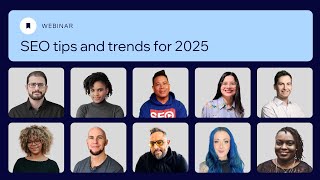
Crystal Carter and Morty Oberstein led a panel of eight SEO experts discussing 2025 trends: AI-driven search, the Helpful Content update, and new e-commerce SERP features. They covered brand management, structured data, video SEO, and how to integrate PPC with organic strategies for better visibility.
Chapters
Okay, we are live and we're very pleased to be back here for another WIX SEO webinar from the WIX Learning Hub, where we've got SEO and an informational WIX studio. And WIX and lots of fun, fantastic things. And today we are joined by a whole crew of incredible SEO folks. Folks. And of course, I'm joined by Morty Overstein there. Can you say hello, Morty?
I'm saying hello. I'm just admiring those earrings. I wish I had a pair of earrings like that.
They're quite. They're. They're a lot of earring. It's a lot of earring. I do like a big earring. I think.
So, yeah.
We're really, really pleased to be here to start. Start off the, the year with, with some great SEO trends. And we are getting lots of people joining in. Have lots of people saying hello. I've said hello. From Alaska.
Yeah.
Say where you're from. Say where you're from. Here we go.
It's always really fun to. We get a really international crowd. I saw South Jersey.
New Jersey. Sorry to hear that. New York. That's better.
From the Caribbean, From Dubai. Gosh. Really Coming in now.
Oh, there we go. There's international.
Spain, Texas, Madrid, Philippines, Kumstadt. That's the only Tagalo I know, but big fan, big fan. Okay, wonderful. Okay, so we're going to get. Get going.
There's Pittsburgh in there. Shout to my Steeler fans. Okay, sorry. Now we're good.
This is true.
Okay, so we've got a few people here. So just to give you an idea of the agenda for today, we are going to be. We are going. Oh, am I sharing my screen?
Yes.
Okay, so here we are. So today we are going to be joined by lots of fantastic SEO folks. And we are going to be starting with introductions, and then we're going to go into a little bit of a 2025 SEO in context, and then we're going to get into our discussions. So today we've got a big crew of speakers joining us. There's myself, Crystal Carter. I'm the head of SEO communications over at wix. There's Morty. Do you want to say hello to the low, Morty?
Hi, I'm Morty.
He's the head of SEO branding.
I'm the SEO brand at wix.
I'm at WIX and WIX Studio. We will also. We're also joined by Elita Solis, fantastic owner, founder, SEO extraordinaire over at Oranti. And we are also joined by Greg Thin who is over from Cypress north who will be sharing some PPC insights. Anu Adegbola from Search Engine Land who will also be sharing some PPC insights. Jamie Indigo who is going to give us some some fantastic information from all of her years of experience working consultancy but also working working for her team now. And also Rishi Lakhani who's also done some fantastic work for in SEO for a long time. Mark Williams Cook agency owner who will have some great insights on E commerce and Naomi Francis Parker who is an in house marketer over at Charlotte Tilsbury who will be giving us some great insights there. A few housekeeping notes for our crew. Yes, webinar is being recorded. People always ask this in the comments so if anyone asks it, tell them yes it will be recorded and you will be doing us all a big favor. And speaking of the recording, you'll get a copy of the recording with a link for the YouTube video sent to you via email. And also you can ask your questions in the Q and a panel at the bottom of the screen so you can see that there's a chat and then there's also a Q and A and you can ask your questions there. And wiz.com SEO learn webinars and you can also see any upcoming webinars there as well. So let's just get a little bit of 2025 in context. So just as a sort of year in review of 2024, Wix and Wix Studio introduced lots of AI powered assistance across the platform which was really, really well received and helped lots of people unlock a lot more tools and a lot more capabilities within the platform, which is great. And there are lots of SEO tool collaborations so SE ranking and some other things as well. And we also launched an SEO course which Alita contributed to and a few other folks as well and Morty and myself also contributed to that as well. That is free to take. So if you're interested in the SEO course, if you go to the WIX site learning how WIX SEO Learning Hub you can find that out and get more information about that. And if you'd like to hear all of the updates that happened in 2024, you can go over to check out the webinar that we hosted in December and you can see see that information there. Also across the Wider, Wider Web OpenAI launched their search GPT which really rocked the sort of SEO space and got a lot of people thinking about how to how to be visible in Search GPT and other tools like that. We also saw the emergence of AI Overviews formally. So it became instead of being sge, they formally named it AI Overviews. We did a talk on that or we did another webinar on that earlier in the year just as they made the name change and I had to update the poster, which was fun. So we've seen how that's been rolling out. They've gotten much better. There's still a challenge, but they've gotten much better. And we've also seen Google added lots more E commerce SERP features which I think we'll get into a little bit here. And also we had the helpful content update which, which caused a lot of disruption across, across lots of different verticals and was, was very interesting and caused lots of discussion there. When we look at 2025, there's a great article on the WIX Studio Learning Hub which is written by George Wynn and it features a lot of the folks that you'll be hearing from today and they're talking about the SEO trends. So again with some of those, Those new developments, LLMs are becoming more of a channel for, for websites to drive growth and traffic. You can also think about how you can use SEO to add value to your brand online. That is, and also thinking about honing in on niche specific tactics to help improve efficiency and illustrating the value for your stakeholders for SEO. Because there's so many different channels and so many different touch points. How do we illustrate that value? And then also thinking about a multi channel approach which may very well include ppc. And with that I'd like to get into our first set of discussions. So I'm going to stop sharing and I would like to, I'd like to hear from Mark. No, sorry, I'd like to hear from Aleta and Naomi. Aleta, Naomi, would you like to say hello?
Hello. Hello everybody.
So happy to be here. Yeah, very excited to be here.
Very excited. So both of you contributed to the article on 2025 SEO trends and you both had some interesting take on brand and entity. Elaine, I'd love to start with you. One of the things you mentioned was the importance of managing brand authority and you know, things like your knowledge panel and how and how that that will help you to manage your authority. Is that something you're thinking about at your agency and is that something that, that you're looking to offer clients in 2025?
Aligning and optimizing better for brand visibility in general is something that I am definitely looking to integrate even further. I'm fortunate. I have the love to work with a lot of very well established clients. So that is much more straightforward. It's more about aligning of what is already going on in all the areas and set what a proper branding department even. But I also work with startups, right? And I believe that unfortunately it is also the smaller companies or the startups that tend to have like a harder time to understand why it is so valuable. They tend to overlook a lot branded queries and branded searches and trying to rank for them and target them properly without realizing that they don't necessarily own these queries. They don't own this traffic. Competitors might be targeting them, comparison websites might be targeting them and trying to rank for them. Negative also even information about them that might not necessarily be accurate or the way that they want to be portrayed. And then also many of the branded queries are made through the customer journey to validate to ensure that they are the right offer that they are the right product with the right features that will fulfill the user search needs. So it's not necessarily traffic that they own, it's traffic that is about to convert. So they definitely need to target these sort of queries instead of being overlooked. Also a lot of these queries have to do with support what post purchase type of needs that they need to be able to also fulfill in order to reduce cost of support and to upsell cross sell rather than and engage and establish loyalty with their clients rather than them like giving up because they didn't realize that they were going to be able to be fulfilled whether the directly with the company and switch to another one. And we know how it is much more costly to attract a new customer or client rather than to retain that. So in order to align all of this that from a marketing and business standpoint is so obvious but unfortunately it stands to be overlooked so much in SEO. Also taking into consideration that finally last year because of and it had to be like a good doc leak, right? Like a few of the leaks that were disclosed last year shown the importance of how important it is also for Google and how they take into account a lot of signals that correlate with this. So at the end of the day because of all of these reasons is something that I want to develop establish further also making sure that Google understands that these websites are the authority in these fields. We have seen recently how even very big brands end up dropping for topics that are not necessarily aligned with their actual subject matter expertise. So this is also good branding, right? Like what do you want to also offer and provide information for at the end of the day if it is not something that you can be recognized of, what is the value of that? So it's aligning all of that and yes, it goes through by implementing structured data, claiming your knowledge panel, making sure that you consistently align and optimize all of the presence like from social platforms to mentions and citations that unfortunately many SEOs have also tend to overlook. Because of course since they are not blacklist, they don't matter. But we know that a lot of these information are taken into considerations by LLMs to understand if you are an entity or not and to recognize you and provide you in their, in their answers. Right. So this, all of this is what I believe can be tends to be opportunity overlook overlook and can be certainly value valuable today more than ever just because of all the craziness going on also in search.
Yeah, and I think that a lot of, a lot of times they show that, you know, when people go to Google in particular, they look for brand names and even if you're a small brand, you know, they'll be looking for, they'll be looking for a small, they'll be looking for your brand name in that town, for instance. So it's very, very important to have to have, have that very present on your, on your website and on your
social presence overall for specific features and also with comparisons of your competitors. And I know that a lot of websites, a lot of brands are afraid of comparison pages naming competitors. And of course I know that there might be legal implications, but I mean, of course check with your lawyer. But as long as this is done well and in a transparent way establishing what you are actually for and what are the actual services that you can provide and who are your audiences. And if this are a good fit for you or not, it will only help you to better validate and to offer your services to an audience that actually is the meant to go audience for you at the end of the day. So also a lot of this comparison pages, I believe that they are certainly valuable. They have, they get a bad rap just because of how they have unfortunately been used in the past. But there's nothing like and you can tell right when it is a good comparison when they say, oh, and we are for this sort of customers and we are not for you. If you don't have this, you don't have this, you don't have this. So yeah, certainly valuable.
Yeah. So I think, and I think that when we're thinking about brands, you know, this is something that, you know, you, Naomi, you have, you're working in house at A brand that's a well known cosmetics brand. And so how are, what are some top tips you would give for, for someone from an in house marketing point of view? If you're somebody who's working on, who's like either the owner operator, who's, who's the marketer wearing that hat as well, or you're the in house marketer who's looking to, to illustrate your brand, your brand name and your, and you know what your brand means via SEO. What are some things that you would recommend from and some tactics that you're looking to do in 2025?
I think one of the main things and what Elada said is completely spot on. But one of the main things and actually one of the reasons why In House was so interesting to me is because you have access to the other teams that have a direct impact on your brand authority. So like your social media team, your comms team, your PR team or teams, if you have several ones. And so obviously it depends on the business. But arguably it's easier to align what you want from the SEOs with what the brand is saying because you all, if the brand is, if the branding is done correctly, kind of singing from the same hymn sheet. So from an SEO perspective, that's where you can say, okay, these are the keywords that represent our brands that we want to rank for which you still need, you still need keywords, you still need to understand what people are searching for. But instead of looking at in a siloed way, which I think we know many SEOs have been guilty of in the past, like it's just SEO, we don't care about social or whatever it might be, actually how do we then communicate that to the social media team and all these other teams to make sure that when they're putting things out there, when they're talking about the brand, we can make sure that they're including that language, which then will help us with rankings and how people mention things, especially on social media videos. Like Charlotte Tilbury has quite a big YouTube channel. We need to make sure that the words being said in the videos but also in the descriptions align with what we're trying to portray about the brand. So for example, my case it might be like foundation, we want to talk about full coverage foundation, we want to be known for cosmetics in that space. And so we need to make sure that our keyword lists are then expanded beyond SEO or even just performance marketing. So the whole company, whether you're big or small, whoever's involved in those areas and actually putting the branding out there, they're aligned with what you're also trying to do from the SEO side. And I think it's where SEO should have always been, but now I think people are conking onto it more. It's beyond just optimizing for Google or wherever. SEO should, like, underpin everything, just as branding should underpin everything. Social media should underpin everything. And if you have, if you're a big company that has influencers or even a small company, how your influencers are talking about your brand, whether it's paid content or organic content, should align with what you're trying to target and portray around your brand. So that's Right.
Sorry. And I think that folks who are familiar with the SEO set of checklists on wix, when you go through that, they ask you, you know, what does your brand do? What does your company do? Where are you based? What are the keywords that are core to what you do? So, for instance, in your case, where you're a cosmetics company, you would say, you know, we do cosmet, you know, makeup, things like that. And so what Naomi's really talking about is making sure that that information also goes to the people who are doing the Instagram page, who are doing the other pages around there, so that everything lines up to help give you some clear. Some clear illustration of that.
Yeah, definitely. It's crazy that that doesn't actually happen that often. And so then you'll find that, like, your PR team are talking about one thing which generally is probably more closely aligned to the brand, but then as an SEO, you might be looking at something completely different and it's not aligned. And so that doesn't make sense. And also I would probably say that compromise will need to take place because the SEOs will have what they want and PR team will have what they want, and then the social team will have what they want. So also, just don't be afraid to compromise and also accept that you may have to tweak plans or what you want to target to fit with the wider business just to help everyone move forward, rather than being a loggerhead with each other. Yes.
And I think it's a really interesting topic and I think that if people are really interested in. Really interested in it. Morty Oberstein has written a great article on, on branding and SEO and how that's going to play out in the next sort of little while. And, and you can also hear more from Alita and Naomi about this topic in the article that I mentioned before. Speaking of Morty Overstein. I'm going to hand it over to him next section.
Wow, that's a smooth transition. By the way, that was a really long article. So like get a good cup of coffee or a beer or something and then take it slowly. By the way, there was a great episode of Crawling Mondays. Shout out to Aleyda. We talked about impact of brand and an SEO as well. Okay. So I want to, I want to over, you know, the whole idea of brand and why it plays into the, into the SEO equation. There's so much about that that is just, it's a huge problem and it has to do a lot with the amount of digital chatter that's going on outside right now. Things don't resonate the way that they used to. The amount of algorithm updates that we talked about, the amount of volatility that there is. And brand comes into focus because of all of the things. And I wanted to ask Rishi, you know, you've been working in the SEO space for a long time and brand has suddenly become this hot topic as if it didn't exist before in the SEO space. I know all the SEO OGs are like, yeah, this has been a conversation forever, but let's assume that it has if it's a hot topic. Now, in what ways do you think SEO consultants can add brand value in 2025 and 2026? Let's do both years at once.
Well, first things first, if an SEO consultant has not been adding value to a brand, they're probably not doing things right. Yeah. They shouldn't be consulting. Simple as, but in the realistic point of view. Right. And I think I'm also going to address the majority of the people who seem to have joined to listen. I think a lot of them are from small organizations, small businesses, and they want to try and understand. So I'm going to address this from that perspective as well. Right. When I'm a consultant and I work with small businesses, the first thing I look at is how well is the brand built, how many markers across the site. Talk about the brand. Does the logo include the brand, does the primary homepage include the brand? That sort of thing. So do a complete ground up review of understanding how well your brand is represented. The second thing, with small businesses especially, it's very important to make sure that local brand awareness is quite high, I. E. In all the local spaces where your sites are being looked for, are being searched for, or your, your services are being looked for. So from a small business perspective, just a complete overview of understanding whether you have everything in place, but from a larger, more complicated corporate. The latest SEO, kind of like buzz thing about branding and awareness and how SEOs can add value. Realistically, it's about making sure that your brand has a very distinct personality that can be gauged by search engines and search engine algorithms. Is there tone and voice that's unique to your brand? Is your brand's expertise unique to you? I. E. If I remove your logo from your website and I look at the content and I look at the products, I look at the services, can I tell or can I guess most likely who this brand is? That's an important part of the equation. Right. And that is part of the content, the display. But the second thing, the second part of that equation is when I look for that brand, can I find it for all the variations and services that expect that brand to be there for? Right. So your brand name and service, brand name and product, do you appear and do you appear well for them? And then the other thing that we used to do back in the day, which seems people have simply forgotten about, is sentiment analysis, I. E. How does that first page that your brand shows up for, how much of that is positive, how much of that is negative? What can you do to get that to be 100% positive? Right. You've got to have very good sentiment analysis. And that's a very big piece of the equation. And that is not just for big brands, it's for small businesses. You know, if you're, let's say Johnny's Candle Shop in Mayfair. Right. What are Johnny's Candle Shop Mayfair reviews looking like on that page? So these are some of the elements that I'll be looking at, at the very basic level, making sure that everything's in place. Yeah.
And it's really, really interesting, you know, the way I. The way I agree completely and the way I look at it is it all. It all kind of starts with that brand identity which you talked about. Once you really understand who you are with a little bit of depth, that should really guide you as an SEO. It should guide everything, the whole company, who you target, what you target, meaning what's your audience? What are you talking about? What's in your lane? What's not in your lane? So that that brand value and that SEO value to me really overlap because everything should really overlap. Overlap with the brand. It's kind of what I wrote about in the article.
Absolutely, absolutely.
I don't want to get too stuck on brand, but I'm hesitant to leave brand. But if I'm going to Leave brand. I'm going to leave brand for AI because everyone loves AI or hates AI, depending upon where you're sitting on the spectrum. No one has it. No one has a middle ground opinion about AI, which is so interesting to me. You either love it or you hate it. It's kind of like parents, I guess. Anyway, for the AI conversation, Jamie Indigo, who's one of my all time favorite SEO personalities in the entire planet ever. So you've been, you've been talking about or advocating building AI management and awareness into your career path. How does that work for SEOs and have to add in 2025?
Well, if we had a time machine, it'd be real weird. Like, hey, to prepare for AI, it's 1994. Things are about to get weird. Let's start with context. We exist in the context of all that came before 2023. More content was made that year than 2010-2018 combined. That is insane. And a lot of this is from AI. What we're seeing is an explosion of content on the Internet. And you've got to remember, Google does not crawl you to be altruistic. They want something out of it. It costs just over a cent to run a query. It makes them just a percent, an ROI for it. So Google has a goal now of crawling less. And as a humanist, I have many soapbox opinions about AI. But I'm going to be pragmatic here and talk about how we can go ahead and adapt and be prepared and rock. This can ring a bell. We are here now. So the first thing is learn how to control the AI crawlers. AI crawlers behave differently. Some of them can't render JavaScript, some of them use different controls. So no snippet means nothing for the average crawler when it comes to your web page and it sees that meta tag. But Bing, that means it won't use it in Bing chat. So there's ways of controlling it. And you need another limitation. Look at your logs. Who is crawling you? What are they after? Remember, no one likes wasting time or resources, including Google, including search engine AI engines. So when you have personalization resources, let's get them removed from the path. Pay attention to how robust TXT changes are coming. Remember, robots TXT was only formalized as an Internet standard in 2022, so it's relatively new. And my big thing in the human soapbox for AI is hey, we never consented to any of this. We need a bigger robots txt. We never had a say in whether our content was used for training and training these models, regurgitated AI is the new car warranty. All right? If you're building your content out of the same stuff everyone else is, you have homogenized information. There's not a unique value to it. And beyond that, there can come semantic drift. So when you have AI and you ask it, hey, rewrite this for me. Hey, condense this for me. It drifts away. And that's how we run into fake news. So we need to anchor in facts. Programmatic SEO can work really well here. You've got a database. It's full of facts about your products. Whatever you're offering, use that as a basis. Be factual. We don't have time for more trust issues. You can use AI to enhance your data. Make sure it's accurate and complete. These are really useful things for everyone. And great content wrapped in a bad user experience is bad content. So if your site is unusable, I don't care. I don't want to go to it. I will find somewhere else that probably trained its bottle off of your content. Biggest thing for everyone out there lives in small teams. You have to make allies. SEO is the sum of its parts. We are working. We are the only folks who get paid by one company while doing the will of another. And that's one wild. So if we prioritize trustworthy experiences that meet user intent, we're going to grow. Even if organic traffic numbers fall and they will, zero click is going to continue to rise. It's making those clicks that do come count and making brand. Making users trust your brand. They go, okay, I can go to that page and I can get what I want, or I can try and read that news article and I'm going to have a seizure from all the things flying at my face. We are in a unique place right now. Tech SEOs, this is the time to shine. It matters more than ever. I believe in you.
So many, so many points there. I think that. I think that if people want to dive into it, Jamie gets into a lot more of them in the. In the discussion. But yeah, you're absolutely right. Even. Even if it's not your favorite thing, you absolutely need to know how to. How to sort of team and plan for all this AI content.
Someone just called me Spock with personality in the chat. I love you.
Okay, so we're going to. We're going to move on and live long, and so we can live long and prosper as we go, go along here. So thank you very much, Jamie and Rishi, for, for your. For your contributions there and you talked about technical SEO. And we're going to head over to Mark Williams Cook who is a dev hand at technical SEO and had some very technical recommend share as part of his 2025 trend top tips and recommendations. So one of the things that he shared was a really detailed, really detailed approach to managing discontinued products and to managing those, those products in your e commerce shop. So if any of you have had an e commerce shop on Wix, then you, you have tools to help you manage some of, some of those things. And Mark Williams Cook has a great, had some great recommendations there. So, so it was really, really granular this particular recommendation and there's like a D thing. But I wanted to say, I wanted to wonder, I was wondering how is your team using like really granular tactics like this to make, make your clients more competitive in 2025? Do you think it's still important to get this granular?
Yes, more, more so than ever. So actually I think to break it down, there's two kind of streams we're looking at for E commerce at the moment. One, and something that's always existed for E commerce clients is the importance of technical SEO. E commerce sites are some of the most common sites that we deal with technical issues like facet navigation where you have different variations of products. You know there's a different sizes, different colors. That's like some of the most common issues. They're pretty well understood I think now within SEO from a technical point of view though, we're planning long term. So 2025 and later in Jamie's time machine maybe because I think where we're going with this is I strongly believe the interaction we're seeing with things like large language models are going to be like a stepping stone towards essentially people using AI agents to make a lot more decisions for them. So to, to give you an example, I did a talk recently about E commerce and I asked the audience if they thought Amazon was an ethical company. And pretty much no one put their hand up. And I asked who used Amazon and almost everyone put their hand up. And when we explored that it was just because of the, the convenience that Amazon offered. Right. And I think where we're going with AI and LLMs is that they're going to learn about your preference as a user. So when you are saying, okay, I want a new pair of running shoes, for instance, it will be some of the agents that make the brand decision for you because they will understand that, okay, you like eco friendly stuff. This brand is eco friendly. I understand this is your price range. This is the selection that you have. So kind of like a Google shopping Amazon recommendation on steroids. So firstly, we go really deep now with E comm clients in terms of technical SEO and making sure we're set up for that. The flowchart, pictures and everything as you described it, for discontinued products, some of the best success we have now with pretty much all companies, whether they are small, medium or large, is about tying SEO into their actual processes. Which is why I shared that's a flowchart that we actually share with clients. Right. So our general approach to SEO is that you should always, and it seems obvious, but be doing things that are good for your business, but doing them in the best SEO way possible. I think traditionally, sometimes SEO has kind of been this firefighting exercise where companies are doing stuff and you're desperately emailing them, trying to be like, don't do that, do it this way. So the discontinued products was a great example of, you know, it's not uncommon for an E commerce company maybe not thinking about SEO. When a, when a product is, is finished, it's not coming back. So it's not out of stock, it's discontinued, they just take it off the website because they're like, we don't sell it.
Right.
There's no reason for that. What they're missing, obviously from the SEO lens is there's still search demand for that. People still want this exact product. So the recommendation, the kind of SOP we give them is, okay, well, explain if there is a close alternative to this product, a new model. If it's gone away, then explain why and then there's more opportunity there actually for, you know, things like video, like, okay, this model of laptop isn't here because this one's here. And it does all these great things. So some of the best success we've had is actually taking those things which impact SEO and working with the companies. So they're just doing it as part of their process so they know when something is, for instance, for Ecom, out of stock, discontinued. These are the things we need to do. And the weird thing is, in my opinion, even if search engines didn't exist, they should still be doing these things because they're good for their user. So it's a win, win. And it also gets you out of kind of conversations around what was the benefit of doing this? What was the ranking change? How many impressions did we have? Because it's a good thing for users. You are making users happy, which I think is a good way to round it off because it, it contributes to pretty much what everyone said so far about brand. And I saw someone in chat saying, you know, how, how do you define brand? And someone told me something that impacted me quite a lot about this, which was they said brand used to be what you tell people about your organization, your company. You know, in the 1920s when you're putting up billboards and stuff. And they said, now brand is what people say about you. And I thought that was quite interesting for me because that's actually how it exists online now. You know, people Google for reviews, they do research before interacting. So all of these things contribute to that. Which is the bigger SEO picture.
Well, thank you very much for that very thorough answer. And yeah, I think that, I think that getting into those details can be so super valuable and people overlook it for LLMs as well. You don't want to waste their time on pages that aren't useful. And so it's good for good for that too. We, you talked a lot about E commerce. We've had some folks who are wondering about service area businesses and we have, we have Paul Andre De Vera who has some great insights on video SEO and video for visibility, which actually is a fantastic tactic for someone who's working in a service service so that they can illustrate the different services that they do. I'm a big fan of watching people retarmac driveways online. That's a thing that I like to check out. And if you're a wix user, we have some fantastic video tools to help you to showcase some of your content as um. So Paul, are you able to share where you think video is headed in 2025?
Well, we all know that a video is very, very important if you're not on YouTube. Now that's one action item you need to do. After this call, register YouTube account so you can get ranking on page one of Google almost instantly. In the video I shared with George, we were able to showcase him like us posting a video and I was ranking within minutes. So if you guys want to get ranking on page one of Google right away, make sure that you have YouTube. And also video is not only about YouTube. We have what Instagram carousels. We have TikTok carousels that are showing up on Google. So when you have video, you are taking up more real estate within page one. So be sure to make sure you start making videos. But one of the trends that I'm seeing now is live streaming. We all know Google loves fresh content, right? What's the freshest content out there? Live streaming so be sure to schedule your lives out and you'll see your videos rank on Google almost instantly. So be sure to make sure you get that going. And if you get brave, you want to mess with schema, you can add the broadcast event schema to make sure that your videos got start ranking and have that little live badge possibly increase increase ctr. So be sure to again if you look at like Google Search central one of the top majority of the case studies Google features are videos how video has helped companies drive more traffic, drive more conversions. So if you're not on video right now I feel like if get on video first and then you can get bold, start doing live streaming, schedule live streams and you will be set in 2025.
I think that's a great tip. And there's lots of different channels. So you talked about YouTube. It's also valuable on LinkedIn and even on X if people are still there. Thanks. And also it's valuable on meta as well. And speaking of meta and lots of other channels, I think we're going to head over to our PPC folks and Wardy's going to talk to us about that.
That I just want to say we're having like a semi reunion of it's new. It's New, the daily SEO series that focuses on PPC now because Annu is now part of it and Greg, Greg was always there but now Anna was a part of it. So check it out on the Rusty Brick YouTube channel on the Wix SEO Hub. Anywho, PPC, I know tons about it. I don't. I, I'm like genuinely interested in. I checked out on PPC when it started getting super common, all the updates every day I'm like I can't, I can't keep up. So now I just keep up with Greg and now Anu every day and I'm going to stop plugging that. So in your article you highlight a number of tactics. One that stood out was the prediction around more highly skilled PPC experts being in demand in the age of AI agents. Does, does that makes. How do we understand that?
Yeah. So like I, I'll actually go back to something that you said earlier on Modi about how they're. There's no like middle ground with AI. People either love or hate AI. I love AI. I hate the way people are using it. Like, and that's for me that's my split. I think AI can be incredibly powerful. I'm on the side of like it's the future, it's now, it's the future. We've got to use AI. Pmax is the most used campaign, the most spent amount of money spent in terms of Google Ads. But it annoys me how it feels like there's so many like junior PPCers, clearly junior PPCers who are making themselves look like experts. But it's just, they've just, you know, thrown a lot of, you know, AI prompts and, you know, throwing out, you know, the AI answers and giving the AI answers. And now I'm just even talking across the board and we can see that on loads of LinkedIn comments, which is just so annoying. Like, I don't need this engagement on my post. This is just a flipping AI response, isn't it? You know, and God, I was gonna
say, like LinkedIn somehow got more annoying, which I didn't think was possible.
Didn't think it was possible, but it is.
So I was going to ask you, are you talking, are you sure you. Are you talking about PPC or SEO? Because it sounds very similar.
Link is where it blends all together. Can I sell you some links?
I, I love to, I'm, I'm so glad to be in this group of people as well. And I love that I've come behind all these, all this fantastic, you know, you know, things that have been said because I so identify with all the talk of the branding stuff, the video stuff and everything. And it really works. I remember I was speaking to somebody about AI recently on my podcast or a podcast, but. And you know, I was talking to, asking him about how he used.
What's the podcast? You can't say. You have a podcast saying.
It's called the PPC chat round off. If you search for it.
Yes.
You'll see it as the. Previously I round up and I talk about, you know, loads of experts who are giving their ideas, you know, in terms of the, in the world of paid search, most of the time I'm talking to people who are working agencies or consultants. But this year I'm going to start interviewing people, paid search folks who are in house. And my latest interview I did with this guy, you know, Matt Bezek, who is fantastic, you know, in house, Paytok guy. He did some agency work before. He loves working in brand now and he was talking about how they use AI and he's like, whenever it comes to branding and actually showing what the, you know, what the brand is about. Yeah, they don't, they don't touch AI with that kind of stuff. They, they really, they get the experts to look at the brand and Brand is going to really be, you know, it really needs to be strong now these days with everybody, you know, using AI. So because Google has really not figured that out. Even though Google has come out with their updates of like, if you use this tool and add the brand guidelines into the AI tool, we'll be able to create the ad copy or the video or the images that really matches. And I have not come across one paid search expert that is using that and says it works well and knows how to actually reflect their brand well. So most definitely we're still going to need the PPC experts who know how to use AI well, who know how to prompt again and again and train it again and again to actually get it the data, get the right outputs for that it needs for the performance. And in terms of like strategy, human being, yeah, AI is never going to be able to do that properly. Human beings are still definitely going to be needed. And we're talking from the beginning of when we were doing paid search, it was always the experts. It's not the junior person that came in with that with the strategy. It's always the senior, the account directors that speaking with the clients to actually go through what your strategy for a client brand needs to be.
Yeah, I'm going to, I'm going to like theme, all of this because I like themes. That's my, that's my theme themes. But you're talking about like AI and ads and we're talking about, you know, brand before the later and Rishi and Naomi. The one thing that I find I can't do because it's not a human being. I know that's a shock to many is that it can't, it doesn't understand how to resonate. So you can write copy, but then the copy is just a little bit off because it doesn't know how to resonate. And Brand is someone who's done a lot of. Brand is all about figuring out how to resonate and the AI just can't, it can't do that. I don't think it'll ever be able to do that. But prove me wrong, AI, prove me wrong.
Definitely can't do it yet. I agree.
Definitely not. You know who can do it? Greg can do it.
Yes, yes, yes, I can. And Morty, we are on a Daily Show. As you talked about before, what is maybe the buzziest thing that's happened in the last quarter with Google?
I don't know.
The buzzing happened in the last quarter for me is your wall, which you redid looks, which looks Amazing.
Okay, I thought you were going to say AI to which I was going to disagree with you because the last maybe third of the year, shopping in commerce, it feels like every single week there's a major change that is rolled out for this. And this is sort of just like a little wake up call that if you are selling products or even if you can be tangentially impacted by this. Google is putting a lot into shopping and there's a lot you can do on the SEO side of things that can help with your ads but also help with your free listings. And just through the past four months I'm going to read some of these stories that we've covered. Merchant center next rolled out to everybody in September. Big powerful tool, has product studio in there, really allows you to granular manipulate free listings one at a time in bulk. You can do a ton. They also rolled out a brand new shopping design in September. Oh, October, they have more shopping features with AI injected into them, giving summaries. In November they came out with new labels for shopping, a new little gradient and a new system there. They also came out with an entire deals page in November. Oh, not to mention the fact that they have promotions that you can now attach to similar products within your merchant center. And then for the first time that I can remember, there was a sales event that is only for free listings in your merchant center account. Continuing on, there are sales by promotion types, there's a bag icon in search. And then in December you can start tracking pricing, share and save. And then finally there's popular store shopping carts last week there's expandable things. Google is putting a lot of effort into shopping. And give me that Brian Windhorse meme. What's going on in Utah when there are all these changes happening? A lot of times it's because they are working through making a better solution for shopping. And so if you are one of those merchants, I would implore you that the your merchant center account is part or should be part of your SEO plan. Making sure that you are showing up that your products are just very active and descriptive. If you need supplemental feeds, you've got supplemental feeds. As you're using these promotions, you're using these sales events. Google is trying to make shopping work and when they try to make something, there is a good percentage that this will actually happen. So that is sort of my big takeaway from an SEO standpoint point. And then also how could it impact SEO just ads in general in 2025? We have started to see at the end of 2024 as well. Ads are being mixed in with the organic results. I was just doing a search on bing and the first ad was organic, the second ad was sponsored, then there were three organic, then there were sponsored right within those SERPs. And then we still have not really even seen the impact yet of any type of AI overview ads and how that's going to affect anything like click through rate or anything like that. AI overviews now have for the most part there have been some things spotted in the wild not been showing ads in the minute that that happens and that you push again organic down lower. I think there will be some big impacts for that with ads showing in the results above, the results with AI review. And then lastly in December they tested multiple ads from the same advertiser. So there's a test again last week showing a mirroring all above organic. So that'll be something you want to keep an eye on even if you're not in ppc, just to see what is happening there and how the results may be shaped.
And I think there are a few people who were saying I was surprised to see a PPC in an SEO, an SEO webinar. But I think as you mentioned, there's so many different features and if a user is going to Google half the time they can't tell the difference between a paid feature and a not paid feature. So it's really, really useful, particularly in 2025 when there's going to be lots of more new ad types as you just described, to be aware of which ones are coming down the pike. With that, we are now going to go over to questions. So thank you to everyone for, for submitting questions and being active in the comments and thank you to all of our panelists for sharing all of their insights. Marty, do you want to start us off with the first question?
Yeah, I got a bunch of questions. I'm going to try to get everybody mixed in on this. The first question is someone asked Rishi, can you unpack what you meant by sentiment on the homepage?
Yeah, I mean it's quite simple. It's, it's a technical word for something very simple. Right. How much of that, how much of the results for your brand? Say your brand is Emma's Candle Shop and you Google it and they are obviously going to be more than two results for that, right? You're going to see a bunch of results. How many of those results are positive about you and how many of them are negative? Are you seeing positive reviews or are you seeing negative reviews? And that's Kind of like you're gauging sentiment. So it's a percentage. Right. So out of 10 results, if three are bad then you got 30% negative sentiment. What can you do to improve that sentiment? Because when people are scrolling and looking at those results and this isn't negative about you, they're immediately going to click at the negative result. People love looking at negative stuff first before positive. And that's what simple in simplicity sentiment is.
Yeah. And it's interesting. There's always like these tactics and it'll close your ears for a quick second. Like, like, like. Yeah. I wrote a column for this unsearched journal that's coming out in the next day or two about this very topic. Sorry Anu, I love you too, but they asked. So there's usually tactics like oh, if you, if you tweet or if you X, if you post. I don't want to call it. Still don't know what to call it. You'll, you'll get a box on the, or carousel rather that shows up on the, on the result page with your, with your X posts and that can push down a bad result. Yeah, I don't, I always find those strategies like, you know, like great, why not do it? It gives, it gives you control. By the way, it might knock off a good result and might keep the bad result. Doesn't help you the top of the SERP either so much. And I think like the wider thing that you need to do with that is really there's usually when you have, let's say 8 out of the 10 results that are, that are. There are negative, there's usually a relationship with your niche industry that you need to fix and there's short term things that you can do like getting a Twitter box or whatever it is. But the real thing is you can read about it more of my columns. I don't want to take up too much time is you have to repair the relationship in the industry and then you'll have the momentum to fix those results thereafter. Speaking about brand and, and, and search, Aleta Naomi there's, you know, often in SEO there's this focus on search volume. So it's. I know, I've seen this by the way. It's entirely possible that one brand search volume for their branded queries is more than another brand's. That statement on its own is not shocking. But sometimes the brand with less search volume, meaning you have a brand. Imagine like Nike just for the audience. Imagine people are searching for Nike and you have Adidas and Nike has, you know, a million people show up to Nike's website by searching the word Nike and half a million people show up to Adidas's website by searching for the word Adidas. But Adidas might have more branded search terms. So Nike might have a million people showing up from 10 terms and Adidas might have half a million people showing up to its website from 500 terms. Which is better?
I will say the long tail and it has to be aligned at the end of the day also with something important here. What you mentioned before, potentially the sentiment, I will say that having like a million searches about the brand, but always negatives asking about is this a fraud? Is this brand a fraud? Might not necessarily be. Be necessarily the best.
Does this suck? Not what you want.
Indeed, indeed. But yes, I will say that in terms like all things being equal, let's diversify. It means that potentially they are the you're offering more and you have more feature and you have more product lines. And I prefer to not have all the eggs in a single bag necessarily. It probably also means that you have done a really good job establishing your different product lines too and making them recognize as their own brands too. So I like to think along those lines for sure of diversifying, establishing more, incentivizing people to search more about your brand too through different sort of campaigns. So I have had clients in the past that literally launch campaigns that have to do with new offerings or funny things for their community that have a lot of community, community activity, social activity, influencers activities do that have impacted a lot search. At the end of the day, everything is connected. We don't work on a silo. And I believe that that is why it's so, so useful to work along all the different areas and channels. Speaking of like for example, you spoke before with Andrea about video. I have a client that is in the technical space, let's say that have a very powerful channel because it's a very complex topic and they have a devrel. They, they have have a lot of work going with influencer influencers across different channels too. So we do a lot of work together understanding what is going on and once what is being searched in YouTube, learn from that, incorporate that also in the traditional, let's say content that is created on the website, embedding also the videos on the websites, trying to also maximize the visibilities of those videos in the video carousels in Google SERPs, et cetera, et cetera. Right. So that is more visibility, that is more share of their brand in the serps.
Too.
So it can really, let's say, compound in a way that you don't expect initially.
Yeah. Naomi, are you thinking about that breadth and variety of branded searches also? Or just the. It's like a softball question. Or just the volume.
I completely agree. Because, yeah, sentiment and intent are so important. You can search for Nike, but you could literally be searching for anything. Whereas if you're working for the brand as an SEO or anyone that's involved in conversions and E commerce, if you want to drive revenue, it's about reach versus resonance, you want to resonate and you want to actually make sure those people convert. If you're just like Charlotte Tilbury, people will search for Charlotte Tilbury because she's a person, which is great. But do I want that or do I want people who are searching for Charlotte Tilbury Foundation? I want the people searching for Charlotte Tilbury foundation because they have the intent to then purchase, learn more about the brand and more about whatever we're doing. But then also, like Elaine said, it makes sure that you've actually, you've done good work there to make sure that your brand resonates with what you're offering, what you wanting people to actually, how they want to interact with your brand, what you want them to do, what action you want them to take. I would argue it's much harder when people just know the name but don't associate you with anything else.
Yep. Hey, that, that, that variety in the query shows that you've done a good job with like showcasing your, your, your product and something that Mark Williams Cook talked about at Search Norwich. Wow. I'm really like weaving the questions. And was that how branded searches play a factor in the algorithm? So for example, if I'm searching for Nike plus shoes, Nike plus athletic gear, Nike plus whatever else they jerseys, whatever, that's a signal to Google, right, Mark?
Yeah. So this was in Google's site Quality patent, which describes how they are scoring websites. And the patent talks about, among other things, when people are googling and I use the term brand like fairly loosely, I would say are navigationally searching for a particular website along with a search term. That's a really helpful signal for Google to understand, okay, this is, this is, you know, this is the site, the brand that, that people actually want when they're looking for this. And there's ways, even if you're a small business, that you can work this into your marketing. So for instance, if you're doing say, video ads on Instagram or TikTok, right? Apart from if you can Post an actual link for people to click. You can prompt people have the call to action to be for them to search specifically for something. So the most basic example is like in the uk, there's a TV ad for like the British army and they tell you to search for like army jobs, right? Because they know they'll rank number one for that. So I think encouraging people to search for your brand and maybe like your products or the category of product can be really helpful. And it's actually a more natural action, right, because if you see, say in a magazine, a website advertised, probably what you're going to do is go to Google or your favorite search engine and just roughly type the name of what you saw. You're unlikely to be like www.so that's something we encourage all our clients to do throughout their marketing, is try and encourage people to do searches.
As we're sort of trying to wrap up here in the small amount of time we have left. One of the big questions on both the PPC side and the SEO. So I'm going to summarize, like everyone's questions up into, into one. So get ready everybody else who hasn't talked yet. What, what's the best way to secure both ad performance and rankings for the, for the long term, for longevity? Let's start with Greg. Let's put Greg on the spot.
Be good at your job. I mean, it's hard to say. I think you really want to look at what's working well. You know, you can say if you have limited budget, like, hey, if I'm doing well on these specific terms organically, I may try to lean in to get some incrementality on ads and terms and keywords that I'm not doing well for. And then I really think, like, these things go hand in hand and you should be 100% working with your team that is running your ads, seeing some of those terms, not just your keywords, but your specific search queries that are driving traffic and converting and saying, okay, let's take these, let's put them back in, kick them over to SEO team, see what terms you want to put into the mix to kind of come up with a content plan and a ranking plan for. So I'll kick it to Anu.
Do you disagree with Greg?
I know, yeah, I absolutely agree with Greg. Now more than ever, we're actually going to need the PPC experts I said earlier on to actually know what works, what the foundations of paid search is, what the foundations of marketing as a whole is. It's about knowing where your customers want to see. I think we can get stuck in licking, thinking about clicks and, and all of those numbers and metrics. But you're advertising to people, not, not, not bots.
Yeah.
And back to SEO. Jamie, what works long term? What's going to work long term? Guarantees. I'm looking for guarantees for my rankings. Do they exist?
Why would you have me lie to these nice people?
I was just sending you up to say no, Morty, that's wrong. That's.
I'm not going to lie to them. There are no guarantees. That's not how this works. Anything can change at any time for any reason. But fundamentally, humans are still going to search. They're still going to look for answers. And if you give good answers, if you're trustworthy, they'll find you.
Wow.
I hope I give good. I hope the ant. Well, all the answers here were really good. And that's how I'm going to end off the Q and A.
Thank you to everyone for joining us. It's been really illuminating and it's been so good to have so many different perspectives, folks coming from a consultancy perspective, coming from an agency side, coming from in house and with, you know, new folks and people who've been working in this space for a long, long time. So thank you to everyone for joining us again. You can find the replay of this. It will be on the same place where you registered for the webinar. It will also be posted to our YouTube channel and you can get resources on that pages on the LP as well. And join us again for our next webinar. Thank you so much to everyone.
Thanks all.
Bye bye, bye.
This will be on the same place where you registered for the webinar. It will also be posted to our YouTube channel.
More from Cardinal





Chef Noah was tired of dull tools - so he made his own #cooking #knives #chef #fyp #kitchen #shorts


every day Chef Noah wakes up and chooses violence... professionally🔪 @forgetotable #knives #chef

Mother Nature knew what it was doing with these color combos #graphicdesign #design #designinspo


Trying Modern Bread & Bagel for the first time 🥯 #nyc #glutenfree #food #shorts #foodreview
