Wix | SEO Webinar: The Power of Keyword Intent for Organic Success
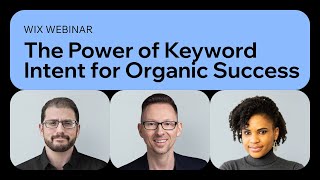
In this 2022 Wix SEO webinar, Morty Oberstein (Head of SEO Branding at Wix) hosts a session with Marcus Tober (Head of Enterprise Solutions at Semrush) and Crystal Carter (Head of SEO Communications at Wix). The webinar introduces an upcoming Semrush integration within the Wix platform that will let users access keyword suggestions, search volume, difficulty, and intent directly during site setup. The core of the presentation is a deep dive into keyword intent, defining its four categories—informational, navigational, commercial, and transactional—and mapping each to stages of the customer journey (awareness, consideration, conversion). Data from Semrush shows that informational queries dominate search volume (≈53%), while commercial, transactional, and navigational queries make up the remainder. The speakers explain how intent influences content strategy: holistic landing pages that address multiple intents, format diversification (lists, FAQs, images, videos, schema markup) to capture SERP features, and the importance of updating content to maintain relevance. Practical guidance is offered for small‑business owners, including using local schema, leveraging “near‑me” searches, extracting keyword ideas from customer pain points, and starting with low‑competition, long‑tail queries before tackling high‑volume terms. Keyword difficulty and volatility—especially during Google core updates—are highlighted as factors that can cause rapid ranking shifts, underscoring the need for ongoing content maintenance. The Q&A segment addresses real‑world concerns such as standing out with common keywords, targeting every SERP intent, and using Semrush tools (Keyword Magic, Search Console) to discover existing rankings and user intent. The webinar concludes with a teaser for the next session on homepage SEO and a reminder to access Wix’s SEO learning resources.
Chapters
To harnessing the power of intent for your SEO. My name is Morty Oberstein, the head of SEO Branding at wix, and we have a wonderful little webinar for you. Before we go around the horn, I introduce our crew to you. For today's webinar, I just want to go through the quick format. We're going to start off. Well, we're going to start with a little bit of a sneak peek and surprise for you. We'll get to that in a moment. We're going to start off with Marcus Tolber from Semrush presenting all about user intent. We'll then have a short little panel discussion where we dive into what Marcus talked about, and then we'll be taking questions from you. So if you notice there's a Q and A section in the zoom setup, throw all of your questions into there. At the end, we'll get to as many as we possibly can. We'll also have some moderators trying to help you out throughout the webinar. There is no such thing as a silly question, so please, whatever questions you have, we would be happy to get to as many as you possibly can. So do not censor yourself in terms of the content that you ask around, keyword intent, and how to leverage that. Now, let's go around the horn. Today we have with us the head of SEO communications at wix, Crystal Carter, and Marcus Toper, who is an absolute legend. He's working at Semrush of their enterprise product. I will just say this, Marcus is one of the founding fathers of SEO in my mind, because he started to create enterprise SEO tools. One of the first people to do that. Crystal. Marcus, thank you for joining us.
Thank you for having me.
Yeah, thanks for having me, too.
Pleasure. Crystal, what do you do here at wix?
I am the head of SEO Communications, so I communicate about SEO,
which is
what you're literally doing here now.
Oh, my gosh, look it, we're doing it right now.
Coincidence.
And one of the great things about the role is that I get a really good opportunity to talk to fantastic people like Marcus and to talk about fantastic tools like Semrush to folks at wix. And I'm really excited to hear more about that today.
Definitely going to get into that. And Marcus, I know you're over at Semrush. Do you want to share with us what you do there?
Yeah, I'm heading the enterprise solutions department, so I just joined Semrush in January. But actually, the goal really is to build great solutions on Top of Semrush, which already is the perfect foundation, especially towards larger enterprise companies. Yeah, it's super exciting.
It is. And Semrush is an absolutely fabulous tool, which is why before we get into the actual deep diving into the keyword intent around SEO, have a little bit of a surprise for our wix folks here. Share my screen really quickly because I'm happy to say that coming soon, in the near future in the dev world, when you're developing a tool, the near future is, well, relative. There is going to be a Semrush integration right in wix for your WIX sites. You'll have a new way to access keywords and deeper metrics around keywords in your initial SEO setup. So when you are setting up your your wix site and you go through your SEO setup checklist, one of the steps in there is choosing keywords to focus on for your website. In the near future, you will have an in platform connection to SEMrush, which you can see in the screenshot here, that will give you access to keyword suggestions from Semrush directly. Now, what's amazing is that Semrush has a fantastic algorithm which they recently updated around this to offer you the best solutions or the best keywords that align with what you want to do for your website. So what you would do is you would type in the topic that your website deals with. In the example here we have hip hop. You can choose a region. For example, here we're showing the southern part of France and you get all sorts of keywords relevant to that topic and to that region. And you get all sorts of metrics like the search volume, how many people on average or in general are searching for that particular term each and every month in that region. What is the trend is that, are people searching for that keyword or that topic more often? Is that a hard keyword to rank for and which we're going to get into today? What is the intent behind the keyword? Is it an informational keyword, commercial keyword? And if you're confused about what that might mean, well, that's why Marcus is here. So I'm going to throw it over to Marcus. Look for this soon inside of the WIX platform. Very excited to have Semrush inside of wix and the keyword intent part of the equation that our users will be able to have access to. So Marcus, how does keyword intent work for search?
Yes, I'm super excited to talk about keyword intent because that's a topic I really like to talk about because so many people talk about keywords and rankings and is my landing page optimized and all these kinds of things. But often they do not understand that the searcher has different intents, especially throughout the whole customer journey. And keyword intent is really one of the most important segments that you should use to create a good content strategy, to look at your success, to even analyze the competition, because not every competitor based on the customer journey is a competitor. That kind of sense. All right. Yeah. I mean, Mori announced me, but I mean, I'm Max Tolber heading Semrush Enterprise Solutions unit. And I'm an SEO since like 22 years.
Yeah.
What is keyword intent and why is it important? So keyword intent is the notion of when, what people expect to find when they use search engines. And it's a concept that Google kind of like made more popular in 2016 already, like many years ago when they said, like, hey, we have a concept we call micro moments. And because we as a search engine, we want to deliver the best results based on, hey, I have things like I want to know moments, or I want to go moments, I want to do, I want to buy. And this is a concept that Google kind of like made like public. And based on this, Semrush has built the keyword intent, which is very important because it is a good reflection of where people are and what people are look for in the whole customer journey. But let me explain a couple more details about the keyword intent in general. So the first one is information. So this is the very broad one. When people look for a specific question or general information, it could be like, typically question searches like how to tie tie, what are capers, or who's signing singing at the Super Bowl. And this is something you can really multiply because both, whenever people have some sort of problem, they open Google and they do a search. And this is typically information searches. But information searches can be also a little bit more specific. People maybe search for what is keyword intent or definition of SEO or how to build a website. And this is something you should keep in mind because informational searches are really, like, important. You know, how to start getting more insights from your customers and how actually to start being more visible in the whole customer journey. Then the navigational keywords. When you look at navigation keywords, you often think of just brand searches, but this is not true. When the searcher has a certain intent to find a specific website or physical location or certain thing like a login page. This is often when searchers may be not in the know or maybe too lazy to kind of go to the website and just, you know, go to this specific page. So for example, ebay login has a very high search volume or Facebook login. So these are typically informational searches, but it could also be like Obama's Twitter account and so on. This is something we also define within our keyword tools. Then we have commercial intent when people search for a specific brand or specific service, but also like for typical comparisons or best of searches, typicalistic pages. So like I put Air vs iPad mini or on this office chairs and all that stuff. So this is important because there's one last segment which is transactional because this is even closer to the transaction when people already have decided like, hey, I know now I want to buy an iPad air, not the iPad mini. I'm going to search on like iPad air deal. So iPad air for cheap or iPad Air 2020. Because I don't want to buy the newest one, I want to buy like an older one or where to buy a kayak. But transactional searches are not just for like purchasing products. They're also like there for completing actions. So if you do not like like sell products but you offer services or offer something else, it could also be like among us download or new construction homes near me. So please keep this in mind. And if you look at all the whole like segmentation of keyword intent, we could also take a look at like how keyword intent plays an important role from the customer journey perspective. Because if you look at it from the final perspective, like awareness and interest, they have like the highest search volume. So that means like in, in this area, people are very unsure what they actually really want. If it's like a certain product, if it's like something else, or if it's just general information. And this is something where you see now in the segmentation like information searches, they have the highest search volume. Then you have commercial searches, more like the interest and consideration phase. And then we have transactional searches who are much closer to the, to the transaction. And often companies, they mistake like the segmentations by okay, transaction searches, they deliver the highest conversion rates. We are trying to focus from the content perspective primarily on transactional searches. But they will miss out the majority of searches the consumer or potential consumer does. Because at that moment when you are in awareness interest phase, this is where you have more search volume. And this is where if you do not get customer, it's more like, it's more unlikely that you get the sale in the end. So let me give you one example. So think about the user and the intent, right? So you know we are in next webinar. So people search for how to build a website. So many people search it every month because they want to know and if WIX want to be relevant for how to build a website they can't just have their, their landing page with a purchase button like here, see the prices and you know, let's, let's go and create your website. It's like people have different kinds of searches and in this list it's going what you are going to get in a new CMS and WIX very soon. Like different types of searches with different intents. And how to build a website is a typical informational query. And if you want to be relevant for informational queries there are certain things you should understand that people are looking for structured content. They look often for lists. People have gotten very lazy. They don't want to read long texts. They want to have like structured content like step 1, 2, 3 or they want to have like, like frequently asked questions like structured content in that kind of sense because they want to learn very quickly how to build a website and like I don't know like how to learn all these kinds of things. And this is what WIX actually did. And if you look at all these different types of queries even here for the commercial query website builder you have much higher search volume than for the information query like how to build a website. And then you have your navigation queries like WIX website builder with a decent search volume as well. And this is interesting because if you look at and it's not just to please like Crystal and Molly here, it's because what WIX really actually did here is they've created what's called a holistic content landing page. So that means based on the different types of researchers intents that people want to learn how to build a website. People want to understand how all these steps work. People really want to kind of like understand what WIX is offering in terms of product. They created one like holistic connected experience. And the interesting thing is again so the intent of keywords is really dominating like what Google is showing because Google is very much, I mean Google's mission is to discover the best content, right? So Google really wants to make sure that not websites are ranking that just have keywords on their page or use the keyword and title tag. So it's really important that the search on the end really finds as fast as possible what he was Intended to look for. So if you look at the commercial intent website builder and the information intent how to build a website, you even see that the results look very different. Whereas on the commercial intent side you mostly have really product pages because Google understands this is searcher that wants to build a website. And there are lots of free but also lots of really good commercial services. So wix ranks your number one. And if you look for the information intent how to build a website, you see the first one is a feature snippet. You have point 1, 2, 3, 4, 5, 6. How to create a website. That's often a good intriguing piece for the user to see. Okay, this is maybe even answering my question or I want to know. And voila. Also WIX is ranking on number one here, but we have two different intents. If you look at the rest of her results, this is really interesting is if you just purely look at the rankings. WIX is the only website that is able to rank for both for the commercial and for the informational query. Everyone else is different. On the left side here for the website builder, the commercial intent, we primarily have product offerings like GoDaddy, Wix, Squarespace, etc. And on the right side for the more informational intent query, we have mostly content pages like long form content pages. So you see here now it's not just the case that you can only wing for one intent. If you create a holistic experience, you can cover the customer journey on a much broader scale. So you can intrigue. The customer comes to your website, he can learn. But at the same time, once you have learned enough, he can even convert on your website, which is actually super cool and not very common. A little bit more background in terms of the distribution of keywords by intent based on our study that we made just recently, informational queries, the majority of the queries people do if you look at then commercial and transactional queries, commercial queries are at 10% transactional like almost 20% and navigation are like the minority of just 10% here. So keep this in mind because if you create content you should always make sure that you cover enough of like information intent as well. Because this is where you can capture a lot of search volume. Which brings me to search volume by intent. So search volume by intent means we at Semrush we measure like how many people search on an average basis, like on an annual basis per average certain keywords. And if you look at information intent it's still in the majority with 53% of all searches on our last Keyword database. Then you have here like commercial which is now in the minority with 8.5% in terms of search volume because it's often like long tail queries. It's like best iPad air online or best iPad air deals for cheap or something like this. So super close to the transaction. So lower search volume. Then you have transactional queries 16% and navigational queries here with 21% compared to the 10% we had before. And the reason is very simple because if you have like, like lots of brands, like if people just search for a brand like Wix or Nike or Facebook or whatever, this is typically trading the high search volume which makes up this 21% here. So yeah, and that brings me to a good point because information searches, they represent the majority of searches. And yeah, I mean there's something that's actually really cool what Google is doing. There's a website link with Google. It's like, like it's like like a blog where Google on a regular basis is publishing studies and really like pretty good insights. There was one study about the purest consumer where Google gave some pretty interesting insights about growth in certain areas for mobile searches and for this webinar. I think that's really cool because these numbers are from like 2017 so they're not from today. But important is about the growth. So the growth between like within the two year time frame. And if you look at this, even small decisions are researched like best umbrellas within two years had 140% growth or best travel accessories had 110 growth or best toothbrush over 100% growth which is interesting. So people become more aware of how I can use search engines to like help me in making my decision. I don't need to go into like a physical location that was even before the pandemic. So I can just use Google search and look at like certain websites that do give me some good options for like best and then product. And if you then look at mobile searches that have like underscore ideas that they also have grown within a two year timeframe of over 55% that's really like everything like bathroom remodel ideas, gender reveal ideas, graduation party ideas. And this is interesting because it's growing fast and if you look at these different types of queries, look at this and this is something you're going to get very soon in your preferred cms. So if you look at this you get the search volume and get the intent. And this is interesting because you see like best and then product. It's typically a commercial query. So like I said much closer to the transaction but often with like decent search volume. But the information queries, all the ideas stuff this has as you can see here, very high search volume. And if you are for example a bathroom store that sells bathroom accessories, you know, things and bathtubs and whatever you really need to think about what does the user searches like much much more before he's even considering a certain product. And bathroom remodel ideas would be a perfect idea if you are like a shop to create as content to kind of like get interested potential consumers on your website and like really try to help the user to find good information like how to remodel the bathroom. And of course you can like advertise your products and try to make like a good upsell here. So this is really like how you should think about the customer journey. So knowing this, this is not just the only thing that you get as benefit. If you think about keyword intent and kind of like how you can like create targeted content. Often if you create content for the different types in the customer journey, you also have like much more improved conversion rates on your transactional pages. So look at the wix's homepage that is able to rank for informational commercial navigation queries. So by creating more holistic content you can improve the conversion rates and you can kind of like reduce the bounce rates as another pretty good benefit here. Sure you also create more page views because like if you have like not just one piece of content for the whole customer journey, you maybe even produce more piece of content because you know what is like search more informational stage and like search more on the transactional stage. If you are like a shop you can create more content. You can even create more page views then your answer boxes which is pretty interesting. So think about the example I was showing like with Google search results featured snippets or like these answer boxes that are often below organic. This is something you can Trigger if you for example have FAQs on your page and you use the schema.org integration for the FAQ markup. So so you can even trigger these answer boxes which increases your screen equity within Google search. Sure. The next benefit is to reach a wider audience. Why? Because if you are purely focused on selling your products or services in that moment when you also create informational content, doesn't mean everyone coming to your page is becoming a customer. But you can increase your brand awareness, you can increase the customer happiness and maybe at some point the person that visited your page for Bathroom remodel ideas is going to remember your brand coming to your website at a later stage and yeah, sure, of course, much more traffic. So how can you do this? Like in our keyword magic tool in Semrush, it's quite simple. The magic tool works in a way that it's like a pivot table. You have an idea. So this one is for coffee roaster. And then you see all the results and next to the results you see the intent, which is actually quite cool because you can filter very quickly. Like, like certain things. Like if you want to create a piece of content, you should focus on information queries. If you are a shop and you want to understand what kind of keywords do users need users search to be like more ready for the purchase. You should filter by transactional or by commercial intent, which is cool. So which you can do here, the next one, which I really love is you can filter by questions. Why? If you really want to understand what keeps your potential consumer up at night, what are they searching? What are the questions? You can very easily filter by questions only. And for each question you have to the volume and intent, which is cool because here for I had coffee roaster as a very broad term before and now people, I mean I can see people search for how to roast coffee beans or what is blunt roast coffee. So this is really cool because if you are a coffee roasting company, like maybe a physical location, like somewhere, or maybe you sell roasted coffee online. If you now create content that incorporates all these questions, you can not only trigger these answer boxes or feature snippets, you can also get customers to your website because they're interested in something way before they even make a purchase. As you see, for example, is dark roast coffee stronger? Hey, just great content. Answer the question and maybe you have a happy customer for life. And like I said, you can also filter by other intents. So this was informational, this is commercial intent. You see here. These queries are a little bit different. And there's one also one cool thing in Semrush, we do also have like intents that tend to like information and, or commercial. So we do not have a binary thing like only information, only commercial. Often keyword queries are even like tending towards like information or commercial. That's something we even offer in that kind of sense, which is actually really cool. And if you are very serious about the business and you want to, you know, sell your products or services, Researching what people search, researching what people kind of search throughout the customer journey is actually one of the most important things you should do to create content. Yeah. And then I mean there's one other cool thing. Like I said, you should really think about the customer and what keeps them up at night during the whole like journey. How to research product. So here, this example for is for guitar. And I knew, I know many friends that wanted to play a guitar, that had in mind to play guitar or that played a guitar in their youth and they might search for things like how to tune a guitar. So if you are a guitar shop and you're selling like good entry level but also like the super expensive electric guitars, electronic guitars, I don't know. The thing is you shouldn't only focus on like, like guitars in that moment or if you are like a physical location. Google knows for example also where the searcher is when people search for where to buy a guitar. This is transactional intent. But this is really close to the transaction and you see in the search form it's just 1,000 people searching versus how to tune a guitar. 18,000 people searching. So it would be a much better thing if you are an expert anyway and you have a guitar shop or guitar website and you know how to tune a guitar and many other things around this topic. You should create a content. And if you're an expert, Google will appreciate your content anyway because Google is looking for like expertise, authoritativeness and trustworthiness. It's the EAT concept and that would be even a pretty good idea to have that content on the website. Yeah, let's continue here. Like I said, you can even search for different intents in this moment here it's like informational and transactional. But there's one other thing I wanted to cover at the end is the keyword difficulty which you're also going to get in wix's backend very soon. And it's cool. Why? Because if you know that there's like high search volume on many different keywords but the difficulty potentially very high to kind of like compete for high search volume topics. You can even use the keyword difficulty. And that moment easy to start with some more easier to kind of like empty level keywords. Yeah. So we're almost at the end on my presentation at least. So it's important that you get the foundations right. So the keyword intent mapping is very important for you that in your content strategy that you know that based on the customer journey you provide the relevant content. Please do not try to have holistic content for every kind of topic. You should not try to kind of like create how to Tune a guitar and have the products on the same page. You can have the products on a page, but you should not create a shop page with only like large amount of content and hope that you can cover everything at the same time. So please be very diligent on what is necessary for information and for commercial transactional content. So get your foundations right. So for information searches, again these are typically queries where people search for specific question or general information. This is something you should really leverage to grow your brand aware awareness by for example providing blog post or other sorts of information educational content. I should definitely include FAQs on your page. Please do not forget to use schema FAQ markups and this will really help you to kind of like attract a lot of top of the funnel traffic. Then for navigation queries, even if you think like okay, when people search for my brand or when people search for I don't know something around my blend my brand, like I don't know like the login page or some other page, please be aware of that. It's very easy to optimize branded queries, but often at the same time these large brands or brands in general have an issue to understand like okay, there's some sort of queries people have around my brand, but if your page is not optimized, maybe an affiliate or some someone else is going to outrank you even for these more navigational queries. So please also consider navigation queries in your keyword content strategy and it's again easy to rank for for them if you are the brand anyway. Then we have again commercial queries. This is what people typically use if they want to investigate a certain brand or service or products. This is something you should use in your content strategy when you for example create product comparisons or typically listicle pages. Listicle pages are not just for products. It could be also around like the top 10 destinations in Germany or the best electric family vans or something. So it's really like more longer form content where people expect some more in depth information but really closer to the product. Then we have transactional queries. This is typically where searchers already know what they want. They know maybe even where they want it. And this is even something where it's highly like recommended to also run PPC ads at the same time because this is really what Google typically says as one plus one equals three. Because if it's very close to the transaction you should have a good content strategy to have good organic rankings. But at the same time you can even capture good traffic close to transaction through ppc, this is my last slide. So why, I mean I'm a data guy, so I can talk about that kind of stuff like for hours. But Google just recently made a core Update. So on May 25th they started and I think two weeks later Denny Sullivan announced they finished with the core update. But the core update has different influences and I thought like let's take a look at what kind of keyword intent has had the highest influence, highest volatility during the Google core update. So I took a pretty long time frame between May 25 and June 21. And interesting is really that information queries here, they had the highest volatility. So from my perspective I can only imagine that especially on the, on the information side it's higher search volume. It's often that there's a much larger variety of different offerings that Google really tried to readjust. What are the best sources. I definitely have seen that for many keywords, but typically brands had good rankings. Google now started to rank like more informational sources. I definitely have seen on many high search volume like, like really short terms that Wikipedia again like, like gained rankings and YouTube at the same time which is very interesting for trans commercial queries. We also had a pretty high volatility and maybe to explain volatility super quick. So volatility means that in my case more than 50% of the rankings shifted during the time frame of May 25 and June 21. More than 50%. This is what I consider here volatility. And then the last one, navigational, they even also had a pretty high volatility of 40%. Even if you think like when people search for a brand or for a certain action they want to complete and they know what actually the result they're looking for. Even there with a 40% volatility, why is it important? So first it's important for you to know that there's constant change at Google. So even if you create content, you see that your competitors, they're outranking you and you're maybe not even found on the first page of Google because of the volatility. And if you make a good job and if you kind of like have experts or your even expert writing content, if you maintain the content, like create the assets, maybe create like, like videos even or create what people really want based on like the high volatility is always a good chance that on a regular basis, even with like a big update, Google is going to consider you as much more important source and you will start ranking on a first page or even like in the first couple of rankings. Yeah. Thank you very much for the time and the attention. I know that sometimes the topic I'm going too fast to all the slides, but that's why we have the Q and A now. And I'm really looking forward to all the questions. Thank you.
That was really great. Thank you so much. I really enjoyed all of it. And I love seeing the whiz round with all of the Semrush stuff because Semrush is such a great tool. There's so many parts of it. I have a question, Morty. Do you mind if I jump in? Jump straight in. Okay. So you talked a lot about search intent and you shared the example from WIX using obviously you talked a lot about search intent but you shared the example from WIX talking about ranking for a few different kinds of intent on the same page. One of the things that I thought was great about that example was that was the format was that for the different kinds of intents there were different, the content was formatted differently. I wonder if you could speak a little bit to that and maybe you could talk a little bit about how Semrush also segments for that within the tool.
Yes, 100%. I mean the thing is that Google is pretty aware of what the user wants and nowadays people are very like, they don't have like a high attention span so they want to get to the results super fast. So Google even like sends to user very often to the paragraph they're looking for even if you have a long page. And what I found really good at what WIX did is so you've seen like there were different types of assets. So often they had like, like images to explain certain things. You had like lists especially when people look for structured content and they want to have a list like a step by step guide or some sort of like bullet point list. This is something you should provide. And you can use information in Semrush in a way that you look at different sub features that Google is triggering. So for example, when you look at the keyword, we also show you in Semrush that there are like image results, video results, there are related questions. So there are direct answer boxes. So there's a lot of like, like rich information in Semrush that gives you just looking at the keyword good understanding of what kind of results are triggered. And of course still if you, if you want to create content, you can't just like, like start to produce the content. You really have to understand what does the user wants and often it's maybe something different you have in mind. Right. So with living in the TikTok like, like era now, I would say people need short form content, they need it super fast. And if you, if you only provide long form content and just purely text, that's maybe even something where you're missing out your potential future consumer. So you have to really think about what kind of format are you using. And I mean we all know that Google is very good in machine learning. They announced this mom concept, I think last year it was right where Google is able to kind of like create the connections between different sorts of asset classes between like videos and images and text that Google understands like the relationship between all of them. So that means like if you're missing out because you only provide, I don't know, only images or only text or only video and the user has some different expectations, you're maybe not being considered anymore as like the best ranking.
Yeah. What's really interesting about what you're talking about, what you're saying right now is and it goes back to the stat you share that most of the searches being done and the volume of searches being done is around informational keywords. So how to do something, best ways to do something. And you have Google getting really smarter as you mentioned. And that means that how Google understands what someone's looking for even within the intent of informational, let's say for example it's around car insurance. So you have things how to buy car insurance, which policy should I buy? Comparing different car insurance policies, all sorts of informational content. And I think that as Google gets smarter at what it's able to do and how it's able to break down a topic, let's say the topic of car insurance and all the different types of informational content that is possible for a person to be looking for, that Google's going to get better at showing those different pieces of content. So it's not just enough to know, yeah, I need to create informational content, but what kind of informational content should I be creating? Should I be creating a how to guide or a comparison or whatnot? I was wondering what you thought about that.
I mean this is really like a good point. You know, often I have tunnel vision. So I'm an E commerce website. I know like I have good products and I have good prices, but I have tunnel vision on what the user actually wants. And this is, this is where keyword research looking at intense like brings a little bit outside just like, like bubble. Because people often have many different touch points until they make a purchase. Right. So Google made lots of studies and they definitely found a high correlation that the more expensive a product is, the more it kind of like really kind of like is valuable and at the same time expensive, the more searches you make. And they had one really cool study for a family that booked a family vacation in Disney World a couple of years ago that was a study and they found out that they made more than 100 searches around the whole topic, like booking this family vacation, Disney World to in the end make the purchase. Which is really interesting because they looked up like, what kind of point of interest are there, what kind of hotels are there. They looked at things they can do in the area. So it wasn't just like one search and they made a purchase. They made over 100 searches, which is something people often forget that when they create content. And often. I mean, this is really interesting. I was in the board meeting not that long ago where there was asked like, okay, I mean we have all these like pages here, but the conversion rate is so low. It was about listicle pages. So with low conversion rate. But so what do we do with these pages? You know, so because often decision makers, they just look purely at certain KPIs, I don't know, conversion rate or deals or whatever. They don't really look at like how the customer journey works. And if you start to get the customer very early in the customer journey, you can do something with these people. You can create more brand awareness about your products and people maybe come back but to a different page. So that, then it's more like a problem of attribution. And you know, and that's something, that's why I put in this, this guitar example here. Because if you just purely sell like guitars in your online shop, but you don't write about how to kind of like tune a guitar or how to, I don't know, select the best one, you're missing out like a big audience.
Yeah. And I think you mentioned expertise, authority and trust. And that kind of content builds trust. If they know that you know how to tune a guitar, then you probably know about other stuff. So it's worth building that. Building that in.
Well, yeah, I was going to say
it's a good point.
Just forget search engines for a minute. But your own users, when they come to your site, they find you whatever keyword they show up at your website and they see that you've covered the basis all around, whatever it is around. Guitar buying a guitar playing that creates one is the funnel is messy, which is really, Marcus, what you're saying, people just don't go, okay, well, I have the informational content. Now I'll go and buy it. It's really. They research, think about yourself. You research, you go in, you go out, you come back, you think about it for a week, you percolate about it and you come back, you maybe you buy. Now I'm going to research more. That's what you know. So the mess, the funnel is messy. And at the same time, if you're able to show the user that each point during their journey you have the answer to their question, they're far more likely to buy from you.
Absolutely, yes. So we do have a lot of questions.
I'm just going to say I want to take some questions before, before we get into the questions actually about the, the, the particular insights that Marcus shared there. There were, I noticed there were a lot of questions about the integration. So I'm just going to share my screen really quickly again and quickly answer some questions or try to answer some questions that I saw about the integration with Semrush that is upcoming and don't know why that's not loading. Okay, so for starters, the Semrush integration that you're going to have inside of WIX is free. You do not have to pay for it. There's a certain amount of searches you'll have per day. I don't remember the exact quote of the top of my head, but it would certainly be enough to help you get set up. So I'll just run through a quick example. Let's say on your homepage you want to talk about. Oh, just, oh, you know, I don't know. Microphones for podcasting. That's what your website does. You might want to search for microphones podcasting and see what kind of keyword options Denver March gives you. How often people are searching for those terms related to podcast microphones, how difficult it is to rank and obviously the intent. Or you might want to compare that to, well, USB microphones, maybe. People don't search for podcast microphone. They don't call it that. They just search for USB microphone. So you can run another keyword search inside of WIX using Semrush data and see. Okay, well only 10 people are searching every month for podcast microphone, but a million people just making this number up are searching for USB microphone. And it's, you know, medium difficulty to ring. So that's, oops, apologies. That's the kind of data that you'll have inside of there. Now, SEMrush offers a freemium model so you can go from here and you'll have access to do this from the WIX dashboard to go into Semrush proper. So Semrush is an independent SEO data platform. They have a free trial. I recommend you check it out after the free trial expires. By the way, there is a freemium model where you can keep exploring keyword and all other sites of data information through their freemium model. So yes, you'll have the access, the initial access to the foundational information inside of wix. You will be able to use Semrush's freemium model that they offer in general inside of the actual Semrush platform, which you'll have access to via the WIX platform, where you can explore the the keyword data and the possibilities is a little bit more so I just really wanted to share that before we get into the actual questions related to the webinar that Marcus just presented to us. Give me just one quick second. I pull up my questions. I apologize, I don't remember them all by heart. So let's start with, you know, the first question maybe let's start with is what's a good example of how a small business can target users with keyword intent? That's a really great question.
I mean the first question is that is it like a physical business, like with a physical location? So that's important because people not only search for near me, like I don't know, best guitar store near me or best hairstyle style near me. Also Google without the usage of near me. Google knows the location especially on your mobile phones. So just people searching for guitar store. The near me information is important. So if you are a small business and you have a physical location, you should be sure that you use address information on your page. You should use schema.org to make sure Google understands you're like in a certain location and it's actually super easy. So then if you also offer services outside just a certain area, you should create content like really based on what we have presented before. You should think about the customer journey from the beginning. If you sell flowers, you should think about, I mean if you're not like like sending your flowers like on, on a, like like to all states in the US or like internationally you should think about like what people search more probably around your area. But let's, let's say you ship on on a broader scale internationally even. You should really start like at the top like what are people searching? What are their Pain points in the customer journey. And this is how you start like a keyword strategy. You should not start writing just content right away for the search first keywords because for Google it's all about a connected topic. So that is like semantically related. So that means if you even make a proper keyword research and you start writing lots of different types of pages, it's often the case that these things belong together. That's what I, that's what I call holistic content. That you put things together maybe as a string in a certain order. And then of course if you sell products or services or whatever, you should really try to understand how can you come to the point that leading the user towards a certain product or service makes sense. Or maybe just write two things. I've seen companies being incredibly successful creating a good blog, becoming an authority in a certain space without even like super promoting all their products. It was just natural content they created because out of the expertise and they really created like a good brand around all these like informational, educational content without the necessity of like hyper promoting all their products. It's maybe even the better thing to do. So this is something. And then there's one thing I really have to talk about because of maybe lack of expertise or maybe lack of time like, like really like thinking about SEO. Often people trying to create good content, even like good people, they try to like, like underestimate the, the complexity and the time they need to spend in like research and structure content. And they often believe like, okay, if I have like just a few hundred or maybe a few few thousand words that will be good enough. But content is something you really have to care about, you have to maintain, you update the content on a regular basis. Producing one thing once and pushing it online is not enough. So if you really want to be relevant in a certain space, you have to make sure that you maintain an updated content on a regular basis, that you add information that you add kind of like refresh the content when something is outdated. So this is really important. That's something people often underestimate. So content is really an investment. So that's, I mean, I mean it. And if you do it right then, I mean look at wix's homepage ranking for many different terms, high search volume terms. This is something that you will earn over time when you do it right.
And I think you mentioned pain points there a few times and I think for small businesses that's a really good one to think about. So for a small business you're very close to your Customers a lot of the times. And it can mean that they ask you the same question a lot. And so you know their pain points as they tell you.
This is really a good point. Seriously. I mean all the small businesses, especially ones that have maybe like a direct connection to the customers because they go to your shop or because you do customer service like yourself, you should write everything down. This is like the best source is your customer. You know, it's not just Google keyword tool or like Semrush magic keyword tool. It's not, it's like your customer is the best source. And that means like, I mean I've seen in the medical space the best content is written by doctors, right? Not by someone writing about some sort of like sickness. It's like doctors, they can write about stuff and it's the same in every other industry.
Yeah, absolutely. And I think you can use that information as your seed for your wider keywords to make sure that, so the information that you get from your customers you can use as the seed word for your keyword research to get like really extra top notch content.
Sorry, let's go to a question, sorry from Lizzie Jane. If we go with, speaking of keywords, by the way, if we go with the common keywords, does that mean we are basically joining millions of people offering that keyword? So how do we stand out from competitors using common keywords? It's a very good question, Chris. I'm going to throw it to you first.
So what I would say as a small business, if you're a small business, I think the easiest thing to do is to go to Google and enter in that keyword. So for instance, we've been talking about a lot about guitars. So let's say it was Guitar Shop. You would enter Guitar Shop. There are millions and millions of guitar shops all over the world and if you go to Google they will actually filter you and they will start to ask you more questions about that. Same thing happens within the Semrush tool. So you enter Guitar Shop and they will, and there will be some smaller terms within that and you want to sort of you, what you, what you want ideally with keyword research is you want to be a big fish in a small pond. So you need to find the best pond for yourself and also the most relevant pond where all of the fish are your friends now. So, so you want to make sure that you've got, that you've got keywords that work. So, so you want to filter it down a little bit more so that you're not just saying guitar shop, let's say a guitar shop in your town or like guitar shop, like vintage guitar shop or, or like you know, great value guitar shop. Let's say you sell really, really reasonably priced guitars. But just know what, what is the special thing about your business and try to tailor your keyword to go with that and make that your sort of core, core term. That's what I would say.
You can't get around your own identity and what you do and what you offer. That is the foundational core of everything.
Absolutely.
I'm sorry, Marcus, go ahead.
No, just, I just wanted to make a reference. I mean when, when people are interested in running, they also do not start to run a marathon the next day, right? So they start slow. I mean they do training and they maybe start like with like a three mile run a week later. So this is really how you should see content as well. You should not start with high search volume, hyper competitive keywords. You should start small and see like the progress then kind of like become better over time.
There's always this question out there in the SEO world, there's a zero search volume keyword, right? Meaning no one's searching for this, which there's no such thing as that really. Should I can bother writing about it or targeting that topic, in my opinion, you could tell me if you disagree. Is yes, you need to the search engine and with your audience as well, you need to build trust. They need to understand this is who you are, this is what you do. This is, this is the content that we can rely on you for. And if you start off writing for those longer tail, longer kind of more specific kind of topics and keywords, you slowly build up that trust, you build up that authority, you build up that expertise in the eyes of your users and with search engines and then you can write and rank for a more competitive keyword. So I most definitely would disagree with you. Don't. Zero search volume. Don't write about it. No start. Maybe start there. That's a good place to get going and build up your. Your authority and your, your eat as we like to call it. So quick question. Should I be creating content to target every intent Google shows on the SERP for all of my keywords? Very ambitious, Crystal. I see you shaking your head.
Maybe Crystal, you should stop.
I would say not, not everything all at once. And Mark Marcus used WIX as an example and WIX is actually really good at this. So topic clusters are something that people talk about. So think about your what, what if you look up if you look up like blogging or blogs or things like that, WIX has like some blogs on blogging and blogs on 120 different ways to make a blog, different blog topics. And we, and so, and, and so you're covering lots of different parts of the intent. I would say. One of the things that's great about SEO is that like it's, and, and Marcus talked about this before. It's not a one shot deal. You can write your blog now and then you can go back and you can add stuff in later. So like maybe it's best guitars, best guitars, best electric guitars and maybe the Fender Stratocaster is the best one right now. Then maybe like this other one makes this great new upgrade and actually it's not the best anymore and you can go back and you can update that and make the new guitar the best guitar or you know, different laws will change or different, different other things will change and you need to update it and that's great. Google loves that because they already know your page, they already know that it was good content and then you can say that you've updated and then they know not only was this good before, but oh my gosh, they're keeping on top of it and it like looks, looks great and it's, you know, it's still good. So this is, this is something that people are looking after. So I think don't, don't do it all at once. Like, like Marcus said, like it's, you know, it's a marathon, not a sprint. Like get in there, do a bit now do some more and just, just keep going.
Yeah, I mean I think this is really like how you should do it, right? I mean you should if you start with like keywords with a lower search volume and less, less competition. And it's also like super exciting to see your content showing up. It's also something that's like pretty motivational. And what you said, like, updating content is one of the things I've seen most companies struggling with because it's like if you don't see it anymore, it's like out of your mind. And if you see content creation as a business, you only think about new content. And I've seen companies being most successful when they do maintain and care about content that was even created like a couple years ago. But like you said with the Fender Stratocaster, they updated and then maybe they can kind of like be the most relevant source, you know.
And I think we talked about formats as well. Another good, good way to look at, to change the intent or to add intent to. To a web page is like, let's say you had a web. A web page that was all about how to tune a guitar, and it was a written bit of content. And. And you talked about the SERP volatility there with different intents. So one of the things that changed in the last algorithm was there was a lot more video that was present. So let's say you had this blog that was written, written about how to tune a guitar. You could go back to that blog and add a video about how to tune a guitar, and then you would be adding more intent and you'd be able to show more features and. And it would still be the same blog and would still have that ranking stuff, but you'd be able to satisfy customers in it in a different way, which is what it's all about, really.
And that's, by the way, a great way if you want to understand how Google's looking at intent. If you Google something for, like, how to play guitar and you see there's images and videos and all sorts of different kind of media formats, then you know that Google looks at this as, hey, the intent here is for the person to, when writing, if you're creating content, well, they want video content, or if they're searching how to make meatloaf, they want an image there. So look what Google's doing. That'll help you, clue you into what the wider intent is. So Barbara Danielson asks, how can I. This is just up Marcus's alley, right? How can I find out what people who find my site are searching for?
I mean, this is really where you can, like, fully use, like, the full spectrum of Semrush. So if you put in your landing page, Semrush will tell you for what kind of keyword queries your landing page has already found, for what kind of search volume and what your ranking is. So this is really a pretty good starting point. And from there, you can start to look at your competition and do the same. So what I often do is, so if I think about one keyword, so for example, how to tune a guitar, I take the first ranking and I click on the rankings on the keywords that this page also ranks for. And it's often like hundreds or maybe sometimes thousands of keywords. So out of one seed keyword, looking at the landing page that ranks the best, I see what other keywords this page is also ranking for. Then I can look at intent again. I see, okay, top of the funnel bott of the funnel. So this type of research is very important because otherwise people get stuck with just a word, a keyword, but in the end it's like a topic which is much broader and more holistic. So and then, and if you don't know what your page is already known for, you can also go not having access to Semrush, you can also go to Google Search Console and take a look there because Search Console also gives you a lot of pretty good information for free.
So I want to get to one more question. We're going to squeeze this one in because I think it's a really good question from Anna about keyword ideas and searches. Isn't this just a reflection of us being in the pandemic for two years and now the trend around whatever keyword will massively change as people go back to normality.
I mean I totally see where this question is coming from, especially during the pandemic. I mean all these like, like websites like Pinterest or like like all other DIY pages, they really kind of like like had a huge growth and especially in like for searches and popularity. But I do believe like, like the, the laziness and knowing that Google is going to provide me any answer what I want really, I mean seriously, people are not going to go away from like idea searches or best of searches because they know that Google or maybe another search and as well is just making a pretty good job in organizing information for me. So that's, that's, that's, that's why I don't think it's going back to normality. And you can always use like Google Trends to kind of like challenge like hey, is this really going away? You can use Google Trends to see if there's like a like a decline in searches. And I doubt that idea searches in general are going to decline in the future.
And I think also people, you know, Google is a, you know, it's, it's a, it's a two way thing. So Google, Google will serve results and they'll say we have this result for you. And people will go I don't like that. Or people or people will say oh I really, really like all those Pinterest searches or I really like having lots of videos for that. And Google sees oh people like this, we'll give them more of that. And I think like within the last year for instance, Google got much better at understanding video. So, so they're able to auto add chapters or add different sections and each of different parts. And so that will change where things show on the serp and that will cause volatility further down because previously they were only able to index certain text in a certain way, and now they can read videos in a different way as well. So as the technology changes, that also can affect different rankings and things, which is another reason why it's good to have a mix of content in your content.
And content is constantly changing. And people, the way people look for content and what they're looking for very slowly sometimes, but it's constantly changing. Think back and just end at this point. You know, 20 years ago, people were searching for music. They were searching about CDs, right? How many people are searching about CDs or cassettes anymore at this point? Right.
So only to sell them.
What do I do with them? I still found, I found a whole bunch of CDs I don't want to do with them. But the way people constantly, the way people look for things, what they're looking for, it's going to change over time. And that's just the way content is. On that happy note, thank you so much for joining us. And Marcus, by the way, thank you. That was amazing and wonderful. I really appreciate your time. Crystal as well, of course.
Thank you.
We're back again next month with another webinar for you. We're talking about your homepage and SEO for your homepage with Crystal and myself. You can look for more SEO content on Wix.com SEO learn. So that's Wix.com learn more about keywords and intent and all sorts of great SEO information and check out our next coming webinar. You'll also get an email with this webinar recording as well. So not to worry. Thank you everybody.
Thank you so much. And thank you, Marcus.
Thank you, Marcus.
Thank you too.
Bye bye.
More from Cardinal





Chef Noah was tired of dull tools - so he made his own #cooking #knives #chef #fyp #kitchen #shorts


every day Chef Noah wakes up and chooses violence... professionally🔪 @forgetotable #knives #chef

Mother Nature knew what it was doing with these color combos #graphicdesign #design #designinspo


Trying Modern Bread & Bagel for the first time 🥯 #nyc #glutenfree #food #shorts #foodreview
