Wix | SEO Webinar: What Google Wants from Your Content
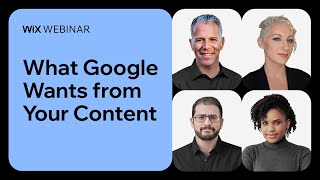
Glenn Gabe, Lily Ray, and Wix's Morty Oberstein explain how Google's recent updates evaluate site-wide quality, not just individual pages. Google rewards sites that stay in their lane, meet user expectations, and remove low-quality content. High-ranking product reviews need original testing, clear pros and cons, and structured disclosures.
Chapters
Joined here today by. By Glenn Gave, who is joining us from. From the east coast of the United States, and he is from G Squared Interactive. He is an absolute legend, absolute phenom in the SEO space, and we're very pleased to have. Have him here. He's got 25 years experience as an SEO writer, SEO analyst, SEO sensei, as it were, and we're very pleased to have him here. Thank you for joining us today, Gabe.
Yeah, thanks. It's great to be here. Really excited, especially given the timing that we have a broadcore update rolling out and we just had the helpful content update and probably a product reviews update. So this is very fitting.
Yeah, it's super exciting. We are joined by another absolute hero, SEO hero, Lily Ray, who is the Senior Director of SEO and the head of Organic Research over at AMSIV Digital. She is going to talk to us about some of her research that she's done across SEO algorithms and also about eat, I'm sure, and about all of the ways that you can bring quality to your content on a sort of holistic scale. She's also an amazing TJ and is dialing into us from, from, from Berlin this week. So thank you so much for joining us, Lily.
Of course. Thanks for having me. I'm excited to be here with you guys.
Absolutely. Fantastic. And finally, last but not least, we are also joined by our own wix's own Algorithm Smith, who just love to do deep dives on algorithms and how they all work. And he's worked with Semrush, he's worked with other tools. He is here at WIX and helps drive so much of our SEO innovation. It's Morty Oberstein. So I'm super, super excited to have everyone here. We've got. We've got two Yankees fans, Lily, I'm not sure which team you support.
Yankees, I guess. I don't know. Sorry, sorry, sorry, sorry.
You are from Queens, though, so be the Mets, but I'd rather see.
Yeah, okay, great.
So we're gonna. We're gonna hope to hit ourselves an algorithmic home run today with some of this content. So I'm just gonna let. Let Glenn Gabe get set up so that he can share some of his insights. We have almost 1,000 people joining us already, which is brilliant to see. I love how punctual everyone is. I had a look at this deck earlier. It's fantastic. So you're in for a real treat. I'm gonna mute myself and let Glenn take it away.
All right, excellent. So, again, it's great to be here. We have major updates rolling out. The September broadcore update is actually rolling out started yesterday. So within the next few days I'm sure we're going to see a lot of lot of movement. And obviously your content is super important from that standpoint. So let's hop in. So first, a few key concepts. Right. First, machine learning and major algorithm updates. This is extremely important to understand. First, let's talk about Google's Alan Kent, who's been kind of leading the effort a little bit from a product review standpoint. He confirmed that machine learning machine learning system is being used for the product reviews update. That is not shocking. You can see that tweet on the right side there where he kind of alluded to that. He also explained a lot more about machine learning in general and how it can be used on a recent podcast with Marie Haynes. So I definitely recommend checking that out. And we truly believe broadcore updates are using machine learning as well or multiple machine learning systems. And this is where Google could be sending many signals to a machine learning system which determines weighting of factors and ultimately rankings. So as Bing put it, Fabrice Cannell, an engineer, can't really go in and understand, you know, the weighting of certain factors. The machine learning system is figuring it out. So the idea that you can tweak a handful of and surge back is not what this is about. You should think holistically about your content, address Google's best practices and don't just match the competition, but try and 10x their content. And you know, it's great that Bing is, is very open about their use of machine learning and Google little by little is explaining more about it. For example, the helpful content update uses a machine learning system as well. Okay, another important concept, site level quality algorithms. Yes, site level, not everything is at the URL level, which unfortunately, unfortunately has kind of spread throughout the industry a little bit over the past few years. So Google has site level quality algorithms that can have a very big impact during major algorithm updates, especially like broadcore updates. Google has explained it's evaluating sites overall and over an extended period of time via machine learning system. Right. And now the helpful content updates doing that as well as well as product reviews update. So don't miss the forest through the trees. Focus on quality overall. Don't just look at a specific URL. Rankings across the site could be impacted by site level quality algorithms. So definitely important to understand that. Another important concept is quality indexing, which I've been writing about for years, probably dating back to medieval Panda days. So for those people that think quality is just about the content, it's not, right? And anyone that's really focused on broadcore updates has seen this, right? You have a terrible user experience. Heavy ads, deceptive ads, all sorts of stuff going on on the page, confusing for users. Sites like that could be impacted by broncore updates as well. So Google's John Mueller has explained this in a search central hangout quality is not just about the text on the page. It's about the site overall, the ux, the layout, how things are presented, ads and more. So definitely important to look beyond the content. You may have great content, but if the user experience is absolutely terrible, you better watch out. And this I find myself saying to clients all the time, especially newer clients. The SEO mantra Meet or exceed user expectations based on query, right? So it's really, really important. This is what Google wants to do, right? They don't want to dish out rankings for sites that don't meet or exceed user expectations. It can happen. Everybody sees it. Sometimes a site squeaks through and is ranking, but over the long term it probably will not. So it's important to objectively review your content through the lens of user expectations, then boost content that doesn't pass right? Or even nuke it if needed. I help usually larger scale sites. It's not uncommon during an audit over a number of months for a site to Nuke 10, 20, 30,000 URLs right? If they're just cruft old cropped, lower quality content, et cetera. And also user studies come in very handy for evaluating content and I'm going to cover more about that soon. And yes, short content could still meet or exceed user expectations. Google just covered this on a help hangout that they uploaded to YouTube. I believe it was last week and they've been explaining this. For the long term, if a query yields shorter content and it can meet or exceed user expectations, it's totally fine. Don't just see something with one paragraph and think that it should be nuked. Another important concept. Staying in your lane. I have a case study where I talk heavily about this coming up. So focus on your core competency. Show Google what you should rank for. Earn links and mentions from other sites based on those pieces of content. All of this can really help, especially from an eat standpoint, which I'm sure Lily's going to cover. It's okay to veer out of your lane occasionally. So some sites are like can we write about this or that? Even though it's not our core competency sure, if it's every now and then, totally fine. But in my opinion, based upon what I've seen, I would maintain a very strong focus on your core competency. If you veer heavily out of your lane and heavily is a little different than what I explained before, you could pay a heavy price. So what's wrong with my content? So I kind of overloaded this next slide. It's usually three slides. I just wanted to quickly explain the difference between relevancy adjustments, intent shifts, and overall site quality problems. Because any site impacted by a broadcore update or major update is going to run into this situation. Okay, again, a lot of information on the slide. Sorry. Relevancy adjustments might be totally correct. That's where your content might not be as relevant anymore for the query. Great example of that is when I help entertainment sites, news publishers that maybe have a three year old post that was ranking on page one for a celebrity or a politician. Now it's not as relevant anymore. It's still good. It's not low quality, it's just not as relevant anymore. So if that's happening, that's not something where it's overall site quality. It's a relevancy adjustment. Intent shifts are where Google decides to show a completely different type of site for the query. We've seen this, and I know Lily has brought this up too with the product reviews update, where an E commerce retailer might start ranking for reviews or vice versa. And that intention can switch as well. So there's not a lot you can do. You can't just suddenly become an E commerce retailer if you're a review site and vice versa. Now if it's not one of those, it could be overall site quality problems. If it is, you can. The good news is you can address those over time and usually recover eventually. But it takes significant work over the long term. It can take six months or longer or even a year or more to see recovery. I've written a lot of case studies about recoveries from broadcore updates. Some took a year, year and a half to actually recover if the situation is bad enough. So if quality is a problem, then what? Is there a way to understand how users actually perceive your site? Yes, there is. And I mentioned this to almost every client and I will tell you a small percentage actually executed for whatever reason. It's super, super powerful to go through this. So anyway, the power of running user studies, you run them through the lens of Broadcore updates, the helpful content update and product reviews updates or whatever you're actually looking at right For a lot of clients I'm helping, it's usually one of those two, usually product Reviews update or Broadcore updates. So Google literally gave you the questions, right? There's tons of questions now from the Panda questions. From Medieval Panda to Broadcore updates to product reviews UPD and now helpful Content update. Lots of questions. Craft scenarios for objective users. Not your spouse, not your kids, not your clients, not your coworkers really. From a panel of people that are objective and have them go through and watch video, listen to them, ask specific questions, have them try and traverse the site and accomplish something. I'm telling you, it's super powerful to see this and hear it. Clients that I've helped go through this. It's usually a light bulb moment. So what can you test? You could test everything from expertise, content quality, deception, ad aggressiveness, barriers, triggers for people which can happen. You may not even know that what you're producing on your site is a trigger for some people I've seen that happen. Credibility and trust and user experience. And from a content standpoint, obviously focus on content quality, expertise, credibility, trust and user experience. Right. So these are things where you can test like how do real people feel about the content. This isn't just looking at bounce rate or adjusted bounce rate or anything like that. It's literally hearing from objective people. So it's, it's a really good way to go. Okay, let's hop into some case studies. I provided three. First was a news publisher in a very tough niche. Very strong eat, but some glaring issues. Right? So they taped during two consecutive core updates, right. As you can see on the right hand side there's. So they basically got hammered between the two of them, contacted me and what was crazy is I had been on the site all the time, right? So I love the site. So I really was eager to help them. So overall, the content, the articles were great, right? Outstanding. But there were some really interesting glaring issues. For example, users could end up in an endless loop trying to find answers they could never find on the site. I found myself doing this based on checking the site from via query. And then I checked the behavior flow report and I wrote a case study about this by the way too. So there's a blog post backing this, but they also. I'll get to that in a second. So the user can end up in an endless loop. But there was also a lot of cruft from over the years. They've been around forever, so that was also an issue. So let's talk about behavior flow. So I started from Organic search at a certain landing page and watched people go downstream and watch people go back upstream and watch people go back downstream. And this was going on over and over. It was unbelievable. So I know a lot of people hammer this report in the old Google Analytics, but boy, it was so easy to explain to the client what was going on. They got it immediately and took action. So what'd they do? They significantly improved the site quality site overall, including nuking or improving pockets of content that were ranking but couldn't meet or exceed user expectations. That's exactly what I was just talking about. They nuked cruft that had built up over the years. They also improved the user experience, technical SEO, causing quality problems and more. Did a lot of work over several months. And they surged back with the December 2020 Broadcore update. By the way, they were never in Google News based on their niche. They jumped into Google News. They also jumped back into Discover, and this is what it looked like. I mean, you want to talk about a spike? I mean, look at that top graph. That's web search. And again, they were really never in Google News for the most part. And they popped in right after the update. So we're down the line. So it was really cool to see that. So what's great about their content? Tons of expertise in the niche. Tons. They stay in their lane. You never go on their site and suddenly, you know, they're writing about entertainment or something. You know, like they're focused on a very specific niche. They provide supporting links and content, which is really important. I can't explain what they cover, but it's really important for them to do this. They have visuals, charts and graphs to support the content. And also, if the story yields shorter content, that's totally fine. I explained this to them. They're totally cool with that. And sometimes it is shorter. It might only be four or five paragraphs. And it still ranks really well because it meets or exceeds user expectations and they are trusted and well known. Okay. Again, I knew them when they contacted me. Okay, case study 2. Veering way out of its lane. So this was a reference site. Keep that in mind. Reference site, long history, very strong eat veered way out of its lane. At one point they unfortunately, there was a content strategy that, you know, they figured that they could potentially rank for a lot of stuff outside of their core competency. And they did initially. And then they got hammered by a Broadcore update. As you can see in the charts, right, that systrix visibility at the bottom, GSC up top, that's Clicks, dropping off a clip. So what they do, they removed all that fringe content and focused on its core competency again. Two broad core updates later, they surge back. So again it can take a while. Right. Google's algorithms need to evaluate over time and see, oh wait, there's not health and entertainment and politics and sports. They're focusing on a reference site again. So it was really cool to see. So these are the surges in visibility again, surged back pretty heavily. So what's great about their content? A ton of facts and information about each topic. Very strong visuals which is very important for their site and in different formats which is from a user experience. Amazing. They have well organized pages with a table of contents and jump links to each section which is a great way to go if you have a lot of content organized well. They provide links to relevant information across the site. So very strong internal linking, not for the sake of just linking, but really to help users and Google and it's also a very trusted site, so it was very cool to see that. And the last case study, steady as it goes, this site, it's always amazing. Every time a major update rolls through I go to see what's going on and they just keep going. They're just, it's not like they're surging, they're doing well already. They just, they seem always just, you know, not impacted by these major updates. So it's really fascinating. I've been helping this site by the way since 2014. So they were hit by Panda and Penguin in the past, right. So this was 2012. So they worked hard to improve the site overall, did a lot of stuff over the years. They contain a ton of user generated content in ugc. They moderate now the UGC heavily and continually review their article content to improve or boost the content. Again, extremely steady trending through broadcore updates over time as you can see on the right hand side. So what's great about their content, Their articles and blog posts are very strong and based on firsthand expertise. The UGC is provided by real users who have firsthand expertise with the programs. Strong moderation, heavily moderated embedding system in place so no spam gets on the site or even really rudimentary comments don't even get up there. They have a voting system to help users understand the most helpful UGC and they have great visual support in the content. They're a in their niche, well known and trusted now by users. And as you can see below, this is over time again they just, I'm sure with this latest Update. My guess is they'll probably just keep going. They're doing all the right things. Okay, so let's switch gears a little bit. Let's talk about the product reviews update and content quality. So the wire cutter approach and testing labs. So not surprisingly, through the several product reviews updates for sites that were heavily impacted, they lacked strong content.
Right?
Not shocking. They often had an affiliate focus versus people focus, Very low effort content trying to monetize. Right. So they lacked firsthand expertise and experience, didn't provide pros and cons, lacked visual supporting review including photos, videos and GIFs. And don't underestimate GIFs. They could be great. They often linked to a single seller, mostly Amazon. And they just felt like quick and dirty reviews content. I've had so many review sites impacted by these updates reach out to me and when I check a lot of them, unfortunately, you know, you could check off almost every box here. So it's tough because they have a lot of work to do. So wire cutter. So in my post about the pru, I often reference the wirecutter approach to reviews content. They produce some of the best reviews on the web. Super thorough, heavily tested in the lab. Reviews provide everything you need to know for the most part when looking to purchase a product. They've done this for years. They're owned by the New York Times now, but they ranked really well even before that. They have an incredible reputation and it is a trusted site and trust has come up several times in this presentation. So testing labs. There are others doing similar things from a testing labs situation. Good Housekeeping Institute also has a very, very in depth lab. Right. You can check out all this stuff after the presentation. Very well. Testing lab. Same deal. And now other smaller players are creating their own testing labs, which is really interesting. Right. For example, a client of mine who surged, let's see, they surged during the first, dropped during the second, saw weird movement. Anyway, they basically are like, okay, we're going to just really try and figure this stuff out. So they created their own testing lab. And I'll tell you, those reviews are really, really good. So I expect testing labs to keep growing. Everybody can create one. Is it hard? Yep. Does it take a lot of time? Yep. But if you're focused on review providing reviews, you should really consider creating your own testing lab. So the anatomy of a strong review. I'll just go down these bullets. So based on wirecutter, right. Clear affiliate disclosure. Make sure people know that you can make money off of their them clicking your links, a table of contents with Jump links. Very helpful headings for each section. Logically broken down categories demonstrating firsthand use. Unique and valuable insights Providing pros and cons. Very strong visuals. Unique visuals as well. Original photos, videos and gifs. Graphs and charts where needed. Author details with a link to a bio, references and citations when needed. So really important when you go down if you go to Wirecutter and you go down the reviews you're going to see a lot of this. So if you're producing product reviews I would definitely take a look. Okay so now before we move on to Lily, let's cover some key points based on the presentation. So remember that Google's using machine learning for some major algorithm updates. Don't miss the forest for the trees. Focus on the site overall. There are site level quality algorithms at play. Again those site level quality algorithms can have a big impact during broadcore updates and other major algorithm updates. Focus on quality indexing. Right. So Google's evaluating all content index when it's evaluating quality, not just specific URLs. Always look to meet or exceed user expectations based on query. Stay in your lane content wise. If you veer out of your lane heavily you can pay a price. Run user studies. Don't think it's great and not do it, just do it. And I'm telling you you'll have that light bulb moment. Probably use a wire cutter approach to building reviews content. Check out their site. You won't be disappointed. Create a testing lab if reviews are important to you. It's very important moving forward and build trust with your users. Become a well known source for the topics you cover. So hopefully that this was helpful and I look forward to your questions in the Q and A.
Fantastic. Thank you so much for sharing Glenn. It's always a pleasure to hear you speak and it's always a pleasure to hear this insight. I've got, I've got loads of questions myself so I'm sure that they'll, we'll have lots from the, from the content as well. Just a quick shout out to the, to the, to the audience. Yes this, this is being recorded. Yes we're going to be showing, sharing the resources after the, after the event. So so just in case you're still. These are new concepts to you. You can sort of, you can take, take a deep dive later on. But yeah, I think some, some fantastic insights. I think the, the point about user testing, it's very interesting and I think. And not rel mom or your best friend.
That's exactly right. And just one thing on that Google actually provided information in their post about Broadcore updates, about user testing, so they think it's really important too. Just keep that in mind.
Yeah.
And I think there's a few different ways to get. Get to. To do that, so maybe we can talk about that later in the. In the. In the discussion. So thank you so much for that. And we're going to move on to Lily's fantastic presentation now. And again, we're going to be sharing the resources from all the speakers after the event. So, yes, I'm just going to let Lily get all set up with her beautiful deck.
One second. Just one second. Yeah. Yes.
Louise Louisa, you will receive a recording. It'll be on our YouTube channel. It'll also be on the same place where you registered for the event.
Awesome. Okay, I finally remembered how to share my slideshow. Okay. Everything look okay?
Looks beautiful.
Awesome. Well, thank you all so much for having me. Thank you, Glenn. That was so much excellent information and I'm really excited to share some insights as well. I think there's definitely a lot of overlap between some of the concepts that we're going to be talking about today. So I'm Lily Rae, and I'm going to be talking about how to incorporate real expertise into your SEO strategy. So, again, my name is Lily Ray. I'm the senior Director of SEO and head of organic research at an agency called AMSIV Digital. We're based in New York City and super excited to be here with the WIX crew today. So today I'll be talking a lot about expertise. I know a few people in the chat asked what EAT means. I'll talk about that in a little bit, but it stands for expertise, Authority and trust. Expertise is the E in eat, and this is definitely an acronym and a word that we see appearing throughout a lot of different Google documents and Google Communications over the past two years. And the way that they're framing it is honestly as like one of the most important factors for producing high quality content. And I know that Glenn discussed that in some of his case studies. You know, some of those clients that are doing really well in the SEO space are conveying a lot of expertise throughout their content. So, again, for anybody who's unfamiliar with eat, it stands for expertise, authoritativeness, and trustworthiness. This is an acronym that Google started using in its documentation in about 2014. And it's something that Google uses to train human search quality evaluators, who they conduct tests with thousands of times throughout the year all around the world. And Google tells its quality evaluators to think about the eat of the websites, of the people that are producing the content, the brand itself, anybody that's contributing to the website. And so these quality evaluators basically rate how much eat a website or a content contributor might be displaying in the content. And this is something that Google uses to inform future algorithm updates. So it's an important concept to understand for SEO. And beyond that, if you read a lot of different Google documents and communications and product updates and algorithm updates in the language that they're using, you can see that they talk a lot about expertise, specifically throughout these documents. So Google actually has this really fantastic guide called the Search Engine Optimization Starter Guide. It's a really great free resource for SEO. And they specifically say, if you want to learn SEO, you should learn how to cultivate a reputation for expertise and trustworthiness in a specific area. They also say that expertise and authoritativeness of a site can increase its quality. This is Danny Sullivan from Google. He does a lot of communications related to what Google's up to. And in an article that he wrote called what Site Owners Should Know about Google's Core Updates, he asks, is this content written by an expert or an enthusiast who demonstrably knows the topic very, very well? So basically like, is there evidence that the person that's creating this content is a true expert in their field? There's another article that Danny and Google put out about ranking well in Google News and Google Discover. And they explicitly say if you want to appear in Google Discover Google News, you need to make sure that you're producing content that conveys a lot of expertise, authoritativeness, and trustworthiness. I know that Glenn mentioned Alan Kent. This is Alan Kent from Google. He's been kind of overseeing the product review updates, which there's been about to be 5 of in the past two years. They keep rolling out new versions of the product review updates. And Alan says that you should always express expert knowledge about the products where appropriate. So we'll talk about that a little bit later as well. And most recently we have the Helpful Content Update. And this is Danny again basically saying that with this brand new update that Google launched a couple of weeks ago called the Helpful Content Update, you need to make sure that your content clearly demonstrates firsthand expertise and a depth of knowledge, for example, expertise that comes from having actually used a product or service or visiting a place. So we see kind of this, this common language that Google's using throughout a lot of these communications. The last thing Danny says about the Helpful Content Update is that you should avoid basically entering some niche topic area without sufficient expertise to be able to write about that content. But basically, if you're putting out a site because you see maybe you bought a domain, you want to pretend like you're an expert in a field, you thought you'd get a lot of SEO traffic and potentially, you know, like affiliate revenue or ad revenue, but you don't actually have real expertise to write about that content that could potentially set you up to be negatively impacted by the helpful content update. So my theory, and I know that like Morty, we talk about this Morty from Wix, we kind of think that there's like this big change that's happening with Google over the past couple of years where I believe that they're algorithmically being able to differentiate between a real expert and somebody who might be faking expertise or basically just rehashing what a lot of other people have said online. So there is a really interesting Google patent that was analyzed by the late great Bill Slowski a couple of years ago called Contextual Estimation of Link Information Gain. This is a Google patent that they filed in 2020 and it has this really important concept called an information gain score. What this means is that Google is capable of understanding when they're looking at two different documents and let's say the documents have effectively the same information. If something has net new information that they haven't seen before, that's going to increase the information gain score of that content. So basically that means if this content has a certain expert opinion or certain piece of information or fact that Google hasn't seen in other content, that's going to increase the information gain score and therefore that could potentially increase the rankings because Google is looking to produce or provide more original content in the search results, different perspectives in the search results, and as you can see by a lot of these communications, they're really focused on conveying expertise as well as. So I wanted to share with you a little SEO story time because whenever I think about the role of expertise in SEO, I always think back to this one little anecdote that I've experienced in my time doing SEO for clients. So I wanted to show you guys one example of a small tattoo shop website that continues to outrank Cosmopolitan, Birdie, Good Housekeeping and Men's Health for a variety of different tattoo keywords. What's amazing about this example is this site has been sitting here in the featured snippets on and off for about six years. And these are really big brands that have a much bigger presence, you know, bigger domain Authority and all these other SEO metrics that we think about. This is just a small tattoo shop business from New York. So how does this site continue to rank in the featured snippets? And how does it continue to maintain such great page one positions for all these different keywords? So you can see here there's a variety of different, you know, really relevant keywords that this, the small website, probably only a 10 or 15 page website, continues to rank on page one and in many cases in the featured snippets. Well, what if I also told you that nobody has touched this content since 2016? This website has essentially not changed at all. The content that's ranking in the featured snippets has not changed at all. It hasn't even been updated at all. So I worked with this client and I'll tell you all about our SEO process. It's pretty simple. Obviously this person's a tattoo artist. He's been tattooing for 20 years. And what I did was I we came up with a couple of different pieces of content that we thought would be really relevant for his customers to know, such as, like, what lotion to use on a healing tattoo. I asked him some questions. He gave me all the answers based only on his own experience. I transcribed all the content, lightly optimized it for SEO. So it wasn't that, you know, it wasn't like I was giving him a bunch of things that he needed to answer based on my own keyword research. He was giving me a bunch of content based on his own experience. But then we tweaked it for SEO, included relevant headlines, and honestly haven't touched it since it's been six years. And my theory is that Google is capable of understanding, number one, this is an expert in their field. This is a website that's focused on tattooing. This is a person that's an expert in tattooing that we recognize online. That person and this website has a lot of eat in the tattoo space. But beyond that, the content that he's creating demonstrates that he's a true expert in this field. And the content offers that unique expert perspective that we're not just seeing from a bunch of other publisher sites. We're honestly probably doing a lot of research from all the same resources. This person didn't look at any of those other resources. He's just providing his true expertise. So I believe that there's a lot of sites that are doing a really great job of this and they're using an expert focused content strategy that's getting them Big gains in the SEO space. So these are a variety of different sites that are seeing big increases in SEO this year. So this was calculated using the CISRIX Visibility index. That's a tool that basically evaluates how much visibility a given domain has on Google over time. Think of it like the stock market for SEO. And you can see that all these sites have seen pretty substantial increases in Systrix visibility this year. This was calculated between January and September of this year. Now, I want to be clear. There's obviously many different factors that go into an SEO strategy. There could be all kinds of reasons why they're seeing increases. You know, these sites are doing a lot of things right. It's not just about the expertise. They have. In many cases, great technical SEO. They have great pr, great backlinks, you know, great brand recognition. All these things are of course, contributing. But there's a lot of different ways that you can look through the content of these sites and see how they're leveraging real in house expertise or in some cases, reaching out to experts in their field to inform the content that they're creating. So LifeWire is a really interesting one. They have a lot of different product reviews. And what you can see is that they actually have a dedicated page on their site that describes LifeWire's experts. And they specifically say, to Glenn's point, you know, we're careful to work with real experts in their field. We take seriously the credentials and the expertise behind the people who write and edit the content that you're reading on this website. So not only do these, this site, does the site focus on expertise, they actually have an entire page describing how important expertise is to their business. This is another site that is really interesting to keep an eye on. This is a gentleman named Bob Villa. He does home construction projects and he maintains a lot of position one or page one rankings for a lot of different keywords. And what I love this is that Bob Villa is, you know, a professional home contractor. But there's so much great content that's either written with Bob, you know, in conjunction with Bob, or maybe Bob oversees the content or provides like an expert review of the content. And in this example, this is a page that he's ranking position 1 for the keyword basement waterproofing. And in this article, it's written by Bob and another writer. There's honest recommendations for how to work with a contractor. There's FAQs in the content. He explains the what, why, and how you should, you know, implement basement waterproofing in your home. He doesn't necessarily link to a lot of other sites because again, he's the one that's providing the expert information. He provides clarity around the expected costs of doing basement waterproofing with real numbers. You know, not just like a vague range, but an actual cost of this process. And then again, you know, there's a lot of sites that do use other, you know, external writers, or maybe they hire writers in house. But what I love about this site is that Bob is often involved in that content creation process. And you can see that the this article was co written with an author named Glenda as well as Bob. This is a site called Gadget Review that ranks number one for best ceiling mounted projector. And this is. You know, Glenn talked about some product review sites this site actually has in its footer, like the methodology behind why this site exists. They talk about the fact that too many product review sites are just trying to capitalize on affiliate revenue, and that's kind of informing the content that they're writing. Whereas with Gadget Review, they're very focused on real expertise, they're focused on objectivity, and they make sure that they've actually tested the products themselves. So these are some screenshots that convey how users and most likely search engines are able to read this content and say, there's a lot of evidence on this page that the authors actually spent time with the products. There's pros and cons, there's examples of why they like it. And if you're Google, you know, you can tell like maybe a bunch of other people have written about these ceiling projectors. But Gadget Review has net new information because they're experts and they've tried the products. And Google hasn't found that information on any other page before. This is rei. I'm sure you all are familiar with them. They do a lot of things right from an SEO standpoint. And, you know, a lot of the growth that they're seeing is not just because of the content. They obviously have a huge E commerce business as well. But what I love about REI's content strategy is that they leverage real employees from REI who have specific expertise in different areas. So in this case, this is the number one ranking page for backpacking for women. And it's written by a woman named Liz, who's an REI outdoor school instructor. So it's like from woman to woman, here's what you need to know about backpacking for women. And it's written in the first person. It's written based on her own experience. And I believe this is what Google's looking for in terms of providing expert advice. So this is another site that I love to look at. It's called Smith's Pest Management and it's an exterminator business that's based in California. They rank number one for all these different how to get rid of pest queries. And they're growing a lot over time. You can see the SEO visibility of the site is increasing a lot over the past couple of years. This is a gentleman named Zachary Smith. He runs the business, he is an exterminator, he does pest control and he's involved in the content creation process. You can see his author bio in the content on every page. He uses first hand experience. They use actual photos that they've taken on the job. They're very empathetic with the reader. You know, it's, it's basically just real evidence that the company that's doing the work is the same company that's providing expert information. So maybe you don't have experts on staff. That's a really common situation for companies to be in. Redfin and Business News Daily are two sites that do a really good job of saying, you know, we wanted to figure out the answer to this question. So what we did is we reached out to a communication and etiquette expert or we asked human resource experts and professionals to chime in. So, you know, just because you don't have an expert working at your company doesn't mean that you can't do that outreach. Reach out to them and ask for an expert contribution. So really quick, I want to shift gears and talk a little, a little bit about Google's helpful content update because I do believe that this new update by Google is very aligned with, you know, this notion of eat and the focus on expertise. So what Google said about this update is that you're going to see more results with unique authentic information and you're more likely to read something that you haven't read before. So what have we seen from this update so far? I think a lot of us read Google's communications and kind of saw this coming as like really a potentially big change to search. Right. We expected this really monumental change the same way that we see with a lot of these broadcore updates. But what's actually happening in reality is it's been a pretty slow update to begin to roll out. But what I think we're going to see is that there's this new notion of a classifier which I'll talk about in a later slide. But Google's beginning to classify sites that are unhelpful. And it's a machine learning system which Glenn talked about. So over time the classifier can get smarter and smarter and better and better at identifying unhelpful content. So I think we're seeing just the beginning of this update. And Google started with low hanging fruit. So with this update we're starting to see some kind of fringy sites that aren't really following SEO best practices and content quality best practices. Starting to see negative impacts from these updates. So we have things like lyric sites, some adult sites, sites that offer different grammar recommendations, MP3 downloads, low quality affiliate sites, product manuals, and sites that have copied code on them. So just some really quick examples. We have some Lyric sites. There's a lot of Lyric sites on the Internet obviously. But, but Glenn pointed out a really good point that in some cases Lyric sites don't actually have the license to be legally displaying this Lyric information online. So it's entirely possible that Google's starting to catch onto some of that and really reward like licensed Lyric sites. Whereas other sites that are just replicating what everybody else says without actually adding real value could potentially be impacted by this update. So this is a screenshot of one of the sites that was affected. And I'm in Germany, so that's why these ads are in German. But you can see the extent to which the ads are overtaking the page content. Right? It's like very hard to use. So it's possible Google's just saying like this, this Lyric site is really not helpful compared to other sites that are offering much better content. There's also some product manual sites that started to get hit. So these are sites that offer actual like PDFs of different product documentation, but they don't add a lot of original value or anything that hasn't already been found online before. So these sites are being impacted grammar sites, which also, you know, there's thousands of these types of sites online. Some of them are seeing declines from this update. It's possible. Google's just saying, you know what, we already have so many different answers to this question. These sites are not doing a great job differentiating their content. And I'm just a little bit like, we'll see what happens with this update. But this is my little skeptical, like I don't know if this is helpful or not. So apparently Google has deemed a lot of these sites as not, not being unhelpful. But personally I'm like, meh, I don't know. This could be seen as Helpful. So it'll be really interesting to see how this helpful content up classifier changes over time. And as I mentioned before, this classifier that Google's using is still learning. It's a machine learning process. It's going to get better and smarter over time. The frustrating part is we don't exactly know the extent to which that classifier is working in the algorithms. It's a little bit of a mystery for us. And really quick, the product review updates. I know Glenn talked about this a lot, but if you read the documentation related to what it takes to write good product reviews, they do talk about showing expert knowledge whenever possible and also providing evidence of your own experience with the products. So they want you to actually show videos and pictures of yourself using the products whenever possible. These are two sites doing that really well. This is Clever Hiker as well as Switchback Travel. You can see that these are pictures of the actual women that are using the products that they're recommending in the article. So this is a really good example. Don't just use stock photography. Take actual photos of yourself whenever possible. Product review updates have been really, really intense for a lot of different product review sites. This is an example of a product review site that was basically wiped off the map with one of these product review updates. There was supposed to be a new one maybe this week or next week, but Google just announced a core update yesterday. So we don't really know when that's going to be rolling out. But there is a new one coming and Glenn talked about this as well. But basically there's like a bad and an okay and then a much better way to convey product reviews. This is bad. When you're just pulling in data from Amazon, you're not providing any unique insights. You're just putting affiliate links on the page. Not great. Google does not like that. When you're saying, you know, we have an algorithm that we're using to take all the different information online and create our own scoring system that's a little bit better. Right? You're doing some work, but you haven't exactly tested the products. Better is to say, we've tested the products. You know, we have a product testing lab like Glenn mentioned, and here's what we've actually found through our own product tests. So do this whenever possible. So quick tips for incorporating real expertise into your SEO strategy. Number one, as much as you can incorporate real experts into your content strategy, you should do that so you can provide questionnaires to experts that help inform your content. You can transcribe expert audio and video interviews that they've already done. Or even just ask, asking experts to review the content and then using their names. Number two, make personal branding for experts part of your SEO strategy. So this is a site that's in Spanish, but what I love about this site is that they have an expert that contributes content to the site. That same expert, she's a doctor, she has a profile on the site, and then if you Google her name, you'll see that her profile on that site ranks really well for her name. So this site does this for all the different doctors that it has on the site. They're content contributors, they're experts. And you can tell them we get to have a page on the Internet that ranks number one or number two for your name, which the experts always love. And you can reach out for experts for content contributions when you don't have any experts at your company. So, you know, research credible experts in their field, make sure that they're the best person for the job, offer them maybe a link to their site or other publicity. And turns out that experts really enjoy sharing their contributions. So ironically, quick Twitter survey this week asking for anybody that considers themselves an expert in the field. How would you respond if somebody reached out to you and said, hey, would you mind contributing to my article? Turns out 44% of people would happily contribute with no incentive. 22% would contribute with some type of incentive. So the vast majority of experts, basically 66% of experts, are happy to contribute. So always use that as part of your content strategy.
Great insights. We're getting some great feedback from the, from the audience on this. I think Lily is. Might need to rejoin just quickly. But yeah, we're getting some great, some great insights. A few people asked a couple of questions in the chat around. I'm just, if, if I may, around some of the WIX things that we have built in around this. I can jump into that straight away. Or we can, or we can jump back into your deck. Lily.
Hey. Sorry, my Internet went out. Can you repeat?
Oh, no, I was, I was just, I was gonna give a shout out to a few, a few WIX things because some, some people were saying, like, what do you do if you have a small budget? What do you. And, and I think that, you know, your example of the tattoo parlor was. It was a really good example because that doesn't. I think one of the great things about eat is you don't need a massive budget to, to make some of these, make some of these, some of these changes. And you can you can do them on Wix or on any. On any platform?
Platform, yeah, absolutely. Like, you know, in both the example of the tattoo artist as well as the pest control guy, like, that doesn't need to have a big budget. You just need some time with the expert. So sit down with them, think about what are the most important resources to have on your site. It only really needs to be like five, you know, five of the most relevant questions people ask and just work with them to create the content that. That stands the test of time.
Absolutely. And I think one of the things that a lot of times if you don't have a big budget, what you. What you might have is time. So if you. If you have the time to put in, then it. Then it can absolutely make a difference. Did we have more slides from you there, Lily? Was that your last slide?
That was it. Okay.
It was beautiful. We had some fantastic feedback on it. Mordy, I don't know if you want to jump in. We're running out of time rapidly. Sure.
So I'm going to jump in really quickly. And I know we're sensitive to time, so I will do it for quickly. Hi, I'm Morty Oberstein. I'm the head of SEO branding at wix. Wix and do a bunch of other stuff. We're kind of going to skip it, but we do actually, Crystal and I host a podcast called the Surf Stop Podcast. You can find it on the WIX SEO learning. And last week, we actually talked about Google algorithm updates. So if you're looking to learn more, check out the podcast episode. Okay, I'm done plugging. Let's get learning. I'll cut this a little bit short, but one of the things I want to talk about is kind of what Lillian and Glenn talked about is the approach is more important than anything. Your mindset of how you think about content and how you're analyzing the content after a core algorithm update is really important. So what I tend to do is look at, hey, you know, this page went up in the rankings, or it stayed the same and still ranking really well versus pages that lost ranking and thematically analyzed what's missing in the content, what these pages could have done better. So really performing a thorough and holistic content analysis. And we could talk about this for a long time, but I want to be sensitive to the Q and A. So I want to run through three very quick lessons that I have seen over the years from Google's larger, broad core algorithm updates, meaning fundamental changes to the algorithm. Lesson number one, is to be exact whenever. Whenever you can be exact. So core updates or Google algorithm updates are kind of like playing operation. I don't know if you played operation as a kid, but one small little touch and you set off the red buzzer. Algorithm updates are kind of like that. One small little problem can really set Google off, which is why it's really important to be specific and I'm going to give you an example. So the keyword here is mild bipolar disorder. So really important, very sensitive keyword. And the top three lines, the green line, the pink line and the light pink line. I guess These are all URLs or website web pages that stayed the same throughout the algorithm update. The purple line lost ranking. And what I want to understand is well, what happened with that purple line? Meaning what happened with that web page that lost rankings? What was the problem with it? And I want to show you really quickly. So the Cleveland Clinic is one of the websites that stayed ranking among the top three results throughout the algorithm update. And what they talk about is cyclothemia. And they say cyclothemia is often keyword often considered a milder form, a milder and chronic form of bipolar disorder. The Mayo Clinic, again one of the top ranking consistent websites says that it's a cyclothemia is there are several types of bipolar and related disorders disorders WebMD says what causes cyclothemic disorder. Many experts, not all, but many experts say that cyclothemic disorder is a very mild form of bipolar disorder. Here's the page that loss rank Cyclothemia, sometimes called cyclothemic disorder is known not often known can be known Many think is known is known as a mild form of bipolar disorder. And they use it in the subheading of the page an overview of cyclothemia. I'll get it right. The condition commonly called bipolar 3. That's a really big problem because imagine you're somebody who's looking at this webpage and wondering well what should I do next in terms of mental health? And you're reading this page saying that if you have these symptoms of cyclothemia, then you have bipolar disorder when that's not necessarily the case. Being exact and being specific, especially as it applies to people's lives and their financial well being is very, very important. So if you can be as exact as possible in your content, it's a way of creating really good, really quality content and Google's kind of in the know about it. Moving on. Watch your tone which I tell my children all the time. So I'm going to Go back to the September 2019 Core Update. I'll show you. Very quickly. We're looking at the keyword business term loan. What you're looking at here is a webpage that lost ranking because of this update and it did it because, well, they're selling a loan that can really mess with your financial life. And they're saying, well, business term loan never goes out of style. We all love a classic. Like it's trying to sell me a used car. It even talks about how I can use a term loan to finance my brother in law's wacky startup. This is not really the content you want when taking out millions of dollars of loans. Going to skip the slide for the sake of time. What happened was they sort of updated their content. They wrote the classic small business loan. This is the page as it is now. Still not the best, but they got rid of all the weird content about funding your brother, brother in law's wacky startup. And they put really helpful, really useful informational content about what does a term loan mean, types of term loans. So instead of trying to sell, I'm just going to skip that, skip that. Instead of trying to sell or oversell content or via their content. They were being reasonable. They are being reasonable now. Google knows you need to make money. Google is fine with you making money on your website, but you should do that appropriately and don't over well, don't try to market a very problematic product if you don't get it right, like such as a term loan as you're trying to market a used car. Market things appropriately. Be reasonable how you go about your marketing. Language lesson number three, teach, don't preach. And we're going to the product review update that Willie and Glenn spoke about. And we're looking at two different web pages. One web page gained rank, one page lost rank at the hand of the product review update. And the question is, is why? And by the way, this is still a problem for these websites. Well, in the case of the site that won rankings, they're still winning rankings. And the site that lost rankings, guess what? They still are in the gutter. Well, they're on page two, which is the equivalent, I guess. And the, and the page that lost ranking, it's not like it's a bad page. It's got stuff on the page. It has a nice chart that goes through each of the products they're reviewing. In this case, they're reviewing camping air mattresses. It tells you the price, it tells you the warranty grid information even goes through a Nice little write up around each product.
Product.
They even give you a rubric of what they were looking for when they were evaluating the products. But they don't do this. And I'll explain to you what this is in a second. And this is from the page that won rankings, the page that lost rankings. When they go through their rubric of how we were evaluating these products, they wrote things like, oh, yes, we looked at comfort, but it kind of went on. Didn't really define what does comfort mean. How do I know what is comfort if I'm looking for a mattress myself? The page that gained rankings did that. I'll just read it to you. For example, they write for comfort. Some air mattresses have a soft top surface which eliminates the needs for sheets or a sleeping bag. Others don't. So you'll need a type of. Some type of insulation to stay warm. They're telling you when they looked at comfort, these were the specific things that they were looking for, which is really usable. Because now if I want to go to Walmart, I don't want to look at any of the products on the actual webpage anymore. I want to go to the store and buy one of these mattresses. I know what to look for. You actually taught me something that I can take and apply somewhere else. In teacher language, by the way, that's me teaching children, which is a scary thought. But in teacher language we call it scaffolding. In other words, if I'm just telling you what we looked at, comfort, you may have a rubric around what you use to understand what comfort means, but you haven't brought me along. There's still gaps. I don't really understand that. What if you tell me, yes, we looked at comfort and here's how we define comfort. You're filling in all those gaps. By the end of the piece of content, I'm walking away fully understanding something that I can apply somewhere else. So if you're thinking, how do I create content that Google's going to like, I always think about it as creating scaffolded content. Content that really walks the user through the concepts that you're trying to teach them without leaving any gaps. And I don't want to leave any gap by forgetting about the Q and A. So I'm going to end here. Thank you.
Thank you so much, Morty. Always, always a pleasure. And yeah, some great, great, great insights about, about making good content and about comparing the SERP and comparing, comparing the different results that you see and comparing content to figure out what to do. Next. So, yes, thank you. Thank you all. We've had lots of questions. The audience has been really, really engaged. So thanks everyone for sticking around and for asking some questions. Let's jump right into it. Just a quick question for Gabe. You talked a lot about user studies. Can you give us an example of a way that somebody can get started with user studies if they've never done it before or maybe that someone might be able to get started with it if maybe if they don't have like a big budget or that sort of thing?
Yeah, absolutely. So I wrote an entire post about this. So if you Google Glengave user studies, you're going to probably very highly. So just go there. It has a whole case study of how I helped a health client through a user study through the lens of broadcore updates. I list on their various services you can use and everything like that. So it's probably best just to go through that post because it's pretty in depth, but it definitely do it. A lot of people, again look at it and they're like, oh, it sounds cool and they never do it. But definitely go through that and just try it out.
Yeah. And I think that's really important because Google is trying to make sure that the content is good for users. So, you know, they can see a lot of indicators to show that, that through all of their algorithms. And if you've got real users giving you that insight, it's really valuable. So yeah.
Cool.
And you mentioned a broadcore update. Somebody asked what that is and I could just summarize quickly that sort of Glenn's like, that's a big question. A broadcore update is essentially when Google decides to adjust their algorithms across the web. Overall, we've mentioned people talking about product review updates. We talked about other things and sometimes, sometimes they'll focus on one particular part of the web and then sometimes they'll focus on the web overall. Those are called broadcore updates, generally speaking, in a very, very top level sort of way.
They're big.
They're usually three to four times a year. They make the earth shake. It's when Google is basically updating its core ranking algorithm so it's global across all languages, et cetera.
Fantastic. And then we also talked about, we also talked about lots of things from Lily. One of the things that someone was saying was how does Google know whether or not someone was an expert? They were saying, you know, Google's, Google's, you know, they're just taking these people's word for it. Is that what's going on or how do they know that someone is an expert on their website or using external information?
Sure. So Google doesn't always know. Right. Like, Google can't possibly know everybody in the world, but they're trying to. And they have something called the knowledge graph, which is 500 million facts, about 500 billion facts, about 5 million entities, or something like that. I should definitely memorize that statistic. But basically, they're trying to understand most of the recognizable people in the world. So when you get to a certain point of credibility, Google actually has an entity for you. In the Knowledge Graph. If you Google a person's name, you can see on the right sidebar at the top of the page, they know who that person is. They know that they're an expert in their field, and they can make connections between who's writing this content. For example, when Glenn writes content, sometimes they might highlight his name as an author in something like Google Discover. So there's a lot of different examples of how Google's using real authorship and trying to get to know who all the real experts are. And I just want to mention something because a lot of people are chatting here. When I mentioned websites that have been dinged because they have copied code, I did not mean CMS platforms like wix. WIX is fine. I mean sites that are literally copy pasting code like Stack Exchange, where they're just. Just like basically plagiarizing other sites. So you're fine if you're using wix. You're all good.
All good. Thank you. And Morty, you talked about a lot about different quality of content. And is there a way that you. Is there a sort of litmus test that you use when you're trying to evaluate whether or not a piece of content is decent or not?
Yeah, and it's very similar to what Glenn and Lily talked about. I call it the brand sniff test. So think like a brand marketer for a second. So if you're a brand marketer, what you tend to do is you'll look at something, you'll think of all the latent signals that it's sending. Is it the right tone? Is it to send off the right quality signals? Like your brain is basically AI and steroids. So when you look at something, you're making a million snap judgments, like 0.3 seconds. Kind of think of your content like that. If you're a fresh user coming to the page, what latent signals is the page sending? Does the format look right? Does it structured well? Is the tone right? Is it graphically appeasing and if you take a look at those latent, more subtle signals and you walk away saying this looks like a great page, then it's probably going to be a great page for Google as well. Obviously you need to dive a little bit deeper, but that's my general litmus
test, I think so. And it's interesting that you bring up some of the, some of the visual things because Lily and Glenn both alluded to some of those. So that, that useful one that you showed that had all of those ads everywhere that you couldn't see anything. And Glenn, you mentioned, you know that when we talk about quality content, we're also talking about content that, that's messy. So.
Yeah, right. Yeah, I was just going to say, I mean, I've written for years about the negative UX experience, aggressive ads, deceptive ads. It's been in the quality rate or guidelines. So you Google me and ad aggressiveness and all sorts of stuff like that. You'll find some posts about it. But definitely do not overload the page with ad.
Absolutely. And I don't know if we want to have take just a minute saying what we think maybe about the helpful content update or if we think we just keep that can of worms closed. I don't know if I'm, if I'm opening a can of worms. I think. Do you think what's your, can we, can we possibly make some predictions maybe, or is that
too far?
I think it'd be interesting to see how it all plays out. There's a lot of different tools that Google are using, using for the, for the helpful content update.
So I mean, the biggest thing, and I actually pinged Danny Sullivan on Twitter about this, but since it's continually running, if they juice it up, change it, enhance it, whatever, you'll never know that you're impacted by that. That's a huge problem. So I asked Danny, I said, if you do that, can you let us know? And he said if it's significantly updated, then they'll try and let us know. So if not, four months from now, a site could tank. It could be the helpful content update. You would have no idea, Literally no idea. So I mean that's, that's the only thing you got to just hope that they actually communicate that it's part of
what makes it hard that running another algorithm update right now, right after the helpful content and implying that it's very possible that the helpful content update is going to be for lack of a better boosted by the release of the core update, so which is responsible for the ranking shift.
Yeah. Actually, Danny replied to my tweet about that. That's actually not the case.
Oh, is it?
So, yeah, I mean, based on his response last week, it sounded like Broadcore would take that signal and actually use it as another signal for Broadcore updates. That's not the case. They're separate. What he was saying is the combo of the two could impact you, and that would be more extreme. Yeah, I know. I was with you, and that's what I thought, but that's not the case, unfortunately.
Be interesting to see how it all plays out and. Yeah. And how it affects sites and how we make sure that we keep the content like the one that you showed Glenn, where it's just always doing well. I've seen clients like that and just. And it was interesting that, Lily, you were saying about Experts, it was a lawyer site and they just wrote the content. I never did anything like you were saying, like, SEO, make sure they've got headings, bullets, and blah, blah, blah. But I didn't go over it too deeply, and I just set up all the structure. And they always do well because they always just write the content based on what their clients ask them and that sort of thing. So it's very interesting to see that.
Yeah.
Cool. I think. I don't know if we should start wrapping up because we're sort of hitting our time. We've got loads more questions, so we'd love to have you back another time. Thank you very much to everyone for joining the session. We will be back next, next month for another. Another WIX SEO session, and it will be all on local. Local SEO. We'll be joined by Amanda Jordan. So please do join us for that. Thank you so much, Lily. Thank you so much. Glenn. Thank you so much, Morty. Thank you all for joining us.
Thanks for having us.
Okay, great.
Thank you.
More from Cardinal





Chef Noah was tired of dull tools - so he made his own #cooking #knives #chef #fyp #kitchen #shorts


every day Chef Noah wakes up and chooses violence... professionally🔪 @forgetotable #knives #chef

Mother Nature knew what it was doing with these color combos #graphicdesign #design #designinspo


Trying Modern Bread & Bagel for the first time 🥯 #nyc #glutenfree #food #shorts #foodreview
