Wix | Webinar: SEO Competitor Backlink Analysis
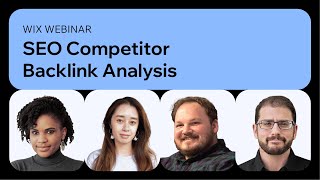
Patrick Stocks from Ahrefs, Debbie Chu from DialPad, and Wix's Crystal Carter walk through backlink analysis and link-building strategy. They show how to use free tools like Ahrefs' Backlink Checker to find link gaps, identify link-worthy assets like research studies and tools, and avoid link-scheme violations. Wix's features include referral traffic reporting and automatic canonical tagging.
Chapters
Today we're going to be talking about SEO competitor backlink analysis. And y' all are in for a treat because we have two panelists here who are fantastic at backlinks, at all aspects of backlinks, and we're going to cover it from lots of different angles. So you're going to get a really well rounded introduction or top up on your knowledge around backlinks. So to give a little roll call, we're going to be joined today by Debbie Chu. Debbie is a fantastic backlink and link building expert. My name is Crystal Carter. I'm the head SEO communications here at wix. We're joined by Patrick Stocks of Ahrefs. And we're also joined by Morty Everstein,
my partner in crime, my podcast co host writer on the WIX SEO hub, international speaker, Yankees fan Morty Everstein.
Thank you for the last one was the most important one. Thank you for that.
Okay, so in this session it's important
to know and please tell anyone who
joins late because they always ask, we love you all. They always ask the same question, which is why this is here. Yes. The webinar is being recorded.
The YouTube link will be sent the YouTube link of the recording will be sent to you via email after the webinar. So I know that we're going to cover a lot of stuff during this webinar. Don't worry, you'll get the link. You can go back and watch it on YouTube and you could stop and start and play along as you go later on. So don't worry if things don't don't make sense just in the first instance. You can stop and start and go through it as well. Ask questions. In the Q and A panel, we have people who are going to be answering those as we go along as best we can. We are also going to be curating out some of the themes to ask our panelists at the end. If you like this webinar, join us next month or join us in September
for the start of our next.
No, sorry, next month. Next month. Actually, we're not doing August, we are doing July. So join us next month for our next webinar and then join us again in September for webinars after that. And you can find those on the WIX SEO Learning Hub. After and without further ado, we're going to get into some of our presentations. So we've done our introductions. We're now going to hear some insights from Patrick Stocks. Then we're going to hear some insights from lovely Debbie Chu. And then I'M going to tell you a few different things that you can do to support your backlink campaigns and your backlink activity on wix. And then we're going to do the Q and A, as led by the wonderful, fantastic Morty Oberstein.
And with that, quick wait, quick point of, quick point of order, marketers have to market. Don't forget to check out our SEO newsletter, Searchlight over the WIX SEO hub, and our podcast, SERPS up.
Yes. Where you can hear all of this information and more. So with that, we're going to hand over to Patrick. Who Patrick. If you'd like to share your screen,
can you, can you enable screen sharing?
Oh, yeah, that would be, that would be a great, a great thing for you. Just a second.
Think I got it. Can you do it?
Yep, got it.
Cool.
Fantastic.
All right. Hey, everyone. Excited to be here. Thank you for the awesome introduction. Crystal. Morty, always, always a fan. As Crystal already said, I work at Ahrefs. I'm pretty active in the SEO community. I'm really not going to cover any of this. Just like to skip that. For those that don't know, a link basically is when you, when you click something takes you to another page, that's a link. There are different things that make some links better than others. You know, the, the page that it's on, how relevant it is to the page, it's linking to the anchor text or like what the link says, that kind of thing. Links are like votes. They help you rank better in Google. You're basically saying, I trust this site, I like this site, I'm going to link to it. I think that content is good, so you should rank them higher. And Google uses that. According to Google, one of their folks has said that it's literally one of the top two ranking factors, content and links. We run tons of studies because we have more link data probably than anyone at ahrefs. We found that generally better links correlate with more traffic. Now, warning, correlation is not causation. Anyone that does any data analysis will tell you. But generally, if you've got a page with good content and good links, you're going to rank better than a page with good content but no links. I actually proved this a couple years ago. I used what's called the disavow file in Google and I just removed. I basically said, like, don't count links for a bunch of my posts. And the results, they didn't kind of speak for themselves. We lost a bunch of traffic, we lost a bunch of rankings. It hurt Us don't do that. It's a bad idea. So bad that I think I was the first one to actually try this. And we've also run big studies. I think this study was over a billion pages and we found that 92% of pages have almost no links. About two thirds of those actually had zero. But another what 26% had like one to three referring domains, like one to three different sites to link to them. So there aren't that many pages on the web that really have good links that are viewed as kind of authoritative, that people are vouching for that people think the content is good. It's a surprising small subset of pages. And those pages answer a lot of user queries. So they tend to get a lot more traffic. If you're going to start link building, the one thing that I always recommend especially for like local service companies, which typically what I, I've worked with a lot in the past, start with your competitors. Look at the links they have. First off, find your competitors. We've got a way to do this for free. The whole competitor report lists dozens of competitors within Ahrefs. It's Ahrefs.com awt which is Ahrefs Webmaster Tools. This will show you in a nice like competitive view chart. But if you don't want to do that it's fine. You can just search on Google and see who your competitors are. This is actually just a random page on, on my own website about purple laser pointers and my, my competitors are some niche laser sites and like Amazon and ebay basically. But yeah, just pick a few terms that you know are relevant to you and you can find who your competitors are. With that you'll want to see what their, what links they actually have. So again this is another free tool, ahrefs.com backlink checker. You put in any domain you want, you'll get I think it's a hundred that it's limited to. It'll tell you what links are going to your pages with that. What you want to do is just look at common links. It's basically links to companies to pages that are in the same niche as you are. Probably the links that you also want, they're probably the ones that are easiest for you to get. So this is kind of your low hanging fruit. I'm going to show you a better example here using accountants. This is like some local accountants to me. I'm in Raleigh, North Carolina so I just picked a few a link intersect tool. There's several of these out there but Basically you can enter a bunch of competitors and get like the co occurrence of their links. So like five of these sites have a link from whatever domain. You can do this again for free. And like the backlink checker tools, there's a bunch of free backlink checkers too. It's just a lot more trouble to go through one at a time and on limited data. So these kind of help speed up the process of it. And this is kind of what that looks like. So like GoodFirms Co a website probably about accounting firms. There's like three of these companies here locally that have links from them. So that's probably a link that I want to go after. Same thing like uspaa.org I'm sure that's an accounting organization of some kind. Probably already a member may not have filled in the website information when filling out the form and signing up for that. So more than likely I might have a profile there. My client does. I can just go in and say like oh, this is my website and boom, got a link from there. And that's the kind of thing you want to look for. You want to work your way through the individual links, see what, see what they're getting, look at the sites and find patterns for that. Now I have a much more scaled process I use personally. I put a link to this, this blog article. This has it with exporting sites. I did this for I believe whoever is in the top 10 in the top 50 US cities and also as a way to do it with local markets to find local specific links. So I basically said like don't just look at accountants, go look at, you know, lawyers, go look at dentists, go look at other service industry folks in the same market and look at what kind of links they're going. I personally even use an API for this. So this takes me like all of 10 minutes to do. If you're exporting, I would say a couple hours and then another hour or so on the classification. So it's more work up front. Well, I would still say less work than trying to go through one at a time but in general more work up front but a faster process. When you start to go looking at the links that you want to get. So patterns, certain things you'll find niche specific. So these are basically the all the links that I found that I would classify as niche specific. For accountant links I could probably go through these sites and look at how and get these in an afternoon. So it's not that it's going to take you forever to go through these. It's not that it's a ton of work. I would say these links are some of the most valuable you can get. Whatever links are niche specific to your industry. They're probably some of the easiest ones for you to get. But also like they're the most relevant links. So they're going to be valuable, they're going to help move the needle and help you rank better. Lots of other ways to look at patterns. You'll see things like directory sites, local citations, coupon websites. That's about all I found actually when I was looking at just the accountant links. But when I started to look at the city specific links, I found a world of different opportunities. So again this is relevant in Raleigh, but we have a bunch of colleges and universities here. I found like their forum, their websites. People were getting links from jobs, from scholarships, from club sponsorships, from discount codes. These are all opportunities for you to get locally relevant links. Tons of city specific to different magazines, different, like visit our city, different event type sites that I found stuff for the surrounding area, the greater state, North Carolina, tons of opportunities. These, these are folks that are generally looking for content. Then you know, it might be that they want to feature a local business, it might be that you're doing good in the community, you donated something, you spent your time, you volunteering. Any number of reasons can show up for like why they're getting these links. But in general, if other local companies are getting these, that is an opportunity that shows that you can probably get them too. There are also tons of local news magazine sites, food blogs. Some interesting other patterns that I saw were people involved with weddings here. Basically every dj, every photographer, every event planner, they were all talking about the weddings and the events that they were doing and they were all linking to each other, which I thought was pretty fascinating. You know, if I, if I was say a dentist here, I might even get involved with weddings, like do some kind of thing like oh, get your teeth whitened, bride and groom. Because more than likely I could probably get some links from some other local companies out of that just being involved with the wedding. It was very similar for real estate. So like realtors, apartments, HOA communities, they were all linking to like local restaurants, local things to do. So if I'm at event space, if I'm a restaurant, more than likely I'm, I'm going to reach out to some of these folks and be like, hey, I'm here. We're awesome. Do you want to add me to the list? You already have? There's just a Ton of patterns. These are again common ones I've seen across like different niches. But any suppliers affiliations, meetups. Meetups are popular, especially if you're sponsoring a meetup, you know, buying them some pizza or something, or some sodas, you typically will get a link out of that. Local podcasts, charities, sponsorships, different awards like city awards, who's got the best burger in town, who is, you know, does the best landscaping. All kinds of options are opportunities for that, coupons, different directories for things in the city. Again, these, these aren't super complicated or super hard to get. They're, they're things that your competitors are already getting links to or, or folks in your city they're already getting links from. So more than likely you can get these, these are kind of low hanging fruit. They should be fairly easy. I would say again, if you spend a day, two days, three days, you'll probably cover most of the links that you can get within your city and within your niche. So it's not super time consuming. It is time consuming, but it's not as bad as I think a lot of people think. And I've done this many times over the years with different companies and usually I would say results are shown within a couple months. They, they tend to, to go right, right up towards the top if they were say like middle of page two, middle of page three for some of their main terms. So it does work and that's all I've got. I'm excited to see what Debbie is sharing and Crystal after that. So thank you all, appreciate your time.
Thank you so much. Patrick. That was really, really cool.
I think we had a lot of
great questions in the chat, a lot of people who are interested in, in links. So we were talking in that section about how you can understand the sort of linking environment, the kinds of links that other people in your space are getting to help their content rank. As Patrick was saying, a link from another website to your website is like a vote. It's like somebody saying this person is good and I think this person is good and I think that person is good when they link to you when
they post a URL from their website to your website.
And yeah, you explained it really well. Debbie is now going to talk to us about a couple of examples and a couple of ways that you, once you've done that, that research, once you've had a look at all of the different, different kinds of links that, that people are getting in your space, how you can go about getting some of those links to your website in order to help you get some great SEO results.
Awesome. So let me share my screen now I think. Thank you Patrick. I think we have a good segue or try to make it like a good segue into my, my talk today. So basically, hi everyone, my name is Debbie. I'm the Global SEO Manager at DialPad. Of course. Thank you Crystal and Morty and everyone at Wix for having me to talk about links today. I did want to kind of expand on a few things that I think will be helpful for everyone to help you have a better understanding of like what really works for your competitors. And but I do want to also remind you to like also look beyond your competitors, which Patrick touched on a little bit as well. So earlier we've kind of talked about that link intersect or a link gap analysis to see, you know, what are domains that are linking to your competitors but aren't linking to you. If we have like a better idea about what works in your industry, I think that's going to be really, really helpful information that you can use to guide your own link building strateg strategy. So in order to figure that out, the big question that we want to figure out is what are your competitors best? Pages by links? Right. So Patrick earlier shared about like, where are the sites you can get links from? But I also want you to look at what are the pages you want to get links to. So when you are able to figure out like what is this valuable link worthy asset that you can create for your website, that's going to be something that can really help increase your chances of getting links. You can use that as a way to maybe pitch journalists or you know, you share it on social media and it kind of goes viral and that might be a way for it to increase its visibility and get links that way. So I wanted to kind of go with an example. So let's say we, we have this dog walking service and so we use Ahrefs and then we're looking at like who are our competitors? And we identify Rover.com is a potential competitor. They're essentially like an angel Angie's list for pet sitters. So in Ahrefs we can go to the site explorer at the top and then enter in the URL Rover.com, and then on the left there's the best buy links. We can click on that and then you'll see the results here. What we're going to do is ignore some of the pages like the homepage or like the signup page. But we're going to focus on some of the remaining pages that, that you see. So we have this Dog Friendly Cities. I'll share the pages in the next a slide that's coming up. So here are a few and then if we keep scrolling down, there's a lot more that we can look at. And what I did was I pulled all those URLs into this table. So we have the title of the page, the URL of the pages, and then also the referring domains. So I can see which ones have gotten a lot of links. And then the most important thing here is to look at each page and then categorize them by the content or page type. So for example, the first one is on top Emerging Dog Friendly Cities. This is a research that Rover did with, I believe it was Zillow. They looked at which cities in the US are going to be really dog friendly. And so if you're a dog lover, you can potentially consider, you know, renting or buying a house in those cities. So that was kind of the purpose of that research. And the insights is kind of something that you might not have ever heard of before, but it's also like very interesting. So it's like unique, new and interesting and that gets people's attention essentially. Aside from that, we have a tool. So they have this tool where like for example, if you see some sort of plant and you're not sure if it's going to be poisonous or not to your pet, you can look it up. And there's this really cool tool that Rover has to help you understand that. And so I think this is another content type that can really help people get links as well as it's just a very informative piece of content that is helpful and that's why it got has gotten links. Another one that I wanted to quickly talk about is the listicle type of page. So they have 100 most popular dog names. So you know if you're a pet dog owner and you just got a new puppy, you might be looking for a name for your dog, right? And so having that listicle is just a super helpful resource for you. And if someone else is writing a blog post about like some tips for when you first have or how to like kind of take care of a puppy. If you're like a first time dog owner. I might link to this 100 most popular dog names because it's relevant to the topic that I'm writing about. So from my experience, topics are pages that are based on research or like a tool or even a listicle. It can Be dog names. It can be even a list of different stats for a specific topic. Those are really great ways to get links, no matter what industry you're in. So definitely look into what exactly your industry is doing. Make sure you don't only look at one competitor, but we're also going to do this process for two or three competitors. And if, you know, if you have the time, you know, look at more of the pages that have gotten links and really categorize them and tally those up. The end goal is to really get a pulse on, you know, how is your industry or how is your niche building links. So the more competitors you analyze, there's, you can avoid potential bias. So like, for example, if you only look at one competitor and they only rely on creating a lot of guides for their website, and that's what has gotten links in the past, that might not be the best way for you to get links. You also want to look at what other competitors are doing. I wanted to kind of quickly share that I have done something like this for six different industries in the past. And I shared my findings in a talk that I did back in March at Search Love. I wanted to share one key finding that I think would be helpful for this audience. With the study that I did, I looked at like 12 or no, sorry, six different industries that are like really competitive in terms of link buildings to see, like for competitive niches, what exactly are people trying to do? What types of pages have people gotten links to and therefore what pages should your website also have? And so I looked at, I kind of separated out the Dr. 90+ websites and I found that the top three types of pages that have gotten a lot of links are number one, a product or service page. So like a dog walking page. Number two is a guide, so maybe like how to choose a dog harness for your dog. And then number three is research. So the Zillow and Rover piece that I mentioned before, so make sure if you try this methodology, do it for your industry and really see what shows up in terms of like, what is your industry, how do they, how are they building links? It's going to be typically different from other industries. And you know, if you do this research, make sure to give me a shout out, let me know what are some of your findings. Happy to kind of talk about that. Another thing I wanted to quickly go over was that aside from just looking at your competitors and your specific niche, as Patrick mentioned, you should also look at what are some of the complementary businesses to yours. So two reasons that I recommend this number one, there might be really cool and unique ideas that other companies are doing in terms of link building that you can repurpose for your own niche. And then another thing is also if you're able to identify the different partners with that, you can kind of build a network around and you're able to sort of create win win relationships with these people, they can help potentially like distribute your content. You can also do co marketing with them to collaborate on link worthy assets. One quick thing to kind of help you ideate like who are these competitors? You can just ask ChatGPT. So this is what I did and so they gave me a bunch of potential kind of like other businesses for me to reach out to and try to create a relationship with. So last thing I wanted to kind of touch on was before you start doing your link building, make sure to also understand Google's guidelines in terms of like what are things that they want you to avoid? What is considered spammy link building. So if you see any of your competitors or complementary businesses engage in any of these, so like excessively exchanges buying or selling links, which is relatively common, or like forum spam, spam, you should avoid doing that because they're essentially against Google's guidelines. So a lot of times when it comes to link building you need to try it out for yourself to see like what tactics actually works for your company. Like what might work for someone else might not actually apply to you. And so you need to just try it out yourself and see the results and iterate from there. So you know, again if you see there's a bunch of foreign comments that are linking to your competitor, that doesn't necessarily mean that this is actually links that help their website. It might actually be hurting their website. So you need to really be careful when you do all this analysis and decide what is next. So that was what I wanted to share today. Feel free to find me on Twitter and I also write for Wix as well. Yeah, happy to answer any questions during the Q and A section. Thank you.
Fantastic. Thank you so much. There's some great examples of ways that you can do link building there. We have got some great chat, some great, great chat questions, more to you getting the questions ready for everyone.
I've got questions, I've got a notebook full of questions. I got a, I have questions, got lots of questions.
Okay, so what's going to happen now
is I'm going to go through a few WIX resources for helping you to manage some, some, some of your link building activity. I'm going to go quickly so that we have time to get to your questions.
That's why I'm going to go quickly
and, and you're going to get this deck after the, after the webinar finishes and there are links to everything that I'm talking about so that you can explore it in a bit more depth depth afterwards. So I'm going to talk to you about a few of the backlink management resources that we have on wix. So one of the things that we were talking about is we were talking about all of these links that you're getting. Well, when you're getting links it's really important for you to track the links that are coming in and whether or not your link building efforts are going well. So Debbie was talking about for instance, if you did a report and if you were getting lots of traffic to your report and lots of like let's say that the news, the local newspaper picked up on your report on like
how many dog walkers are there there are in the city of San Francisco, for instance.
Let's say you did a big survey of all the dog walkers in San Francisco and they wanted to see that. Well, you know that it was on the local newspaper, but it might have been on other websites as well. So when you go into your marketing overview report in you can see a referral growth over time. Now sometimes traffic from links, from external links is referred to as referral traffic. In, in Google Analytics you'll see this and also in WIX analytics and here you would select Organic Social which those
are light link building signals, they're not exactly the same.
And you would also select referral and you can see your growth for instance on this one. And you can also see for instance the different channels that you're getting across that as you're going through as well. The other thing that you can see is the value of your links. So for instance it might be that that newspaper that all of the people who come from that newspaper buy something. That means that's a really valuable backlink for you for lots of different reason. So for instance if you go to the order conversion by traffic source report, then you can filter by referral which tells you where the link came from. So this is the external website that has a link to this website. And then you can also see information about the traffic source and you can also see information about those sales that were related to that over that period of time within that report. The other thing that's useful to think about is when you're doing backlinks Some of the comments were saying, how can I add a link to my website? Well, the thing about backlinks is that once on their site you're not in charge of it. So you don't exactly add it. They add it. Sometimes people add it wrong.
Sometimes they might add it without the www, or they might misspell something, or they might do something to that effect.
And if that happens, then that you the link's not as valuable to you as it might be if it, if
they've done it properly.
Now if that happens, you can use the URL Redirect Manager to redirect their misspelled link to your properly spelled link. So here I have communities with two N's.
And thank you for the link. I wish you'd spelled it properly. Let's here's a redirect to my actual
page that has the community. So in the WIX URL Redirect Manager you can manage that and you can find that in your WIX SEO tools. Another thing that's useful is to track your link. Sometimes people might use something like a coupon code or a promo code to go with sort of a link. Like if you're doing campaign project, are you working with an influencer or doing something to that effect. It might be that you might use a coupon code. We have coupon code generators and you can generate a coupon and you can give them the code and then you can see for instance, if something was working there. We also have something that automates canonical tagging.
And for the beginners out there, don't be afraid of that word. It's not a big deal. It sounds more technical than it is. It's basically, it's like, it's like stamping that. It's saying that the content is yours and you were the original writer of the content.
And what happens on WIX is when you, when you make use your blog or whatever your content you have, we automatically canonicalize your page. So if you do something called content syndication, for instance, if you publish your page on a different place or if somebody else publishes your page, your content on a different place, we have the canonical that tells Google that you were the original poster of that content and it helps you to help with your content syndication. Additionally, we also have lots of resources on the WIX SEO hub. There are a few people asking about about backlinks and learning more about backlinks from the beginner point. We have a great article from Ashwin that Talk about Backlinks 101. Once you get to grips with that.
You can have have a peruse through Debbie's. I can see Debbie's like, yeah, that's my stuff. Debbie's articles about link building, about how to get started.
She shares some great examples there. She also talks about sort of the link building myths and things there. And we also had Debbie also joined
us for a podcast as well. And Patrick, I'm realizing we need to get you on the podcast as well to talk more of that later. And with that, I'm going to jump
into your questions and again, we're going to send all of these and all of these things have links to all of them. So I'm going to stop sharing and Morty's going to get to your questions.
We did, by the way, give Patrick a backlink on the episode there. He talked about how to choose the right SEO tool.
That's true.
Yes, yes.
There are so many questions before I first off, thank you, Patrick. Thank you, Deborah. That's really interesting. Someone asked about the T shirts. Why are you both wearing matching T shirts? That is the very famous Ahref T shirt that just says T shirt. It's a classic, classic SEO T shirt. One of the things Krystal, first, thank you for mentioning about traffic. I think one of the things that gets lost in the discussion about links is that links are good because they bring traffic to your website, not just for their quote unquote SEO link juice, which is is also port, also helps Google find you and be able to crawl your pages as well. Another benefit so one of the other benefits really quick about links is Google is, let's say you have a link from espn.com and Google is crawling ESPN's website and they stumble across your A link to your website. They will theoretically follow that link, see your website and start crawling and indexing and reading your content as well. So it's a great way for pages to be discovered. Link building taxes, I want to say really, really quickly and Debbie touched on it. Link building sometimes can be a relationship building, especially the local scene. If you are a local business and you go say out of the local county fair, you can make relationships with other people at that fair who related to your business and you can theoretically evolve to the point where you're oh, you do that and you do that. Great, great, I'll link to you on my website. Oh really? It makes sense for me to link to you as well. Don't do an exchange on purpose that way. But if it comes out naturally, that's another issue. That's a Great way to get links. Hbar Blauer over at Studio Hawk has a great way of framing this. He calls it the teammate technique. And it's where I see that maybe you have done something on your website. You talk about a certain topic. I could help you spruce that up a little bit it and make that even better and add on some points you might have missed. And I might even have a blog post on my website that talks about that, which you would naturally link to because I helped you with it. It's content that's about literally what we, you know, what you're talking about. And the natural result is going to be a link. So relationship building and link building really kind of go hand in hand.
Okay, I agree with that. I mean, I'm sure Patrick and Debbie would agree with that as well. I think it's a really great place for, like, beginners to start.
Like, if you, if you have sponsored the cupcakes at the church picnic link, then like, ask for a shout out on the church website. I'm just saying, Patrick, I don't know if you have any insights on, on things like that for beginners to get started with with some links that are
based on their relationships.
Yeah, it's what Morty said, especially for local links. You know, you want to be on a podcast, go meet the person, go to a meetup that they're at. Yeah, it's. It's that way, really. No matter what it is. You know, I got the link from the podcast apparently because I did the podcast. I'm active in the community. Morty's a great guy. He. He hooked me up there. So that kind of stuff helps. I mean, I'm sure that's probably how like all of the links the. To my own website or a lot of the stuff to my. To Ahrefs. People share my content when I write because I've established those relationships. So it really does help.
Absolutely.
Yeah. And social media, by the way, is a great way to get links. Patrick did a great post about. He mentioned before about disavowing. Disavowing links. And that didn't really make a difference. I saw that. I said, hey, let's cover that in a podcast I do called Edge of the Web. It's a SEO news podcast. And we cover that on the podcast and we link to Patrick's article, which I saw from Patrick. Social media. So social media is a great avenue to build links.
Absolutely.
Okay with that. There are a lot of questions. I'm going to frame one of the questions or a Lot of the questions as is, are all links equal?
I think that's great.
What do we think, Debbie?
I would say no there, so there are kind of like the spammy links that I kind of talked about earlier. Like for those typically, like if, if you don't know what the disavowed. If you're not familiar with disavowed tool and what does, please do not use it. Like that's what John Mueller at Google has said many, many times. So I mean naturally for like all websites out there, they have like some random spammy website that links to them. You can just ignore that because Google is already ignoring that. But in terms of, are all links the same? I would say, I mean there are the links that can potentially drive traffic, but they may not be from like very authoritative sites. Perhaps they're from like a really relevant site. So like with the dog walking example, like maybe in another county, another dog walker, there are links to you that's really relevant and potentially could drive traffic to your website. Whereas if it's ESPN linking to your dog walking website, that, that seems kind of odd, I guess. Yeah. So I think you need to have look at it from different angles and also figure out like what is your goals in terms of SEO. Like are you trying to build links to improve the rankings of your pages? Are you trying to build links to actually just drive traffic to your website or like potentially drive leads and like people who are actually your audience. So those are kind of a few things that I would look at. You can also look at metrics like Dr. The traffic of that website that's driving links. Yeah, there's just a lot of different things to look at. So it's definitely not, not all the same.
Right. And, and Patrick, in your tool you, you, you class the links in different, different ways, don't you?
Yeah. Depending on the sites they are the strength. You know, we, we have ur, which is like a page level kind of strength metric. But then there's all the other data too, you know, is a, I think in general Google counts links more where they're more likely to be clicked. So a link in the header footer worth less than link in the body, you know, then, then all the information in that link too. So I mentioned the anchor text right. To start with. So what that link actually says, it's kind of a pet peeve of mine. Like when people say like link with like learn more, click more. Oh read, read here, click here. All that is. Basically saying like to Google like this page is about learn more if it says like this is Debbie's service, that's useful information link.
And I think so anchor text is that when you have a hyperlink, anchor, Anchor text is the word that's underneath the link. So essentially I kind of tried to think of it as it's almost like
the door or the label for the door. So let's say it's like what's behind the door? And if the door just says open, you have no idea what's under, like what's behind the door. If the door says, if the door says it's the kitchen, then you're like, great, that's the kitchen. I want to go to the kitchen. So you will go through the kitchen. But if you're, if you're just labeling with nothing, then that's not really giving them, giving them details.
And so all of the anchor text gives, gives Google information about, about your site, which helps them to understand your site as well.
And yeah, it's really, really, really. I can't agree with you more about, about qlik here. It just makes me,
it's a great
point because conceptually speaking, I think what you're trying, what we're trying to say is, you know, the websites that linking to you and the text that they're using to link to you create a semantic relationship between you and the other websites. Google, we're talking about relationships. Google's trying to establish a relationship saying, okay, what's your relationship to this topic that this website is talking about, that linking to you? Is there a relationship? Is this random? Is trying to better understand and contextualize who you are, what you do and how relevant you are for that topic by your associate who are your friends basically? And if your friends are not nothing to do with what you talk about, then maybe there's something going on here that's a little bit weird. Another question that comes up often has come up in the chat is, is there a magic number? Is there a magic number of links that you need? Is there a magic number of websites that you need linking to you? What's the magic number to get the rankings? Patrick, do you have
the limit does not exist.
Does it not exist or you're just not sharing it?
No, there's, there's, I mean, potentially more than your competitors. But there's so many other factors too with content and you know, Google's other like 200 ranking factors. So links are just like one, one part of it. Again, they're, they're kind of a major part. But you know, if you, if you're not doing external linking, at least do internal linking. Like links from one page on your site to another. You, you control those, they're easy to add. So all this stuff adds up. And I don't think anyone would legitimately give you a number that says you need 578 links. It just doesn't work that way.
Yeah.
And I think, also, I think, you know, Morty, you touched upon this about crawling. When we think about links, if you have a piece of, if somebody writes a piece of content and it has
no links internally and has no links externally, like that's kind of like a tree falling in the wood, making no sound is what that is. It's, it's, it's a lonely, lonely page.
And so, so you want to make sure that, that your, your content has, I, I, I think rather than a number, think about like, you want to think about competitor, like have a good look at competitors to give you an idea of the kind, the kind of links you can, you should be getting. If you think about something that's like a news post, news articles tend to have, like, for good news articles will tend to have lots of links coming off of them. Whereas if you have one, one piece
of content that doesn't have, that's a
news article and it doesn't have any links to it, that's kind of saying that this piece of content doesn't have
any votes, that it's good that there aren't that many people linking to it.
So I think, I think, I mean, I don't know if you'd agree, Patrick, that it can vary by industry, that for some industries it's really important to have a good volume of links and for some industries it's less important.
Oh yeah. Like the, a lot of what I focused on here was local service businesses and, and sometimes the folks even ranking in the top five, they have 20, 30 links and that's it.
Right.
You know, someone like Google is going to have billions of links.
Right, Right.
And I think that's something to keep in mind, and Patrick mentioned it before, is that links are not the only factor. And I think what happens with links is it's so quantitative. I can get a hundred of them, I can get a thousand of them. Now I'm going to win that we get hyper focused on getting the links when really links is one part of the equation I have, I've literally outranked Search Engine Land and Search Engine Journal and you know, all the other websites with a small little website that has no links because that made sense for that particular query with those particular pages in that particular instance. And really me running around trying to get links wouldn't really have been the most beneficial use of my time. So don't think that now I have to, I've listened to this great webinar, I have to go out there and I had to get a million links. That's not how it works. Question, Debbie. This is from Simon Cox. Which is more important? Internal links meaning one page on your website linking to another page on your own website or external links meaning another website linking to your website?
Can't choose both.
You have to ask Simon.
I think in terms of priority, definitely the internal links is just such an easy sort of low hanging fruit for you to do. No matter like what content that you create on your website, you should always have internal links from other pages so that you make sure that Google can kind of crawl your website and make sure to find those pages and its relevance. So like at the very bare minimum, when you publish a new piece of blog or a new blog, for example, try to find other places within your website that you can link to there and then kind of you can, let's say assuming that you've written the best piece of content on this topic, you've added some internal links within your website, you can kind of let it sit for a little bit, maybe give it a few weeks or a month or so and see how it ranks. So let's say a month later you're ranking on the first page but that you're at the bottom of the first page. At that point you might want to consider maybe trying to build a few links to it so that Google understands like, okay, this is a piece of content that people feel is trustworthy and good. And I'm not going to now make it go from 10 to the first page or number one on Google. So that's kind of my recommended approach to it. You don't have to like put in like thousands of links to this page if it doesn't need a thousand, A thousand links.
I think in my experience I found that sometimes depending on how your website's
configured, like some, sometimes it can depend as well. Like for, like, for some, for like, for some big sites sometimes like making sure you're very strategic about your internal links can, can make, can be important
for, for like how you show on the serp because if you have lots of content around a similar topic then
it can affect like whether or not you show an indented results and how you show there and which content Gets the priority on the thing as well. So yeah, I think that they're absolutely both important.
If you're looking to learn more about internal linking, we have some posts out. We did a webinar with Cyrus Shepard about it. So check out the WIX SEO hub. For more on internal linking, check out the Ahrefs blog. I'm sure they also have a bunch of resources on internal linking. Hey Patrick, do social media links count is another question.
Generally, no. Pretty much every social media platform uses what's called nofollow, which in the past has told Google like don't pass value through these. I'm not gonna say they don't help because like what Morty mentioned earlier, he saw one of my posts there, he linked to it from his podcast. So for exposure like you, you can reach an audience that you wouldn't have ever or might not have reached. Some writer for a newspaper or search engine land or something might see that, write it up and then boom, you, you just got a link because of the social. So I wouldn't, I wouldn't discount it, but it's the links themselves on social. No,
with that maybe. I know we touched on just a second ago about the different types of links. There's a nofollow link and it relates to a question that someone asked regarding I sponsored something and I paid to have my logo, let's say appear up on their website and that image links back to my site. Does that link count if I paid for it?
That's complicated. Technically it shouldn't. Technically that should be marked sponsored or no follow. Google does have some systems to look to try and identify whether that is like a paid for link and discounted if it is. But it, there's always a chance that it actually could be counting as well. Like if their systems don't catch it. If it's not marked up, potentially it could. But hopefully you're sponsoring something because you want to be sponsoring it and not. And not doing that just for the links.
Debbie, could we quickly run through what it means? We say no follow link or sponsored link versus what we'd call a follow link, so.
Oh, sorry, I was just going to
say I dropped a link in the chat. I'll drop it again. We have an article on the WIX SEO hub also about no follow links. So I'll drop the, I'll drop the
link there as well.
Cool.
I think so basically by default all the links on the web are followed or so basically if I'm looking to this other page, I'm Showing Google I vote for this content. I think it's good. Now there are situations like where if you, if that person paid me money to sponsor something that I'm hosting, then I should show, I should let Google know that this link was through a sponsorship and I can mark that link as sponsored. And then there are other situations where let's say I have a, I don't know, let me think. Maybe people are like they're able to comment on my website and I don't and for some reason they're able to get a link from my website to their website and I don't want that to count. That's in a situation where I would add a no follow because they have basically if you think about like user generated content, so random blogger goes on Debbie's blog and comments like I don't want them to or I'm not voting. I don't, I don't have, I'm not. There's no vote of confidence there. Yeah, I just want to, to kind of make sure that link is a no follow. Or there's also examples like for example, I think some higher domain rating websites like Forbes maybe or Huffington Posts, they might also just no follow their links because they don't want people manipulating the their authority and showing Google mixed signals basically.
Right. I think it's kind of like you
don't, like you don't vouch for everyone. Like if you think about and the bigger your site gets, the trickier it is to check every single link that comes through the door. So yeah, something like you're saying something like the Huffington Post or everybody who comments on your blog. You can't check everyone to see if
every single link that they share is
a good quality link. And you don't want, want people to think that you're like yeah, this link is great. This is because it may or may not be and you don't know.
So that is kind of what the nofollow is supposed to signal.
It's supposed to say either either that Mariah Carey meme like I don't know her or, or, or just, you know, I can neither confirm nor deny whether or not this content is decent is kind of what it's supposed to say.
Yeah, because you know, it's, it's a two way street if you're linking out to other sites. So if I, I have a baseball blog and I'm linking to espn, Google's looking at who I'm linking to. I'm, I'm linking out to a bunch of really Shady sites that are trying to steal money from people on betting. Google's like, maybe that's not a great website to rank. So what you link to also says something about who you are. So if people in your comments, you write a blog post and people are put whatever link they want in the comments, oh no, now Google's gonna think I'm not reputable because the people in the comments are linking out to all these crazy websites. But there's a label or there's a status you can attach to the link called user generated or goes like, okay, we get it. This is just random blog comments and we're not gonna, we're not gonna hold it against you kind of thing. Which brings us to another question. Let's say a bunch of really non reputable websites and Patek obviously spoke about this before and Debbie spoke about this before, but let's just discuss it. A bunch of non reputable websites are linking to me. The exact question was how can I remove links? People have established that I don't want, right? So Joe is a terrible person. He's got a terrible website and he's linking to your website. Oh no, what do I do? Joe's linking to me. How do I get rid of that link?
What do you think?
What do you say, Patrick? You use that disavow thing that I think that's what some people think that's for.
I mean I think that's what it was originally for. But years ago Google kind of changed the way they worked. Where before, like you would want to remove any bad links or you might be penalized. Now Google plays a lot nicer. Rather than penalizing people, giving them manual penalties that then you then have to do like outreach and say like please remove this link and then anything you can't get removed. That was what the disavow file was for the disavow tool and disavow file was to remove anything extra. To say like please don't count these against me. I screwed up up. I made this mistake. But their systems changed. I don't even know six, seven years ago probably where they just tend to ignore any spammy links now any, any bad links. So I would not touch a disavow tool unless I had a manual penalty these days. But I, I know a lot of people do it as like a routine maintenance thing. I personally think they're shooting themselves in the foot. They're probably getting rid of some links that are helping them. So it is, it is not something that I would, I would Do.
Yeah, I think also I've seen, I've seen a situation. I think somebody mentioned something like this. So, yeah, that somebody, somebody had some malicious traffic coming through. So they had some sort of like some spammy, like really spammy links coming coming into them that were so that were sort of like bad traffic, like bad bot traffic or something to that effect. And I've seen that on clients before. The client that I saw who had that, and I don't know if you've seen, if you had other ways of addressing this, but in the end they migrated their site so they changed their domain. And rather than doing a straight 301, they actually just had a page that
was like, we have a new page at this page. So if it was a human who got there, they would go to the new link. And if it wasn't a human, then they would just end there.
So that was an extreme case.
And I'm not, and I doubt that many people are going to be in
that sort of situation. But, you know, I think there is also a question of thinking about the page that they're linking to. So if they're linking to a specific page, you have control over the page that they're linking to, you have control over the content that they're linking to. So there's potential opportunities that you can take some action on that side if you're getting terrible traffic.
But I think it's unlikely that that's happening to you.
So tldr, for the most part, if, you know, bad actors are linking to you from their websites, Google's pretty good at just ignoring it. So you should do the last thing. That's what I really want to talk about. We're just short on time, which people are brought up is we mentioned Google's guidelines. Can we maybe just run through a couple of scenarios or situations or aspects that violate these guidelines? Because that line of trying to build links and violating Google's guidelines is a very thin line. I'll give you a. I'll start off, somebody comes on LinkedIn and says, hey, would you like to guest post on my website? And I will guest post on your website and we'll trade links. Technically is a violation of Google's guidelines. That's how thin the line is.
Yeah. So I think the way that I approach something like that is if it is so at my company is Dialpad. We are, we are a SaaS company. So we integrate with a lot of different tools. And, and let's say so, for example, like HubSpot, we integrate with them. If for some reason HubSpot wants to create this content that's super relevant to DialPad and our audience, I wouldn't say no. Like, I don't have a reason to say no because I know the content that they write is really high quality. So in that case, I would accept it. And then if I can write something that's super high quality for HubSpot and it goes through their editing process and they kind of vet everything that I write, including the links, and they find it acceptable, I don't see why not, or why Google should discredit that relationship. So there are, like, specific situations. So I usually think of it more of like, if I have a really good. If I'm genuinely writing good content for this other blog and they're also writing it for us, and it's not just for the backlink. We also want to write something that's helpful for each other's audience. I think it's okay in that situation.
Do you think it has a. It's the question of user value.
Yeah, yeah, user value. And not doing the guest post for the link, but more of like the user value there.
It's all about intent. Yeah, the intent is to get links or the intent to. I have something good to say. Use something good to say, let's share with our mutual audiences.
Yeah, exactly.
Patrick, give you the last word.
Don't. I would say a lot of new folks, they'll just go to like fiverr.com and buy a package of a hundred thousand links. Do not do that. Don't do it. Anything that is at some crazy scale, if it sounds too good to be true, if it's some automated process, if they're like, we're going to add you to like 500 websites or whatever. Don't do it. Like, it's. It's not going to help you. At worst, it. It very well could hurt you. You could actually get a manual penalty from that kind of thing. So try, like link. Links take work. They. They take relationships. Really, if it sounds too easy, just think, think twice.
Don't buy links. I think is the bottom line. If someone had to sell you a link, don't buy it.
Well, thank you all for. Thank you all for coming. Thank you, Mordy, for fielding all those
fantastic questions from our fantastic audience. Thank you, everyone. We have lots of backlink content on the WIX SEO hub, so please go and check that out. We have podcasts, we have this fantastic webinar. We have loads of articles. Do visit Patrick on the Ahrefs blog where he has lots more content on links and a lot of those studies that he referenced and as well. And, and you can see lots of things, lots of content from Debbie on, on lakes. And she also has a website with some great work that she's done there. So, yes. Thank you to, to Patrick, thank you to Debbie, thank you to Morty, thank you to everyone in the audience. And we'll see you again at our next webinar in July.
Thank you, everyone.
Bye, everyone. Thank you.
Bye.
See you soon.
More from Cardinal





Chef Noah was tired of dull tools - so he made his own #cooking #knives #chef #fyp #kitchen #shorts


every day Chef Noah wakes up and chooses violence... professionally🔪 @forgetotable #knives #chef

Mother Nature knew what it was doing with these color combos #graphicdesign #design #designinspo


Trying Modern Bread & Bagel for the first time 🥯 #nyc #glutenfree #food #shorts #foodreview
