Qualityclass: Goal based Quality Board Reporting for health and human services
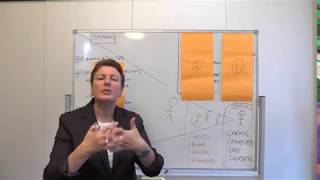
Dr Cathy Balding explains how to structure board reports on safety and quality around a single purpose: create a great experience for every person every time. Report the safe goal at every meeting, rotate other consumer-focused goals, and include brief systems reports so boards can actually govern and support managers to improve care.
Chapters
Hello everyone. Cathy Boulding here, founder of Quality Class and author of Create a Great Quality System in Six Months Blueprint. And today I'm going to talk about something that many people ask me about and that is what do we need to report to our boards about the safety and quality of the care and services we provide? You might call it clinical governance reporting or quality governance reporting. Quality reporting, it doesn't matter. It's what are the essentials that our board needs to know to fully enact their governance. Accountability for the quality and safety of what's happening at point of care and service delivery. Now, this is a tricky area because it's evolving. We're not as mature as financial reporting, for example, because they've been doing that for centuries. They've got it pretty well bedded down by now. A few tweaks here and there. But reporting to boards on governance around safety and quality, now that is really in its early days, in its infancy, and I hope in 10 years there'll be no need for videos, training videos like this, because we'll just know. But at the moment, everyone is trying to find their way. And I'm not claiming I have the answer, but I'm going to present one way of thinking about it that relates to my strategic quality system. If you haven't seen the training video on my strategic quality system, I recommend you go and have a look at that first because that really explains it in detail. And I'm going to be referring to that as we go through. So it will make a lot more sense. If you've seen that, if you have seen it, hopefully this will make a lot of sense to you. Because if we put our reporting within a broader framework of what are we trying to achieve for every person, every time, what are the people issues that we need to get right to make that happen, and what are the systems issues we need to get right to make that happen, Then you can start to think about reporting in a different way, a more purposeful way, a more consumer focused way. So what do I mean? Let's take a look. Now, some of you will remember that my strategic quality system started with the purpose, which was to create a great experience for every person every time. And when you do the work with people to define that, you'll find that that definition does not change a lot. The actual words that people use might change a bit, but what they mean doesn't really change. People want caring and connected. They want an experience that is collaborative and that makes them feel respected and cared for, that is connected and by that I mean that everyone's on the same page about what's going on. Health professionals in particular want to make sure that that experience is safe and successful. So some people might use the term, say, responsive, integrated, safe and effective. It doesn't matter. Whatever works in your organisation for you and your staff is the most important thing, but really it's having the purpose that's critical and key. So once you've defined those goals and you say, this is why people come to work in this organisation every day and we're going to support them to make that happen. When you think about your reporting to the board, what do they need to know? Well, I think that at every meeting they need to have those goals reported on, but not all of them. They can't look at everything all at once. You know what it's like. Stacks of paper, beautiful graphs, lots of figures, fantastic commentary. But what does it all mean? How does it all come together? What story is it telling about what's happening at point of care? And this is what I think is often missing the story. What's the story about? What's going on? All this is telling me something, but I'm not really sure what. If we frame our reporting around what we're trying to achieve, our purpose, then we start to get a story of, well, are we achieving our purpose or not? Or to what degree are we achieving it or are we making progress towards it? Then you can start to have much better conversations around, well, if we're not making progress, what's the board's responsibility in that? How does the board govern that? So, for example, I believe that at every meeting, you would have to report on the safe goal, because the safe goal is the cornerstone goal. Everything else is, of course, incredibly important. But if we're harming people, that's the thing we have to address first and foremost. So most of you will be very comfortable with reporting on safe, because as far as I see in my travels, that's what most people report on most of the time, to their board. So you would look at, say, incident reporting and all audits around safety, Any key risks the board needs to be aware of that is worrying people, or is going to worry people. Any investigations into critical incidents or sentinel events that have caused harm or death, and what's happening about that, what the open disclosure process was, what we've learnt from it, what we're putting in place to stop it happening again, and then there'll be some external data. For most of you, increasingly, you're required to compare yourselves against external safety data and external reviews of your safety and information from your funders about safety and the comparison between you and other organisations. So all of that could be looked at under the safe goal at every board meeting. The other goals you can rotate through because we can't give boards too much. I think that's when boards just look at it and go, oh, well, I suppose it's all okay. I suppose the board Quality Committee and the Operational Quality Committees have got this under control. Well, yes, they might, but that's not really enacting your governance role, is it? As we know, governance is such a cornerstone of any organisation. Get it right and you'll have a great organisation. Get it wrong and with the best will in the world, your fantastic point of care, people are going to struggle and to suffer. So we want to get it as right as we possibly can. And that means the board has to pay attention to what's going on and enact their accountability for that. So we can rotate through the other goals rather than trying to report on them at every meeting. So, for example, here we've looked at safety. Let's say we're going to look at the caring goal. So what are the sorts of things we would look at around caring? We could look at feedback from our consumers and their carers and their families. How caring did they find, their experience? What suggestions do they have for improving that? There might be a particular initiative that's going on around the caring and collaborative goal, where perhaps, for example, the staff and the consumers are now going beyond care planning together to care implementation and evaluation together. That would be a fantastic initiative. Firstly, I'd love to see that. And also the board would be very interested to know how that initiative was going, because it really does help to know how we're pursuing that caring and collaborative goal. We might look at the results of a staff attitude survey on how they find trying to provide more caring and collaborative care. What are the difficulties? What are the systems issues for them? What knowledge gaps do they have? Because clearly they're the ones that provide the experience. So we need to know how they're travelling in terms of these goals. So that would be a great goal based report for your board without giving them too much or overloading them with too much. And then I believe you need also to give them some systems information, because it's the systems that the board ultimately can do something about. They can't come here and provide the care. That's not what they do. But they can work with the executive and should work with the Executive to make sure that the managers and the staff have that solid platform to stand on, where they can confidently provide and go after providing care and connected, safe and successful care every person, every time. Because without that solid platform, this can get to be a bit hit and miss, can't it? You know when you can have good days and not so good days and you will have, of course, in a complex high risk system, which we all work in, you'll have those anyway. But it'll be even more hit and miss unless they have a solid systems platform and that organisational support and back up to go out confidently every day and make that happen. So the boards need to know, well, how well are we helping our managers and our staff? How are our systems going? What more can the Board do in a governance role to make sure those systems are in place and to make sure the executive has that in hand and under control and is working purposefully towards providing those systems? So the four systems that I talk about, of course, are the planning, leadership and culture, consumer partnerships, people in practice and pursuing high performance. They're the four organisational systems that I believe a board and executive needs to work together to govern and to operationalise, to give these people that solid platform. So let's say that at every meeting, the Board gets a short report on the pursuing high performance system, particularly as this is where our compliance systems will come in. So if there's anything happening that the Board needs to know about in terms of compliance, perhaps things that haven't gone so well during an accreditation visit, for example, or an upcoming compliance issue that the Board needs to be aware of, this is where you can discuss those sorts of things. And I think that at a minimum, you'd probably want to discuss some aspect of pursuing high performance at every meeting. It might be the introduction of a new risk register, for example, that would be a systems issue that the Board would need to be across, and then you would pick one other governance system to talk about. So in this example, I've chosen the consumer partnerships. And it might be that in terms of the systems, the consumer partnership systems that support staff and consumers to work together to make these goals happen every day, that in this case they might be seeking approval, a business case, for example, for a joint quality plan planning session with a consumer group, because you've decided in your organisation, it's about time your quality plan was equally developed by your consumers as well as your managers, your executives, your quality team. You want to have a real joint approach to it. So there might be an approval required from the board to bring that together. There might be development of an E communication system to get everyone on the same page to provide that collaboration with families around what's happening with their loved one. So there might be some amazing project that's come up where we're going to have some sort of text based communication system and that needs to be discussed at board level because it's a big change. So these would be the sorts of things that you would be talking about in terms of systems. And then as we go through the year, when consumer partnerships as a system comes up again in the rotating schedule of what's being reported, say in 12 months time, you can report on the progress with these and what difference they've made to that caring and collaborative and connected goal, because that's what you're trying to do here, pursue that goal. So I hope that makes sense, that having a schedule is really important. Don't try and give everything to the board all at once. It's impossible for them to take it all in and be really, really clear when you're giving them information, which part of the framework they're in. Are we talking about what's actually happening at point of care? So the results we're getting right here for caring, connected, safe and successful care in a rotating schedule. So safe every time the others rotated and what are we doing from a systems perspective to support that? And all of this will come together in the quality plan. So really you're reporting at every board meeting on the quality plan because even the safe data, which you might think is mostly monitoring. Yes, it is, but it should be telling you to what degree are we achieving our goal for safe care for every person every time. It's not just monitoring, it's telling us something about that. And if we're not making progress, and gee, I see an awful lot of safe reporting that is very, very flat. It's not getting worse, but it's not getting better. So the conversation you can have here is, well, we seem to have plateaued. What should we be doing as a board to help the organisation to take the next step around safety, to take a leap to the next level, because we seem to be stuck on the same rate of harm, for example, month after month. So it's not just about monitoring and it's not just about status quo. The board has a responsibility to improve so they can have that conversation. Similarly, this is the sort of feedback we're getting on the results of the staff attitude survey. They don't look so great, they don't look very keen on this collaboration with consumers business. What can we do as a board? What's our role? We need to make sure the right systems are in place to help managers and staff to make this happen. So I hope that that's helped you or given you perhaps a different way of thinking about reporting to boards. To me, the bottom line is purpose. Let's be clear that when we're looking at a graph or some data or commentary, we know exactly why we're looking at it, what it's telling us, and then have a conversation about the decision we need to make related to that information. And all of that must come together in terms of are we moving closer to or further away from our purpose, our goals for great care for every person, every time. In the meantime, while you're thinking about it, I want you to go out there every day and create great care and services for and with your consumers. I'm Cathy Boulding. Thanks for joining me. See you next time.