CB Bowman, Founder & CEO of ACEC and the MEECO Leadership Development InstituteTM SPEAKS UP
CB Bowman founded ACEC and the MEECO Leadership Development Institute to certify master-level executive coaches. The MEECO designation requires organizations to reapply every two years and align with ISO standards. Bowman argues coaches need to move beyond hourly billing toward sustainable revenue models and position themselves as enterprise business partners.
Chapters
More clients, more fun. Welcome everybody to this virtual coffee of the More Clients More Fun, and today we have an amazing and very, very special guest. Her name is CB Bowman, and she has a lot of things on her plate and a lot of amazing projects that she's leading in an incredible and inspiring way. And we met CB here at More Clients More Fun. Me and Juan met her about maybe 1 year ago via LinkedIn. Both of us connect with CB and we start to communicate with CB. We had a couple of meetings on the phone just to know a little bit more about her and her projects. And we went to this amazing conference in Sonoma, the MICU 2017. And we were totally impressed by the quality of people there, the quality of the speakers from people from Google, from Ford, to Jim Koses from the author, to Frank Wagner of Marshall Goldsmith. We were totally blown away by the quality of the event and the participants, and since then we've been collaborating with CB in other projects. And I want to bring her in this virtual coffee here just for let more people know about what they are doing that is, I think, so impactful, and starting with these conferences. So welcome, CB.
Thank you, Anna. And I want to say to everybody that Anna has been so instrumental in my learning about LinkedIn and leading us through a new era of technology and awareness, and I'm just so impressed with the work that More Clients More Fun does.
And tell us a little— let's start because I think one of the best ways for people to know you is knowing you through your work, that all these projects that you are leading, and I think a great place to start is this conference. Because was the being there in person, because yes, we meet people online, it's always great. We can bring people like in Zoom and be communicating. Today you are through the phone. Sometimes we are face-to-face. This is always an amazing way of communicating with people and to know people. But there is something still very special. And I think especially today on the online world, to have the opportunity of being in an in-person conference like the MICCO that you organize in Sonoma, and this year is going to be in Colorado. Can you tell us a little bit about the— what is the intention behind this MICCO conference and tell people about the importance of this event?
I would love to, and I just have to warn you that I could talk about this for a century and a day, so I'm so excited about what's going on, what's being developed by the people that surround the Association of Corporate Executive Coaches and the MECO Leadership Development Institute. The Institute started in 2016 when the Association of Corporate Executive Coaches Visionary Committee said to me, CB, we need to recognize organizations that are displaying best-in-class behavior with regard to executive coaching. And I said to them, well, are you talking about an award? Because that sort of thing exists. And they said, no. Since we're a member of ISO, which we are the only association that's a member of ISO, which is the International Standards Organization. We need something— and that's usually seen in manufacturing and consumer products, not in the talent space. We need something that's going to be at that caliber. So, we created the MECO designation. It's not an award. Any organization that gets it has to reapply. every 2 years because we know that there is dramatic change at the top of the organization during that period of time. And it's a— it's an incredible process. There's a 2-phase application. The first part of the application just acknowledges general interest, and then the second application is really an in-depth document, and organizations have told us that this was an amazing experience for them completing it because it takes a look at where they were, where they are, and the sustainability of what they're doing. And in 2017, we expanded the designation to include not only best-in-class use of executive coaching, but we added in employee enhancement and corporate culture. And we expanded the number of categories that are available for an organization to apply because we wanted to be fair across the board. So to wrap it up, the MECO designation is for organizations— MECO Institute is only for organizations— Who are doing Amazing things, to borrow your word, in the leadership development space, be it executive coaching, employee enhancement, or in fact corporate culture.
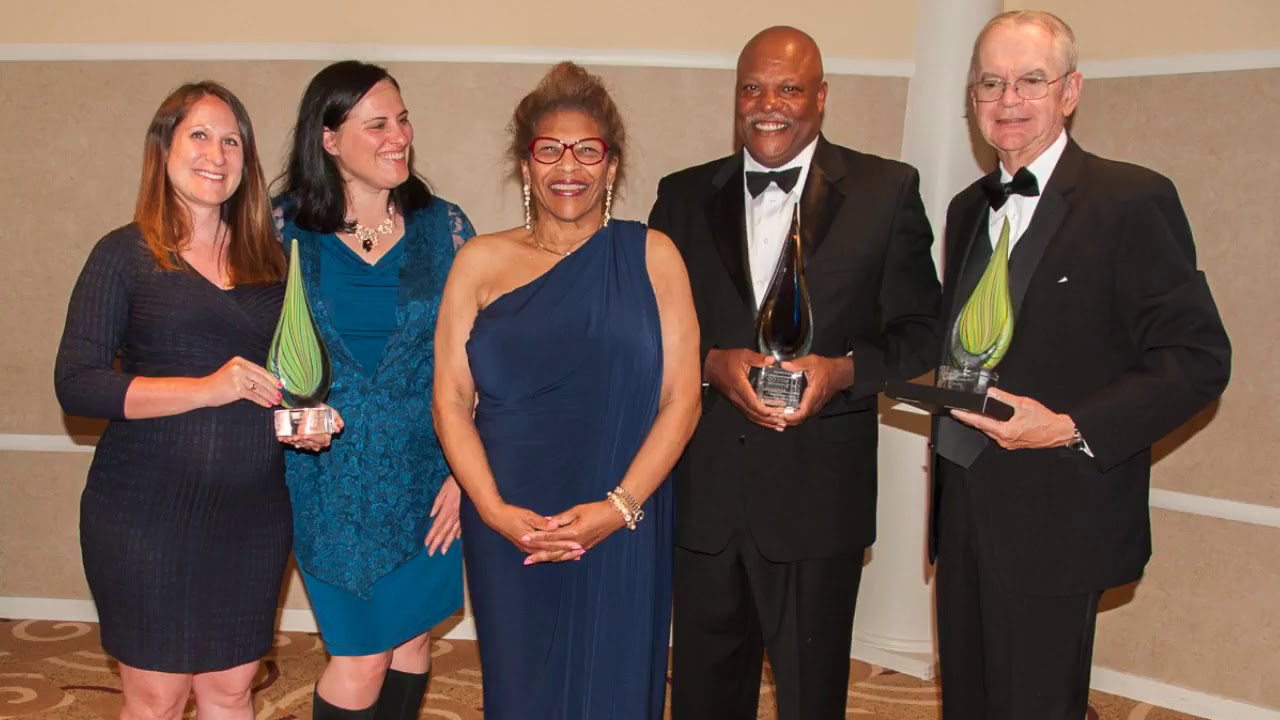
Yeah, and I'm sharing now the screen here that people that are listening and watching to the video, they will be able to see the website for the MICU 2018 Leadership Development Conference and some of these past designees, these companies that got this award about the work that they are doing internally with corporate— with coaching and the leadership work that they are doing using coaching as one of their main tools. Companies that got these designations are Ford, Mayo Clinic, Rodan Fields, L3 Technology, MD Anderson Cancer Center. These are amazing and well-known companies that they got this designation. And one of the things that I truly enjoyed last year at the conference is that many of the leaders, the coaching leaders in these organizations, came to the conference to receive, of course, the designation and also to learn. I still— it's vivid in my mind that we were in the wonderful dinner that you organize for the— where the designees, they receive that beautiful glass statue. And we were in the cocktail hour, we were networking there with amazing people, and I was speaking with a person that I had saw in the conference, but I didn't have the opportunity to speak too much. And I was speaking with him, and he was the person from L3 a company that honestly until that moment I didn't know much about, and I realized how big they were. And he was not a coach, he's the one that brings coaches in to help that organization to be better. And was incredible the insights for me of that conversation. And he was there the full conference from the beginning to the end because he was wanting to learn more about how corporate executive coaches can be a help for them? How can you use more of that? And all the other topics that were being discussed on the conference.
I think it's an important point to note that, first of all, this conference is becoming like the TED Talks of leadership development. And the theme for the conference every year is The Future Is Now. And the purpose of the conference is to bring senior or master level I don't wanna use the word senior because then people tell me I'm talking about their age, right? So we'll say master-level coaches with people in organizations that make the decision to hire them and to bring them together so they can share knowledge and just develop a relationship and look to future solutions. So this is very unique in the conference The other thing that we do is that we keep it small because we don't want people walking away with a collection of business cards and the concept of let's do lunch. Our theory is to keep it small so that people walk away with more of an opportunity to actually do business.
Yeah, and I now I pull it here on screen, the one of last year, the The Future of Leadership and Coaching Is Here, like you say, and the topic was a lot around neuroscience because it's something so important. And the quality of the speakers was amazing because we had— you had there Jim Kozes, that is an author in the leadership world that most people are very familiar with his bestselling books. And was amazing and interesting to listen to David Peterson from— that is the responsible— is the director of executive Coaching and Leadership at Google. Very interesting speaker and incredible, how do you say, he really was thought-provoking and make us, how do you say, open horizons to new ways of seeing coaching. That was very interesting. I also absolutely— Shane Meeker, in terms of the story, that is a topic that is quite common nowadays, but he had a very incredible approach to it and shows a lot of his experience in P&G as the corporate storyteller. And Phil Dixon was with the neuroscience, and you had other amazing people there speaking about neuroscience, but that the brain-based leadership is a concept that is so important to understand. And this— and one of the things, because many of the other speakers, maybe they are not so well known or not representing these big-name companies, but the quality of them, because we have many presenters there that are also members of the Association for Corporate and Executive Coaches, the ACEC. And most of the participants are members of this association, and the quality of the people there was truly outstanding. So can you tell us a little bit about the ACEC and how it relates to the MICCO?
Yes, but first I want to talk to you a little bit about the speakers for this year because I am just so excited. So I'm on a personal goal to, to get executive coaches to change their business model because I think it's a bit archaic, the whole concept of being paid A dollar for every minute that you speak, or whatever the fee is that you're charging. The whole concept is that you charge based upon an hourly service, which means that it's either in person or you're using technology today. The problem with this model is that it stems from doctors and lawyers, and it doesn't really apply to today's world where you have a solo practitioner such as a coach who could have a serious accident or something happen in their family, and all of a sudden they cannot earn an income. This to me blows my mind because I come out of the corporate world, and I think that— actually, I know that coaches have to change if they're at a mastery level. They have to look at bringing and establishing multiple income streams. So the focus this year is on giving attendees enough information to be able to do that. And the focus is on, from the corporate side, measuring success. Now, we are using this word of return on investment. return on investment, words of return on investment, which because I come out of consumer products, I know that this just, it really doesn't apply to coaching. And I know that I'll get a lot of flak for that. But the reality is when you're dealing with behavior, it's very difficult to isolate return on investment. There's too many factors in it. So we actually have corporate speakers who are hiring the coaches, who are paying the money, who are going to come and speak about how they really view a return on investment. I think it's going to be shocking information for people because they don't measure it the same way that these experts, quote unquote, out there are selling the return on investment as a tool to gain clients. That's really not what's happening.
Yeah, and I think one of the things that make these conferences special is what you create, this space that brings together the leaders in companies that know that coaching is important and these master-level executive coaches that serve these companies, and they come together in a space where they can exchange ideas. They can learn from each other and, and do business too.
Absolutely. And this year we added in technology, new systems that can help support both sides of the fence. And so one of the things that we did this year in selecting speakers is we selected movers and shakers in our field that people have rarely heard of. And how is that possible? Because you're using their systems, but you don't know who's behind it. So we're really excited in terms of our speakers. And how that all relates to the Association of Corporate Executive Coaches, nicknamed ACEC, is because all of our coaches in ACEC, in order to get in the door, You have to be recommended, you have to be sponsored, and you have to be at the mastery level. We do not have any members that are below the mastery level. And so you have to be coaching in the C-suite for at least 5 to 7 years. It doesn't mean that's the only thing that you do, but you have to validate that you have been coaching at that level. Those are— that's the caliber of people that you're talking about that attended last year and who will be there this year.
It's people that are master coaches. They really know what coaching is and coaching and consulting at the high level, and they know what working in a corporation is, and they bring those 2 things together in a very powerful way to help organizations to be better in many levels.
Yes, and most of them have had corporate experience walking in the shoes of the CEO, and most are not only just coaching in the corporate space, they're coaching in the Fortune 1000 space. Yeah, so it's a really different experience. I know that last year when Jim Kouzes came after the conference, he came over to me and he said My God, what an environment. Thank you so much for allowing me to participate. And I want to tell you something, that the people in the audience challenged what he said. Yeah, so he's not used to that. This is not an audience that's quiet. They speak up.
Totally, and engaged, and with that eager to learn more. And it's really extraordinary, all that environment that you managed to create there. And because it's a small conference, as you said, how you can speak with the speakers, you can really pick their brain in many different ways. And, but let's go back to, because I think one thing is we can say that like 99% of the coaches, and honestly, everybody that I spoke there that were coaches were high master-level coaches. And interesting thing, like you were saying, that some of these master-level coaches, some of them, they have the business side very well developed. They have their own organizations and they have their own groups and other coaches in their bench, a team working with them. So, but many others are equally excellent as coaches in terms of what they offer to a company, but they have a practice of coaching. They don't have still a business. If they, like you said in the beginning, if they stop working by whatever reason it is, even if it's a good reason like going out to some downtime in vacations, or because something happens that they have to put their attention family-wise or their own health, their business stops to create income.
Yes.
And I love what you are doing, especially in this 2018 conference, that, that is one of the tracks. One of the things is helping people to learn from each other, the ones that are there for longer, and what works and what doesn't work, and helping these coaches changing their business model in a way that is much more sustainable.
Yes, yes. And the other thing, I just— it sounds like a weird thing to mention, that all of the coaches in ACEC have a high degree of humility, and that's important for our members because these are such high-level coaches. We wanted everybody to have a head size that they could fit into the door.
Yeah, and it's totally because I, I, I met most of them. I met them for the first time and we were just chit-chatting, having a conversation. Oh, you work with so-and-so company? You work with— it's like, whoa, you are there. And they were, as you say, totally grounded.
Yes, absolutely.
And that is grounded and willing to share their experience, to learn from each other. It's always refreshing to see that.
Yes. And, you know, let me— I just want to go back a second and explain to those that are kind enough to listen to this. There is a big organization, an overriding organization called G4. And G4 has under it— stands for Group of 4 Organizations in Leadership Development. Today we're talking about the Association of Corporate Executive Coaches, which is ACEC, and you can find us at acec-association.org, which is for individual coaches and coaching cadres. Then we have MECO, which is the MECO Leadership Development Institute. That website is MECO, M-E-C-O, E-E-C-O. E-E-C-O-institute.org, and that is for organizations. And there we look at research, and we have what we call the stakeholders circle. That is only for organizations, because here we look at how do we help organizations better their relationship with coaches, better their relationship with employees, We look at sustainability of employees, aka retention. We look at all of the areas around leadership development. We also have something that's going to be opening called the Youngbloods Tribe, which is for new coaches coming on who really want to be able to develop their path correctly. And we have something called the Brain Trust. which is really a transition group of management consultants, HR people, talent management people who want to move squarely into the coaching space at the mastery level. So it's— G4 is the family organization under which these organizations exist that are doing remarkable things in the field of leadership development.
'Cause, and I love this new, the newest child that is the Youngblood, the ACC Youngblood, because we cannot rely on, because yes, we have these amazing master-level coaches with an amazing corporate experience. Usually coaching is not their first career.
No, we're not old, Ana.
No, but experienced. Yes, it's the experience that is there. But the reality is that, that now coaching people are— we have colleges, universities that are giving coaching degrees, coaching master degrees. And these new coaches don't have the corporate experience of many of the other ones, but they need to learn what is coaching, because coaching in the corporate environment is very different that coaching one-on-one a small business owner or other types of coaching. There is something, how do you say, there is a— it's almost like we know that from one country to another country there are different cultures and the corporate world is a country in itself with a very specific— Very specific culture. And if you don't know their jargon, their language, You are going— how do you say— you are going to be noticed not in the way that you want to be noticed. Like, so you don't know what that means? Like—
I think that's a really good example of how people are using ROI incorrectly. And they're sort of like, you know, blindly drinking the Kool-Aid with people who are trying to force-fit the definition into a carrot for them to get involved with. But the people who are part of ACEC understand what ROI is. They know what an SOM is. They know how to read a balance sheet. They know what the competitive frame does to the mindset and behavior of the C-suite. They know what the effects of the boardroom is going to have. They understand Yeah. And they can go toe-to-toe with any CEO of any Fortune 100 company. That's the difference.
And a very important difference indeed, even for somebody that are not lucky enough to have that background experience. For instance, myself, I have experience in terms of organizations on the university world in Portugal, Spain, and even here. that is a culture in itself, that is very peculiar also with their own jargon, their own culture. Now that I'm starting to work more with corporations, I'm learning, and having this opportunity of connecting with people of the ACEC that have this experience accelerates my process of learning without any doubt.
And it's not to say that we don't have coaches that are working at the top of the house of universities, academic institutions, government agencies, and the such. We do. We do because MD Anderson is part of the University of Texas. So, but what we're talking about is people who can, as I said before, go toe to toe with the top level of an organization. But also, These are people who very well reach out and help people who are not at the top of the organization who want to get to the top of the organization, because when you apply for a Master Corporate Executive Coach certification through the MECO Institute, you have to show volunteerism, and that volunteerism has to clearly display that you're giving back to whatever community you choose. That has to show that you are reaching out and helping somebody or a group of people who are not at the same level as you. And that's what I mean about humility. It's really important. And we monitor our members for that kind of service.
And so let me throw you a question.
Yeah.
How can corporate executive coaches change the world?
Oh my God, you know, I have a favorite expression, which is— it's a question actually, and the question is— animal lovers, don't hate me for this because I have an amazing 5-year-old Cairn Terrier who rules this house— but the question is, how do you eat an elephant? And the answer is Bite by bite by bite. And then my other, my favorite tagline, which I created, is the answer is the beginning of the question. So when you combine those 2 things, we can't change the world. We can make a difference in a specific leader. And as we do that, then we begin to affect the world.
It's that ripple effect. And I have to add that your perspective and the ACC perspective, that the people there have seen coaches as that enterprise-wide business partner, that positioning allows the coach to have more impact in organization?
Oh yes, now you're really pressing my hot button. I am so tired of coaches being seen as a throwaway element or as an element that's nice to have when your profits are, you know, high. We need to be seen As enterprise-wide business partners. And that is my quote.
Mm-hmm.
I own that one because, again, you know, we as coaches, we have to do more. We can't, we can't sit on the sidelines and think, okay, I'm just gonna coach and I'm gonna go in and leave. You've got to show your client that you care about that organization, and that's the only way you're gonna keep this client.
Yeah.
Because I'm going to tell you that the newer coaches coming out, they know, they know that the way to the heart of an organization is to become part of that organization, to be an advisor, to look out for the organization, not just go in, coach, and collect a paycheck. That's not it.
Yeah, it's not. Otherwise, it's like, oh, HR is calling a coach to fix somebody. you are becoming a commodity. It's like, okay, if this— and the other one is like you are the strategic advisor. You are the secret sauce that you can come in and really help organization in a macro way.
Oh, and yes, and that's got to be hollandaise sauce because it's got to be rich.
Yes. So, and one of the things that— and going back to the conference and this year conference that people can find more about if they go to, let me go here to the MEECO, M-E-E-C-O, conference2018.org. Because one of the things, like you said in the beginning, you always try to speak about the future that is now here. So tell us a little bit about the hot topics. You already spoke about the importance that is for any coach to develop their business model, to have different sources of income, to create a more sustainable business. So, but what are the hot topics are for— on the reserve for the lucky ones that are going to the conference in Colorado this year?
So I'm gonna change that question a little bit and make it very sort of CB-ish. Not necessarily talk about the hot topics, but talk about the topics that are needed, because there's a big difference. Hot topics are things that everybody's doing, everybody is talking about, and you can get the information anywhere, like neuroscience. Behavioral coaching. I mean, that's, that's just so old. It's, it's scary. What we are going to cover are things that are sorely needed. For example, we have the CEO of LeaderAmp who's going to be speaking, and he is creating— and this is patent, I think it's patent pending— a new product whereby you can measure a client's response, their behavior, through your smartphone. I mean, how scary is that?
Right.
We have Michelle, Dr. Michelle DeVoe, talking about, you know, an insider's perspective from a corporate view of how do they value coaching. Very different from what we value. We have a few attorneys speaking. One attorney is going to be I laugh because it's really funny if you've read any of his work. He absolutely has an incredible sense of humor. He is an attorney who's turned coach, and he's talking about the things that get companies in trouble. Now, why is that important? Because if you're coaching on one of those subjects, you need to know about this. He does it in such a wonderful way. Wonderful way. Again, it's things that we need to know. We have an attorney coming in to talk about how do you protect your intellectual property. I mean, coaches are working so hard for so many years, especially those that are seasoned coaches, and they don't realize that they have product, product that can be bottled and sold and licensed. But how do they do that and protect their intellectual property is another story. And then we have a— well, we do have something that's very, very current, shall we say. We have Dr. Candida who is going to be talking about this whole sexual harassment thing that's going on within the corporate space. And it's— I'm laughing even though it's not a funny subject, but it's amusing that in terms of, you know, it has rippled through our culture to the fact that coaches really need to pay attention to it. And that's what I think is kind of like funny because we thought about that as remedial coaching. And most senior-level coaches don't want to go near remedial coaching because, you know, the person is on the way out. But now it's interesting because you've got some big-name people who have been caught in this storm, and what do you do? Do you throw them all out as we've been doing? Do you give them— I was going to say expose them to, but I guess that's the wrong word— To a master-level coach who can help them see what's happened and understand what's happened and the repercussions and, you know, is there anything they can do about it. I mean, this has moved into the topic of the day to perhaps a coaching specialization.
And it's more that because there is lots of sexual harassment training and many of the companies already have things on the— their HR department already have some things around this. But cannot be— these are not problems that are solvable by a course that they make everybody go through and click up the— check the boxes. This is more complex than that.
Oh my gosh. Yes. And you have got to read Janovec's latest article because that's the attorney that's speaking. He wrote an article that we just put out in the direct mail, and if you don't have it, please email Anna and she could send it to you, or email me. And that's exactly what he talks about, is the uselessness of harassment training. This is so much greater.
Yeah, and that is another thing, a great thing of being part of the ACEC, is that The community is the opportunity to come, the discount rates to these conferences, quality of the other members, and all the information that the committees organize and the committees in itself, and all this information that you share that helps people to be in the top of their game.
Yes, yes. And by the way, we have another attorney speaking. very interesting topic, is how do you actually go and entice CEOs to hire you? Now, I know that because we have master-level coaches, they've all done it, but you know what? Not so much, because there's a new breed of CEOs coming in. And you may be thinking, and all of your clients exist in the old breed, but if you're not gonna be retiring tomorrow, And I do mean tomorrow, January 10th, whatever the date is, then you really want to hear this.
And because there is this— because now I'm putting it on screen, I'm really looking forward to listen to this, Optimizing Millennial Behavior to Increase Organizational ROI. Is there— all these, all these say we are these new generations, this new blood that is coming in, and that I think is one of your genius of starting the Youngblood tribe in terms of coaching, they are going to help the other coaches to relate more with these new generations that are coming. Because they are now the new leaders. They are now the new people. And I can tell you of very seasonal coaches. It's funny, a couple of people that I've been speaking to in the last couple of weeks, they're very seasonal coaches with an incredible track record. an incredible experience in big corporations. And when I ask, okay, what's your biggest business development challenge? They say, most of my business in the past came from referral sources and kept my book— how do you say— totally book solid. Now most of my referral sources are retiring and I'm not ready to retire.
Mm-hmm.
So I need a new way to do business development.
Absolutely. And that's why, Anna, you were speaking about how do you— are you prepared to market in the viral world? Viral world, number one. And number two is that we have a millennial speaking about how do you work with millennials. Yes, it's very different than what people think.
So, okay, so just to wrap up our wonderful conversation Can you tell how people can connect with you and learn more about all these suites of resources?
Sure, they can email me at cb@meeco-institute.org, or they could email me at cb@acec-association.org.
Yeah, and, or Google, or if they go to LinkedIn and look for CB Bowman, they will also find you there. And of course, if somebody can be this May in the MECO conference, it's really an opportunity to take advantage of. So check at meeco-conference2018.org. It's going to start on May 21st at this beautiful location, the Stanley Hotel in Estes Park, Colorado. Hopefully I'm pronouncing it okay. It's a beautiful location.
You were close. It's the Stanley Hotel at Estes Park.
Thank you.
Colorado, and the fun thing about that, that is where Stephen Kubrick, I think is how you pronounce— no, Stephen King, sorry, 2 different people. Stephen King wrote The Shining, and he has— he had a room there and he wrote it, and they have ghost tours at night, and it's in the foothills of It's at the foothills of the Rocky Mountains, and we got a phenomenal rate of $169 a night, which is going up to, I think it's $469 the day after we leave. And, you know, a lot of people are booking it for the week and bringing their family out, and it's just gonna be a fun time for all, learning the fun way.
I'm looking forward. I will be there this year again, this This is one of my F2Go events, so, and looking forward to see you in person there again. So thank you so much for your time today, for doing this interview with us.
Thank you.
And everybody that is listening, a pleasure to— any question, just email us at questions@moreclientsmorefun.com. Any final words? Our listeners.
Yeah, I'm looking forward to hearing from you and seeing you at the conference. And, uh, look, I'm so excited. I'm so excited. I'm humbled that you've taken the time to listen to this.
Okay, bye for now, everybody.
Bye!
Easy to run. Building it up one by one. Yeah, more clients, more fun.
More from CB



211- Courage to Leap & Lead with Louise Story part 1Courage to Leap & Lead







