CB Bowman LIVE!: Challenges of the C-Suite: Guest Susan Curtin, Episode 25
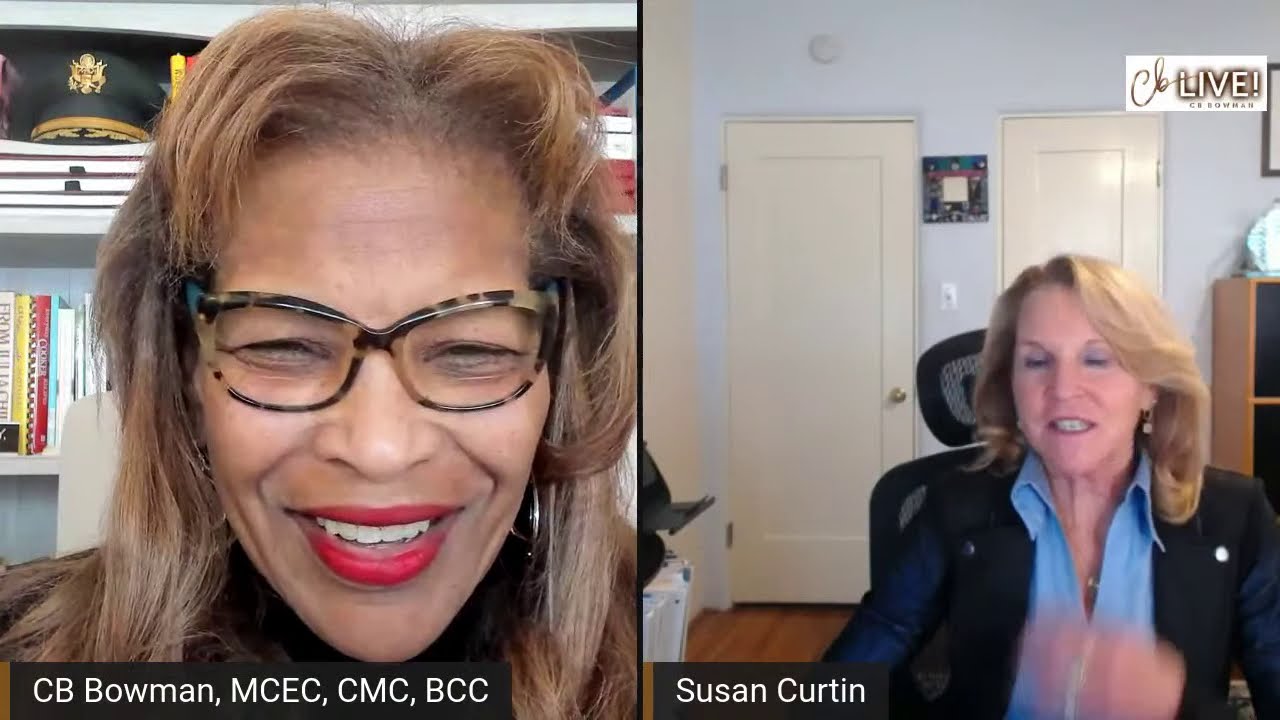
In this live interview, host CB Bowman talks with executive‑coach Susan Curtin about the biggest pressures facing C‑suite leaders in early 2021. Susan introduces the Positive Intelligence (PQ) certification she is completing and explains how its focus on self‑awareness, emotional intelligence and the "sage" mindset can help leaders navigate the turbulence caused by COVID‑19, rising healthcare costs, talent retention, and heightened board expectations. The conversation expands to broader topics such as diversity, equity and inclusion (including pronoun usage), the impact of cancel culture on trust, and the need for leaders to model resilience. Susan describes her "Managing for Results" program – a structured assessment and toolkit that helps managers distinguish between training, coaching, performance, and disciplinary conversations and provides concrete resources for ongoing feedback. Throughout the dialogue, both participants emphasize practical, neuroscience‑informed approaches to leadership development, the importance of building a culture of trust, and the challenges of applying coaching principles in real‑world organizations.
Chapters
Okay, well, we're live. Hi everybody, this is—
Yay!
Bowman with Challenges of the C-Suite with my special guest Susan Curtin. We have spent the last half an hour trying to figure out what the problem was that she could not get on. You could hear— see her face, but you couldn't hear her. And we figured out that this system only works with Chrome. So not to shout out to Chrome, but to say to livestream, let's get busy. It's got to work on other platforms. So why don't we roll right in and talk to Susan, our very special guest. Susan, how are you now?
I'm doing really well. I'm echoing. Can you hear me?
I can hear you, and you're not echoing here. It does sound like you're in a A chamber, but it's not an echo.
Oh, okay.
So Susan, tell us about yourself. What do you do? Who do you do it with? What's going on?
Okay. Well, first and foremost, I am currently participating in the Positive Intelligence Certification Program, and I want to kind of give a call-out for that for 2 reasons. One is I had the opportunity to participate in this as a direct result of ACEC and CB inviting Sherzad to one of our Saturday business meetings and encouraged any of us to take advantage of his special program for coaches. That led me to sign up with 4 other ACEC members, and we did the 6-week, and then 2 of us continued on to the certification program. And I'm bringing it up because I have been practicing all my PQ reps as I have been dealing with the technical difficulty, um, that CB and I have been, uh, experiencing. So it's been a great opportunity to kind of practice What I'm learning, implementing, stay calm and present. Anyway, so—
Wait, wait, now you're gonna have to tell people about the program, the PQMs, everything. And yeah.
Okay, so the Positive Intelligence Program, and some of you who are out there that are coaches may want to look into it because Sherzad, who wrote the book called Positive Intelligence, has a passion in terms of really making a difference in the world in a big way. And so his program for coaches is extended worldwide. So there are coaches all over the globe who are participating. He's in, I think, cohort number 5 of coaches going through the certification program, which was preceded by the opportunity to Attend his 6-week program on positive intelligence that normally there's a fee for, close to $1,000 per person for the 6-week program. So the fact that he has granted the opportunity to have coaches go through for free is a result of his belief and passion that coaches are in a position to really make a significant difference in the world. And really provide the tools, resources to individuals to help them change their lives, which then ultimately, you know, contains the world. You know, one person at a time impacting their relationships with family, friends, coworkers. So that has been, you know, his passion, purpose to get the resources out to others so they can benefit. And as a coach, It's an opportunity to provide that to coaching clients as well, you know, individually as well as teams. I will be starting a leadership team through a PODD, the 6-week program. So it's really an opportunity to kind of enhance what I believe and build upon the individual's emotional intelligence. You know, it really increases One's self-awareness of when one's been triggered and maybe operating from kind of the lower part of our brain, the limbic system where the amygdala lives, where we may be more reactive. And in so doing, say and respond in ways that we may regret later or may be disruptive relationships. So it's really, you know, an opportunity for people to apply the tools to build their emotional intelligence at a time where we are facing so much change, you know, so much of the unknown, so much of the challenges, you know. So we can look at challenges from throughout. I know the topic today is challenges with the C-suite. And so when you look at it from the standpoint of leaders lead organizations and leaders set the tone for employees in that organization in terms of how to respond and how to handle challenging situations and venturing into the unknown, venturing into having to shift maybe pivot their business model to deliver services differently, to the resilience of handling the change from working in person to, you know, working virtually. And I just think, you know, positive intelligence couldn't have arrived at a more appropriate time, right? So the opportunity to provide this to individuals as they are dealing with the challenges of COVID And if you're a leader of an organization and specifically a member of the C-suite, you have not only the responsibility for managing your own reactions and knowing that you don't necessarily have all the answers. I think the opportunity to draw upon the wisdom that comes from kind of what positive intelligence refers to as kind of the sage in all of us, which really speaks to when we are able to operate out of our highest and best self, usually it's our prefrontal cortex, the executive brain, where we can make decisions more consciously, working from a place of kind of clarity, calm, confidence, compassion, that really has a direct impact on the organization, the employees, and the customers you serve. So with that, I just, I just thought that, you know, I'd add on that I knew today was coming, and I looked at an article that was written on— it was a survey done by the Conference Board. What is top of mind for CEOs today in terms of heading into what's referred to as the post-COVID-19 recovery?
Susan, I want to just break in and wrap up about positive intelligence. So for those that are new to this area, basically in summary, what we're looking at— and Shahzad does a fabulous job of this, and Susan is mentioning that he came to speak at the Association of Corporate Executive Coaches. which is ACEC. And it looks at what we ourselves trigger in ourselves to prevent us from achieving goals, moving forward, and being happy. So it's a great program. And I have to tell you, you want to talk about somebody who's certified in a lot of things and who knows a lot about these programs, of various sorts, and she's giving a high kudo to Shazar's program. It's Susan. Susan is certified. I, I get so jealous when I look at the bio and I'm going, oh my God, how does she do all this, right? Um, and so she's uniquely qualified in not only her understanding of all these different methodologies and theories and practices, she is certified to the point where she knows when to use them and how to use them, which is a sign of a master-level coach. She's a great person for us to ask, what is it that we see are the biggest challenges that people in the C-suite are faced with? Because she's the person that they're going to to help them resolve these challenges. So now, Susan, I want to ask you, what are the 3 biggest challenges that you're seeing in the C-suite?
Yeah, I think what I have seen, and I think what I would differentiate, is that leaders at all organizations have challenges, right? And when we refer to corporate America, we refer to the C-suite, right? And so their pressures, their priorities may be driven differently than, let's say, leaders at the top of organizations in public sector, government, and/or nonprofit.
Mm-hmm.
Though they're all in leadership roles that absolutely have a direct impact on the lives of those individuals in their organization and their communities and ultimately their customers. So I think what's important, and for me when I thought and kind of reflected on C-suite, I mean, the C-suite really kind of speaks to corporate America.
Yes.
Who then we have to look at what drives corporate America, or what keeps the C-suite awake at night? What's top of mind for them? And I think we have to kind of look at what is top of mind for them now in January of 2021 versus what has been top of mind, right?
Yeah.
So if there's a, you know, a reminder of what influences them is who they are accountable to, right? So I'm reminded of— so if they have boards that then hold them accountable, you have to look at what are their corporate boards asking from them, what pressures are they facing from their boards who ultimately you could say, are their bosses. And so I think you could look at kind of the variety of what might be top of mind now with COVID what might be top of mind for, you know, the social unrest, Black Lives Matter, this emphasis and increase on paying attention to diversity, equity and inclusion, right? And so depending upon— I would say it's what are their boards concerned about, and then in turn, what are they holding the executives accountable for, you know, all members of the C-suite? And so that can vary, right? That can vary from corporation to corporation. And I think what I was going to refer to, which I really feel like it spoke to what is going on currently and the combination of COVID and now a new administration coming into the government, which then influences policies, what might be expected moving forward. And I thought this was particularly telling because what it refers to is that top of mind, the number one was COVID-19. And with 58% of US CEOs listing it as their number one concern and the main disruptor in 2021, I think that is significant. And then carries over to one of the other issues was healthcare, right, which is a cost issue. It's the healthcare for their employees and the rising costs of healthcare, and that if There are costs that uninsured— what health insurance companies oftentimes will do is put that added cost with increased premiums for the employer, right? So you've got a greater need for healthcare today, right, with COVID and COVID issues for employees and their families. And then you have— the rising cost of healthcare, especially if there's been uninsured, where then your rates may go higher. So that really obviously directly impacts the bottom line, you know, the profit for the organization. So I think those 2 are clearly big. Then you add to it, right now the unemployment rate is the highest it's been since 1945. It's 6 point— we had a 6.2% job loss. And so the question is, you know, employers, I'm sure, you know, concerned about in that losing their talent, right? So if there's job loss, how do you retain your talent? And how do you, again, pivot to create different jobs and keep the people that you don't want to lose, right? So I think the retention of top talent is also one that they listed. as a major concern. So I think those really speak to what I think we as coaches, consultants are hearing and addressing is how do we assist the leader with addressing all of the changes that they are facing and prioritizing that. And And each one in and of themselves would be demanding, right, and time-consuming. When you take kind of the blend of all of that, it really is a time of change where people who are used to having all the answers, who are used to being in a position where they can allocate resources, prioritize, implement as they, you know, it's more about growth, right? It's been a history of maybe their businesses growing and expanding to now we're at a time of change where they're looking at, you know, kind of reestablishing what is important. And then what are the, I think from a leadership perspective, what are the leadership competencies most needed right now? to address and manage through this time of change?
Yeah. I think that, Susan, I agree with you about the focus of leaders in different spaces, be it government and corporate or academic. Up until now, But in listening to you and in listening to others that support leaders in various indexes, it occurs to me that right now, here and now, that their concerns are the same regardless of the sector. COVID-19 has hit the academic space. It certainly has hit the medical space. It has hit you know, just about government, every facet of our being.
Right.
Health has hit every facet of our being. So it seems to me that there might be this fantasy world, an opportunity for the different industry sets to get together together and figure out some solutions.
I absolutely agree. And I think when I was referencing the difference, it was intended to say what keeps them up at night, right? Like, so who are they really accountable to? So when I think about it, I also reflect on the public sector. So when I worked internally for the City of San Diego, The city manager at that time reported to the mayor and council. So they didn't really have the full independence to execute and implement, right, what they saw as the priorities of what the community of San Diego needed from them, right? So there was a level of accountability that the priorities came down from the mayor and council. Obviously, the city manager who was most successful was the skill, you know, the ability to bridge that, the capacity to skillfully have a successful relationship with the mayor and council.
Yeah.
To listen, to hear, and know when to advocate and promote maybe things that they weren't considering, kind of from an internal organizational perspective. So it was and and both, but it was not— it was the reminder of, so when you have maybe corporate America that a board may push, let's say, profit versus mayor, city council might be pushing for what is best for their communities and the districts that they're representing, right? So it's a different focus. And that's where I was saying in terms of what keeps you up at night and who ultimately is the decision maker. So I thought about it recently because a client said to me that their board has a change in board members, and many now are coming in with, let's say, a more inclusive view than the past board. And as a result, there was an expectation that they wanted to see internally employees at all levels use and reference the pronouns. So on their emails, should be able to identify the proper pronouns in terms of how they want to be addressed, right? That's a great example. That's amazing.
Yeah, because I don't understand that. Can you explain the whole— I don't want to say it's a trend, but the whole usage of the pronouns? What, what is the purpose of it? And where is it going? And why did it— let's start with why did it start? What is it? And where is it going?
Okay, so I will begin by saying I am in no way an expert on that, though what it is, is it's a diversity issue. Okay, so it really is about kind of the reminder of the gay, lesbian, transgender segment of the population that in some ways for many have felt invisible, right? That they are not seen and heard for who they are, like being seen and heard and recognized when we talk about inclusion. And this really speaks to kind of my passion around diversity, having worked internally in the City of San Diego's diversity commitment, the reality is diversity has always existed. The issues have really been about equity and inclusion.
Wait, wait. Are you saying the lack of diversity has already existed, or are you saying that diversity has worked, or just The word issue of diversity has been around.
No, the point I want to make is that the recognition is that there has been diversity in the workplace for a long time, looking at even the gay, lesbian, transgender, right? So that's diversity. And the question is, were people feeling safe to be seen and heard and to express themselves? No. So the diversity existed. Let alone gender diversity, age diversity, ethnicity, the diversity of behavioral styles, how people think, how they operate, cultural diversity, I mean, so religious diversity, ability, you know, persons with disabilities. I mean, so what I am kind of reinforcing is that diversity has always existed in organizations. Now, the degree of which, how diverse they are, may vary. The challenges have really been about how do we tap into the diversity that exists, and are we providing equal access, and are we including their voices, are we including their perspective, do we see them, or do we want them to assimilate to our culture, our values, and to be more like us, us being whatever culture is the dominant culture in that organization.
Mm-hmm.
So for me, you know, the pronoun usage is really speaking to the respect of seeing who you are and how you want to be, you know, referenced. So again, I'm not an expert on that form of diversity in terms of how, you know, specifically the meaning behind listing the pronouns. But I know that organizations have taken it on. So, for instance, one of our daughters works at San Diego State, and they started doing that. So the faculty and staff use it in their email. So that— it's a growing— how would I say it? It's an englob— it's a growing—
Movement.
expression of what I see as inclusion, right? So the ability to kind of see in here that people may not know who I am beyond just what they see externally, right? I am a female. I am a white female, right? So I pointed it out because I thought it was an interesting example of someone on their board thought it was important, so made it a priority. to their CEO, which then has to look at what are we doing and implementing this in our organization. So I'm just sharing it as a perspective. So the same thing, I mean, we could look at if you have a board that might minimize the impact of COVID let's say.
Mm-hmm.
or might minimize the impact of social injustice, or not necessarily see that there are issues around exclusion, right?
Yeah.
And that there may still exist systemic issues that keep groups oppressed, right? So if you have boards that don't believe in any of that, Yeah. They may not support or encourage their leaders, you know, the C-suite, if we're looking at corporate America, to make that a priority, to invest in it, right, to prioritize it. So that's my point, is knowing where the individual resides, if it's corporate America, if it's nonprofit, if it's public, and knowing then what might be top of mind for them? Because we can all look and say, yeah, absolutely, whether it's academic, public, private, COVID is real, right? We all know that. Now, how people address it and the priority they give will vary. And so that's what you really have to kind of identify is how— So I'll use the example. So maybe their only concern is bottom line, that if COVID isn't addressed, they are going to spend more on healthcare or they're going to lose good workers, right? So their driver might not necessarily be the concern about slowing down COVID or believing if COVID's real or not, or if it's as serious as it is, but if they feel the pinch that it may have direct impact on their bottom line, then it's going to become a priority, right? And then how they approach it and what they're willing to do to kind of address it will vary. There's diversity in handling COVID, right? There's diversity of thought around how people see it.
Yeah, I think that's a really, really good example. You know, bringing it down to a granular level, a school's administration may be focusing on COVID in terms of their ability to respond technically. Will children have enough computers? Will the teachers be able to make the transformation from in-person dialogue to speaking to a screen? Whereas an organization that produces cookies may say, well, Or Ford Motor Company may say, well, we can produce masks instead of cars. So I hear what you're saying, and it's an interesting perspective. Both are looking at COVID, but from different lenses.
Uh-huh.
And ergo, the diversity of concern, of thought. I mean, we're not talking about the racial aspect of diversity now. We're talking about the thought aspect of diversity and its applications to the work on a different level. I think that's great. How do you as a coach then prepare to go in and coach your leaders that are struggling with different stimuli? That triggers their response systems?
Yeah, I think the exciting part is we've learned so much now from the neuroscience aspect of— and my interest has always been the recognition of how can leaders bring their best selves to that role? Because leaders lead others, And how they show up is what makes a difference in the lives of those people that work with them and for them. So I think the responsibilities leaders have really requires them to pay attention, right, to be self-aware of the pressures that they may be under, right, and the stress that they're experiencing. How are they managing that stress, right? And how do they assure that they're able to make decisions. So, you know, there's always this emphasis and everybody's talking about the resilience. Everybody needs to be resilient and everybody needs to be able to skillfully pivot. And, you know, it's all the words and the expected competencies that we're now wanting leaders to have who may or may not have that natural capacity, but then they are being looked to, to be able to skillfully transition, handle the pressure, handle the changing organization, the changing times, the lack of resources, the not having the answers, but be the resilient one, be the ones who can pivot and address the concerns. So I think it's a time of great stress for leaders at all levels to— and so for me, and especially with COVID it is what are they doing for self-care? What are they doing to manage their own stress and well-being in order to effectively lead making decisions that are really in the best interest for the organizations that they serve?
So let me just ask you, so this whole thing of resilience, do you just go and pick it off a tree? Like an apple? How do you develop that ability so that you could use it on the fly as you need it?
Yeah. And see, this is where— and it's coming from my interest in the work that I do, kind of, I lead with Working with emotional intelligence, right? So—
That's right.
And I lead with that because if you are not self-aware of who you are, what your strengths as well as what your blind spots are, if you are not aware of what might trigger you and potentially cause you stress, then you're not positioning yourself to make the best decisions and/or positioning yourself for ensuring success in your role. So I think it really starts with kind of that self-awareness. And so the question is, how do people become self-aware? So to be resilient, you have to figure out— so one of the assessments from MHS on the EQ, it does test for your You know, resiliency, you know, your capacity to handle stress, right? To handle stress is one of the competencies in EQ because it is about when we are stressed, you're usually not in a position where you can think clearly, respond calmly, and, and have the confidence to execute whatever is expected in your role. So it really is that, you know, and some people have a higher tolerance for stress, right? Some people, based upon their style, may invite it. They may, you know, bring it on. They like the challenge. And as a result, they, on a continuum, can manage a higher level of stress and not be impacted, whereas others may experience may have a different experience where they may get extremely overwhelmed by the stress, feeling the pressure of the stress, which then really makes unavailable their ability to make clear-headed decisions, right, the capacity to be innovative, to pivot. That's resiliency, right? The resiliency is my ability to not have the answers, But my ability to recognize that working with others, I may not have all the answers, but if I work with my team, we can kind of explore what's possible, right? And we can brainstorm things that hadn't been considered. So we make cars, and now we move to making masks temporarily, right? So that innovation, creativity comes from the leader who is calm, clear, and and able and confident that they will get through that, right? So that's, that's the self-awareness piece. So to know what it is that causes you stress, and then what is it that you're doing to mitigate that? What type of, you know, practices, health practices that are allowing you to make sure you are able to keep your stress low, whereby then you're in a better position to lead others. That's that self-awareness and the awareness of your emotions and the awareness of when I'm triggered, how to not say or do anything when I'm in a triggered state. And if it is also my, my responsibility to be aware of others, so is my team feeling stressed? And if so, How do I make sure that I'm not overwhelming them with too much, right? Or asking too much at this point? Maybe this isn't a good time, right? So that ability to pay attention to others and what others might be thinking. So a high level of empathy.
So here's my question. I know that you have developed assessments and your company has contributed greatly to the tools that we use as coaches. But here's my curious question. We can't be saints all the time. So quite frankly, let me just ask, what do we do when we screw up and the stress gets to us and we just like, yeah, go crazy? How do we gain our terra firma again and walk on the the side of unity once we've exploded like that?
Yeah, a great question. And I think that your comment is one of saying, do we expect too much of leaders? And in reality, leaders are imperfect human beings, as we all are. And leaders are work in progress, right? If we really embrace a growth mindset, That means we have not arrived. That means a leader really doesn't have all the answers. But a leader is willing to admit when they're wrong. A leader is willing to acknowledge that they said or did something that may not have been the best thing to say or do and to own it. That's why that whole push on transparency. And it really speaks to— We did a presentation last week on trust to an organization. And I think it really speaks to the importance of leaders influencing a culture of trust. And so what does that really mean? What does that really look like? And trust is about people believing that you have their best interests at heart. At heart, right? That— so if you say, or if you slip and say or do something that's incongruent, your ability to say, oops, sorry, you know, I was not— I was kind of in a state where I was overwhelmed by a meeting I just came out of, and as a result, I know I came on down hard on all of you and expressed some frustration and disappointment.
It's that— Susan, I have to ask, How does that then work? I hear what you're saying. If you have a solid foundation of a community of trust, then they will trust that this was just an episode and it's not the way that you are 90% of the time. But what's changed, and I'm going to say it's changed because of COVID and because of social media.
Mm-hmm.
Cancel culture. How does somebody, you know, how does that work with trust and with the ability to save faith, as a friend of ours has written about, Maya Hong Chang? How do people have a chance to recuperate in this culture?
Which culture? I missed when you said.
Cancel culture, where you're just automatically deleted, like from Facebook, you're unfriended or anything else. You just— and we see this in politics a lot. We see it in entertainment. It's just cross and delete and never to be heard of again.
Yeah.
So it's kind of hard to survive that And to even envision it with trust. So let me give you an example. Rosie O'Donnell, right?
Mm-hmm.
Who for years had a reputation for being, you know, a tough broad, right? So we expect that certain things will be said from her. We're probably not going to agree. That's okay. But now, if she makes a mistake, as she did, everything gets canceled. Her show gets canceled. There's no room to sincerely apologize from the heart. There's no culture of trust around these people. You can imagine the same thing is happening in the corporate world. And I'm not saying that people are right. Listeners, don't write in and say, CB said. But you have an example. The CEO of Wells Fargo, the CEO of Google have made some real serious mistakes recently. Did they just not have trust from the public, trust from employees? They were canceled.
Mm-hmm.
Mm-hmm.
Yeah, I mean, I think what you're expressing is the heightened sensitivity that we're all experiencing now. And as a result, that, that's different. I mean, so there's, there's certainly more complexity of when someone may say something and then want to kind of ask for forgiveness afterwards, right? So I think what we're seeing and hearing in the canceling out is oftentimes that's a reflection of a building up of comments like that that have been made for too long by too many, right? And so there's a heightened sensitivity and a willingness to almost push back now to say, Enough is enough. We're done. We're done. And I was reading an article that talked about diversity in corporate boards. And they were talking about this push in California in particular, making a mandate that so many corporate boards had to have a certain number of women and diversity. So when you think about it— and some of the women that were interviewed indicated that they did not want to be the token woman or the token woman of color. They wanted to be on the corporate board because they brought expertise and they brought a perspective that would be valued. If I was the token, that really speaks to the recognition of, are you— it's an assimilation piece. We will have a certain number of people who are different from us, But they have to assimilate to the dominant culture. And the dominant culture is kind of how we see the world and what we believe is right and what we think is the best approach. Does that make sense? And what we—
It's really, you know, we want you to assimilate. We don't want to open the door to a sense of belonging. Right.
So I think, you know, when we're looking at kind of the canceling out culture, I think that is a reflection perception of the times where people are feeling the frustration of, I'm done. And then in all fairness, there is a responsibility that we all have to our own blind spots. So have we said or done things that may have reinforced our dominant culture and not seen or heard people who don't fit in? And do we naturally accept kind of the diversity— we'll use that as an example— of thought or diversity of ethnicity and gender, but only if you're in alignment with how I think and believe, right?
Interesting, yeah.
So it's this— the work is in the equality inclusion piece. That's where I'm going with this. So it's like the example of the board member, the corporate board member who said, I'll be on your board, but I want to be heard for my expertise, not just because I'm a woman of color, right?
Yeah.
And that token. So if they're a token, then that is not equity and inclusion, right? Equity and inclusion is actually drawing out that individual's expertise and perspective because it's needed. And ultimately, as they feel valued, they're going to contribute more. I mean, that's the bottom line. If people feel valued, seen, and heard, they're going to contribute more. So you get better results. And so the question is, what are leaders and organizations doing to make sure that their employees and customers are seen and heard and included? in order to get the best from them. Because if people feel valued, seen, and heard, they are willing to contribute and go above and beyond. If they don't, they will maybe go through the motions, do their job. So we've got all of that kind of bubbling up right now with the issues around, you know, diversity, equity, and inclusion, the not knowing how to manage it. So for people who may have been in positions of power, who may be in positions of being able to make decisions that impact other people's lives, if they're not aware of their own bias and their own maybe unconscious expectation of people to assimilate to what I think, feel, and believe, right? Like, that's the work. I mean, that, that really is the work. And I think that's why, in all fairness, when people are— have risen to the top, right, and are in a position of power, and they've been successful getting there, they think in some ways, it worked for me, and this is how I did it.
Yeah.
So now this is— if you do the same thing, you'll be successful. So there are people of good intent who also have tried to maybe be inclusive and bring diversity into their organization. But then it shifts when they're trying to mentor and coach them, let's say, to do it the same way they did it, which then negates their diversity, right? Negates who they are. So therein lies the challenge.
Yeah. So, you know what, I want to— we're running over time because this is such a great conversation. And I need to apologize to the audience because my husband just handed me a note saying that I screwed up on famous people. It was Roseanne Barr and not Rosie O'Donnell. So, Rosie, I deeply apologize to you and your fans. And before we jump off, I do want to ask you about the assessment that your firm has developed. So tell us briefly about it and how people can access it.
Sure. So we developed the Managing for Results program that is a comprehensive approach to hiring, developing, and retaining your talent. And it basically provides the tools and resources to supervisors, managers, and leaders on kind of how to be— how do they show up? you know, kind of their EQ skills, their how to create a culture of trust, to what to do. So knowing when this is a training issue, when you're onboarding a new employee and you need to train them into their role, to then when is it a coaching. And if I'm coaching the employee, am I coaching them to get to the mastery level, so coaching for performance, or if I have somebody my high performer, my individual who I don't want to lose, how am I coaching them to develop their capacity and continue to let them grow? And then how, when an employee may slip, especially during these times of COVID and stress and change, and they stop performing at that high level and maybe feel like their performance is slipping because of the change and maybe going virtual, How do I have those coaching for improved performance conversations? But so the program really provides the tools and resources to develop their skills as a coach. We hold managers responsible and accountable to mentor and coach, but nobody actually teaches them how to do that. It's just in their job description. You need to coach, you need to, in order to retain talent. So the Managing for Results program provides them the The tools, the resources to develop those competencies so they know when to do it, how to do it, and then a coaching model that they can utilize to have those coaching conversations. And then knowing when it's a discipline issue, right? And knowing when the slipping turns to faltering and failing, that they may need to have then the partner, you know, the conversation with their HR business partner to say this person is is not improving and we may need to take disciplinary action. So it's really about knowing kind of when to do what, but more importantly, starting with how to be, how they show up. And so it's a comprehensive program providing the tools, assessments, and resources they need.
Well, I want to do another program and interview you about that because I have to tell you, I won't say who, But there's a retail establishment that just put in, quote unquote, a coaching program.
Okay.
And I hear from the bottom of the employee list, or I should say mid-tier of the employee list, how they're using it is as a threat for future work. Instead of coaching. So they'll have somebody that just is a poor employee, which I'm hearing about, and they say, well, maybe we should coach the entire team to cover up this poor employee and not face it dead on. And I'm like, where are they getting that this is coaching?
Yeah.
This is demotivating. This is not Facing the issue. There's just— so they could definitely use your program. We'll have to talk offline.
All right. Love to hear that. Love to hear that. Yeah, because again, the key is not every issue is a coaching issue, right? And that's why the awareness is, is it a training issue? Is it a coaching issue? Is it a discipline issue? And then more importantly, giving them the tools of how to have those conversations with the employee if they are slipping, right? And how to have you know, the— provide the feedback. I think that's the other skill set that is really critical for employees to continue to learn and grow, right?
Yeah.
If they're not getting the ongoing feedback, then they don't know if they've hit the mark or not. And so the expectation of kind of shifting from having coaching conversations throughout the year versus an annual performance review.
Right.
So I think the whole performance management system is changing, but it's providing the tools to know how to have those ongoing coaching conversations and ongoing feedback so there's no surprises, and that managers and supervisors know how to do it and feel competent and capable, and employees feel valued that they are getting the feedback they need in order to continue to grow and develop.
Well said. Well, Susan, it's been great. We had a technical challenge that we just— you were able to breathe through it. I was like, can I just throw my computer at a wall?
We handled it skillfully, actually. I have to admit that. And even our prior connecting and getting the information that we needed on Updated. You were calm, cool, even as the clock continued to tick away. So kudos to you.
There was a baby aspirin waiting because my heart was like out of my chest.
Well, I'm glad— yeah, I'm glad we were able to kind of connect and have this conversation. I was disappointed we didn't get to do it the first time, and so when the technical challenge happened again, I was Hoping that wasn't going to be the same outcome. So yeah, thank you, thank you.
We had, we had the first time I had technical issues with the organization who we will not name, and then the second time I wanted to do it I had COVID-19, and then this time I'm like, stop, this has got to stop. So, but let me say goodbye to everybody. Thank you so much for tuning Thank you for tuning in to CB Bowman Live, Challenges of the C-Suite, with our special guest Susan Curtin. And Susan, tell everybody where they can find out more about your assessment, your tool.
Yeah, they can go to insightsforresults.com, which is my website, and it should provide all the information that they need there.
And that's for the number 4.
The number 4. Yeah, correct. Thank you very much. Insights4Results.com.
Great. Thank you so much, Susan. I love this, and I hope you all were able to listen to the entire interview. Bye now and go with success.
More from CB



211- Courage to Leap & Lead with Louise Story part 1Courage to Leap & Lead







