CB Bowman LIVE! Challenges of the C-Suite: Guest Anetra Henry, Episode 26
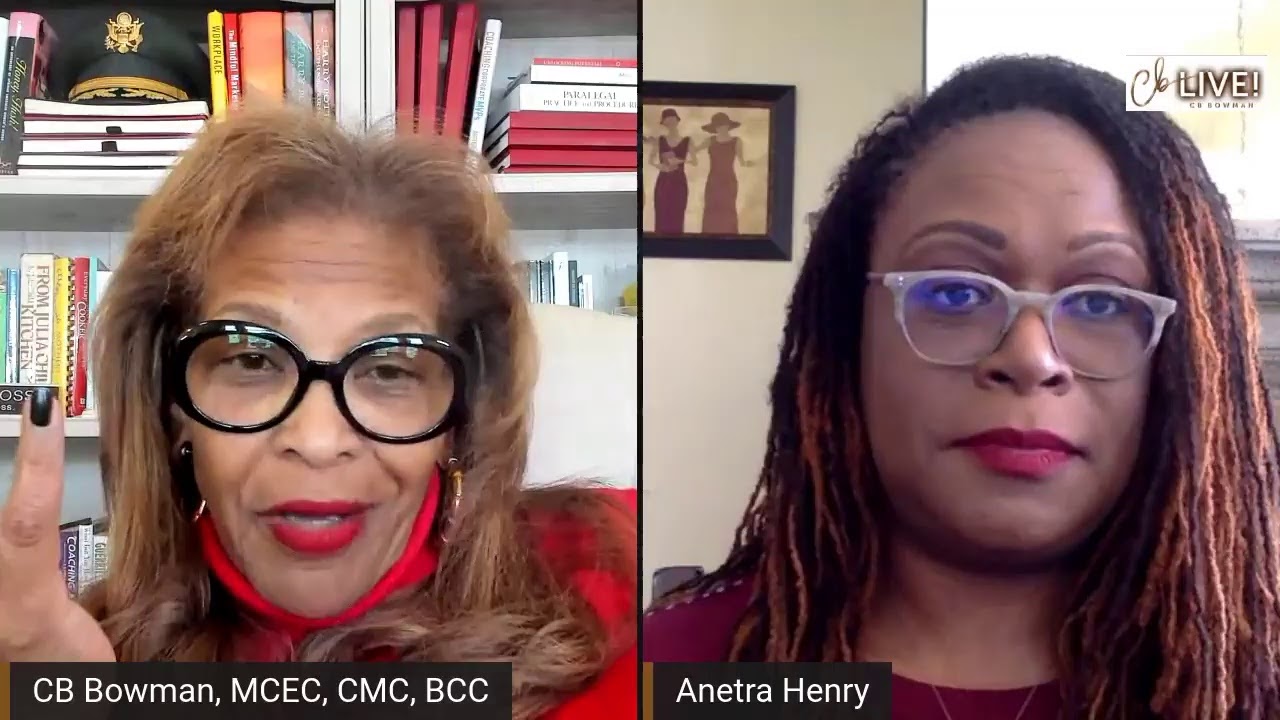
In this episode of CB Bowman Live, host CB Bowman interviews marketing strategist Anitra Henry, a Savannah State University (HBCU) graduate and member of Delta Sigma Theta sorority. The conversation weaves through Anitra’s personal background—her HBCU education, sorority involvement, and the role of the Divine Nine in fostering community service and professional networks for Black women. Anitra explains how corporate sponsorship decisions often rely on personal relationships and opaque criteria, leaving people of color at a disadvantage. She introduces the concept of the “marketing of misery,” describing how brands like Heineken, H&M, and Gillette produce culturally insensitive or exploitative ads that target or marginalize minority audiences, and how such campaigns perpetuate trauma. The dialogue shifts to cancel culture, which Anitra characterizes as a slippery‑slope that can stifle dialogue and shift responsibility away from creators. She discusses the cumulative trauma experienced by Black communities from media coverage of events such as George Floyd’s killing, 9/11, and the Capitol riots, and highlights the stigma surrounding therapy and Employee Assistance Programs (EAPs) in communities of color. Anitra critiques superficial corporate DEI efforts, using a case study of Wells Fargo’s post‑Floyd social‑media posts to illustrate the gap between stated commitments and actual practices. She stresses the need for authentic, accountable actions—asking who approves DEI policies, what resources are allocated, and how inclusion is measured. The interview concludes with a call to action: Anitra’s upcoming WE Conference (June 7‑9) on Workplace Equity and Equality, and an invitation for listeners to engage with her work via anetrahenry.com. Throughout, the discussion balances personal anecdotes, industry analysis, and actionable recommendations for marketers and leaders seeking genuine inclusion.
Chapters
Hi everybody, this is CB Bowman Live, and you know what we do on Thursdays. We talk about inclusion, diversity, equity, equality, the whole nine yards in a very usable way. So today we have on an incredible guest, Anitra Henry. She is one of the young bloods, I like to call her, who is able to break into the marketing area as a marketing generalist and a strategist. And we all know that that is an interesting space and a tough space for people of color to break into. And so she's actually— I don't know what just happened with my screen, but you know, it's technology, you gotta love it.
Yes, you just roll with it.
Anitra, I'm gonna have you introduce yourself and tell us about your company.
Absolutely. Well, first of all, thank you for having me, CB. So just a pleasure to be here and spend some time with you. Um, so a little bit about me, I've been in marketing for a long time. You won't say how long. A long time. Um, I graduated from an HBCU.
Uh, for people who don't know what that is, and there are some, it's a historically Black college/university.
And mine really is an HBCU because when I enrolled it was a college, and while I was there we got our credentials to become a university. So, um, graduated from Savannah State University. Go Tigers! Um, member of Delta Sigma Theta Sorority Incorporated, uh, Delta Nu chapter at Savannah State, and have continued in service here at San Diego Alumni chapter as well. Well, timeout.
What does it mean to be part of alumni for a historically Black college? Is there any difference? What, what happens?
And in terms of a college or in terms of the sorority? Because there's a difference in, in the two.
Yes, well, let's see, let's talk about both.
Yes, yes. So to start with the sorority, because I know that's a hot topic with the election of our vice president, um, and her membership into Alpha Kappa Alpha sorority, which was the first, uh, Greek letter sorority for Black women. I came in the second sorority for Black women that is a Greek letter organization. So yes, I'm a proud member of Delta Sigma Theta Sorority, Incorporated. And what it means, first and foremost, the biggest difference is ours is a lifetime commitment. So it is not just for your college years. The other difference is we have chapters for women who maybe didn't have the opportunity for whatever reason on their campus, because it is for college-educated women, the sororities are. For whatever reason, if they did not have the opportunity to pledge membership in undergrad, we do have alumni chapters or grad chapters. And with the grad chapters, You know, whether you are— you join through that avenue or you just continue to do service through your alumni chapter, which is what I've done because I pledged undergrad. You know, it's, it's a great way to stay connected to your community, and we do a lot of outreach. You know, each sorority is different, but the main common theme throughout all of them, and it's We are under a tent called the Divine Nine for the fraternities and the sororities.
And what is that? So, you know what, this is really interesting to me because my school did not have this. So I guess I could qualify as an alumni. Uh, Pace University, where I took my MBA, didn't have this.
Yes. So for— yes, you absolutely could in your area. Connect with an alumni chapter, see when they are having intake process. For— it depends on which sorority you want to be involved in, but for my sorority, my beloved sorority, it's one of those things like we want to make sure that our members are devoted to doing community service. You know, it's not just about having the best grades. We do go after the members who have a mix of everything. They, they are academically astute, but they're also involved in their community. And for me, that was at the time when I pledged, being involved on campus, being involved in the community. And we do a lot of social justice. Um, we do a lot in the community, period. We have outreach programs for teens. We have outreach programs that honor holidays that tend to be, you know, geared more towards African Americans like Martin Luther King, uh, during Black History Month, but we're doing something year-round. We have arts and letters, there is it, whatever your forte is, there is a place for you to make an impact in your community as a part of this award.
So when you're using the term community, we know that community for, uh, white listeners When we say community, we're talking about the Black community. That's a code. Are you only referring to supporting the Black community or the community at large as the general public knows?
It is the community at large. Um, however, for Delta Sigma Theta, I would say that there is an emphasis on supporting and uplifting the Black community. Because typically that's where we've been left behind in certain areas. Our kids don't necessarily have the same opportunities. We know that funding for different things varies widely depending on who you are and where you are. And we have a tendency to focus on those who don't have the same opportunities as others readily available to them. However, that does not mean that we are excluding the greater community. We have members of every race in Delta Sigma Theta, and I'm sure that is the case for the other members of the Divine Nine as well. And I know you wanted me to touch on what exactly the Divine Nine is. So it is an organization, Pan-Hell Council, that basically oversees the activities and membership into— of all the Greek letter organizations. So there are 4 historically Black sororities and there are 5 historically Black fraternities, and that encompasses the Divine Nine. So when we as members of these Greek letter organizations refer to the Divine Nine, that is what we're talking about. We're talking about the organization that connects and combines all of us because we do have— although we have our own memberships and our own points of interest and service that we focus on, we tend to overlap. And we definitely support each other. And we're often the first places that we go if we're having an event, if we're doing something that is definitely going to impact Scholarship programs. There's so many different examples. Our other Greek letter organizations definitely support us, and we definitely saw that in the election of Biden and Harris because there was such a large Greek—not just the AKAs, not just the Alphas, not just the Deltas—but all the members of the Divine Nine came together and got out to help drive the vote. and to ensure that voters were safe, and if they wanted an opportunity to vote, that they understood not only their ballots, but if they needed rides to the polls, those kinds of things. Um, all of the Divine Nine typically get involved, uh, in those sorts of activities.
So can you join the Divine Nine, or you have to join a frat or a sorority, and then this is an overriding group. But can you join the Divine Nine?
You have to be a member of, uh, one of the fraternities or sororities first. And ultimately, by being a member of one of the Greek letter organizations, you have a membership in the Divine Nine. It's, it's one of those things. The Pan-Hellenic Council is overseeing, but that's what we call it internally. that internal Greek jargon, if you will, or shop talk, is the Divine Nine.
Okay.
So you, you have membership once you become a member of your selected sorority or fraternity, um, and it's, it's not necessarily a paid membership. Pan-Hell is something— is the actual entity that is in oversight or, or combines us. But when I'm speaking of the Divine Nine It's not like a paid membership, like being in a sorority or the fraternity is. It is just a membership by right to be a part of this group of wonderful people. And there are hundreds of thousands, if not millions of us.
I can see how proud you are.
Yes, it is a— it is definitely a wonderful experience to be a part of not only the Divine Nine, but a Greek letter organization particularly mine, that works so hard at social justice, at recognizing arts and letters, doing things with the children in the communities, and just creating a space and an opportunity to make an impact wherever you are. For me, I'm originally from the South. Like I mentioned, I went to Savannah State University. I now live in San Diego, California. So one of the first ways to get connected was to reach out to my local chapter here, because what people don't realize about living in San Diego, although it's America's finest city and it is indeed a very beautiful city, is the, you know, number of Black people here is pretty small.
We're talking like the state of Colorado.
It is, it is definitely small. And it— when I first moved here, I moved from Atlanta, Georgia.
And it was just a huge variance. That would suck.
It was a huge variance. And so in order to get connected to the Black community and to find other people who looked like me, had a similar experience, a similar existence that I have, one of the first things that I did was contact my alumni chapter and say, hey, I moved here. Yes. And, and, you know, it's like instant family, basically.
I love it. I love it. And so let me ask you, you keep referring to a Greek letter organization. Why is it called that? I mean, obviously the name, but is there a history behind this?
There is a history. And, you know, some of it is that's rites of passage. Is why it's a— why each sorority or fraternity is named what it's named. Each Greek letter, uh, has meaning, just like each word in, uh, the English language has meaning. And when you put them to combine them together, it may have come to have a different meaning than those words individually. So yes, there's—
That's an inside scoop. And, uh, to Tell us what yours stands for.
Oh no, can't do that.
Come on, Anitra, it's just you and I talking.
No, no, can't do that. Those are rites of passage. But, uh, we have definitely, um, a focus on social action. We have, uh, I, I would say for me In particular, there, there isn't really a facet of life that my sorority doesn't touch on in our tenets.
Okay, is this paid advertising for your sorority?
It is not. There's really not a facet of life that my particular sorority does not touch on. But, uh, it— what it does do is for each woman who decides to join or is afforded the opportunity to join, you know, there's certain things that are going to ring closer to your heart. And definitely the social action and social justice was a major one for me, a major one for me with my upbringing and going from a stark contrast of basically being a Catholic schoolgirl to going to an HBCU.
You gotta love it. Now tell us a little bit about the cost factor. Can you spill the beans on that?
What does it cost?
Um, don't tell me that's a rite of passage now.
Well, I, I can't really tell you because it changes. You know, what I paid 20-plus years ago to join the sorority is not what it costs today. You're slick.
Okay, what does it cost today to join?
You know, we recently— I can't— you know, CB, I didn't join just now, so I'm not really clear on what the women who just became members of our great sorority, uh, what their cost was.
You know what, audience? Now you know why she succeeds in the work she does. Oh my God. Okay. I'm going to get you offline. That's it. Just because we're going out to like 10,000 people, you're being cautious.
OK.
All right, let's talk about your work.
Yes.
And the impact it's having with people of color.
OK?
Yes. So what is it that you're doing that has that impact?
What I'm doing— quite honestly, CB, I took a pivot. So with, uh, my years of marketing and management experience, I've done a lot of different things, uh, in my career. Um, but in, in as it pertains to marketing, for a long time I had, um, a company that focused on corporate sponsorship because I knew how to do this. I was a decision maker for a few of the companies that I worked for behind the scenes when people were sending in requests. they were landing on my desk. I had to make a decision who we were giving funding to, who we were giving in-kind donations to, and ultimately who we didn't. When you have a lot of great causes, you have to come up with creative ways to eliminate because you only have so much of the pie to hand out. But what I also noticed during that time in working in corporate was So much of it, people just really didn't understand. And people of color, particularly Black people, weren't necessarily always getting funding. Um, and I became a person that was like, I need to teach my people how to get this money. And so I've done that for a really long time. And then About 2 years ago, I became pretty disillusioned with what I saw, the changes in that particular segment of the industry.
How so? How so?
I became disillusioned because what I was noticing is with the change of not only digital marketing is in, in how impressions were being counted, there was, there was a lot of things that weren't concrete anymore. And people were not getting— in terms of corporations weren't really getting the return on investment that they used to get, um, because people were relying so heavily on digital impressions, right? I'm gonna have an event and this is the overall avatar of the people who are showing up at the event, and so that should equal you getting a return on investment. And what people don't realize about the sponsor is, I don't just want my money back, I want multiples of my money back. That's what makes it worthwhile for me to participate. Um, and I particularly saw with the advent of people going to coach and become speakers and write books to become, you know, to get out there. And particularly with Black people, it was They had no idea what sponsors were looking for. It was just, oh, I Googled this sponsorship guide and I'm going to pull some stuff from here and I'm going to put together a nice pretty deck and I'm going to send it out across all my favorite corporations and hope for the best. Right. And that just doesn't work. Right. So what also disillusioned me was the industry became more and more dependent on relationships. And as you know, for a lot of people of color, it is hard to have those relationships.
Yes.
This is something that has always been present in corporate America. There's certain rooms that we've been historically kept out of and conversations we haven't been a part of. And what I was starting to see is more and more funding of opportunities, events, whatever the case may be, that there's no way that they were getting a return on investment. But the people who were making the decisions were making these decisions based on just pure relationship.
Who they play golf with.
Yes, who they play golf with, who they dine with, who— whatever the case may be. And You know, it just began to make me sad and say, you know, I don't know if I want to continue to participate in, in this, this way. I love marketing, but that is definitely something I don't want to continue to perpetuate, right?
Mm-hmm.
The other piece of it is how it's having an impact in what I'm doing now is for all of my clients. I've always been that person to have to tell them sometimes, particularly my white clients, Do you notice anything that's odd about this strategy?
About who's buying this?
Those kinds of things and do it in a way that has been gentle. But marketers tell the stories, right? And I understand why diversity and inclusion begins typically in human resources. But what I also find is there has been a big shift in growth in the place of, I feel like, purposeful marketing of misery. And Black people tend to be on the receiving end of that. I've actually written a few pieces about the marketing of misery. And we've seen that in the response to And it starts— let me just back up a little bit. And it starts with that slogan in marketing and sales that— and PR, you know, all press is good press, right? Even if they're talking negatively about you, if they're talking about you, it's a good thing. Taking that to a whole new level. And we've seen that over the last, I would say, 5 years at its height. So you've seen things like Heineken doing an ad about colorism and getting backlash. We saw this with H&M with the ad that went out of the young boy, the young African child with a monkey shirt on, and not being aware of those cultural colloquialisms that are quite offensive. And then when called on it, it's like, oh, we had no idea, we didn't know. Well, of course you didn't know. If I take a look at your marketing and advertising department, who's going to tell you?
I love it. I love it. But what— what is that? How you're defining master marketing of misery?
There's, there's different levels to marketing of misery, right? Um, usually when there's something that is very offensive Um, it is a minority of some sort that's on the receiving end of it.
Mm-hmm.
It is not, uh, the larger group that is typically on the receiving end of a really poor piece, an offensive piece of marketing, right? An ad that it just totally misses it, um, you know, those kinds of things. But that is in essence, the beginning of, or at the root of the miserable experience for the recipient. And it starts with— sometimes it's not even the thought, because I think in the backlash of it, people begin to think, oh, these marketers, these advertisers specifically thought about me and trying to offend me so that I would have a response, when in actuality the bigger problem that has— is not only in the marketing but also just in the world is you don't think about us at all.
Yes, yes, I love this. Yeah, so, um, so it's not even a question of intent, it's I'm just And you know, they're running— I'm colorblind. Here's another side of colorblind. I just don't see the person exist at all.
Right.
Yeah, right. Better yet, the race doesn't exist at all.
Right. I, I can ignore you because you have absolutely no daily impact on my life. I don't have to consider you.
Yeah. Wow. All right, number 2. Number 2 on the marketing misery. You gave us one.
Well, I think it starts there. The other piece of it is back to what I said, all press is good press. There are times when there are— that, you know, a piece may be created and it goes to the next phase of approval. Right.
Yeah.
And someone does say, or a group of people do say, no, that, that is offensive. You should not do that. Here are the reasons why this does not make any sense. Um, I, I think we're going to get backlash from it. And the decision is made to do it anyway because you have a company that maybe no one has talked about at all for a long time, and then all of a sudden they're clickbait, and it does work in their favor because people are starting to click. And if you add in what we just went through for the last 4 years, where there was all of this rhetoric that made that kind of thinking okay, or at least if it wasn't, I totally agree with that kind of thinking on the marketing end, it's an opportunity that I can take to at least make the story that, hey, people are clicking on us now.
Yes, people are talking.
Yeah, people are talking about us, and that leads to generation of something, right?
Yeah. So these are the organizations and people who feel that they're so powerful that they can afford to take the risk, right?
Yeah, they can afford to take the risk, and it's not about what is right or wrong. It is not really about, for them, Black or white. It is about green, the absence of money or the presence of money, but at what cost?
Yeah, because here you go. Advertising now is so expensive. I mean, what do we see on TV in Colorado ad nauseam? It's lawyers who can afford the advertising spots. So, or even the mega organizations are no longer looking at television as a way of marketing, if you notice, right? So they're taking to social media. So every once in a while, somebody in the marketing department— as you know, I come from marketing, right? Somebody in marketing says, hey, we need some splash here. Let's just go outside. It's kind of like you don't My analogy is Vogue magazine versus how we dress every day. Absolutely. Just go all the way up to bring the awareness of our organization to the forefront in a way that we don't have to pay for it.
Right. Yeah.
And I think, ironically, I think the, the most recent one was not with people of color, but it was men, the Gillette campaign, I believe it was the Gillette campaign, about men just not caring, not being part of, you know, reality. My God, that hit such a backlash, and yet Gillette was on every single front page. They— if they— they couldn't buy that kind of exposure.
Absolutely. And so a lot of times that's why those decisions are made, but at what cost? And that's what I really mean at the marketing of misery, is as a Black woman in America, there are— you know, I work, I'm involved.
There's plenty of work for you, in other words.
It doesn't work for me, but there's— there is also a thing of trauma. I was having a conversation, and there was a conversation that was actually going on online this weekend around over the last 10 years, various movies that have come out, ending with most recently, I think, American Skin. And I don't know if you've seen American Skin yet or not. That opens up this conversation around both sides of the argument of police brutality and the killing of young Black people. But there've been an abundance of slave films, and then, you know, the police brutality narrative being shined a light on in films, and going back and analyzing certain things that we found out, like When They See Us.
What—
I think at large people don't understand is for a lot of Black people, that is trauma. Oh yes. And we carry that trauma into every space that we inhabit. We're walking around our homes with it that we're now locked into because of the pandemic. If we are working, when we go on the Zoom calls, or if we are actually in our offices, that trauma is with us. With us and to have marketing contribute to that trauma and then say, we really don't— oh, we made a mistake. We don't really know any better. Oops. Oops. Oops. It's a problem. And that is the work that I'm doing and getting at, at large, is marketers have to be more responsible. We have bias too. We have bias too. And it comes out in the stories that we tell. And if we can address the bias and become more responsible corporate citizens, because it's the right thing to do, you— most people would not consciously and willingly traumatize their neighbor. You know, I use this example of if I get into my vehicle and put it in reverse and back over and break the foot of my neighbor, is it any less broken if I meant to do it? than if I did it on accident. The broken bone has to be addressed. And I think that's what has been happening over the years is, oops, I made a mistake, it was an accident, doesn't that make it okay? No, you haven't addressed my broken bone. I love that analogy.
I love it. You know, there's a couple of things I want to go back to and talk to you, uh, there's a lot I want to go back and talk to you about. I need to— I didn't know that you were holding all this rich conversation in your head because in how we met was through an online meeting room. And you usually sit quietly. And I could see the information is going in and in. And I'm like, Anitra, I remember when you first called me and said, CB, should I say something? I'm like, go for it, girl. You know? And now you're going for it. Thank you. Applause to you. Because this is amazing conversation. So I want to go back to now this whole concept of the cancel culture. Is that a white privilege or can Blacks make a difference by canceling out?
Cancel culture for me is a slippery slope. Okay. Very slippery slope. I do see how it could be perceived as white privilege, but I actually probably experience it more because of my algorithm. I love it. Yeah, because of my personal algorithm, I see more Black youth participating in it, right? And why it's a slippery slope for me is because you don't create room for anyone to ever make a mistake. And we're human.
That's true.
And we all make mistakes, right? The issue has been is cancel culture tends to exist and live online.
Yeah.
You know, it's, it's a hashtag. I don't like this. I'm having a negative reaction to this. And so, uh, something goes viral that we're gonna cancel this. And that's supposed to be the solution. Okay, so the, the stimuli that you don't like may be gone depending on how strong, you know, your viral reaction to canceling something goes, but it doesn't fix what the core wounding is, right? It doesn't. Why, why do you want that to be canceled? Did the people who created the stimuli that offended you, did they actually learn anything? Right. Um, in some of my conversations—
You know what, I can take this to back in my day. We didn't have the social media, but it could— we could affect by going on strike against a company. So that was an— that was back in the day, that was a cancel culture that didn't have a name, right? buying the products. I mean, I remember when I was part of an inside scoop in terms of the culture of a cosmetic company, a major cosmetic company, and I just decided, you know, I can't support their values. I stopped buying it. And this is like 30 years now. I still won't buy their product.
Mm-hmm.
So that was my cancel culture, right?
Yeah, this cancel culture is a little different. Same sentiment, but it's a little different. You made a decision like, okay, I can't stand by their values, I'm not going to put my money there, and you share that with your network, right?
Yes, I did, big time.
This is my issue with this brand. Um, I'm, I'm not buying it. I strongly suggest you don't buy it either. You know, you use your influence. You were, you know, first Instagram influencer, right?
I was ahead of my time.
Yes. The, the issue now is that I feel like the difference is this cancel culture is lacking the piece where you went to the The reason I don't want to spend my money here is because I can't align with their values, right? I feel like a lot— and I'm not saying all of it is this— but there is a ton of cancel culture that's around seeing something for the first time out of context.
Yes.
And therefore it is canceled.
Yeah.
Um, and we saw that, I think there— I can't think of the name right now, but there was a film that was on Netflix about young girls who wanted to dance, and there was this whole big cancel this because it was too sexualized, right? And the film was, I think, made by a Black woman, French Black woman director, And it was telling that story, but the cancel culture was coming from moms of all races here in America who are constantly putting their daughters in cheerleader uniforms that are getting shorter and shorter. They are all about the Dance Moms culture, all of this stuff. So there's not a propensity to look inside and say, how am I contributing to the very thing that I'm canceling?
Inconsistency, right?
There's— that's the big difference I feel like with cancel culture as it's being experienced. That may not be the intent of every cancel campaign, cancel culture campaign, but I feel like that is how it's being experienced. And a lot of this right now is being dictated by people, meaning us, you know, citizens of America, citizens of the world, who are hyper-emotional right now because—
Yes.
And you don't think about how, how you feel at the moment impacts your response to watching something, your ability to really truly grasp the context. Of it. Uh, and that is my kind of back and forth with cancel culture. There are certain things that are just flat-out bad ideas. Um, there are certain people that, yes, I wish they would be quiet. I don't allow them in my head. I don't allow them to rent space in my head. Uh, but I don't necessarily go as far as to say they should be canceled.
Yeah. Yeah, you know, it's— for me, it's a tougher subject, and I don't know if it's because of our age difference, but I— my mind flips back and forth between freedom of speech and the whole concept of the cancel culture. And I do see it offline because, you know, how many people have you seen recently who have said something on air by mistake and all of a sudden They've disappeared from the channel, right? And so I feel like we're getting to the point where you're afraid to say anything because we can't put it in the right context of this is just speech, this is just rhetoric, and it doesn't have to— I don't have to take it in, right?
Right. I don't allow them to rent space in my head.
I love that expression.
And it is a thing of, like you said, freedom of speech. There's also a void right now of personal responsibility.
Oh gosh, yes.
And that is, is it that the person needs to be canceled, or this entity, whatever that is, but movie, film, mark— piece of marketing campaign, whatever it is, needs to be canceled? Or do I need to set better boundaries?
Yes.
I don't have to watch. I don't have to click.
I don't have to engage.
I don't have to engage. But, um, I feel like cancel culture skirts that line. I think the original intent is to be a more viral approach to striking or to saying, you know, I boycott product. I think that that is probably the intent at the heart of it, but it has gotten to a place where it is a void. It sometimes butts up against that void of personal responsibility. The other person that— or the other entity that has offended me is the one that bears all the responsibility, and I would— I bear none. And that is not okay.
Totally agree with you. I want to talk— go back and talk. Let's see how much time. We're good. We're good on time. I want to talk to you about this whole concept of trauma.
Uh-huh.
Because I've seen recent conversation about psychologists now and researchers now looking into the trauma that's created by what we're seeing on TV, what we're hearing. That's outside of the marketing space. I'm talking about, you know, the situation, the the killing of Floyd, the, you know, uh, that it's played. And, and this actually started— I think that this started— this conversation started with 9/11.
Yes.
Um, and is now quite applicable to the discussion around race, uh, as well as other things. So how do you go about— so I'm flipping back and forth between social, and business. So in the business space, how do you go about preventing this trauma other than you writing about it? Because you're writing about it starts to open the doors of people seeing and understanding what's going— and hearing what's going on, right? How do we as the public address this both in ourselves to prevent the trauma and to create awareness in marketing to support what you're saying? 2 different questions.
2 different questions. So I think it starts with the first one that you asked, which is how do you do it individually? Because I feel like you can't do a great job of doing it corporately if you don't start with you, right? And back to that personal responsibility. Um, for me personally, I'm an advocate of therapy, I'm an advocate of self-help, um, I'm an advocate of spirituality, um, and I have mentors in that space.
And you know, this is going to take us off into another direction, but traditionally Traditionally, people of color do not support the world of therapy.
Yes. No. And so I grew up— it's interesting, um, CB, that you bring this up. If, if I could just share a bit about how I grew up. So growing up, I had a father who was one of 22 22.
22 siblings?
22.
Sugar.
One father, 2 moms. The first mom passed, um, in childbirth, and he— my grandfather married again, and he was a pastor. And, uh, he loved his children, but grandfather was having help. Okay, my granddad also owned— this was in segregated South, um, my grandfather owned the Black-owned dry cleaners and the Black-owned grocery store. So his kids helped him run those stores while he also ministered to the community.
Right.
Um, all of the male siblings went into some branch of the armed forces, and grandfather planned for all of the girls, if they wanted to, to go to college. Yeah, I love it! Whoa, if they wanted to go, if they didn't get married, the girls went off to school, the boys went into the military.
Love it.
My dad went off into the military and married the love of his life, which was my mom. He pulled her ponytails and told her when they were young, you're gonna be my wife and have my babies. He married her, right?
Dipped him in ink.
Yes. And, uh, my mother actually spent a lot of time working in civil service, and she worked at a counseling center. So it wasn't the same stigma that in my household that most of my cousins and other family members had around Therapy, because my mother knew, like, look, people come in here, they have marital problems, they have problems with the kids, it is good to talk. And she came from a place of seeing it work, right? Right, right. But they each came from a background of that is for crazy people and you have to be strong, right? Yes. So if you're strong enough, you don't need therapy.
Yes, exactly.
And so there's a— you know, there was a bit of that, but it was also a kind of a different balance. Um, so I ended up feeling like when I got overwhelmed, things in my life, like, I need help. So I'm done with the strong stuff. I need help. I'm going to go get help.
Oh my God, you and I have so much in common because I come from a military family.
Whoa. And the great part about that is, I think, for communities of color and particularly African American communities that hold these deep-seated beliefs that just talking about things doesn't help, when you start to see people who are willing to admit that that is what they're doing, to be better and to get into a better space, the stigma kind of goes away.
Yes.
So that's me personally. Now, to translate that into corporate America and how we see that being used, there hasn't been a corporation that I have ever worked for directly that did not offer EAP services as a part of their benefits packages. But I will tell you, not one of them did a great job of suggesting people actually use them.
But because that— okay, my mind is racing. Um, the EAP professionals have a stigma on their own because they are financed by the employer. People didn't want to go to them because they didn't have They didn't conceptually have a psychologically safe space. When somebody else is paying that bill, even though they have a personal code of ethics, there is the concept in the user that nothing is private.
I, I understand that too. Even if it's just a step To like, it may not be— you may have the stigma that it's not private, but when you're dealing with someone who doesn't believe at all that it could work, right? If you just take the step of, you don't have to pay, you can try. Just try it. It's, it's an option for you. Here is an option. You may not have— you, you may not like the person. you may start to feel those feelings of it's not safe or I'm concerned about my privacy. But if you're not even willing to— when you're having to overcome the obstacle of even trying, Mm-hmm. I just— I feel like that's a first step that I feel like corporations should do is, hey, there's something that is available to you. You know, and then from there, it is about creating— so many larger corporations have these different affinity groups that are supposed to be safe spaces but tend to be more about more work when you're not supposed to be working. I have more and more People come to me from affinity groups saying, hey, we've been tasked with raising money, especially when I was working more in the sponsorship space. We're trying to do more and more work. We're trying to raise money and convince our higher-ups that HBCUs are a great place to recruit. So you're going to give me a group to go to so I can do more work? Yes. That's not—
I don't see what's wrong with that.
No, no, not— there's, there's no— but those are the things that I think, uh, definitely happen. Um, I feel like corporately Taking the step to understand, and I feel like a lot of organizations have taken at least the first step to at least address that they have bias, but there is still an issue around authenticity.
Oh, yes.
Yeah. And after George Floyd, if people were jumping on the Black Lives Matter hashtag because it was a trending hashtag, and we saw that, I wrote about that. with Wells Fargo. I'm sure you saw that piece about—
So tell me, tell me. I don't think I saw that one.
Okay, so I wrote about marketing telling on you, like, and this was okay a few months ago. A few months ago, um, the CEO of Wells Fargo came out and said that, you know, he thought it might— although it may sound like an excuse, he couldn't find Black people.
Yes, I do remember that. And I remember our conversation about that too.
So I— part of what I do, even in my organization, when I say that I'm working around diversity and marketing, is I went and took a look at their— just their Facebook posts, and I did an analysis. And I took it from the time they posted which was June 2nd, which was pretty much right after we, meaning the general public, had seen the video of George Floyd, up until the time that he made this comment. Just this, just there, that one channel of Facebook posts.
Mm-hmm.
And their marketing told on them. Of course you can't find Black people to be in management because your marketing says that you don't ever see us a part of management. The few Black people or people of color who were depicted were depicted either using their products or in service to someone else. When they did post around leadership and business, it's white men. Your marketing is telling the story of your internal culture. And your internal culture—
it's so like a company that I know that love the— love their end product, but the challenge is when they have competition and there's a prize involved, and not understanding why more Black organizations don't apply for the competition. Well, look at the rules of the competition.
Mm-hmm.
If you have to be a billion-dollar company net worth to apply, you're not going to get a lot of Black-owned companies. Hello?
Absolutely.
So be careful of the ground rules that you're setting.
Absolutely. But keep in mind, one of the, the first— I want to say 4 posts from Wells Fargo on Facebook after George Floyd was, we are making a commitment to hire more. And it wasn't 6 months later that you're reneging on the commitment. And the other piece, the other thing that I brought into this was Wells Fargo has not cleaned up their PR disaster from the fall of the economy. You're making an assumption that Black people want to work for you.
Well, absolutely. And, you know, you know, I'm an executive coach. So my question is, what does commitment mean to you? Let's detail it.
Oh, commitment means to me—
No, I mean Wells Fargo. This is the question I'd be asking Wells Fargo. This guy, what does commitment mean to you?
How long does that take, right?
Yeah. What are you— what's your intent? What are you going to put into this, right?
Right.
And I mean, and I'll give you another example. Google.
Mm-hmm.
Now, few people know that Google signed a pledge. There was a pledge in the tech space that said, I am committed to diversity.
Mm-hmm.
And then we see who gets fired. Mm-hmm. I'm like, are you kidding me?
How do you— are you committed to diversity as long as your core Are you— what is the—
Or even worse, are you committed to diversity as long as it doesn't involve people of color?
Right.
Because let's not, you know, as we say, let's not get it twisted, sister. If you're focused on bringing white women up to the top of the organization, that does not comprise the entire diversity pool. Let's get it straight.
And I've had to have those conversations with my clients. I've been doing it my whole career. I love it. Does it necessarily pay for it? Like, there's something amiss here, you know? When you say diversity, what does diversity mean to you? And what is the— what is insinuated on the end of your sentence when you say, I'm committed diversity. Yes, yes. Is it as long as— and then that brings in the whole thing about people of color, right? Because a lot of times that people of color excludes Black people.
Absolutely. It's like I said to somebody once who I was coaching, and they had put in a new policy, and And this was in support of people of color. And I said, did you get it approved by anybody of color?
Mm-hmm.
Yes, I did. Who was it approved by? We have an African-American person that's at the top of our ladder, and we ran it by that person. I said, oh, that's good. Where's this person from?
Africa.
I said, okay, so let's go back to the drawing board, because you don't want to make people wrong. There was a true, honest attempt. So part of what— part of what bothers me is when we say it's not our job.
Mm-hmm.
That is us not taking a partnership, right, in creating change. It's us complaining, and rightfully so, about the situation. It's us rebelling at the situation, rightfully so. But if we don't speak up about what change looks like, On a point-by-point basis, not even getting to the point of explaining why it's necessary, just getting to the point of awareness and being able to discuss this awareness, we're not going to get anyplace.
Absolutely. Um, CB, I finally wrote— it took me a while, to write about and release my feelings about Capitol riots. And I just basically went step through step about what my emotional response to it was. And I understand the emotional response of this isn't my fight. This doesn't have anything to do with us.
I do. I totally understand it.
It is okay to feel that, but you got to feel through it. You got to go through it because it is definitely— it's, it's— we, we continue to hear others profess and stake claim to America and America's values and its democracy, its republic, its laws, it's all this stuff. And I know that for a lot of us, the experience is it is not for us, but we pay into that system. We're paying for it.
Yes.
If there's nothing else, my tax dollars went to pay the salaries of those people. My tax dollars went to pay for that building. My ancestors built that building. I can't help but care once I get past my initial response of, what did I just see?
And what do I need to do to make this change? I don't want to have to do this. I've been doing it. You know, the other day on Brett's Clubhouse chat, he went around and he said— yesterday he went around and he asked all the moderators, what will you do this week that you feel is courageous?
Mm-hmm.
And everybody gave very profound answers. And I said, get out of bed. And continue to stay focused on my true north, regardless of what it takes as a Black woman who owns 2 businesses.
Absolutely.
I— my courage is breaking each block as it keeps flying at me like judo.
Absolutely.
Courage, because there are days when I just want to say, Well, I'll clean it up for our audience. Forget about it, right? I'm just gonna stay here and let this world be what it— what it is. I don't want to participate, right? I'm gonna sit here and read my book or watch a silly TV show and pet my dog.
To give yourself the space to do that. Yeah, yeah.
But then, then I have to say, come on now, CB, who are you kidding?
Well, I will say it like my grandfather, my dad's dad, used to say, uh, about being involved in the world, about being involved in corporate America, about being involved in anything. Um, whatever you're involved in not only just has your physical being, but it has your covering. Yeah, pull that back.
Yes.
When you pull that back, it's, it's not just, um, sometimes coming from a special, uh, a selfish place, um, but you leave something that you potentially love uncovered. And although I don't always like America, I do love her.
Oh, so well said. So well said. Yeah. And I just— I want to be part of the change, which is why my new company, which is Workplace Equity and Equality.
Yes.
Where we take commitment and move it to action.
Yes.
In a way that provides a safe space. There's no shame, there's no blame. And anyone who's listening, if you want to find out more, reach out to me.
Absolutely.
And so I, I love this conversation, and we've got— it's 12 o'clock already, so we're at the top of the hour. You're gonna have to come back, and we are definitely gonna have you speak Oh, thank you, thank you.
Anytime, CB.
Well, let me give you the dates. It's the WE Conference, and it's June 7th, 8th, and 9th, and it's about workplace equity and equality. But even more than that, it's supporting people, organizations who want to create a D&I space. And those that are creating a D&I space and having a lab for them to work together. So it's going to be a unique kind of conference, and I can't wait for you to be part of it.
Thank you. Thank you. I am looking forward to it.
So notice how I did that. I got the commitment right now. Oh my gosh, I'm so happy because I think— Many of the people that will be coming represent corporate and organizations, and they need to hear the branding part. They need to understand the effects of their marketing on this. They need to understand that this is a unique strategy that has to be embedded into their culture and what they're saying to the public.
Absolutely.
And Anitra, they need to reach out to you. Yes, give the name of your website so they can read, just take a look.
Sure, it's anetrahenry.com. So that's A-N-E-T-R-A Henry, H-E-N-R-Y, dot com.
Couldn't be simpler. Yes. So everybody, let's thank Anetra for being on the show today. What an amazing show, you knocked it out the Thank you, thank you.
Thanks for having me again, CB. It's always a pleasure to spend time with you.
Thank you. So audience, listen, of course be sure to tune in next week when we're going to have Dr. Sharon Milnick speak. And also— oops, my phone is ringing. Also be sure to hold on, this is technology. I thought I turned it off. Um, also be sure to tune in on Tuesday where we have CB Bowman Live: Challenges of the C-Suite. So with that, we're going to say go with success and go with happiness. We'll see you next week.
Thank you.
More from CB



211- Courage to Leap & Lead with Louise Story part 1Courage to Leap & Lead







