CB Bowman LIVE: Challenges of the C-Suite: Eric Schurenberg Episode 3
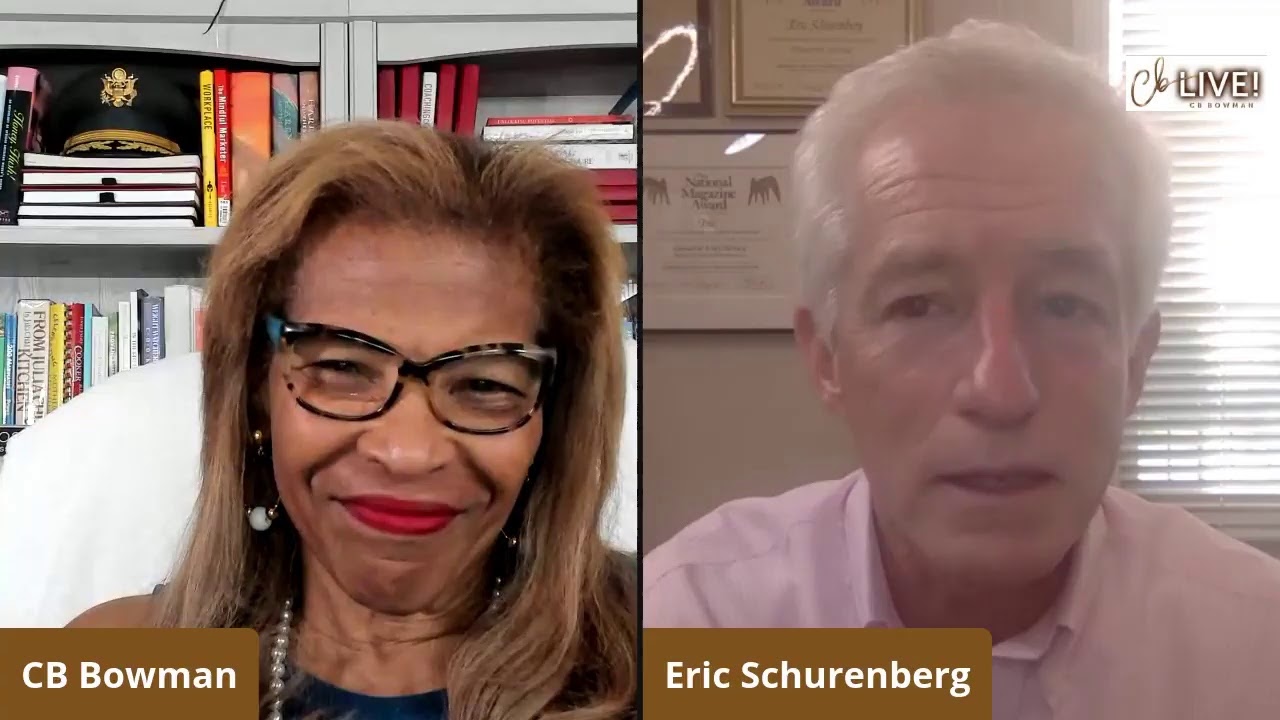
Eric Schurenberg, CEO of Fast Company and Inc., discusses three major C-suite challenges: remote leadership and employee mental health during COVID, revenue collapse forcing business pivots, and maintaining trust while avoiding ego-driven decisions. He recommends frequent one-on-one check-ins and high-quality virtual production to preserve connection.
Chapters
Hi, Eric. How are you?
I'm good.
I'm good, CB.
How are you?
Hi, everyone. I'm fine, thanks. We are running a little late today. We had some technical issues, and Eric, our wonderful guest, is hosting a major event right now for Fast Company. And so he was kind enough to jump on this call while doing— talk about multitasking, Eric. I so appreciate it.
Part of the job.
So everyone, this is Eric Schoenberg. He is the CEO of Fast Company and Inc. magazine, and I am so fortunate to have him today. I'm super excited. Eric, I would love for you to tell everybody a little bit about your history, how you got to where you are, and then we're going to dive into the challenges of the C-suite. And everyone, this is CB Bowman live.
Uh, well, thanks for having me on the show, CB. It's a real pleasure to be here and, uh, always great to talk to you. Uh, God, I mean, uh, where do I start? I'm a, you know, I'm a Midwestern kid from a suburb of Cincinnati called Finneytown, and, uh, I came to New York to make my fortune as an actor, which, uh, was, uh, a quest that ended the way most of those quests end, my getting a real job. And my real job was in publishing. I started as a fact-checker at Time Inc. Time Life Books was the division I worked in. And I ended up working for Money Magazine as a fact-checker and eventually became the editor-in-chief of Money Magazine. And then worked at some other titles within Time Inc., left Time Inc. to go to CBS, and left CBS to go to Inc., where I was the editor of the website, and eventually became the president of Inc., and then the CEO of the company that owns Inc., as well as its sister publication, Fast Company.
You know, I never did ask you if you know a really good friend of mine who worked at Time Inc. Time and Then Money, Roberta Kirwan?
Yes, yes.
Oh my God!
I had no idea that you were pals, how about that?
Oh my God, we, we— I won't tell, but we went to high school together.
Wow.
Yeah, we met when we were in high school, and so yeah, we have known each other many, many— well, I won't add another many onto that— years.
I love Roberta. She's great.
For some reason, since I've known you, your name haunted me. And you mentioned Money before, and I forgot to ask you. And just now I thought, is it possible that they know each other? Yeah. Oh my gosh, she worked there for a long, long time.
Yeah, yeah, yeah, yeah, we overlapped for many years.
Oh my gosh, I have to call her and tell her this now. You know, the world is so small, it's, it's amazing. So, Eric, I, I am— I want to jump right in here because I know that you are an expert in this area with all of your research and background, and you have so much knowledge. And I should be transparent And mention to our listeners that Eric has been kind enough to accept an opportunity that I posed to him to serve on the Executive Committee for Workplace Racial Equality. And I just couldn't be happier because he's just one of the people that I've met who has such positive intent and grace in this area, and I just wanted people to know that. I absolutely adore you.
Well, CB, that's so kind of you. I consider it a very high calling to be on the board of Workplace Racial Equality. It's, it's a company with a mission that is just absolutely right for our time and, and probably, and in fact overdue, but really right for our time and has a historic tailwind behind it. I'm so proud to be part of it.
Thank you. Thank you. But now, okay, so let's go to the other frame, challenges of the C-suite. Eric, I'm going to ask you, what do you feel are the 3 greatest challenges that people in the C-suite are faced with today versus yesterday? And let's talk about how you might envision those challenges changing to a positive result. Number 1, let's go.
Okay, the 3 biggest challenges facing people in the C-suite today are, uh, I mean, the most obvious one is the, is the pandemic, which makes it impossible to, in most cases, to meet your employees face to face. That's certainly the case at Inc. and Fast Company. I have an editor working for me, the editor of Inc., who was hired in January. So, he really only spent 6 weeks with his staff before everybody dispersed to their homes or wherever they were working from during the pandemic. It is really hard to establish connection when your only connection is by Zoom. You can't do the things that good managers do, like walking around the floor and taking the temperature of the workforce that way and having those casual conversations that are so important to building trust and being seen. On top of that, there are all the stresses that come with people working from home, parents with young kids who can't go to school or go to school part-time. need to be homeschooled or overseen while they are educated by Zoom, people taking care of their parents, people cooped up in small city apartments. All of that adds to the stress level of your workforce. And so the challenges that you have are to be seen, to be, you know, present in a real sense and let everyone know that you care about their well-being when you can't— you're just not so available as you are when you're in the office with them.
You know, Eric, you just mentioned— and let's go a little bit further here— you mentioned the pandemic. You know, as I'm talking to leaders, I'm hearing that they're faced with actually 5 pandemics, which America has never been faced with before. And what they're calling the 5 pandemics are Economics, environment with the fires and the tsunamis and everything. Social injustice certainly has become high on the list. Mental health as a result of what you're saying, the stressors, and COVID-19, the grandfather that started all of this. So when you're talking about that sort of distance that you can't reach out to employees in the way that we used to. Which of the pandemics are you referring to, or are you speaking about all of them?
I would lump together the COVID pandemic and the mental health crisis. I think that one leads to the other, as you implied. The social justice pandemic, as you refer to it, also looms very large in my mind and in the mind of my team at Inc. and Fast Company. We have a very passionate and dedicated workforce at Fast Company and Inc. that are conscious of their role in shaping people's attitude about business and want to be seen as a leader and want to correct decades of injustice. And that, uh, that requires an awful lot of attention and, and changing the direction of the, of the ship of state, if you will. Uh, so that is, um, that's a challenge, but it is, um, and it's, and it's, um, and it's a powerful challenge too. I, I want to be clear of that because It means changing the way people have done business for a long time, and there's an awful lot of emotion around it. But there, people can work together towards a shared goal. There is no dissension at Inc. and Fast Company about whether this is a worthy thing to do, and it's all simply a matter of what are the steps to take to get there. You know, and what is the timeline to get there? Those are the questions. On the pandemic, it is— one of the challenges about it is that it affects people differently. And so if you have kids and childcare is piled up on top of the heavy workload and the fact that you're sort of never away from the screen and never away from work, That is, uh, you know, that, that means that some people are able to cope with it, some people are not able to cope with it. People who, you know, have houses and lots of room are in a different state of mind than people who are cooped up in a small apartment or in a crowded place. And, um, if part of your workforce has to be in the office and part of your workforce can stay at home, then you have another thing that divides the sense of team that you want to build. For me, that is the, as you put it rightly, the granddaddy of all the crises of 2020.
You know, it's interesting how they're all linked together. When I first heard the term of 5 pandemics, I thought, what are you talking about? And then I stopped and I thought, okay, so COVID is the umbrella, for lack of a better identifier, that's resulted in people staying home, as you said, and then an increase in emotion, right? Because not only are you staying home, it's hard to get to people to express your emotion, to hear other things that are going on. So you're resulting in a mental stress. And then you're sitting and watching TV or listening to the news or Alexa or Echo, and you're hearing what's going on in the streets. And then we're on Zoom and we're seeing the results of social injustice. And that's building up because you don't have somebody to talk to. You can't go out and really do discuss the issues and dive down into what's going on. And then you have the economic— the environment, which are the wildfires, which are keeping you in even longer. I mean, we are really in a combustible state right now.
Good choice of words there. I don't have too many staffers out in California. So they're not being shaped by the fire. But yes, I mean, that just adds an incredible level of difficulty on top of everything else. And in that sense, we're lucky. In that sense, we're actually very lucky—
Mm-hmm.
At Inc. and Fast Company that most of the workforce can work from home. And the teams that need to be in the office, like the video team, for example, or the art and production team when the magazines are closing, they're a small enough contingent that it's not a problem. It's easy to keep socially distant under those circumstances, and everybody feels safe because the office is nearly empty.
Mm-hmm.
It would be a very different situation situation if we were in any of those really hard-hit industries. Imagine hospitality or restaurants or cinema, other— Broadway, other businesses where there is no real substitute for face-to-face working.
Yeah, you know, it's— the other interesting fact that I've observed is while— first of all, I should disclose I'm a high introvert, so being locked up at home really works for me. But the, the other thing that I'm seeing is that while people are locked up, and those that are fortunate enough to have a computer and can get on Zoom, we are actually experiencing a different kind of intimacy. That we might not have had a chance to participate in, especially with the— and it's an ironic situation— the laws that protect us from asking intimate questions about our coworkers have now blown up, because how can you do that and still see somebody in their home? You're going to notice the pictures on their wall, The dogs, the children, the guitars in the background. And so now you are allowed to see— you might see a religious figure on the shelf. You are now allowed to see the intimate part of your colleagues and your coworkers. So, you know, does that mean our laws change to meet the new Today, it's an interesting dilemma, I think.
Well, you can control what people see to some extent. And, you know, you just have to make sure that your dog is quiet and, you know, your spouse recognizes when you're on Zoom and doesn't walk from the shower through the back of the scenery. I think that in a way I like it. I like seeing where my colleagues live. And the head of our sales operations, our sales op leader, lives way out west in Pennsylvania and has chickens. And other animals at his house, who knew?
How do you think he keeps quiet?
I'm also pleased to see how many musicians we have at Ink Fast Company from the guitars in the background. One of the video guys has a beautiful mural in his house, which, you know, looks like something from a Gainsborough painting.
Wow.
All of that is, you know, things you would never otherwise have known.
It's kind of fun, you know, except for those that cheat and put a virtual background on. You can't tell.
Yes, that's right. And that— and they, they never look good. No, no, not at all.
So, okay, so what are some of the ways that, given the restrictions, that CEOs could have this personal experience, not intimate, personal experience with their employees given the restriction that you can't really personally shake hands? What do you recommend for organizations to keep a united front and a front with intent and purpose?
For my part, and I know many other CEOs who do this, I spend a lot of time talking to employees who don't report to me on a one-on-one basis just to check in on them. I think it's really important now. And I think people really appreciate knowing that the person at the top cares about them.
Mm-hmm.
So there's that. Meetings are more frequent. I try to have a chance for everyone to connect, just to remind each other that we're there and for everyone to sort of see each other's faces on a regular basis.
Yeah.
So that's one way to sort of overcompensate for the fact that you can't step out of your office and walk to the office next door or run into people in casual conversation in the hallway when you go to the pantry to get coffee or whatever. All of those things are no longer available to us. So you have to make a special effort to, to be present, you know, whatever present means in this, this bizarre situation in which we find ourselves.
Yeah, I guess, I guess you can't have wine tastings, but possibly having tea or coffee together or lunch together. Might be a fun thing to do with some sort of corporate games that are, you know, would be approved by the attorneys, you know, to get to know each other better or to brainstorm. What I'm finding is that Zoom is a great opportunity to have breakout rooms and brainstorm, and people are loving them.
It seems like it's adding another dimension Yeah, I think breakout rooms are a great invention of the Zoom era in that you have a chance to get to know people, you know, briefly in a way that you wouldn't necessarily if you were in a large gathering. So that, or at least you have a chance to recreate that opportunity. to walk up to a group of people and start a conversation. That is a, you know, that is one of the surprising and not the only surprising benefit of working in Zoom.
Mm-hmm.
I mean, I think a lot of people have, I mean, it's fashionable to talk about Zoom fatigue right now, but I think a lot of people were— have been pleasantly surprised at how effective it is to meet over video. And that, I think, means that this kind of meeting, this kind of virtual meeting, is not going to go away. It's just going to be incorporated into—
Yes.
The way we do business.
And those—
Zoom fatigue is a real thing.
Yeah. Those breakout rooms are like, what do they call it, speed dating?
Yes, that's right. That's what they're like.
You get to get into somebody's mind real quickly and then jump out.
It's helpful to have moderation in those rooms. So it's not just kind of everyone staring at each other. And then one person holding forth while everyone else rolls their eyes. It's good to have a shared topic so that you can all— a topic of shared interest as well, something that everyone has an opinion about, and then a chance to get to know people by what they say.
So you're running a huge mega conference right now, and you're using some sort of Zoom online streaming. What are you— can you share your secrets on what you're doing to prevent Zoom fatigue?
Well, the— there were a lot of things that the really skillful people on the video and events team have done to make this better than the average Zoom experience. There was a great deal of effort put into making sure that our moderator—
Yeah.
—who are working out of the office or in studios, look great so that the cameras are high quality, the lighting is high quality, and everyone who's on our end of those interviews looks good. And then we did as much as we possibly could to make sure that the people at the other end were also looking good. So it's a much higher quality experience that you might experience in just kind of in the early days of Zoom. So there's that.
Okay.
The festival, the Fast Company Innovation Festival, which is going on now, and you're your viewers can still sign up for it and attend, is just a little plug there.
Oh, good plug.
It's a mashup of a bunch of different technologies. So there is communication on one platform and breakout sessions and one-on-one mentoring on another platform. And a lot of the Sessions are prerecorded on Vimeo so that you can assure the quality and make sure that the conversations flow smoothly and things like that. In addition, there is an idea garden, we call it, where people can interact. And it is a literal, you know, 2-dimensional gamified garden.
Mm-hmm.
You enter and it looks like you're in a park. And people are invited to plant ideas there and water the ideas that they find there that they find particularly compelling as a way to vote up ideas emerging from the Innovation Festival. I love it. All of that is part of the total experience. And then of course, the other thing is that because it is virtual and And the speakers don't have to travel to, you know, to a convention center or a hotel ballroom. The talent that we've been able to bring in has been astonishingly good. And I today was watching the CEO of Intel. I was watching Janelle Monáe. I was watching Chip and Joanna Gaines, Robert Downey and his wife, Susan, and, and then a number of other less luminary people, but still experts talking about the things that they knew best in smaller, more intimate workshops. That's all happening all at once.
So for those of us that got caught in building a company and couldn't sign on, will we have a chance to look at it?
It's all available for 30 days afterwards for ticket holders. So it's all recorded.
I'm so glad I registered.
Good. I'm glad you did.
Any entertainment?
Yes. There is a poet who's the most remarkable performer you can imagine. She watches these sessions, which are, you know, about complicated ideas, and then creates a poem. about them. And for example, one that I just saw was the CEO of Intel, as I mentioned. They were talking about diversity and inclusion at Intel. Immediately after that session ended, Chanel came on and had already written a poem about that. And the poem was, was lovely. And all the more remarkable in that it had sprung up right there at the moment, practically was written in the minutes before the camera turned on her.
You know, it's very interesting, Eric, because I have watched it. I don't know whether it's because we're in this pandemic zone. I have watched the resurgence of poetry, or as people today call it, the spoken word.
Mm-hmm.
I was so pleased with America's Got Talent. Yeah, this year the winner was a person who gave spoken word, and he was extraordinary. So maybe another good thing that came out of this. Yeah, so now I could go back to writing poetry again. Okay, so we've talked about connectivity with employees. What do you see is another challenge that the C-suite faces?
Well, the other challenge— well, we were going to cover 3, I remember, so I have them lined up in my head. But number 2, which is particular to this environment, is the recession. Our industry, along with many other industries, there was a big hit. The way we do business changed utterly. The willingness of our clients to spend money changed dramatically, particularly in the second quarter. And we had to scramble to come up with new ways to do business. The Fast Company Innovation Festival, which is entirely virtual right now, is just the closest example at hand of how we've had to change the way we do things. You know, we had never done anything like this before. And the remarkable thing about it is that it's, in its own way, is working quite well. So if I could just divert for a second to the Fast Company Innovation Festival.
Mm-hmm.
We will have, as of today, and we're not done yet, registrants. That is a factor of 5, probably by the time we're through, over what we would have at our peak in a live event where people actually had to get up and travel to places in New York. And that is one of the, one of the benefits, but there are, of course, downsides.
Right.
That many of our clients in the hospitality industry, for example, example, don't have the money to sponsor events like this as they did in the past. And that has meant that we are— we have to be particularly mindful of our own costs because there's just not as much revenue coming in.
Mm-hmm.
That— so, and of course, our industry is sort of, I would say, in the middle in terms of the difficulties that the recession causes. There are some that we've already mentioned that have been absolutely shattered, and particularly— this is of particular interest to the other publication that I run, Inc., which is focused on small businesses, and small business owners have been really, really harmed. And the Main Street businesses that are now shuttered are a tragedy and an indictment of the risks that we expect entrepreneurs to take, and the symbol of the fragility of the entrepreneurial network that is so important to the— innovation and job creation in this economy. So small businesses, industries that just need people to travel and group together, those are massacred. And then on the other hand, there are industries that are— that have a sudden tailwind, like some technology companies and healthcare. And anyone in the drug discovery business is having government money shoveled at them. But that creates its own issues. And so, you know, just turning the ship around and keeping the team focused on all these pivots that you have to make, all of that is a real challenge to the leaders.
You know, as I heard that, I was thinking about— I'm a member of SmartEngine. I think it's the name. And it's a fascinating new opportunity for people to invest in startup companies. And it was started by— I'm blanking on his name— fellow from Shark Tank, Mr. Wonderful.
Oh wow.
Yeah. And it's what I'm seeing is a lot, a lot of innovation for entrepreneurs that are coming out. And now there's an opportunity for them to get funding because it's people like me who don't have massive dollars to take a risk on an organization that could explode in the future. There's such fascinating companies that are listed. And so I support what you're saying that this recession has created a whole host of new products. For example, there was one that I loved, which was sort of like an MRI machine that you go through, the body goes through it, and it can predict diseases that are coming in the future for you, like cancer.
Uh-huh.
Or whether you're at risk of a heart attack. And I saw that and I thought, oh my God, this is just brilliant, brilliant technology. I would have never had the opportunity to invest in something like that until it was too late. Right? So I love what he's doing. I love the, the new products that are coming out under this wing. Um, it's certainly, um, it's kind of like, uh, it's kind of like Inc. magazine, except that now you can invest before it even hits Inc. magazine. And so I love it. And at the same time, I want to ask you about companies that have been hard hit. You spoke about entrepreneurs versus your mom-and-pop classic successful organizations.
Mm-hmm.
Do you feel that entrepreneurs today have a better opportunity to pivot during recession and crisis than, for example, a Ford Motor Company or A Mayo Clinic, a classic company?
It really depends on the product— the products, rather, that the company puts out and the culture of the company. Inc. is full of stories of companies that have pivoted from one thing to another and begun making PPE or masks or or other things like that. But that's also true of large companies. You know, you think about GM making ventilators, for example, and stopping some of their automobile production lines. But I do think that those pandemic-specific pivots are kind of to be short-lived, and eventually have to go back to find— to something, you know, within— soon, I hope, go back to something that people in their normal lives, their non-pandemic-influenced lives, will need, and that where there is growth potential. And sometimes, you know, a small company can't pivot. What does your neighborhood dry cleaners, for example, do when the, um, uh, you know, people are not dressing for work anymore and don't want to go out so much anyway and spend, uh, you know, don't want to go to the store that much anyway and, and are dressing in their pajamas all day. Uh, that's— I don't, I don't know what the, the pivot is there. Um, you know, events planners, uh, like the division that, uh, runs our wonderful events at Inc. and Fast Company, can pivot to digital events with varying degrees of success. It's certainly not easy, and success is not guaranteed, but some doors open. I would say overall, though, in an economy, economy-wide, nothing spurs innovation like a crisis. And you will see new companies arise out of this that really do have traction to survive and thrive after the pandemic ends. And you will see new models of cooperation between companies and in science, for example, that were necessitated by the pandemic and I hope will prove to be sustainable. That, that I think is, is going to happen. Also, people are able to focus in a way that if their business slows down, they're able to focus on, you know, the next, the next thing. Patents, for example, may blossom during, during the pandemic. But I— and I guess one more point that, that's worth making is that One of the effects of the pandemic has been to accelerate trends that were already in place, especially in technology and communications. It just seemed to be, as well as in healthcare, there seemed to be no point in holding back. And so these trends just kind of slipped into place and will be here to stay. All of those are ways in which the pandemic has fostered But it comes at a cost. And Joseph Schumpeter calls it creative destruction. There's a lot of that.
Oh, I love that. You know, would you advise— I mean, this is way out-of-the-box thinking, but would you advise entrepreneurs to, when they're designing for a new product, Would you advise them to think in terms of what else they could do if a crisis hits, sort of that preventative look, or even what we used to call R&D when companies had more R&D departments and money? Do you see us going back to that R&D scenario, and do you advise entrepreneurs to think in terms of what if?
It's hard in the middle of a pandemic to say that, you know, a smart entrepreneur should have seen this coming and been prepared for it. I don't think that there were many signals outside the public health area that people could have paid attention to. And that's one of the tragedies of this situation, that That while people in public health were were sounding the alarm, that message never got past the gatekeepers. You know, in in government public health, and I mean think about your own experience and when it was you came to realize that this was not the flu or this was a serious thing that that would come to the U.S. and what. wasn't just another one of those Asian diseases that never really crossed the ocean and hit these shores.
When I couldn't get into Costco, that's when it happened. When I couldn't get into Costco.
Okay, well, there you are. When was that? Was that April? Was it—
That was March, late March, yeah. And I couldn't get into the Apple Store. Like, what is going on? The world has ended.
Yeah, yeah, that was it. Or when you couldn't buy paper towels.
Yes, at Costco.
Yeah, this is— yeah, then you know that, hey, this is no joke. But it was long after most people in public health were aware that this was no joke. And so I wouldn't say that the lesson of the pandemic is that you should build your company to have an escape hatch if there's a pandemic. I think what you need to do is build your culture so that you can be agile and change and recognize that, you know, when you pull together, you can pivot and be creative and support each other. I think that's the thing that is most helpful, and that will serve you in any kind of recession or any kind of economy. The one thing you know about business is that change is constant and unpredictable. So rather than sort of set up a bunch of worst-case scenarios for which you have, you know, plan A through F, just have a culture that that can quickly drum up a plan B, C, D, and E when those things are necessary.
Good point, but how do you build a culture like that?
It starts with trust. It starts with a sense that you can count on the person next to you, that you share the same goals of prosperity for the company and the mission that the company serves, and that you know that you can rely on them, that people have your back and that they're doing their best and that they're always working from a place of good intentions. That, you know, that, that gets rid of the sort of the all-too-human tensions that arise in the workplace and all too human jealousies and misunderstandings that can fritter away so much productivity.
So you bring up such a wise point. And so I want to ask you, since there are a lot of coaches that are listening to this, executive corporate executive coaches who are members of the Association of Corporate Executive Coaches, a little plug. How do coaches, executive coaches, coach for an agile culture with their clients?
I think coaches are great for helping people, helping leaders establish that sense of trust. The most difficult thing for any person is to get out of their own head and see things through the eyes of another person. When you're a leader, that challenge is multiplied many times over because you're leading many, many people, and all of whom have a different point of view from you. And what a good coach does is to focus you on the data that is real, to help you separate your own all-too-human reactions from the reality on the ground, help you perceive that reality, and then help you imagine where the people who work with you are coming from. And that, that is the thing that builds trust. That is the thing that makes people want to follow you. And then if you need to pivot and lead the company in a new direction, that we are now going to be a virtual event company as opposed to a live event company, we're now going to make masks instead of something else, they will follow you. And that's the sense of trust that allows a company to be agile. Yeah.
I have to interrupt you. I'm smiling because I love how you just reframed the definition of ego. You know, getting— I have to smile at that. You did that so masterfully.
Well, you know, as a coach, CB, that leaders have to get out of their own way. That the most important thing to realize as a leader is that it's not about you. It's about the people who work for you. And that your job is not to glorify yourself, but to help them do the best work they've ever done and create great jobs for them.
And so hard to do, especially if it's your own company, because you, you You have trouble defining protecting your baby versus your ego.
Yes, that's really true. You're so totally tied up in the, uh, in, in the company who's— who may bear your name on the door. Uh, that's the hardest thing for entrepreneurs. I mean, being a CEO is hard enough. To be a founder CEO is, uh, multiplies the challenge many times over. And it's why you see relatively few, uh, you know, Jeff Bezos, uh, you know, quick name 5 others. They're just— The founders tend to be the visionaries who get things started, and they drop off, um, along the way when it becomes really a question of leading a team and inspiring other people to do, you know, to do great work. And also, you know, when you need to inject process into the company to organize people, all of that tends to be not the strong suit for the kind of visionaries who start companies from scratch.
Eric, I think you're giving me a subtle message. Listen to that.
Maybe you may want to do it yourself, but that way madness lies.
Oh gosh, okay, I heard you. All right, let's go to the 3rd point. You have a very devilish grin on your face too.
Well, the 3rd point that I wanted to make was, was a much like, uh, We've just been talking about, CB, and it is the same challenge that leaders always have, is to be— is to think of others, to be aware that, you know, your role is to create great jobs for other people and not to create a great job or a reputation for yourself, that your job is to enable other people to do the best work that they can do and not to feather your own bed and to get your own ego out of the way. That is— that's not any different from the way it is normally. And the pandemic and the recession that are the other 2 challenges for leaders right now don't change that. They just maybe raise the level of difficulty for overcoming that challenge. But the work that you need to do as a leader is often in you and it's on you. And the art of getting people to trust you, the art of listening to people with an open mind, the art of understanding what what is really going on. And all of that is, that is an internal challenge. That's why coaches are so valuable, because it's, it's really hard to look through the eyes of other people when, you know, you're sometimes in the spot of being, you know, lonely at the top. And people have an approach to you or an attitude towards you that is, you know, that you don't recognize, that you don't recognize yourself in, just because that's the— they see you as this figure.
Instead of as a person.
Yes, right.
So we're almost out of time, but I want to ask you, a serious question, which is my observation—
Serious question so far, CB.
Well, I tried to interject some lightness in it, but you're right, it is an important conversation that we've had. So my final question to you is a very challenging one for folks like you who are in the C-suite. Which is, it's just blooming right now, which is, how do you know when an employee is trying to take advantage of you when you're trying to show compassion? How do you know that and what do you do about it?
That's a really difficult question, CB. And it's, it's funny, I was listening to one of the speakers at the Innovation Fest Festival today addressed that very question. The, the speaker was Kerry Smith, the founder of Big Ass Fans in Lexington, Kentucky, and his answer was that you don't know, and it's much better to assume that people are not trying to take advantage of you because 98% of the time They're not. 98% of the people who work for you are trying to do their best and are honest. Uh, and to live your life in fear of the other 2% is no way to live and no way to run a company. The thing about trust is that it tends to be reflected back at you. When you extend it to people, it tends to come back at you to your benefit. You will, you will from time to time find people who will take advantage of you. That is another one of the aspects of running a business and being an entrepreneur is that there will come a time when people steal from you. That is just the nature of it. You know, you should be alert to it, but you, you cannot live your life or run your company in suspicion that, that people are— that people have ulterior motives. People are generally predictable, and people, I think, want to, want to feel like they're doing a good job. And if they trust you, they really want to do a good job for you. You know, that said, if you're a founder entrepreneur, you also have to realize that no one cares about the company as much as you do. And that you can't hold everyone else to the same work standard you hold yourself to. It's your company, it's your baby, it's your vision. And you can inspire people with it. But you can't light the fire in them that is in you. But that's okay. That's okay. You still need those other people and they'll still give you good service. And if you're lucky, you'll hire people who will blow you away with their creativity and bring a point of view that will make your company successful and fill in the holes in your own ability.
I think I just got another message from you, Eric. So, and, and little London here, my little Cairn Terrier, just agreed with you, just in case you were wondering from a 4-legged perspective.
Cairn Terriers are more like this.
Yeah, I got that. I got that. So we've come to the end of the program. program, and I am truly hoping that you will come back and talk to us some more because you have such great wisdom and such kind ways of expressing that wisdom. And so the invitation is open to you.
CB, I'd be honored.
Thank you, thank you. So everybody, this has been CB Bowman. Live with Eric, who is an amazing person. And oh, you know what? Before we end, we have about 5 minutes. Please tell people who may be living in a cubbyhole what Fast Company and Inc. are about. We forgot to mention that.
Yes, I guess I always assume that people know. So Fast Company and Inc. are 2 prominent iconic, if you will, business publications. They started as magazines. Inc. is 40 years old, and Fast Company is 25 years old. And they serve similar but distinctive differences. Inc. is totally focused on entrepreneurs and helping entrepreneurs, who I believe are the most courageous and necessary people in a free enterprise economy. Everything they need to do to bring their company to fruition, to get their ideas realized and build their company to something great. Fast Company is all about charting the future of business, and as Fast Company sees it, the future of business is driven by just a couple of pillars: by technology for sure, innovation, creativity, and design, and social justice. And all of those are covered exquisitely well by the editors of Fast Company and reflected in the attitude that Fast Company takes to business news, to business advice, and to the people that Fast Company— the people, the business people that Fast Company elevates with its recognition programs.
2 magazines I highly recommend, and I hate to say it, but I remember when they came out. So I've been a longtime fan. I'd rather say I heard about them when they first came out. Eric, it's been a pleasure.
Always great to talk to you.
This is an amazing man. I hope you get to follow him on LinkedIn, follow his magazines. You'll be so rewarded. intellectually, and from the heart. Thank you so much. This is CB Bowman Live, and we'll see you next week on Challenges of the C-Suite. Thank you.
More from CB



211- Courage to Leap & Lead with Louise Story part 1Courage to Leap & Lead







