CB Bowman LIVE: Challenges of the C-Suite: Beth Polish Episode 12
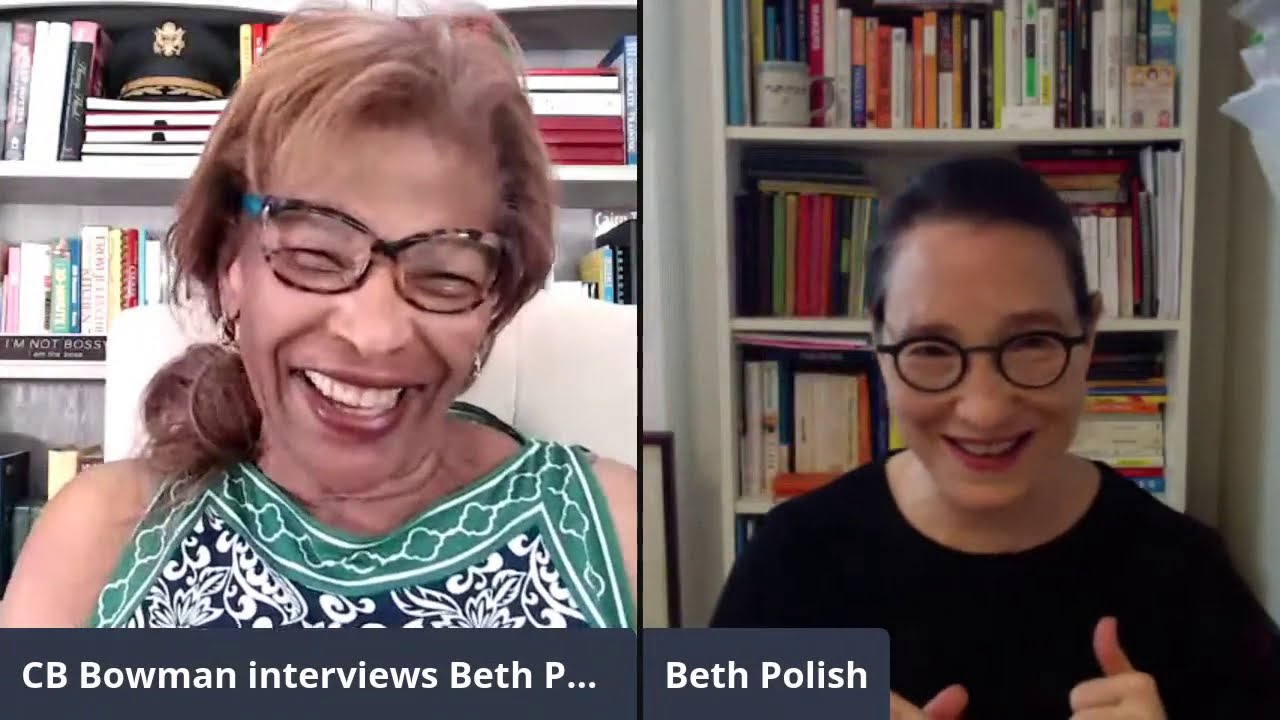
Beth Paulus, a former CFO at Goldman Sachs Ventures and founder of iVillage, says the core challenge for C-suite leaders is making decisions fast in a technology-driven world. She argues executives must become "enterprise-wide partners" who understand strategy, finance, and culture well enough to ask the right questions rather than blindly delegate.
Chapters
The C-suite. Hello everyone, welcome to The Challenges of the C-suite. We are so lucky today to have Beth Paulus with us. As you know, this program is brought to you by the Association of Corporate Executive Coaches, which is an organization that focuses on supporting executive coaches in being enterprise-wide business partners. Beth comes to us today. She's an amazing person who is very experienced as being in the C-suite and advising those who are in the C-suite. Beth's background is in New York tech— New York, basically she's been in New York and is known as a guru in the tech field. So with that, I'm going to let Beth introduce herself. Beth, welcome.
Thank you, CB. I am so excited and delighted to be here, mostly because I adore you. And I know we're gonna have a real conversation, 'cause it's not very helpful to people when you listen to others talk about their experience and it's not real. So I'm excited that you're real, I'm real, and we're gonna have a real conversation. Right? So, and maybe that's 'cause I'm a native New Yorker and that's all we know how to do.
We're real.
We are, you know.
We're gonna get into trouble with the rest of the world because we now said they're not real.
Oh, okay.
Well, let's put it this way.
Us New Yorkers, we bump into and collide with people on the street as opposed to driving everywhere. So, um, I do think we are kind of real in that way. We don't have no place to hide out. We just have to be out on the street interacting.
That's true. That little pose, I'm open for conversation.
Exactly, right? It's like all the guys who are playing checkers and chess, like out on the street, and anybody can come and tap them on the shoulder and say, I want in.
Yes.
So I am, as I said, a native New Yorker, although I did spend 5 years living in LA. And I have spent my career, pretty much my whole career, in the tech world. I started as, I started right out of college working for the CTO of Dun Bradstreet in the advanced development R&D development group where we created computer voice response systems using human voice. And I wrote those applications, but then for a variety of reasons, I needed to learn to code. So I learned to code way back when and did that. And then I was very much involved in the New York tech community as a A founding CFO, COO of a company called iVillage, which was the first online business for women. And then I was partnered with Tony Robbins for a couple of years as the president of a company called DreamLife that he was the non-executive chair of. I was at Goldman Sachs Ventures as the CFO. I was at Hearst as the SVP of innovation. So, and then I spent a— let's just say sort of a sampling of things, which I think will give us some good conversation about the C-suite. And then I spend a lot of time advising and coaching people who sit in the C-suite. And you mentioned an enterprise partner. That's what you talk about.
Enterprise-wide.
Enterprise-wide partner. And I think that that comes from the ability to do that is to really understand the strategy of the business, to be able to speak the same language, to And I hope that I am that kind of partner, an enterprise-wide partner, when I'm a coach to companies.
Yeah, you know, it's really important. People say to me, what do you mean by enterprise-wide business partner? And for me, I see that as the next level above being a master corporate executive coach. You know, there's so many different levels of coaching. The space that I deal in is corporate executive coaching, which specifically means that you're walking in and you're coaching in the C-suite and top-line executives.
Mm-hmm.
And for that, for that relationship to be valuable, you have to know not just what the issue is that you're dealing with, with the coachee, but you have to know the environment in which they behave. reside, meaning you need to know about their competitors, you need to know about the company, you need to know about employees. You can't coach in isolation. I mean, you could, right?
But you're not— Do anything you want, but—
You're not going to be totally effective, and you might be shown the door politely, but shown the door if you go in and you're just asking questions. So it's more involvement, it's It's breathing your client's business life.
Yes.
And I know that you've done that. And so you're the perfect person for me to ask, what are the top 3 challenges that you have seen C-suite executives go through? So let's start with number one and let's make this a great conversation.
Okay. So I've thought about this, so we could start with decision-making, because I think that that leads to some of the others. I think it's really hard for C-suite people to make good decisions, to feel confident in their decisions, to know how many to make, because the world is just— I've watched the world change so much. When I first started out, if you had a background in tech, you were unusual. And there were tech companies, and then there were all the other companies, right?
Right.
And this still sort of exists a little bit. And when I would go around and say— I'd go into a company as like the head of innovation, and everybody kind of looked at me like I had 5 heads. And then I would get— I'd go to the IT group or the tech group, and I think, finally, even though I'm not a techie in the traditional sort of way, and I'm not an IT person, I thought these people are going to love me, right? And they look at me like I've got 10 heads, right? So it's, you know, it's that what's really hard is that when every company is a tech company today, and that means that things move really, really fast. It's not about the technology per se, it's the speed at which business models iterate and innovate, it's the way marketing changes. So it's not about any of the individual technologies involved, It's just the rate of change and the pace is totally different.
So would you say that technology— sorry, Beth— would you say that technology has become an acronym for speed?
In many ways it is. It is an acronym for agility. Kevin Kelly wrote this great book about what technology wants, and the thing about it is The moment you get comfortable in one technology, another one, you've got to move on to the next and not be wedded to it. And when you're living in that context, number one, it's really hard to keep up. So as a CEO or somebody sitting in the C-suite, there is just no way you can be up to date on every one of these things. And yet, you're going to have to be leading the ship, so to speak, and/or piloting or whatever, navigating it. And you need to be able to make decisions in that context. And I think today it's really, really rough. And forget, you know, not to date our show, but forget the whole COVID situation. Even without COVID, this is a really hard spot for C-suite people. And how do you make good decisions?
So how do you make good decisions?
Well, you first off start by having an appreciation of all the elements that go into the decision. And by that, I mean that decisions are not made in isolation. So when you talk about enterprise-wide, it kind of ties to that because you have to be conversant in the different pieces of your enterprise, not so that you're the expert, but conversant and can ask good questions so that when you get information back, from your team, you're in a position to understand what they're telling you and to ask good questions of them so that when you make decisions based upon what you learn from them, you can feel confident in those decisions. So that's one thing I think is really, really important for people.
So would you say that one of the mistakes that leaders make is Hiring an expert and then walking away saying, you know, okay, I've hired an expert IT person, I've hired an expert accountant, I've hired an expert marketing person, I don't need to look at this anymore, just give me results.
Absolutely.
Okay, that's a mistake.
I think it's a huge mistake. And one of the places I see it a lot has to do with finance.
Mm-hmm.
And numbers and being on and understanding that, that I always like to try to do something called a CFO for the day, not so that a CEO that I'm coaching or working with has to become the CFO, but they have to be able to understand their numbers and how it flows. And I see time and time again, CEOs don't really understand the economics of their business. They say they do because many CEOs are very good communicators. And so they can wing it, but it's hard to make decisions when you're winging understanding the levers of your business. And so that if you change one thing, what's the ramifications? So, so to your point, CB, about hiring experts and walking away, you can't because they don't know your purview in the C-suite is the whole business. An expert or a functional person's purview is theirs. And so you can't really— it's a mistake. You can do whatever you want, as we just said, but it would be a mistake to just say, oh, they're the experts, I'm going to just take whatever they say, because you're inevitably making yourself vulnerable when you do that.
So, you know, I face this as ACEC grows. The question becomes— and I hear what you're saying, you have to know something about everything, right? The question becomes, when do you step away? Because I remember, and I said this in a previous broadcast, that when my executive team said to me, CB, you're getting in the way of our growth, step aside. And I thought, What are you talking about? This is my baby, you know, please.
Right, right.
And I was devastated, to tell you the truth. And I thought, well, you have no place to go, so you might as well try it their way. And I stepped away, and I have seen my organization grow with leaps and bounds. But it could have been a disaster. So, you know, when do you—
how much and when and I mean, it's a great question 'cause I don't think there's a perfect answer. I think it begins with a few things. One is to hire people that you really believe in and who complement what you know. It's not about replicating yourself.
Mm.
It's about hiring people who you're confident know a lot and are curious and they're voracious in terms of understanding. And they're good communicators. So you start off by hiring a team that, not to use a cliché, but that is diverse in terms of its perspective and knowledge and is aligned in their integrity and how they value everybody else around them so they can listen to each other. So that's one thing that I think it begins with, because if you don't trust your team, you could give it a— you could give it to them, but it'd be really hard to actually do it with authenticity. So you hire, you gotta hire people that are better at it than you are or I am. Like when I was starting Dream Life, I really wanted, I know enough about marketing to have a really good conversation with the marketing person or the technology person or the biz dev person, whatever, but I am not an expert, but they are better than me at this point. What I bring is that overall vision and understanding that they were better than— I assumed that they were better than me in their area. So that's one thing. Another thing is to be very clear about the vision and the goals so that they're set up for success. So it's, you know, whatever it might be, everybody needs to understand where the boat is sailing, because if they don't know where the boat is sailing, then they can go off and do things and it's not their fault. It's mine as the CEO's fault that I didn't, or whatever in the C-suite. I need to give them that, and that can be a collective decision about where the boat's going. But once it's set, you're very clear on what are what I would call business model milestones. How do you know that you're going in the right path so they can evaluate where they're going and understand what their parameters are? So I think that it starts off with those 2 pieces, and then it's not about disappearing. It's supporting them as they're making the choices and moving forward.
Mm-hmm.
So they're comfortable. They don't feel like it's like the expert, okay, I'm walking away. It's your baby. If you fail, it's on you. It's being there as a resource to them and staying on top of it. And on top of it, it's not micromanaging. But whatever the cadence is, whether it's a once a week update or once a month, whatever it is, is doing that. Because if you fall down on the communications, then I think it's very hard. So people need to feel also they can stub their toe, that they can make mistakes, but, you know, they're believed in. So it's sort of like those 3 things together is what's helped me before. Do that.
So that raises— correct. So that raises a couple of questions. One is, and I think about my own organization as an example, since we're a young, new, agile organization, and yet as we're growing, I'm finding that people are saying to me, CB, what's the vision? I'm like, you don't get the vision? The vision is clear to me, and and then the next question becomes: What's the strategic direction? And shouldn't we have a business plan? And shouldn't we have this? And I'm saying to myself, no, no, we shouldn't, because the whole the whole basis of our association is being able to grow. Monica, is that we can pivot. We can pivot based upon the needs of the members. And so it creates this concern that once we have a strategic plan and we have all this and that. And so for me, all I see is this shrinking happening. And then pretty soon we're in this tight rubber band of rubber bands, and there's no place to, to have any elasticity. to grow and respond to market demand. So I would think that that's a big concern over newer organizations, not so much the Fortune 1000 organizations, but how do you— and that's probably how we've gotten to the term disruptive organizations.
Mm.
It's, you know, we want it all right now. Is that a danger?
Well, it is easy because—
I'm sorry, your voice is going out.
So can you say it again? I don't know why. There's an echo now. Let's keep trying and we'll see what we can do. It seems to be okay now. Technology, right? You want it.
The live streaming, right?
Start it when it doesn't work right. It's really annoying. So we'll keep trying. So I don't know why there's suddenly an echo. Give me one second, I'm gonna try something.
Okay.
Okay, let's keep trying. So here's what I feel strongly, that you have to put some stakes in the ground about what you are and what you're not, and then you measure against it. And that doesn't mean you're rigid, it just means that it doesn't morph You know, when you make, it's a conscious decision to do that pivot as opposed to, you know, the game, as opposed to an unconscious one or an unintended one. So I don't know when you were a kid if you ever played telephone where, you know, kids are sitting around, right? And they whisper something and then by the time it gets all the way around, it's something completely different. And that's what can happen to businesses. So I don't think you need this long business plan. I do think it's important though, you have a vision about who you're supporting. Right, you're supporting coaches.
Yes.
So they can be enterprise-wide business partners to their clients. All right, so you know, you probably know that you wanna be the number one company in the world who does that. I'm just gonna guess it. And the smile on your face tells me that that's what you want.
Yes.
Like, let's just be real here, all right?
Yeah, yeah.
So, and you probably already know, you wouldn't have gotten into the business if you didn't have some ideas about what that meant, and not just to be flexible and pivot. Some other things, whether it's certification or whether or not it's some training on helping people figure out, like, what's that mindset shift they need to make in order to be enterprise-wide versus traditional code, right? You're laughing at me, right?
Yes.
Right. So you got into things.
All right.
So in all fairness, let's not go to here. The idea— I'm going to call you on that.
I think I've been busted just now.
You've been busted, my dear. So I'd say to you, 'cause people get, 'cause you know, this notion of business plan has just taken on a life of its own. It's like brands have a Bible, right? They have a Bible, and this is not about what color font you're gonna use or what font it is and all that. It's about saying, that's my goal, to be the number one global company that supports coaches as enterprise-wide business partners.
All right.
So that's the first thing. That's pretty clear because global means it's a lot of coaches, right? And it's a lot of companies, right? All right, we don't need to say that's 100,000, 200,000, 20, irrelevant. It's global. So now, sorry, Abby.
I'm laughing so hard because I have just been busted so nicely.
So now, right? And you already know, that's your vision, right? That's your vision that you share with your people. And by telling them, That these are kind of the pieces of it, you're empowering them to go out and do it. 'Cause you're not the expert in each, you're not the expert in building every educational program. You're hiring people that can do that. And then you just gotta unleash them and let them do it. And then be there as a support and a resource to help them through the problem, to make it clear how you wanna handle problems.
Right.
Like for me, I am a really good problem solver if people tell me when they know they're having a problem and they don't hide the problem. I don't care about blame, doesn't matter to me. I roll up my sleeves, I'm with them. I just don't really love it when they know and they hide, 'cause that's—
Of course.
I'm kind of known to be that kind of partner, so don't hide. So it's, yeah, so I'm sorry, but I think you do need something. Give me one piece of paper. Not fancy, so that when you make— when you pivot, you know what you're pivoting from and what you're pivoting to, and you can evaluate whether that pivot is worth it.
And when you—
after you pivot, whether it delivered what you needed, the results you need, because if you don't get results, you're not going to be in business. That's the bottom line. So sorry.
I love what you're saying. So the biggest One of the biggest challenges is the ability to make decisions. What I'm hearing is that those decisions can come in all different packages and you don't have to be restricted. You can actually build in decision-making with agility. I love that.
Here's what I can tell you. We promise to be real. I'm not gonna name names when I say this, okay?
But who are we talking about?
No, no, no, I'm not doing it. You're not gonna get me to do it. But I remember when, you know, I became CEO, which is very different than being COO, CFO, or any other C thing, or even an executive vice president. You know this, right? When you sit at the top of the pyramid, it's a different perch and nobody else has that same perch. And it's, you know, it's a big deal to sit at that perch. So, and so I remember in the face of things is the, like the startup growth stage, I mean, through going public, one of my board members screaming at me that it was my job as CEO to make 100 decisions a day. And to start off with, I needed to make, get 50% of them right. The ones I got wrong, I needed to defend, and that I hope my batting average would get better every single day. Now, if you— the point of the story is that in the C-suite, you've got to keep moving forward and making decisions.
Mm-hmm.
And recognize that the vast majority of the decisions are not irreparable. And not making decisions is a decision. So you gotta keep moving forward and not turn into— turn every decision into a life or death situation or a dangerous decision.
Yeah.
So if you have that mentality, then agility gets baked in. It's not a question of being agile. It's about being comfortable making decisions with imperfect information. And evaluating them all the time and being comfortable with that evaluation. Like the military does their after-action reviews, right? And it's no harm, no foul. You just got to get it out there about what went right and what went wrong.
I absolutely love that. It reminds me of my days at General Foods. After we would launch a product, we would then dissect each piece that allowed us to launch and said, you know, what are our lessons learned?
Right.
It's almost like the TQM of 5 whys. You keep asking why and why.
Right.
There's so many people in the C-suite that are afraid to make a decision because they're afraid to be wrong.
Right. That's right.
Sometimes they're afraid to be right.
Yes, I think so too. I'm sure I've been guilty of that. Well, because if you're right, it comes with a whole host of other things. And I think it's particularly hard today. It used to be hard, you know, in a public company because your decisions that went right or wrong were very public.
Mm-hmm.
And you'd have to report them. And your time horizon, you know, as somebody who was the head of a publicly traded company, you have this problem that people are looking for quarterly results. You gotta put that out there. And so you don't have as much time. The market is not as interested in longer-term or medium-term results. They're looking constantly. And then you add that with the 24-hour news cycle, right? All these things. And then now with social media, things get tweeted out or posted. And so mistakes become more public.
Yes.
And I think that we haven't yet as a society grappled with how to handle that. And people are not good enough yet at projecting themselves into the other person's seat or shoes or seeing the world through their eyes to say, that might, you know, people who do tell-all books, that might feel good today, but it's gonna not feel good later on.
Yeah.
And we have to hold, I think we're gonna have to figure out like what's appropriate and what isn't appropriate. To call out?
I think the pendulum has swung from being indifferent about results that CEOs make. And then we had Tyco and Enron. And now everything is— you use a microscope for everything, right? Not a magnifying glass, a microscope, right? And so now it's at this other end where CEOs and C-suites are almost afraid to make a decision. And we've got to get that pendulum in the middle.
Yeah.
You know, you see it with young companies when they start up, they have the ability to go from left to right to center. And then— and I've watched this and I've started to study it— as the CEO gets older in age, Then the decision-making gets to be more classic.
Really? That's so fascinating.
It actually winds up destroying the culture that made the organization great. So if you take a look at Google, right, if you take a look at Microsoft, and you take a look at Airbnb, but Google, Microsoft are the primary examples of when the founders were young, it was like, let's just go for it. And then as they got older, each year it started— the company started to get more and more conservative. And if you watch, um, things like Glassdoor and you watch the feedback from employees, you'll see that the conversation starts to shift from, wow, this was a crazy innovative environment and I loved it and I could bring my dog and I could say celebrate, and I could do this and that, to, wow, it's like a classic Fortune 500 company, and I feel stifled, and the creativity is not what it used to be, and, you know, the fun is not where it used to be. And then, and then what happens is the CEO starts to see this culture shift.
Mm-hmm.
They don't know what created it, right? And they try to go back, and they start bringing in executive coaches to figure out what the problem is. And so now they're trying to go back to this sort of quote-unquote disruptive culture, and it's too late. You know, you almost hang up your shingle and go and do something else and start something else. It's an amazing, uh, story when you start to really sit and analyze what's going on.
So it's really interesting what you're saying, and I've worked, as you know, with a lot of gurus. In my life. And the one of the big challenges is people get set, they feel like they've come this, this high up, right? And if they do something, they only can go down. So they become risk-averse for the mistakes.
Yes.
The more successful they become, the more afraid of losing the status. Yeah.
And then it—
and I think that that's a lot of what you're seeing when you, when you list the names of the companies like Google or Airbnb. When they were quote unquote upstarts, they had nothing to lose.
That's right.
And then when they become the behemoths and almost have a monopolistic position, they're terrified of losing that. And so if they go off and do something that is disruptive in its own right, then they're worried that they're just gonna have a diminution of either status or market share.
Yeah.
Well, I think that that's— so in a way, the coaching in my mind is around getting them back to the mindset that it's okay, you can make mistakes, that you've got to allow for that elasticity, for that movement. So that you're not in that little ball that you just, or that little, little world that you described earlier. So that's my experience. I think you're absolutely right. And I saw this with like gurus whose business it is to tell us how to live our lives. And they have this, like when I would help them go online and move from an in-person experience to a digital experience, a great example of that is that when you're in person, You've gotta do things to get your audience in state to be receptive to the work.
Absolutely.
Right? They're leaning back in a theater, they're leaning back. But when they go to the computer, they're leaning forward. So if you put all kinds of barriers, if you put all kinds of things which you would like, music or effects, to get the things that worked when they were in a theater to get them in state, what you've done is you've literally moved them from being like this, waiting to get started, Yes. Like this, watching the show.
Absolutely.
And yet when you— when I would talk to them about it, they would get really upset with me, saying, you don't understand how I do it. And I'd say, I understand how you do it. You don't understand this medium.
Yeah.
That they're leaning forward already. And I think that that speaks exactly to what you're talking about. And it's the fear of doing it this other way, because what— it's a little bit like what Marshall says, right? Like, what got you there won't get— what got you here won't get you there.
Yeah, yeah, yeah, exactly. And another prime example is Apple, right?
Mm-hmm.
Apple under Cook's umbrella— granted, he had a reputation for not being a great people person, but you're talking about innovation after innovation after innovation. And it was exciting. It was exciting for people like me who were Apple followers, you know? might not be able to afford it, but God, it was, it was energizing watching what's got— it's like electricity came from that company.
Right.
Whenever he walked on stage in the black, you were sitting there like, you know, a scary movie, or, you know, like you were reading a Robert Ludlum book. What's the next chapter? I've got to get to the next chapter. And now it's, it's heartbreaking because not that the company is not run well, But it's like watching an inchworm, you know. It's this electricity. There may be an occasional little static spark, but— and I keep saying, come on, Apple, come on, bring it, bring it, you know. I'm like, where are you?
Yeah, they have— they are in such a product cycle that I, I just can't even imagine having to— that output about what What features and functionality and how you're going to mash it together. And it's— yeah.
Yeah. It's still a really good company, but gosh, it's gotten boring as hell. So, Beth, you know what? I want to ask you the other 2 questions about other areas that you see CEOs being challenged with. But this has been such a great conversation. I think we have to come back and ask you at least 2 more times to ask you the mystery of the other 2 questions.
Yeah, I got some good ones, I think, that you and I would have a fun conversation with.
I love it. I love interviewing you. And so I'm going to wrap this one up with— I hope that people in the upper echelon and even the middle and lower echelon have heard how difficult it is to make decisions, because when you're there by yourself, you feel like, why can't I decide what— it's almost like going into a clothing store and saying, do I get this suit or that suit? You know what, I'm not in a decision-making mood today. But we always have to be in decision-making modes, and I, I want people to hear there's no fear in making a mistake. There's no fear in being right. The only fear is standing still. And with that, thank you so much, Beth. Thank you to the audience who tuned in to Challenges of the C-Suite, being brought to you by the Association of Corporate Executive Coaches. And I hope all the C-suite people out there that are listening have selected their executive coach. Goodbye now.
Bye.
More from CB



211- Courage to Leap & Lead with Louise Story part 1Courage to Leap & Lead







