CB Bowman LIVE: Challenges of the C-Suite: Dr. Frank Wagner Episode 17
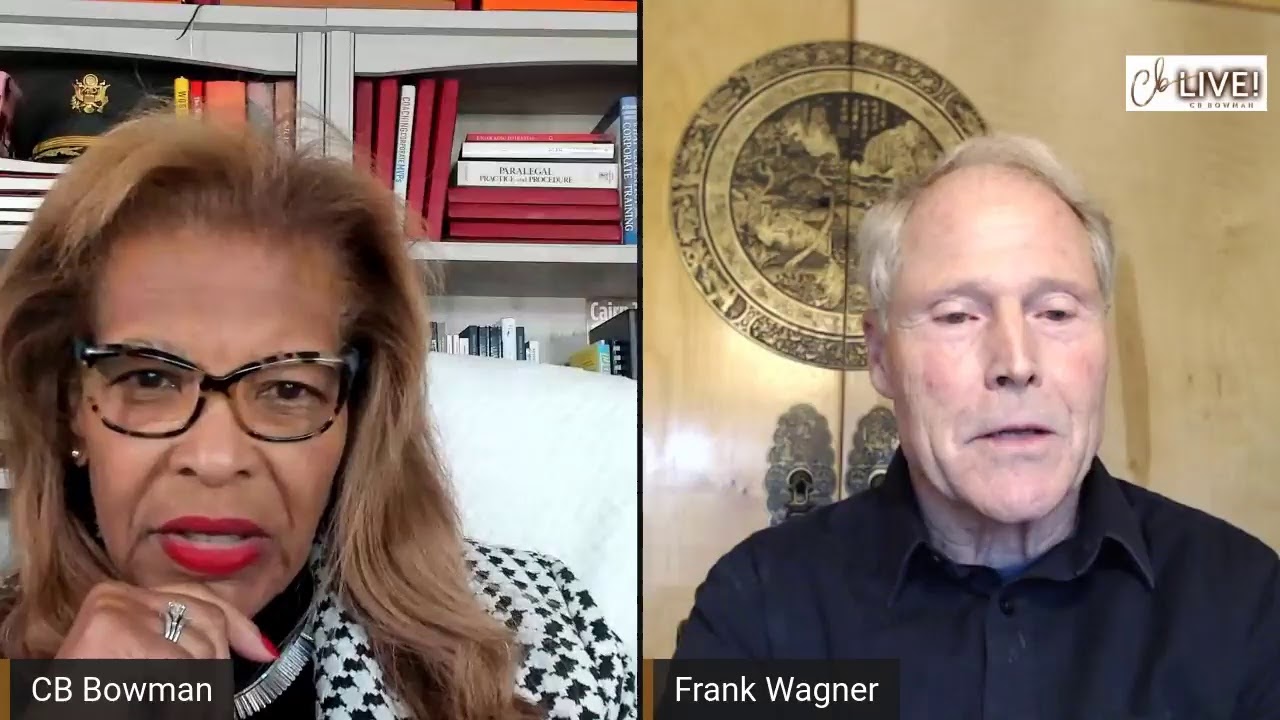
Dr. Frank Wagner, who studied under Marshall Goldsmith at UCLA in the 1970s, separates the C-suite's internal challenges (character, culture, communication) from external ones (time compression, complexity, rapid change). He uses Alan Mulally's Ford turnaround and Norman Schwarzkopf's leadership philosophy to show why culture must be lived, not proclaimed, and why 360-degree feedback matters more than perfection.
Chapters
Okay, we are now live. So everyone, welcome once again. I'm so happy you're here with me today. This is CB Bowman Live, and today I have an incredible, very special, very, very special guest, Dr. Frank Wagner, who is my mentor, my friend, and one of the best people that I know on this universe. He is a statue for human kindness. So with that, I'm going to welcome Dr. Frank Wagner.
Oh, thank you, CB. You're far, far too generous with your comments. So, but thank you anyway.
So Frank, tell us a little bit about yourself so that the few people in this world that don't know you Well, I'm hoping that there's only a few people who do know me. No.
And that's, you know, they— but just a little bit about my background is, you know, I started my real true professional career getting a PhD at UCLA in their business school. And that was, you know, started in 1972. And that's where I met Marshall Goldsmith. We were one of— between the two of us, there were 3 people that started in our little part of the business school, which today would probably be called leadership. Back then, they had a very unique name for it. And And, you know, we became fast friends and ended up teaching together when we first got out of PhDs, became business partners together. And I've known Marshall, like I say, since 1972. And so I like Marshall being the famous person. I don't want to be famous.
Yeah, but you know what? It doesn't work that way, Frank. You can't hide from the world.
Yeah, well, I do my best. I'm only doing this kind of thing because you asked me, CB.
Oh, Frank, I adore you. And so were you and Marshall surfer dudes together? Because I know you were surfing.
That would be a, you know, an interesting background. Marshall grew up in Valley Station, Kentucky. Right before I met him, he had got his MBA at Indiana University. So he was not very close to the ocean growing up. So he comes out to UCLA, Los Angeles, West LA where he lived. And I introduced him to the ocean.
Uh-huh.
Marshall was never a surfer, although Marshall and a guy who became a very good friend of ours— he was sort of like the dean of students at Loyola Marymount University where we taught— the 3 of us went surfing quite a bit, and both of them did something called a boogie board. That's where you lay on a kind of a rubberized thing with fins on, and you do ride waves, but it's not true surfing. And so we did that quite a bit. One day they got so into it, they went without me. And Marshall ended up breaking his neck.
Okay, I'm not laughing, but the fact that he went without you.
Well, I mean, they— I mean, it's not like they didn't have some competency in what they were doing, yet, you know, Marshall did something, you know, the ocean is not something to laugh at. And, but what was laughable about it, Marshall tells a story, I mean, it's so funny because he— now he's laying on his back on the wet sand with the waves coming in. And he was— we were at a— this was at a location that we used quite frequently, very close to the Loyola Marymount where we taught and where he lived. And it was right at the borderline between city property and county property. And the lifeguards from both areas were both standing over Marshall saying it was the other person's job to take care of Marshall. And here's Marshall laying on his back. I mean, he broke his neck and he's going crazy. So he ends up going to the hospital. And it wasn't that serious. But I tell you, but also Marshall turned anything he does into a, number one, a story, and number two, something positive. He wore a neck brace during the semester of teaching and he got the highest teaching evaluations in the business school because he got the sympathy vote. So yeah, so I hate to say I might've claimed I introduced Marshall to surfing. You know, by the way, he now lives He can look out and see the ocean down in La Jolla where he lives. So he loves it. But I would not put Marshall as a surfer.
Well, you know, he is incredible at telling stories. So what you're telling me does not surprise me. And he's probably the world's best marketer. So he used that to market his ability to get high scores teaching. What a character.
Well, he deserves his high scores. I mean, there's just no question about it.
Yes, he does. But that added touch helps too.
Yeah, but getting back to really what you asked me about is, you see, I've got really just one area of experience of which I've really devoted my career to, and that's leadership. So, you know, all of my experiences around either teaching that, coaching that, observing that in what I do. So, you know, this whole series you have around the challenges in the C-suite, The one area I have some area of experience and expertise is around the leadership side of being a leader at that level. So, you know, I do have an opinion.
Well, okay, we're going to get to that opinion. And so I've got my note paper out to ask you questions as you go along.
Okay.
And I just will remind you, this is kind of like a laugh and learn, because I have this theory that if people are laughing, they have a chance to really learn a lot.
Sure.
So here's my key question. What are the 3 challenges that you feel are at the top of the list for those that are in the C-suite?
Okay, well, the, the— actually, I— well, I'm gonna maybe double what you said.
Okay.
Because so I see there, there are 2 places where the challenges come. One of them is what I would call internal challenges. And these are challenges, when I say internal, it's both inside the leader herself or himself. I mean, this is actually behind the eyeballs. And the other challenges are within their own organization. So I'm classifying that as internal. But there's also external challenges. These are what's going around out in the environment, outside of the leader and outside of the leader's organization. And there's, you know, there's challenges on both sides. So, you know, I would say if you start with the internal, which again, for me, is much more my area of expertise, I mean, I would summarize it with basically 3 areas. One of them is character. There are challenges around leaders and their character that happen. And these, and by the way, everything I'm going to describe applies to all leaders from, you know, someone who's leading at a very young age at a very small informal organization to, you know, someone in the C-suite of a major corporate corporation, right? It's just a matter of magnitude changes as you move up. So character is one of them.
Okay.
That's truly inside the person.
Okay.
And, and the second one is culture. And, and being the shepherd of the culture of the organization. And the last one, which really kind of ties into both of these, is communication. And I mean, there's a whole lot of experts in the field of leadership that would say, if you really have to boil it down to one thing, it's communicating. That's what you do. That's what you do for a living. So are there— I think there are challenges today. I mean, I always— I mean, a quote that I've used forever when I'm working with leaders, and this really comes back to when we first started, Marshall and I first started doing corporate work. We were doing training. We weren't coaching. We were doing training in wonderful organizations. And, and we would— we were pioneers in the early '80s, late '70s, early '80s, in providing leaders with feedback, these 360 feedback reports. And I would sit down with leaders and I almost always would expect them to be disappointed with the results they're getting. And my way of helping them—
Wait, Frank, why is that? Why do you expect them to be disappointed?
Well, it's because Their view of how well they're doing as a leader is internal. You mean they know what's going on inside their own head? They know, and by the way, they may be a phenomenal mathematician. They they have complete records of how well they have been a leader over the last twelve months. And now I'm going to give you the quote, and it comes from ancient Greece, a philosopher named Epicurus. And Epicurus said this, and he was describing merchant. Captains. These are people that were in charge. They were leaders of ships that plied the Mediterranean for trade and all that stuff. This is what he said about captains. And then, by the way, excuse me that he only used the word male. So I'm going to just give the exact quote. He said, a captain earns his reputation during the storms. Now, by the way, let's be modern. A captain earns his or her reputation during the storms. Now, what does that mean? What it means is you're a sailor and you're leaving, you know, an island of Greece. You've done some trade, you're going to someplace else, and it's smooth seas. The wind is at your back, the tide is in your favor, you know, and you're navigating and leading this ship to another port, right? Do you earn any kind of a reputation at that point in time? Very little, right? It's easy to lead in the good times. Now, all of a sudden, A storm comes. You know, there are 30-foot seas. The wind is going crazy. The boat is taking in water, right? When does the captain earn his or her reputation? In the storms. I use that when I'm talking with someone about the 360 feedback because they'll look at their scores and say, if I take the last 365-degree days and average my leadership, my score should be higher. And when I tell them, guess what? People don't count every day equally. They're gonna assess you on probably the 2 toughest weeks of the year. So take that into account when you're looking at your feedback from people. So, and by the way, CB, let's look at the year 2020. Have there been a few storms?
Oh yeah. Okay. Yes.
Yeah. So the good news is they have an opportunity or a challenge to either enhance or detract from their reputation of how they're acting during the storms. In fact, you know, there was a— well, I'm assuming you remember this name, CB. Norman Schwarzkopf. Does that name ring a bell?
Oh, no, no, I'm not old enough to remember that name.
Who is that? And by the way, this is a person— gee, do you have some knowledge of the military or experience around the military, CB?
None whatsoever.
Right, right. Well, yeah, yeah, Stormin' Norman, who was his nickname. He said fundamentally— yes, CB, you're pointing at something. Oh, I thought you were pointing the—
no, I'm pointing to— wait, okay, there it is, the hat.
Okay, yes, the hat. Oh, I see the hat behind you. Yes, that hat looks familiar to me. Now, Schwarzkopf, you know, was a very successful guy. And by the way, interesting enough, we use the word storms. I mean, he was one of the most things he was known for was Operation Desert Storm. And, and, you know, one of the most greatest, easily accomplished military victories in the history of warfare. Now, by the way, a lot of people don't like generals in the Army and, you know, what they stand for and all that. But I don't think they really understand most of these real people. I mean, these people don't say, gee, I grew up wanting to do this kind of stuff. They're serving their countries. They're doing important A lot of them really understand leadership. And Schwarzkopf said that, you know, if you really talk about the 2 most critical things to be, that you would be as a leader, it's having strategy and character. But here's the funny thing he said, if you only had to have one, have character.
Oh, that's interesting. I was thinking it was going to be strategy. No, no, no.
And well, well, that one thing is see, and that's the challenge for most leaders. A lot of people start off as leaders as they're growing up in organizations. This is long before the C-suite, and they do a, and they really do have character, and they really do care about people, and they really do, you know, and they really are good leaders. And because of this, they get promoted. And as you move further and further up the food chain, things like strategy seem to become more important. Now remember, Schwarzkopf didn't say character was the only thing needed— character and strategy. He just said if you had to choose. So the challenge of, of C-suite, one of the challenges of C-suite is don't forget your character as you're leading.
Okay, so we're gonna go back now. There's a couple of things that you said, and I want to be— I want to make sure that the audience is on the same page.
Okay.
Define 360. What is that?
OK, a 360 is something that was developed, you know, in relatively modern times. And in fact, when we started, we didn't use computers per se. People would get a survey to fill out on a person anonymously. And our 360s are around leadership. So for instance, someone might get feedback on how well they provide direction. How well they delegate, you know, how well they communicate. And people are typically being asked on a scale of, you know, from, you know, not doing so well to doing really well, to circle little numbers and also to write in written comments about what the leader does well and what the leader could do to improve. And then those get put into a report. And so now you get data. And the 360 report means you're getting it from all around you. So a typical 360 was, by the way, the leader would fill it out on herself. So CB Bowman is getting her little 360 feedback report. She was asked to complete this report on herself. How good are you at delegating? How good are you at collaborating? How good are you at instilling trust in others?
Right?
You get to fill out your own score. You get to compare your score with others. Now, your manager, people above you fill it out, your peer group, Right, they fill out your— and your direct reports. That's what the 360 means.
Okay. So now, Frank, first I'm going to ask you to move over a little bit because we see more of— that's good. Perfect. Now, how do you prevent— this is a tough question— how do you prevent bias in 360 results? So suppose somebody, a group of people, have decided, oh, I can't stand that person, they're too introverted. And they write negative feedback because they don't understand the personality type of that person. How do you justify the 360 then?
Well, well, first of all, you know, I've seen countless 360 reports over the years. Is there bias? Certainly there's bias. I mean, everyone's got bias, by the way. In fact, maybe the biggest bias is that self-score on the report, right? I see myself through rose-colored glasses. I mean, bias is a fact of human nature. It's the way we're wired. So yeah, bias will exist. So you always have to take these things with a, you know, both a grain of salt and interpretation.
Mm-hmm.
And so, you know, if an introvert is getting thrown into a pack of wolves, meaning that you, with a bunch of extroverts, they don't get this person. They think the person is strange, weird, whatever. And then they take it out on the person at 360. Well, you should— that's, if you understand what's going on around, you will understand how to interpret that feedback in terms of this. And having said that, I have found that the vast majority of the leaders in the organizations we work with, people are generous, you know, with their feedback. And, and I mean, they give people the benefit of the doubt, at least the first time they do it.
Hmm.
Now, Ben, we were doing it, it was literally, we were doing it with some organizations, it was the first time anyone ever got any feedback on their leadership. By 2020, most leaders have gotten a fair amount of feedback about their leadership. So, you know, it's a different world now. Still, most of the people we know want to give a leader the benefit of the doubt. Now, that doesn't mean they are biased in a positive way either. If they see something a leader needs to improve, so I always tell a leader when they look at the report, Don't look at the raw scores. Don't look at the, you know, the, you know, just what your score might be compared to what you'd like it to be or others. Look at the relative scores. So even the people that are biased against a leader don't always rate every behavior the same way. Everyone gets their highest scores and their lowest scores. And look at those. So you can, you can get information from that. So you—
Explain the difference between a relative score and a raw score.
Well, when I say a relative score, it's relative to what? See, a lot of the 360 businesses would sell a generic leadership survey. And they would sell it to corporations, you know, like General Foods or Citi, back then Citibank, or IBM. And they would say, we can give you comparative scores. So, OK, CB, you got a score on a 5-point scale, 5 being excellent, you know, 1 being, you know, throw this person out the door immediately. And you got a score of 3.1. They will say, well, on average, people in her role, in her size of organization would get about a 4.0. So now you're saying, oh my God, I'm terrible.
Yeah.
I got a 3.1 compared to the average, the relative score of most people getting a 4.0. I think that's ridiculous comparisons. Because the only true valid comparison of a leader is if someone else was working with the same people at the same time, and you could compare them. Now what I like about relative scores is Everyone— I've seen leaders who've gotten horrible feedback. I mean, it pretty much says, like, why is this person even a leader? But they don't get every single score is a 2.0, right? They'll, they'll have a few scores that are like a 3.5, and they'll get some scores that might be a 1.9. I tell them, look at the, your own relative scores to get a sense of what you're probably doing better at as a leader and what you might want to work on to improve as a leader.
Right. That's good information. Yeah.
So, you know, so, but that's it to me. So one of the key challenges, though, getting back to, you know, my key thing is, see, I think very few people really go around, the types of people we work with in leader, in C-suites, that see themselves as, oh, I have a terrible, I have, I'm a terrible character. I'm an evil, bad person. You know, I'm fooling everybody. And they generally have a fairly positive self, self-concept. about themselves as a leader. Yet they have to be careful. Because see, the thing is, the further up you move in the organization, the more you have power and influence. And you'll get people that respect you, if nothing else, just because you're the top person in my area, like you're the top marketing person or the top financial person, you know, or you're the CEO of this organization. So you get surrounded by people that laugh at all your jokes. They always say, yes, you're brilliant, right?
Yeah.
They're never going to tell you anything critical. So here's the challenge at the C-suite around your character is your ego takes over versus your character. And, you know, here's one thing that we find out is, see, to me, if I had a little app on my Apple Watch, it should be a meter that says, Frank, what's your humility score for the day?
You know, you need to Bookmark that because when Apple steals that from you—
They can have it.
Right? Yeah.
The thing is, yeah. And by the way, with the advances in neuroscience, I tell you, I wouldn't put them past it. They'll be able to come up with this at some point in time.
Absolutely. But Frank, let's go back and get real clear on what does character mean? What are you talking about with culture? And of course, we all know what communication— but what does it mean? And Relationship to what we're talking about now?
Right. Well, see, well, again, I can't remember where this happened, but I was with a group of people and we're all asked to come up with our definition of leadership. And mine included character. So first of all, let me say, you know, just to remind people, you know, I deal with a simple field, leadership. You know, I don't deal with all this complexity and all these, like, you know, the half-life of knowledge is, you know, is very short because half of which, you know, is obsolete because of all the advances and stuff. No, I deal with very simple stuff. I don't deal with easy stuff. I just deal with simple stuff. There's only one thing you need to be a leader and that's followers. Right?
Mm-hmm.
You can claim to be a leader, but if no one's following you, you're not a leader. Right? Now, character has a lot to do with who chooses to follow you. So my definition of leadership is at the intersection of Character and commitment. And what does that mean? It's what other people believe you stand for and do. Because remember, it's all around perception. So you may, you have your own definition of character and commitment. Oh, I'm a very committed person. I really care. You know, I've got a sterling character, all this stuff. But see, character deals with how, and commitment, with how strictly someone practices what they actually believe in.
Right.
And by the way, it's what other people believe you believe in. Because that's what, that's how they're interpreting you and deciding whether they want to follow you or not. Now, I mean, I've, you know, you know, we, CB, you and I and others have had the great fortune of being around a lot of absolutely phenomenal leaders. You know, and certainly one that comes to mind is like Frances Hessebein. Another is Alan Mulally. And, and these people have— they themselves would say, I don't deserve the way people describe my character. But they do deserve it. Yes, because people are observing who they really are. Now, there's a lot of other people that, that they, they try to, you know, come across like, I got this character, but, you know, they're lacking inside. And that's the challenge.
We know a few of those too.
So yeah, so character has to do with What are your fundamental values, beliefs, and how well do you actually implement and practice them in your day-to-day life? See, that's why, you know, someone could say, like, I'll use Al Molalli. Al Molalli's written some phenomenal stuff about himself and his growing up. And, you know, he gives so much credit to his mother.
Yes.
And he says, you know, your goal in life is to love and to be loved. Yeah, in that order. So in other words, you got to take the olive branch and love other people first. That's one of his, his, his, we look at his Working Together principles is you love them up. You love people up. People come first, right? Now you can make those statements. And by the way, I can, I can tell certain leaders, if they're, they'd say, Frank, I'm going to be just like Al Mulally. I'm going to make those statements. I'll say that is the stupidest thing you'd ever do in your life. Because your evidence shows the exact opposite in terms of how, who you really are as a person. You know, you'll, you'll lose credibility, not gain credibility from that. So I mean, if you love people, but here's the thing too, and that's why I went back to my Epicurus quote, you got to be careful when the storm hits.
Yes.
Because you, you truly love your people 360 days out of the year, but those 5 real rough days, a different side of you seems to come out. And you got to be careful of that.
I totally agree. Totally.
So yeah, so remember, so character has to do with kind of how you're wired. You're truly how you're wired. But it's not, remember, but it's how, what's projected to others. And that's why I mean all this stuff is interconnected. Let's switch to culture. All the great, and I've been around a lot of great leaders for many, many, many years. And it all started when Marshall and I started doing work at IBM as young consultants doing a program called Situational Leadership. We got exposed to, I mean, unbelievably good leaders at the IBM Corporation. And the one thing you noticed about, I started noticing about good leaders, how often in their conversation, their communication, they were talking about their values. Now at IBM, they were called the basic beliefs. They had 3 basic beliefs. You would watch a good IBM leader talk about the beliefs. They didn't take it for granted like, oh, it's singing to the choir. I don't have to say anything and talk about our values or any of that kind of stuff. No, they all did. They do that, the good leaders. Now, so the challenge that I would say to a lot of leaders at the C-suite is, when's the last time you ever mentioned anything about your core values or beliefs or principles or whatever you choose to call them? Let me pick up Alan Mulally again. Alan Mulally Has done an amazing job as a leader. There's plenty of leaders that have done as good a job as Alan Mulally once. You know, they turned around and say a city or something like that.
But for people who are listening who don't know who he is, please tell.
Alan Mulally? Yeah. Well, Alan Mulally started his life as an engineer, aeronautical engineer. Basically just an individual contributor working on airplane, aircraft design at Boeing. Right? Well, he then became a first-level manager where he failed miserably. And because he treated management like an engineering job. But he learned from some good people. By the time he got on our radar screen, he was the president of Boeing Commercial. They had a number of crises. He led them through a crisis to huge success. Boeing was the most admired, most bought airplane in the world when Alan Mulally was there, right? Then he decides to leave. Marshall Goldsmith was his coach in the last few years, right? When he was there, Alan, like anyone who's Marshall's coach, becomes a good friend and a confidant. Alan suggests, you know, Alan's asking Marshall, where should I go next? Well, the Ford Motor Company job came up. Marshall said, yeah, you can't do any worse than they're doing now. Go take the job. So Alan Mulally, a guy who builds airplanes, and by the way, he was responsible for the 777 aircraft, which any— I wouldn't say any, I shouldn't exaggerate. Almost all airline pilots asked, what would be your preferred airplane to fly? They'll say the 777.
Wow.
And, and, uh, and it was an amazing airplane that was built that no one thought could be built. Well, Alan did that. So I mean, the guy's a success, but if that was his only success, I'd say I'd put him in the camp of most other well-known leaders. He goes to Ford Motor Company. They are losing $17 billion that year. You can divide by 365. That's how much money they're losing every day, right? I mean, when he took over, they were predicted to lose $17 billion. 3 months later, when they actually had the numbers, they were amazingly accurate. They lost $17 billion. How would you like to be running an organization that's bleeding that badly, right?
No.
So Alan instills his Working Together principles, which, by the way, he first put together at Boeing, right? And every week they had a meeting and they did their business plan reviews, BPRs. Every meeting for, I don't know, here's where I'm a little foggy. I can't remember whether Alan was at Ford for 7 years, 8 years, 9 years. I don't know how long he was there. When he left, they went from a bankrupt, basically a bankrupt company To making an amazing amount of money, stock price increased like 1,700 percent or something like that. Here's the deal: every week, Alan Mulally was a CEO of Ford Motor Company. They had a weekly staff meeting to review business stuff. Every meeting for how many years he was there, what was the first thing he did? He talked about. least one of his working together principles. In other words, do you have that kind of discipline and that type of understanding of human nature that these are the things that are important? That's the challenge for a lot of leaders.
Tell us some of those working together principles.
Well, okay. Well, they're principles and practices. He has them together. Now I can't remember. I haven't memorized them. But I will say anybody who works, any leader that I coach who works in an organization, if they have a stated set of principles or values or I'd say memorize them. If you don't memorize them, you're probably not going to use them in your conversation, memory and communication, which is the other part we're talking about here. So, but some of the ones are, like I said, I've already mentioned one, people first. Now here's another one, everyone included.
Love that one.
I mean, see, Al Mulally was brilliant in getting the right people at the table, where so many like senior corporate C-level suite meetings are done in private. It's just the inner circle talking about things.
Yes.
Lawley and Clearview. In fact, Alan's very proud of what the Business Roundtable did this last year in 2019, where they changed the definition of the purpose of the corporation. See, the purpose of the corporation up till like a year ago was increase shareholder value, stock price, right? Now, how many people just go to bed at night saying, oh, I really wanna work for this corporation because The senior managers who have all the stock options are gonna make a lot of money 'cause our stock price is high.
Mm-hmm.
And I don't think so. Right? Well, the new definition of the purpose of the corporation includes customer, it includes employees, it includes suppliers, it includes communities. Right? And I mean, it's amazing. And the shareholder, I don't want to get it wrong. They didn't eliminate the shareholder on this thing. a much more systems view of things. So like Mulally, we look at his Working Together principles, understood to solve our problems, we needed to have all the right people at the table. He did that at Boeing, right? He did that at Ford and the way he operated. He also has very, very clear disciplined business processes. So for instance, a key principle is facts and data. We make our decisions based on facts and data. He says, you can't manage a secret. And another part of his principles, everybody knew the status of everything. And so information was widely shared in terms of those things. He also had some things that I don't think were actually necessary, but it's respect for each other, right? Trust the process, have resilience, right? There was, they didn't turn Ford Motor Company around in a day. Let me tell you. It took them a while to turn that sucker around. So, but those are some of the principles they had. But see, the thing is, they weren't just platitudes. Alan Mulally lived this. And anybody who stayed— 2 of the senior people at Ford, when they heard about his principles, they said, this is stupid. This sounds like Boy Scout stuff. You know, I don't need to do this. They actually went to whoever was the Ford who was still around. saying, get rid of this guy. And I forget which Ford it was who was still there said, to his credit, I hired the guy. Those 3 people left the corporation with zero money.
What?
Their stock options were underwater. They made no money. Guess what? 14 other senior leaders stayed. They all made multi-millions of dollars by the time they left. Right? So by the way, but Remember, this stuff is not difficult to understand. It's just difficult to do.
Yes, I agree.
And that's, you know, Dr. Jim Kim, who's another one who's a brilliant person, done phenomenal things for all of human nature. His last big job was the head of the World Bank. I love the way Dr. Kim describes our stuff. He said, all this stuff is simple. It's just not easy. But then he adds a great line. He says, it's the not easy part that scares people.
Yes, right.
Character is important. Commitment's important. Culture is important. Culture is what's going to hold everyone together. So see, the challenge of C-suite people—they are the by the way, in good in good organizations with a great culture, this starts at ground zero. First level management—they drink the Kool-Aid. It's got to be everybody's got to be invested. But guess what? Where It means the most at the senior level, right, in terms of this.
Frank, I mean, you and I are both from corporate. I was in corporate for so many years. And what I saw happen is that the C-suite would take the latest thing and make it so that it marshaled the whole company. And people were just so tired of change. It was like, let me read Good to Great. Let me read Built to Last. Let me read this. Let me read whatever was the thing of the year, the flavor of the year. And then they changed the whole organization. It was like they changed their values and their principles and their processes. And people started— and I think that's what's happened today— is people started to say, oh, not again, not another one.
Right. So I'll give you a perfect example of what you just described. There was a phenomenon. I mean, I didn't learn any of this in graduate school. I didn't learn this as a consultant with some great companies until it became the fad called TQM.
Oh, I was part of that.
Right. Total Quality Management. Now, see, Marshall and I were hired by—
Zero-sum society.
Well, let's see. But what was one of the tenets of Total Quality Management? Was continuous improvement. Yes. Right? So you took whatever level of quality you had now and you improved it. One thing that— see, again, remember, I, I don't claim to have any kind of monopoly in anything except for one thing: leadership. I started observing, and I thought the quality movement was a great idea, and it was done out of necessity. Japan was kicking our you-know-what. Yes. And, and so the U.S. businesses— I'm just talking about the U.S., but I know the whole world, you know, they grew up and they realized we got to practice some of this stuff. But here's the— here's my question. Everything in this corporation had to improve except for one thing. You know what that one thing was?
Communication.
Nope. Well, it's sort of— the one thing was management didn't have to improve. Leaders didn't have to improve. In other words, you could be the same leader you were next year as you were this year, but everything else had to improve. Now, I don't think people were that aware of it. just clearly, but it subjectively made people say this stuff is bull. You know, I'm not committed to it. Because now let's take the opposite. The places where something like total quality—
Well, you're right. Because I remember when that became in vogue at General Foods. And it was all about the product and the processes and really had nothing to do with leadership.
Exactly. So, but think about then the cynicism that comes up. Oh yes, I've got to work my tail off to improve this process by 1% or 2% or whatever. But my managers know better, right? Why does this apply to them? Yeah. So, you know, where total— so I started observing that. And by the way, total quality wasn't a complete disaster. It did work in a few places. You know where it always worked? Where all the leaders were trying to get better themselves every year, right? Remember, character, commitment, you know, these kinds of things. These are the challenges because see, you get fooled when you move up to the C-suite because no one's going to tell you this stuff. And I'll give you a perfect example around the culture piece. I won't mention this case. I only mention people like Al Molali because they're rock stars. They deserve to be heard. But when they're not a good example, I just disguise it.
OK.
I was brought into a company because another famous, famous person had sold this company a bill of goods and then backed out at the last minute. But I will tell you that basically the— and you may figure this out— they were going to train all management in this thing called transformational leadership. And, and, and so the acting head of HR who knew me One day calls me up and says, Frank, I need your help. I said, fine, what do you need me helping? Well, we got this guy and he came in and the chairman bought this bill of goods. We communicated out that we're going to have this total, we're going to have this transformational leadership program. And they backed out. I need you to come in and take over. And I said, hold on a minute. And I swear to God I did this. I had to open a dictionary and look up what the word transformational meant. And so I said, look, I don't know anything about this. How the heck?
You're barking up the wrong tree here, man.
Forget it. He goes, Frank, Frank, I know you. I need you. Come in and do this thing. So I came in. I resurrected the thing. So it turned out to be a big success, this program. And they did something very similar to the workouts at GE. I would— the chairman of the board, CEO would come in and give his kind of his analyst talk. He treated all these engineers and people in the organization as if they were just like an analyst, explain what's the state of affairs. Then I did like 2 days of having them use this concept called transformational leadership. And then the chairman came back on the afternoon of the 3rd day and everyone basically presented a transformational project. And right there, he gave them a thumbs up or thumbs down.
Mm-hmm.
Okay, this was a huge success. So now I'm actually kind of known in this place. So one day, because of, I forget where this came from, they decided we don't really have a statement of our values. Of this company. So let's create our values. So I get invited to this meeting. This is a very small meeting, four people. It's in the chairman's office. He has this huge office. Is just away from his big his desk is this round table. So I come in. He's sitting at the round table. That's chief human resource officer sitting around table and the head of corporate communications sitting around table. And I'm invited. And and and and and so they start talking about values. Well, the chairman, as they're talking about, says, well, absolutely, one of our values has to be teamwork. And I'm sitting here now, I know this, this organization fairly well at this point, and I'm looking around and all I see from these 2 other people is like nodding their heads like, oh yeah, teamwork, that'd be a really good value. I'm sitting there going, this is crazy. And, and so I turn to the chairman and I'll say, um, that's really a bad idea.
Oh!
And I swear to God, I think the other 2 people had to go clean off their behinds because of, you know, what happened in this meeting. I mean, they looked like, oh my God, Wagner, I mean, this is stupid. By the way, let me tell you something about this chairman. He was a tall white male. He had played basketball. He did, I guess at some level, believe in teamwork. Now let me give you the background why I told him this was a stupid idea. I said, you were brought in 6 years ago to turn this corporation around. And you were given a marching order by the board of directors. Guess what? It is now 5 years and every single thing you were tasked with doing has been achieved. And he's sitting there going, all right, proud. I said, now let me tell you something. My understanding, I wasn't around 5 years ago. My understanding when you came in that you had 27 lines of business. Is that pretty much accurate? And but I knew my data. He said, yeah, that's accurate. I said, now what did you end up doing? You basically half the workforce was fired over time. Cut the headcount in half. And so in other words, many people lost their friends at work. This guy was not well liked. At least back then, he certainly wasn't well-liked. And I didn't even— I wasn't involved with this organization at that point in time. I said, what did you do? You created 3 lines of business and they were called— here's, here, here's what you called them: independent business units. But let me ask something else. You have a senior team. You've been here 5 years. How many retreats have you had with the senior team? I knew the answer: one. One, I said, if you put teamwork up, and I'm telling him this, and he's sitting there like looking at me with a glare, and the other 2 people are like saying, can I leave the room? And I said, now, I think you believe in teamwork, but you didn't, you haven't exhibited it for 5 years. If you put teamwork up as a value, people will laugh behind your back. And if you, if you want that, go ahead and do it. Guess what? Teamwork did not make it onto their list of values. Because see, the thing is about values are platitudes also, right? Oh, wouldn't it be nice if we had teamwork around here? But don't preach teamwork until you've earned it.
Yeah, yeah.
And so, you know, all the great— and by the way, probably, I don't know, it's hard for me to put as a Best leader I've ever met. But one of them is a guy that's not well known. His name is George Weber.
OK.
Marshall one day said, Frank, I've started doing work with the American Red Cross. I'm working with the president of the American Red Cross and all of them doing our excellent manager program. We call it the Excellent Professional. Would you do this? The first time I did this program, we invited the head of the Canadian Red Cross. George Weber, would you go do the same thing with them? I said, absolutely. So we're doing this pro bono leadership training. I go up, do work with all the senior people at the Canadian Red Cross. And that part of that time, at one point in time, they needed— they were told by their— I couldn't believe this— their CPA firm at one of the— what at the time, one of the Big 8 accounting firms— that you need to have a management philosophy, which doesn't sound like an accounting suggestion. And they had tried twice to put together a management philosophy with his retreats. Didn't work. So George Weber calls me up again, just like this transformation. He says, Frank, could you come and help us? What do you need me to do? We need to come up with a management philosophy. I said, okay, well, tell me why. Well, we were told by our auditors to do this. And why? And we've tried it twice and it's failed. And I'm going, well, why are you bringing me in? Because they all like you, Frank. Oh God. Okay. So we go in there. We We put together this phenomenal weekend. They come up with this— actually, I was very proud of this unbelievable statement of philosophy. Now, by the way, why did it fail twice? Because remember, they were the Canadian Red Cross. The Canadian Red Cross is part of the International Federation of Red Cross and Red Crescent Societies. The Red Cross has values. They have the 7 principles of the International Red Cross. Well, half the Canadians in the room said, why the heck? Why are we doing this? We've already got our values, our principles. The other half said, no, no, no, we have to— we're Canadian, we have to be unique. We could stay— it was like, you know, tastes great, half filling. I mean, they, they could never agree. So I came in, I don't even remember what I did, but they came up with this philosophy which somehow kind of walked down the middle ground here. And, and they were so proud of it. And when they were done, they all left. I said, George, I, I, I've seen this enthusiasm for this thing. Um, please do me a favor, don't cast it in stone until you've tried it out for a while.
Mm-hmm.
You have ceremoniously a piece of paper with this, your, your management philosophy. And when you go into a meeting, you take it out of your pocket, you unfold it, you lay it in front of you, and you observe what happens in your meetings and see whether this is actually real Or it has nothing to do with what's going on around the table. And after you do that, um, and it succeeds, make it an official policy. This is our— he said, I'll do it, Frank. And he was a great leader. I was so disappointed when about 3 months later he calls me and says, Frank, I, I'm no longer the head of the Canadian Red Cross. I said, okay. He says, yes, I've been promoted to be the head of the International Federation. And he said, and one of these, and George was not a guy that bragged, but he did say to me, Frank, I am the first nonpolitical appointee to this role in the history of the International Federation. It's always been a hack who sort of got this job and did nothing. Right now, he's now the head of the International Federation of Red Cross and Red Crescent Societies. He had over 190 countries reporting to him.
Right?
I remember one time I went to— I was in Geneva doing some work for the International Federation. And everyone had gone home. And it was a Friday night. And I was going to fly back to LA, where I lived at the time, the next morning. And he and I are at a little bistro in Geneva, just the two of us. And towards the end of the evening, one question I always love to ask leaders is, what's most important to you? George thought for a minute. His answer was not what I thought. He answered in 2 words. His answer was, my health.
Whoa.
I am going, okay. I said, you know, I just sat there for a bit and he didn't have me to prod. He let me think for a bit. He says, Frank, I am responsible for 190 countries. If I don't have my health, there is no way I can help these people. And I mean, talk about a huge complex system he was managing with 190 countries. And, and, and yeah, then all this is leading up to the last thing I want to say about George Weber. He never told me this. He did his stint. I don't know whether he was there for 5 years or 6 years or whatever. When he retired, by the way, it's one of, one of the people reported to him told me the story about a year later. He said when he retired, he got a 20-minute standing ovation.
Wow.
Right? This was a man of character. This was not some egomaniac. Oh, look at me and look at how important I am and all this stuff. He was a servant, just like, you know, a servant leader, just like, you know, Francis Hessebein, just like Al Mulally, just like Harry Kramer, just like all kinds of these really great leaders in terms of the way, the way he operates. Yet, you know, he, he lived values. Hmm. Live this up. Because I mean, who can't be enamored with— like, I've talked to many, like, retiring C-suite people, and you say, well, what are you gonna do with the rest of your life? Oh, I want to do something really important, you know, like save human lives and do something for the common good. Well, that's what the Red Cross— the Red Cross is there to help the most vulnerable. Right. And George was living that. But people cried when he retired. And I mean, I said to the guy, yeah, right. Is this an exaggeration? He says, no, no. We had the clock on. People would not sit down for 20 minutes. Wow. His retirement. I don't know anybody that's ever gotten that. That's why I put George right up there at the top. So now let me give you— so Character, culture, focus on those things. So it's the making culture real to people, because that's what turns people on. That's what people want to show up to work. They believe in the mission, the culture, the people I'm working with, all that kind of stuff. I just want to tell you one funny story about communication. This goes back to— well, it was—
Wait, wait, wait, Frank. You've got like 10 minutes left. You can tell that story, but you also need to squeeze in The external part.
Okay, will do, will do. So this will be the last story I'll say and then we'll do the— this was, well, I guess I can mention this. This is called Longbow. This was like late 1980s. Chris Coffey, my business partner, and I were doing training inside Apple Computer in sales and marketing. They get a new VP of sales and marketing at Apple. This was, now remember, one of the rare times Steve Jobs was not at the helm. This is when a guy named John Sculley was in charge.
Yes.
Interesting enough, because Chuck Boesberg, they hired him from IBM. I thought, this is weird. So, so, um, Chris Coffey and I decided, hey, we're training all, all of this guy's leaders, let's have a meeting with him. So we get on the guy's calendar, we go in and meet the guy. He understands what we do. He— we could talk about IBM because I've done a lot of training at IBM. And, and we're talking about, well, what do you want us to tell the people? And he said, well, let me tell you a story. He says, at a certain promotion I got at IBM, my first day on the job, something very interesting happened. I just did a walk around and it was a huge facility, giant facility. This was his building, right? He's walking around the building and he got to one of these cubicles where there's like 4 cubicles so that if you take the walls and you look down from above, it's like an X.
Right, right.
And so there's these 4 cubicles, and, and these people had all taken a bunch of plants and put them right in that middle, the X. So these plants are in there, and Bosenberg goes, oh, that's really nice. It's just, just offhand comment, right? He goes home, he says, my second day of the job, I walk in, I go into that room, every cubicle has plants just like that through the whole freaking facility. He said, when you talk about communication, you got to be careful what you say.
I love the video that— and I think it may have been with Alan Mulally or Martin Lindstrom, both of, you know, our friends. And there was a video that Marshall did when he said, what's the greatest thing that you've learned from being coached by me? And the response was— and I'm not saying it correctly— But the response was, I need to be careful of what I say because whatever I say becomes the law and I don't mean it to be.
Right. See, because a suggestion becomes an order.
Yeah.
And so, yeah, you got to be— that's why Alan, when he was at Ford, never gave his opinion on anything in his business performance reviews. He always turned it over to everyone else because he knew that dynamic of what would happen. So, you know, he would just say, hey, I know how to build airplanes. I don't know how to build cars. You know, I think airplanes are a little more complex than cars. And the thing about Marshall too is, is one of my favorite, you know, Marshall stories is Marshall loves Broadway.
Yes.
He's got his apartment in New York on 42nd Street. He loves Broadway. But he says one of the analogies he gives to leaders is, see, on Broadway, when you pay all that money to go to a Broadway play, what do you expect? Phenomenal performance, right? And these people work hard, these actors on Broadway. But the same token is, I mean, they're working, you know, like, I don't know, 8 shows or 9 shows a week. You know, they got their evenings and they have their matinees on a few days, and then they're off. Well, when you're a leader, you're no off time. It's showtime every minute.
Yes.
So that's the thing. But wait, we got a few minutes left. See, the 3 things I think to me that are relevant, which all of the internal stuff applies to, Is let's look at what's going on in the environment. One of them is time compression, right? Time compression means how much of our time is being squeezed because of all the demands, right? We don't—we just don't have the time to do everything. So that's one of the key challenges: How do I deal with time compression? Second one is—is complexity. Things are not getting simpler; they're getting more complex, right? And then the last one—I mean. Gee, the pace and velocity of change. How soon before what we're doing today is going to be obsolete? And I mean, I'll just go to Bill Gates. I remember one of Bill Gates's quotes that I really liked was he was often— people saying, God, aren't you lucky, right, to be where you were and did what you did? He goes, well, how would you like to run a business where everything you make money on now is going to be obsolete in 18 months? Right? We're on a treadmill. So those kinds of of external challenges just up the ante that your leadership's got to be impeccable to manage this stuff. And, you know, and it's tough. But I'll tell you, I'll go back to my early IBM days. A guy, I did not know him back in the day when I was this young guy going around IBM, but I heard stories about this guy forever. He was in charge of sales for IBM and probably relatively their 10 best years ever. He was up to be CEO. And he didn't make— he was, you know, he came in second place. So he left and wrote a book called The IBM Way. His name's Buck Rogers. Well, I got to know Buck after he left IBM and he became a mentor. But I mean, all this— and by the way, every story I ever heard about the guy, I asked him if they were true. He says, well, yeah, it's probably true. Yeah, yeah, true, true, true. There was no— nothing about the guy's legend was false. And one of the things, and this goes back to a lot simpler time, When there wasn't as much time compression, when there wasn't as much complexity, when there wasn't such a velocity of change, he never allowed anyone on his staff to have more than five priorities. Hmm. And and and and by the way, he I asked him about that, and he said, "Well, yeah, I'd get you know some of the smarter ones would kind of put two of them into one statement, and I'd catch them on it and say, 'Look, okay, yeah, you've actually got six here, even though you got only." a list of 5, they said, which one are you not going to focus on? He said, you can't do everything. So the magic is the right priorities of where we're focusing our time. I mean, easy conceptually, hard to do.
So we're almost out of time. We have a few minutes left. Can you give our leaders that are listening and our potential leaders advice on how to manage those external areas that you just talked about? Time compression, velocity of change, complexity?
Well, it's all about, you know, if nothing else, giving yourself, you know, one of the things that we love in our material is, for instance, doing a daily checklist. Now, everything doesn't have to be done on a daily basis. It depends on the pace of what you're measuring. You know, it can be done on a weekly basis. But something like this is a daily thing. Is just stop and ask yourself, where did I spend my time today? On what? And was it the right thing? Because for instance, a lot of— let's talk about the values. A lot of organizations really truly, they bleed service to the customer. Then you look at your day. I didn't spend one iota minute either with a customer or talking about a customer issue. Right? So you got to start prioritizing. If that's important, see, focusing on what's important is the only answer. And the answer is different for different people in different roles. Right? So, but it all applies because, by the way, if you think you're focusing on what's important, but everyone around you thinks you're focusing on the wrong things, it's not going to lead to success. So you got to have a shared understanding of what's important. I mean, where do we start? So it's really what are we not going to do is where you got to spend your time. Yeah, it sounds, it seems important, but compared to this, I'm knocking it off of our plate. You got to just do a few things well. And that's why I'm going to go back to McKinsey studies that led to In Search of Excellence, that led to all the work that Marshall and I did with IBM and all these companies is stick to your knitting. You better know what your knitting is.
You know, you bring up a really good point. I was so frustrated right before our call, um, not only with the technology of Livestream, which is a good platform, but I couldn't figure out what the problem was that I was having to get you on. But before that, I also had technical issues, and it kind of stemmed from LinkedIn putting me out to pasture. I'd like to say they were protecting my security and they put me on leave of absence. Let's put it nice. But and then I got back on. Thank goodness they have new access channels that let you get back on fairly quickly if this happens. But I had a conversation with our friend Anna Malinkian. And she sent out a post about understanding LinkedIn's new algorithms. And I thought, okay, my head is spinning. Because I thought I had their complete understanding of their algorithms, what not to do, what I could do, what would lead to more contact and communication with people that were following me. And I saw this new post of hers. And I thought, Crap, I do not understand a thing. They've changed it all. And she said to me, you can't post more than once a day. And she was going on and on and on. My head was exploding. I was sitting here feeling sorry for myself that I don't understand all of this new stuff when I was so proud that I understood everything.
Right.
And listening to you, I'm thinking, why am I getting so involved in technology? technology when I have people around me who are so much better at it than I am? Let it go, CB, and focus on— yeah, what happened all of a sudden? Talk about technology. It's the technology universe getting back at us.
The ghost in the machine. Yes. The thing is, is though See, you bring up the whole point of complexity. You, you, you see, you— it was good for you to know the algorithm and to know this thing. Now the thing is, is though, it's not necessarily your job to keep up on when the algorithm changes. You need good people around you and then gives you the Reader's Digest version. You can't ignore that complexity.
Yeah.
It just has to be managed. So we can't be all things to all people. And that's the challenge because people want to be able to rise to the occasion and be all things to all people. You got to make choices. Choice is tough. You know, that's, you know, I guess maybe that's the big C of all the Cs of the things I talked about. Yeah, you need character and culture and communication. You need choices. It's a choice. We're ultimately judged by the choices we make.
Yeah. And my choice is to let other people manage it so I could focus on The greater plane of talking to you today and the greater plane of focusing on my Workplace Racial Equality.
That's right.
Program, which I'm so excited about, and focusing on the growth of the Association of Corporate Executive Coaches.
All wonderful things to be working on, CB.
Thank you, Frank. So we're out of time, and I want to thank you so much for coming on and promise you'll come back.
Um, well, if I got anything more to contribute, I'll come back. If I don't, don't, you know, don't expect to see me.
You have lots more to contribute. I want to talk to you about each of these points in depth. So with that, you have an open invitation. And I want to say to our audience, thank you so much for tuning in to CB Live. We'll see you on Thursday. Bye now. Have a successful Couple of days, and if I don't see you on Thursday, it's horrible. So.
More from CB



211- Courage to Leap & Lead with Louise Story part 1Courage to Leap & Lead







