CB LIVE!: Courage to Leap and Lead: Guest Deborah Gilboa, MD, Episode 92
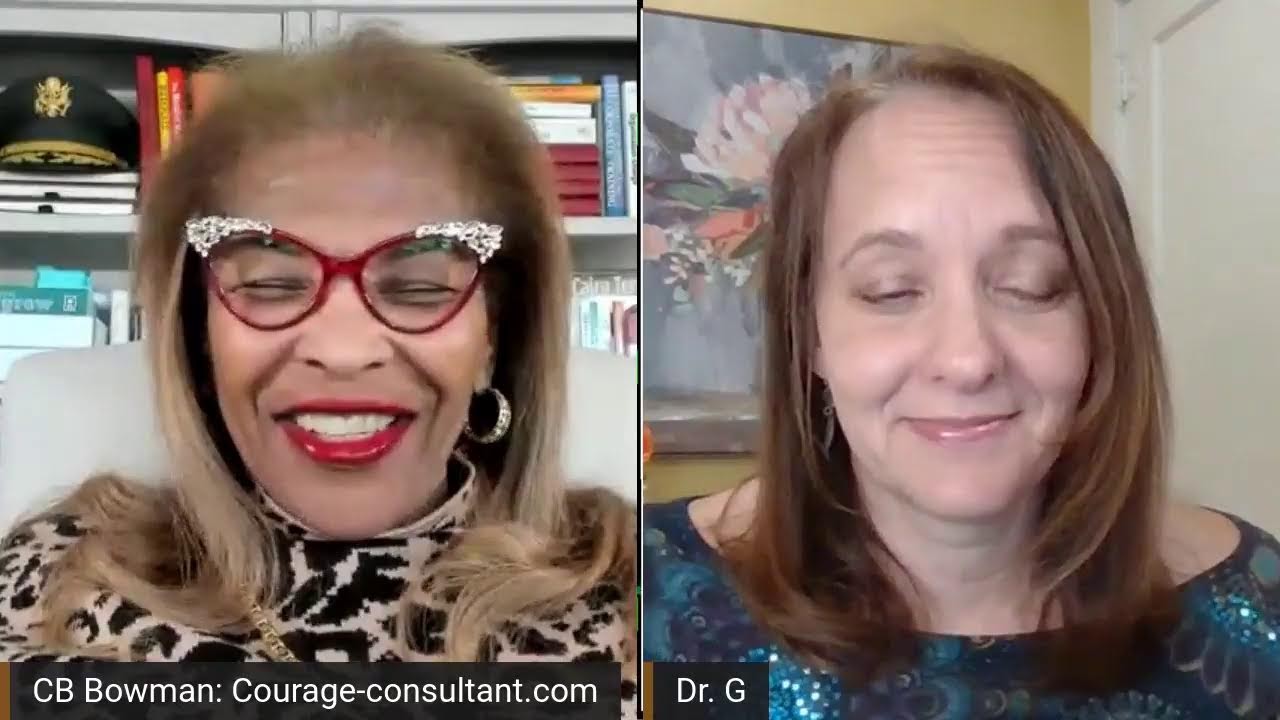
Dr. Deborah Gilboa, a family physician for refugees and immigrants, argues that resilience is a learnable skill for navigating change, not a fixed trait. She identifies three brain safety mechanisms that trigger with any change: loss, distrust, and discomfort, which are heightened for people of color and refugees. Leaders must recognize these reactions in themselves and others rather than taking them personally.
Chapters
Hello everybody, welcome to CB Live. And you know we're starting a new format. We did that last week. We'll do about 15-20 minutes here, and then for the really juicy part, you have got to go to the podcast. So the podcast is available to you on all the major podcasts. You know I'm a hit. So any place you look, you'll find CB Live. So, and, and by the way, it's almost the first week in May. So please remember to look for my LinkedIn newsletter. It's gonna be good again this month. And so you can find it by joining me on LinkedIn and remember to subscribe and remember to tell your friends, don't be stingy. Share the newsletter. Tell people to subscribe. Okay, so how do you like my new glasses I'm rocking today? My God, I'm gonna have such a wardrobe. Zoom is forcing me to make sure that I look smart on each show, so I've decided to do it with glasses. So other than that, I have a female doctor of resilience. Wait till you hear the advice you're going to get today. So without further ado, let me introduce Dr. Gibbon. And Gibbon, did I pronounce your last name correctly?
Gilboa.
Gilboa. Okay.
That's why I go with Dr. G. It's remarkably hard to pronounce.
Gilboa. Okay, I'm gonna write that phonetically. G-I-L-L-B-O-A, otherwise called Dr. G. And so we met each other, get this, on this show. She was listening to an interview that I did with a fellow friend, Todd Cherise, who wrote a wonderful, wonderful book called Visual Leadership. And if you don't have it, please run and get it. And she participated. She gave us information in the chat. She wrote in. And I loved her comments. And I said, hey, want to be on my show? That's how it happens. So you have to comment if you want to be on my show. And of course, you know, we talk about courage now. And people confuse courage with resiliency. And it's very different. So we're going to talk about that. We're going to talk about the work that she's doing. We're going to talk about her courage. And of course, clearly she has one. She has several courage stories to tell us. So let's start. Dr. Gilboa, how are you today? And welcome.
Thank you very much for having me, CB. I'm fantastic.
Great. So first, let's start with telling us a little bit about your background.
You bet. I'm a family doctor, so I'm a medical doctor. I see patients in a federally qualified health center in Pittsburgh where I live. We serve refugee and immigrant populations primarily, and we counted in November of 2019, and our patients speak over 100 languages natively and come from over 60 countries. So it's really a global medicine kind of practice. And it gives me the opportunity to meet and work with families from all kinds of different cultural backgrounds. So I learn every day about approaches that are different than the way I was raised.
Wow. So do you know Isabella Lundberg? She's done a lot of work in the refugee camps. She escaped the war and she's actually going back. over to Ukraine to help survivors. She's done a lot of work with war survivors, as she is also one. She's done amazing work. That's why I didn't know her. She's, she's out there a lot on LinkedIn, and she has a newsletter, by the way.
So when I've been in practice for about 5 years, and this goes back some years, I realized that As a doctor, I had a lot of training in how to help people get better from an illness or an injury, but not a lot of training in how to help them be well. And that gap between healing from something and really feeling well, fully well, in the medical literature, that's often called patient resilience, which I'll grant you sounds a lot like a cop-out on the part of like, you know, doctors are like, well, we did our part, the rest is on you. But I thought, okay, if that's true, if patient resilience, plays such a big role in wellness. What is it? We use that word a lot, but really, what does it mean? And more importantly, how do we build it? Because it's got to be more than just like your eye color. Like, it's a trait that you're born with, and it is what it is. Because of all of the work about growth mindset in the academic fields, I thought, I wonder if that's the case as well with whatever this resilience thing is. And it is. It turns out that resilience is not a trait. It's a series of skills that we can build. And some of how you're born and what you go through plays a role, but nobody is incapable of building their resilience and everybody needs it. So all of the work that I've done outside of my medical practice, which I still have in the last 10 years, has been focused on this idea of individual and group resilience.
So I think of resilience like a rubber band. If you constantly stretch it and use it, it keeps Being malleable. You can constantly stretch it and use it. But I've noticed if I lay my rubber bands down, like in a bag or in a drawer, and I forget that I have them, when I try to use them, they snap.
Yeah.
And you can't get them— you can't use Elmer's glue on them. It just doesn't work.
Navy duct tape. Yeah.
So, so how does that compare to the work that you do?
What we have learned about resilience, and if it's okay, I want to define it because many people think of resilience as the ability to bounce back from difficulty, which is where I think that rubber band image comes in for people. But it turns out that's not the whole story. That's a better definition of grit, overcoming adversity. Resilience is about navigating change, all change, even the stuff that we think of as good. Because some changes are good. Still, all change requires resilience. Resilience is the ability to navigate change and in a business sense, come through that still mission-focused. So you can see as an individual how that's a pretty easy definition to translate. The ability to come through change and come out of it focused on the kind of person I want to be or my own personal mission. When we think about resilience as the ability to navigate change, we start to see why it is both crucial, right, that we develop more of it because change isn't going to stop. We've seen the last few years the pace of change is really picking up speed, as a matter of fact. And we can't get anything we want without navigating change.
Why is the pace of change speeding up instead of slowing down? I mean, we've got all these tools now to use. We have—
Ding, ding, ding. That's why, right? Because you don't need an entire day a week to do your laundry. Right. We've got tools that make that go faster. So you have the opportunity to go out in the world and interact more and achieve more and try for more things. But also more stuff comes at you. And that's an oversimplification. But as we have tools to speed things up, We speed things up.
Hmm, I see. We don't take the opportunity to slow it down.
Many people do on an individual basis, but the world values productivity, especially the Western world, especially North America, values productivity over pretty much any other metric. And that's a whole other conversation, but it does mean that Change is a constant, but the rate of change, as one of my physics teachers might have pointed out, is not constant. And it's really been increasing. Knowing how to navigate change and still come through it the kind of people we want to be or the kind of organization or business we want to be, mission-oriented, is crucial to not only accomplishing what you want, but getting the kind of life that you want.
Mm-hmm. Okay. So if I thought about it in terms of rubber band and in terms— and I'm not surprised because I am a Black woman. So, you know, so in my space, resilience means being able to navigate change, but kind of, I guess, in a different way than what you're talking about it. Right. I'm not sure. I'm not sure the difference there.
It's certainly true that women and people of color, and more than anything, women of color, most change has an underlying threat, right? Mm-hmm. Like, basically, this is actually how everyone's brain, regardless of the body that it's born into, looks at change. Our brain has a million functions but one job, and that job is to keep us alive. Okay, if that's true and we are currently alive, good news. That means every change is a possible threat. But when, as most people of color have experienced, threat comes so often in so many directions, we're even more vigilant about whatever the change is, even if it's winning the lottery. How could this put me at risk? How could this put my mission at risk? How could this put my people at risk? Like the people that are important to me, whether that's in a business sense or in a family sense or community sense. What is the risk here? Every time our brains encounter even the possibility of a change, and let's take a really good one like a big windfall of money, okay, like that most people would say that sounds like a great change theoretically. Our brain says wait, but what could we lose? Can we really trust it? And what's going to be uncomfortable about it? Those three things our are our brain's reflex safety mechanisms to protect us, to make sure that we're looking out for threat. I'm a second-generation American. My grandparents were refugees, and they were constantly on the lookout. I remember the, the first experience I ever had that really sticks in my mind. I was maybe 3 years old. I was with my grandma right outside her apartment building in the Bronx in New York, and you You know, in some preschool show I had seen, I remembered learning that you wave to officer friendly. Okay. And so we were walking down the street and a police car slowly drove by, and my grandma— and I waved my hand, went, hi, officer! And my grandmother smacked my hand, pulled it down, and pulled me into the corner of a building and stood there with me silently until that police car was gone.
I get it.
Right, totally. But from that moment on, I got it. I was just, you know, I had seen some little kid TV show about wave to officer friendly. I was good at following rules. I saw an officer for the first time and did that thing. My grandmother had an entire lifetime of hiding from the police and escaping a country in which if she got noticed, she'd likely have been killed for who she was and, and the skin she'd been born into. So that being the case, right, she and my grandfather and my parents to a large extent were much more vigilant about risk while wanting to raise me without that as best they could. Every brain is suspicious of change, but many brains, like you're pointing out, have been wired and raised to be even more vigilant because it's crucial for survival.
Mm-hmm. So give me the 3 areas again. You said change, uncomfortable.
Change, just the possibility of change. We have 3 safety mechanisms in our brain. What could I lose? Loss.
What can I lose?
Distrust, right? Is this really true? This change, this windfall of money, for example, is it really mine? Are there really no strings attached? Will you know? And then what's going to be uncomfortable about it? Who do I know that's going to be coming to me for a handout? Am I going to lose some loan that I was going to get to, you know, to send my kid to college? Now I'm not going to be able to get that because we have this windfall of money. Am I going to be treated differently by people who know me or people I work with because of this windfall of money? So loss, distrust, discomfort. Even with what is qualitatively a great change, our brains are skeptical. So when it's qualitatively a terrible change, you can imagine that our brains put us through Those 3 safety mechanisms and don't want to let go of those, that loss and that distrust and discomfort. Resilience is about how do you feel those things and navigate them. One thing for all the business leaders who are watching that I want them to really think about is business leaders, family leaders, and community leaders also are often the messengers of change. Whether or not they decided the change, and sometimes we do, But often, we are the messengers of change. And we tend to feel really betrayed, angry, hurt when we announce that change and those people express loss, distrust, discomfort. We think, don't you trust me? Don't you know that I have your best interests at heart? Don't you know that I'm focused on us succeeding? Why would you have those reactions? But that's silly for us to feel betrayed by that because it is a reflex. We can't help it any more than in the office when I tap someone's knee with my reflex hammer and their foot kicks out. I shouldn't be mad about that. If I stood right in front of them and I got kicked, that's on me.
I love that example. Hey, with that, we're going to stop and we're going to move to podcast format. So those of you who would like to hear the rest of this interview, We've laid the groundwork. It's gonna be exciting. So please join us on your local podcast. And this is CB Live. And this is Dr. Gilboa. And so how did I do?
Fantastic. Thank you.
Great. Okay. I wanted to be sure of that because as a dyslexic, things don't come easy to me. So, with that, please join us next week, same time, same bat station, and join us on the podcast to hear the rest of our conversation. Bye now.
More from CB



211- Courage to Leap & Lead with Louise Story part 1Courage to Leap & Lead







