CB LIVE! Courage to Leap and Lead with Justine M'Poyo Kasa-Vubu, Episode 103
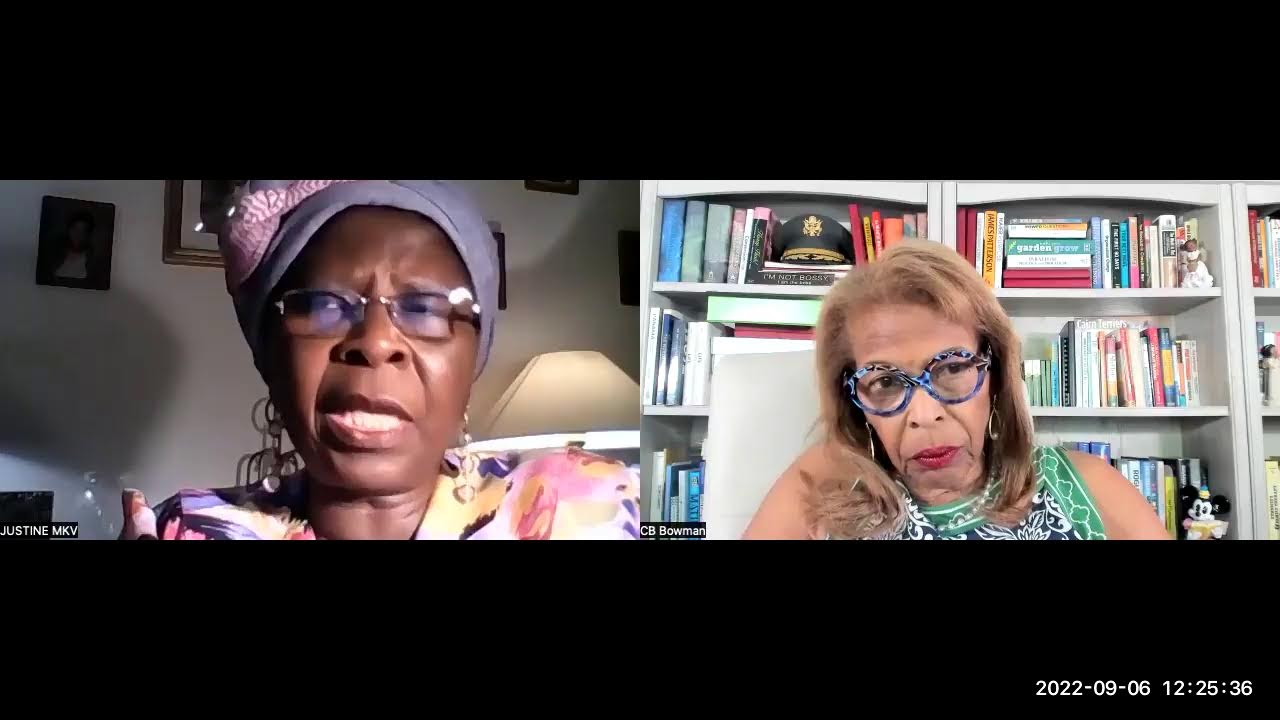
Justine M'Poyo Kasa-Vubu, daughter of Congo's first president, fled her country after Mobutu's 1965 coup and later discovered her father's papers, including a letter from JFK. She served in government, ran for president in 2006, and warns that Congo's history is being erased from schools.
Chapters
Hello everybody, this is CB Live, and I don't know if you had a chance to see part 1 of my interview with Justine, but oh my God, I'm just like, I'm so excited to talk to her. This is part 2. I want to advise you to go back and look at part 1 if you missed it. Because such wisdom, such pearls of wisdom. I mean, this woman is bringing me to tears and just allowing me to reflect back on my own childhood and how I grew up and how my sense of value developed. I, I don't think I took the time in my life to sit back and think about it, but she's forcing me to. And I have to say, I was very lucky. So without further ado, I want to introduce Justine again. Hi, Justine. Thank you for coming back.
Oh, I'm very happy. Yes. Hello.
Hello. Justine, we were talking about when your father passed away, um, and you had to go back into the country where you grew up, and you had no inheritance, and you basically had to start over again as a family. And your dad had been president, and then through a coup and political situations ended up in prison. And even though they invited him back, to come, he decided that he had done what he was supposed to do for the people of Congo. So now your dad passes away, and now your family is faced with returning. Tell us more.
Yeah. Yeah, even more than 50 years later, it's still very difficult to talk about this period because Congo is still— country where everything is going wrong, instability is still around, insecurity, etc. And I mean, injustice is spreading everywhere. So it's very, very difficult because Congo is a very special case in Africa. You see, being a democrat and being elected as the first president of a country, it always brings some difficulties afterwards because You see, nobody expected Mobutu to make the coup, but he did it, and he got also support from the West and everywhere in the world. So it was just a painful period and very challenging also. But I mean, the most difficult for us was the choice. You see, Mobutu's regime brought us to 2 choices, either for, for, for girls and for boys. For boys, it was just decided right away, uh, make it impossible for them to continue studies, or disturb them, uh, to— for the studies, so that they don't get revenge over, you know, the father. And the girls, it was just simple. Oh, no, no, no, they would become, you know, mistress and, uh, you know, second wife, or, you know. We just had a prostitution invitation, if I can say so, for the girls. So I decided to refuse this choice. That's why I went in exile. And this was also a punishment for my husband, as I told you in the beginning of the show, that he was working in the administration. And by the day he got married with me, We decided that we will not submit ourselves to this regime. So that's why we went in exile, and the exile brought me here today, and I became a writer, etc. So—
Whoa, whoa, whoa, whoa, no, no, you skipped too much. You skipped too much.
Okay. But we only have 10 minutes or 15 minutes or so.
No, we have another hour.
I have to rush.
No, no, no, we have another hour. You have the time. So wait a second now, you got married and you and your husband decided to go in exile. Where did you go?
Well, first we lived in Algeria, uh, we had this opportunity, and after Algeria we went to Belgium where I am still living today. But also we had sometimes opportunity to make a little trip here and there, but basically Algeria was the first place, and after that we came to Belgium.
Okay, for my listeners, what does being in exile mean?
Oh, first of all, it's not the same for, you know, for other Africans, I guess, because being in exile as Congolese, this is one thing, but being in exile as the daughter of the the first president of the Congo in the country where the colonial rule took place. I mean, this also is another aspect of the challenges, but that's how circumstances made it. So I'm here in Belgium.
But what does it mean? What does it mean?
Well, it means that you have to recover, first of all, from all these injustices. You see, you have to take life very normal. Don't see yourself like a privileged person because you don't get privileged at all. Nobody will come and give you things for granted. No, this you have to forget. So you have to be born again, if I may say so.
Okay.
Forget about your past, forget about your father, forget about what you had when you were a child, but just take the values that made you strong, that made you become an adult, and you work with these values. That's how I, you know, I raised my children, because my children, I didn't raise them by the fact that they were a grandson or granddaughter of a first president. No, it wouldn't have been useful for them at all. So I didn't want them to, you know, to be pretentious. I wanted them just to have a normal life, which was the case being here in exile. But yeah, but being in exile, it means you left your country. I left it.
All your wealth, everything.
Yes, everything.
You packed a bag, and how did you get out of your country?
Well, uh, I got out of my country because just, uh, in the very beginning, being a girl, as I told you, uh, the system, the, the dictatorship system, always thought that, uh, having lost everything, at the end you will just go back to them and beg. You see, they were just expecting me to go back and beg them, but I didn't go back and beg them. I preferred, I mean, to even to die of hunger, if it could be so, instead of going and beg Mobutu. So that's also—
But how did you escape from one country to another?
No, I didn't escape. You see, also the, the most genuine aspect of the dictatorship is just to let you live your life, but not showing that you are in danger. You just think that you can manage, you know, daily. But I mean, it comes very, you know, in a, in a very— you, one must be very imaginative to, you know, to understand that the danger is around. You know, they just let you move, and sometimes they seduce you. Sometimes also they can give you some promises, but if you don't pay attention, those promises become compromissions at the end. You see, if you give too much, then it becomes a compromission, but if you don't give an inch, so you are just escaping. So we were just in the balance. But you see, Being married, this also was a protection for me because, you see, they won't come directly because there's a man around me, you know, there's a man, you know, taking care of me. So they just come with caution. But anyway, it was—
So with that, you're able just to take your suitcase and get on a plane and go someplace else?
Yes, yes. I had, uh, sometimes you, you have your passport But sometimes also you don't have a passport because, you know, they keep you just hanging, waiting, waiting, waiting, and until despair, until, you know, desperation comes around. So this was always the challenge. But I refused to go into prostitution. I refused to obey Mobutu, and I always said that I will never surrender. as long as Mobutu remained in power, I would never surrender because I thought that he betrayed our father. Because you see, when it comes on Congo matters, sometimes people say, oh no, Congo doesn't belong to Congolese. No, you have the Western, you have the United States behind, you have the European Union behind. No, but I think that we still have a percentage of independence that we can manage, that we can handle. And I think that in this part, if we still have 60% or 40% of independence capacity, I think that in this 40% of capacity, there is always possible to make things better, to work for a better future. But it wasn't the case. Dictatorship just collapsed everything. So being in exile and having to carry on all this wasn't very easy. But I had to be born again, to be able to live again, you see.
Mm-hmm.
So, uh, it takes, uh, it takes a couple of years to realize that, because, uh, maybe you trust people, but they don't come to you, uh, because of having confidence in you. They come more in spy. So they just spy you because they gain money going back to the dictatorship and say, oh, this, look, How things are going. Now you have reached this position. So I think, you see, I'm still in a very, very bad position when I look to these years. When I look in the past, I feel that it's more a matter of hatred than betrayal of an outside country, because I never saw an American or a European just frankly say, no, hate your fellow compatriot. I didn't— or just destroy the schools. No, I didn't see that. I didn't hear that. But it comes from the capacity of a man of hating, of being just full of hatred, So this is my disillusion in Congo, you see, because my values is love for others, is just being positive, is looking for a better future, a better education for our youth, and good welfare for them. And how can we develop the country? All these elements that make a country you know, be emancipated. So nobody, um, force you not to do it or not to think on that, but if you do, then it means that, uh, you're not honest.
Mm-hmm.
You're not honest at all. So, um, it was very difficult, yes, to recover from these periods. It was very difficult also to get my own place, but I did it anyway because, you see, Mobutu lasted 30 years, and during those years, I never worked with Mobutu. I just accepted my fate. I accepted it as well as my husband. But it wasn't easy because he was supported by the West, he was supported by— Belgium. The European Union, but I had a few friends who understood the situation, but I mean, they couldn't do more than just showing me some love and adopting me also, because I met also here people who knew my father during colonial rule and who didn't accept how things turned around after independence. Because you still always have people who are in the good track, and who wished you the best in the past, but are very disappointed to see what has become of Congo. So when they meet you again, I mean, they would like to to keep again something or to recover for something that is just maybe impossible. But they want to show you that it could have been better. So in this challenge, they get you, they take you, and they kiss you. They, I mean, they adopt you. So this is how it helped me to go forward, to move forward. And being aware of this history gave me some inspiration So I started to write, and this also gave me another challenge, and it brought me to another level, and it showed me that I was on the right track. Yes, I took good decision, but it wasn't easy, because you see, when you have opportunity to work, but you realize that this work is just a temptation, it's just an occasion to put you down, because there is also the revenge of history, revenge of the past, you see. It's not always easy to be clever.
What do you think gave you the courage, one, to go into exile, two, what gave you the courage to Keep to your conviction, not to cave in. And now what's giving you the courage to write, uh, and express— and I'm taking it that your writing is about the experiences that you've had. I mean, that's incredible. Uh, what's given you the courage to do all those things? And I know that you think, oh, it's part of life, it's part of my strength, it's part But can I just tell you, no. As you can see for yourself, many succumb to prostitution. Many succumb to accepting the men. That's it for my education. You were the exception, maybe the exception among several, but you were the exception.
Yes.
So what gave you the courage to be that exception? And we can take each situation at a time. First, for escaping, to say to your husband, okay, we have to go now, I'm going to give up everything and go.
Yeah, it's maybe the feeling also to experience sometimes periods of maybe it's a tough word, but I could say maybe miracle. And I also experienced the fact that, you know, the will of transmission. Why do I say transmission of all those informations and all these experiences? I think that it's very important for the youth to know how things, you know, happened. And if you don't share this experience, I mean, it's lost. And a people who doesn't have, you know, the knowledge of the past, I mean, it's a lost people also.
You know, you're bringing up something that's a hot button here in the United States. Um, now the schools for the young are deleting a great deal of history. There is a movement from the mothers to say, I don't want my children to know about this. So it's kind of like I have— saying to your children, yourself, to the world, I don't want to pay attention to what happened before. I want to live in a panacea where I believe everything is Just beautiful rose-colored glasses. And your children grow up without this knowledge. The fear is— the concern is that history will repeat itself because we know it does. And then children will be lost. It's a whole generation of lost children. Yes. Not understanding why or how it's happened or how they involved or what to do about it.
I think it's very important to give the information and to explain how things happen, because you always have, through different generations, people who come up with the same reactions, the same characters. Because you see, it's just the beginning of, you know, the world. You had Eva and Adam who came and their children, they had also, uh, you know, these patterns of behavior. It's just repeating itself throughout the generation. So, uh, what happened under these circumstances and what were the answers given by those who lived those experiences? This is very important. And also I was helped in doing so because, uh, you see, During all these painful years, I happened to find myself in our home, native home, and one day when I was just about to leave and come back again in Belgium, I was just very, very, very, you know, sad, and I said to myself, well, what would my parents like me to do now before I move again and go back abroad? And I just said, well, let's clean up the house and let's just, you know, keep household very, you know, very neat, etc. So in doing that, I just found in a very, you know, forgotten area of the house, you know, all sorts of dishes and things that were just expecting to be thrown outside. And, you know, digging in that I just found papers, and when I just, you know, put my eyes close to those papers, I just found that it was, you know, school papers of my father, you know, when he was just in primary school. It was all, you know, wrapped, but in the very wrong way that you wouldn't even pay attention to it. It was such ready to be, you know, to go away, to move away. And I said, well, what is this? So I went, you know, further, and I just found a second piece, and then a third piece. And I said, wow! And this comes from 1935.
Wow.
When we were under colonial rule, when my father was at school, primary school, secondary school. I said, how did he keep this all these years? Now he's dead, maybe 30 years after his death, and I'm just finding this. So I have a mission, because nobody saw those papers. It was just disgusting looking at all this mess, but I went there just like a dog, you know, digging in some dishes outside on the street. I just went there. I said, no, there is maybe, maybe not a diamond here, or cobalt here, but I can have my diamond in another way. So it was the papers that my father kept when he was at school. So I said, no, no, there is something to do with this. So it gave me those, uh, 2 of my books written in the recent years came from this experience. So I said that if my father kept it, even if now it was neglected, but he kept it, otherwise I wouldn't found it. So it means that he had, you know, in his heart he had the purpose maybe to show us, maybe to transmit. So I have the duty to transmit and to transcript so that it can become, you know, a story can— that can be told to our children. So I think that transmitting history experiences is very important because it's better than a school. It's better than what a teacher can give you because it comes straight from your father. It comes straight from, you know, a lived experience. And, uh, you can take more, um, information from that. And, uh, also you, I mean, it's just give you a certain height of, uh, ambition. And then you find yourself just like a historian and, uh, archaeologist when they just look, they dig in the, the sand in Egypt trying to find some kind of mystery or some kind of pieces, special pieces. I felt exactly the same, that I was— I discovered a special piece and nobody else did. I was the only one and the only child of the family who had this, I mean, this behavior of just, you know, not wasting anything, just taking care piece after piece. What can I do with this? What can I— is it really— do I have to get rid of this or not? Before I decide, I have to see, I have to check. So this curiosity brought me to what I am today, you see.
Yes.
I am an archaeologist sometimes. I found myself being a historian, sociologist, and yeah. So now, this is very ironic because other Congolese now, they say, oh, Yes, Justine, no, no, it's just too much. How can she bear all this? You know, some people are now jealous, but I don't have their millions, but they are jealous because, you know, this sounds something very special they don't have, you see.
Yes.
So it helps. This is what faith is capable of bringing in a lifetime, you see, uh, make things exceptional. and bring some interest to things that were just, you know, neglected and just put away. But now you gave it a new face, a new value, which, you know, gives, you know, a sense to your destiny, you see. So that's where I am.
What's so amazing in that story is here your father said to the Military that came to him and said, "Come back." I'm done. Thirty years later, he spoke to you and said, "I'm not done. I'm passing it to you. I'm passing it to you." Exactly.
This you you just found the words.
Continue to continue.
Right?
Exactly. He took a pause, and he knew that is just— it's scary.
Yeah, but I mean, it gives me tremendous strength. And yeah, yeah, and very— yeah, he gave it to me. Yes, I'm very sure, because, yes, well, time is so short today, but I hope I can meet you in some you know, in some near future, because the story is very, uh, exceptional. It's extraordinary what I've lived, what I've went through, because, uh, spiritually speaking also, the experience was very fantastic.
Yes.
And, uh, I know that, uh, yeah, on one way you can say my father is dead, but, uh, on his part, he's not dead because I have seen so many signs Many signs that really, that tell me something. Yeah.
Yes, I would say that your father did not pass over. He took a pause.
Mm-hmm.
You know, he took a breath and he decided through you he was going to speak again.
I'm sure, I'm sure. And, uh, I can even say it when I recall this time, because you see, in these papers I also found the message that President Kennedy sent to my father, you see, and nobody knew about it. Nobody knew about it, you see, because the two were— became president almost the same year, just a difference of a few months, but hope was alive. at that time on both sides.
Yes.
And the will of doing well and bringing more peace in the world was, you know, their purpose. And I have the, you know, the testimony of that. And I think that my only regret is that he didn't, you know, make a full mandate, President Kennedy. Because on Africa issue, I mean, his vision was the right one, was the right one, and my father would have been a good partner with him, which of course appears in the papers that I discovered.
What do you mean by he didn't make a full mandate?
Because he became president in January '61, And President Kennedy was assassinated in '63. He didn't make a full mandate. Ah, ah, ah, so, yeah. But my father became president in 1960, and he was deposed in '65, 2 years after assassination of Kennedy, on which, you know, connections were made to work together and to make the free world, you know, rely on a Congo stable, a Congo in progress, in emancipation, etc. So this is also elements that are found on these, you know, dishes and all this stuff that I just discovered in my home.
So it wasn't just his primary school papers, it was a lot more.
Yeah, a lot more, exactly, a lot more, a few lot more, if I may say so, but yeah, yeah, enough. To teach me that.
You know, Justine, this would make the most incredible movie. I'm so glad I'm interviewing you and getting this captured because I really think it would make a great movie. His speaking through you.
Yeah, I hope so. I hope I'm still— uh, yeah, I'm sure of that. Yeah, I'm really sure. Yeah.
So what was your book, the other books, what were the books called?
Well, the books, first of all, he sent to my father his book on courage. This is our subject. This is our topic today. Courage in Politics. This was the book of Kennedy. And also Global Strategy for Peace. How can we handle with Africa to move forward? This was also the book that he sent to my father. But it was just about to be forgotten, and I just came on time to get it out and to find what was in it. And I had another experience also, which was a very old man who lived in our country in a remote area. And he was, you know, approached by my father before his death, telling him that, well, I'm taking you to the— he gave also some other papers to this old man.
Your father did?
Yeah, keep it safe, because sometime in the future it will be useful. And this old man saying to my father, how can I be sure to be alive in the future? You are giving me some precious papers. And my father told him, no, God knows. I'm coming to you because I'm sure that God is leading me. He will make it sure that you can live long enough to be able to see To which child you can give it among my 9 children? And that's what happened. So that man lived 40 years after the death of my father, and this one year, exceptional year that I went back to Congo, I went back to this home in our country. He knew that I got There, and he said, how can I reach Justine? So he made it possible. Can you see? You see an old man with, you know, like, you know, with very bad clothes, like rags, you know, clothes coming along. No, no, no, he just came and knocked at the, you know, our garden, and I said, who is coming so late today? Oh no, it's a very old man. You don't have to pay attention to him.
I didn't.
an old man, I don't have to pay attention. Maybe you, you think that I don't have to pay attention to him, so let him in. So he came, he crossed the garden, he came to me, I greeted him. So we sat in the veranda and he said, well, my daughter, you don't know me, but I know you by reputation because your father 40 years ago came to me and gave me these papers, and he said that God will show me, uh, among which, you know, who, you know, among the children he had should get these papers. And our wisdom council in the village, we decided that it should be you. So I'm bringing you these papers. And we must thank God because after all this turmoil that our country faced, we have been able to keep these papers. So now it's up to you. I'm coming to give it to you as I promised to your father 40 years ago. And that was it. And the man left. He didn't even ask me for money. He didn't even ask me for food. I just wanted, you know, as we do in our country, when you have an old man or an old woman who comes, even if it's a younger person, Mm-hmm. you can always give, you know, bananas, you can give peanuts, etc., you know, things like that, so that the person can go back with a guarantee that the long way he's done to reach you will be compensated by something to eat when he reaches his home place, you see. So I got these papers, and for me it was another experience that my father was still, you know, leading was still handling the situation, was still, you know, looking after me and wanting me also to do good, you see. So that's why I think that Congo has a destiny of being a part of a free world, of being part of a better world, and we have to work on these tracks and not other ways, you see. So This is the other thing that really gives me—
So wait a second, what happened to the man? Did you give him food? And what was it? What was in the papers?
I just made it traditional, and he went. He couldn't refuse because, of course, he didn't come alone. He was— he had a younger fellow with him, you know, to help in case he can fail, or you see. So I just gave In our home in Africa, there's always a bunch of peanuts, a bunch of potatoes, etc. You can always wrap something and give to a visitor so that he can go back home if you don't have time to prepare a meal, so he can go back with something to be sure that when he reaches his place, he can have something to eat, because there is always a woman around. There's always a cousin and an aunt who can just, you know, in a few minutes, you know, prepare something for him. So it's a testimony of consideration that you show to an old man who comes to you. So he died 3 years later.
Wow.
But he accomplished his mission, yes.
Wow. Now, what was in the papers?
In the papers, it was the vision that my father had for the the Congo and what he wanted Congo to be, and also his love for the country and the significance of the inspiration that God gave him. Because you see, it wasn't easy to just stand up under colonial rule and say to the Belgians, oh no, it's enough, we have to move, you know, to decolonization and have our independence. It was just a challenge, Madame. Uh, it wasn't very easy, but he took it. It was just a burden. God gave him the inspiration and he accepted it. In the first place, he didn't succeed, but he accepted it to move backwards, one step backward, and wait another opportunity. And the opportunity was given to, to him 2 years or 3 years later, and then everyone was ready to move because the spirit, the mindset of people was ready to accept that we should make it strong, stronger we are together to move forward so that we can, you know, move colonial rule and get our independence. But of course circumstances here again helped their courage because in the '50s it was the decade of decolonization and we had Ghana experience, in the first place, and this also helped Congolese to, you know, to be sure that they were on the right position to ask for more democracy, for more justice, and for more liberty. Yes.
So, Christine, are you back in the Congo now?
No, for the time being I'm in Belgium, but I can go to Congo anytime, of course. But you see, being a politician, it's— you just don't move like this. You just don't decide to go because you are homesick. No, you have to go and analyze, and you see all the guarantees of security. Well, of course, there is never a guarantee 100% that you can be in security. Even in Belgium, there is no 100% of security, but I mean, you can handle a little bit better the situation from here, but I'm ready to go to my country anytime. And yeah, nothing is forbidden in doing so.
Well, but let me ask you, you speak very honestly and frankly to me, which I really appreciate, but does that put you in danger of going back?
Well, it's not a danger of going back. You see, the situation of Congo today demands a lot of attention, and also you need to have also allies. You cannot go because just you have a party. You see, I ran for office in 2006, but this was just the challenge of this period. But of course I didn't succeed because the context was not one that can bring you success. We were already under occupation. We, we had this confrontation with Rwanda, with Uganda, etc. And the country has not yet recovered from this period. So we are still facing the consequences of this occupation, of these injustices, of this provocation, etc. So being, let's say, without pretension, being a little bit clever, knowing also history, of course I'm a target. It would be very naive not to consider myself not being a target. I am a target anytime. And also, we are often wrong thinking that it can only happen to others. No, one always has to bear in mind that it can happen to anybody, anytime, anywhere. You see? So keeping this in mind, it gives you a luggage That, you know, make you feel how you can handle, when can you decide to go, or when can you just stand and wait until you can, you know, leap, as you said.
But Christine, how do you live with that fear that you could be assassinated? How do you How do you deal with that?
Well, faith again comes here to my rescue, if I may say, but it's not enough, of course. Well, you see, here again we need a page to open, another page of history, because I'm in Belgium for the time being, and Belgium is a very special country also, because having ruled a country like Congo, You always have coalitions in Belgium, and sometimes in a coalition of 3 parties or 4 parties, you may have 3 parties who are for the Congolese emancipation, and 1 party may not be in that position, but their constitution calls them to respect, I mean, the balance of power between themselves. So if those who are in a good position in this balance of power, if they don't want Congo to be stable, it's very difficult for the others to say, oh no, no. So there is a gentleman's agreement plus the constitution that makes the coalition sometimes in our— not in our favor. So it's always difficult to be an opponent in the politics of Congo when Belgium doesn't work in the same direction, when you have, you know, a balance of positions, because you always have people who are nostalgic of the past, who wanted Congo to be again under colonial rule in some way or another, just like it happened in South Africa. You see, why was it so difficult to overcome the apartheid system? Only because you had some parties, some factions who thought that, I mean, the values on which they grew up in South Africa was of apartheid, so they didn't want to give up. But others thought that it wasn't anymore the case. So it takes time to make things, you know, come to a level of balance that can be acceptable by all. And it's the same for Congo. So—
But in South Africa now, to my understanding, you have this uprising again.
Exactly, because as I told you, you always have people, generation after generation, some people who come again with, you know, some things of the past. They're just nostalgic of the past, because, you know, sometimes you can be in financial position that gives you all of a sudden the strength, and you feel, especially when it's a financial force, you think that you are in heaven. You think that, I mean, nothing can happen to you, that you can impose but others cannot impose you. So this brings some audacity, as Obama said some time ago. He had audacity of hope, and here it gives us audacity of provocation. But you see, do you remember audacity of hope? But now we have— it brings here audacity of provocation. And I mean, the motivation of audacity is also a kind of courage, you see. So this courage, if you take it in the same— in the good direction, it can make miracles. But if you keep it on the wrong side, It can also be disastrous, you see.
Yes.
So, yes, okay, so what do you choose? Are you convinced that you are right? Sometimes experience and days passing by can teach you, but until then, it's always a challenge anyway.
Oof, okay. So I'm not even sure what to ask you next because I'm afraid I'm gonna miss something. So have you written books about your father yet?
Yes, yes, yes, I've done so. Uh, the, the recent one is Casablanca Biographie d'une Indépendance, which was released, uh, during COVID in 2020, but, uh, now it's, uh, again, uh, up to date because of course COVID stopped many activities, but now the book is just rising again and This is the most recent one and the most, I think, genuine also, because it, you know, summarizes his life as a whole, and it also paid tribute to the role my mother played on his side. So this is the recent one, but I began more than 30 years ago by another book, which was released as Kasavubu, Conscience Nationale. And you see, also the particularity of my experience is that, you see, under dictatorship, one couldn't write freely.
Yes.
I wrote a book with what I could get at that time. So it's just like a puzzle. And after the fall of Mobutu, It was again possible to write more, so I did another book. So it's, you know—
And that's, that's after you found the papers too?
Yes, I found all the papers and also those who met my father and were more likely to talk, because they were just silent previously, but after that they were ready to talk. They gave me some testimonies and They showed me things also, and it helped me to make other books. You see, the life of Casa Hugo, that's how it is. It's always like a puzzle. Decade after decade, you add something, you add something. People, you know, still call me and say, Justine, why another book? I said, because I have another information. So if I don't do it, who can do it? Because all these people, they were also, you know, during dictatorship, you couldn't write. Even our historians, they failed.
Yes, that was why I was asking you if you were safe to have this discussion.
Yeah, we can have it. Yeah, this is, this is not a problem. The problem is, where do I stand? What choice do I make? And how do I handle the situation? I can do anything I want, but at my own risk anyway. So that's why I say it's always a challenge to, to know at what moment you can go, at what moment, who is your ally or your allies. And I don't want to be pessimistic. No, it's not up to date at all, but I have to be realistic anyway.
Mm-hmm. Mm-hmm.
To, to be sure that, uh, things mustn't be taken for granted.
Mm-hmm.
It's always a fight. It's always, uh, a victory to overcome over something, you see. So, um, but I'm ready for that. It's my destiny anyway. It's my destiny. And, um, I hope that, uh, we can make ourselves heard by those who are interested in Congo, because it seems that also the Western countries have wronged a lot, but they won't accept it openly. They won't come to you and say, oh no, no, we were wrong, we weren't right, we shouldn't have done this, we should have done this other on the other side. No, they will never come and, you know, apologize openly. No, this they won't do. Keep a low profile, they won't do it. But in their heart, they will know that, no, we were wrong, and now we should, you know, recover from these bad attitudes. So it's up to us to help them to recover, because I think it's always possible to get a man changed, or to get a man I mean, to, you know, to bring some more values in terms of acceptance of others, and in terms also of peace, of liberty. It's not a fate determined, predetermined. It's always a procedure that you have to gain Day after day, and with your values, and with determination, and also with, I mean, the will of doing well. But it will never be perfect, but the will must always be the, you know, alive.
And this, this is the age of age-old problem of admitting you were wrong because at the time it seemed right. And then, so you support that because it seems like the right thing to do. And then if it turns out to be the worst thing you can do, what can you say other than to say, well, at the time it was the best thing? Now it's not. You know, I see that so often in all of the struggles here in the United States where people supported people that turned out to be monsters. And, you know, what can you do? Can you go back and grab the past? No. But what you can do is not erase history so that you know what to watch for coming next time.
Right?
That's why I'm so opposed to cutting history out of the, the lives of children, because they won't know what to do next time. You know, they're going to be innocent babies, and then they're going to make the mistake, and then they're going to say, but I didn't know. But if you had the history, yes, you know, it's right there. You know, you can assume—
History is a wealth, in some way.
Absolutely. Absolutely. So, so what is— first of all, through all of this, how did you get involved in politics to be ambassador yourself? I mean, were you not concerned the same things would happen, or was it more important for you to, as we say, fight for the cause?
Yeah, the fight for the cause, certainly. And above all, the fall of Mobutu's regime. This was my— vraiment my obsession. Because you see, he betrayed my father, so I was just awaiting the day he would fail, you know, and fall. So it happened 32 years later, which is a long, long period. But anyway, we took advantage of this situation to give a chance to the change.
Mm-hmm.
So I accepted the the offer of Laurent-Désiré Kabila, not this one, but Laurent-Désiré Kabila, who just came after Mobutu's regime, if you can remember some pictures and the coverage of the time showing Laurent-Désiré Kabila negotiating with Mobutu for the handover of the power. But Laurent-Désiré Kabila didn't come, he wasn't ready, I mean, to handle the situation. He came with his allies. The allies happened to be Rwanda and Uganda, and in some extent Burundi, but mostly Rwanda and Uganda. So, well, he did what he could, but it was not enough. So I accepted the challenge, but bearing in mind of everyone that if I found out during the course that we are doing wrong, I shall resign. And more than a year later, this happened. I found that Laurent-Désiré Kabila was going too risky and he didn't really handle the situation, and he was head of state, I wasn't. So I couldn't, I mean, bear the same challenges as him as head of state. And I thought that I have done enough and I couldn't go further, so I resigned. But this is a courageous act that I really, you know, faced, because it wasn't easy, you know, to leave the boat, because you always have advantages when you are appointed, when you become famed because you are a member of a cabinet, etc. But I felt that what was at stake, it was not my honor, personal honor, it was the values that I'm defending. Defending for the good of my country. And I thought that we were going wrong, you know, according to these values, so I resigned. And ever since, I returned to the opposition. I came back to Belgium, but I took part in the election. I ran for president in 2006, but in the meantime, Laurent-Désiré Kabila was assassinated. So this is the issue that brings us to the situation of today. After the assassination of Laurent-Désiré Kabila, my country—
Wait, wait, wait, wait, why was he assassinated?
Well, because he was considered now by his allies like a traitor, because there were some kind of deals that they concluded during the period they were just gaining the country. with all these different armies, and it seems to their view that Laurent-Désiré Kabila didn't respect the deal. So it took them just a while to decide that now it should move, but they weren't alone, as you said. As I said, you know, the Rwandese were not alone, and nor the Ugandese. They were also supported by some Americans, and okay, this is another chapter, but anyway, they had the Western support. So Laurent-Désiré Kabila got assassinated, and the one who took over was one, you know, presented like his son, but in fact it was not his son. And I mean, the wicked situation of this country began at that moment, because we never had, after the assassination of Laurent-Désiré Kabila, a head of state who is really looking for the interest of the people, always interest of the aggressors, yeah, Rwanda and Uganda. So this is the situation today. That's why I am very cautious when I tell you that I am a target, a possible target. Yes, because of course, I am looking for stability of my country, not occupation of my country. So when you fight against that, you fight not only against Rwanda and Uganda, you fight also against those who support them. And up to now, it's still a balance. It's still a balance. So one has to take— to bear in mind that it's not always a term of personal you know, interest. It's always a cause you defend, you bear in mind, and you also take risks for that. But there is an extent of risk beyond which you cannot go, because anyway you won't succeed. So it takes time to evaluate the situation and to see when you can make a compromise and when you cannot. And well, this is the definition of politics.
Yes.
It's not a matter of sudden It takes time, and you have to accept that it takes time, because you don't change mentality all of a sudden, and you don't, you know, defeat agreements like you want.
Mm-hmm.
It takes people. Sometimes there is a coalition that change, and you have to wait another coalition to come up and discuss again. Sometimes you have to go over and over again and start again. So this is it today.
So Justine, how many children do you have?
I have 4 children.
So do they live in fear that something is going to happen to you?
No, they don't live in fear, but they know reality anyway. You see, just like I was just experiencing, you know, some fear when my father experienced the coup. coup d'état of Mobutu, I was wondering, is he going to be dead? Is he going to be killed, etc.? So being a child of a politician is always a challenge because anything can happen anytime. And this is also— and our aggressors are particularly very violent. But Congo is still a country worth fighting for, and I think that our people deserve our sacrifice, our mind, the spirit of sacrifice, because you don't deliver a country, you don't gain liberty without sacrifice. I think it's part of the game.
Well, Justine, I hate to end again, This is a perfect ending that you have given us. I cannot believe an hour has gone by again. I think I could talk to you forever and a day. I'm sitting here as the studious student sitting at your feet, learning, and I can understand how your son gets his wisdom. It comes from good
More from CB



211- Courage to Leap & Lead with Louise Story part 1Courage to Leap & Lead







