Jeff Smith Coaching Inside of a Technology Company
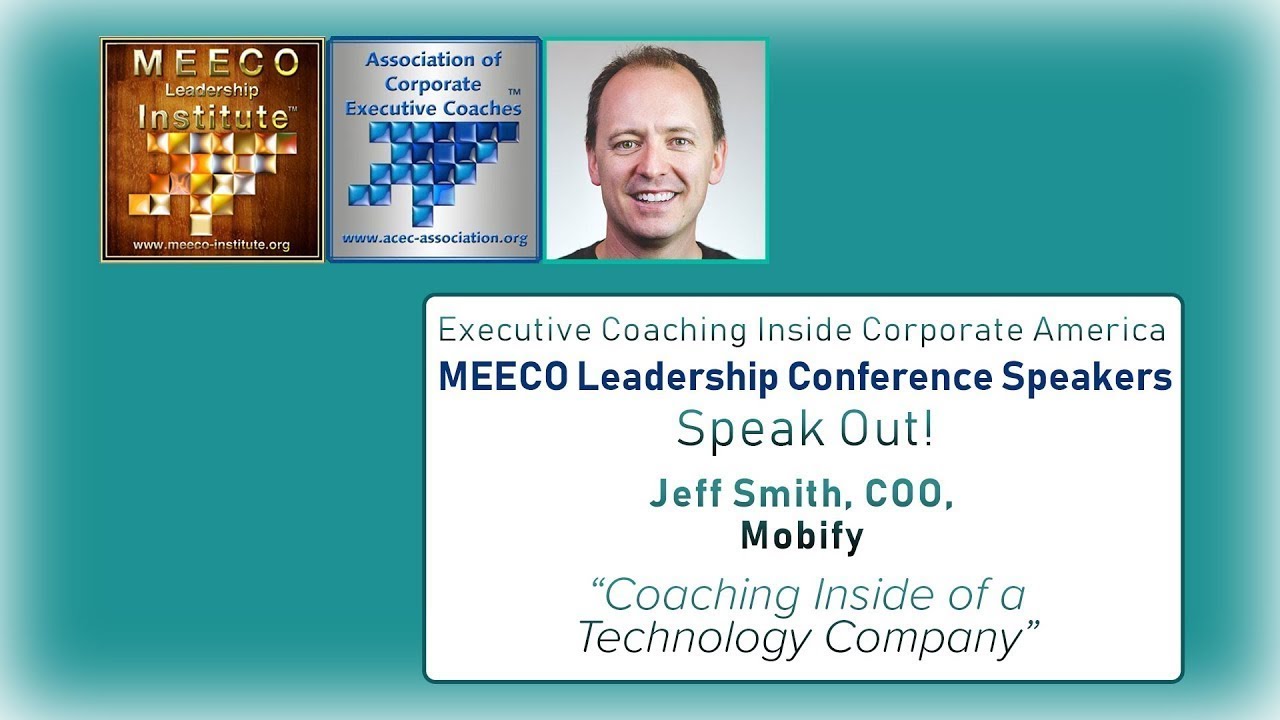
In this MECO TV interview, Jeff Smith, COO of Mobify, discusses how executive coaching is integrated into a technology company’s culture and how his personal practice of yoga and meditation informs his leadership style. He explains the importance of confidentiality and trust when a senior leader also serves as a coach, and describes the blending of coaching and leadership roles, emphasizing presence, questioning, and empathy. Smith introduces the concept of "supporting lines" as an alternative to traditional reporting hierarchies, and how disruptive behaviors can be harnessed for innovation and employee engagement. He details his use of yoga (including teaching classes at work and in a public studio) and Metta meditation to improve negotiation outcomes and emotional regulation. The conversation moves to professional development tools for coaches: mentor coaching versus coaching supervision, the value of feed‑forward, coaching triads, and how internal and external coaches can stay aligned through common language, methodology, and thoughtful pairing. Finally, Smith shares practical advice for maintaining coaching quality across the organization, balancing internal and external resources, and fostering a service‑oriented mindset across all roles.
Chapters
So Jeff, welcome to MECO TV.
Thank you.
We're really excited about having our TV channel on YouTube, and right now we're interviewing the speakers for the MECO Leadership Conference. And hopefully you'll talk to us about what you're speaking about without giving away the whole can of wax because we want people to come. But I'd love to know a little bit about you and why you decided to speak at this prestigious conference and just a little bit about what you're speaking about to entice people and tell us what you do. And I'm so excited. First, why don't we start with your name, your company, and what you're doing now?
Sure. So, uh, that's all— that's— there's always lots of things I think all of us are doing these days. Uh, so it's Jeff Smith. My my main role is the chief operating officer at Mobify. Mobify is a company focused on retail and e-commerce providers, and we help them with their excuse me. We help them with their mobile front end customer experience. The the other things that I do, I I'm also an active executive coach. So I coach people inside our business. I coach people outside our business. The majority of the coaching I do is inside, and right now I'm coaching between. 25 to 30% of our company in a given point in time.
Wow.
That's been— yeah, it's been really an amazing, amazing experience. I think it's been helpful for people here, and I know for me it's drawn me deeper to the people I work with than I've certainly ever experienced before. Um, it's been great to have the executive coaching background to, to actually to do that. So I'm drawn to—
Wait, I have an important question.
Yes.
How do you get people to trust you as a coach when you're actually the CEO?
Well, I guess that must be one of my superpowers. I think the big thing, it's really important. Confidentiality is super important. And I start every coaching session with that, even, even the ones where I've been coaching people multiple times. So I think it's a combination of them having that trust initially, and then me using that, you know, effectively and respectfully. So I think that's the biggest thing is creating that space for them as a coach. But then also, yeah, going to my day job, and it's, there's different types of confidentiality. So part of it is just the trust that they would have. And the other things are actually when you're the COO, but you actually know some things through coaching, but you can't use them as a COO. That's often tricky as well. So that's, I mean, that's, that's a little bit of what I will talk about. I mean, I have more than enough content. I think I won't give it all away right now. But yeah, I mean, that's some of those situations. That's exactly some of the things I'll be talking about at the MECO conference.
Okay. So tell us more.
Okay, so the the other thing I guess for me is if you look at the role of an executive coach and then you look at the role of a leader, I think what's happening right now, at least my experience as a leader with a couple of decades experience across technology and across you know different heavy industries, I think those roles more and more are blending. I think that there's there's the best of both that I think each can bring. So what I really what really draws me to Miko is. The, the fact that there's a full respect for that degree of executive presence, not just an experience, not just the fact that you got a coaching designation. And I think the flip side is true as well. I think that a lot of leaders can use a lot of the benefits of a good coaching conversation every day. So things like presence, asking more questions, not making assumptions, some of those basic things we have to do as coaches. I think all leaders can do that a little more.
Yes.
Yeah, for sure. So in terms of the, you know, the other things that I'm up to, I also, I do a lot of speaking work. One of the things I talk about is the fact that throughout my career, and I think for a lot of leaders, I like to see supporting lines rather than reporting lines. And I think that's a really sort of core element of my leadership. And it's something that I've been speaking a bit about lately as well. And what I mean by that is that your role of, you know, your role as a leader is really to support the team, to try to find ways to get people to work together more effectively. And so those are versions of supporting lines. So really, instead of the reporting line org structure that people normally see, a supporting line to me is really a lot more functional and arguably a lot more the way that companies get their work done than the silos that are in the traditional org chart that we often, that we often experience.
Would you say that your organization is typical of the new organizations that we're seeing now that use a lot of disruptive behavior?
I think so. I think my job is to sort of make sure that we are using disruptive behavior in ways that create innovation, create a culture that people want to work in. Ultimately, what my— I'm really passionate about employee engagement. I feel that we spend more time with people we work with than we do with our families. And so it should be, it should be a much better experience than I think it is for a lot of people. So yeah, we do a lot of disruptive things around that, but it's not even— I mean, there's lots of tech companies that do, you know, there's all kinds of different accoutrements people have in the office. But for us, it's really about trying to get people down to, you know, are you growing? Are you growing in your role? Are you excited about what you're doing? How can we work better as a team? Because when we're achieving as a team, everyone's winning. So I think I think what's actually disruptive is we're actually taking some of these concepts that are more traditional and trying to bring those into a tech framework, because it isn't all about ping pong and beer at 2 o'clock in the afternoon. I think people want more.
That's interesting, because we on the outside of technology companies think it's all Google-esque, and all you do is play badminton and bring your pets to work, which I'm all for, by the way.
Totally. As long as you're getting stuff done, right?
Exactly, exactly. How do you find that coaching works with— now I'm going to tell a little bit of your secret. I think that you're into yoga.
I am.
Okay, so how does that relate to coaching?
Well, I think in some ways it's, it's changed. It's been, it's been a big part of changing who I am and how I operate. And I think that that's created much more fertile conditions for me to be a coach than I would have had, say, 5 years ago. So I've been doing yoga for quite a while. A couple of years ago, I had an experience that was really challenging and really leaned into my practice. And what that did then was I really, really opened up elements of compassion and other things that I'd never really used to their full expression before. And so I think it changed— that changed the way I showed up. I think that really changed then the reaction people were having to me. And then, so Jen Gervais Keane, who you know well, she's my executive coach. And so last year, she— we were talking about the fact that my whole leadership team is going to be new in role and that coaching would be something that I really should double down on. So I guess about a year and a half ago now, we embarked on, you know, form— really formally getting executive coaching to bring together all of the things that I was doing work-wise. But what I noticed as I was doing it, a lot of the elements of yoga philosophy are very central to coaching. So compassion and empathy, like, they're similar things. So a lot of people think about yoga as, you know, tight pants and mats and, you know, hot classes and everything else. But yoga is more a philosophy. So to me, I'm in a yogic mindset 24/7, and I think that it's very conducive to being a coach. A lot of the things that we did, like the personal groundwork and the other things you do in a coaching program, were all very familiar to me because they were things that I had gone through in my My— in sort of yoga philosophy and a lot of the teachings. They're very, very similar things. So it's really infused my leadership. And then a funny story here was then I get into Mobify and we have yoga at the office.
Really?
Yes, we have yoga at the office. And so what happened was we went on a staff retreat and we didn't have our yoga teacher with us. And so they asked me if I would teach and I said, sure. So I went to my teacher and I said, can I do this? Like, can I just start teaching? He was like, yeah, go for it. So I prepared a class, I did it with my teacher, and then, uh, so everything was good. And then I went and delivered the class. People asked me to do another one the next day. So we did, we did a couple of yoga classes on our company retreat. And then when I got back, I taught a couple of other times and then people asked me if I would have a regular class. So every Friday I was teaching at work. So that was pretty, uh, that was pretty disruptive.
Yes.
That's transitioned. So I still teach at work, but I've also been asked by my teacher to take my class to a studio. So what's really crazy is that I actually on Friday mornings teach yoga at a studio in Vancouver called the Dharma Temple. So it's, uh, to me, it's, it's a very important thing. It's a thread right down through all my leadership, all my coaching, everything. I mean, everyone has different ways, so it's not— I don't, I don't think you have to be a yogi to be a coach, but I think that, um, being a great coach makes you a better yogi, and being a great yogi really, I think, makes your coaching, uh, quite a bit better. At least that's my experience.
So I'm going to admit to being very naive and very prejudiced Because in my head, classic, a man doing yoga who's also a leader in a technology organization, it's just not gelling in my head.
I've been doing it my whole life. It's okay.
I know when I first met you and you had a yoga symbol for your logo, I said, what the hell is this?
Totally.
How is it that, especially— okay, I'm gonna sound awful— men in your organization respect you as a yoga master, as a COO, and as a coach? How are you getting this all gelled together in their heads? And help me in my head too.
Yeah, so I think the first thing is, you know, I have moments too where if I go back and think about how I was as a leader 5 years ago, I think there's elements that I still do that were things I did well then. And there were other elements that were probably more traditional, like alpha male working in companies and trying to move stuff forward and having, you know, ambition. And while you're trying to focus on the team, you always had something you're working on. I think what the yoga did for me was it helped me really embody these principles. So it's not just a practice that I do, it's part of my ethos, as is coaching, as is being a COO. So I think the big thing is that it's the integration of all those things into you as a person, into how you show up. And I think that they're so different that when people see the consistency across each of them, I think that also really helps. So, you know, ultimately all 3 of those— an effective leader, an effective coach, and an effective yoga teacher— they are all people that are of service. So it really starts there. And so that's the fundamental essence of my practice. And I think that when, you know, I have, you know, some of the men here, they come to my yoga class and we have a yoga class that my teacher actually teaches here at Mobify on Mondays. Often it's all men in the class.
So it's really interesting.
Wow. Yeah, so we actually call it broga because it's all dudes. Not all of them are like that. I mean, we have, we obviously have a lot of women in the office who do yoga as well. And depending on when the class is, if it's early morning, midday, after work, that sort of thing, you can get a different level of participation. And even when I teach at the public studio, I've had classes that are all men, and I've had people from work that have gone to that class. I've had people that used to work at MobileFi that have gone to that class. I've had classes where it's, you know, all women. It really varies. So I think there's a lot of different people that are practicing yoga. To come back to the question on how people respect it, I think when you have all the experience and you have some of these teachings just kind of coming through you, when you spend a lot of time being immersed in it, you have a lot of wisdom. And at least that's the feedback I get. So people tell me I have wisdom. You don't always feel— you wonder yourself sometimes. But I do, I mean, I have to be honest, I do catch these moments where, you know, I'll be saying something or I'll be teaching yoga at work or something and you're just, it's a little bit of an out-of-body experience. You're like, you know, how did we get here? But it's, uh, it all makes sense. And I think that's because it all makes sense to me and because I'm able to embody that consistently. I think that's why it makes sense to other people as well. And then when you, yeah, the way you show up, if you show up in service of others in all of those roles, um, then yeah, you get, you get a fantastic response. So yeah, it all makes sense even though it's all different.
So how do I get from men, seeing them in a boxing ring, to sitting on a mat and saying kumbaya? I just— I mean, how do you get past, you know, if you have a tough decision to make, you know, you're used to thinking of men as duking it out.
Right.
Whereas women are more seen— are seen more as having conversation about it, right? So all of a sudden now you have a man that's having a conversation about an issue. How does that all play out?
Right. So I think one of the big things is we all have a polarity. So we all have a male and female portion to us. And I think what yoga does is it gets people in touch with both. And so I think that's where you start to uncover different things. So an example that I would give is that I actually noticed a shift in my level of empathy when I started having children. So when we had— we have 3 kids now, and we first had kids, there was definitely a shift. And I feel like a similar shift happened when I really deepened my practice. And meditation in particular, I do different types of meditation, but the one for me that— and this will fit right into your stereotype of the male executive.
I know I'm going to get a lot of flak from this.
It's all good. So one of the meditations that I really like is a Metta meditation. It's often also known as a loving kindness meditation. So one of the things that I can walk you through is how that could help you in a really difficult negotiation.
Okay.
Yeah. So we had, we had a financing we were doing about a year and a half ago. And as part of that, we had a couple of points that were a little contentious. And so one of the meetings that we had before the meeting, I knew it was going to be a contentious meeting. And so loving kindness or metta meditation, what you do is you actually focus on self-compassion and then you work out toward compassion for others. And you start with people that you really care for and you work towards people that are creating some frustration for you. And so what I did is I actually did one of these meditations and I pictured the people that we were going to go have this ridiculous negotiation with. And it actually really helped. It actually helped me be calmer in the, in the negotiation. I think we had a better outcome. Because in that situation, to your point, there's, you know, there's the duking it out boxing ring equivalent of the business deal. But when we're sitting down to hammer out the deal, it's like, you know, these, these guys are their husbands and their fathers and they do all the same stuff that I do on the weekends. So when you actually, when I meditated on it, I could picture those people doing things that weren't just being difficult with the terms of a contract. And that really unlocked something for me. Like I found the whole experience to be totally different. It became much less personal.
Yeah.
Um, I was much less frustrated. Um, my anger level was lower. I was way, way more composed. And I think we got a better outcome as a result. So, um, yeah. And I think when, so then when other people on the team see you, you know, doing that, and I actually explained to them how, you know, they were like, wow, I thought you were gonna be more excited about that. And you explained to them why you weren't, it kind of blows their mind. And then their next question is, okay, so what was that meditation called again that you did?
So you're, you're like a Jedi Master.
I don't know. Sure. Your words, not mine. I think, I think a true Jedi Master would never, never say that they were. I think there's always lots to learn.
But— Well, I'm picturing in the middle of a heated finance argument, Yoda.
Yeah, it's super helpful. Like, it's— and that's really transformational for me. Because, you know, 5 years ago, I would never have had that gear. That's a new That's a new skill and it's really profound because you're connecting with people on a human level. I think that's, that's the— again, that's a similar thread that's through all of these things is you're connecting with people not based on their job or whatever meeting you're going to have. You're connecting with people.
So the opposing side— I hate to even say opposing now because it's friends— were they caught off guard? Did they ask you what was happening?
I think it was a style of meeting where I knew it would be like, we've all had those meetings where the other person's tactic is to get you excited, to get you off your game.
Yes.
So they kept trying and it didn't work. And I think they thought from a previous meeting that I might get more agitated than I did. So, and I was, I just really wanted to make sure I stayed composed and we stayed focused on what we were talking about and got to the right outcome. And I didn't want to get drawn into the, to what I believe they were trying to do. I don't know what they were trying to do, but that's what it felt like.
The drama.
Right. So I was able to kind of stay above that, and I think it actually helped them as well. I think it actually helped them also stay calmer too. So that's why, you know, it's cooler heads prevail, right? So we— I think that my meditation actually helped all of us stay a bit more chill and get the deal done.
Would you recommend this for coaches? Because I'll tell you, these days we are dealing with some very challenging coaching assignments.
Yes, I would. And I think that it's Contemplative practice, there's so many types. Some people, they find when they run, they get the same sort of thing, because when they're running, they're just focused on running. For me, it's meditation, it's yoga. So really, it's being in tune with your physiology. So for me, I carry tension in very specific places, and I find that coaching gives me a lot of energy, but sometimes if it's a really difficult, challenging session, or if it's a session where I feel like I could have done more and I just didn't quite get it—
Mm-hmm.
That, that those sorts of things, like, I can walk away with a bit of energy. So it's either I've taken a bit of the person's energy, or it's something where I just wish I had maybe done something a little different, and it just— I could have taken it down a different path, or, you know, maybe if I asked that question. So, you know, sometimes maybe some second-guessing. I find that I'll carry that. So this is really good for me to kind of work that through. And then I find that my coaching is way better if I'm doing my practice regularly. So I try to do daily practice. And I find that that really, like, I start my day with the practice and then I go into my day in a service mindset. And I think that in all 3 of those roles, that really helps me. Um, and you're just more receptive. So I think for me, in all those roles as well, being receptive to people and how they're feeling is super important. And, uh, so yeah, I'd recommend it to coaches and leaders. I think there's a, there's a lot of studies being shown now around what meditation can do, for example. And how whatever you do to get into that meditative state, whatever type of meditation you practice, there are benefits, but they're also very specific benefits. So metta meditation, while that would be good for cultivating compassion, there's other things in mindfulness or what's called vipassana where you're just paying attention that actually is just good. It really helps with your listening skills and just really being aware of cues. And so yeah, I think if a coach— if I was to talk to a coach about this, I've had the conversation with leaders.
Yeah.
Um, yeah, I think there's a lot of, there's a lot of elements of contemplative practice that are very beneficial for coaching traits and techniques and things that you do. And yeah, I think that the two, they just go hand in hand to me. Like a really effective coach is probably a yogi, even if they don't practice it, they're already in that yogic mindset.
Well, I think there's two areas that I'm thinking of specifically. One is an area that we all deal with and prefer not to And, and that's the issue of transference that happens during, you know, any service kind of profession, right?
Yes.
That we need to be careful of this. And so I wonder if yoga could help with that particular area. And the other area I'm thinking about is something that's coming here from abroad, which is coaching supervision.
Right.
And I, as I'm learning, I was totally against it, by the way. Typical American, right? In the sense that, oh no, we don't want that. That's for psychologists and we don't want to be ruled by it. But I'm starting to understand that coaching supervision is really what we accept as peer-to-peer coaching.
Right.
And not everybody is fortunate to be a member of the Association of Corporate Executive Coaches because number one, It's very difficult to get in. Uh, 2, you have to be at a master-level coach already. So there are not a lot of coaches out there that have somebody that they can turn to for peer-to-peer dialogue.
Right.
So how do you see— oh, and the other thing that I'm learning is coaching supervision, uh, the word supervision is really sort of a misnomer because I have always thought of it in terms of a blue-collar position where somebody is watching over your shoulders and directing you.
Right.
So, you know, as I'm finding out more about it, it's not that. It's really about having a peer that can say to you, take a look at how you're coaching, what you're coaching, what's coming up for you, and what's coming up for the coachee.
That's right. Yeah, so I think, yeah, those are 2 areas where I think, I think yoga, yoga definitely would help with the transference. Like, I use it for that. So I have, I find 2 things challenging that yoga helps with. So the first one is just that if someone's going through something super difficult and you have the conversation and there's a lot of emotion, it's just, as a caring human being, it's really hard to not have a connection with that, right? It resonates with us.
Yes.
The key is to figure out how to not get to the point where then you start to pick it up, right? So it's more how do you help them get through it first? So the challenge there is how do you work that energy through? And so I think for me, yoga definitely helps with that. And also I've meditated to reflect on the fact that while I care about this person, I really want them to kind of get through the situation, they do need— it's their journey. They need to get through it.
Yes.
the entire world one coaching session at a time, but I can let one person explore something new. And sometimes it's even like, you know, you have one of those questions where you really, you, you can create the emotion. You didn't do it intentionally, but you've asked a question that really gets at the heart of the matter, and then there's a release of emotion. So those are difficult as well.
Yeah, trigger.
So that is something that I think, uh, helps. And the other thing that I find is that just the The concept of being of service to someone also helps me with the way I follow up with people, and the way I pursue things in coaching, like staying out of the trivia of someone's life, and really just coaching the situation in front of me.
Well, that's important. I love that.
Yeah, that's another one where I just— it's the composure, and just remembering what you're there for. So, I'll often meditate in advance of a day. I'll meditate, and I'll bring to mind the people that I'm going to be coaching that day, and especially then, Like, you go into that then in, in service of them, and you understand that sometimes being of service to somebody means that you have to kind of let them work it through and not pick up the load for them. Like, they have to, they have to, they have to get through it.
I find your definition of being in service interesting. Hmm.
Okay. How so?
Well, I mean, I guess a lot of people, a lot of people use the term in service to, without having a clear understanding of what it means. So just to have your definition of sort of saying, you know, I have to understand it's their journey, and my goal is to help them see various paths through their journey. That's it.
Yeah, totally. And holding them capable of being able to walk it, right?
Right.
You're always there for them. I think the biggest thing as a coach is that if they know that you're there, it gives them courage to go forward, but it doesn't mean you have to be there next to them at every step.
Yes.
I think that's the big thing, because what's most in service is that, you know, at some point they have gotten through this and they've built some resilience that the next time they get the situation, they're able to take it on differently. In terms of the second part, mentor coaching. So the program I did at Royal Roads is amazing. We had a lot of mentor coaching, and I think that's a better term probably for supervision, because I'm with you, like when I hear supervision, I picture a boss. And I have a blog post that I've called I Hope I'm Not Your Boss for the reason that I don't associate great traits with what a boss is. I'm okay with being your leader, but please, if you tell me that I'm your boss, like my team here knows, they actually joke with me. They call me their boss. Like it actually bothers me. So for similar reasons, I think that you're—
Which sends you to meditation, right?
Totally. Yeah. If they want to send me off to the meditation room, they just start calling me their boss and I'm like, I got to go meditate. I'll be back in a minute. The, so the mentor coaching was great. I think it comes— one of the best terms I got exposed to over the years, and I've come across it seemingly at times where I really need it, is Marshall Goldsmith's concept of feedforward. To me, that's really, really powerful. So feedback is supervision and boss behavior. It's like, I'm going to pin you down for the thing that you did, and we're going to talk about it. Feedforward is mentor coaching. Feedforward is, I hold you capable of being a great coach. But as your mentor coach, I'm going to sit down and listen to your conversation. And I'm going to, I'm going to ask some coaching questions. I'm going to provoke some thought. Like, you know, there's probably a couple of different ways you could have gone with that particular thing. Why'd you choose that one? What were your, you know, what were you, what were the factors that led you to go down that avenue? And other times I got, when I had mentor coaching, I got really good supportive feed forward on just the way I showed up in service of clients. And that really, I had my mentor coaches tell me like, Or very early on, like, that's your signature presence. Like, you need to really build that out. Like, that's your build on that. That's great foundation. And I think it's hard to realize those things on your own. So I think it's from a place of feedforward and making you a better coach. That's super helpful. And then also, you know, there's, there's a whole bunch of different things, a bunch of competencies, all these other things that we all train on, and everyone has different methods. But it's just helpful as well. Like, if you don't have mentor coaching, I think the risk as well is that you can develop some bad habits. So maybe there's a couple things where, you know, maybe, you know, I'm not as thorough on certain elements of coaching as I should be. And it's just good to have someone listen to the call once in a while. And so I try to do it once a quarter, and I have someone listen to one of my conversations, and then they'll give me some feedforward on, okay, this, this worked really well. This area here, I was interested in, you know, what, what led you down that path. And so we talk about my experience of coaching and the decisions that I made in the conversation, all with a view of trying to make me a better coach.
You know, it's interesting because I think, you know, you're from— it's weird to say Canada is a different country, but it actually is. I mean, we're going to have a MECO conference in Canada next year, and I have a dog, and I thought, okay, no problem. Then all of a sudden I realized we're crossing the border. I have to get different paperwork. Wait, how's going to Canada crossing the border? So my mind had to do all of this thinking, right?
Right.
I recently read an article that defines the difference between mentor coaching and coaching supervision. And, uh, you know, we're getting so finite here in the States, and I'm not hearing that it's happening in Canada. Here in the United States, one of the big organizations out there is defining mentor coaching as something that's done through this person who watches videos of what you've done and gives feedback.
Right.
Whereas coaching supervision is mere— is more of a colleague discussion that looks at your inner mind and the mind of your coachee. How do you feel about those 2 different Definitions.
So I don't think— it's interesting. I remember when I started doing mentor coaching, I had one mentor coach that really preferred strongly to just be on the phone, didn't want to do video. So they're on the call. The person that I'm coaching agrees to it. They know they're there. They know they're following all the same rules around confidentiality, ethical standards. Everybody that I did that with was super— they were like, I didn't have any coachees that said, no, I don't want to do that. And they all actually, they were, they actually knew that they were helping me be a better coach. They were actually supportive of it. I thought it was really interesting that she didn't want to use video, but she said that helped her focus. And I think also helped her kind of be in the background more than being right there on the screen. It worked really well. So I think for me, the most effective mentor coaching would actually be to have someone in the conversation. 'Cause I think that does a couple of things. One is if it's video recorded and they look at it after, that could still work, I think, but I'd rather have the person there 'cause I feel that. So it's actually like I'm coaching under— it's not necessarily pressure, but there's a little, there's something there. So you're coaching, you know, someone's listening. And so, um, yeah, it helps you focus, but you also want to stay loose and you want to coach the way you do. Um, I found those really helpful. I think we had like half a dozen and then I've done some others since.
Mm-hmm.
Every one of those, I got something really important.
I think that's consistent with the US. It's either by phone or somebody listening in and giving you or watching and giving you feedback.
Right. Yeah, just if we had a chat about coaching, we could do that as peers. I don't see that as mentor coaching necessarily. I see that as maybe more— it could be mentorship, especially if there's a real disparity and there's like a less experienced coach and a more experienced coach. So that's a, that's a different type of business coaching. It's not executive coaching, but it's, you're mentoring or teaching, you're into a different type. But true mentor coaching to me is someone is listening to your—
Yeah, that last part they're defining here as coaching supervision, a separate, a separate unit from mentor coaching.
Exactly. And so, yeah, to me, I think the mentor coaching, if that was encouraged, And, you know, I always think everyone has an aversion to things being sort of required, but I require it for me because I actually think even if there's no rules, that's something that I would want because it makes me a better coach. And I think I also have people— so we also did a coaching triad, which is a standard thing in any kind of coaching program. We're still doing it. So my program ended a long time ago, and there's the 3 of us are in the triad. We still do it on a monthly basis.
And it's—
that's been really helpful too, because in some of that, it's— we're getting coaching from each other. But we're also getting a little bit of mentor coaching there as well, because there are some things as part of a proper triad debrief where you're getting some feedback on your coaching. And, you know, most of that is from a place of support. But then there's also a couple of things too, where it's like, you know, my observation of several of your sessions, especially over time, is that you have a tendency to do this. What do you think? You know, what do you think that is? Why do you think you're kind of going down that road? So I find it really helpful.
Mm-hmm.
But it's got to be feedforward. I don't want anyone kind of pinning down and saying, you know, I violated, you know, capability or whatever, you know, 3-2i.
Like, that's—
yeah, that to me just— I don't know, that doesn't, that doesn't do it for me. The competencies are important, but I don't, I don't need someone to police my coaching. I think we need to hold— one of the fundamental things is holding people capable, and we should start with coaches.
So it sounds like you're— even though it's You don't call it mentor coaching, you're more in the camp of coaching supervision.
I don't like the term, but I think it's— I'm open to it from a professional development standpoint. Yes. It seems like requiring that is a good idea in some ways, but how you enforce that and stuff, I don't know. You just get into a whole other—
Yeah, I think once you reach a certain level in coaching, if you're a master coach, I think having somebody saying to you, no, you did this wrong, is not necessarily beneficial.
I agree.
Having somebody say to you, have you looked at this methodology versus the other methodology? Now that's something that sounds more respectful.
Right, exactly. Or also, I think there's good cross-pollination, right? Like if I watched one of your coaching sessions and you watch one of mine, we also may have something to offer. It could be a tool. It could be a thought, it could be an idea, right? You know, I read this book. Like, I think there's things that would make the— I think mentor coaching done the way we're describing it would probably be more— it'd be beneficial for the whole coaching profession, actually.
Yeah, I totally agree. So the coaching that you're doing inside the organization, are you the only coach?
So I'm the only full-time, like, the only sort of credentialed coach that's full-time employee. So Jen does some work with some of the other executives as well. Jen Gervais Keane. And we have some people in-house. One of the things I've done internally is I've actually done some sessions trying to expose coaching, sort of the competencies and some of the approaches and some of the mindsets to our entire staff. So we've done, we've done multiple sessions with that where we walk people through what coaching is, what it isn't, and then had people do triads. And the goal there was really to get people into a mindset of coaching and how you show up in a coaching conversation. And also encourage people to go try it in their one-on-ones. So go try it and see how it goes. And if you get stuck or whatever, come find me. Like, we'll, we'll talk about it. But I think a coaching conversation is actually what a good one-on-one conversation is supposed to be, rather than a dump-off of a whole bunch of tactical stuff. A true coaching conversation and a one-on-one should be very similar. And so that, that's been quite successful for a lot of people here. They've really found a new gear in their leadership because of that. So in terms of what I do, I coach pretty much director and up, with the exception of some of my executive peers. I think we have coaching conversations, but they're not— I'm not coaching them formally per se. I coach— I have— I used to have office hours and people would come to the office hours and then we would just talk about like stuff. A lot of them ended up in coaching conversations. So what I do now is actually have— there's 2 30-minute coaching sessions that are available. And people book in advance and they're usually, they're usually in demand and that could be anybody in the company. So that's, that's, I really enjoy those because it's, you're, you're talking to people from the top, you know, in terms of seniority all the way down to people that are just out of school. So I find those sessions really, they're, they're really powerful.
You know, I know that this conversation took us down a path that you weren't expecting.
All good.
I do have one final question that I think is, is a challenge for all organizations that use external coaches as well as internal coaches. How do you keep the coaches so that they're sort of on the same professional level? In other words, you might have one coach that believes in one methodology and Another coach that uses another methodology, using different assessment tools. How do you keep them aware of what's going on, understand the benefits of their tools, understand, uh, the value that each coach is bringing?
Yeah.
And how do you keep the coaches informed in terms of what the company needs, especially if it's a difference between an internal and an external coach? Because the internal coach is going to have access to more internal politics data than somebody on the outside. And I know I just threw a whole bunch of questions at you, but go for it.
No, there's a lot in there, but that's, that's okay. I'm good. I'm good with it. Um, so I think there's, there's 2 big things that stand out for me. One is the internal versus external and how you balance that. Definitely a dance. And I think you have to let things ebb and flow. So I think sometimes certain executives are more open to coaching. And sometimes I've had experiences where people think like, okay, I've done a bunch of sessions now, I think I'm done. Okay, so you have to kind of give them space, but then gently go back and encourage them as an inside coach, even if it's not me. I do think actually this is beneficial. And coaching doesn't have to be like something you do when the wheels fall off the bus. Like, it's, it's something you can do. Like, I do coaching every month. It's set with Jen, and we do it month in, month out, like all the time. And if I need an extra session, it's like, hey, Jen, can we talk? Because I do have something that kind of came up today. So I think the first step is just making sure that whether it's internal or external, the— I do think that every coach has their own style, but there should definitely be an alignment. There needs to be a mindset alignment of how you're going to do that. I think when it gets into tools and things, we got to be careful is that you can get into— you can create confusion. So I do think it's important that There is a common language. So if one coach has got a completely different way of talking about something than another coach, that's going to confuse people when they're in meetings together because it can be really hard for them to do work, especially if you go the full extent and you get into— so this, like the Supporting Line stuff I do, I have a very specific way that I do things around planning and how you take the plan and then get into execution with a team that is cross-functional. So they're not— there is no formal structure. So it's how do you put Just enough formal structure, mutual understanding, and commitment around that so the team can be successful, so that you don't just have people kind of spinning around. But if I have that method and then another coach has another method, then that's just going to be really crazy. So I think that, you know, it's less about which method's right, but that the group, the coaches as well as the executives, settle on what the method's going to be. Otherwise, that's good. That's going to be just total chaos.
Mm-hmm.
And then I think it's just let— give people some freedom. So while you want to have common methods, I think it's okay that coaches are different. I mean, I have— I think what I would try to do— so I go back to some pro bono work I did with a group of coaches, and we tried to align the coaches with the people on the sort of client side in a way where there's gonna be really good personality fits, really good style matches as well, energy matches. So if someone's really intense, And someone's really calm and quiet, depending on what the coaching conversation is, that could work, but it might not as well. So it's good to be mindful of those pairings. So if you have a similar methodology, some alignment, and then you are thoughtful about what coaches are working with what people, I think you can have a lot of success. And it really shouldn't matter whether the coach is inside or outside the company.
Well, thank you so much. I really appreciate it. I am definitely looking forward to hearing Awesome. I'm also looking forward to how our coaches will challenge your conversation. So, you know, get prepared.
Okay, great.
Thank you so much, Jeff, for giving us an insight into what's going on in terms of internal coaching, external coaching, yoga, and technology.
Yeah, we covered a lot of ground. Thanks, thanks a lot for having me. I really appreciate the chance to speak with you.
Thank you. Have a great day.
Okay, see ya.
Bye now.
More from CB



211- Courage to Leap & Lead with Louise Story part 1Courage to Leap & Lead







