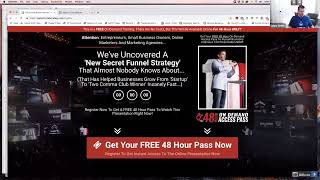
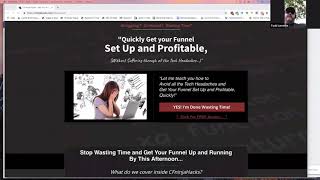
Funnel Foundations
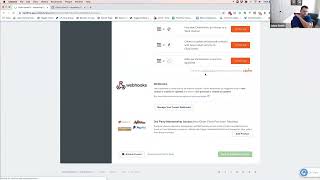
Live recorded session presenting an introductory, practical course on "Funnel Foundations". Jaime Smith emphasizes starting with a blueprint—defining audience/avatar, offer, and delivery method—before building pages; demonstrates backing into pricing (example: a $997 course), using the Perfect Webinar framework (domino belief, secret 1/2/3), and choosing delivery tools (Zoom/GoToWebinar/WebinarJam, ClickFunnels, email autoresponders, Stripe/NMI/PayPal). The session includes a niche example (yoga studio owners), a tool-by-tool rundown (domains, logos, webinar platforms, autoresponders, payment gateways), and live Q&A about ClickFunnels integrations and notifications.
Chapters
This will probably be a little bit different than any other course that we've been through. One, we're doing this live. Two, it's me and I tend to just kind of roll with things, right? So we're gonna, we're gonna kind of get this thing kicked off and we're gonna go, so just be aware of that. But, you know, so it's not gonna be super superficial and it's not gonna be a bunch of slide presentations and going through all that. We're gonna kind of talk through the beginnings of funnel foundations and the biggest issues that I see people go through and the biggest struggles. And we're going to kind of roll with that and kind of set that plan and that foundation for your funnels moving forward. So some of this may be review for a lot of people, but it's good to make sure that we're all starting at the same point, at least have that same base of knowledge. And then we'll move into. Throughout the course of the next eight weeks, we'll move into more of the offer creation hook story offer more of the marketing psychology that goes into your funnels and how to set those things up. And. And then we're going to move into actually jumping into clickfunnels and building your funnel and going into the details of that and getting into the nitty gritty and throughout that process. Then we'll build out several different kinds of funnels and show all the tips and tricks along the way for that. And then we'll jump into the more advanced stuff, the custom JavaScript, custom CSS, things like that. They're going to help you make better funnels and serve your business as well as your customers, businesses at a much higher level. So that's kind of the plan going forward. So as we go in these sessions, I've kind of got things laid out. It looks like Aaron's on as well. Good to see you. So if we could just kind of take notes and as you have questions, I'll make time to make sure and answer everybody's questions as we go through. And we'll probably definitely have a Q and A session towards the end of every session so we can make sure everybody gets all of their questions answered and want to, you know, provide as much value as we can there. But I'll just ask, kind of as we have everybody now, if everybody could kind of keep their self muted. And then I'll stop every once in a while and just see if we could have. If anybody has any questions we can cover before we Kind of move into the next segment of the training. So. So we've got quite a few people on, so it's good to see everybody. And so we'll go ahead and get started. Just so you know, these sessions are being recorded, so all the recordings will go into the members area as well. So you'll have those for the long run. And then also any of the live videos and stuff like that that I'm doing in the Facebook group, I'll try and pull those down and put them in the memories area as well. So you'll have kind of a simple place to grab all of those things. So like I said today is we're going to be covering the funnel foundations. And the reason for that is that this is the biggest problem that I see for people that are coming in, especially coming in new to click funnels, but generally coming into all kinds of software brand new, is they come in and get excited by the belief that, hey, funnels is the answer to my business problems. I just need to jump into clickfunnels and I need to start building the page. Oh, that one looks nice. Let me click that button and I'll start building on that. And then they get halfway through the process and they're like, oh, crap, how do I do this thing or that thing? Or hey, I build out my sales page, but how do I add an order form to it? Or I build out my order form, but how do I, you know, how can I add my one time offer? They, they go in and they don't really have a plan for what it is they need to build or they build out. You know, I see this question come up all the time. It's like, I built my order form but it doesn't, doesn't show me where I can change the price of my product. It's like, well, you didn't have a plan for what you needed, so you missed out on a bunch of pieces because you just jumped in and started building. So the first thing that everyone should do when they're coming in to start with their online business in general, but especially with funnels, is make out that plan of what it is that you're actually selling. What is your offer going to be? What kind of funnel do you really need? And then map that funnel out. So by the time you get to click funnels, you already have a map of what it is you're going to build. It's just like if you were building a house, you're not going to go down the street to Home Depot, buy a Bunch of hammers and nails and a bunch of lumber and start nailing stuff together. You're going to start with laying out a blueprint of what it is you want to build. And you're going to start that blueprint by saying, okay, well what kind of house do I need? Do I need a three bedroom house, two and a half baths? Does it one story, two stories, you know, three car garage, Two car garage. You're gonna, you're gonna figure out all those, all those things before you ever get started. Otherwise you're gonna build something that's not gonna work for what you need at the end. So that's the biggest problem that I see people have is that they don't start with that kind of foundational blueprint. And so those are important things to go through. And you know, one tool that I use just to go through and kind of do that blueprint, one is, is thinking through. And I'll share my screen here in just a moment. But you start with thinking through the important piece, which is, okay, who am I serving here? Who are my customers and where are those customers at? Because at the end of the day we can all build fantastic funnels, but if we can't figure out how to get people to those funnels, then what's the point? And then so you start with, who are my customers that need something and how can I solve their problems? What is the problem that I'm trying to solve? What value can I provide to them and how do I get in front of them? So you need to understand who your audience is, what your avatar is, and actually go through and provide kind of an avatar checklist, the things to think about. And a lot of you probably already have these sorts of things, but it's something important. If you don't already have one, we'll create an avatar checklist. I'll put that in the members area as well. That lets you go through and say, okay, let me define out who it is that I'm trying to serve and what value it is I can provide to them. Because that's going to help you figure out where do I get in front of these people at. So that's some of the core foundation that you start with. Because a funnel is not just a series of pages. A funnel starts with your traffic and you have to figure out, you know, a funnel does no good if you don't have something to pour into it. So a lot of people will look at your funnel and say, well, this funnel doesn't convert and, and it's not really, because they started and they're looking at just the series of pages. Well, the series of pages might not convert with a particular audience, but if you don't start with who's my audience and build the funnel towards that audience, then, yes, it's very highly likely that funnel will never convert because you haven't taken into consideration who is it I'm trying to serve and what value is it I can provide to them to start with. So that's something to always look at when you're. When you get started. It's like, who is my audience? What value can I provide? And then from there, I tend to like to start with like, okay, great, I can provide this value. I can provide the solution. I want to do it in this direction. I want to build a course or I want to. I want to. If it's E Comm. I want to create a T shirt or I want to create a, you know, handmade bar of soap or something along those lines. Like, figure out what is the value that you're going to provide and then start thinking about. In fact, Russell does the same thing. It's like, every business starts with think about the name and think about the domain name and think about the logo. Those things aren't necessary to start. You certainly don't have to do that. But I feel that it gives you a little bit of creative juice to get going. And, like, honestly, the CF Pro Tools logo that I had created is what brought to my mind the CF Code Lab in the first place, because I worked with Jake Leslie to build the design for CF Pro Tools, and he built this beaker with the code thing in it. We kind of talked through that, and I'm like, man, I want to change the name on my business to cfcodelab just because the logo looks so damn cool. Sometimes that gets that creative juice flowing just to go through that. And it's an easy thing to do. What you can do is go to a couple things. I'm going to share my screen here real quick just so I can make some notes on the screen as we go. Let me grab my right window here. Okay. You guys seeing my screen? Okay. If I can get a quick thumbs up, that'd be great. Okay, awesome. Okay, so get on the right monitor here. So one thing that I start with is with Logo one, you can go out and hire a fantastic logo designer. Aaron, I believe that you fall into this niche. I know you've. I've seen Liz talk about, you know, hey, guys, if you're in the Val, Accelerator. You need a logo, go talk to Aaron so you can go find somebody that's really good at doing logos for you. If you're kind of strapped and you need just someplace to jump off, you can try Graphic River. Honestly, I think. Let's just pull it up. I think it's graphicriver.net but it's been a while since I've been there, so let's just do the. Yeah, there we go. Graphicriver.net you can go in here and search based on your niche, based on all kinds of things and kind of find some really cool starting points for logos and that kind of gets those creative juices flowing and, you know, think about things like names for your business, like what is the value in it? And so I like to use Graphic river at least to get the, you know, the creative juices flowing in your brain. And you can pick tons of logos in here. We could search for logos. You can go through popular ones and you know, they give you all kinds of kind of branding ideals along this and it's kind of a cool way to just kind of start thinking about things. So that's one route to start. The other thing you can do is if you know, if you're short on cash, you can go to Fiverr and search for logo jobs. There's. I've actually had some really, really good success with Fiverr, finding really, really talented designers. And you might be able to pay 25, 50, 100 bucks to get a really, really good logo designed. I wouldn't use that as a long term solution, but if you need something quick and easy to get you started, then that's an option to go to. So just a couple tools to think about along that vein when it comes to just getting started with the things that kind of get you started heading in the right direction. Logo design, something that's pretty cool to get laid out. The other one is domain names. And so you can actually go to. The one that I use the most is namecheap. And namecheap will, you know, it's got a great search. It's like nine bucks or something for your domains. They include privacy in the domains and it's now unlimited privacy. So every year you renew your domain, you get domain privacy with that. So that just means that you're not going to start getting a ton of phone calls and you're not going to start getting a ton of emails from people that are trying to spam you their services. That's one of the reasons I really like Namecheap is they include that domain name privacy along with every purchase. And so that's a good one. Looks like we got a chat coming in here. So cool. Yes. Awesome. Jeremy says, love namecheap. Yeah, absolutely. I use namecheap for almost all of my domains. I still have some old ones that are in godaddy but godaddy is a lot more expensive and I believe they may now include privacy in their domains. But they didn't used to, so I kind of shied away from them over time. And so, you know, you can go in here and just start searching for domain names or keywords that are related to the audience that you want to serve or the business model that you want to serve. And so those are important. And then thinking about that business name, kind of what you know, the domain names available, that is available will help sometimes craft the course name you're creating or the business name that you want to use. So it's important as you're thinking through those things to do them kind of in tandem, the business name as well as the domain name. And if the domain name is available, that's super awesome. And I've seen a lot of people do this and it's actually well worth it. If you know you have a business ideal that in the long run is going to be extremely profitable for you, you can go and buy premium domains. And I see the ClickFunnels team do this quite a. If they've got, if they've got a product idea and the name that they want to use is taken, don't necessarily count that out. There are ways to go to people. A lot of times domain names are taken but they're not being used at all. And people would love to offload those for an extra couple hundred bucks or five hundred bucks or one thousand bucks. And if you've got a product that you know that, hey, I'm going to be able to turn this thousand dollar domain name and turn it around and make $100,000 course out of it, then that purchase was well worth it. So you don't have to start there, but it's certainly something to just don't say, well, the domain name is unavailable and so I guess I won't use that name for the business because if it's worth it, it's worth it. I've spent money to buy premium domains and I've seen Russell spend hundreds of thousands of dollars to buy. In fact, for mastermind.com if you watch that launch at all, the mastermind.com launch Russell actually has talked about, I believe he pa you know, more than, you know, a significant amount of money, let's say hundreds of thousands of dollars for that domain name. Just because it's like this is the perfect fit for what we're trying to accomplish. And it's easy to remember, it's easy to say, it's easy to advertise. So those things are kind of important. And that's actually a really good point. When you're looking at things like domain names, especially if you're going to be doing something like a live webinar to help promote your business and help promote your course, you want that domain name to be something that's easy to say, something that's easy to spell, something that doesn't have a bunch of dashes in it or numbers in it, or if it has numbers, make sure that you get both the number version and the spelled out number name version. So, like, if you were going to have the number 2 in your domain name, make sure you get the one with the numeral 2 and, and also tw o. That way when you say it and people type it in, they can actually go to the right place and you just have one redirect to the kind of primary one. Obviously, when we do online things, people are going to, you know, most often you're going to actually link to those things. But when you're doing live webinars, a lot of times people, and especially if you're using something like Zoom, like we are today, where it's not super easy to drop, just drop a link on the page where somebody can click the link. They either have to see it visually and type it in, so you want to make sure it's easy to spell, or you have to just say it out. Say, hey, go to clickfunnels.com go. Go to cfprotools.com go. Then it needs to be easy to spell and easy to say. And this kind of goes back to old radio days. If you ever. Nobody listens to the radio anymore, right? But it used to be if you were doing radio advertising, you had to make sure that you had a phone number, a business name, a website address that was easy to say and easy to spell because people couldn't see it. You're on the radio, all they could do is hear your voice. So you have to be able to speak it easily, clearly, and it has to be easy to spell. And so that's something to just keep in mind as you're looking at business names, domain names, make sure that it's simple and easy to spell out if it's available for 10 bucks, that's fantastic. But don't necessarily count it out if it's not. You can start to look at variations of that domain. Say if you wanted to use a business. Here's another, and this one goes back a lot of years. It used to be that when domain names really started becoming popular, a lot of the ones that you wanted to use, especially if you were doing things like the old style AdSense websites where you were going to put up a kind of a content site and run ads on it to generate revenue, a lot of those names were already taken. You know, you've got a niche like gardening. So it's like, you know, you're not going to get gardening.com but if you could go in and you could get, you know, gardeninghq.com that's still easy to say, easy to spell, and it has the keyword gardening in it. So it was super easy to buy. So you might look at something like gogardening.com or getgardening.com or gardeninghq.com so if your topic is, you know, funnels, then you could, you know, come in and say, you know, yoga funnels. Say you're going to, you know, create a course on teaching yoga instructors or yoga studios how to make more money by having a funnel attached to their yoga studio, either to sell courses, sell DVDs or sell people into coming in and getting up, getting an annual membership, then you're okay, so I'm going to teach people how to build funnels related to the yoga space. Then you might look at YogaFunnels. YogaFunnels.com in fact, let's just look and see if it's available. If it is, we'll just go ahead and buy it. It's probably not, but you never know. So we'll look at Namecheap here and see what it says. Yes, it is taken. So then the other thing you can do is say, okay, well, let me just go to it. And hopefully it's not something inappropriate. But yeah. So yogafunnels.com there's nothing here yet. So it's possible that you could reach out to this person. Sometimes you can you. And what you can do is do a who is search and let's see if Namecheap. I usually use GoDaddy for the who is, but let's see if it's actually on namecheap as well. Who is guard? Who is lookup? Okay, so if you're looking up a domain and you're like, hey, somebody Purchased this. I'd kind of like to figure out who has it. Sometimes you can get some data around from the who is lookup. So if you scroll down to the bottom name sheet, this is also in GoDaddy. Pretty much every domain name registrar that registers domain names will give you this sort of tool, this whois lookup. And what this is is a way to go in and say, hey, there's a domain name. I'm interested in figuring out where it's being used, how it's being used, who owns it, and I need to be able to contact them. So you can type in yogafunnels.com and do a lookup. It's probably going to come up and ask me to either log in or no, it goes right away. So it must know that I'm not. So it's registered at GoDaddy. So we can see here. Okay, so the domain name is yogafunnels. Here's the domain ID is registrar, the WHOIS registrar, which kind of tells the rest of the world who holds this data, who is the source of this data. So GoDaddy is the source. It was registered at GoDaddy was registered and let's see, 2016. So it's been around a while. And so they always have to have an abuse contact email address. So this is if you were, you know, if somebody were to claim, hey, I own this trademark or something like that, then you'd be able to reach out to them in that address. You can see the status of the domain. Hey, it's. No, you can't transfer it, can't update it, can't renew it, can't delete it. Those things are all prohibited. It doesn't show an organization here. It shows you where it was registered in California. But this is probably GoDaddy's information. So select domain holder link at. Okay, so you can actually go. So they give you some details on where to get the registrant email. And so we could probably open that up and see what's going to happen. It's probably going to come in and. Yep. Want to make sure you're not a robot. So they're not spamming. And then here we've got a little bit more detail. Okay, so here we go. Oh, actually this is somebody in our ClickFunnels group. I know this guy. So you can kind of see. Okay, so fitbusinessfinance.com, okay, Rafael. So we get an email address. We've got an address. We probably have. Yep, we've got a phone number. So you could reach out to this person. If you really wanted this domain, you could reach out to this person and say, hey, I noticed you have this domain. It doesn't look like it's currently being used. Would you have any interest in selling it and reach out to them and find out? You never know. A lot of people are like, oh yeah, I meant to do this something with it, and I never did. It's costing me 20 bucks a year to keep it updated. Especially if it's a godaddy. It's costing me 20 bucks a year to keep it updated. You know, sure, I'd be happy to get it, you know. You know, some people go crazy like, oh Yeah, I want $100,000 for it and be like, dude, you're not even using that. I don't think so. I'll just call it yogafunnels hq.com and we'll move on. But some will be like, yeah, a couple hundred bucks and I'd be happy to let it go because then it's more money in my pocket. So something to always kind of keep in mind and same thing. It's like, okay, Yoga Funnels is taken. So, you know, maybe we call it getyogafunnels.com. that one's available. Okay, boom. Now all we added is a little bit to it. It's just as easy to spell, just as easy to say. And it's a little bit of a variation and it's available for 10 bucks a year. So kind of thinking through those things is important. And then from that you can say, okay, well now, because I have a domain that relates to my business, and I could just call my business Yoga Funnels or I could call my business, you know, something along that line. And now I have something I can use and I can feel confident in. I can say easily on a webinar. I can. It's easy for somebody to spell. I can be walking around town, I can be meeting somebody in person, I can call somebody on the phone, whatever, and I can say it easily. And they can get it and they can go and find it later and type it in and get straight there as well as, you know, obviously when you have links and ads and things like that, it. It just goes well. And then when somebody sees, you know, say they see a Facebook ad in their newsfeed and it says Yoga funnels in the domain, it just adds a little bit of credibility that, like, okay, yeah, this thing, it's not like some randomized URL string. It's not some bitly Link. It's not some. Whatever. It's like, okay, if they're telling me that they can teach me how to build yoga funnels and they actually own yogafunnels.com that probably, you know, is pretty legit. So, you know, having a good domain name is important to your business. So it might seem kind of crazy, like, hey, I'm going to hold up building the rest of my business until I figure out a good business name or a good domain name. But it really does kind of make sense and it lets you feel at ease, like, okay, yep, I've got all the pieces in place that I can move this forward and work with this, so hopefully that all makes sense. And then from there, you know, you can build out your logo and kind of go in and then, you know, secure that name and all your different spots. You can do all kinds of fun stuff with that. So those are some of the things that I look at when you're first getting started as, you know, just thinking about who is I want to serve and what kind of value it can provide. And then that will lead you into, okay, what kind of business name might want to attach this? What kind of product name might. I want to attach this. And then from there you work into deciding what it is that you're going to provide. And so let's open up the lines here and see if anybody's got any good ideas that they'd be willing to. And I don't even necessarily want good ideas. Any, any like, anything that jumps to mind. It's like, you know what, I'd kind of like to go down this rabbit hole. Any niches that you would think that you. You know what, it'd be kind of cool to see an example of how to do this in this particular niche, because what we'll do is we'll actually walk through and say, okay, if I'm going to think about a business in this, here's how I'm going to figure out where the traffic's at. Here's kind of the logo, and not when we probably won't get on the logo, but here's kind of the domain, kind of the name we'd look at. And here's kind of the value, the offer that we might be able to provide. And then let's map out what we can actually build around that. That is a good starting point so that we have that strategy, that planning session, that foundation for that business, and we'll run through. Anybody have any good ideas, we'll open up the line here. If Not, I'll just pick one, we'll throw it out and we'll go, Nobody, nobody. Going once, going twice, going three times. Okay, well, let's just go down this avenue because here is one actually. And I throw out yoga funnels. Not intentionally, just off the top of my head. One, because my wife is a certified yoga instructor as well as an orthodontist, but she loves yoga. So it's always kind of, we've talked through 100 different business ideals and that. So that's why I kind of threw that out there just off the top of my head. But let's actually drill down that path just a little bit. This is not a business that I've created. It's a business I thought about a little bit. But let's do the task of actually, let's think about an audience that like I talked about, the audience would be, hey, I know that as somebody that can help with marketing and funnels that I can help yoga studio owners make a better, stronger business utilizing online marketing and particularly with funnels and product creation, course creation, all kinds of things like that. The reason I know that is because generally yoga studio owners, unless you really can build a large scale studio, generally don't make a lot of money. In fact, I had somebody that as my wife knows because she's been to several different trainings with this person that owns a higher end affiliate studio of a large yoga brand. And she just posted in Facebook the other day and said that, man, she has really been struggling to keep her business afloat and she actually thought she was going to lose her business. And this is somebody that's attached to a very large name yoga brand. And so it just, it's like, okay, well it's as a yoga studio owner generally, and this is true of all kinds of practitioners, they get into something and do something because they're practitioners, because they're technicians, they're really good at something. Not necessarily because they're entrepreneurs. And that makes it really tough because generally then the business is not thought out to the point like how do I actually make money at this or make a lot of money at this or make it profitable? It's more like, hey, how can I. Yeah, exactly. Dan says the E. Myth. Dan, I keep seeing your name come up as Gene. So if I call you Gene, I apologize. So mentions the E. Myth and that's absolutely 1000% correct. If you have not read the book the E. Myth Revisited, it's a fantastic book by Michael Gerber and talks about that there are three types of people in a business, one is the technician, one is the manager, and one is the entrepreneur. And so most businesses are actually started by technicians because they're good at what they do. And they're like, hey, I can take my talent, my skill set, and I can serve other people. The problem is that businesses really need to be run by managers and entrepreneurs, not by technicians. Technicians are usually really horrible at being business owners because they generally don't learn and aren't good at the things that a business requires to keep it profitable and keep it afloat. And so, you know, that's what happens with yoga studio owners. So, like, man, I love yoga. I would love to be able to teach other people yoga. I'm really good at that. But they don't have all the other skills that come along with how to manage people, like how well in order to do this right, I have to. It has to be open more hours than I can work in a day. So I'm going to have to hire staff, and that staff is going to have to be trained and they're going to have to be monitored, and they're going to have to do payroll and we're going to have to do taxes and we're going to do all this other stuff that has nothing to do with owning a yoga studio. And they're miserable and they hate it, and because of that, the business suffers. And it's a passion project versus an actual business. So yoga studio owners tend to struggle financially because they're doing what they love. That might be enough to keep them somewhat happy, but it's never going to be super, super profitable unless they learn how to become an entrepreneur, unless they learn how to better market their business and offload those things that they aren't the greatest at. So, yeah, actually, absolutely. Dan says more technician. Most technicians end up creating a job, not a business. And that's absolutely right. We're all guilty of that. It's like, okay, I'm really good at this. I want to build a business. And then before you know it, you're working in your business, not on your business. And it's taking up all your time, and it never grows. You kind of get to a certain level and then you just. You're spinning your wheels. So I've had that idea many, many times. Like, okay, I know that this is an audience that I can serve. This is an audience that I can help. This is an audience that's passionate, that loves what they do. And because they are business owners or want to be business owners, many are like, hey, I'm a yoga teacher, but I want to start my own studio. But I don't know how to do that, or I can't do that because it's too expensive, or I don't, I don't make enough money to do that. So how can I jump in there? I know that's an audience that, okay, anytime, anytime there's, you have an opportunity to teach somebody else how to make more money, they will be willing to pay to learn how to make more money. It's just those are kind of the, kind of like Russell teaches, the three, kind of the three core areas that you can build a business around. You know, health, health, relationships and finance. So, you know, or health, wealth and fitness. So you can say, okay, if you can teach or not. Health, wealth and fitness. Health, wealth and kind of love. If you can teach somebody else how to be more healthy, how to solve their health problems, they're willing to pay for those things because when somebody's in pain and you can get them out of pain, they, that's valuable to them. If you can show somebody else how to make more money, save more money, build an investment, be able to retire early, things like that, they're willing to pay for that because that's a valuable thing. It buys them back time, it buys them a better lifestyle. And that's what most people looking for is freedom. So anytime you can teach somebody, especially in this case a yoga studio owner, hey, I can show you how to build a better business that's going to buy back your time and, and it's also going to make you more money so that you can actually enjoy the life that you've been trying to build and get more of the freedom that you've been looking for. It makes a super, super simple pitch. And then relationships, same thing. People that are in pain because their spouse left them or their spouse is cheating on them, or they just want to have a better marriage or they want to have a better relationship with their kids. People are always willing to pay for those sorts of things. There's always value you can provide there. So in this case, let's go down that funnel or that rabbit hole of, okay, we've got yoga studio owners. That's our niche. That's the area that we want to serve. And how can we serve them? Well, we can serve them by showing them how they can better market their businesses online, using funnels to get people to come in and actually join their studio. And so that's kind of the area. So it's in that wealth area that we're serving people, that's, you know, the overall. So you look at, when you're looking at, am I going down the right path? You need to start with one of those big three. If the niche you've chosen doesn't fit into one of those big three, there's a good chance you're going to really struggle to make it successful. There are plenty of niches where people have had kind of the one hit wonder success and they've done something awesome and that's great. But when you're just getting started out especially, but in majority of cases, if your niche, if you can't, even if you can't mold your niche into one of those three key areas, you're going to struggle a little bit more to get started and get traction and make profit. So this one falls into that wealth. We're going to teach yoga studio owners how to build more money or how to make more money, how to build a better business. And we can do that. Okay, do I have a way that I can provide value in that? Well, absolutely. We can show them what teach them the things that we've learned about funnels and how online marketing can help them build a business. And so we're going to go down that vein and then we start thinking about, okay, well if I'm going to teach them how to build a better business via online marketing and building a funnel, how would I want to go about delivering that? And this is an important thing that people don't often think about when they're first getting started. It's like, oh, how am I going to actually get my content? Whether that's a physical, you know, hey, I want to sell a T shirt. That's awesome. And then they go out and they build a funnel. Oh yeah, and I sold 100 T shirts, but oh crap, I don't actually know how I'm going to deliver and ship and track and maintain and follow up and do customer service and all these things and then it's like they get collapsed, crushed by the weight of all the pieces that you didn't plan out in the beginning. There are times when you can launch your business and figure it out on the run, but there are a few key things that you need to figure out before you get started. That's one like, okay, I have a ton of information I want to deliver. How is best to deliver that information? Is it going to be something like this where, hey, we're going through an eight week live course. Is it going to be something like group Coaching, like, hey, every week we're going to get live on a Facebook call. We're going to have a group of people and we're going to go through and answer everybody's questions and problems and, and work together. Is it going to be some sort of a mastermind? Like, hey, we're going to hold an event and we're going to bring, you know, 50 people or 100 people in and we're going to talk about everybody together. We're going to talk about online marketing and yoga studios and we're going to have kind of a mastermind. Everybody's going to get to share their experience and see how that's going to work. Or is it going to be, it's just going to be recorded videos. I'm just going to talk to the camera and we're just going to talk and talk and talk and I'm going to teach and I'm going to lay out this course structure and I'm going to, I'm going to put a course out there and it's on demand and the person can come in and consume the content at their own pace. That's one route. Or hey, I'm going to write a book on how to do this and I'm going to sell the book. So there's dozens of ways that you can actually deliver that content. So it's important to kind of think about that when you're getting started because that's going to totally change the funnels that you need to build in order to sell and deliver that product down the road. So that's a lot of, that's, that's one big one that I see people miss when they come to setting their foundation is they don't plan for that delivery. And how I'm going to provide this content because it does change one, your pricing and your value of that content. And you have to look at those things when you're looking at long term profitability. And then also how am I going to get somebody from step one to step two to step, which is to finally be in my content and receiving the value that they paid for? That's super, super important. So if we look at yoga studio owners and say, okay, I want to provide a ton of value by teaching them how to use funnels and online marketing to build their business, to make more money, to hopefully free up some time, allow them hire more staff and do a lot of those things, how would it be best to deliver that? So a couple key ways would be, hey, I want to create a course around that. Okay, so there's probably enough in funnel building that you could build a course around how to build funnels. And hey, if I tailor that specifically to yoga studio owners, the content is really probably pretty similar for any type of business. But if I can tailor it and tailor my message and speak specifically to those yoga studio owners, then it's going to be much more appealing to them. It's going to be more. They're going to connect it greater with it. And so, hey, I can create an online course that steps through and has specific examples of how they would use it for their yoga studio to actually build a stronger business. So, okay, so we want to create an online course. Okay, so that's easy enough. So that means I'm going to need. And let me see if I can. I'm going to open up a new document here. You guys still see my screen. I should probably flip back to my main camera here. So instead of staring at my blank screen the whole time. So let's just create a new. We're just going to create a new Google Doc here real quick. And we're going to kind of map some of this out. And then we'll map out a funnel using. I like to use the Google Drawings application to actually kind of map out because you can, you know, say, hey, I want to add boxes. I want to add a box here. And this is step one. You know, step two. Oh, I get it. Insert again. There we go. Okay, step two. And you can draw different shapes and so you can kind of draw these things out. So this is a tool we'll get into as we start kind of mapping out what is our funnel and how does it work and how does it connect and where do we bring people in and all that. So we'll jump into that. But first let's just kind of do just a rough draft of how to kind of get this going. And let me zoom this in a little bit, make this fit. Okay, awesome. So we're looking at yoga studio owners. So let's just. This is our audience, yoga studio owners. We're going to create a course. And I'm a big fan of. And Russell teaches the same thing and a lot of people teach the same thing. I'm a big fan of starting in the middle of your value ladder. So if we look at value ladders, as, you know, it's kind of important when you're looking at your business, like, okay, I can provide a bunch of value, but if I only. That's all I do is like, I have One thing, and I provide a bunch of value in this one thing. It's kind of hard. You know, it's always easier when you have a business if you can continue to provide more value to the same customers than it is to go out and try and fish for new customers every day. You know, you want to do a little bit of both. You want to like, hey, I can, if I can go in and get a couple new customers every day, but I can continue serving the 10 or 20 or 100 or thousand that I already have at a higher level, then it's going to be easier to keep that growing and going than it is to constantly be like, okay, every time I serve one customer, they go out the back door and I got to go out the front door and find a new one and drag them in. So you kind of want to look at that value ladder. It's like, okay, so, but when you're first getting started, like, we're coming into this as, hey, we don't have anything right now to serve yoga studio owners. I want to build a brand new business around this. There's okay, so I can build a brand new business and I could just write like a, I could write a book around how to do that and I could probably sell an e book on how to use funnels for a yoga studio owner for like 37 bucks. And that's great, but man, I got to sell a lot of $37 products to make enough money to make this business worthwhile. It's going to take a lot of effort. It's going to be just as much effort to write a book on building funnels for a yoga studio as it would be to create a course. But the perceived value of that book is always going to be, hey, I can go to Amazon and buy a book for 20 bucks. So I'm not going to pay 900 bucks for an ebook on yoga studio funnels. But the perceived value of courses, like video courses, hey, there's, there's eight hours worth of training here on how to do this specifically for Yoga Studios, or 10 hours or 20 hours worth of video training. That perceived value is much, much, much higher. So when you come in, you look at that, look at your value ladder and say, okay, I might at some point down the road want to have a low, a low cost front end product that I can attract more customers to, but I probably can. I need to have a 500 or a thousand dollars product that I can sell. That's what's where you're going to make the bulk of your money at, that's where you're going to make the bulk of your profit at. So when you're just getting started, it's always kind of good to start with that because it probably takes just as much work to do that as it would to create your low cost front end product to begin with. And so if you create that middle of the value ladder, and that's why we look at creating a course, it's like, okay, we're going to create this $997 course that targets yoga studio owners. You may only have to sell five or ten people a month to have a sizable amount of profit that comes in. If you can sell 10 people a month into a thousand dollar course, that's an extra $10,000 a month. And for most people, $10,000 a month is a sizable business. That's a six figure business right off the bat. And so it's much easier to do that than to say, okay, I'm going to create a $37 product and now I've got to sell 500 of those things to make it to where I'm even getting close to breaking even. So start with that middle of value ladder, create that course. And so we're going to create a course and then I like to back into what it is you're trying to accomplish and you say, okay, so going to create a course. And in order to be profitable, in order to, you know, make a business that's, you know, hey, I want to make them, you know, it'd be great to build that seven figure business, you know. And so how am I going to do that? Well, I'm going to back into, well, to create a, create a seven figure business, you know, seven figures a year, that's, you know, that's, that's my million dollars. Oh, having trouble hit my keyboard. I've got resting on something weird here. So you know, we're gonna create a million dollars a year business. Okay. So in order to do that, let me fire up my little calculator app here. So you see this on the screen? Oh, it's being hidden by my videos. Here we go. So we've got a calculator here. So you know, if we say, okay, million dollars a year divided by 12, that's $83,000 a month. Okay, so 83amonth and that's divided by 30 days on average. So that's, you know, $2,700 a day. Okay. And so if I want to get, to get to $2,700 a day. So let's say, okay, we've got a $37 product. If we were to look at this like say, okay, I want, I need to be able to make $2,700 a day, I could go, I create a $37 ebook. Okay, so if we decide 37, that's 75 sales a day, I have to create, to create, you know, to do that. But if I want, if Instead I'm doing $2,700 a day and I divide that by a $997 course, now I'm looking at less than three sales a day. That's doable. We can get to three sales a day if we go down that right direction. So this would be a better way to start, a more achievable way to start to get that million dollar business than trying to start out with a $37 ebook. Because it takes a lot less traffic and you have a lot more avenues as you can go down to actually generate those sales. So we're going to look at this direction. We're going to create a course and we're going to, we're going to make it a 997 because that's a lot easier to achieve that million dollar a year business. So when I create $997 core 97 course, that's, you know, what do we say? 2.7 sales per day. Okay, so the next thing to think about is, okay, so this is what I'm doing to create a course. We don't need to know all the details of how many modules and what we're going to teach and all that stuff just yet. Yeah, we just need to know, okay, we're going to create a course and here's how much we're going to charge for it. And then we back into, okay, what do we deliver that makes that course worth $997 to our customer. To a yoga studio owner, that $997 is probably represents a lot of money. You know, some audiences, $997 is super cheap. But to a yoga studio owner that's pretty pricey probably. And so we need to back into like what kind of value do we need to show them in order for them to say, wow, this is worth at least 10 times that amount and I need to come up with at least 10 times that value to make it kind of a no brainer purchase for our yoga studio owner. But in order to get to the business we want, that's the price we need to charge. So that's what we're looking at is, okay, now we're going, now we have kind of a map of where do we want to get to so that we can back into what is it we're going to provide that makes that value. And then from there we can figure out, okay, we need to get three sales a day. Okay, that doesn't sound like a lot, but doing that, having that on autopilot and being able to repeat that every day, bringing in three new customers, you've got to have kind of a system around that. And so, so we look at, okay, how can we achieve that? And that's where we can look at, say, okay, we're going to create a course, it's going to be 997. So we got to figure out the value prop of what we're going to put in that offer. But then we also figure out how can we sell a $997 course on a consistent enough basis that we can get three sales a day. And one of the ways that we're all probably familiar with doing that is by doing either. And it's kind of switching nowadays back and forth between webinars, what we call webinars or masterclasses or free online trainings or just a straight up video sales letter. We're seeing Russell, we're seeing other people move to more of the model of hey, get access to this free online training. You've got a limited time to consume it. A 48 hour pass. If you were to look at the video sales letter for the secret funnel strategy for the Funnel Builder Secrets product within Click funnels, it's a 48 hour pass. People will look at Freelancer Secrets. It's a 48 hour pass. And on the back end of that sells a three or four hundred dollars course, I believe. So that's one direction to go. But basically we're going to need to come up with a presentation that we can provide to a yoga studio owner that breaks down their beliefs around how do we, you know, that they can actually build a business, they can actually make more money and we can actually show them how to do it, they can do it too, because that's going to be the biggest thing. How do I overcome that objection? That man, a thousand bucks is a lot of money. Does this person really know what they're talking about? So the best way to do that is to start with, okay, I'm going to build out a presentation. I'm going to build out whether we deliver it as a webinar, a live webinar, is a great way to start and then from there go into. So we can do this consistently. Get three sales per day. Go into an auto, either an auto webinar or a 48 hour pass sort of video sales letter that goes through that same presentation. There's a couple different ways to deliver that and we'll actually go through in other sessions, we'll actually go through and build both of those out so we can see exactly how those both work. But we can look at now and say, okay, that's kind of what we need to build. We need to build, you know, a perfect webinar presentation. I love the perfect webinar model. If you're not already familiar with it, definitely I would recommend studying up on the perfect webinar. Russell does a great job. And I think the thing that is key that most people miss with the perfect webinar, and this is one of the foundational aspects of the perfect webinar itself, is that it's not about teaching, it's about breaking down false beliefs and then rebuilding them. A lot of the yoga studio owners don't believe that they can ever make a lot of money owning a yoga studio. They're like, oh man, this is a struggle. I talked to all my other friends and they're struggling the same way. And this is just how it is. If I want to teach, if I want to own a yoga studio, it's always just going to be a financial struggle. It's always going to be hard to make money because that's just the way that it is. So they may have that kind of deep seated belief that yoga studios just don't make a lot of money. And so what we would have to do is get yoga studio owners to believe that. So if we were to look at the perfect webinar, the first thing you want to do is kind of build out. What is that big domino statement? What's the one belief that if you can get the yoga studio owner to believe this one thing, they'll have no choice but to say, hey man, that's totally worth $1,000 and give you $1,000 and then you can take that and then help and serve them. So if I can get yoga studio owners. To believe that funnels are the only way to build a profitable yoga studio business and that yoga funnel secrets, I'm just making stuff up here as we go. Yoga. Yoga Funnel Secrets is the only way to quickly and easily learn how to build a profitable yoga funnel. Then they'll have no choice but to buy my course. Course not Curse course. There we go. So this is kind of what you look at and you say, okay, so when it comes to the perfect webinar presentation, this is kind of the first thing. It's like, if I can get, if I can get yoga studio owners to believe that funnels are the only way to build profitable yoga studio business and that Yoga Funnel Secrets is the only way to quickly and easily learn how to build profitable yoga funnel, then I'll have no choice but to buy my course. And so, great. And then from there you build out. And we won't necessarily go through all the details of the perfect webinar presentation, but this kind of goes into that foundation of like, okay, here's what I need to do to build this business. I need to be able to build a presentation that is going to serve the customer, that they're going to feel like even if they don't buy. And this is something I heard originally from John Reese, and I'm sure he probably heard it originally from someone else. But listen to a great podcast of his. If you're not familiar with John Reese, he was the first guy to have a million dollar day, a million dollars in 24 hours through a funnel with his Traffic Secrets launch. And this is way back in the, let's see, 2008, maybe, might have been early 2000s actually. But so he was, you know, so John has a podcast and John said in one of those podcast episodes I listened to, he said that a true, truly valuable marketing is marketing which your prospect or somebody that might be your customer comes into the experience of your marketing and that even if they leave and never have purchased anything, they still feel like they receive value. So if you're running an ad, if you're running, doing a presentation, if you're doing anything where you know, you're attempting to sell a product and you have something that you're trying to market to somebody and they come in and even if they don't buy, they walk away and say, you know what? I feel smarter for having listened to that conversation. Then you're doing it right. If they come into it and they feel dirty after they leave, then you're doing it wrong. So you want to make sure. And so that's the goal of the perfect webinar is even you're not necessarily teaching them how to build a funnel, but if you can get them to change their beliefs around that, they will have that epiphany and they will still feel as though they've learned and that they've become a better person. And that marketing was actually valuable to them. Even though they may not have purchased, you know, they may just say, hey, I just can't afford it, so I need, you know, I can't, can't buy it right now. That may be their primary objection, and that may be where they're at, and that's okay. But if they still leave that event and say, you know what, even though I didn't buy, I still feel like I learned a lot through the process, then you're doing it right. And the perfect webinar is a great way to do that because it allows you to break their beliefs so that now they've got a brand new set of beliefs. And that person that has a brand new set of beliefs is totally every time going to feel like they learned something because in order to break those beliefs, they have to take on new beliefs. And those new beliefs are learning. So as much as it's not about teaching tactics, it's about teaching strategy and changing beliefs. And people will always feel enriched because of that. So that's what we're looking for here. So, okay, so we've gone through, we've kind of mapped out, okay, here's our audience. We're gonna, we need to create a course because we need to go in at the middle of our value ladder. We don't create a million dollar business. We need to break down. And we need to get about three sales a day. In order to do that consistently, we need to come up first with a presentation where we can probably launch with a live webinar, get a bunch of sales in the front door, deliver that content, and then from there we can get to where we automate that. And now consistently, it's bringing in new sales every day. And we don't have to continue to deliver it live. But in order to do this perfect webinar presentation, we need to start with, okay, what is the one thing? If I could get my customer believe this one thing, if I could get a yoga studio owner to believe this one thing, they would totally buy a $997 course to help them. So this is the thing that we need to teach them. And in that process, we need to, you know, do our secret 1, 2, 3, and kind of map those things out. And go through those things. And so in secret number one, for those that don't already know this, the secret number one, when we look at building, building out a webinar presentation, you know, using the perfect webinar script, we have one big belief, one core belief, and that is this that is our, you know, core belief statement. This is what we call our domino statement. And this is. None of this topic is mine, by the way. You probably all know this, but this is all straight from the Russell Brunson playbook. I love Russell. I love this methodology, and I love to be able to share it, kind of break it down, because I feel like, just like with the foundations funnels, there's foundations for this process that a lot of people miss. And in fact, I've actually, you know, we all know Liz and know and love Liz Benny. And one of Liz Benny's products that she launched here a while back was Insta Social Secrets was an Instagram course around how to use Instagram to actually build a business around that by doing sponsored posts and things like that and building up a following. And I worked with her on the launch for that. And she actually just shared this the other day with a group, so I know that she would be okay with sharing this. And she's talked about the story before, but it was kind of funny. It was the day of the launch for the live webinar to promote Insta Social Secrets, and we jumped on a call and. And she was kind of going through the webinar and had an epiphany at that moment. She's like, oh, crap. Or actually, she was getting ready to do the launch. I think she shared it with Russell and Russell messaged her back. And then her. And I jumped on a call and she's like, I'm about ready to go live with my webinar. And I just realized that I totally forgot the fact that my secrets are all wrong. My secrets are all about teaching people about Instagram because she was still learning Instagram. The point. So it's like, oh, I'm going to teach people what I want to learn. And then she realized that I'm not breaking beliefs here. I'm teaching. And the more you teach, the less you sell, and the less you sell, the less money you make. So the goal here is not to teach. It's not that people won't feel like they've learned. It's that your job is not to teach them tactics. And the secrets are never about the one tactical advantage you have. If you do this one tactic, you'll make more money than everybody else. It's about getting them to break down false beliefs they have around the vehicle, which in this case is funnels around themselves. What's that internal belief that they have that's holding them back, that's keeping them from being successful? That's keeping them from saying, oh yeah, okay, funnels are awesome. You've broken down my disbelief that online marketing and it could, and honestly we might, we might even just say this is online marketing for their business, specifically funnels. So we're going to teach them that, that vehicle and so they might come in and say, oh, that's awesome. You know, I totally get the. Online marketing is the answer to my problems. I totally get that building a funnel is the answer to my problems. I believe that that's the case. But man, I'm just not smart enough to do this myself. There's no way that I can get this done because I just don't, I don't have the experience, I don't have the chops, I don't have the smarts, I don't, I don't know how to work a computer or whatever. So that's going to hold them back. It's a belief about themselves. It's going to keep them from being successful. And so, So, you know, I don't, I'm not smart enough, I don't know enough, I'm not techie enough. You use online marketing to build my business. So that's, that's going to be an internal struggle that they have, an internal belief that they hold that we need to break down and show them, look, you don't have to be a techie in order to get this. You just have to be a, you have to act like an entrepreneur, like a business owner and understand that funnels are the way. And then we'll give you the tools, we'll teach you how to do this simply and easily so that anybody can do it, even you. Even if you've got no tech experience, skill. And part of the reason that I'm going through this, just so you know, is not just a rehash stuff that you probably already know, but because it is foundational to the, to the next step of the process is when we're crafting our landing page and our hook and our story and our offer, these are the things we're going to go back to, to bring that message to the forefront so that we've kind of pre framed the things that we're going to cover when they get to the land or when they land on that landing page, we're going to, this is going to set that frame so that when they get to the presentation, they're already prepared to discover these things and change these beliefs so that by the end of the presentation they're primed and ready to Buy. So it is kind of that foundational thing that's going to add into how we craft our funnel. And so if we can think about these things in advance, it's not only going to help us build our presentation, but it's actually going to help us build our landing pages and our funnels in the right direction. And so the next thing is to actually go through and look at what are the external struggles that they might be coming up with. So what is, you know, what's an external thing that they might be struggling with? Like, okay, so I get, totally get the online marketing and specifically funnels are the answer to my problems. I know that somebody could be successful. I can see how that could help a studio owner be successful in building a big enough business to be profitable and run a six figure a year business. Okay, that's great. I get that. And okay, initially I thought I wasn't smart enough, but you've taught me that funnels don't have to be complicated and I don't have to have a PhD in computer science to be able to build these things out. So I totally believe I can do it. But man, this other thing, this thing outside of me is holding me back. A lot of yoga studio owners might say I don't live in a big enough city, I don't have a big enough audience. I don't have a big enough audience. This would be the case in the small town we're from in Indiana. There's a yoga studio owner there. Thankfully she's gone through and is actually using some online marketing to actually build her business. But it's been a struggle for a long time. But we live in a small town, it's about 20,000 people. So a lot of yoga studio owners in a smaller area, a small town, or there's a lot of competition that might be there, you know, that might be another belief that we could go down. That really is very similar. I don't have a big enough audience. I'm in a small town, There's too much competition in my area. I can't make that. I can't make, I can't be successful because of that. And that's where we can tear down and show them that like, look, if you use online marketing properly, you're going to tap into, you know, use some of these tools that we show you around psychology, around marketing, how to build funnels. You're going to tap more of that audience. You don't need, you know, to have, you know, a thousand people a month coming to your yoga Studio, maybe you'll just need a hundred dedicated people to come in, buy an annual subscription. And if you do the things like we're doing right now and go through course value creation, building an offer. If we can teach you how to build an offer for your yoga studio that gets people to come in and pay you $1,000 for the year, or, you know, $1,000 a month or whatever, that is what, you know, back into their goals as well. Like, what size business do you need? Like, think, let's think through this and let's walk you through how to build value creation so we can show you that, hey, you don't have to have a huge audience to build a profitable business. So that's one direction we could tear down that belief. Another one is to show that, hey, you know, you don't have to just tap your local area if you want to. If you want to build a yoga business, you don't have to have a physical presence. It doesn't have to be people coming into your studio to actually do this. You can do this through courses, you can do this through videos, you can do this through DVDs, you can do this through all kinds of other mechanisms. And so anybody can do that. So that I don't have enough audience. There's too much competition in my local area. I live in a small town is no longer a problem. You've overcome that objection, and then now they can believe that. Okay, yeah, that makes sense. I can do that too. I can totally see how it doesn't matter. Funnels are the way. Doesn't matter how smarter I am, and it doesn't matter how much of an audience I already have. I can be successful with this. And now they're like, okay, awesome. Now you can make them an offer that walks them through. We can teach you how to do this for yourself. Here's the stack, here's the offer. Now they go buy. But we're going to use these things, this statement and these vehicles, these beliefs. What are the false beliefs and what are the ways that we tear those down? We're going to use those when we craft our landing page for our funnels. So we won't go through the whole creation of the, of the perfect webinar presentation, because there's other courses that cover that much, much better than I could. But I wanted to at least lay this out because these are some of the things that are really, really important to think about when you're looking at crafting your funnel. So I'm going to take a quick drink of water. And then looks like Dan has got a question. And now says Dan Havey. So hey Dan, we're glad to have you with us. Right name now. So Dan says, what do they get during that 48 hour pass? Dan, what they get during that 48 hour pass is the exact same thing you would deliver on an auto webinar. It's just a different method of delivering the perfect webinar presentation. Oh, Jeremy told me how to fix it. Awesome. Thank you, Jeremy. So Yeah, so the 48 hour pass is really just a way to deliver kind of that urgency and scarcity. Hey, this thing is only available for a limited amount of time it expires. So you need to make sure and consume the content right now. It's another way, you know, the kind of. Some people in some niches, some markets, the concept of the automated webinar is kind of getting a little burnt out. So the 48 hour pass is kind of another mechanism like, hey, I'm giving you this free presentation. It's just, it's a, it's a video, you're coming, you're going to watch it, but it's only available for you to consume for a 48 hour period and that goes away and you won't be able to get to it again. So yeah, it could very much be like a PLF type format. PLF is specifically a series of videos. But the 48 hour is really the perfect webinar presentation. It's just really the exact same thing you do with an auto webinar. It's just instead of saying, hey, this is not a webinar. You know, you wouldn't want to say auto webinar, but this is a webinar. You're going to come in, it's going to be this presentation. It's just more of like the, hey, this is a video sales letter. People can play it, they can pause it. You know, when we do auto webinars, we generally want it to appear as though it's a live webinar. They can't play, they can't pause, they have to sit and consume. With the 48 hour pass, it's more of like, hey, you can pause this video, you can play it again. We don't let them control the speed, we don't let them control, fast forward, rewind all that stuff because we don't want, still don't want people to fast forward to the offer. We want people to go through it and consume all of the content in the order in which we deliver it. So we still Limit that. But they might be able to pause it and go grab lunch and come back and watch the rest of it later. Where with an auto webinar we're generally going to block that play pause. So the video just starts and it plays and then or once they start it, they can't stop it and they have to consume it all in one shot. 48 hour pass is more of a old VSL style where like hey, I can pause this, I can come back to it later, but I have to watch the whole thing before I actually ever see that there's an offer at the end. So hopefully that kind of clears up the auto webinar versus the 48 hour pass. Same content just delivered in a slightly different mechanism. Take another quick drink here. So all making sense so far. Get a good thumbs up. This good stuff. Useful hopefully. Okay, good deal. Good deal. I know this is probably for some a little bit of a refresher, but for those that haven't been through this or really looked at this sort of thing, it really is foundational to how you craft your funnel because if you haven't mapped these things out in advance, then you're not going to build as an effective a funnel as you could. If you think through, you know, backing into the offer, what kind of thing do you need to sell? How am I going to deliver that value? And especially if you're going to go down this road of I have a course and I want to see sell it. One of, in my opinion the best way to deliver that content is in a perfect webinar format. Whether that be a webinar 48 hour pass or just a VSL, just a he's a free video. The presentation itself is what's powerful and thinking through the big domino statement, the secret 1, 2, 3, that the vehicle internal, external is the best way to actually craft your landing page that's going to get somebody to opt in. Even if it's just a headline and in an email input, you're going to use this statement to help craft that headline. And so this is important to kind of think of all in advance. So yeah, so we've kind of gone through that and so we've kind of mapped out and said, okay, we're going to serve yoga studio owners, we're going to create a course. We want to get to a million dollar a year business. Okay, awesome. How do we do that? When you get to three sales a day, the way we're going to do that is we're going to craft this perfect webinar style presentation and we're going to deliver that. And in some sort of fashion we can decide later how we whether we do that as a 48 hour pass sort of situation or we do this on a webinar. We start with a live webinar, we can kind of figure that out down the road and actually you could deliver that same thing in all those ways, but knowing it up in front, then you can kind of pick which one do we want to start with and how do we want to go. So for us it's a brand new business. And just real quick, Jeremy asked a question. You're going to cover how to deliver the 48 hour pass in a later session? Absolutely. We will go through how to build out all these different types of funnels. We're going to kind of step through the foundational stuff. Next week we're going to go through the hook story offer because again, it ties directly into how you're going to craft your funnel and your landing pages. That's all going to go into how to build that sales message, the landing page, the sales pages, the order forms, all that stuff. It's going to go into that. So we're going to talk through that on the next session and then we're going to jump into the kind of nitty gritty of click funnels and getting started, getting that all set up properly. And then the following sessions will be going through and actually building out all of these different types of funnels. So we'll absolutely go through the 48 hour pass funnel as well as the auto webinar funnel, as well as the live webinar funnel as well as the order forms. We'll go through membership areas and how to deliver the content and all those things. So we'll, we'll cover everything it takes to go through and build this business from what we're doing today all the way through to profitable business at the end. And then we will get into the really nitty gritty stuff of how to make it beautiful, how to add the custom CSS, how to add the custom JavaScript specific to ClickFunnels so that you can do the little, the little nitty gritty stuff that can make your funnels convert that much better. And yeah, so we'll go through all those things. And so we've kind of gone through this, we've kind of mapped this out. And so what we look at is say, okay, what makes the most sense for me today with what I have to actually go down this path. So I've got, I'VE kind of mapped out who it is I'm talking to, what I'm going to create, how I'm going to get to my million dollar a year business. I've got my. And in order to do that, I need to do the perfect webinar presentation. And I've got that somewhat mapped out. So how do I deliver that presentation to my customer, to my prospect at this point? How do I get them in and how do I deliver that to them today? What's the best way for me to get started? Well, in this case, it's like, okay, the best way for me to get started with this might be just to do a live webinar. Just let me throw it out there one time and see how it works. And so we're going to go down that path of live. So I'm going to do a live webinar because I don't, you know, it might take a few times to practice and I don't have to practice a hundred times by myself before I see whether it's going to convert or not. If I just can schedule one and I can get people to it. Which we can figure out through, you know, email blasts, we can figure out by, you know, doing advertising through Facebook or YouTube videos or, you know, there's tons of ways we can get traffic. I can work with somebody else that's got a big list that's like, hey, I want to help. You know, maybe they've got, you can work with a JV partner that's got a big yoga studio on their list that they serve in another way. Maybe they help them with advertising, maybe they help them with delivering T shirts, or maybe they help them with, like if you could reach out to somebody that helps actually build yoga studios. Like there are things, especially if you were to look at yoga studios, one of the things that's kind of becoming more and more trendy, it's been around for a long time, but now it's being talked about more and more is hot yoga. Well, hot yoga means you have to have heaters in your facility. So there are people that specialize in installing and providing heaters for yoga studios. So you could go to a vendor that specializes in that and say, hey, you probably have a list of yoga studio owners that you serve. I would love to help you serve them in a greater value. Would you mind sharing your list with me so I can reach out to them? And I will be sure and mention that, hey, we're connected via you and I'll send an email out to them through. It tells them, hey, I want to help them build a better business. It helps your customers, it helps. It helps me serve people that I want to serve. And that's one direction you can go down and actually getting in front of the people that you need to serve. And that would be enough, you know, even if you only had, you know, 10, 20, 50 people on a live presentation, it's a great way to get the ball rolling, to get started, get you practice, get you to be able to see how people are going to respond. Answer those questions so that you can see, okay, is this going to be effective? And am I headed in the right direction? How is my belief statement working? How's my secret 1, 2, 3 working? Is it hitting with people? Is it connecting with people? Is that really their false belief? Are they struggling with that? And did I help them have that epiphany moment that got them over that false belief? So live webinar, we're going to pick that. We're going to go with that direction. So we know then from a live webinar, we need some way to actually deliver that webinar content, right? So that's something that we need people to be able to. Just like we did today, we jumped in on this live session. We need people to be able to join us in a live format. So we need to make sure we have the tools to be able to do that. And so we need to look and say, okay, well, there's a few ways we could do that. We've got tools like, you know, GoToWebinar that will help us deliver live webinars. We have tools like Zoom, like we're using today. Zoom has a webinar format that we can use, and so we could use Zoom. There's tools like Webinar Jam that will help you deliver live webinars. They also have a complimentary product for auto webinars called everwebinar. I'm not a huge fan of Webinar Jam. I would recommend GoToWebinar or Zoom webinars. Those both work great. But GoToWebinars, Zoom webinars, webinar Jam, great tool. Another option is just using a YouTube Live. You could stream your webinar presentation into a YouTube Live room. You could get people to register, get onto an email list, send them an email that says, hey, on this particular day, at this particular time, I'm gonna go live in this place on YouTube. Go there and watch it, and you deliver the presentation. They can interact with you via the chat on YouTube live. So that's another option you could use. You could also do Facebook Live. You know, these, again, you don't get nearly the interaction with those. You kind of have to monitor your comments and you might need to help, have somebody help, kind of moderate and things like that. But it's a cheap, it's a free way to deliver the content in a webinar style format. It obviously requires that your customers be on Facebook. But that's another way to say, hey, I'm going to deliver this content and in a live format at a given time. So you need to show up. And so these are the ways that we could go down. So these are some of, just some of the tools and there are others. There are plenty of others. Webinar tools. There's Webinar Geo. It's like J E O. There is. I'm spacing on a couple of the other tools. I actually met the owner here a while back, David Abrams runs a platform that's actually a really, really good webinar platform. I've not used it myself, but I've talked with a lot of people have used it and they really liked it. But I'm spacing on the name right now. But these are just some of the things that you can look at. GoToWebinar is fantastic. Liz Benny uses GoToWebinar for her webinars when she's doing live webinars. We just used for the latest Russell Live webinar, we used GoToWebinar for the funnel scripts. When he did a pitch with Jim Edwards for Funnel scripts for the new lifetime access to funnel scripts, they used GoToWebinar. The reason the big benefits for GoToWebinar over something like Zoom is that GoToWebinar has a lot more marketing tools built in to their platform. So you have a lot more control over the emails, the reminder emails and things like that that get sent out through GoToWebinar. So you can have a lot more formatting, you can make them look pretty, you can send out a lot more of them. You can have specific control over the entire email where when you go to something like Zoom, Zoom is a lot less expensive than GoToWebinar for their webinar platform. I use Zoom Webinar. I use it for that reason because I'm not running live webinars all the time. I do them every so often and I want to just be able to use their webinar platform to actually publish straight to Facebook Live. So I choose Zoom Webinar because they have that great integration and it's a Little less expensive. The downside of Zoom is that their email reminders are not very customizable. They're kind of ugly. And it's. You get to put a sentence at the top and then their presentation format of the reminder is fixed. You can't change it at all. And then you can like customize a little message at the bottom. But otherwise, you know, a Zoom webinar reminder email when you get it, because they all look the same. You can customize the subject line a little bit, but not much. So you're really kind of limited. It's a great tool. And when you use it in conjunction with your own reminder emails through something like ClickFunnels or through your autoresponder service, like, you know, ConvertKit or Mailchimp or ActiveCampaign, stuff like that, then it can work very well. But it's a great tool for delivering the content, not necessarily a greatest tool for email reminders. Webinar Jam is another one, has great tools for your marketing side of things. I'm not a big fan of the platform for delivering the content can get a little clunky, especially from the presenter side. I think it works well for the consumer, but it gets a little clunky from the presenter side, especially if you're going to have multiple hosts for your webinar can get a little clunky, but it can work well. And once you get in it and it works well for those that love it or for those that use it and have good success with it, they absolutely love webinarjam. So it's another one to look at YouTube live again, super, super simple. You can go live on YouTube, you can share your screen, you can share your video. You can bring other people onto the YouTube live. So there's lots of kind of cool ways that you can use that. And Facebook Live again, Facebook tools are getting better and better. But the way that I use Facebook Live when I want to do something like we're doing today, where I'm actually sharing my screen, but I'm also talking to the camera and I have the. You can see my face is I use Zoom webinar and I schedule a webinar, even if it's only me on it. I do a Zoom webinar and then I stream that live into a Facebook group or into a. Onto a Facebook page. That way I don't use Facebook Lives. Like, you can now go to your Facebook Live page and say, hey, I want to go live. And. And you can either use your camera and just speak to the camera or you can show your screen, which may work great. If you're just showing a slide presentation for the perfect webinar and you don't want to show your camera at the same time, then you can do a slide presentation and show your screen. You just, you can only do one at a time. So sometimes that's not the greatest. So that's one of the downfalls of Facebook. And again, they don't have the reminder systems, they're not going to send out reminders when it starts and all that. You'll have to manage all that through your own email tools. So these are just some of the tools to look at for live webinars. If you're wanting to run a live webinar, here's some options to look at. I highly recommend Zoom. It is my go to for running webinars today. But gotowebinar is also, once you get, if you get to the point where you're, you know, you're building that million dollar a year business and you want to be able to scale that you might be looking at going to, especially if you're going to do live webinars with large scale, you're going to have 1000, 2000, 3000 people on at the same time and you want to get as many people in as you can. Then going with a tool like GoToWebinar is probably definitely gonna be affordable at that point because you're gonna make so much more from that scale of people than the cost of the tool is. And you've got a lot more control over the marketing tools inside of gotowebinar. But if I had to choose, I would start out with Zoom Webinar as my tool of choice for live webinars today. So that's kind of some of the live webinar tools. I'm kind of sharing this as the foundation for like, here's kind of the tools that we need and to think through, like, here's the options you need, the things that you need when you're getting this started. So we've got our, you know, live webinar tools here and then the other things we're going to need is like, hey, I need the ability to be able to send people emails. Like they're going to come and some way they're going to let me know that they're interested in attending my live webinar. And so I need to be able to collect that and, and I want to be able to send them emails. So you know, I need some sort of email autoresponder and so you're going to be able to send reminder emails through all of these platforms. These first three, not YouTube Live, not Facebook Live, they don't Facebook. You can actually set up a, an event, do a scheduled, excuse me, a scheduled Facebook Live. And people can click and say I want to get reminders. But you don't really have any control over those reminders. They're just going to get a reminder from Facebook that says, hey, this event's happening at such and such a time, don't forget about it. So and YouTube Live probably does the same thing, but I think it's the same, same thing. You can probably, they can probably subscribe to the event, get notifications, but you don't really have any control over those things. But so we want to be able to send out emails to say, hey, great, thank you for registering for the event. Here's how to get access to it. Here's what to expect as well as hey, we're getting ready to go live tomorrow and then the day of, hey, we're going live in eight hours. Hey, we're going live in two hours. Hey, we're going Live in 15 minutes. And here's the link to go join us. We'll want some sort of a tool to be able to do that. And so you know, in this case what we want some sort of what we call an email autoresponder. That's a way to respond back to these people. And we want a tool that can do broadcasts for a live webinar. It's easier to do broadcasts for a live webinar because you know exactly when it's going to happen. So you can actually go and hit send A lot of times you can pre schedule those, but you can say, hey, on this date at this time, I want to send an email to this list of people and it will go out versus somebody signed up. And a day after they sign up I want to send them this email and a day after that I want to send them another email. That's the traditional autoresponder method. In this case we will need a tool that has the broadcast ability as well. Like I want to send an email right now or at this particular time to this group of people. So we need that sort of tool. And so there's plenty of tools that will allow us to do that. Obviously we have the first with clickfunnels and action etics. That's you know, great tool of choice. We're probably most most familiar with that one. But you can also use tools like ActiveCampaign is a very popular one. Has some great campaign style tools for autoresponders but will also let you send out broadcasts and do things like that. You also got tools like one that I've used for 100 years it seems like is AWeber. And so you got AWeber, you've got ConvertKit, we've got Mailchimp, Those are the big ones that I can think of. Off the top of my head there are, there are a hundred others that I know of. Constant Contact is another one. So these are just some of the tools, some of the style tools. Mad Mimi is another one that Jeremy mentions here. So, so that would be another style one I'm not familiar as familiar with MadMe. I know of it I'm not used to personally but I know it's a great tool and I know that a lot of people have used it and had great success with it. So those are just a few email autoresponder tools. Obviously I work with clickfunnels, I work for clickfunnels and I work use clickfunnels in my own business and Actionetics and use their broadcast and autoresponder tools. So that would be my go to this and I believe we're probably all here have clickfunnels accounts so that would be the tool to go with. If you're not using that then that, that's the direction I would look in. But if you're on a, you know, if you don't have Actionetics then you know, certainly you can use one of these other tools and a lot of these other tools will cost you less per month than what Actionetics will cost you. And so if you're on a limited budget then looking at something like after campaign or Aweber might be a good direction to go as long as you have a way to get, get the, the registrants email address into those tools and you can craft the emails then you're going to be in good shape and we're going to look at doing broadcasts for a live webinar. Now when you get to the point of doing an auto webinar we'll be looking at actual autoresponders and you can use any of those. So when somebody signs up to the list within, you know immediately they're going to get this message and then 24 hours later they're going to get this other message and 24 hours after that they're gon a different message and so that's where that autoresponder comes in. So having a tool that handles both of those directions is very important. And Jeremy says, with Mad Mimi, mailchimp and Mad Mimi both have three levels to start. So that's a great option if you're just getting started, to be able to jump in and kind of get started on the low end. So that's great. So we've got now an email autoresponder and broadcast tool. And you kind of have list to choose from there. And then the next thing is, okay, well, we need a, we need some sort of a landing page for these people to come to to actually register for the event. Now if you wanted to go to Webinar Zoom, Webinar, Webinar Jam will all provide you with landing pages if you wanted to use them. Landing pages that you can customize to a degree that will allow people to register for your events. So you wouldn't even have to have an external tool if all you were doing is like, hey, I got a list of people that I can reach out to. I can, I've got their emails. I can send them an email. I can send them a link to a registration page where they can register the event. I just need to be able to deliver the live content to them. Then you could use nothing but these tools to get that job done. I wouldn't recommend that. I'd recommend some sort of a landing page software like click Funnels so that you can build out the landing page and customize it and put in the, the strong headline that's gonna get people actually register for your event. So I would, I would recommend ClickFunnels there, obviously. So landing page builder, and we're just gonna say clickfunnels, but, you know, you could do WordPress if you wanted to. You could, you know, use the, you know, go to webinar tools. We'll just call that. And let's just put all these in one. So. We'll just call this their registration tools. So we've got the, you know, you need some sort of a landing page Builder, whether that's ClickFunnels, WordPress, Go, webinar, you know, could be any of a hundred different softwares that you can build a landing page on. Obviously, ClickFunnels is my top choice for very good reasons, and most of those being the simplicity of doing it. It's what we're covering the rest of this course, obviously. So that would certainly hopefully be the direction that you would go down. But when it comes to mapping out your funnel and the foundations of it, what we're looking at is what kind of tools do I need to get the job done? It's like when you're looking at building a house. Yeah, I need a hammer. You don't have to decide which particular hammer. You need to know that I have the tools to do the job. You can figure that piece out later. We're just trying to map out, okay, what are all the materials that I need to get started and to head down the right direction. And so we need, you know, we need a tool to deliver the content. We need a system to send emails to let people know when it's getting ready to start. We need some sort of landing page builder to be able to collect that registration. So, great, so we've got that. So, and let's just say registration landing page builder, because that's specifically what we're talking about here, is the registration landing page builder because we're going to deliver this live webinar on another platform. It doesn't, it. The webinar itself is not going to be on ClickFunnels. It's not going to be on WordPress, it's not going to be, well, it is going to be on one of these tools. But these are just, we're talking about the registration here. So just because you bought clickfunnels doesn't mean you're going to be able to deliver a live webinar that, you know, once they've registered, then they're going to get a thank you page that says, great, you've registered, but from there it's all about the email and getting them to, onto this live webinar platform. So, but the next step is, okay, so we've got them to register. We figured out where the audience is at. We found a way to connect with them. We've got people to come to our landing page, our registration landing page, and register for our live webinar. We've delivered the live webinar via one of these vehicles, you know, Zoom, GoToWebinar, something like that. The next thing is, well, at the end of that, we're going to tell them they need to go buy something from us. So now we need somewhere where we can build out an order form. And that is where clickfunnels is gonna shine for us. And obviously what we're gonna be building out. You do the same thing in other tools. You could build out, you know, put a hundred plugins in place and do it in WordPress, you could do it in Kajabi, you could do it in, you know, teachable, you could do it in you know, all kinds of other course hosting platforms. What's the, there's like Gumroad, you know, there's, there's a bunch of options here to be able to do this. Obviously Clickfunnels is my choice and I think it probably would be everybody's choice here as well. But that's what we're gonna walk through. We're gonna teach how to do this in clickfunnels. But that's the next thing we need in the piece of the, the puzzle, right? We need to somewhere where we can actually build out an order form that's going to let somebody pay us money. And from there then we need to figure out, okay, now we're going to deliver where we're going to host our course that we're going to sell. And this again I'm a huge fan of just putting this into super simple click funnels members area and then also alongside that. And we'll get into this when we go more over the offer creation and the hook story offer will talk about all the other things, all the other ways you can deliver value that should go in line with your core. So the core is going to, hey, we're going to host this course whether it's going to be in clickfunnels or it's going to be in Kajabi or we have a WordPress members area with something like MemberPress or we have create a course on Teachable or we use Gumroad to collect something. Gumroad is really just our order form but we need to host our course somewhere. So ClickFunnels is a great way to do that. Kajabi is another tool that we can do that. We could do this in WordPress with something like MemberPress Member Mouse. There's several different member type hosting platforms inside of WordPress. Teachable could be where we host this app. So this is, this is, we've got, we've got to host this course somewhere. We're selling the course, we've collected an order for it through one of these tools. Now we need to actually host it somewhere. We need to give somebody access to that. So obviously the more we can use the single tool in the process, the better it's going to be. So that's why we can use click Funnels for all of these things. You know, we can use it for our email autoresponder registration builder or form builder, our course hosting, all that stuff. And so it just, just keeping it in one tool and having that consistency definitely there's some huge bonus there. So but these are the things that we need to figure out in advance. Like where am I going to do all this stuff at? Like if click funnels at the 297 level is too much for autoresponders, then maybe I have to use a different email tool. Maybe I can't afford to do clickfunnels at all. So I need to figure out how I can do this with WordPress and maybe I need to figure out how I can do this on teachable or whatever. You know, these are the things you need to think of in advance so you at least know that, hey, when it's time to do this portion of the business, here's the direction I'm heading in. So we've got our course hosting and then I think that pretty much covers us for there. We've obviously still got our email tools, we've got our order form building, we've got our course hosting and then so now we've got kind of the framework. It looks like Todd jumped on. Todd, it's good to see you. And so now we've got our framework of things, kind of our assets that we need. We figured out, you know, what is it? We're, who's it going? Who are we going after? We figured out we're going to create a course for them. We want to get to a million dollar a year business. So that's, you know, 83,000amonth, you know, almost $3,000 a day, a little less, excuse me, a little less than three sales per day. We're going to deliver that via, you know, we're going to be able to sell that number by doing some sort of a perfect webinar presentation. We've got our domino statement, we've got our secrets, and we figured out that we're going to do this via a live webinar. So here's some of the tools we can use. We also need to be able to send emails so that we get people to the live webinar and follow up them after the live webinar as well. And then in order to deliver that live webinar, we need to get them to register for it. So we need to have some sort of a landing page so they can register. And then once they've attended the live webinar, we need to be able to sell them the product, which means we need to collect the payments and then once they've collected payment, we need to be able to deliver the course. The other thing that we'll need it here is some sort of a payment gateway. It's great to have an order form, but if on that order form you don't have a way to collect credit card information or you can't actually, you know, get that payment from them, then what's the point, right? So there we have options with Stripe, we have nmi, we have, you know, although we can't use it with ClickFunnels anymore, we've got Braintree, we've got PayPal, and you know, these are just some of the, these are just a few. There are tons of payment gateways. You can, you know, authorize.net, you know, you can do all kinds of mechanisms here for this. So. But my, the one that I use, the one that's easiest to get set up and going is Stripe. Works perfectly with click Funnels. Some business, some business models, you need to be a little careful with Stripe, you know, they're not huge fans of selling from what they call pseudo pharmaceutical supplements, things like that, although they have started to loosen up a little bit that first on that for certain businesses. But when we're talking about courses, Stripe is a, is a good direction to go in. The thing that you want to keep up on top of is when you're starting new business, just make sure that you're, you're doing a good job selling, you're actually delivering. Because what you don't want to end up with is, hey, you sold a bunch of stuff, but then you got a bunch of disputes because you didn't deliver on your product and now they come in and shut your account down. So but you're gonna, you're gonna rock that out of the park. So Stripe is a good direction to go in. NMI is another one. If you've got a little bit more of a high risk business, NMI is fantastic. You can work with a company called Gateway Funnel Pros. And this is Alex Roy. So if you ever need somebody to help you get a payment gateway set up and you can't work directly with Stripe and you can't work, you know, use one of the other tools you want an actual credit card processing platform, then Gateway Funnel Pros is a great way to go. His name is Alex Roy is actually who we work with quite a bit at ClickFunnels as well. And it's probably the only person that we recommend for this. And what Alex will do is actually work with you to set up a merchant account or multiple merchant accounts with different banks. So they'll work directly and say, okay, here's the merchant account you need and then we're going to help you get set up with NMI so that you can integrate with clickfunnels. And so the great thing about NMI and using your own merchant account is that you could go and say, hey, I know this business is going to take off and I know that I want to be able to scale it. And I know that I'm going to eventually run enough volume that some, somewhere along the way I'm going to have issues with PayPal or Stripe for some reason. So I want to avoid that up front. Or my business has kind of outgrown PayPal or they've outgrown Stripe and I'm afraid I'm going to run into issues. So you can reach out and get your own merchant account where you actually have a relationship with a bank that is going to handle your credit card processing. And then you can go to nmi. NMI is a gateway and NMI will let you put multiple merchant accounts, attach multiple merchant accounts to the same, same payment gateway, and they will then basically pass the credit card information from the gateway, which is nmi, to your merchant account. The merchant account will actually correct collect the money from the person's credit card company and then they will deliver that money back to you via transfer to your bank account. And one of the great things about NMI is they will actually do load balancing. So if you ever get to the point where you're running a million dollars a month through a business, the worst thing you can have happen is that for some reason that merchant gate or that gateway or that merchant account comes along and says, hey, we had, you know, five disputes on your account last month, so we're gonna go ahead and shut your account down. And now you've got a million dollars a month that you've been transacting, that all of a sudden you can't transact anymore. And if you've ever listened to Russell speak, he's actually talked about this, he almost went bankrupt several times. But one of the times was due to the fact that their merchant account came along and said, hey, you've had enough credit card refunds and disputes here that we're just going to shut down your merchant account so they can no longer collect any money. And they put a hold, I believe it was a 6 month or a 12 month hold on the money they had already collected, which was at that point hundreds of thousands of dollars, and said, okay, just to keep things safe, we're going to hold on to this money for the next six months and then once nobody else disputes it, we'll release that. Well, in the meantime, you got no way to collect money and you can't actually take the money out you've already earned. So you're pretty much screwed. So what happens if you're working with somebody that's running a large enough volume to have it make sense? You can actually set up work with Gateway Funnel pros. They'll help you set up multiple merchant gateways, run them all through NMI. You have one NMI gateway in ClickFunnels and then NMI can actually load balance those transactions so that the first transaction goes through merchant account one, the second transaction goes to merchant account two, the third transaction goes through merchant account three. So now you've distributed that money amongst different accounts, you've distributed the risk amongst different accounts and if any one of them were to ever get shut down, you've got two others that you can continue to collect to our five others or you know, however you want to do that. But that's one thing that a lot of people weren't aware that you could actually do. But it's a good thing to know, especially if you're servicing and building funnels for other customers. Especially if you want to get into the higher volume, higher revenue, high scale things like E commerce where you might be transacting millions of dollars per month in revenue. The last thing you want to have happen is your merchant account gets shut down and you can't collect any money or they put a hold on that money. So being able to distribute those transactions in three different accounts means that you've only got a third of your revenue ever tied up in one merchant account at any one given time. So you've always got availability in the other two. And then if one gets shut down, you can load balance it out. So something to be aware of there. So that's how we collect our money. And so, so yeah, so those are the kind of things we need to actually build out the funnel to be able to deliver the course, to be able to sell, you know, collect the orders and to actually be able to collect the money. And then with each of these, you know, the whole point of Stripe is, you know, you connect your bank account to Stripe. When Stripe collects enough money, they send you a, send you a deposit. So every money, every day you'll hopefully be collecting orders and every day they'll be sending you a deposit straight to your bank account. So it makes it super easy. Same thing with nmi. NMI is just a gateway. You're going to have your own merchant account and the merchant account will collect the money for you. Then they'll send you a Deposit on a regular basis, PayPal, collect the money, go straight into your PayPal account. Then you go into PayPal and you do a transfer from PayPal into your personal bank account or your business bank account. Braintree works in very much the same way. Authorized dotnet and is kind of a gateway and merchant account all built into one. They work exactly the same way. They collect the money, they send it to your bank account. So it just works well. Let's see here. So that kind of goes through and covers the basics of what we need to look at. How do we build a million dollar a year business? It's not going to go, we're not going into the nitty gritty details, the graphics and things like that. We'll get more into those when we get into the design component like how do we make good looking funnels. We'll talk about the other tools we use. And you know, Aaron, I know is probably using a lot of these things off the bat which is, you know, you know, things like we don't have to get into Photoshop, but there's plenty of free tools that you can use to quickly create graphics and there's, you know, you can go to Fiverr, you can go to a really good designer, you can get, build good relationships, there's Facebook groups that you can get into where you can have people that will help you out with the graphics so you can get good looking funnels. So we're not going to get into the nitty gritty of all the tools that go into this, but I wanted to at least cover today the highlights of how do we start thinking about our business and what are the assets and tools we need to start with domain name, get a logo made, think about your business, craft your offer and we'll go more into the actual full on offer in the next session. But then start thinking about my presentation, start thinking about how I'm going to deliver this initially and then how am I going to collect the offer. Is this all making sense so far? I think now is probably a good, good time to stop and see if there's any questions, anything that I haven't covered that you have questions about relating to this foundations or if there's anything that I covered that wasn't quite clear. If there's anything that I can answer that would be great. So feel free to unmute yourself and throw hands up or whatever and see what we can cover.
The only question I had is on the payment gateways, which ones are available inside of ClickFunnels because I only I only really knew of Stripe, PayPal and then Apple Pay. Are there others?
Yes. So NMI is an integration that's inside of ClickFunnels and so that. So Stripe. So Apple Pay is actually part of the Stripe. So the only way you can use Apple Pay with ClickFunnels is when you have a Stripe account. And then they have the new PayPal B2 integration, which makes it a direct integration there. NMI is the other one that I would recommend. NMI is actually has been around for a long, long time. So they actually have another tool that is based on nmi, but it's called Easy Pay Direct. So we have a direct integration in Click Funnels with Easy Pay Direct. They both end up on the back end. They use nmi. So if you have an easy to break Easy Direct, Easy Pay Direct account, you're behind the scenes without even knowing it. You are using nmi. And we have integrations for payments. If you were using ontraport. Ontraport is a CRM, kind of like infusionsoft, but they will. They also have a payment gateway, so you can connect to OnTraport to collect payments and send them through the API to. And they will collect that money through OnTraport. And through Infusionsoft, you have tools to connect with directly like Authorize.net so those two act as a payment gateway. Authorize.net is also payment gateway, but it has kind of a merchant account built into it as well. Or you can bring your own merchant account, but you can use OnTraport or Infusionsoft as a payment gateway inside of ClickFunnels. And ClickFunnels will collect credit card information, send that to OnTraport or Infusionsoft, and they will actually collect the money. So that's where Infusionsoft and Ontraport are a little bit different. They have two ways that they integrate with ClickFunnels. One is as a payment gateway, the other as is as a CRM or an email autoresponder. So those are a couple others that I know people use.
If I were to set up infusionsoft, let's say I would set that up through the payment gateways and then also then within the product, then it would come up and I would see it there as an option.
Yep, absolutely. And using infusionsoft for other things like sending out email sequences, you'd actually set it up twice as an integration and clickfunnels, once in and once in payment integrations and then once in your other integrations. So you set up. Set it up to be able to deliver emails but also set it up to deliver payments. You don't have to use them both. But if you want to be able to collect money through infusionsoft, you have to set it up as a payment integration. And you may say, well I never want to send emails through that. I'm going to use Action EDX for that. You will just have it as a payment integration. But most likely if you're using Infuse and SOFT to collect money, you're probably also going to use it to collect emails and send emails. So you want to set it up.
Both ways because I see people in the groups all the time who are in foreign countries and they either can't use PayPal or they can't use Stripe. So then could they use something like an EntReport or Infusionsoft and get it that way?
That's a great question. I'm not 100% certain on the rules that they have around, but most likely they probably could. Those ontraport and infusionsoft tend to integrate with different payment gateways and they might have other options that are more international that where they can collect the money through those. But that I'm not actually ever used it for a customer that's working internationally like that.
Yeah, I was just curious because I see people asking that all the time and I thought nothing else. I can just say, you know, go check these things out.
Yeah, yeah, I certainly wouldn't. You know the thing about infusionsoft, it's not inexpensive. So usually that's gonna be your higher end client that's already got a pretty good sized business that probably already has their own merchant account that you would just go to NMI and so that's infusionsoft is more for those that hey, I'm already using infusionsoft. Okay, great, we can work with that. And same with ontraport. Generally that's going to be somebody that's already got a pretty good system built in ontraport and they just want to keep using it to collect money they've already built out. You know, they've already got funnels working somewhere else. That's not using clickfunnels. I just want to build young use clickfunnels now how can I continue to use the tools I'm already familiar with? Yeah, unfortunately ClickFunnels doesn't have a ton of integrations that work work with a lot of internationals. I see that come in a lot as well. There is Stripe Atlas which helps a little bit. So you can work with Stripe that way, but it takes more documentation. So they have to kind of prove that they build a business and they have all the proper credentials and everything in whatever country they're in. And it's still limited to some degree, but it's generally not one. Most often the people that are in the groups that are saying, hey, I'm in Zimbabwe and I can't use Stripe. How do I. How do I make this work? They generally are just getting started. So they're going to struggle to get a payment gateway in the first place. So it's. So, yeah, so that makes it a little tough. So then it's okay. Well, if you can get PayPal or you can get partner with somebody that's already got, you know that that's got a PayPal account and especially PayPal business account, you know that you can partner in business with, then that's probably your way. You're going to have to get started at least with clickfunnels. Okay, cool. Any other questions I can answer?
I have one regarding, like the email autoresponder. And you might. I'm sure you're gonna get into this later on anyway, but like. Cause like, I'm still. I'm setting up like my personal website, like through ClickFunnels. And like right now I have just like a. Like if they want to contact me just like through the submit form. And then where does that information live? Like, I've seen it under the Contacts tab, but it's kind of like, do you get notified when people do that? Like, how do I. Like if someone goes to my website and signs up to chat with me, like, how do I collect that information?
Sure, sure. Yeah, let's actually jump in here, see if I can jump into. So let's say I'm gonna pull up my own contact in my own Quick Funnels account here. So I'm gonna go into my contact here. So this is a person. They've gone in, they filled out their form. They're now created as a contact in your system. So if you've got a custom form Fusion, any custom form fields inside of Click Funnels, that data is going to go into. If you click on the General Info tab and then scroll down, it's going to be under the additional info column. You can see it here.
Okay, I've seen that. And then does ClickFunnels give you like a notification when someone enters their information, or is it kind of like up to you to go check it periodically?
They can send you a notification, but it's up to you to set it up to tell them to do that. So the other thing you would want to do is if you go to your say you've got your form when somebody submits that on your Automations tab or even you can attach into if you're using the 297 plan you've got access to follow up funnels. You can actually have an action set on that follow up funnel that, that is to send a notification. And what that does is anytime somebody submits that form clickfunnels will send you a notification. You put in what email you want that notification to go to, have it send to you and it will just say hey so and so a new contact was created, here's the data they submitted and it went into your click Funnels system. That way you at least get some sort of email that they filled out the form.
Okay, but that's only on the 297, not the 97 use it on the.
97 plan as well. The Automations tab.
Jamie the only thing I would say on that is I, I always thought you could use the Automations tab on the $97 plan. And then I tested it and then I talked to the Q and the guys in the Q and A call one day and they confirmed it with me that the automation only works for Action EdX. It does not work on the $97 plan. So if you were just, just pull up a funnel and go in there. If you click on it the only option you have is click Funnels Internal which is actionatics.
Correct. And that's those still work. It's, it's, it doesn't require actionetics. The only difference with that is that you don't have control over that format. And this has been the case with automations forever since the beginning of time. With clickfunnels you can still send, you can use like the Fulfillment email tab in ClickFunnels to send emails, to send auto webinar response emails and all that stuff it goes through. We'll call it actionetics for lack of another term. But it's kind of like imagine actionetics like ClickFunnels will still send those emails for you through your SMTP responder, your SMTP account like syncgrid or whatever. You just don't have control over the content of those emails. With a notification email you've never had control over the content that email they're going to use the ClickFunnels built in format. It's going to come from noreplylickfunnelsnotifications.com and it's going to tell you you've received a message. So that absolutely should work unless something's changed that I'm not aware of.
Okay, so in block and test it. But in. So in the automation tab for the notification, I can set up the notification when somebody signs up, and then does that send me their name and email address, or email address in this case. Okay, sure. Will email address. Would somebod need to have an SMTP set up then in order to do that?
No, those will actually. Those notifications will actually go out through.
Noreply@Clickfunnelsnotifications.Com okay, so on a $97 plan, they don't have to set up anything. They can use mailchimp as an integration and they can still get those notifications.
Yep. It's been a while since I've set these up because honestly, there's other ways to do it. Like you could integrate with Zapier, have Zapier look for new contacts on your funnel, and then have the. When that data comes in, push it into a Google sheet. And then you have a Google sheet that you check on a daily basis. So there's. This is one of those things where there's a dozen ways to skin the cat.
I keep seeing all the time where people want to know, okay, when as soon as somebody signs up, I want to get a text message or I want an email or something like that. And it's kind of been a struggle to get those set up.
Yeah, that notification should work, even on the $97 plan.
Okay, I'll check it.
Yeah, but then, but then to do all that, I still need to at least have, like, my mailchimp. Like, do I have to have mailchimp connected to it?
Not at all. Because that contact data is going to go into ClickFunnels regardless. It doesn't have to go anywhere else. ClickFunnels will collect it, and then they can send you a notification that says, hey, so, submitted your page. Here's the name, here's the email address. I can't say for sure that all of the additional info will actually show in that email. I think it does, but I'm not 100% positive on that. It's been a while since I tested it, but at least you'll get that notification that somebody submitted your form. So then you can go into their contact record and review the data if you need to.
Okay, awesome. Awesome.
Thank you. Yeah, no problem. Okay. Any other questions I can answer? Those were good ones. So. Okay, so Let me jump back into our doc here. So that's really, I mean, that's the base of what I wanted to go through today. So we're bumping right up at a couple hours. So that's kind of what I had planned. I don't want to. I don't want to burn through everybody's full Saturday. So I feel like this is probably a pretty good breaking off point. I'm certainly happy to answer any other questions before we go. But again, this was just kind of the goal was to lay out. The first thing that we need to do when it comes to foundations of funnels is think about the overall business and how I want to make this work back into everything so that we've got a plan, we've got kind of a. If you were. Again, if you're going out and you're wanting to build a birdhouse or build a shed or build a house, you're going to make a list of what's the materials that I need, what's the tools that I need before I ever get started. And let's kind of blueprint this out. So next time through, we'll go a little bit more into the blueprint, which is going to be the hook story, offer like, the offer creation like. And what we do when we go through this internally at Click Funnels with Russell is we actually do what's called bat meetings where we sit down and say, okay, great, this is kind of our audience. This is. This is kind of what we're trying to do. This is kind of the product we want. Let's now sit down and work through what's our hook, what's our story, what's the offer going to be, what do we need to add to this offer to equal up to the value that we want the customer to see in this, you know, and, and we always look at trying, you know, especially when you're looking at a $997 price point, we look at kind of a 10x factor, people that just become to comes the point where it's believable as far as, yeah, I can see how somebody might give me, you know, $10,000 worth of value for $1,000. If you say, well, you're gonna get $100,000 worth of value and it's only 997, they're like, you're totally making stuff up now. Or if you say, hey, I want to charge you $997, but it's really only worth 1500, they're looking like, yeah, well, that's not really a great deal. So you got that sweet spot is kind of that 10x factor. So we look at like what are the things that we can add in that we can easily justify how this product we're offering is worth at least $10,000 and then that to the customer is now, okay man, $10,000 worth of value for $997. That's kind of a no brainer offer and get them to go into that. So we'll go through that the next session and we'll kind of stack those things on and look at what are the things that are the ones that push people over the edge, get people to convert, that we add in as this is the core and how do we come up with that value and then these are the bonuses that we add in and look at things like, okay, people are going to have objections. How do I handle those objections with bonuses? Because people are going to be asking those questions in their mind. When you get to your, the end of your offer like, okay, great, I believe all the things you taught me to believe now, but I still, I'm still going to have questions and objections. When you say, hey, I want you to give me a thousand bucks, I'm like, okay, that's great, but what about this and what about this and what about this? So we're going to go through how to figure out what those objections are as well as how do you address those objections with your bonuses so that they're no longer objections, they're actually benefits from to the customer. So that'll be next Saturday. So hopefully everybody will be able to jump on then. And this has been super awesome. So hopefully this has been good. Thumbs up if this has been good and valuable and you guys are digging it so far. Awesome, awesome. Be sure if you have any questions. What I want to make sure that everybody knows is that I'm in the Facebook group. This is, this is my focus. So if you guys have questions, comments, concerns, anything that I can help with along the way, jump into the CF codelab Facebook group. That's the quickest way for me to get notifications that you've got questions. Jump in there, drop in your question, put in a live video, do whatever, whatever makes the most sense for you to get that question out there. Feel free to throw that into the group and I will respond to it as quick as I can. And then I will also take the recordings from this session. I'll try and take this document that we have here, maybe pretty it up a little bit, get that loaded into the members area as well. So you have this to go back and refer to. I'm also going to work on getting you some checklists. So, like building these things out. Like, here are the checklists, here's kind of some of the tool lists, here's the things that you can use. So as we go through these sessions, I'll be loading in some downloadable content as well as the video content as well. So we'll get that all stuff loaded in the members area. Just bear with me as I get through and have to edit the videos and all that fun stuff. So we'll get those up as soon as we can and we'll just kind of keep this thing rolling. So. Awesome. If no more questions and we'll go ahead and wrap it up for today. And I appreciate all your time and I look forward to hearing from you in the Facebook group as well as seeing you next Saturday.
Thank you.
Thank you. Thanks, everybody. But yeah, as far as the tech stuff, we'll definitely get into that. We've got sessions that that's all we're going to cover is that. So I just want to make sure that we jump in starting with everybody has that kind of base foundation so that I know that there's not anybody getting left behind because they weren't familiar with a perfect webinar script. They're not getting left behind because they didn't know, you know, live webinar versus auto webinar versus 48 hour and weren't familiar with some of the. Some of the vehicles that we go down.
So, yeah, yeah, you got to get everybody up to speed.
Yep. For sure.
Yeah.
Awesome. Well, thank you so much, everybody. I appreciate all your time. And yeah, we'll be in the group if you have any questions, reach out there and otherwise we'll plan on seeing you next Saturday. Awesome.
Thank you.
Bye. See ya.