Learn About Our Ministry Partner Samaritan Aviation from Founder Mark Palm | Seasafe Homes
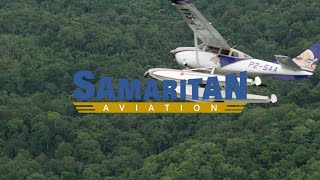
Mark Palm founded Samaritan Aviation to fly floatplanes into remote Papua New Guinea villages with no roads or electricity, reaching people for medical emergencies and hospital care. The organization serves about 600,000 people now and aims to reach over 1 million within five years.
Questions this video answers
About 600,000 people.
An additional 300,000 people.
To be serving over 1,000,000 people within five years.
About 15 years.
Over £260,000 of medical supplies.
Chapters
Good morning, Mark.
Mark Palm. Very excited to have you here. All the way from Papua New Guinea, Samaritan's Aviation here stateside in Florida with us at the CSafe homes office. And just really excited because last night we had a chance to meet with a bunch of friends, families, come around and just really hear the story of Samaritan's Aviation and just your upbringing, your basically drive through ministry and where you are, which is totally inspiring for anybody who's never heard that story, how basically a California kid surfer, if I'm paraphrasing, it turns into, you know, someone who's helping thousands upon thousands of people in these very desolate areas of Papua New Guinea. So, Mark, what time is it there right now, actually. So thank you for being here early in the morning. What time is it in Papua New Guinea?
Yeah, it's about 11 o' clock at. It's actually time to go to bed.
Okay.
For me.
So you're feeling pretty.
Yeah, I'm feeling great.
Well, that's good. I know Chad was on, you know, being a little barista here this morning for you, so hopefully that got the caffeine rolling and things like that. So I know you're going to go to school a little bit later today, which is cool because Mark is going to go and talk to a lot of our students at any Iraq's Christian school just about the ministry as well. But what can we kind of highlight that's going on in the life of Samaritan's Aviation right now on the ground in Papua New Guinea? Like, what are the needs and what is. What's exciting for you over there?
Yeah, you know, New guinea is. There's a long ways away. It's very remote. And so you've got hundreds of thousands of people living on very remote rivers, big water, living in bush houses, no electricity, no running water. And they're literally days away from the only help that they need. If there's a tribal fight, if there's a mom in labor, if there's a snake bite. So every day we're on call and we're saving lives in these remote communities. So we'll get a phone call that we've got a mother that's been in labor for three days, for example. Like, literally she's three days away. If she can find a canoe to get in, if she can then get down to the only road, then find a vehicle to come in. These are people that really have no hope if we're not there. And so every day we're flying patients and sometimes Two or three. I was just there a couple weeks ago. One day I flew in four patients and we've got three airplanes. And so it's just the needs don't stop when you live in the remote communities. There's so many needs and what happens is people don't even know. Right. We got hundreds of thousands of people living out there. If we weren't there to accept calls, these people just died. And that's what was happening before we got there 15 years ago. So it's great to come back, tell stories to our friends, to your friends, try to inspire students, just about what we're here for on earth, and just ask the questions, why are we here? What should we be doing with our lives to make a difference in the world?
Chad, how would you explain, you know, our family's got a chance to travel overseas together and experience Samaritan's aviation, which again, I, I don't know if we'll, we'll ever come across anything as impactful as a family for us that we experience there with, with Chris and the team on the ground, just seeing the patients coming in, seeing them, the, the days following and ministering to them, not only health wise, but, you know, sharing the gospel with them. It was very, very impactful for myself and I can certainly speak for my wife and kids as well. Chad, how did you, how did you meet Mark? How, how did this become one of those areas of ministry that you just felt strongly about? So strongly that you convinced me and my family to travel, you know, 18 hours away, 16 hours away to go visit Mark and the team out there?
Yeah, so I was actually at a dinner, like what we had last night at a friend's house and got introduced. Mark gave a presentation, his wife was there, Kirsten was there and sort of talked about the ministry. And I was, you know, the, the kind of like the sense of adventure piece is what initially drew me in. And you know, just something that's like totally different using, using airplanes to, to reach people for Jesus Christ and help people. That was kind of the beginning of it. And then Mark said, hey, could we go to dinner together? So we went to dinner and he asked me, what draws you to this? Like, why are you interested? Whatever. And I said, you know the part where it took you, like, I don't know what it was like 10 years from inception where you guys thought you were going to raise all this money and that you raised like 300 in six months to finally getting there. I was drawn in by, by just the perseverance to to continue to serve and to be faithful. And I told Mark, if you would have told me a story where your dad was some guy that had a bunch of money and, you know, you had this idea and you went over there six months later and you started the ministry, I wouldn't have been as drawn as I am to somebody who's. Who's been faithful with so little to. To grow this ministry into something that's so impactful. So that was what initially drew me into it and kind of furthered our relationship with the ministry and the team and just seeing their core values and the way that they all serve Jesus together.
Yeah. No, I think it's amazing. And when I think about just everything that the team is able to do there in Papua New guinea and experiencing firsthand, it's not a third world country because it's still developing to turn into a third world country, which I had no grasp of that. There's not the roads, there's not the infrastructure that's there to just get up and go from one town to the other, to get from this village to a local hospital. And that's really where Samaritan's aviation came in with air ambulances, essentially.
Right.
The float planes. You're a pilot. You flew in. You land these planes on rivers and just different areas, which is amazing in itself when last night you're talking about a new village that you went to and you know the. The details of a float plane landing on these rivers, but having to calculate how far you need to take off. But the things you're not analyzing while you're up in the air are, oh, wow, there's a whirlpool there. Hey, there's all sorts of current. So just a dangerous. A dangerous job as well, you know, when you look at it that way. But you do it because there's so many different villages who need access. How many villages, how many languages? Like, what are we talking about there from this developing nation. Many of us don't even know where Papua New guinea is. Tell us about that. Those people that are. That are there.
Yeah. So Papua New guinea is north of Australia. It's the second largest island in the world. The island of New Guinea. Half of it. Of the island is Papua. Half. Half of it is Indonesia, but it's a very large area. So people are, like, always thinking island. So they think, oh, you probably get from one side to the other. If they knew somebody in Papua New guinea, they. They feel like I should know them. But when you realize it's hundreds of miles along, it's 200 miles across and there's 14, 000 foot mountains going right through the middle of it. It's one of the most remote places on Earth that's called the last frontier, just because it's one of the least explored countries in the world. And yeah, like you said, 80% of the people live out in the remote communities where there's no roads, there is just no access. And so a lot of the people are living maybe like they were 100 years ago, 200 years ago, even longer. And that's life and that's all they know. And so you know, when they see a floodplain land in their village, like just a couple weeks ago for me, landing in new, new areas. And if you can imagine, you've, you know, you're 30, 20, 15, you've never seen an airplane up close. And then a plane lands on water and just taxis right up to the side of the.
Yeah, that would kind of scare you a little bit.
Yeah, it's, it's very scary.
Yeah, it's.
I mean, I try to put myself in that situation. I mean, even though the patients we've been serving for the last 15 years, a lot of them haven't been away from their village. And so you pick them up in an airplane, they're going through trauma, someone's dying usually. And then you fly across the mountain where we're at, and then there's the ocean. So imagine if you've never seen an ocean. So you're being exposed to an airplane for the first time. You're being exposed to being up in the air and seeing the earth come up in the air. And then you see an ocean for the first time. You land and we put you in a vehicle.
Yeah.
And then we drive you to a hospital where there's, you know, lights and just the, the whole people poking at.
You, people asking questions and.
Yeah, the whole sequence. Just like I've thought about what would it be like to. If it was us. Yeah, right. We're sitting here and then like that happened.
It's like going to Mars.
It would be like pretty much couldn't imagine it.
Right.
We would have no, no clue. And so that's really what who we're serving are these people that really literally, if we're not there, they just die. And that's historically what's happened. But we're able to go in and not only save their life, but have a chance to share Jesus with them, which is why we're there. You know, it's about Life here and for eternity. And so that's what our team does over there. Every day we, we, we go into the hospital with the patients we bring in. We usually have between 12 to 15 kind of rotating patients that are always there. You know, they'll be, this patient will get well and leave and replacing him with other patients. And so we have a whole team that goes in every day and just ministers to those people. Some of them come out of the bush with no clothes, so we have to give them clothes. Others they have no way to get food or water or maybe formula, whatever it is, whatever the emergency is. So our teams are in there looking after those patients to make sure that they get the best care that we can give them. It's been amazing just to see the impact you can have. You know, for me it was God, God called me. As Chad said, it took a long time to get there. Our five year plan turned into a ten year plan. But the idea is we can impact one life at a time. You know, the need is great. There's needs here in Tampa Bay and around as you strive around right now after the hurricanes and needs everywhere, but you can get overwhelmed with need. But the question is, can we impact one person at a time? And that's what we're trying to do. There's hundreds of thousands of people. We serve about 600,000 people right now. Our goal is to in the next two years. Right now we're actually expanding, so we'll be serving another 300,000. And then a couple years after that, there's other areas that we feel like we need to go to serve. And we could be serving over a million people in the next five years. And but for us, it's like a one, one person at a time starts with one flight. That first flight I had with the pregnant mom was in labor for three days. I ran around and told people in America for 10 years, hey, if you help support us, if you can give us funding and help us buy an airplane, we can set this up, we can save these people. And then she actually go do it. But it's that one life. That life now has turned into hundreds of hundreds of lives. Thousands of lives. And then you look at the impact through the medicine delivery that we're doing. We've delivered over £260,000 of medical supplies with these little airplanes. We helped stop polio over there a couple years ago. So you start looking at thousands of lives, hundreds of thousands of lives potentially. And that's really. It all started with it with a dream that God gave us. And then people like you guys coming alongside and saying, hey, I can't go. Right? I'm. I'm good at business. I've got things here. God hasn't called me to go do that, but I can get behind you and say, hey, I'm not. I'm not sent to go, but I can send you. And that's what it's taken us, like a whole team. And you guys are still doing that as partners of Samaritan Aviation?
Absolutely.
It's because of the community here that allows us to go save lives and to be the hands and feet of Jesus. Yeah.
Chad, do you want to just touch on?
Yeah. So I thought it was really cool, like when we were, you know, on the ground, because, you know, you can see videos and hear things and talk to people, but when you're physically there, it's. It's totally different. Right? It's. It's a different world. You find a Port Moresby, and then we flew out to Wewak, where. Where the ministry is located, and traveling around with the people from Samaritan Aviation, it was like you were rock stars. Because everybody knew the impact that these guys are doing with providing a free service that in this country would be something the government does. Their government isn't resourced the same as our government. So they partnered with Samaritan to help for these guys to be able to provide a free resource. But talk about that, I think it's Simon Ballas is what they. Is what they call it over there, because they don't call it Samaritan Aviation, the locals. But like, what that means and where that came from and. And, you know, why the people are so connected and things like that with the ministry.
Yeah. So it's Salman Balus is. It's. So it's to pisan the language. 840 languages in the. On the island. So a fifth of the world's language is just on that half of New Guinea. So the Papua New guinea side, salmon ballus is a bird. So that's the word for airplane in talk Bisson. And then salman is an outrigger of a canoe. So it was like immediately, the first time I ever landed in the village was 2010. People would. I just kept hearing saman balus, aman balus. And so it became, okay, what. You know, I had to ask the same question. What does that mean? And it's an airplane with floats on it, or it's an airplane without riggers on it, basically.
Or a bird without a canoe with wings.
Canoe with wings.
Yeah.
So it's kind of become what everybody, they don't call a Samaritan Aviation now they call us Salman Balus. So we have that on our vehicles and it's kind of, it's who we're known for. But I think, you know, it doesn't take long when you're, we're covering 120 villages every year that we serve and we're talking over a 600 mile stretch and a river and then you're saving lives. In that culture, a gift is an obligation. So technically we don't charge, but they in their own cultural kind of owe us. Culturally we don't collect on anything, but in their minds they owe us. And so you can imagine they can't give us anything and we don't ask for anything, but they can show their appreciation. So that's what you're seeing when you're driving around town and everybody knows who we are, what we do because everyone you saw, we probably saved one of their family members now that we've been there for 15 years. And so they kind of feel connected that way and they almost culturally are obligated to look after us. And that's what you're feeling is so much gratitude for what we do because we've gone in there and we've, you know, we, it's all about serving and, and really big foot washers. I know we like to say that, but that's really the goal of Samaritan is how can we serve these people? You know, it's not, no one's going. It's an adventurous thing, obviously, as you mentioned, but the adventure only takes you so far and pretty at these people have seen people come in to make money off of them over the years. They've seen people take advantage of their resources. Because Papua New guinea has like amazing gold deposits, timber, oil. There's a ton of resources there that over time people have come and taken from them. And so when you have an organization come in with just one goal, just to serve them and say, how can we help you? How can we save you in your time of need? And then how can we love on you? People see real, they see genuine, they see when it's selfish or whatever. And I think that's part of it too because I've had people come up and say, you guys, how you guys do what you do is just different. Like we can see it. And I think people know when you love them and they know when you're, when you care about them. And they also know when you are trying to take advantage of them. So over time, I think that's also why you see the appreciation. You just see that it's passion. I'll get in meetings with government officials, and there's tears happening through just around the room, just how thankful they are that we're there saving their family and loving on their family in a way. And that love comes from God. You know, we don't. You can't manufacture that. You can't, over time, maintain that. But when God can fill you. There's a scripture I was reading this morning, Thessalonians 3, chapter 3, and it talks about, like, being so full of God's love that it spills out and, like, splashes on people. You know, what a cool picture that is. And I think that. I mean, that's what you guys. I see that through your lives. It's just like you're. You're just like. People walk by, you know, they get a little splash. You know, that's like what we're called to do, I think.
So when. When I hear the story that you tell in just the. The way they are as a nature, a nation, culturally, that they always feel that they have to repay for something.
Right?
That's essentially what it is. Kirsten, your lovely wife, was telling me a story when we were together a month or two back, and maybe I'm going to tell the story wrong, but this is what I took away from it, is that essentially you flew in multiple times to this one particular village, very remote village, you know, way out there, and you help to treat different members, different people within this tribe. But at the same time, when you would share the gospel to them, whether you were praying when you were first taking them into the air, ambulance, into the plane to fly, or you were coming back to circle around in the hospital itself to pray over them to again, just plant those seeds that they were very standoffish. They were very standoffish. And there was definitely a group within this town that was certainly standoffish towards you and Samaritans Aviation for sharing what they were calling your God. Like, you don't. We don't need your God. We have our God, is what I remember Kirsten basically saying to me until the time when one that was in that small group who was very resistant got sick. You guys came in, you took them open, armed. It was never about anything other than treating them and being selfless. And quite honestly, the fruits of the spirit being right there. And it was so evident to those people that Kirsten said, you Know, that patient got treated, they, they flew him and, you know, life back out and all that kind of stuff. But it was so obvious to that group and that family within that community that she talked to Kirsten and said, you know, our God didn't show up. I can see your God showing up. And she's like, well, what do you mean? She's like, well, I, I can see it. You're asking for nothing from me. And you're just there loving and caring and just giving that, you know, that love that your God has through you. And so I just thought it was amazing when you were, when you were telling me that story. It was something that, that has stuck with me for a while. And it's truly the heart of who Samaritan's Aviation is and who we strive to be. I mean, we at C Safe Homes have committed, you know, certainly to commit to supporting your ministry. We look forward to supporting you now and continue and just pray that it gets blessed abundantly that we can use what we're doing here with business and helping people with new homes and that. That's going to turn into helping others overseas. Those hundreds, thousands or whatever we can be. Is that spoken the wheel for you? So I'm excited about it. I'm excited to hear everything that's going on with growing and expanding and just the stories, just the stories of the people that you're helping in, in big ways. You know, not just, you know, the, the snake bite or the spear through the arm and things like that, but really that eternal help that, that you're providing and opening their eyes to it. Chad, do you have any.
That's, that's a good summation for sure. How do people, how do people get a hold of Samaritan Aviation? What's the best way?
Yeah, you can go to, you can go to samaritanaviation.org our website. We're on Facebook, Instagram, and we'd love to have you join us. You know, we're, we're, we're funded by people like yourselves who have a, have a passion to serve people and to be part of other people making a difference. And so, yeah, we'd love to have people partner with us. And samaritanaviation.org there's lots of pages on there. You can learn more about our leadership team, you can learn more about our mission, our focus area, and I would love to have you check us out.
Yeah, absolutely. Do everything from going to visit these guys in person, which again, plan on having at least a week, you know, a couple days of travel and a couple, a couple days there on site. But everything from traveling to visit with them and helping the physically being the hands and feet on the ground to, to just picking up some cool swag, a cool, cool hat, cool T shirts and things like that on, on the website. Yeah, exactly. Exactly. So thanks for tuning in and thanks for supporting us because you're supporting many around the world with Csafe Homes.
More from Chad
Mike Twitty Full Interview: Navigating FEMA, Tax Relief, and Rebuilding After Storm Damage

On the Road with Seasafe: Inside the Offsite Build Center – Key Insights for Homebuyers