A short talk by Chandler Comerford comparing risk management practices in Navy SEAL teams and industrial settings. Comerford argues that while SEALs face immediately obvious consequences for risk, industry often normalizes deviations from standards leading to accidents; therefore, beyond procedures and controls, organizations must address cognitive biases and the shortcuts people take—especially under urgency or information overload. The excerpt includes an anecdote noting rapid resumption of production after an accident.
Chapters
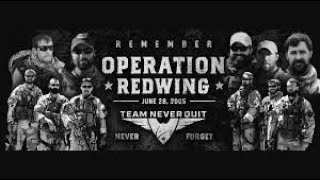
The SEAL teams are constantly conducting high risk evolutions.
Similar to industry. We look to identify, analyze, evaluate and put controls in place to manage those risks.
Believe it or not, risk management is probably easier in the seal teams because the consequence for poorly managed risk, it's immediate.
The reason why risk is hard to manage an industry is because in many cases it's more difficult to see. What we know is that oftentimes when accidents occur, it isn't that a procedure was wrong or the risk wasn't identified.
What we have found is that most often there's a deviation from the standard practice, where the deviation has been normalized.
In many cases, individuals are blamed, when the reality is it is much more nuanced than that.
The way our brains work, the way in which we've evolved, it predisposes us to take shortcuts to simplify, to rationalize our way of thinking.
We can put multiple layers of control in place. We can practice develop response procedures to assist us in the event of an emergency. But that isn't enough.
We also need to focus on our thinking, on the biases we all have, on the shortcuts we take.
Whether we are NASA engineers, workers in an industrial setting, mountain climbers, we all take shortcuts. We are most at risk when there is a sense of urgency, not enough information or too much information to process.
This keen focuses on thinking and on the risks of cognitive bias, on the shortcuts we're all prone to take. It takes participants on a journey from the SEAL teams to the work site, articulating how we make decisions and identifying when we are most at risk.
One decision can impact our safety, our workmates and our families. And we may have to live with it the rest of our lives.
Three days after his accident, that company went back at full production.