In this explainer video, the host walks Ontario business owners through the upcoming Canada Budget 2026, emphasizing practical, real‑world financial implications rather than political rhetoric. The narrative is structured around five sections: (1) the government’s two‑track consultation process— a massive public tour running alongside a quieter, earlier professional track that actually shapes legislation; (2) the concrete technical fixes that accounting bodies (CPI Ontario, CALEW, CPB Canada) have asked for, such as system simplification, split‑income tax reforms, and bookkeeping grants; (3) the ongoing U.S.–Canada trade war, detailing the 50% U.S. tariff on Canadian goods, Canada’s $7.5 billion relief package (workforce retention, regional tariff response, liquidity loans, diversification fund) and how the timing of counter‑tariffs coincides with the budget consultation deadline, making immediate exposure calculations essential; (4) a cautionary “capital gains ghost story” from 2024 where a proposed increase to the capital gains inclusion rate was announced, then delayed and ultimately cancelled, illustrating the danger of reacting to speculative budget proposals; and (5) a five‑point actionable checklist for business owners: calculate U.S. tariff exposure, verify eligibility for the relief package, conduct year‑end tax planning under current rules, clean up bookkeeping, and review income‑splitting structures. Throughout, CPA Charles Ndegwe stresses planning with confirmed rules, distinguishing the federal fall budget from Ontario’s spring budget, and consulting professional accountants for accurate numbers.
Chapters
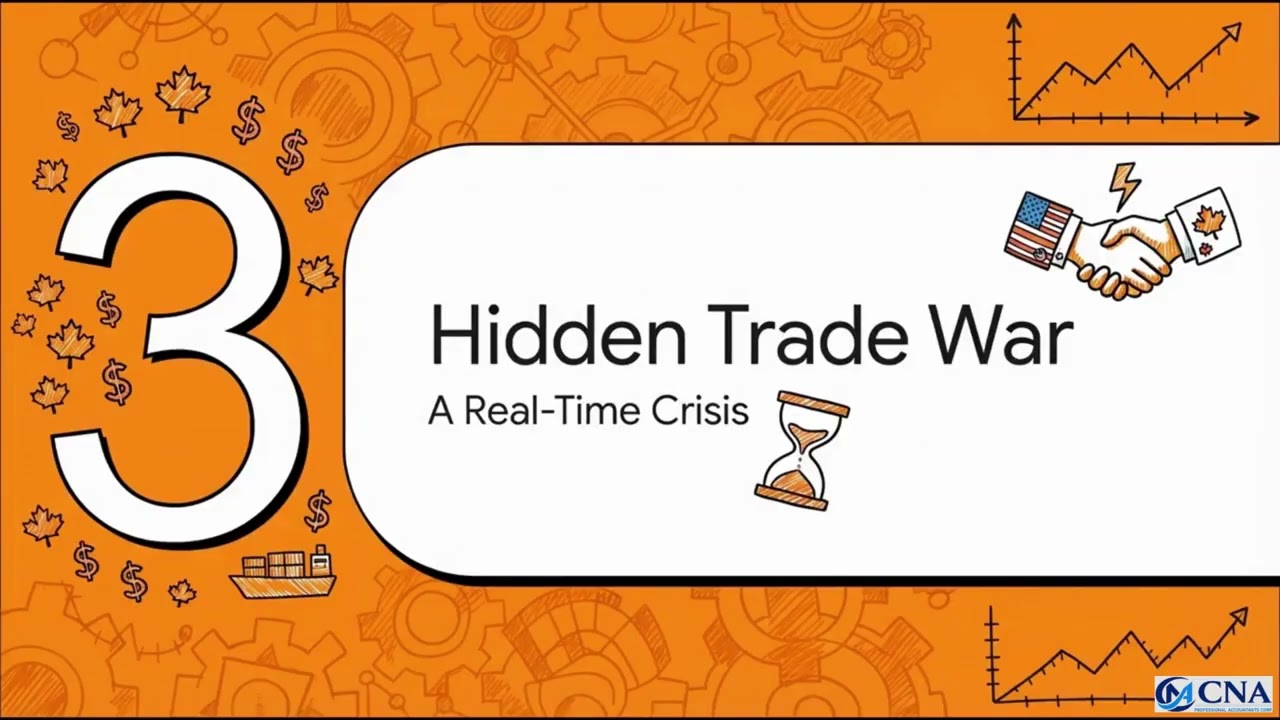
Welcome to The Explainer. So glad you're here. Look, today we're bypassing all those standard press releases and political talking points to uncover the actual real-world financial mechanisms shaping Canada's Budget 2026. If you're looking to cut through all that noise and genuinely protect your business finances, you are in exactly the right place. To help us do that, we are leaning heavily on the brilliant insights of our expert anchor today, Charles Ndegwe, a CPA. This quote from him really hits the nail on the head. He says, Ontario accountants aren't asking for lower taxes just to be popular. We're asking for a system simple enough that a business owner can predict their own tax bill. Because the reality is, what you're seeing in the headlines simply doesn't tell the full story for your wallet. Right, let's dive straight in. We've got a very clear path ahead. First, we'll look behind the budget headlines, then see what accountants actually want. After that, we'll unpack the hidden trade war, Tell a bit of a capital gains ghost story, and finally, cover exactly what you need to do right now. Let's start with Section 1: Behind the Budget Headlines— The Two-Track System. You see, most people assume budget consultations are just one big, unified event. But the government is actually running 2 very different consultation processes at the exact same time. On one side, you have this massive public summer tour. We're talking 23 cities, 44 roundtables, and over 18,000 public surveys just to gauge sentiment on affordability. But simultaneously, there is a much quieter professional track that actually started months earlier in March. This is where professional bodies submit highly detailed technical requests. So while the public survey highlights the general worries, it's the professional submissions that dictate what actually gets written into the legislation. So what did those professionals actually ask for? That brings us to Section 2: What Accountants Actually Want— the Technical Fixes Requested Behind Let's look at the formal recommendations. CPI Ontario, representing over 105,000 members, is pushing hard to simplify an overly complex system. In fact, a staggering 84% of their members said the current system is just way too complex. Then you have CALEW, representing estate planners, who are pushing to simplify the tax on split income. And CPB Canada is asking for highly practical things like bookkeeping grants. You know, these aren't political talking points; they are urgent, real-world field reports from the people who actually file your returns. Before we go any further, Charles Ndegwe offers an incredibly important tip for us. Never ever confuse the upcoming federal fall budget with Ontario's provincial spring budget. They might share a bit of DNA, but they are asking 2 completely different governments for 2 entirely different things on completely different planning timelines. You absolutely must plan around the right calendar for the right measure. And all of this builds into a very real-time crisis. Section 3: The Hidden Trade War. This is the urgent economic backdrop that is actively eating into business margins right now, and it completely changes how we have to view the upcoming budget. Just consider this chaotic late-summer timeline. On August 22nd, the U.S. applied a massive 50% tariff to $27.6 billion worth of Canadian goods. Just 3 days later, Canada responded with a $7.5 billion relief package, and by September 8th, Canada's matching counter-tariffs took effect. What's absolutely crucial to realize here is that these counter-tariffs took effect on the exact same day the Budget 2026 consultations closed. The trade dispute and the budget are inextricably linked. But here is what you really need to focus on right now, without waiting for the budget to drop: that $7.5 billion relief package. If your business is affected, there are actionable lifelines available today. You can access a workforce retention program offering up to $1,000 per participant. There's an extra $1.5 billion in a regional tariff response initiative, a vital $500 million liquidity stream for loans, and a $2 billion diversification fund. These are not future promises; they are concrete tools you can use right this minute. And this brings us to a rather stark reality. As Charles Ndegwe so accurately points out, For a lot of my clients, this budget isn't background noise. It's being written while their input costs are moving in real time. As a business owner, you must calculate your tariff exposure today. If you buy American materials, you need to work out exactly what a 10 or 15% cost increase does to your margins this week, rather than sitting around waiting to see what relief might magically appear tomorrow. This urgency leads us to a bit of a cautionary tale. Section 4: The Capital Gains Ghost Story. This is a fascinating bit of recent tax history that perfectly illustrates why guessing at upcoming budget policies is a terribly dangerous game. Think back to April 2024. The budget proposed raising the capital gains inclusion rate to 2/3, which sparked massive panic. Business owners and investors hurriedly sold off assets to beat the deadline. But then, implementation was delayed to January 2025, and finally, in March, the increase was cancelled entirely. Anyone who panic-sold a property permanently lost out on a tax rate that never even came into force. This is exactly why Charles Ndegwe's advice is so grounded and vital for your strategy. He says, My advice for Budget 2026 hasn't changed since then. Plan with the rules you have today, not the ones you're guessing at. You can't undo a sale you made too early out of fear. Acting prematurely on unpassed budget proposals can permanently rob you of the financial flexibility that a little patience would have naturally provided. So, the crucial point is, we need to focus on what we can actually control. Let's look at Section 5: What to Do Right Now. Here is Ndegwe's concrete checklist for business owners today: 1. Calculate your US tariff exposure immediately. 2. Check your eligibility for that $7.5 billion relief package right now. 3. Do your year-end tax planning against today's confirmed rules. 4. Get your bookkeeping absolutely spotless. Businesses with clean records access these relief programs days, sometimes weeks, faster. And 5, review your income-splitting structures based on their current merits, not on rumors. Which leaves us with this final thought. Look, budget speculation is free, but a wrong guess about your own tax position certainly isn't. Are you planning with today's rules or tomorrow's rumors? Before you make any major moves, consult professionals like CNA Professional Accountants Corp to get a second set of eyes on your numbers. Thank you so much for joining me on this explainer, and remember to always plan for what is on paper today, not what might be on the table tomorrow.