Can Stem Cells Really Help You Live Longer?
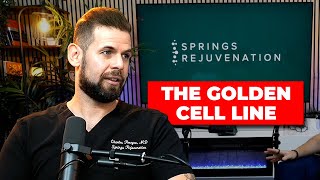
Dr. Charles Pereyra discusses stem cell and exosome therapies for longevity, explaining how mesenchymal stem cells release compounds that patients report improve cognition, joint health, and fitness. His clinics report zero major adverse events using CGMP-approved labs and minimally manipulated cells, though he warns unregulated overseas clinics have caused infections and sepsis.
Chapters
The first thing that we're already seeing is people living into the mid-70s and 80s, 90s being healthy. Like, we've all seen Sylvester Stallone. He's ripped in his 70s. You know, there's a lot of people like that too if you take care of yourself. And it's not just taking TRT replacement. There's a lot of things they do. There's stem cell therapy, of course.
If someone has regular stem cell exosome therapy, what changes can they experience?
How would they feel right away? The first thing is always an increase in cognitive performance. They feel like they're sharper, that the mental acuity is there.
Everyone wants to know, can they live forever, or can they get to 150? Whatever the number is, that doesn't matter right now. What I really want to understand is how you have seen stem cells be used when it comes to increasing someone's lifespan. Welcome. It's James Moody here with the amazing Dr. Charles sitting next to me today. We're going to be talking all things stem cells and maybe exosomes as well, and maybe even peptides and other rejuvenation tools that are on the market today. So, Dr. Charles, welcome. It's great to have you.
Oh, it's a pleasure to be here, man. I love doing this kind of stuff and talking about stem cells, regenerative care, and longevity medicine.
I know it's important to me, it's important to you. So let's kick it off. Like, what are stem cells?
That is probably the million-dollar question, right? Everyone's trying to say what exactly a stem cell is, and really there's many different kinds of stem cells, right? There's the progenitor pluripotent stem cells all the way up to more adult stem cells like MSCs. And the MSCs have become the more popular cell line, right? So about 10 years ago, there was a lot of celebrity around the MSC lines. Some people even called them the golden cell line, really because of their potential to help regenerate areas. And that really is what people are looking to do is help regenerate with it. And so since then, there's been a ton of studies and a lot of the studies look at MSCs because this was the line that was shown to be most beneficial. So when looking at MSCs, and that stands for mesenchymal stem cells, they're more along the adult cell line, but they secrete these things called trophic factors or exosomes that contain— they're little bubbles, essentially, exosomes, and they contain RNA. They contain proteins, growth factors, and many different short little chain proteins called peptides that are likely acting as signals to the cells, telling people's own cells to turn on. I think that's been really what a lot of people are calling the magic behind stem cells, exosome therapy. And while, you know, the mainstream data is that its research is not quite there yet, I've personally seen a ton of studies. The case studies are overwhelming, and there's a reason why people are flying all over the country and world to get this stuff.
A lot to unpack there. Yes, there is. We've got professional athletes that work with us at Springs from the UFC, WWE, NFL, Bellator. There's a whole host, so they trust us. But there's still the question: are stem cells and stem cell exosomes safe?
Yeah, that's probably also a really big question, right? So we want to make sure if you're going to do something that could potentially make you better, is it not going to make you worse? Right. And so luckily, I mean, I can only speak to our centers. You know, at our centers, we've seen zero major adverse reactions, you know, across all of our centers across the country, thousands and thousands of patients, including with our solution, thousands of patients and zero major adverse side effects. Obviously, there could be redness at the site of injection. There could be some inflammation that's, you know, transient. But when we think about things like cancer or anaphylactic allergic reactions or, you know, even, you know, the ability to just get an infection from some solution that you don't know where it came from. All those we've seen zero of. And I think what's given the stem cell industry a little bit of a dirty name is because some people aren't doing this the appropriate way. Right? So if you want to know if a stem cell is safe or if your solution is safe, you need to at the very least go to a CGMP-approved lab. This means the FDA has had some regulatory oversight over the sterility and processes of the lab, which is really important, right? You want to make sure if you're getting a vial, even if a doctor is giving it to you, that it's sterile, it's not contaminated, right? And so at Springs, we make sure not only do we use vials that are from CGMP-approved labs, but we also get third-party testing to make sure, again, random sampling, that there's no infection. Because the first thing that you want to make sure of when you're doing any kind of procedure, whether it's topical or otherwise, is that it's safe and it's sterile.
Hang on a second. You're saying this is happening inside the US? I've heard from so many people that stem cells aren't legal here or exosomes aren't legal here. So what's the loophole? What's happening? Are we in the gray area? What's going on?
Yeah, some people say yes, some people say no. I will tell you there's different types of stem cells and what we're doing, right? So for topical applications or cosmetic, it's a little bit different. Also for expanded versus non-expanded, right? So we talk about things called minimally manipulated cells. Versus manipulated cells, and it's a totally different pathway. So if you're expanding your cells and culturing your cells and growing your cells up in a dish, that would be considered an expanded line. And that's what's called 351 is what they call it. And that's really super frowned upon. You can't do it here. I don't know if anyone is. I don't think anyone's doing that here.
And is this like killing babies? Is this— what's this? Is this—
no, even that's— you're not— no one's killing babies. I think that was a bunch of propaganda that was hyped up. You know, we'll pretend we don't know who propped that propaganda up, but I will tell you that when you talk about stem cells that are 351 expanded, I think they're great. We don't have that here. What we do have is minimally manipulated product. We have the exosome product, which is very concentrated, up to 250 billion exosomes. And because these are minimally manipulated, I mean, there's, I believe, over 700 different clinics doing this around the country. So, it's here. And it's probably here to stay, right? I know Utah just passed a legislation to make it legal there to give stem cells. You know, Florida, the Senate just last week proposed a bill to legalize live cells. I mean, one of the first things the new Secretary of Health said that he wants to do alongside legalizing raw milk and psilocybin was stem cells. And there's a reason why he picked those three. I mean, there's a ton of research behind psilocybin, by the way, but there's also a ton of research with stem cell and stem cell therapy. And it's a shame that You know, it's been exclusive for the rich and famous because they can fly around or pay these exorbitant amounts. But when it comes to the everyday person, it's hard to create access if there's like all this propaganda and all this, no, this is not safe, this is not real, this doesn't work kind of thing. I think it's very premature to say that this doesn't work and likely inaccurate in many cases. 'Cause for sure there's been plenty of patients who have had incredible results.
So let's talk about the results. I know you can't always be super specific with this because we can't mislead people in the industry. But what uses do stem cells have and stem cell exosomes? Who can use them? What kind of results can people expect?
Well, we collect not only testimonials that are written, we collect video testimonials, we collect before and afters, any imaging that we can find. And so I feel very confident saying that there is strong, positive anecdotal data, case study, if you will, data, you know, and not just this. If you're looking at let's say hair alone in the past 24 months, there's been 4 studies that have come out citing— and this is just exosomal therapy for hair— that it's been incredibly impactful. Right. And these are independent studies from each other and independent from us. Right. We don't fund these studies at all. And so really incredible promise here.
Amazing. So let's talk a little bit about FDA, because the FDA currently are not approving— just be super clear here, this isn't an FDA-approved process or procedure.
Am I correct in saying that the FDA approves stem cells for very little things, mostly for hematopoietic stuff, but for mostly everything else, the FDA does not approve. And just so you know, the FDA really doesn't even like PRP, you know, taking your own blood from your body and spinning around and putting it back in. It's, it's a very slippery slope what they consider a drug and what is not a drug. And it's been a topic of contention for some time. There was a case the FDA proposed here in Florida and then won there was a case they proposed in California and then lost and then appealed. And there's all this back and forth and Utah says, you know, no, we're going to do it. You know, and my contention is just personally, you know, that it should be the oversight of the physicians to determine whether or not the product is safe and to determine whether or not they want to give this if it's not a fully, you know, manufactured drug. I mean, these are cells from other people's bodies. If you're not adding chemicals to them which are foreign to alter the structure, I don't see it to be a drug if they're not manipulated. I'm very strong about that.
Can we talk about manipulation and maybe why you are a big proponent of doing this in the US and coming from a regulated lab versus going overseas? I know you've said to me before there are some great clinics overseas, but there's also some horror stories that you hear. So I'd love just to hear why it might be wise staying in the US.
I mean, listen, you got to be careful whenever you're going out of the country. For the number one reason is that we don't know the regulatory processes at all. They're not the same as the United States. For all the bad things the United States does, our regulatory processes are very, very strict. And I do like a lot of the clinics actually that are abroad. But there's also been some cases of really horrible things. You know, there's a very prominent organization of entrepreneurs where someone was in the ICU for a long time, almost died. And they went overseas to get it to a reputable place. And it was an infected solution. It was not sterile. And so, you never really know. And again, a lot of these places have done a lot of good. You just, you just don't know.
So what's the risk continuum, if you will? So you talked about inflammation and you talked about ICU. So that sounds like it's pretty extreme. You can go from having something very mild to something very extreme, maybe even death. That sounds like the continuum. What can we do when it comes to selecting and sourcing stem cells? And, and you also spoke about exosomes as well. So maybe giving us an understanding of the difference between the live cells and also the exosomes and the risk factors associated with both.
Well, look at it this way, James. If I give you a solution in a vial and I just put a little bit of bacteria in there, and then you inject that solution into your body. Now that bacteria has proteins, a warm environment, it grows and it causes something called sepsis.
And I know about sepsis.
Yep. Yeah, that's how you can go to the ICU. That's how you could die. Sepsis is a very, very severe, very quick condition. And there's also other things besides bacteria. There's communicable diseases, there's viruses. And so you need to make sure that you have a certificate of analysis which goes through everything and tests regularly. Safety is the biggest part of this. Right. And so when it comes to stem cells and exosomes, really the sterility testing for me is one and the same. The difference between live cells and exosomes, I think exosomes are a little bit more safe because they don't have a nucleus. There's not that abundant DNA and they don't have any cell surface markers. They're just these little packets. In fact, every cell in our body secretes exosomes, right? Every cell in our body secretes them. So when you inject these, you apply them topically, your body knows what to do with them. It's not really viewed as far in.
So really, what's the difference between live cells and then mesenchymal stem cell exosomes?
Yeah, so that's a fantastic question. And the main difference for me is I think they're a little bit safer and more effective when it comes to the stem cell exosomes. And I'll tell you why. So stem cells are nucleated. They have cell surface markers, right? So they can be recognized as far in. Potentially, even though a lot of times they aren't. And that could lead to inflammation and kind of exacerbate things first. And also, exosomes are recognized everywhere in the body, right? Every cell in your body essentially produces an exosome. Exosomes are the way that cells communicate with each other. So, they're these little bubbles that contain mRNA, that contain growth factors, peptides, and a bunch of other materials to really help signal to the cell, hey, you need to turn on, you need to do your normal function and you can communicate cell by cell with an exosome. And there's a great book, probably one of the most popular books that came out, Mila Jorgensen called Stem Cell Rising Tide. And they talked about these trophic factors and these EVs or exosomes. EVs and exosomes are used interchangeably. And so, if you can do something which has the potential to be the main working part of the stem cell and likely is, and then just do that and safer, well, it just makes sense to do that and do it at a very high Amazing.
So let's talk about longevity here because it's a growing field. Everyone wants to know, can they live forever or can they get to 150? Whatever the number is, that doesn't matter right now. What I really want to understand is how you have seen stem cells be used when it comes to increasing someone's lifespan and also healthspan as well.
Yeah, I think we're all looking for the next breakthrough, right? I don't remember who it was. I think maybe it was Aristotle who said that, you know, the old, you know, let go and make way for the young. And that's when the average lifespan was 35 years old in the '30s. So we change a bit, right? And so there's little things that happen, whether it's clean water or antibiotics, you know, little initiatives. And, you know, 35 is great, but 70s, 80s is greater if you're feeling well. And so I think the first thing that we're already seeing is people living into their mid-70s and 80s, 90s being healthy. Like we've all seen Sylvester Stallone, he's ripped in his 70s. You know, there's a lot of people like that too. If you take care of yourself and it's not just taking TRT replacement, there's a lot of things they do. There's stem cell therapy, of course, you know, there's different kind of regimens to have exercise and strength training, but we're seeing it's very possible to have a high quality of life longer in life. So I think the next phase is once things continue to be optimized is this longevity. Now, what if you can be— have the same biochemical makeup in your body as you did when you were 30 at 80? Now, what happens to your average lifespan is it obviously just goes up by default. Living to 120, 150, 160, 200, maybe even longer becomes possible. You know, there's many reasons why the body can decay, whether it's oxidative processes, whether it's telomeres. There's a lot of reasons why damage happens. So if we find a way to repair that damage, it just makes sense that aging doesn't need to happen. In fact, aging is now viewed as a disease, which I think it is. No, I think nobody truly enjoys the system breaking down and getting older and being weaker. Truly enjoy it.
So if someone has regular stem cell exosome therapy, what would be happening inside the body and what changes can they experience? How would they feel?
So I can tell you the experience from our patients at our clinic, and, and you can Google other clinics as well. I mean, Right away, the first thing is always an increase in cognitive performance. They feel like they're sharper, that the mental acuity is there. And then for the athletes that come with us that work out, they notice an immediate change. And for the ones who go a step further and they measure the VO2 max, which is the way your heart and lungs work together to utilize oxygen, they know a very much improved VO2 max, not just, you know, conceptually and qualitatively, but also on the numbers. And so those are first things that are noticed. And then a lot of athletes of course do joints, Some do cosmetic procedures. A lot of our patients do hair and facial stuff. But overall, systemically, cognitive function and athletic performance are fantastically improved. And, you know, most people are familiar with the famous case, you know, the celebrity's dad who had heart failure and he was put on a deathbed essentially to die in a few months. And he ended up living another 9 years and got a girlfriend and was living a happy life. And so, there really is a strong potential to repair your organs. And I think the VO2 max going up is just one part of it. And now we know that VO2 max may be the strongest predictor of morbidity and mortality. So how sick you'll get as you're getting older, and then, you know, how long you'll live, which is really cool to see.
It's amazing.
Absolutely incredible.
Dr. Charles, thank you so much for your time today, sharing wisdom, knowledge, and also some truths as well about like what we can look out for when we go into clinics and what we should look out for in the solutions as well. So, Thank you so much for your time. We'll catch you on the next one. Not sure when that's going to be yet, but we will be back. We'll have some more questions. If you have any questions, please let us down below and we'll get those to Dr. Charles and we'll get those answered for you. Until then, speak soon.
More from Charles

Anti-Aging Expert: Stop Touching Receipts Immediately! The Fast Way To Shrink Visceral Fat!