In this interview Dr. Charles Pereyra, a former ER physician and founder of the Springs (Sprinx) network of longevity clinics, recounts his personal battle with male pattern baldness and the series of treatments he tried—from early use of minoxidil and Propecia (which he discontinued due to side‑effects) to PRP, which failed, and finally a two‑step protocol combining stem‑cell‑derived exosome serum with a next‑generation FUE 2.0 transplant (Venus Concept Neographs). He explains why many hair‑transplant procedures lose grafts, attributing failure to inadequate scalp blood‑vessel supply and chronic inflammation, likening the scalp to barren soil lacking nutrients. The success of his own regimen reinforced his belief that addressing underlying biology is essential. Dr. Pereyra then describes his shift from emergency medicine to founding Springs, motivated by frustration with conventional care and a desire to offer “outside‑the‑box” therapies. He outlines Springs’ mission: a patient‑centered, outcome‑focused, holistic model that integrates stem‑cell, peptide, functional, and lifestyle interventions, aiming to democratize access to advanced longevity and rejuvenation treatments that are otherwise priced at six‑figures. The conversation moves to men’s vitality, where Dr. Pereyra highlights the stigma surrounding low testosterone, erectile dysfunction, and reduced performance, noting that up to 50 % of younger men experience hormonal or metabolic decline. He advocates a comprehensive three‑pillar approach (hormonal, metabolic, functional) and mentions custom‑compounded peptides, exosome therapy, and lifestyle coaching as tools. A major innovation discussed is the partnership with PanoE to create the Springs AI Health Assistant. This device conducts an eight‑minute, 40‑parameter assessment (VO₂ max, HRV, tidal volume, basal metabolic rate, etc.) to estimate a person’s biological age and generate personalized nutrition, exercise, and supplement recommendations. The test is offered free to Springs members and is deployed across multiple U.S. cities (LA, New York, Miami, Austin, Atlanta). The AI platform also provides a dashboard for tracking metabolic age, cardiovascular health, and macro‑nutrient guidance, positioning Springs as a long‑term longevity partner for its clients. Overall, the interview weaves together Dr. Pereyra’s personal hair‑restoration story, the scientific rationale behind his treatment choices, the broader philosophy of holistic longevity care, and the practical implementation of AI‑driven metabolic profiling.
Chapters
Now, Dr. Charles, I know you have your own hair loss story, and obviously you have hair now. So what was your journey to get your hair back? Because it looks great.
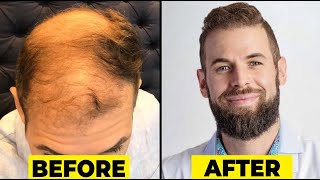
Yeah. For those of you who haven't seen my pictures, I was almost completely bald, like shiny bald. You can see the scalp on my head pretty clearly. And that started young. That was in my early 30s when it was that shiny. And my actual balding pattern started in my mid-20s. And so I started noticing when I was just in college or leaving college, going to medical school, and it just got progressively worse. And so I started things like Minoxidil and Propecia. The Propecia I stopped right away because I personally got side effects within a couple of weeks. And I was online reading about the potential side effects. And there was one guy who had no sensation long term. And there was even a thread about some men who never got it back. At all. And so, I got really scared. I got off it right away. I lost a little bit more hair getting off that. And then, eventually, the minoxidil I was using, the drips, was staining my pillow. Just wasn't really aesthetically pleasing. And then, my partner was complaining of the smell. I said, well, maybe I'll just stop and I'll get PRP. So, I stopped it and I got PRP and almost everything fell out. And that's the picture that everyone sees now of me in my early 30s with shiny head and like zero hair pretty much. And so, I decided to go the route of stem stem cells and exosomes. And I was doing research in the field, very interested in it, and I decided to do a two-step procedure where not only would I get stem cell exosomes, but I would go ahead and get this new FUE procedure, which we have as a 2.0 from Venus Concept Neographs, along with the Stem Cell Exosome Serum. And I was just expecting to get just a little bit back, you know, enough for maybe a little comb-over or grow short hair or something like that. But the results were fairly pronounced. And kept getting better and better. And now it's, well, over 8 years, and I've pretty much kept everything that I've had. So pretty happy with it. And, you know, seeing that a lot of our clients have come to us after 2, sometimes even 3 hair transplants, and the reason why they're not really staying in long term is likely because you're not addressing the underlying issue, which I feel like that's what happened with me and the stem cell exosomes which I used.
So getting a hair transplant is not a cheap procedure to get done. Why is it not working? Why are people spending all this money and ultimately their hair transplant, which is, from what I know, the most extreme thing you can do. Why is that not working for people?
Yeah. So I've kind of looked at it from all areas. So at first I was saying, oh, maybe it's not working because you went to Turkey, because I've seen patients from Turkey whose hair fell out. And then it was also people in the United States. And it made me really start to think of why this is— could be happening. And if you go back to the root cause of hair loss, no matter the ideology, a lot of these are based off of a blood vessel supply and a potential inflammation or even unhealthy blood vessels. So if you're putting hair on the scalp and you don't have great blood supply, you're not going to get the nutrients you need, right? It's like having horrible barren soil and I'm going to plant grass on it. I'm never going to water or give it nutrients or fertilizer or anything. Yeah. So really interesting that we would do that to the scalp and be like, oh, you may not have a great blood supply or good nutrients, but we'll see what happens. And I think that's why a lot of people are seeing hairs fall out some as early as 2 to 3 years after the hair transplant, which stinks, especially if you've traveled abroad or if you paid $20,000, $30,000, or even more than $30,000 in some cases.
So why was getting your hair fixed so important to you? Why did you feel the need to go through so much research and then ultimately figuring out stem cells was the right path for you? Why go through all that?
Yeah. So many people feel that if you lose your hair, just shave it off, right? It's fine. But if you're in your early 20s, even 30s and 40s and you want to have hair, you should have it because some people don't look good bald. I did not look good bald. I very much contemplated shaving it off and growing a beard, which now I just love hair. So I have a beard and hair. But I did not look good with a shaved head at all. And I just, I knew that. And it definitely affected my confidence. It affected my dating life. And quite frankly, I don't feel like I would've had the same experience or maybe even the partner I have now if I didn't have the hair. And not just for looks, right? It's your own personal confidence. It's how you feel when you look in the mirror yourself. And for me, that's really what it was about. It was my confidence.
All right, so take me back to the beginning of starting Sprinx. You started in Georgia. You came out of being an ER doctor. And transition to this world of holistic medicine and looking for outside-the-box solutions to people's health. You know, what was that like? How did that start?
Yeah. So essentially, this was a long road and I was doing research, realized it was slow. I was working in the ER and realizing the main mission of helping people was not always being fulfilled. You know, a lot of times when you work in the ER, you think it's a bunch of that stuff you see on TV. And then usually it's not. It's a bunch of pushing drugs that most doctors— or I shouldn't say most, you know, a lot of doctors don't believe in. Including you, including myself. You know, it was kind of painful for me to push medications that I felt like I wasn't really doing much good. And I think most doctors get into this field to help, right? It's not a field where you're going to be super rich or super famous. Like, it's something you do if you have a passion about it and you want to help people. I just didn't feel like I was doing that anymore. And I talked recently with you about the case of the 17-year-old boy that came in and essentially dead for about an hour. I didn't know what else to do for him, so I just started doing outside-the-box therapies over and over to the point where the nurses thought I was doing something egregious. But, you know, he was already passed in a way. And that patient's now alive. He's singing, he's playing basketball. And for me, that wouldn't have been the case. I'm almost certain that he would have passed if we didn't try outside-the-box things, right? We had his blood gas, which your blood gas measures some of the health of your pH or your acid-base in your body. His was less than 6.8, which is not compatible with life. Right. Usually it has to be between 7.3, 7.4. And the need to try things outside the box, I think, is such a big need in today's society. In fact, I just got back from a conference called Eudaimonia, where many of the thought leaders in the world have gotten together. And it's really a cry for help saying something is really broken with health care. We want to get together, think outside the box, and at least provide access to people. So Springs is a way that we can provide access to novel therapies that traditionally you're paying $100,000 for, flying out of the country, and not everyone can afford that. And so providing access is a big focus of ours.
Talk to me about the vision of Springs. You know, obviously you guys have grown a lot in the last several years. You have multiple different clinics in some of the biggest cities across the United States. What's the vision? Where do you get— where do you want to take it?
So we really want to change the paradigm of healthcare. I know that sounds very esoteric, and I'll tell you why this is important. So Many times when you go to the doctor or you go even to the hospital, you have a sense of hopelessness. You feel like you're not being heard as a patient. And so we want to provide a truly holistic approach where we don't believe in any simple one Band-Aid solution. There are many cases where stem cells don't work. There are many cases where lifestyle modifications alone work. There are many cases where just going through a functional route may not work. But if you look at a person holistically and try all of them, or try a route that's best for them, you have a much higher probability, we think, of getting a real result and a real outcome. And so the main mission of Springs is patient-centered, outcome-focused. And the reason we're outcome-focused, because it really doesn't matter if we change your blood and vessel or your lab levels, rather, it doesn't really matter if we change a single point in your X-ray. What matters is how you feel and how you're performing in your life. And so being obsessed about patient outcomes is really the main mission of Springs and providing access to these novel therapies and novel diagnostics is just a part of it, right? It shouldn't just be the ultra elite of society that have access to things that can improve quality of life. It should be everybody.
Now, one thing that you've said consistently in our conversations is that Springs aims to be people's longevity partner, their rejuvenation partner. Describe more about that. What does that mean for you?
Yeah, so a lot of times when you see an athlete get better or somebody get better from a pretty significant injury and quickly at that, it's because they have a team with them long-term. And the reason why you see celebrities looking younger than ever and athletes playing longer than ever is they have that team who's a partner with them. Essentially, you're a longevity partner. And we want to create access for everyone to have that kind of team, that longevity partner, which is why we're a fairly large center now with teams across the country so we can support that level of volume so that each person can have a longevity partner, a longevity team, and someone to work with them long-term. Also someone to just ask questions to. There's so many supplements and fads and this works and this doesn't work and everyone's bashing each other. It's difficult to decide what is actually effective. And we aim to be this trusted place where you can come to Springs and ask us a question whether we have the advice or not, or whether we have the product or not. We'll give you a straightforward answer and you can feel confident you have a physician team and a team of care or care team that you can trust.
So when it comes to men's vitality, health, performance in the bedroom, it's kind of a stigma today that, you know, men don't talk about. We don't raise our hand, say, I have a problem, almost because we're worried that something's wrong with us, that we're not a man if we have these problems. What do you have to say about stuff like that?
Yeah, I'd say it's probably the most common thing for a man to kind of ignore these problems. So whether you're having issues in the bedroom or you have poor concentration or having low libido, low muscle mass, or if you just feel like you're not functioning the way you used to function, you're not performing. You know, most men don't just raise their hand and say, I need help, or tell their partner or friends or even go to the doctor. And very few of them actually. And so it's really stigmatized in a way. And so what I would say to men is you're not alone. I mean, the statistics are there. Up to 50% of men at a very young age are experiencing effects of low testosterone, effects of low concentration, low performance, and even ED. And so there's a ton of men in the country experiencing this. And the whole concept is that men need to just get ahead of it, right? Instead of waiting to it, instead of waiting for it to be so bad where they have ED, or a condition where they need years and years of treatment, getting ahead of it. Right. And so it is a problem. It is something that's affecting all men. But there is a potential way out if you get ahead of it early on. Nice.
So for men who maybe are having low concentration, maybe they struggle in the gym, maybe they struggle to lose weight, maybe they struggle in the bedroom, or maybe erectile dysfunction. Is there any hope for these types of men?
Yeah, I would say there's a ton of hope. And I'll tell you why. There's many men that are struggling with poor concentration. With low libido, with weight gain, with low muscle mass, and even ED. And this is part of a larger syndrome, right? This is why we call it menopause. This is what happens when the hormones of the male come out of balance. And it's not just hormones, it's metabolic derangement also, and sometimes functional. Now, when you have this quote unquote holistic approach, which is truly holistic, which aims at those three pillars, now you're able to have a much more comprehensive approach and a higher likelihood of success. And that's the way we feel. That's what we believe. And I think that's why we're seeing such success with men. And so I would say to most men who are listening to this, there is hope. And even if you're not going with us, you need to be at a place where you're addressing these 3 things and holistic male care, because whether it's stem cell, exosome therapy, or whether it's one of our custom compounded peptides for you, or whether it's a functional lifestyle change, or us tracking your biological age for you so you can see how well you're progressing. You know, you need to tackle all these together and that's what provides the result. So one of the coolest things today is that we have more solutions to help men today than at any point in history, really, which is really cool. Whether it's a custom compounded peptide, whether it's a stem cell exosome technology or unique intervention or lifestyle change, or even allowing you to manage or monitor your metabolic profile from your phone. We have the ability to do this now better than ever.
One of the really cool things I've heard that you guys have innovated recently is you've partnered with a company called PanoE and developed your own custom technology for helping people live longer, live better. Tell me a little bit more about this.
Yeah, so PanoE is a great company who has been working in and outside the hospitals to validate this tool, which is being used in real research. And so we wanted to work with them to develop something for Springs, particularly for our Springs AI system. And the way this works is that we're actually able to get an estimate of your biological age, right? So you have your chronological age, which is your birthday, but how old are your cells? Like, what's going on inside of your body? And so this machine, this AI system, is able to evaluate you on multiple different parameters, up to 40 different parameters. And so it looks at cardiovascular health, metabolic health, how you burn your fat, even your neurovascular setup, and including things like your tidal volume, your VO2 max. So It takes all these together and creates a more comprehensive picture. Then we're able to actually give you recommendations based on a number of factors, and it'll come with QR codes. You can even scan the QR code and see if there's peer-reviewed literature, which we always pair with some kind of peer-reviewed literature. You're able to see your own basal metabolic rate, your own fat burning capacity, and what zone of activity is best for you to burn fat, gain muscles, and what macros you should be taking, right? Most people hear the word macro and micronutrients, they're like, What? I give up. And so this will actually tell you what to take and when on your off days and when you're working out. It'll help you build a schedule and you get access to our community where we do weekly updates on health and longevity. So if there's something new out there, we make a video about it, we talk about it, we look at the data and we put it in the app for you so you can see it and you can track all this in the app. So you'll be able to see your age tracker, your metabolic tracker, your fat burning tracker, and how you're doing nutrition and how your nutrition is doing all in one single place.
Okay, so I see this box here. You have this new technology you've been telling me about in your clinics. You have them in LA, New York, Miami, Austin, Atlanta. It's really cool. Tell me more about this. What is this box and what does it actually do?
Yeah, so this is the Springs AI Health Assistant and it's really cool. And the number one thing that I think everyone loves about it that I like about it is that it gives you an estimate of your actual biological age. So not your birthday or chronological age, but What's going on with your age inside? What's the age of your cells? What's your metabolic health? And it does this on a multitude of different parameters, up to 40. And so you sit down, it's about an 8-minute test, and you can get this data and you can track it from your phone. And even cooler than that is if you exercise, you put in your nutrition, it can adjust your age for you. So whether it's a Fitbit, a Garmin, or an Apple device, you're able to track changes in your biological age just with this simple AI device.
So I know in the past when I've looked into getting like metabolic age and getting tests like this done, it would cost thousands of dollars. What does something like this cost if I'm working with Springs?
So for anyone who is a member of our program, it's completely free. And we do our best to make this as affordable as possible for people that just want to walk in and do one of these tests. This is a comprehensive test. So it's unlike anything most people have done before, and it's free for all of our members.
So for me, like, Knowing what my metabolic age sounds really cool, but what does that actually allow me to do? Why should I want to know that information?
Pretty much everything that goes on in our body is a function of our metabolism, right? So the oxygen we take in, how we use that oxygen, and the calories we take in and how we use those calories, and how it affects our cardiovascular health, our pulmonary health, and even our cognitive or neurovascular health and our overall general well-being. So metabolism is Everything. To have a machine that can test some of the most important parameters like VO2 max and tidal volume, as well as your HRV, and combine that into unique algorithm to give you an estimated age. And in addition to that, give you recommendations on what you can do to optimize it in the quickest way possible and the easiest way possible. It's something I haven't seen anywhere else, and we're incredibly happy to have it. This is what you can do to actually have a blueprint for you, for your individual body. And have a roadmap for what you can do individually to make changes. So our bodies are extremely smart. It really knows what it wants. And this is like providing a window so you can actually see what your body's asking for in the app from the AI device. And it provides a blueprint for what you need to do to make beneficial changes for your own unique metabolism.
And in this blueprint, what types does it cover?
Food? Does this cover So it covers everything all the way from unique nutrition insights, everything from your basal metabolic rate to how you burn fat differently than other people, and even into your cardiovascular insights like HRV, cardiovascular function, as well as VO2 max and tidal volume. So very unique parameters which have shown to be some of the biggest factors in longevity and morbidity and mortality. Wow.
So who should consider taking this type of test? Who is this really for?
Ultimately, this is for anyone who wants to feel better, perform better, and get insights into their own health and really get a blueprint for the longevity.