How to Stay Young Forever: Inside the Future of Health & Aging
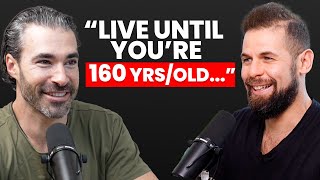
In this informal interview, Dr. Charles Pereyra and longevity enthusiast Billy Bosch discuss personal and professional approaches to extending healthspan. Bosch recounts his transformation from a college party lifestyle to a disciplined longevity protocol, highlighting early health scares, diet changes, and the creation of his supplement blend YouthRx. The conversation moves into detailed mapping of a "30‑to‑160" roadmap that outlines daily, monthly, and yearly interventions, from nutrition and fasting to advanced regenerative therapies. They explore stem cell and exosome treatments, addressing safety concerns, misconceptions, and their clinical experience with thousands of patients. Emerging vascular therapies such as PlaqueX are introduced as a potential plaque‑removal infusion. Both emphasize the importance of comprehensive diagnostics—extensive blood panels, full‑body MRI (Prenuvo), and multi‑cancer blood tests (Galleri)—to personalize interventions. The role of AI is discussed, including AI‑driven longevity assistants that ingest the doctor’s knowledge, assist with differential diagnosis, and design personalized drug regimens. They also touch on mind‑body practices, meditation, and consciousness medicine as complementary strategies. Economic framing of health investment, the gap between elite athlete/celebrity protocols and everyday accessibility, and the need for simplified, accountable longevity plans round out the dialogue.
Chapters
All right, so what's up? I am here with Billy Bosch. We talked about calling it the Bosch Protocol and adding some of his routines. He is into his 40s and has a body better than most 20-year-olds, better than me when I was in my 20s. And he's into longevity hacking, which has been particularly interesting to me since I run a longevity company and I'm an actual doctor. And so very inspired by some of the stuff that Billy's doing, we're just going to hang out today and ask each other a few questions. What's up, Billy?
Let's do it, man. Thanks for having me.
Yeah, of course, man. So quick question. You're not a doctor, right?
I'm not.
Do you have a science degree or anything?
I have a business degree and I have a concentration in human resources. And I also have a degree in partying because I went to LSU, number one party school in the nation, just so you know.
Oh, there's going to be a couple of people that are very, are going to be upset with that in Arizona.
I know, I know. That's part of this longevity protocol. Not so much the partying, but the recovering from the partying. From like all the damage I did to my body, just not caring at that point. And then becoming an adult and realizing, okay, I should probably stop, you know, trying to destroy my body and take care of it 'cause I only get one.
Yeah. So was there like a single point where you were like, okay, I want to be involved in this space, I love this stuff?
Yeah, I would say it started when, and I was an extreme, right? I knew I had all the dollar menus, value, like all the value and then used memorized in college for like Wendy's and Jack in the Box and all this stuff. I could just, I was like, oh man, they're losing money on me 'cause I'm getting all these deals, right? And I didn't care. I was still going to the gym, right?
But I was like, oh, whatever, eat whatever you want, you know?
And then it hit around, I would say like 27, 26, 27. I had started having health issues, high cholesterol, acid reflux. I was to the point where I was having to sleep vertically, like sitting up, uh, and pillows by my back and all this 'cause I had so much acid reflux. And so I go to the doctor cuz apparently you're supposed to go to the doctor at some point as an adult. And she goes, your cholesterol is through the roof. It's like a guy who's 60 and ate cheeseburgers every day his whole life. Like, what are you doing? I'm like, well, I do eat a lot of cheeseburgers and a lot of pizza. And I was, you know, that's sad. Standard American diet. And the doctor, what does the doctor say? If you, if, if you put yourself in the shoes of a typical American doctor and you have high cholesterol and acid reflux, what's the solution?
Oh, it's easy, baby. It's statins and maybe some lifestyle.
Boom. Not even lifestyle. It's like statins and some kind of like, you know, acid reflux pill. And, and I, she hands me these prescriptions. I'm thinking, dude, this is crazy. Why would I take pills for the rest of my life? I'm in my twenties. And so what do you do next? Go to a nutritionist. So I go to a nutritionist and she says, no, this is super simple. You need to clean up your diet. We need more protein. We need to be conscious of what we're eating. And I said, so it's just a diet change. You never, you don't need any pills, just change your diet. I changed my diet and saw my health totally clear up. And so that was the aha moment. And I'm thinking, okay, I want to get in this space because I had trouble finding products as a consumer that were trustworthy and clean and all this. So that was my first company, Iconic Protein, the first zero sugar grass-fed protein drink and powders and all this kind of stuff. And did that for 10 years. And then I got really into longevity along the way, right? Which is just like, I realized aging is a disease, which is like, for most people they're like, what do you mean it's a disease? I mean, the World Health Organization, like who's pretty stale in their views, I would say.
Would you agree? Well, I have my own personal views on the WHO. I'll leave that personal. Yeah, yeah, yeah, yeah, yeah.
But, but they're not exactly like so forward thinking. So they're already acknowledging aging as a disease, then like, you know, it's like well established. And so the thought is, if it's a disease, how can we treat it? Yeah. And that's when I got into all this stuff. So, I've been diving really deep over the last probably 3 or 4 years, but it's been an evolution from like the first step into nutrition.
Yeah. Pretty cool. I think the way that we connected was awesome. We met through a friend of mine, Dr. Amil, who's also in the health and wellness space. And yeah, there's a doc out in the UK and, you know, he kind of broached the conversation by, hey, this guy Billy has a whole protocol that he's putting together and he's been researching every single stem cell company in the world. And I saw the and I was like, oh wow, this guy's really serious. Like it was a deep dive. You probably did better market research than I've done.
That's when I, when I come across something that I'm unfamiliar with, what I do is address it just how I would a business problem, which is research, right? I feel comfortable with the data. So I basically, I'm a spreadsheet nut because my brain is all over the place. So I'm like, I need to organize what's in here in lines and, and all this kind of stuff. So I literally just mapped out every stem cell clinic. I went through the process as a patient to like onboard and learn what offering they have, what the difference between all the stem cells are, kind of educated myself through that, but also doing my own research. And then the other thing was I'm like, how does this not exist? How is there not like a preventative maintenance schedule for the human body? If we take care of our cars and we get oil changes at a certain interval, air filters changed, all this kind of stuff, why are we not taking care of our bodies in the same fashion? So I built that out, which I've showed you. So it's, and you can look at it and say, okay, where were you at? Most people start caring about this stuff around 30. So I started it at 30. So if you're 30, I have a roadmap to get to 160. What does that look like? What do you have to do every day, month, year, and so on and so forth. So that's how I like go super deep and nerd out on all this stuff.
Yeah, man, that's really special. And I could say a lot of the things in there were super high level in the fact that as a physician, I really respected it and we don't, we say we focus on preventative care a lot. Oh, we're preventative focused. But in reality, like, what does that really mean? And, you know, for preventative medicine to truly be successful, I think you have to look at what the consumers are trying, what they want, and adapt quickly to what we see working. And, you know, for me personally, the whole timeframe of waiting 10 to 20 years for a process, which, you know, we'll, we can get into You know, the whole relationship between the FDA and between big pharma. But oh yeah, it's a mess. It's, you know, it hurts people. And like, as a doctor that takes an oath, like, to do no harm and really look out for patients, it's been tough. And then to see people like you pioneering a space where like, okay, I've taken it upon myself, like, I have so little trust in the medical system and the current protocols, I have to make my own. Great. Which I like. And so, you know, I think we can live to 160 now. The data is starting to show this. I mean, you can just look, you know, on a case-by-case study and say, oh, people are looking a lot healthier than they used to. Right. They're playing sports longer than they used to.
Oh yeah.
And they look better than they used to.
And you've worked with some of these athletes and celebrities and all this kind of stuff, right? So you see the changes, right? Like they should probably not be on the field, but you're keeping them on the field because of all these regenerative treatments.
Yeah. I mean, they're all, they've been doing this for over a decade, right? So we always hear these things that, oh, it's everything's still experimental and it's still in its early stages. And it's like, well, Based on the research, yes, this is true. But based on a large number of case studies, and quite frankly, these people have access to whatever they want, right? If you're making $30, $40 million a year, you can, you don't have to do something that doesn't work. And they've all gravitated towards this kind of therapy and regenerative care, whether that be stem cells or whether it be a peptide, whether it be hyperbarics or, you know, a protocol. It's everything. And, you know, I pride myself on being able to see the athletes I've worked with stay long-term. And now, in the mission between people like you and myself is to how do we, we're just the everyday person, how do we spread a message of, hey, you need a longevity partner and maybe even a longevity protocol?
Yeah, yeah. I think it's, again, it's a reframe because I think this is so new to people to think about how do I really effectively manage my health. And it's so much to think about. It's really overwhelming for a lot of people is what I'm hearing. And I think about it like, how can we draw a comparison to what is, is what people know, which is whether it's taking care of your house, taking care of your car, taking care of your dog. People take better care of their dogs and, you know, than their bodies a lot of times, right?
Sometimes.
But it's like, what do you spend a year on a vehicle? Let's just say you're crazy and you wanna buy a new car every year. Maybe not that crazy for a lot of people, but like, what do they spend if they had to buy a new car each year, right? What do they spend when they buy a house? What do they spend on all these other things and what are they spending on their health specifically? Like preventative health. Okay. What do you go to the gym? A couple hundred bucks a month. Most, most people, you know, paying $10, $20 a month or something like, how are you investing so little in your health? But I get it. People are confused. So I think it's on us to innovate and figure out like how to, how to make it easy for people to follow a path, whether it's with you or me or anybody else, but like We're on the same page. We just wanna help people, right?
Yeah.
We wanna like show people, give people a map to figure out like, how do I get to 160 and feel young, right? How do I feel? How am I 160 and feel 40? Who doesn't want that, right?
Yeah. I mean, and, and part of this is what, what makes it beautiful is the collaboration between, you know, a physician, you know, a traditional allopathic board-certified guy. Yeah. And what we're seeing now is these, you know, citizen scientists. Yeah. You know, which is kind of what you've become and taken it upon yourself to do the research. And right. You know, after a certain amount of hours of research, you start to become sort of an expert in this field. And it's a field that's still developing, right? We don't know. We say longevity and okay, the goal of longevity is to live better, to live longer. But what are the exact steps? And it's like this giant puzzle and we're starting to find some pieces, like maybe a peptide here, maybe a stem cell here. And it's almost ubiquitous across the athletes I've worked with and celebrities I work with. Like they're all kind of doing the same regimen. And so how do you bridge that gap to improve it and then bring this to the everyday human who like, all right, we're working hard, we're doing the day-to-day things. Not everyone has $2 million a year like Bryan Johnson to have a personal researcher and formulate all these things, nor would a lot of people want to do.
Not a lot of people want that life. You know, I've seen some people that watched the documentary on it, they were inspired. Others watched it and they felt sorry for them, you know? And it's like, what kind of life is this where you gotta test all your food? And, and I mean, hats off, cuz he's, he's raising awareness about longevity, which I appreciate, but also like, I don't want that life. I want to go out in the sun. I want to eat meat. I want to eat fish. I want to eat clean food. I don't want to eat bean paste that's been tested from a lab every day. You know what I mean? Like, that's not the life I want. I don't want to, I don't want to be that. So I think people have to figure out what path they want to go on. We've got these extremes in this world. The crazy part is this is when I feel like I'm in The Matrix. Most people are familiar with Bryan Johnson. Right. The, the biohacker guy. Right. And then the people are also familiar with Liver King, the guy that eats raw liver. Here's where things get crazy. They have the same name. They're both Bryan Johnsons.
That's wild. I didn't put that. How crazy is that? Right? Like, are we being natricized?
We are. You have one guy that's like super tan, like Oompa Loompa tan. And you know, like, like literally eats raw meat. And like full of muscle and, and kind of a shorter guy. And you got one guy that's taller, looks a bit like a vampire at times and needs bean paste. And look, he's, he's, he's in very good shape. I'll give him that. But we have these total opposite extremes of human beings, right? And I think it's really provocative for people, but I think most people wanna land somewhere in the middle.
Yeah, definitely wanna land in the middle. I mean, Liver King is such an extreme example, right? And he's had his, issues within the public eye. And, you know, I, I tend to think maybe we aren't having enough liver, maybe raw food is the way. But yeah, I mean, his approach was a turn-off, and maybe Bryan Johnson's approach is inspiring to some and a turn-off to others. You know, I think as a pioneer you do have to be a little bit bold. Yeah. And do little things a little bit weird. And I like that he's doing this biological age thing.
Yeah.
And now there's a Rejuvenation Olympics.
Yes.
That was not found, right? And he's 0.62, which means he's having a birthday around every 2 years. Nice. A cellular birthday. Yeah. Which, which is pretty cool, right? So if you can have a birthday every 2 years, well then being 160 is not all outta that realm of possibility.
Right, right. No, it, it makes total sense. What I'm wondering is like, it's great if you've made it to this point, but like what about all the years before this, right? I've eaten McDonald's or whatever, and then it's great, spend $2 million a year for the last couple years. But like, I wonder how much reversal of all the damage you could do. And I know the body regenerates at a pretty fast pace, but I still wonder, I wonder that about myself too, not to just knock him because I'm like, I did a lot of damage to my body. And so how can I make sure I'm being proactive and like reversing my age and slowing down the pace of aging?
Have you heard of PlaqueX? No. It's really cool. I just started looking into it. It's the only thing that I've seen that actually can help remove plaques from arteries. Wow. Wild stuff. I just found out about it. And so heart disease, a lot of people think starts in your teens and 20s, not in your 30s and 40s. That's just when you start to get the side effects from having an unhealthy life in your 40s, 50s. And so this new PlaqueX, you know, infusion is a way to—
You did a, like a, you IV it or an infusion?
It's an infusion. There's a couple of cool things you can do with the IV.
Okay.
I still have to look more into it, but it's the only thing that I've seen so far cursory that is very promising. Yeah. Help remove plaques. 'Cause even if you're doing all this aging, anti-aging modalities, right? Yeah. You get a better heart, you get a better brain, you get better lungs. What happens to the piping system? All the blood vessels that have been getting all this turbulence for so long, high blood pressure, low blood pressure, like what's happening with that? What's happening in your brain, right? Things that are going to kill people are strokes and heart attacks and cancers, of course. And so, we look at the blood vessels as really, for me, it's kind of the final frontier. And that was a cool thing. I recommend everyone kind of Look it up. It's a great tool. It's probably the only tool I've seen aside from diet, exercise, and yeah, and other tools, right? Like if you see your cholesterol's high, there's now a cholesterol drug which is becoming more popular, which blocks absorption of the cholesterol in your intestine.
Oh, you're kidding.
So look, you can lower the bad cholesterol.
So any side effects?
No, the upset stomach's probably the main one. Okay. And again, I, I don't recommend anything or any supplement to anyone unless they've done the lifestyle thing first.
So this is a supplement or a pharmaceutical? This is a pharmaceutical.
It's as close to a supplement as you can get. Even, look at this, even supplements are pharmaceuticals. They're all compounds. It's just, did you go through this synthetic process or not? Even, you know, if I take my protein powder, it's not natural. It could be as organic as possible, but you know this being an industry, you still process. You have to process it in some way. And so, when I look at things, you know, how do I optimize my body? How do I recommend optimizing? There's a few things which I think we share. I know you do them, which is fasting, you know, once a quarter for 3 days. Intermittent fasting, having small meals, probably having one meal a day only is the best and fasting once a week. And if you're doing all those things and you just have this genetic predisposition, you're still having high cholesterol, you're still having something, then it's when, okay, what supplement should I take?
Yeah.
But at Springs, and I know you hold the same philosophy as well, you need to do the research into your own body.
Yeah.
Before you can even know what to take is you don't want to shotgun your health, right?
Yeah.
Yeah. And most people don't even know about their blood work. They're not getting the right tests. And I had my blood work done and maybe we can put it on screen. It's a 30 vials of blood.
You showed me that picture. Nuts. Nuts.
So the lady who came to my house to do it, the phlebotomist, is what we do. She's like, I've never seen this amount of blood. She's like, but I looked at what you're getting. She's like, this seems like the ultimate physical. I was like, it is. It has all the metals, all the stuff, everything. And you know what, there was— I'm pretty healthy, I live in the United States— there was some lead in my blood. And I was like, where the heck did that—
where do you think you're getting that from?
I don't know. I still have no idea. But you can do something about it, right? There's chelation therapy, there's heavy metal detox. You can do. But there's other markers. There's cardiovascular risk disease markers, you know, autoimmune disease risk markers. These are things that people should be doing regularly. It's a part of the longevity protocol. It's part of what you've been putting together. And so, what do you think? What do you think is the sexiest topic right now? Like, what has the most promise in regenerative medicine?
Ooh, that's a good one. Look, I think that, I mean, we can get into like advanced stem cell therapy, you know, and what I say advanced is like the stuff that doesn't exist yet, which is, hey, Save my cells now, save my stem cells, even if they're 42, which they are, then save those because maybe in 10 to 20 years with the help of AI or whatever, you can just like 3D print a body for me. You can give me another 42-year-old body with my cells.
Okay.
It was like, boom. Like, why would you not want that? Like, give me that. I'll just keep being 42 every 20 or 30 years and slip back in this body of mine.
That, that sounds pretty cool. Body transplant.
Yeah, body transplant. You just like upload your consciousness, right?
I love that. That's also scary to me as well, like uploading your consciousness to a computer. Yeah, so you're just gonna do it. Yeah, they're gonna do it. And like, what if, you know, this is a major conspiracy tinfoil hat thing, like what if you can do that and this is like the big AI trap and now your soul is trapped? You're trapped. Oh my God, I feel robot. I was like freaking out.
You know, and it's a thing, man. I mean, I, I'm, I'm sure people are gonna do it. I have no doubt. It's just like, what's the timing of that? And things are moving so fast with AI and I've been thinking about how do you really properly integrate AI and on with like longevity. And the, the easy thing is, okay, we'll create a longevity assistant that kind of like, you know, answers all your questions about stuff. And I know you were doing a lot of work around that, which is like pretty forward thinking of like, let me upload everything I know, everything I've learned. Like all my books and all this kind of stuff and scan it all in. So people basically like talk to you and like have your brain in an AI. Is that accurate?
Yeah. So, you know, upload like not only my talks, but every book that I've ever had to read in medical school, plus the ones I didn't.
What did you just scan all this stuff or what?
Yeah. You can just, you know, put it in the system. Yeah. It can read the book for you. It's actually kind of scary how quick AI can read a book. Like the new models. Yeah. It's wild.
Boom, done.
And then you say, hey, I also like this research, read this research. And it uploaded my mannerisms. So I had to sit in front of a camera for a bit and it scanned my video. So it'll have my hand gestures, my lip movements, the exact way I look.
Little Black Mirror.
And my voice, and I can talk to it. And I'll put a link in this so people can see it. Like, it's literally like having a conversation with a human. It's very close.
Have you stopped?
Little subtle tone.
I'm sure you tried.
I've tried everything to even ask it things like, okay. This is a very detailed abstract medical question. Let me give it a patient scenario like this and then make it something. And they're great at diagnosis.
Really?
And I think there was a study that actually came out that said AI is now more efficient at creating a differential diagnosis. So different diagnoses that you can have when you're sick than a human.
Really?
It's getting— it's not getting there anymore for me. It's kind of is already there. Yeah. No, AI to design your drug. Yeah. No, AI to design. It's, it's, it's here and it's like, well, Yeah. And thought leaders, you know, Elon Musk is probably one of the biggest thought leaders of our time. Like him or hate him, he's done a lot of stuff. And yeah, they asked him about aging, if he can solve it. And he was very quick. He was like, I think I could. I don't know if I'd want to.
Elon, if anybody's an alien, we know it's Elon, right?
Oh, for sure.
Elon, we love you, buddy, but you're not from here.
Yeah. He's, he's got a brain that's from—
yeah. I'm glad we have him because if anybody's going to solve it, it's him. But, but I do think like on other topics, I mean, it's like, you know, I think a lot of people feel like stem cells, it, it is a provocative topic, you know, starting with like the Bush years and banning all this kind of stuff. And then it's like, let's just throw out some crazy stuff, right? Because I hear this stuff because I, you know, I'm into this world, you're deeper into it. And the common themes are like just what people heard, which is like, oh, stem cells, it's like kill— killing babies, right? Or it's like stem cells, it— they give you cancer, right? And I'm like, oh man, here we go. Okay, let's start at page 1.
That was the first thing, right? It was like a whole Bible Belt, like propaganda thing that, oh, they hurt babies and they kill babies. Yeah. And I was like, well, you're getting it either from the umbilical cord usually, or sometimes a placenta, which we don't do. And you know what happens to the umbilical cord and placenta for most people? They put it in the trash or they sell it through research.
Yeah.
There's not— okay.
So shocker, y'all, they're not eating it like Tom Cruise. Okay.
No.
And some of the other people, I—
although more people are capsulizing it now and eating their placenta.
I did, I did see this. There's a service, probably a few of them now where you can send it off, right? You send off the placenta and they put it in a supplement capsule for you. I sent it to a few of my friends that have babies. I don't know if they did, they did it yet, but I mean, would you do it?
I probably would just try.
I mean, I try anything once and see how you're gonna buy yourself into junkies.
You love it. Yeah. Yeah. Do you have, speaking of supplements, I really love this thing you put together. It's YouthRx. It's your daily longevity mix. And tell us a little about what inspired you to create this, because I look at the ingredients of anything, and I mean, my partner will tell you it's a pain to go with me to the grocery store or anywhere. I turn over everything. And yeah, so if I look through this, I'm like, oh, these are some things I could really jive with. So what was the whole basis for doing this?
Yeah, the idea was basically I walk around with this little pill pack, you know, I'm, I'm at, I fill all my pills, you know, that they have these like 30-day pill packs where you map out your thing. It lasts 2 weeks for me because I take so many supplements. Okay. And I'm taking all the stuff I can find for DNA repair, anything anti-aging related, plus my basic stuff, B vitamins, D3, K2, all this kind of stuff. The challenge was I'm taking so many pills every day. I'm taking like 40 pills, right? And most people when they say, hey man, you look good, I want to, I want to get on your supplement game. 'Cause they think the pills are the easy thing. And supplements, let's be realistic, it's probably 10% of the equation if I'm being candid, but it's an important piece of it. So, and a lot of people, they don't want to do the other part, so they just want the supplement. I get it. The challenge is they don't want to actually take the pills. They either have pill fatigue, they don't like taking pills. There's just like, you know, there's poor compliance to actually following this regimen. They'll buy 'em and they just sit there. Everybody, watching this probably has some supplement that they bought that they're not taking that's collecting dust on top of the fridge or in a cabinet or a drawer full of supplements or a drawer, right? Something. And so I thought like, why don't I just make this easy? I'm a chronic oversimplifier for better or worse. And so I say, okay, why don't I just take all these pills, empty all the pills out, and then just make it a powder, flavor it. And then I have like 20 supplements in one. Okay, cool. And you take a scoop of powder, mix it with water, done deal. So it's like 1 scoop instead of 20 pills every day. And the other thing I did is I talked to some of these biological aging test companies, and then I was looking at the data behind some of the people that were on the leaderboard for the lowest pace of aging and the lowest biological age. And I figured out what ingredients and what compounds they're taking and like the top performers, and I put them all in this. So if you go buy things like NR, spermidine, You know, calcium alpha-ketoglutarate, this kind of stuff, and you buy all this separately. These are like $50 to $100 a piece each for a 30-day supply. So I'm like, this is crazy, man. I know it's a crazy markup, so I'm willing to take less of a markup cuz I'm like, I wanna deliver value. I want something that I would actually take and buy. So that, that was the idea behind it.
Well, you know, it's something that I will actually take and buy, man. I'm super excited about this and I'm gonna give it to my partner as well. And yeah, yeah, man, it's awesome. And I think some of the compounds I saw in here actually do help with stem cell. Proliferation, which, you know, yeah, my big thing here. And we talked about like the whole stem cell thing, you know, does it hurt babies and yeah, all this. And I think you also mentioned cancer. That's like the big one. It does— stem cells cause cancer. Yeah.
Like, how did this rumor even start?
Yeah, you know, first of all, you gotta understand, stem cells are a wide range of different kinds of stem cells. There's pluripotent stem cells, there's, you know, stem cells that are in between like these pluripotent, and there's adult stem cells. And the stem cells that we like are are technically a misnomer. They're really adult stem cells. They're mesenchymal stem cells. Okay. When you look at them and the non-differentiated types, I've seen personally zero incidences of cancer. There have been tumor formations with other stem cell types. So one in the spine. And then when you go ahead and look at exosomes, you know, exosomes are all over the literature, but an exosome injection from mesenchymal cells, I've yet to see any myself. And obviously I can't read all the research. So I, type it in AIs and GPTs, and it hasn't been able to find any research for me of that causing cancer either. Okay. There's some suggestion that, you know, exosomes may play a role in modulating your immune system. So, potential to, you know, help with cancer. But, you know, for me, anything can cause cancer, right? And, you know, stem cells based on being the fundamental building blocks and especially exosomes.
Yeah.
Every single person, their body has an exosome. It's a signaling molecule to signal to your cells. It's like, Okay. You know, if it has bad stuff in it, maybe it can cause cancer. But a young, healthy cell that's been pre-screened, that has all the genetic profile done, that we know what's likely in the exosomes, that we know the solution, that the mother's been tested, it's been used thousands and thousands of times.
Right.
For me, that's pretty safe.
Yeah.
You know, knock on wood, at any of our centers across the country, we've seen zero incidences. Amazing. We've treated thousands and thousands of patients.
And do you also suggest doing some type of cancer screening? I know I've had the Galleri test where they screen for like, it's a blood test for 50 different types of blood cancer and you can do the Prenuvo full body scan or one of these other MRI full body scans. Do you recommend doing something like that before a stem cell or exosome therapy?
Depends on your age and your risk profiles. I, I think as part of the whole program for us with longevity is there is the goal is research.
Yeah.
And then replenish and then enhance. Okay. And so when you're researching, you, that's a big part of it, right? You have to go through, get all the biomarkers, some of which are cancer biomarkers. And then it's a full body scan. Okay. We actually use Prenuvo as a partner to send patients to. And so we love the fact of people that can get a full body scan. And 'cause that if you do have a large tumor, yeah, it may pick it up. And there's even specialized scans that can look at your blood vessels in your heart. Wow. And can tell you if you're at risk for heart attacks or— Yeah. I recommend all this stuff. I recommend stool microbiome. Yeah. Everything you can do before you add something else. Like you should know what's going on in your body before you do an intervention. Oh, totally. And if you're young and healthy, you're like, hey, this injured my joint. And I have to play football in 4 weeks, or, you know, I'm young, I need my rotator cuff, or I just want to get more hair.
Yeah.
It's topical or injectable in joints. That's okay. We do like a joint imaging or we do a scan of your, your scalp. I'm fine with that. But when systemic is involved, I think that people should always do some kind of research, you know, before into their own body. And then once you know what to do, okay, well then we can replenish and then we can, you know, restore and enhance.
Yeah. Yeah.
Yeah. So I'm big on that.
No, it makes sense. You know, and I think it's back to like, how do we simplify this for people and create like a protocol they can follow, which you and I have been kind of tag teaming. And there's plenty of stuff out there, but you know, I get a lot of people that say, hey, you know, I went to Function and got my bloods done.
Okay, cool.
But like, what now? Like, what are you doing next? Oh, they sent me an email with like some tips. Like, okay, but like what action steps are you taking and how are you going to be accountable for the changes so that like your blood test looks different next time? And I think like it's important for people to find a resource, whether it's us or somebody else to like help manage that journey or just take ownership and do it yourself and like do the research, do the homework, be nerds like us, go deep on this stuff.
The world needs nerds.
It matters. I mean, I always think like back to what do you spend on your health? If you can give someone a year of young life back, you know, we'll say 30s, 40s, 50s, whatever, where they're feeling good. What is that one year worth? Right? Everybody knows how much they make in a year. What do your friends and family think you're worth? Right? What would they pay to keep you around for another year? And that's how I've kind of reframed the spend on health and the personal investment of time and money into my health. Because like, like I'm getting years back now by being proactive about this stuff. And I think people just don't really understand that yet.
That's kind of back to Bryan Johnson too. People, a lot of people think that he's, he's crazy and he knows that he does a lot of stuff. His thought process is he just wants to stay young enough for when the next wave of major advances come, which he thinks is going to happen in a decade, that his body's healthy enough to receive that. And so he wants to just stop any of the aging. And so I get it, like maybe we can do enough now because we don't know what's coming down the pipeline. I have no idea. You know, we didn't know about antibiotics until we know about antibiotics. We thought it was woo-woo stuff.
You know, we didn't have AI at that point.
We didn't have AI, but we randomly invented some fungus on a cookie or something where you found penicillin and that changed game and improved surgeries. We made surgery robots. And, we're due for a major advance. And, whether that has to do with personalized AI-driven pharmaceuticals or personal AI-driven stem cells or regular stem cells or even frequency medicine. And, we've done a lot of research. I've got a chance to spend some time with a guy, Dr. Joe Dispenza, who does research with the University of San Diego. And, I've looked at some of his papers and just this formulated process, like this regimented process of meditation has profound results on your biochemistry. Really? And so maybe that's also another frontier. We're due for one.
Yeah.
It's time.
I know it's time. I know he does a lot of healing of the body, right? Through the mind. You always hear people going to his events and they're like, weren't walking, they're walking at the end of the event or something like that. It's almost like one of these like televangelist things where it's like, power of God is upon you or something, and then they start walking or something. So it's like, It seems like that, but it actually seems like there's real data behind this, not just like, you know, woo-woo stuff.
Dude, I went to his conference and I was on the side. I'm just gonna say, yeah, I was like a super, super skeptic, right? I just wanted to learn meditation. I was at a point in my life where I just wanted to learn, and I didn't even know that he did healings.
Yeah.
And I heard about it and I was like, oh, here we go. Yeah. And I was with some people who went there for real results, and I'm sitting next to this guy, he is in the military at the highest level and needs to jump out helicopters and planes. Like, that was his job. And he has a severe spine issue. And like, I'm the ER board-certified doc training. Like, I lived in New York in the ER, work in the ER. I know people BSing, and I know pain. Yeah, when I see it, seen it. This dude was in pain. Like, his girlfriend had to help him get into his little walker, and he just could barely move. And he's a younger guy, kind of ponytail. And yeah, so I found out during the course of this, like, his partner convinced him to come here because he was you know, on suicidal watch. Like the guy did not want to be alive. He went so far as to tell, I believe I'm telling the story correctly. He went so far as to tell the physician he wanted his legs cut off because he feels so much pain. And the doc said, you know, maybe neuropathic pain. So we're gonna cut off your legs. I remember this story so vividly because I watched him for like a few days and it's a 7-day retreat. And so we're like 3 or 4 days in and I'm watching this guy in pain. And I'm like, oh, this sucks. And, you know, try not to— I'm trying to be positive, so don't pay too much attention to it. Yeah. I should you not, dude, this guy ran down the beach for you, like ran with nothing. What? And I saw this like my own eyes.
After meditation?
I don't know. I was like, yeah, it's something called a walking meditation that they do. And I actually love these. And he just did it and he like was in this state and just like ran, not walked. Yeah. This guy was sprinting. And for me, it's like, did I just get conned? That can't be a long con. Yeah. And I literally went to, I think it was 8 or 9 Dr. Joe events.
Yeah.
So like, cause it made me feel good, but also like very skeptical of like what's going on at these things. Yeah. And I gotta tell you, I've seen some things that have made me rethink everything, like solid tumors that just are there one minute and next, I'm like, I couldn't unsee that. Right. Yeah. And I try to like rationalize it in my head. And I think to even now to the point, like I try to forget about it cause it's like a, How is this happening? And, you know, it's for his process, it's about energy and attention. In fact, that there's a quantum field that affects matter. Yeah. Not the other way around always. And so if you can change this matter in the quantum field, then this matter that we see has to change. Yeah. And that's his whole premise. And for University of San Diego, which got involved, and there's a guy, Dr. ML, in there, he has made some dramatic changes to the way research is being done. He's a very published researcher. And he works with this group and they've published studies. So we now know you change your, your genetics, you change your microbiome, they change the expression and ubiquitous like across, I think it was 70% plus people had the same genes changed.
Really? Oh yeah.
Just with this regimented thing.
And it was like a regiment of this group meditation or what do you guys—
Yeah. So you get in there and first he like, so this is my experience. I walked in there and I, I was a Tony Robbins guy who went to all those things and I was like, I'm not going to another Tony Robbins help yourself conference. I was like, I'm going to walk out. And then all of a sudden I sat at this table and there was like these young pretty girls and I was like, oh, I don't know, maybe I'll stay. And then he's like, let's just try this breath. So I try this breath. I was like, well, that was something. Like I felt something. So I was like, I'll stay. And so it's a combination of you get in these large rooms and there's like an hour to hour and a half. One meditation is 4 hours long, but that's only one. So you do these hours, hour and a half meditations. So you start it with this like opening the heart, like just feeling love and doing breathwork. Yeah. And dude, I've seen so many things happen in that room where I still try to like tell myself, did I really see that? Like, yeah, did that really happen? Because it challenges everything, kind of doubting what you saw, sounds like. Yeah. I got a chance to sit next to Joe, Dr. Joe, at dinner, and I sit across from him like I'm talking to you, and I was like, dude, I don't know what to do after coming to your conference. Like, I kind of don't believe in traditional medicine the way I used to believe. Like, and it's kind of messing with my brain unless these are all implants and you found thousands of people to mold You're a plant.
You're a plant.
So yeah, that may be another frontier. And I'm a huge believer in consciousness medicine and that you can heal yourself. I think there's tons of stories with it. And it's more of, you know, for me, and I think why we connect is I truly believe in this holistic approach where it is the mind, the body, and the spirit kind of working together and merging and marrying that Eastern and Western philosophy while pioneering innovation. Yeah.
Yeah. Yeah. It makes sense. You know, I definitely want to go to one of his events. It's one of those that's been on my to-do list and I never make time for it. 'Cause I'm always like 7 days and then like meditate for 7 days. It's hard for me to sit still for like a couple hours in a day. I guess that's the point of it, right?
Yeah. It's the point. So dude, I was on my phone nonstop and I, I remember locking it in my safe in my hotel room and I, that was like a scary part at the, but I did it.
Yeah.
How do you feel? Oh, it's like I never wanted to get back on my phone again after that. I was like, this is so nice. I was so present, so connected. And yeah, I thought, I mean, I went to like 8 or 9 of these things and I got to know some of the people there. And I really, I think he's doing good work and he's pioneering a field which is medicine needs and this, this Western Eastern philosophy marrying each other. Cause there's for sure a part of the Western medicine, right? If you get a heart attack or get in a bad car accident or something like It's great to have these skilled clinicians to do this work. Yeah, but healing is more than just when you're already about to die. And I think that's why we're here for preventative alternative measures.
Yeah, no, that's true, man. It's like, it's not just about like not dying. It's about having like a great life. Because I always ask people, how old do you want to live? And what do you think most people say? They're not in our world.
Not in our world. I don't know. I feel like most people just want it to be over or live forever. They want it over or live forever. Well, surprisingly, a lot of people don't say forever.
Most people, the answer is like, oh, maybe like 80, maybe 90. You know, I had some of my family that lived to 90, but they always think that person that was 90 was just falling apart. It was just like a shell of their former self. And then I reframe it. I said, okay, what if you could be in your current body or feel a little bit younger? How long would you want to live? And they say 150, 160, forever. That's when the answer changes. So that's again, one of those reframes around if you take care and put the time and energy into really like figuring out what's going into your body. I mean, I got a friend, a lot of friends, there's, oh, just, I'll do this, but just don't take away my Diet Coke or don't take away my vape or who knows what. And I'm like, come on, man, what are you doing? You know, like, oh yeah, it's better than some other vice. I get it. Right. But like you're comparing like Coke to like cocaine or something, right? Like, oh, at least I'm not doing a bunch of cocaine every, like, Like, what, how is that a comparison?
You know what I mean?
Like, like let's just figure out what's going on. I'm not, I'm not saying like, you know what, if you like a Diet Coke and you wanna have it every now and then, go for it. But I'm just saying like, know the effects of these things. Like do the research. And with AI in the palm of your hand, it's easy to figure out like what's going on and like what are the long-term potential effects of these things. And I think the education around that helps people like figure out what changes to make.
You know, I love that, man. Education first. I think that's a great place to wrap up, man. Education, people wanna live, they just wanna live healthier. Yeah. And we'll do this again, man. It's a real pleasure being with you, hanging out with you, working with you. And thanks for— I'm gonna try this stuff for sure.
Yeah, let's do it.
Nice.
More from Charles

Anti-Aging Expert: Stop Touching Receipts Immediately! The Fast Way To Shrink Visceral Fat!